Ethics Alarms Lubricant 1: Jennifer Rubin on Intimidating the Supreme Court

Whatever one may think about the Constitutionality of the individual mandate provision of the Affordable Care Act, also known as “Obamacare,” it is a difficult and complex question. Anyone who argues otherwise 1) doesn’t know what they are talking about, 2) is lying, or 3) is basing their opinion on ideological considerations rather than legal ones. The members of the Supreme Court, which must decide the question (and in fact have almost certainly decided it) do know what they are  talking about, and while they all have ideological tilts in the sense that each gravitates to a particular Constitutional philosophy, political considerations, ideas pushed by the media and the popularity of particular legislation are supposed to play no part whatsoever in their deliberations.

The degree to which the Democrats, led by President Obama, have attempted to intimidate, hector and insult the Court into deciding the case in favor of the mandate is unprecedented in my lifetime, and I think it is unprecedented period. The advocates for the law had its legal representative make their case before the Court, and by all accounts he either botched it, or didn’t have points strong enough to withstand the challenges posed by the Justices in oral argument. Fearing that their landmark legislation that was passed by a whisker will topple because of the flawed cornerstone that its architects foolishly, arrogantly and unnecessarily placed at its foundation, Democrats have been pre-emptively impugning the honesty of the Court, essentially arguing that if the law is overturned, it will only be because of political favoritism and bias. It has been a disgraceful display, and is a despicable tactic. Continue reading
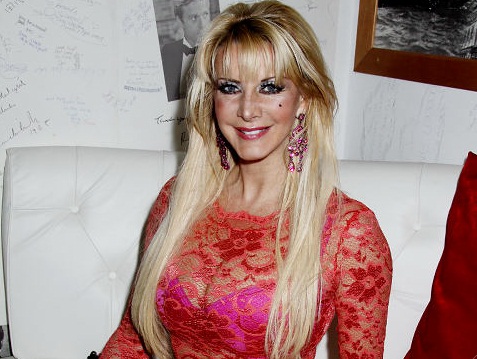

Anderson Cooper vs. “Human Barbie”: A Double-cross Masquerading As Integrity

Sarah Burge, a.k.a “Human Barbie,” who actually contains more plastic than Plastic Barbie, who, come to think of it,  is quite possibly a better human being than “Human Barbie.” It’s complicated.

One of the wonderful things about the Internet is that somewhere out there is always someone who has seen through the fog of lies, spin, misrepresentations and conventional wisdom, and is writing about it. The first trick, of course, is finding such individuals, who may be part of the spin and confusion the very next day. The next one is getting the truth to as many people as possible.

When I heard that Anderson Cooper had kicked the plastic-surgery mutant named Sarah Burge off his show on the air, I was ready to give him an Ethics Hero award. Not only has Burge, who is known as “Human Barbie”, * indulged her pathological obsession with plastic surgery to spend almost a half-million dollars making herself look like the iconic Mattel doll, she is trying to make sure her daughters are similarly afflicted. She told Cooper she wants to botox her 15-year-old daughter, and she is setting up a trust for her 7-year-old so she can start mutilating herself when she turns 18.

Suddenly Cooper stopped the interview, saying, “I gotta be honest, I gotta just stop. I’m sorry. I try to be really polite to all my guests, but I just think you’re dreadful. I honestly don’t want to talk to you anymore.” Continue reading

Ethics Dunce: Sportswriter Jason Reid

I really don’t care how bad you feel, Jason.

In designating national sportswriter Jason Reid an Ethics Dunce because of his sensitive, thoughtful, brave but ultimately unethical column this morning, I don’t intend to suggest that his ethical failing is unusual, or noteworthy for any reason other than the fact that it is universal.

Sometimes we are all like Jason Reid, I think. We all engage in conduct that we suspect is wrong, but we enjoy it. Gradually, truth breaks through our denial and we cannot avoid the conclusion that the conduct is wrong; still, despite the fact that we do not believe human beings should willfully do wrong, we persist in the conduct.

Because we enjoy it.

Reid’s column is titled “Seay’s Death Forces Uncomfortable Questions For Football Fans,” referring to the recent suicide death of former NFL star Junior Seau, the second suicide of a former pro football star in recent weeks. The uncomfortable question is the same one I raised on Ethics Alarms in November of 2009, which tells you how many NFL fans read ethics blogs. I wrote then,

“Simply put, it is wrong to pay money to persuade people to permanently damage themselves for our entertainment. No fight fan can watch Muhammad Ali today, recalling his nimble wit and amusing patter, and not feel complicity in his current near-mute condition, the result of being induced to box after his skills were eroded by time. When we know, and players know, that playing football in the NFL is going to lead to premature dementia for a significant number of players who will accept the risk if the money is right, can we ethically continue to provide that money?”

Sportswriters don’t read ethics blogs either, so in May of 2012, Reid has decided that this and related questions need asking. So he writes.. Continue reading

Ethics Article of the Week: George Will On His Son’s Birthday

Happy birthday, Jon.

Conservative columnist George Will has only occasionally mentioned his Down Syndrome-inflicted son Jon in his columns, but when he has, it has provided an extra dimension to Jon’s father, who usually comes across in print and on TV as cynical, dour, and archly intellectual. Today is Jon’s birthday, so Will devotes the full column to him, his challenges, and, when all is said and done, ethics.

It’s a beautifully written piece, as Will’s columns often are, and a tender one. More importantly, however, it is an essay that should provoke thought, beginning with the fact that the only reason Will wrote this column is that he and his wife chose, 40 years ago, to do what 90% of all parents informed that their gestating child has Down Syndrome refuse to do: allow the child to be born.

The column is here

__________________________________________________

Graphics: Richmond Times-Dispatch

More On The Ethics Of Watching Football From Malcolm Gladwell

And NO,Malcolm is NOT Art Garfunkle's son!

I don’t generally post “See? Someone famous and respectable agrees with me!” links, because 1) somebody agreeing with me doesn’t validate my argument, 2) I’m trying to promote ethical awareness and analysis skills, not to be “right,” and most of all, 3) if I did, I’d feel I had to hide when the famous someone is Glenn Beck, Joy Behar, Ozzie Ozbourne or Dinky, the Pet Rock.

However, I found the comments of Malcolm Gladwell on the topic of football interesting, and I link to them here. Gladwell is the author of “The Tipping Point,” and like Jacque Barzun, Bill James, George Will, Judge Richard Posner, blogger Rick Jones and some other perceptive thinkers I admire, always worth paying attention to, even when he’s wrong. I had suggested that the increasing evidence that football-related head injuries were routinely crippling players implicated the ethics of being a football fan here, and have periodically revisited the issue on this blog  and as a guest on Michel Martin’s NPR show, “Tell Me More.” As a result, I have received a good amount of hate mail from football fans, telling me that I’m a baseball-biased idiot. I may be that, but I don’t think Gladwell is. I think that he ( and I) may be right: ethics and insurance premiums may eventually  send football the way of pro boxing.

______________________________________

Spark: WTVR.com, on Ray Easterling’s recent suicide.

Source: Slate

Ethics Alarms attempts to give proper attribution and credit to all sources of facts, analysis and other assistance that go into its blog posts. If you are aware of one I missed, or believe your own work was used in any way without proper attribution, please contact me, Jack Marshall, at  jamproethics@verizon.net.

Now THIS Is Unprofessional Conduct: The Lesson of the Jilted Dentist

No! It's NOT safe! It's not safe at ALL!

The hallmark of professionals is trust. We should be able to trust professionals to do their duty on our behalf despite their personal feelings. Lawyers often dislike or even fear their clients, for example: a defendant charged with murder who has stabbed his previous three attorneys with pencils is now back in court with a fourth, though certain precautions have been taken. When a professional finds that his or her personal feelings are so intense that they jeopardize the professional’s ability to fulfill their duties objectively, fairly and well, then that’s a conflict of interest, and it must be dealt with, usually by stepping aside.

A professional who doesn’t step aside despite an evident conflict has determined that he or she has the detachment and self-control to overcome it. A recent news story from Poland, however, suggests that it is not a good idea to risk too much trust on a professional’s determination that she can remain objective. Continue reading

Comment of the Day: “Ethics Chess Lesson: The Tale of the Kidney and the Ungrateful Boss”

New commenter Christine has a valuable personal experience to relate, as an individual who donated a kidney to a stranger herself.  The main thrust of her post covers a topic that I have written on before but did not mention in this case, though I should have. Someone who performs a kind and generous act counting on rewards, copious thanks and gratitude, is  doing it for the wrong reasons. The act itself is all that matters. Certainly, gratitude is the right way to respond to generosity, but an act done in anticipation of personal benefits isn’t really altruistic. It is opportunistic. This is a cliché to be sure, but true nonetheless: the generous act must be its own reward.

Here is Christine’s Comment of the Day on the post, Ethics Chess Lesson: The Tale of the Kidney and the Ungrateful Boss.

I want to also commend Christine for following the comment policies, which many of the new visitors here who commented on this post did not do. I prefer full named on posts, but I only require that I am informed of  every commenter’s real name and have a valid e-mail address within a reasonable time of their first submitted comment. One way or the other virtually all of the regular commenters here have managed to do this, and it makes a difference, even in my responses. I regard such commenters as collaborators , not just marauders, and most of the time, I treat them accordingly:  tgt, Steven, Lianne, Margy, Glenn, Tim, both Michaels, Karl, Neil, Karla, Rick, blameblakeart, Barry, gregory, Eric, Curmudgeon, Eeyore, Julian, King Kool, Joshua, Jay, Tom, Bill, Danielle, Elizabeth, Patrice, Ed, Bob, The Ethics Sage and Jeff…I know there are others.   Thanks to all of you for letting me know who you are.

Now, Christine: Continue reading

Ethics Chess Lesson: The Tale of the Kidney and the Ungrateful Boss

Ethics chess is complicated, but ignore it at your peril!

Ethics chess is the process by which one considers the likely chain of events that follow from an act, and tries to predict the ethical dilemmas that may result before they occur. Debbie Stevens and Jackie Brucia didn’t play ethics chess. This is what happened to them.

When  Stevens was exploring the possibility of returning to the Atlantic Automotive Group, where she had worked previously, she met with Brucia, her former and potential boss, and somehow got on the topic of Brucia’s health problems. She needed a kidney transplant, and had found a donor, though it was not yet certain that the kidney would be hers. Stevens said that she might be willing to contribute her own kidney if that donor didn’t work out.

Later, Stevens was hired by Brucia,and two months later, in January of 2011,  Brucia called Stevens into her office and told her that she had lost her organ donor. “Were you serious when you said you would be willing to give me one of yours?’ Brucia asked.  “Sure, yeah,” Stevens says now. “She was my boss, I respected her. It’s just who I am. I didn’t want her to die.’’ It wasn’t exactly a direct donation, but Stevens donated her kidney to a stranger who matched up well with it so Brucia could be advanced on the list and get a better matched kidney from another source. Nonetheless, Brucia got a healthy kidney because Steven’s gave up one of her own. Continue reading

Ethics Hero: Ashley Judd

Actress Ashley Judd (Full Disclosure: I am a long-time fan) finally has had it with snarky and degrading public speculation about her face, her weight, her appearance, and whether the star of TV’s “Missing” has “had work done,” and properly slams the celebrity media and those journalists who either write about her like she’s a competitor in a dog show or question her conduct and character based on their assessment of what she “should” look like.  Her verdict: it’s misogyny. The acting member of the Judd family has written a passionate, perceptive, articulate (if you forgive occasional lapses into feminist jargon, like objectification otheration, and (yuck)  heteronormative) and courageous essay over at the Daily Beast. If you have a daughter, have her read it. If you have a son, have him read it too. Heck, everybody should read it….here.

I wonder if the Daily Beast editors read it.  Here is Ashley Judd, eloquently pleading that women should be assessed base on how they do their job rather than on their perceived sex appeal, and where does the website post it?

On the page called “The Sexy Beast.”

You have a lot of work to do, Ashley, but you’re fighting the right fight.

Brava.

The Pink Slime Debacle: Is Anyone To Blame?

YUM!!!!

The maker of so-called “pink slime” filed for bankruptcy last week as the direct result of a public furor and public relations disaster related to “finely textured beef.” As a result, upwards of 650 people are losing their jobs, perhaps many more. Ground beef and other beef-based food will be more expensive, and quite possibly less healthy. Who, if anyone, is at fault?

The “pink slime” controversy was launched by cable TV chef Jamie Oliver, a healthy eating advocate who urged his viewers to reject ground beef that included the commonly-used filler. It is all meat, you know. In fact, it is virtually fat-free beef that begins as slaughterhouse trimmings, is then heated and spun in a centrifuge to separate tiny particles of meat from fat, and subjected to a puff of ammonium hydroxide gas to kill bacteria. Then it was mixed with ground beef. The process sounded unappetizing, and the nickname, coined in an e-mail by a USDA official, made it seem especially disgusting. The internet and social media got a hold of it, and the next thing you know, there were petitions and outrage. And the net result…jobs lost, beef made more expensive, no improvement in taste or health…a complete loss.

Good job everybody!

And almost everybody’s to blame too.

In rough order of culpability:

  1. The meat industry, for using unnatural, treated meat as filler and hiding it with the deceitful label “100% beef.” Consumers should have known what was being added and how it was produced, and it should have been on the labels.
  2. The clever USDA official. His cute name was a food slur, and in these days of viral tweets, YouTube videos and emails, coming up with a disgusting name for a safe food was reckless and irresponsible.
  3. The news media and websites, for not adequately defusing the controversy by explaining exactly what the substance was, indulging the anti-meat agenda of certain writers and reporters.
  4. Consumers, for being naive, emotional, irrational, and too easily stampeded. Most processed food can be made to seem disgusting,  especially anything to do with meat. So is a lot of food preparation. The public won’t take the time to distinguish between genuinely unhealthy foods and those that just involve processing that isn’t suitable for the squeamish, so they go overboard on the random targets of attention-seeking, half-cocked activists, and often the government and regulators follow the hysteria. This is the tragedy of DDT; this is Alar; this is cyclamates. Industries are destroyed that don’t deserve to be; lives are ruined, and the public health isn’t improved.

Was Jaime Oliver’s conduct wrong? I don’t think so. He’s a natural foods advocate; he has philosophical objections to processed food, and he  performed a public service by letting the public know something about its food that it should have been told about sooner. The story of “pink slime” could and should have been explained truthfully by someone who approved of it; it’s not Oliver’s fault that the job fell to an opponent.