Comment of the Day: “Ethics Chess Lesson: The Tale of the Kidney and the Ungrateful Boss”

New commenter Christine has a valuable personal experience to relate, as an individual who donated a kidney to a stranger herself.  The main thrust of her post covers a topic that I have written on before but did not mention in this case, though I should have. Someone who performs a kind and generous act counting on rewards, copious thanks and gratitude, is  doing it for the wrong reasons. The act itself is all that matters. Certainly, gratitude is the right way to respond to generosity, but an act done in anticipation of personal benefits isn’t really altruistic. It is opportunistic. This is a cliché to be sure, but true nonetheless: the generous act must be its own reward.

Here is Christine’s Comment of the Day on the post, Ethics Chess Lesson: The Tale of the Kidney and the Ungrateful Boss.

I want to also commend Christine for following the comment policies, which many of the new visitors here who commented on this post did not do. I prefer full named on posts, but I only require that I am informed of  every commenter’s real name and have a valid e-mail address within a reasonable time of their first submitted comment. One way or the other virtually all of the regular commenters here have managed to do this, and it makes a difference, even in my responses. I regard such commenters as collaborators , not just marauders, and most of the time, I treat them accordingly:  tgt, Steven, Lianne, Margy, Glenn, Tim, both Michaels, Karl, Neil, Karla, Rick, blameblakeart, Barry, gregory, Eric, Curmudgeon, Eeyore, Julian, King Kool, Joshua, Jay, Tom, Bill, Danielle, Elizabeth, Patrice, Ed, Bob, The Ethics Sage and Jeff…I know there are others.   Thanks to all of you for letting me know who you are.

Now, Christine: Continue reading

Ethics Chess Lesson: The Tale of the Kidney and the Ungrateful Boss

Ethics chess is complicated, but ignore it at your peril!

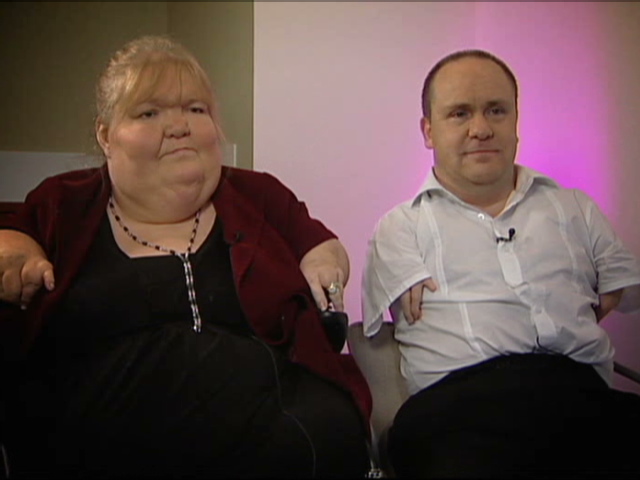
Ethics chess is the process by which one considers the likely chain of events that follow from an act, and tries to predict the ethical dilemmas that may result before they occur. Debbie Stevens and Jackie Brucia didn’t play ethics chess. This is what happened to them.

When  Stevens was exploring the possibility of returning to the Atlantic Automotive Group, where she had worked previously, she met with Brucia, her former and potential boss, and somehow got on the topic of Brucia’s health problems. She needed a kidney transplant, and had found a donor, though it was not yet certain that the kidney would be hers. Stevens said that she might be willing to contribute her own kidney if that donor didn’t work out.

Later, Stevens was hired by Brucia,and two months later, in January of 2011,  Brucia called Stevens into her office and told her that she had lost her organ donor. “Were you serious when you said you would be willing to give me one of yours?’ Brucia asked.  “Sure, yeah,” Stevens says now. “She was my boss, I respected her. It’s just who I am. I didn’t want her to die.’’ It wasn’t exactly a direct donation, but Stevens donated her kidney to a stranger who matched up well with it so Brucia could be advanced on the list and get a better matched kidney from another source. Nonetheless, Brucia got a healthy kidney because Steven’s gave up one of her own. Continue reading

Ethics Hero: Ashley Judd

Actress Ashley Judd (Full Disclosure: I am a long-time fan) finally has had it with snarky and degrading public speculation about her face, her weight, her appearance, and whether the star of TV’s “Missing” has “had work done,” and properly slams the celebrity media and those journalists who either write about her like she’s a competitor in a dog show or question her conduct and character based on their assessment of what she “should” look like.  Her verdict: it’s misogyny. The acting member of the Judd family has written a passionate, perceptive, articulate (if you forgive occasional lapses into feminist jargon, like objectification otheration, and (yuck)  heteronormative) and courageous essay over at the Daily Beast. If you have a daughter, have her read it. If you have a son, have him read it too. Heck, everybody should read it….here.

I wonder if the Daily Beast editors read it.  Here is Ashley Judd, eloquently pleading that women should be assessed base on how they do their job rather than on their perceived sex appeal, and where does the website post it?

On the page called “The Sexy Beast.”

You have a lot of work to do, Ashley, but you’re fighting the right fight.

Brava.

The Pink Slime Debacle: Is Anyone To Blame?

YUM!!!!

The maker of so-called “pink slime” filed for bankruptcy last week as the direct result of a public furor and public relations disaster related to “finely textured beef.” As a result, upwards of 650 people are losing their jobs, perhaps many more. Ground beef and other beef-based food will be more expensive, and quite possibly less healthy. Who, if anyone, is at fault?

The “pink slime” controversy was launched by cable TV chef Jamie Oliver, a healthy eating advocate who urged his viewers to reject ground beef that included the commonly-used filler. It is all meat, you know. In fact, it is virtually fat-free beef that begins as slaughterhouse trimmings, is then heated and spun in a centrifuge to separate tiny particles of meat from fat, and subjected to a puff of ammonium hydroxide gas to kill bacteria. Then it was mixed with ground beef. The process sounded unappetizing, and the nickname, coined in an e-mail by a USDA official, made it seem especially disgusting. The internet and social media got a hold of it, and the next thing you know, there were petitions and outrage. And the net result…jobs lost, beef made more expensive, no improvement in taste or health…a complete loss.

Good job everybody!

And almost everybody’s to blame too.

In rough order of culpability:

  1. The meat industry, for using unnatural, treated meat as filler and hiding it with the deceitful label “100% beef.” Consumers should have known what was being added and how it was produced, and it should have been on the labels.
  2. The clever USDA official. His cute name was a food slur, and in these days of viral tweets, YouTube videos and emails, coming up with a disgusting name for a safe food was reckless and irresponsible.
  3. The news media and websites, for not adequately defusing the controversy by explaining exactly what the substance was, indulging the anti-meat agenda of certain writers and reporters.
  4. Consumers, for being naive, emotional, irrational, and too easily stampeded. Most processed food can be made to seem disgusting,  especially anything to do with meat. So is a lot of food preparation. The public won’t take the time to distinguish between genuinely unhealthy foods and those that just involve processing that isn’t suitable for the squeamish, so they go overboard on the random targets of attention-seeking, half-cocked activists, and often the government and regulators follow the hysteria. This is the tragedy of DDT; this is Alar; this is cyclamates. Industries are destroyed that don’t deserve to be; lives are ruined, and the public health isn’t improved.

Was Jaime Oliver’s conduct wrong? I don’t think so. He’s a natural foods advocate; he has philosophical objections to processed food, and he  performed a public service by letting the public know something about its food that it should have been told about sooner. The story of “pink slime” could and should have been explained truthfully by someone who approved of it; it’s not Oliver’s fault that the job fell to an opponent.

Ethics Quote of the Week: Prof. Paul Horwitz

“I can think of a number of posts about the ACA from legal scholars last week that were clearly and openly offered as advocacy and did a fine job of it. And I can think of others that were clearly not offered as advocacy at all, and said useful and interesting things about the oral arguments…But I do believe that some posts last week traded on the authority of their authors, made overconfident or disingenuous claims about the state of current law and the strength or weakness of opposing arguments, and did so for strategic reasons. I see those reasons as more inculpatory than exculpatory. I don’t see the minimal requirements for scholarly integrity that I offered as changing because of the medium, or because of the importance and currency of the case.”

Hey, Professor! We assume you're smarter than we are: don't play games with our trust!

—-University of Alabama Law Professor Paul Horwitz, writing about the confounding number of liberal law professors and scholars who wrote internet posts professing that the constitutionality of Obamacare’s individual mandate was obvious and undeniable, and that the provision’s Supreme Court approval was assured. As Ethics Alarms did regarding other commentators, Prof. Horwitz suggests that some of the commentary was designed as spin, or to use his term, to “shape the narrative.” He argues that in cases where the scholar was deliberately over-stating the case for constitutionality, this constituted a breach of integrity and honesty. Hie professor-speak for this is “inculpatory.” He means that it was unethical.

Which, of course, it was. Continue reading

Ethics Quote of the Day: The Editorial Board of the Washington Post

“Sadly, even before the sessions on health-care reform had ended, some liberals were preemptively trying to delegitimize a potential defeat at the court. If the justices strike down the individual mandate to purchase health insurance, they said, they will prove themselves partisan, activist and, essentially, intellectually corrupt. We share in the disappointment that the justices on both sides of their ideological divide are, for the most part, so predictable. That’s not, in the ideal world, how judging is supposed to work. But we also think there’s a kind of cynicism, or at least intellectual laziness, in asserting that this is an easy or obvious call — that no justice could possibly strike down the mandate out of honest, reasoned conviction.”

The Editors of the Washington Post in this morning’s superb, balanced and fair editorial entitled “Civics Lesson From

the Supreme Court.”  The Post leaves no question that it supports the individual mandate as necessary—at least now, after the fact of

"Biased political hacks!! The ones who disagree with us, that is..."

Obamacare’s passage into law—because “no American should go without health care, and that society as a whole should be willing to pitch in toward that end.”  But the editors also properly chastise the cynical and cowardly political calculations by the bill’s supporters that placed the constitutionally-dubious mandate in the position to jeopardize the whole law, as well as criticize the unethical phenomenon that Ethics Alarms discussed here-–the preemptive effort by Democrats and their pundit allies to blame the rejection of Obamacare, if it occurs, on “judicial activism” and political bias by the conservative justices. Continue reading

Obamacare Defenders, Spinning

Are you hypnotized yet?

It would be nice, it really would, if partisans on both sides of a legitimate, close issue of national importance would admit that there are valid arguments on each side, show some mutual respect, and not frame their arguments as if anyone who thinks differently is deluded, stupid or evil.

Thus it has been elevating, if, I suppose, misleading, to read over a year’s worth of debate on the topic now under consideration by the Supreme Court, Obamacare’s so-called individual mandate, over on the scholar and lawyer- glutted blog, the Volokh Conspiracy. Written by distinguished and articulate academics, it is a right-leaning and libertarian site for sure, yet manages to cover all sides of most of the issues it considers thoroughly and fairly. Nobody could read the detailed, case and precedent-filled essays about the individual mandate and think for a moment that its constitutionality is an open and shut case. It’s obviously a very close question, and one that involves far wider implications than merely one health care law. This is one of the periodic landmark constitutional cases in which the Supreme Court is being asked to approve another key adjustment in the meaning of our remarkably flexible but hard to amend national by-laws, or, in the alternative, put up a red flag and a brick wall that reminds our government that there are some things is cannot do, even if it would dearly like to.

If you care about the case being argued in the Supreme Court as I write this, go read some—it would take you a month to read it all—of the discussions on this topic over at Volokh. If you can understand the sometimes technical and overly-dense writing, you will recognize how difficult a legal issue this is. If you can’t understand it, then stop rendering opinions about the case, the mandate, and the inevitability of its approval or rejection. Journalists and pundits should follow the same advice. Continue reading

Our Untrusted Professions: Another One Bites The Dust…Or Should.

Come to think of it, Mr. Gower would have put poison in a boy's medicine if it hadn't been for George Bailey...

America’s trust crisis, which has seen virtually all its institutions decline precipitously in public trust, hasn’t left the professions unscathed. Far from it: Gallups’ annual poll of the public’s regard for the professions, the most recent of which was released last December, showed accountants trusted by only 43% of the public (abysmal for a profession whose only mission is to accurately determine the truth and to relay it—funeral directors are trusted more), journalists at just 26% (which is more than they deserve), bankers at 25%, lawyers at an insulting 19% (for a profession that includes honesty as a core ethical requirement), business executives slightly less at 18% (but no lower than those champions of the 99%, labor leaders, also at 18%). Stockbrokers, who figure to have fallen even lower after Greg Smith’s anti-Goldman Sachs diatribe, came in at a “can’t be trusted to deliver the water bill payment” 12%, and then we’re really in the pits of utter distrust, with lobbyists, used car salesmen, and members of Congress, all tied for last place at 7%.

In contrast, one of the professions that always is on top of the list or near it is pharmacists. In 2011, the friendly neighborhood druggist scored a trust rate of 73%, better than doctors and second only to the perennial champs of the last decade, nurses.

Well, all that trust in pharmacists appears to be misplaced. Continue reading

A Question For President Obama and His Campaign: Why Lie?

I have an iron-clad rule for all Presidents, regardless of party, ideology and political philosophy: Don’t use deception as a tool of governance. I have a related rule for Presidents who get elected by pledging honesty and transparency in government: Especially you!

The President’s health care law, a.k.a. “Obamacare,” whatever its merits, was probably the most dishonestly sold, packaged and passed major law in U.S. history (if someone has another candidate, please submit it.) Not all of the dishonesty was due to President Obama’s personal efforts–he didn’t tell its House and Senate not to bother to read the various versions of the bill, for example, or submit to the CBO patently manipulated assumptions to ensure its projection of a net budget surplus from the law immediately prior to its passage, assumptions that were substantially revised later. He is the one who pledged over and over again that if you liked your current coverage, nothing the law did would stop you from keeping it, a promise that seemed dubious at the time and that has in fact proven to be either mistaken or deliberately misleading.

Still…the law was passed. Utilitarian justifications and rationalizations for various tactics and maneuvers to get it passed are unnecessary now. So why does the President and his campaign team feel that they have to skirt the truth in their public relations and re-election efforts?

The Tom Hanks-narrated Obama campaign film “The Road We’ve Traveled” has already been charged with truth fouls by objective analysts on many points, including Obamacare. In the assessment of FactCheck.org, the best and most objective of the various political fact-checking websites, the film dissembles regarding, among other things... Continue reading

“Goody Goody” to the Least Sympathetic Betrayal Victim of the Year, Former Senator Arlen Specter

First, this musical introduction, courtesy of the brilliant and tragic Frankie Lymon:

Ironically, over the weekend I wrote, in a reply to a comment, about how badly I felt when I finally met Arlen Specter and he was very complimentary to me, after I had described his 2009 defection from the Republican Party in very uncomplimentary terms. Now comes the news that the former Pennsylvania Senator’s new book includes a lament that neither President Obama, Senate Majority Leader Harry Reid nor other key Democrats delivered on the promises that caused him to betray his party and those who had voted for him.

Arlen, Arlen, Arlen. Continue reading