“Grow Your Own Marrow Donor” Ethics and Consequentialism: The Ayala Family Saga

Anissa Ayala and her custom-made bone marrow donor

Once again, the fans of that ethically corrosive twin of  “the ends justifies the means,” consequentialism, were holding court in the mass media, as the “Today Show” revisited a two-decade old ethical outrage to declare that it was all perfectly fine after all…because it worked.

Thus does television, itself dominated by ethically-dim writers, producers and stars, corrupt the public. So here we go again:

Does the fact (if it indeed is a fact) that Osama bin Laden capture and execution was facilitated by torture make torture less ethically wrong?

No.

Do the fortuitous results of any action that was unethical from its inception change the nature of that conduct from unethical to ethical.

Again, no.

Is conceiving a child solely to provide donor bone marrow to her cancer-stricken older sister ethically acceptable as long as the sister’s cancer is cured?

Absolutely not!  But to listen to the “Today Show,” and revoltingly, the “Today Show’s” resident medical correspondent Dr. Nancy Snyderman, it is not only ethically acceptable but laudable. Because it worked.

Twenty years ago, Abe and Mary Ayala were desperate because Anissa, their 16-year-old daughter, had been diagnosed with leukemia. Chemotheraphy proved ineffective, and neither the Ayalas nor their son was a compatible bone marrow donor. The Ayalas had long before decided that two children were enough; Abe had a vasectomy. But then Mary came up with the idea of having another child in the hopes that it would be a bone marrow donor who could save Anissa’s life. Continue reading →
Ethics Malpractice from “Dear Margo”: The Tale of Witchy, Tubby and Sue

"Well sure---his inner qualities are much more important to me now that he's so hot!"

I read a lot of advice columns, which often involve ethical issues and very often expose the ethical incompetence of the supposed experts who write them. Some advice columnists are ethically spot-on with regularity, like The Washington Post’s Carolyn Hax. Some, like the past and present”Ethicists” of the New York Times, are off-base almost as often as they are on. Then there are the advice mavins like “Margo,” in the Boston Globe. I don’t know how such people get to be advice columnists, but I suspect it either involves picking names out of a hat or the exchange of sexual favors. [Full disclosure: I give out personal ethics advice myself over at AllExperts.com, when a legitimate questioner can find me—ethics isn’t listed as one of the site’s topics—and when the question isn’t a thinly veiled homework question, which it usually is.]

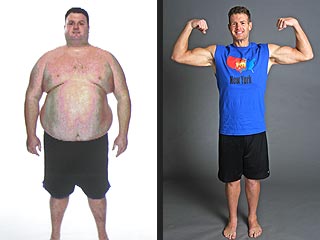
As an example of ethics malpractice, consider this question posed to Margo. “Sue” wrote that she had broken up with her ex-boyfriend over arguments about his weight and eating habits, which “grossed her out.” Eight months later, he’s fit and fabulous, and has a new girlfriend.  “I really would like him back because he’s hot and slim,” Sue writes, plaintively. “How can I step on his witchy new girlfriend so I can get him back?” Continue reading →

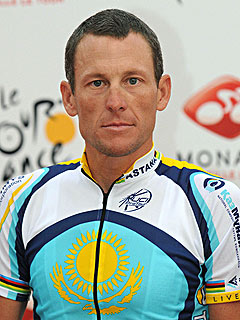
No Excuses and No Mercy For Lance Armstrong

Sorry, Lance…good guys don’t cheat.

Back when Barry Bonds was still playing baseball, a sportswriter mused about why it was that everyone assumed  Bonds was a performance-enhancing drug cheater despite his protestations to the contrary, while most Americans and sports journalists brushed away similar allegations regarding Lance Armstrong. Both competed in sports with acknowledged steroid abuse problems; indeed, the problem in bicycle racing was presumed to be more pervasive than in baseball. (A few years later, with the banning of multiple Tour winners, the presumption became a certainty.) Both athletes had improbable late career improvements in their performance to reach previously unimaginable dominance in their respective sports. Both had to explain or deflect multiple credible accusations of cheating and circumstantial evidence that suggested that they were doping. Both claimed they had never failed drug tests, and there were good reasons to doubt the denials.

So why was Bonds a villain by consensus and Lance an untouchable hero? The sportswriter explored many theories (Apologies: I cannot locate the article. If someone can, please send it), among them the greater popularity of baseball over cycling, Bond’s startling physical transformation into a behemoth while Armstrong remained cyclist-sinewy,  Armstrong’s inspiring story as a cancer survivor, Armstrong’s philanthropic work,and the fact that Bonds, unlike Armstrong, was black. The biggest difference, however, and to the writer the key one, was that Armstrong acted the role of a hero, while Bonds refused to. Armstrong was friendly and accommodating, while Bonds was angry, intimidating and antagonistic. Armstrong seemed like someone who played by the rules, and who lived his ethical values. Bonds seemed like a rebel, one who wouldn’t hesitate to break the rules for his own benefit. In short, the public wanted Armstrong to be the hero he seemed to be, so they ignored the evidence linking him to performance-enhancing drugs.

After last Sunday, the disparate public perception of Bonds and Armstrong, always illogical, became unsustainable. Continue reading →

Unethical Quote of the Month: Tim Gannon

The choice came down to Greg Anderson or Jack the Ripper...

“Some parents have a problem with him being a coach, but it’s not like he was caught stealing or did some bad things with children.”

— Tim Gannon, a real estate broker and father, explaining why he has no problems with Barry Bonds’ steroid-pushing trainer, Greg Anderson, serving as an assistant coach for his son’s Capitol Electric team in the Burlingame Youth Baseball Association, according to an article in Sunday’s New York Times.

It’s seldom that one sees in print a more perfect example of my least favorite rationalization for unethical conduct, “It’s not the worst thing.” This popular and despicable rationalization seeks to excuse bad conduct by comparing it to worse conduct, an intellectually dishonest device that can be used to try to minimize the seriousness of literally any behavior, no matter how heinous. (“Sure, Jack the Ripper did some bad things, but he was no Hitler!” ) It is the ethics embodiment of the dishonest rhetorical technique of the false choice. Continue reading →

“ARRGHHHHHHHHH!!!!” Is This Wrong?

"I'd be so very appreciative if you resolved not to contact me again!"

Some years ago, a person in my household who shall not be named made the mistake of buying some drugs off the internet. Now, with ever-increasing frequency, we receive calls from illicit on-line pharmacies. all hours of the day, sometimes one after the other. Telling them not to call doesn’t work; telling them we are going to report them doesn’t work. I have warned the callers of dire consequences to future callers, and now have to find some actual consequences to inflict.

My new practice, when they reveal who they are and their purpose, is to  give a blood-curdling, high-pitched scream directly into the phone, as loud as I can make it. I am certain this is startling (I have a great scream), and I hope it is painful. I would not be sorry to learn that it bursts an eardrum or seven.  Plan B…an airhorn.

Is this unethical?

Ethics Hero: Jerry Lewis

Great comedians are usually, as Sid Caesar once memorably told Larry King, “miserable sons of bitches,” and few fit that description better than Jerry Lewis. As a result, he also stands as a classic example of how not-so-nice people can still do wonderful, heroic deeds. In Lewis’s case, the deed is the  Jerry Lewis Muscular Dystrophy Association Telethon. Lewis has announced that because of his failing health and advanced age (he is 86), the 2011 version will be his final telethon, and the show itself is being drastically scaled back from over 20 hours in its heyday to about 6 hours. The decline of his Labor Day telethon tradition is as good a time as ever to give Lewis—arrogant, loutish, egomaniacal, tough old bastard that he is—his due. Jerry Lewis is an Ethics Hero. There’s just no way getting around it.

For decades I thought that Jerry Lewis’s involvement with MDA was a stunt cooked up by his publicist during his decline in popularity, to ensure that he would have public visibility after studios stopped offering him movie roles. That was wrong: Lewis started doing telethons for muscular dystrophy in 1952, when his stardom was just blooming and he was still teamed with Dean Martin. his fundraising for medical research began as a series of local broadcasts and went national in 1966. By then Lewis’s career was indeed on the wane (his last hit movie had been “The Nutty Professor” in 1963), but the telethon had already been a constant in his life for 14 years. Jerry wasn’t doing it for himself. He really was doing it for “the kids.” Continue reading →

The Giordano Decision, Sympathy and Malfunctioning Ethics Alarms

Sympathy and empathy are wonderful and admirable qualities, but they can mess up ethics alarms but good, causing them to ring out with gusto when perhaps they shouldn’t be set off at all.

This, I’m sorry to say, is what seems to be going on with the public and the media in the wake of a North Carolina judge denying Alaina Giordano primary custody of her two children,  in part because Giordano has Stage IV breast cancer, and in part because she is unemployed. Giordano is upset and nobody can blame her for that. She has also started a website exhorting readers to “Say NO! to CANCER discrimination!” There is a Facebook page (of course) rallying support for her, and it already has over 14,000 fans. An online petition to the governor called “Do Not Allow NC Judge To Take Alaina Giordano’s Children Just Because She Has Cancer ” has more than 75,000 signers.

Yet there is nothing inherently unethical, illogical or unfair about family law Judge Nancy E. Gordon awarding custody of 11-year-old Sofia and 5-year-old Bud to their father, who lives and works in Chicago, rather than to their mother, who lives in Durham, and has breast cancer that is most likely terminal. Continue reading →

The Unfair and Dishonest Regulation…of Interior Decorators?

Deadly in the hands of an amateur

I stumbled on this as my wife and I investigated the possibility of her setting up a business as an interior design consultant. 22 States and the District of  Columbia require a license to be an interior decorator, which technically means, as Reason so pointedly puts it, that moving a throw pillow could theoretically get you jailed or fined.

How can this be? All professional licensing creates a bar to membership, making such licenses targets of Libertarians and other critics. But at least most professions requiring a license have a plausible argument for the certification based on health and the protection of the public welfare. Lawyers, doctors, dentists, builders, electricians…that makes sense. Real estate brokers, teachers, personal trainers…er, okay, I guess so. But interior decorators? Isn’t this just an example of nakedly restricting competition, and using the sordid process of buying state legislators to do it? What other justification could there be? Continue reading →

Ethics Quote of the Week: Washington Post Columnist Michael Gerson

“In determining who is a “major” candidate for president, let’s begin here. Those who support the legalization of heroin while mocking addicts are marginal. It is difficult to be a first-tier candidate while holding second-rate values.”

—-Washington Post columnist and former Bush advisor Michael Gerson, pronouncing presidential candidate Rep. Ron Paul’s Libertarian endorsement of drug legalization ethically unacceptable.

Gerson’s deconstruction of the all-too-common and increasingly ominous calls for legalizing addictive drugs nicely captures the trio of ethical flaws of the advocacy: it denies the crucial and legitimate government role defining responsible conduct for society, it embraces the myth that recreational drug use “does no harm,” and it is arrogant and selfish, condemning the poor and reckless to problems that their fragile resources cope with, in order to bestow a dubious “freedom” that the drug advocates do not need. Continue reading →

NBC Tries a Hit on Trump, and Exposes Its Own Incompetence

“Trump Fumbles Abortion Question” trumpeted “The Daily Beast” under the label “Confused”. It caused my heart to leap: could The Donald have stuck his foot in his mouth with an obnoxious-presidential-campaign-flirtation-destroying gaffe so soon?  Callooh! Callay!

I rushed to the link, which was on the NBC News site, only to have my hopes dashed. Trump hadn’t made a gaffe at all. Some biased, ignorant NBC reporter, who has decided that it is her life’s assignment to show the American public just who is and who isn’t qualified to run for President of the United States, tried a deceitful and unfair trick question on Trump, who promptly identified it as such. Then, completely mistaken about her assumption that his answer was disqualifying at all, she smugly sat back while her colleagues in the media attempt to present the exchange as a “gotcha.” In  other words, Trump is going to get the Sarah Palin treatment, and this was the first, jaw-droppingly stupid attempt at it. Phooey! It’s bad enough that I keep having to stand up for Palin; now I have to stand up for—ughhh!–-Donald Trump!

Here is part of NBC’s Vaughn Ververs’ account of the exchange between NBC’s Savannah Guthrie and Trump: Continue reading →