Comment of the Day: “Scent Branding, Mind-Control, and Ethics”

Elizabeth was the first one to dive into this murky, interesting, science fiction/ “Brave New World” issue that I examined in  “Scent Branding, Mind-Control, and Ethics,” on a topic that confused me more the longer I considered it. What resulted was unusually long, perhaps accounting for the lack of comments, and Elizabeth’s reaction is long as well, but worth reading. There is something potentially sinister here, or perhaps around the corner—or just in our imagination and fears. Scent manipulation, and all it implies, is in the wilderness of ethics, where human nature, science and commerce meet.

Here is the “Comment of the Day”:

“I agree this is a complicated issue.  As you said, restaurant smells (natural, I assume) tend to make people hungry (or more hungry than they really are), as do waiters with large platters of beautiful food which often encourage patrons order more, different, and perhaps more expensive food than what they may have had in mind.  The goal of the restaurant is to sell food:  if memory serves, it’s only been in the last 20 years or so that restaurants had at least parts of their kitchens open to the dining area so “good smells” could waft out from them.  My memory from childhood of elegant restaurants were the multiple green baize doors that completely closed the kitchen off from the dining room.  So was this change intentional or simply simpler and cheaper as restaurant designs?  I don’t know, but it’s different. Continue reading →

Scent Branding, Mind-Control, and Ethics

Agreed: this is scary. We're not there yet. We don't even know if "there" exists.

A recent article on the web that purported to explore the ethics of “scent branding” was fascinating for two reasons.

First, “scent branding” is a term I had never encountered before, for a practice that I had not focused on. About five seconds of thought, however, made me realize that indeed I was aware of the phenomenon, and had been for quite a while. “Scent branding”—using fragrances in a commercial environment to create a desired atmosphere and to prompt positive feelings, recollections and emotions from patrons—has been around a long, long time, though not under that label. When funeral parlors made sure that their premises smelled of flowers rather than formaldehyde, that was a form of scent branding. Progress in the science of scent allowed other businesses to get into the act: I was first conscious of the intentional use of smell when I spent a vacation at the Walt Disney World Polynesian Villages Resort. The lobby and the rooms had a powerful “tropical paradise” scent, a mixture of beach smells, torches and exotic fauna. It was obviously fake, like much in Disney World; also like much in Disney World, I found it effective, pleasant, and fun. I certainly didn’t think of it as unethical. I was normal in those days, however.

Well, more normal.

The second aspect of the article, entitled “Is it Ethical to Scent Brand Public Places?”, that caught my attention was that it had an obvious agenda. The piece was opposed to scent branding, and set out to find the practice unethical in order to justify condemning it. Continue reading →

Ethics Quote of the Week: Washigton Post Reader Elizabeth Grover

“Sun wrote: ‘Most doctors will not perform abortions beyond 22 or 24 weeks for various reasons, including legal concerns, social stigma, inadequate training or inexperience.’ She left out perhaps the biggest reason: Most doctors believe that late-term abortions are morally wrong.”

—-Elizabeth Grover of Washington, D.C., in a letter published in the Washington Post “Free for All” section. Reader Grover was commenting on a glowing Post profile of Maryland physician Dr. LeRoy Carhart by feature writer Lena Sun, extolling his willingness, indeed eagerness, to perform late term abortions, which are illegal in several states. Dr. LeRoy dismissed state restrictions on abortions of any kind as “ridiculous.”

Grover was absolutely correct to flag the bias and misrepresentation in Sun’s article. Continue reading →

Religious Tolerance Ethics: Pro

Yes, India, worshipping this silly thing means you are all mad as hatters. Now come to a rational church, and chow down with us on some body and blood of Christ. Hey...what's so funny?

In  State v. Daley, the Ohio Court of Appeals reversed a trial court’s mental incompetence verdict and order of treatment for the defendant  because it appeared to be based solely on the defendant’s passionate religious beliefs.

Daley was charged in March 2010 with retaliation, intimidation, aggravated menacing, menacing, and telecommunications harassment. The trial court referred Daley to the court’s psychiatric clinic for a competency evaluation, and the evaluating psychiatrist opined that Daley was not competent to stand trial because he was not able to assist in his defense.

At the competency hearing, Daley testified that, to the contrary, he was able to continue assisting his attorney in his defense. He also testified that his opinions about the legal system, such as his description of divorce court as the “high court of Satan,” were based on his religious belief that divorce is against the word of God. Nevertheless, the trial court found Daley incompetent to stand trial and ordered him hospitalized for restoration to competency. It based its opinion on the diagnosis of the psychiatrist, who testified that Daley, a “radical Christian,” “expresses such extreme intensity of religious belief in very unorthodox religious beliefs to the point to constitute psychosis.” The psychiatrist further testified that treating Daley would “change his psychotic symptoms of which are a religious theme[,]” so that his “intensity and [ ] preoccupation with his religious beliefs will be greatly decreased.” Continue reading →

James O’Keefe—Still Faking, Still Recording, Still Unethical

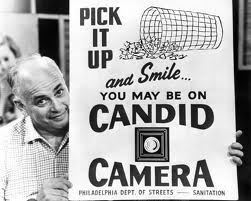
This is all your fault, Allen Funt!

The latest James O’Keefe Candid Camera stunt is supposed to show corruption in the Medicaid system. As in his earlier video hit-jobs on ACORN and NPR, O’Keefe’s colorful crew of community theater rejects pose as outrageous and unsavory stereotypes—this time, drug-smuggling Russians with the worst accents since “Rocky and Bullwinkle,” who are pimping out their “sisters” for sex. The O’Keefe Players manage to find a jolly, badly-trained, none-too-swift Ohio Medicaid worker who giggles away their confessions of wanting to defraud Medicaid and dealing illegal drugs. The video of the dumb encounter—dumb charade, dumber government employee—has been posted on YouTube. More of the same, presumably, is on the way.

If you’re as bored with this as I am, please tell O’Keefe to stop. Of course his act is as unethical as his “Russians'” accents are embarrassing: Continue reading →

Ethics Hero: Jim Brown

Wne Jim Brown talks, people tend to listen.

I have mixed feelings about Jim Brown, the legendary N.F.L. running back and former movie star (“The Dirty Dozen”), stemming from the fact that loving a woman and beating her up never seemed to be mutually exclusive actions to him. His domestic problems aside, however, Brown has also periodically used his fame and status to draw needed attention to important issues, and he has just done so again, calling out the N.F.L. players’ union for apparently failing to make the welfare of retired players part of their impending deal with the league’s owners.

“Why isn’t the union talking about health care, better health care?” Brown recently told reporters. “Why aren’t they talking about better pensions? You definitely need a health plan that goes beyond five years; you definitely need a better pension plan.” Continue reading →

Eight Glasses of Water and the Climate Change Bullies

Never mind.

A surprising new report announces that the well-established health standard that we should all drink at least eight glasses a day is a myth, with no data to support it.  Moreover, the report says, drinking so much water may actually be harmful.  Meanwhile, widespread acceptance of water and hydration as a health benefit has led directly to the explosion in the use of bottled water, wasting money and creating an environmental crisis with so many discarded plastic containers.

I would hope that such news, and we get these kind of sudden “never mind!” stories with fair regularity, might convince some of the more insulting critics of global warming skeptics to temper their contempt.
The ideologues and conspiracy theorists who refuse to accept that the world is warming—though nobody really knows how much or how long—and that the effect is likely caused by mankind—though nobody can say with certainty that mankind can reverse or stop it—are rightly derided, up to a point. But those who question the astonishing certainty with which some climate change scientists, Al Gore, and a passel of pundits, columnists and bloggers who barely passed high school chemistry claim to know what the effects of global warming will be, even though doing so requires extensive estimates, extrapolations and assumptions, are being no more than prudent, considering how frequently far simpler scientific conclusions have proven to be flawed, exaggerated, or as may be in the case of  the eight glasses of water, just plain wrong. Prudence is especially appropriate when speculative science transmuted into doctrine calls for huge expenditures of scarce resources and the re-ordering of national priorities, effecting nations, commerce, businesses and lives. Continue reading →

Explain to Me Why We Tolerate Illegal Immigration, Again?

Yes, I'm in a rotten mood today! Wanna make something out of it??

My cranky Saturday continues with an issue that I increasingly find bewildering: the tolerance, denial, and enabling by so many Americans of illegal immigration, although its unethical character cannot be denied or argued away. I know why Democrats support it—pure electoral cynicism—and I know why the business community encourages it—greed. What I don’t comprehend is why anyone else with a modicum of logic, fairness, and common sense isn’t confronting both of these self-serving institutions and demanding real enforcement of anti-illegal immigration measures. Instead, we get outrageous legislation like the Maryland Dream Act, which institutionalizes incentives for aliens to defy our laws. Continue reading →

The Despicable Nadya Suleman and Ethics Estoppel

Nadya Suleman, a.k.a. Octomom, strikes a dignified pose

From the beginning, the only thing keeping Nadya Suleman from being unequivocally despicable has been the lingering suspicion that she was mentally ill. It might be more than a suspicion, to be fair: having octuplets by artificial insemination when one already has six young children and no viable means of support could be called “proof.”  Now even that malady is an insufficient defense: the issue is settled, and she is despicable beyond redemption. One cannot call her the worst mother on the world, sadly, because every day brings the story of another infant thrown down a laundry chute or left in the care of a six-year-old while mom goes partying or looking for drugs. She may be, however, the worst mother ever to become famous for being a mother.

In the latest issue of InTouch magazine—the rag is one full step down from Us magazine, and one half-step up from The National Enquirer—Suleman confesses that she now reviles her octo-brood. “I hate the babies, they disgust me,’ she says. “My older six are animals, getting more and more out of control, because I have no time to properly discipline them.” Elsewhere in the article she bellyaches about how hard it is being a single, unemployed, narcissistic, absurd, irresponsible mother of fourteen children. “The only way I can cope is to lock myself in the bathroom and cry. Sometimes I sit there for hours and even eat my lunch sitting on the toilet floor. Anything to get peace and quiet,” she laments. Yes, Octomom says she regrets having all the children. Continue reading →

An O. Henry Story Comes To Life

James Verone, a.k.a. " the Rosa Parks of health care," a.k.a. "Soapy"

The media thoroughly disgraced itself by hyping the stupid story of James Verone, an out-of-work 59-year-old man with health problems who robbed a bank in Gastonia, N.C., for $1,  and then  waited patiently for the cops to arrest him.“When you receive this a bank robbery will have been committed by me. This robbery is being committed by me for one dollar. I am of sound mind but not so much sound body,”read the note that Verone handed the bank clerk.

Verone grabbed his 15 minutes of fame with gusto, telling the local TV station that he became a thief out of sheer desperation. He needed health care, he said, and had no other way to get it than through the free care provided in jail. The problem with this is that he had plenty of better options than turning to intentionally unsuccessful crime. A hospital in Gastonia, Gaston Memorial Hospital, offers discounts up to 100% to low-income patients. There is also a free health clinic five miles from the bank Verone robbed, and more in nearby Charlotte. Or Verone could have received treatment from of the state-of-the-art medical facilities at the University of North Carolina, whose mandate is to provide “medically necessary health care to the citizens of North Carolina, regardless of their ability to pay.”

Naturally, few of the media reports, calculated to use this idiot’s stunt to shill for government-financed health care, bothered to report any of this. Continue reading →