Day’s End Ethics,9/3/2020: Three Terrible People, And The NFL

This is really getting up late; I spent all day writing legal ethics song parodies, including a new version of the “American Pie” parody I posted earlier. I was going to discuss the answers to that one, but I am so sick of “American Pie” right now I could spit.

Did you know that there was different end of the last verse? It comes in after “And the man there said the music wouldn’t play.” It went,

And there I stood alone and afraid
I dropped to my knees and there I prayed
And I promised him everything I could give
If only he would make the music live
And he promised it would live once more
But this time one would equal four
And in five years four had come to mourn
And the music was reborn…

The Day the Music Died.

1 . Here’s someone to add to your venal scum list: Stephanie Winston Wolkoff, who has a “tell-all” book coming out exploiting her time as a trusted friend of Melania Trump. All of these wretched people—Omarosa, John Bolton, Mary Trump, “Anonymous,” the rest of them—are the same. They betray trust for money, like Judas, or Robert Hansson. By any ethical standard, such books should be written, if at all, after the individuals who trusted the authors are dead or at least out of the public eye. That rule is the same whether the scum is cashing in on being trusted by Bill Clinton, Barack Obama or Donald Trump.

And yes, those who reward such low-lifes by buying their books are endorsing, rewarding and encouraging unethical conduct.

2. Wait, why isn’t this guy “cancelled?” From the Times:

The rapper and internet troll 6ix9ine, one of the most polarizing figures in popular culture today, is by turns grating, defiant, relentless, hostile and savvy, a self-proclaimed car crash, a rat and an admitted domestic abuser. At 24, he is also inarguably compelling to many, having landed two Top 5 hits — including “Trollz” with Nicki Minaj, his first No. 1 — and racked up more than one billion new YouTube views in less than four months, since his early release from federal prison this spring.

… In February of last year, he pleaded guilty to firearms and racketeering charges stemming from his role in the Nine Trey Gangsta Bloods, a violent, drug-trafficking Brooklyn gang, and agreed to cooperate with prosecutors, delivering what the judge in the case called “game-changing” testimony against his former associates… he was sentenced to two years, including the 13 months he’d already served — but it also put his life and rap career in jeopardy…

6ix9ine, a rainbow-haired, suggestively tattooed attention addict, was already controversial — an endless source of Instagram beefs that often devolved into real-world violence, and a convicted sex criminal, having pleaded guilty as a teenager to the use of a child in a sexual performance. Then he repeatedly doubled down on his villain status. His new album is called “TattleTales,” out Friday via the independent distributor Create Music Group,

3. I have an impolitic question to ask after you’ve digested this… Continue reading

“Fertility Equality”

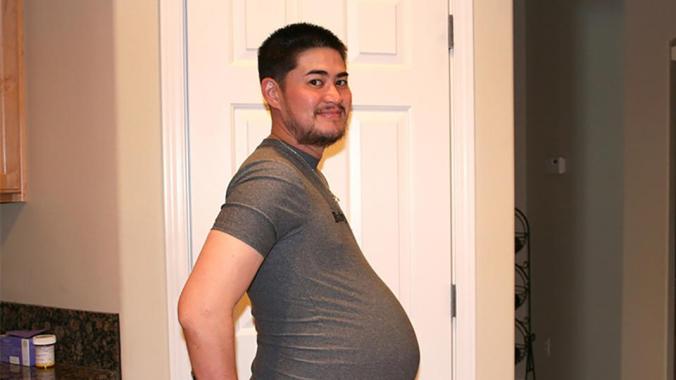
This ethics topic has been lying around on my office floor—literally—for more than a month now. I have not known what to do with it. The New York Times—it is for occasional articles like this that I subscribe to that habitually unethical paper—published an article in July headlined (in the print version) “The Right To A Baby?” It appeared in its “Thursday Styles” section, which specializes in elite trivia (the other piece on that section’s front page was about tattoo artist and dog groomers who make house calls).

Here is the first part of the article:

While plenty of New Yorkers have formed families by gestational surrogacy, they almost certainly worked with carriers living elsewhere. Because until early April, paying a surrogate to carry a pregnancy was illegal in New York state.

The change to the law, which happened quietly in the midst of the state’s effort to contain the coronavirus, capped a decade-long legislative battle and has laid the groundwork for a broader movement in pursuit of what some activists have termed “fertility equality.”

Still in its infancy, this movement envisions a future when the ability to create a family is no longer determined by one’s wealth, sexuality, gender or biology.

“This is about society extending equality to its final and logical conclusion,” said Ron Poole-Dayan, the founder and executive director of Men Having Babies, a New York nonprofit that helps gay men become fathers through surrogacy. “True equality doesn’t stop at marriage. It recognizes the barriers L.G.B.T.s face in forming families and proposes solutions to overcome these obstacles.”

The movement is led mostly by L.B.G.T.Q. people, but its potential to shift how fertility coverage is paid for could have an impact on straight couples who rely on surrogates too.

Mr. Poole-Dayan and others believe infertility should not be defined as a physical condition but a social one. They argue that people — gay, straight, single, married, male, female — are not infertile because their bodies refuse to cooperate with baby making.

Rather, their specific life circumstances, like being a man with a same-sex partner, have rendered them unable to conceive or carry a child to term without medical intervention. A category of “social infertility” would provide those biologically unable to form families with the legal and medical mechanisms to do so.

“We have this idea that infertility is about failing to become pregnant through intercourse, but this is a very hetero-centric viewpoint,” said Catherine Sakimura, the deputy director and family law director of the National Center for Lesbian Rights. “We must shift our thinking so that the need for assisted reproductive technologies is not a condition, but simply a fact.”

Fertility equality activists are asking, at a minimum, for insurance companies to cover reproductive procedures like sperm retrieval, egg donation and embryo creation for all prospective parents, including gay couples who use surrogates. Ideally, activists would also like to see insurance cover embryo transfers and surrogacy fees. This would include gay men who would transfer benefits directly to their surrogate….

Observations:

  • I see this as an excellent example of how a threshold decision in an ethical analysis of any new idea is whether bias and the automatic prejudice human beings tend to have against any new concept—basically the “Ick Factor”—is making a fair analysis impossible. It’s hard to do; our tendency with such ideas is to think, “That’s ridiculous!” and  stop there. But of course, that was the original majority reaction to many ideas that were revolutionary at one time but that represented the progress of ethics, which is evolutionary by nature and necessity. We always are learning that there are things we thought were right and “natural” that were, in fact, wrong, and that some concepts that society viewed as wrong for centuries were either neutral or benign.

That process is what ethics is. Continue reading

Monday Musical Ethics , 8/31/2020: A Number From Today’s Seminar!

Good afternoon!

We ran out of time and had to dash through our last number on today’s version of Ethics Rock (By the way, Mike Messer really looks like the logo, which was designed before we found him), so I’ll let the legal ethics whizzes here (and everyone else: non-layers often do better on these quizzes than lawyers do—take a shot at the questions…Are you ready? “NJSBA” means “New Jersey State Bar Association,” you stress the “J” to make it scan.

“The Day My Ethics Died”

[A ProEthics legal ethics parody to the melody of “American Pie” by Don McLean]

A long, long, time ago,
I can still remember
Legal practice used to make me smile
And I knew if I could get my shot
I’d win my cases, like as not,
And then I could drink Chivas for a while.

But ethics rulings made me nauseous
I’m no good when over-cautious.
Clients give a cruel look
When they see you check the rule book.

I can’t remember if I cried
When I finally knew my brain was fried…
I took the rules and looked inside,
The day my ethics died.

So, hey, hey, NJSBA
Your committee has no pity for us lawyers today;
When black and white start to fade into gray
We ask, “Do you really mean what you say?”
“Do you really mean what you say?”

Oh, I’m the king of slip and falls
My suits make safer lawns and halls
(At least my wallet tells me so.)

My client, Mick, is lame and sore
Since he hit his head on a banker’s floor
And his injury has left him kinda slow.

Now his father has me change his will
To take out Mick and give him nil;
I know its Dad’s estate—
But doing this to Mick I hate!

Then there’s the day when Mick pulls out his gun
And points to strangers in the sun
He says, “I’d like to shoot them, one by one!”

The day my ethics died.

And I am singing,

Hey, hey, NJSBA
Your committee has no pity for us lawyers today;
When black and white start to fade into gray
We ask, “Do you really mean what you say?”
“Do you really mean what you say?”

Crying, lying, everything I’m trying
But Mick is nuts, there’s no denying
I do what he says and we’re dead.

This guy hears commands from Outer Space
And that strange expression on his face
Tells me something has pulled loose inside his head.

He’s pushing theories that won’t fly
And making arguments that I
Would never use in court…
Perhaps I should abort!

Or instead, before his fate is sealed
A guardian can make him yield;
I should have found a better field
Before my ethics died.

So now I’m singing,

Hey, hey, Mister VSBA
Your committee has no pity for us lawyers today;
When black and white start to fade into gray
We ask, “Do you really mean what you say?”
“Do you really mean what you say?”

Then, surprise! Just as I’m feeling sick
A settlement is offered Mick…
A deal like this won’t come again…
So come on Mick, be prudent, don’t be slow!

Drop the claim and take the dough
I’m sayin’, as your lawyer and your friend!

But Mick says no, it’s not enough
I argue, beg, and then get tough:
“You take it, or I’m through!
I’ll quit unless you do!”

Then as a last resort, I shout out, “Hey!”
“The Space Lords dictate what I say!”
And Mick says, “Really?! Then okay!”
The day my ethics died.

So I was singing

Hey, hey, NJSBA
Your committee has no pity for us lawyers today;
When black and white start to fade into gray
We ask, “Do you really mean what you say?”
“Do you really mean what you say?”

When the check arrived for Mick to take
He admitted that his pain was fake,
And I just groaned and turned away.

I tried to learn from CLE
But I fell asleep so rapidly
Though the man there gave me credit anyway.

And in the court the judges screamed
The juries drooled and the clients schemed
But nothing really mattered
My ethics all were shattered.

And the three things that inspired me
Justice,
Love, and a
Giant fee
Just seemed to be a mockery
The day my ethics died.

We started singing…

Hey, hey, NJSBA

Your committee has no pity for us lawyers today;
When black and white start to fade into gray
We ask, “Do you really mean what you say?”
“Do you really mean what you say?”

[SING ALONG!]

Hey, hey, NJSBA
Your committee has no pity for us lawyers today;
When black and white start to fade into gray
We ask, “Do you really mean what you say?”

Questions… Continue reading

A Response To “Comment Of The Day: ‘Ethics Escape, 8/24/2020: The Not Watching The GOP Convention Edition. Item #3, Fetal Research Ban'”

I promised a response to Chris Marschner’s provocative Comment Of The Day on Item #3 in the post, “Ethics Escape. 8/24/2020: The “Not Watching The GOP Convention” Edition. Here it is…

Chris begins,“Before I go any farther, I believe that fetal tissue is crucial to research.” That’s an excellent stipulation; I concur. Thus we agree that obtaining fetal tissue is beneficial, and an objective with positive value for society.

That leaves as the sole issue for ethical debate as whether using the source of such tissue creates such a counterbalancing negative effect that the positive effect, which has been conceded, is overcome and rendered moot.

Chris says he “can see an argument in favor of the Board’s decision to deny access to such tissues.” I can see the arguments; I wouldn’t make the arguments. I’m assuming Chris not only sees them but agrees with them to some extent. Chris goes on,

I may agree with Turley that such research use of fetal tissue does not incentivize women to have abortions. However ,I do believe it incentivizes sellers of such tissues. Such sales make a commodity of aborted fetal tissues and the of other human tissue donations; this is not some far-fetched fear. Do we want to be like China, which forcibly removes kidneys so that others can have a transplant?

I don’t think “may” is reasonable here. Professor Turley states unequivocally that women do not have abortions to harvest fetal tissue, and while it is impossible to prove a negative, there is literally no evidence that indicates this is a problem. Hospitals sell medical waste, including organs for transplant. Chris’s logict applies with equal force to all things removed from patients, who have a right to deny the medical institution from selling it or using them themselves. The patients, by law, cannot sell their tissues and organs themselves, however, and few choose to take the items home as souvenirs. Almost all the time, patients let health care providers dispose of such things as they see fit, and why wouldn’t they?

The “Coma” scenario, where doctors intentionally kill patients to harvest and profit from their organs, has been around for decades, (The Robin Cook novel was written in 1973.) It just hasn’t materialized, and in the case of fetal tissue, nobody would be killed, in the eyes of the law, if medical professionals were selling it as profit center. The argument is a straw man, a separate theoretical problem related to the issue being discussed, but not strictly relevant. In this it is like the anti-cloning debate. Opponents of cloning worry about how the technology might be abused, but that’s a downstream issue. There is nothing inherently unethical about cloning, just as there is nothing inherently unethical about using fetal tissue for research. If unethical practices emerge, you deal with them directly, not by eliminating the otherwise neutral or beneficial process that creates the opportunity for abuse.

Chris:

Imagine a society that becomes insensitive to the concept of the sanctity of life. It is not outside the realm of possibility that we could begin to allow doctors to withhold life saving but costly treatments in order hasten the demise of a potential donor.

The first sentence is irrelevant in the context of this discussion  because, via Roe v. Wade, the law of the land does not acknowledge fetuses as human life. I think Roe was and is a terrible decision; I am certain that the pro-abortion position that unborn children are like warts or parasites is intellectually dishonest and a belief made necessary by the political objective of abortion access rather than justified by reality, but that doesn’t matter. The U.S. position isn’t insensitive to the sanctity of human life because society and the culture, through the courts, have absorbed the legal fiction that fetuses are not human life. If and when that fiction is rejected—personally, I don’t foresee it happening—then the sanctity of life issue becomes relevant. As for the rest of Chris’s statement: that is happening already, thanks in part to the costs of treatment and the limits of insurance.

I won’t say that doctors pressuring a family to take a brain-dead loved one off of life support because a 17-year old woman needs a heart and lung transplant stat is unethical. It theoretically violates Kant’s Categorical Imperative, but Kant wasn’t considering brain dead patients before such patients could be kept alive. This is when Utilitarian balancing is called for. “Are we willing to let doctors or insurers make that call to take the patient off the vent so he can become a heart donor? I certainly hope not, ” Chris asks. Well, we don’t, and shouldn’t, but the input of those not emotionally involved in the decision is valuable.

Chris continues, Continue reading

Ethics Escape, 8/24/2020: The “Not Watching The GOP Convention” Edition

The fact that Bill Clinton was going to speak at the Democratic National Convention was sufficient to justify my personal boycott of that event, and the fact that Scott Baio (“Happy Days,” “Charles in Charge,” “Joanie Loves Chachi”) is speaking at this convention is enough to to keep me away from the Republicans. I assumed that Scott was a speaker the last time because the Republicans were shunning Trump, forcing the nominee to scrape the bottom of the barrel, but he’s the President now. I refuse to accept that there aren’t better choices than Scott Baio available. He’s not only a washed up actor, he’s a washed up actor whom other actors never liked when he wasn’t washed up. He couldn’t even get along with Dick Van Dyke! Baio starred in one of the most degrading reality shows yet—that’s saying something—in which he visited all of his old girlfriends who he had abused when he was a star, admitted how horribly he had treated them and begged for forgiveness, resulting in about half of the women excoriating him on camera. Baio also has been accused of sexually assaulting one of the teenage girls Charles was supposed to be in charge of. Nice.

“the best people…”

1. I don’t understand this story at all, but I do know that the people who run the Susan B. Anthony museum are grandstanding jerks.  Last week President Trump pardoned suffragist Susan B. Anthony, who died in 1906, for her conviction in 1872 for voting before it was legal for women to do so. I wrote about it and rated the pardon a cynical move even for Trump, and a transparent sop for  feminists. Then, based partly on the completely unproven theory that  Anthony would not have wanted to be pardoned, and partly on the now familiar efforts of “the resistance” to deny the President the opportunity to engage in the most benign uses of his legitimate power without being attacked for it,  the leaders of the Susan B. Anthony Museum declined the pardon on her behalf, and the news media dutifully reported that the order had been declined.

The museum has no more power to decline a Presidential pardon for Anthony than I do. Continue reading

Tuesday Ethics Tidbits, 8/18/2020: Michelle Lies, The Convention Dies, An Ethicist Is Unwise, And A Red Sox Fan Cries

1. Loyalty dilemma. I have deliberately refused to watch the last two Red Sox games against the Yankees. This, for me, is high treason. For more than 50 years, I have supported the team through its darkest hours, thus entitling me to take special pleasure during its greatest triumphs. There was stretch of 15 years, many of them with dreadful Red Sox teams,in which I watched, attended or listened to every game, even when it required standing on a chair while holding the radio to the ceiling, as Lithuanian folk music broke into the broadcast without warning. However, the current edition looks like it has quit. I get it: the team lost its manager, Cheatin’ Alex Cora. It had to trade its best player, Mookie Betts, to the Dodgers because he was determined to sell his services to the highest bidder after this season.  The team’s ace, Chris Sale, is out for the year after arm surgery; last season’s biggest winner got a heart infection from the Wuhan virus and has to sit out the season as well. The team traded last season’s #2 starter because he was absurdly overpaid, and let the #3 sign with the Mets because he was a poor gamble at 20 million a year. Even with all that, the team figured to be competitive because it had, or was supposed to have, a dominant offense. Yet the Red Sox have the worst record in baseball, even worse than the Marlins, who lost half its squad to the pandemic, and with only 40 games left, things aren’t going to turn around.

It’s not the losing I mind: I’ve endured that before. I love baseball: watching your team  lose games can still be exciting and fun. But the Red Sox players look like they’re just waiting for this strange, shortened, season without fans and with piped in crowd sounds to end. Why should I watch that, when it take three hours out of my day, the team is behind by 5 runs by the fourth inning in every game, and watching is less fun than “Full Frontal with Samantha Bee”?

And I’m not even considering the giant “Black Lives Matter” banner across the Fenway Park center field bleachers…

Or, having derived so much wisdom, perspective, diversion and joy from Boston’s iconic team throughout my life, am I obligated to stay the course, even if it is just one more thing to make me miserable?

2. No. Just no. Ethics professor Parker Crutchfield is troubled that everyone won’t follow Wuhan virus protection measures, writing,
Continue reading

Ethics Dunces: The Hypocritical Conservative Media

The  conservative media does itself and its cause no favors when it indulges in the same kind of warped and biased logic, as well as shameless appeals to emotion, that it–rightly–accuses the Left-leaning media of inflicting on the public.

This story is stunningly simple from an ethics perspective.  Walt Disney World has a rule that all visitors must wear masks at all times. A careless father who didn’t bother to do his research and preparation for a family trip to the theme park arrived to find that his 7-year-old daughter, who cannot wear a mask due to a disability, would not be allowed in. That was the correct call by Disney. It doesn’t matter whether the rule is excessive or extreme: this is a pandemic-related health  rule for the safety, peace of mind and security of Disney’s guests. If everyone doesn’t wear masks, then no one will regard the rule as fair or serious. There can’t be exceptions to such rules, especially, “Aw. just this once, after all, the kid has a disability and has really been looking forward to this” exceptions. Continue reading

Update: The Times’ Manipulative “Those We’ve Lost” Feature

Tomorrow we will see yet another New York Times “Those We’ve Lost” installment, the paper’s not-so-subtle propaganda and fake news feature in which the deaths of selected citizens from the Wuhan virus (maybe) are given a full page of the kind of  expanded obituaries usually reserved for best-selling authors and former senators. Last week was especially annoying. The Times isn’t the only media outlet playing this morbid game, but as usual, it’s more blatant about its biases than most.

The conceit of the weekly spotlight that implies that some deaths are more important than others. The  four chosen for August 4 included one African American and three citizens born in Puerto Rico and Guyana, plus a Filipino-American. Message: the Wuhan virus is especially destructive to minority communities. (More whites have died from the virus than any other group, but never mind: the idea is Trump is responsible for the outbreak, he’s a racist, and minorities are his victims. ) Of course, an unspoken message in the era of “White People Suck” is that it’s the “people of color” whose losses really hurt. Continue reading

Monday Morning Ethics Warm-Up, 8/10/2020: Stelter Gaslighting, “Neither Rain Nor Snow,” A Good Lawsuit, And Orwellian Marketing [CORRECTED!]

Goooood Morning!

The song is from one of my favorite Broadway cast albums. The show (which I directed in college) is something of a mess, but the songs are terrific. Anthony Newley was a talented songwriter (with writing partner Leslie Bricusse) and a triple threat performer who was just a little bit too intense for some people. Among his best known songs with Bricusse are “The Candyman,” “Feelin’ Good” (from “Greasepaint,”) “Gonna Build A  Mountain” and “What Kind of Fool Am I?” (from “Stop the World, I Want To Get Off.” “On a Wonderful Day” is sung on the album by Cyril Richard, whom older readers will remember as the definitive Captain Hook, menacing Mary Martin in the live TV versions of “Peter Pan.”

1. This is wonderfully hilarious. Brian Stelter strikes again. From his CNN show yesterday:

STELTER: “When you see entire media companies essentially exist to tear down Joe Biden, is there an equivalent of that on the left, tearing down Trump?”

GUEST: “There really isn’t.”

Do any CNN viewers really believe this? How much gaslighting can a CNN talking head get away with?

2. Res Ipsa Loquitur. Running a small business trying to struggle through the lockdown when our main income is from live presentations, my wife and I are finding cash flow tougher than ever. Today we were alerted by the USPS that a large check we have been waiting for was delivered two days ago. (It wasn’t.) A few weeks back, we received what looked like an important letter addressed to someone in Spokane, Washington. Yet I will be encouraging voter suppression if I suggest that mail-in ballots are a disastrous idea.

It’s interesting: the same people who insist that the United States is out of step if it doesn’t emulate “other developed nations” in such matters as government health care and banning capital punishment are oddly silent about the overwhelming hostility to voting by mail in Europe. Paul Bedard points out,

Most developed countries, especially in Europe, ban mail-in voting to fight vast fraud and vote buying that had threatened the integrity of their elections, according to an exhaustive review of voting rules and histories in over 30 major nations. In the European Union, 63% have put a ban on mailing in ballots except for citizens living overseas. Another 22% have imposed a ban even for those overseas. And most of those that allow mail-in ballots require some form of photo ID to get one, according to the report from the Crime Prevention Research Center shared with Secrets. “These countries have learned the hard way about what happens when mail-in ballots aren’t secured. They have also discovered how hard it is to detect vote buying when both those buying and selling the votes have an incentive to hide the exchange,” said author John R. Lott, the center’s president.

Meanwhile, we don’t have to rely on Europe’s example to figure out this is a terrible and dangerous idea. From NBC:

More than 1 in 5 mail-in ballots were rejected in New York City during the state primary June 23, the city’s certified election results revealed this week. City election officials rejected 84,000 ballots — 21 percent of all those received by election officials. More than 403,000 ballots were returned to election officials, according to city data, but only about 319,000 absentee ballots were counted, the certified results showed… The U.S. Postal Service, unused to the deluge of prepaid mailers, reportedly left postmarks off ballots, leaving thousands of them to be rejected because it was unclear they were sent on time.

If I were conspiracy-minded, I’d suspect that Democrats want chaos in the November election–all the better to reject the results and take to the streets. Continue reading

Bulletin: No More Sex. [Corrected]

Extreme, unrealistic, impractical advice from health “experts” is not useful nor effective, and because it undermines trust in such experts (not that there has been any shortage of statements that do that), it is irresponsible and unethical.

The University of Georgia has told students that they really should  wear masks while having sex. Heavy breathing and panting can further spread the virus, after all.

“You are your safest sex partner. Practice solo sex, or limit the number of sexual partners you have,” says the University of Georgia’s recommendations. Continue reading