Health and Medicine
Morning Ethics Warm-Up, 4/7/2018: “Ruggles Of Red Gap” And “Williamson No Longer Of The Atlantic'”
Good Morning…
(Do you remember when Saturday morning was fun? Stupid, but fun…)
1. Your cultural literacy note of the day. The Charles Laughton classic “Ruggles of Red Gap” was on Turner Movie Classics last night. The movie itself is wonderful—I recommended it in an Independence Day post here—but it is also a cultural literacy triumph. In 1935, when the film was released, Lincoln’s Gettysburg address was in the process of falling out of the public’s consciousness. The film’s most famous scene, however, revived it. In a saloon, reference is made to “what Lincoln said at Gettysburg,” and all the cowboys in Red Gap ask each other, “What did Lincoln say at Gettysburg?” Then, quietly, unexpectedly, Ruggles the English butler (Laughton) and the only foreign-born man in the room, recites the speech. TCM host Ben Mankiewicz, in his post showing observations, revealed that when the film was first shown, audiences frequently stood and applauded Laughton’s rendition, and the Address itself became more widely known and quoted.
This is how popular culture works when it is in sync with national values, and not attempting to undermine them.
Here is the scene…for some reason YouTube doesn’t have it, but does have the entire film. The saloon scene begins at about the 56:09 mark:
2. The Atlantic-Kevin Williamson controversy. Unless you routinely plumb the depths of pundit wars and cultural bloodletting, you might well be completely unaware of this skirmish, but it is ultimately an ethics story. Continue reading
Morning Ethics Warm-Up, 3/29/18: Baseball Opening Day Edition, Plus Earlobes, Insults, And Tampons…
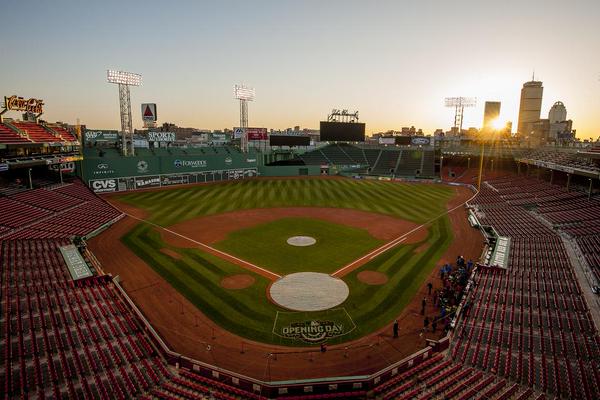
Good Morning, And Play Ball!
1. To Tony C. This is always a happy day for me, but I want to mute my joy a bit by dedicating this baseball season to the late Tony Conigliaro. Since my teens, he has been my constant inspiration to live every day to its fullest, because no matter how bright and promising the future seems at any moment, everything can change in the blink of an eye, or an errant pitch from Fate right into your face.
That’s what happened to Tony C. on a cruel August night in 1967. He was playing right field and batting clean-up for his home town baseball team, in a season that would see them win a miracle pennant. He was young, handsome and incredibly talented. He had become the youngest player ever to hit a hundred home runs, and was in his fourth big league season at the tender age of 22.Then everything changed. Tony’s existence was swept up and placed on a new and dark road that ended with a fluke heart attack and stroke at the age of 37, and a lingering twilight half-death in brain damage until he mercifully passed away eight long years later.
All we can do now is remember a beautiful young man and a brilliant athlete who gave his home town many thrilling moments to savor in the brief time allotted to him, who had everything, and then lost it without reason, warning or justice…and also remember that every day should be lived right, and well, with the determination to be the best we can be, because we may never have a chance to be any better.
Yes, this baseball season is dedicated to you, Tony.
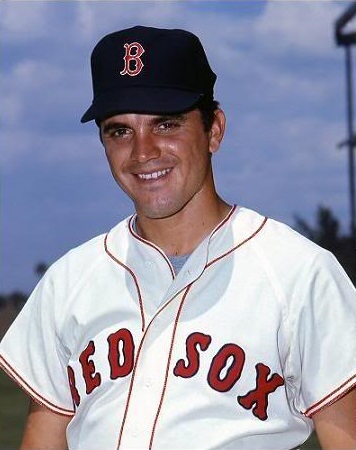
For me, I guess they all are.
2. No, this isn’t The Onion. This is a real tweet from the Democratic Party, authored by Congresswoman Grace Meng:
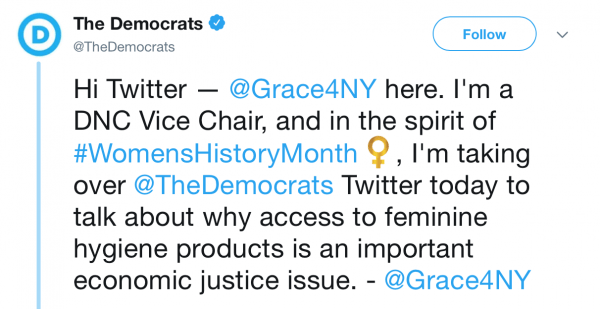
“Women deserve equal access to our economy, not punishment for their gender. That’s why I’ve been working with my fellow women to fight for more access to tampons, pads, and the full range of menstrual products since 2015. …I’ve introduced legislation to make these products more affordable — because leveling the playing field and stopping period-shaming give women, especially low-income women, a better chance to succeed in our economy…What else would give women a better chance to succeed? Electing more women to fight these fights with me — because we need leaders who understand the experiences of those they represent. ..Head to http://IWillVote.com and commit to vote in 2018 and beyond, because women can’t wait for economic fairness any longer.”
I hope I don’t have to explain what is wrong with this, and I eagerly anticipate being able to parry any brain-melted partisan who reads something like this and says, “Hey, what a good idea!” Yet obviously millions of people are in thrall to this kind of slippery slope progressivism: if a gender, or a race, or a nationality or any other tribe has a unique need or problem, then all of society must help pay for it, or life is unjust. Was a virus released into the water system of certain major cities.? What else can account for such abdications of personal responsibility being accepted as fair and reasonable?
Hey! Why doesn’t the government pay for my electric razor? Continue reading
Comment Of The Day: “When Ethics Alarms Don’t Ring: Snapchat Approves A Domestic Abuse Game Ad”
Video games and their effect on societal violence have been mentioned in the comment threads of several recent posts of late, so Michael West’s essay on the topic is especially timely (even if my posting of it is tardy). I am dubious about claims that forms of entertainment warp healthy minds, as I am old enough to have seen a series of modes and genres be condemned from various sides of the political spectrum as turning children into violence-prone monsters. Even the Three Stooges once were fingered as making kids unfeeling sociopaths. I’m also historically astute enough to know dime-novels about bloody Wild Bill Hickock shootouts, pulp novels with half-naked blondes on the cover and EC comics about shambling, face-eating corpses were similarly accused. My son played “The Godfather” video game, and five earlier versions of the “10 Violent Video Games” the Parenting website says to avoid, all with my blessing.
When my son was 18, he bought a gun, too. I’m not worried. He has many friends, a strong peer group, he has strong ethical values and character, and is kind and thoughtful. That is not to say that every new social influence is different, and that attention must be paid.
Here is Michael West’s Comment of the Day on the post, When Ethics Alarms Don’t Ring: Snapchat Approves A Domestic Abuse Game Ad
Video games have been out nationally for quite a while. Even video games that have abstract versions of violence…like Mario Brothers or Donkey Kong…and I mean old school versions of those games like I used to play on Apple IIe. But for us to seriously contemplate capital V, capital G, capital V Video Game Violence as a force affecting the acculturation of our youths, we ought to fast forward in time specifically to “realistic” video game violence. An estimate that will be off plus or minus a few years, the *mid* 1990s is when our culture saw First Person Shooters enter the market, with early favorites like “Doom” and “Wolfenstein 3D” for desktop computers and ultimately entering the console market. In other words, Video Game Violence is still a young force in our society. This makes measuring its effects a bit problematic.
As we raise our young, they are acculturated through several INPUTS…all of which communicate to some level or another the values that the culture espouses OR worse, inadvertently communicates values the culture notionally DOES NOT espouse, but accidentally promote. In a manner of speaking, “we are what we eat”. My personal take up front is that YES, video game violence, as a subset of ALL informational inputs DOES affect each individual’s acculturation. The real questions are, “how much” and “are it’s effects mitigated by other inputs”?
I would think that for video game violence to start acculturating the young towards violence, they would need to be inundated by it and have few effective counter-acculturating forces in their lives teaching them that wanton and purposeless violence is bad. For the first 20 years of video game violence, my gut tells me we can explain away its effects as having been minimally noticeable without deeply searching each individual or practically non-existent. Children of the early years of video games had plenty of other inputs in their lives as well as outlets for their minds at a vastly greater ratio than the violence int he games…first and foremost active and attentive parents.
That leaves us really with only about 15 years of any generation that could be said to be inundated by truly graphic depictions of limitless violence…most of those age cohorts are still too young to see how they turn out as adults. Again, my gut says that you’d see actual correlations, if they exist, in about another decade. And even then, I don’t think we’ll find a direct causal effect between video game violence and individuals acting on violent tendencies *except in marginal cases*. Continue reading
Morning Ethics Warm-Up, 3/16/2018: First They Came For Wonder Woman….[CORRECTED and UPDATED]

Good Morning
… to end a frantic ethics week…
(An unusual number of the items this morning deserve a free-standing post. I’m not sure what to do about that; it’s been happening a lot lately.)
1 Not fake news, just a false news story that everyone ran with...Oops. All the angry condemnations of new CIA director designate Gina Haspel and President Trump (for nominating her, along with existing) were based on a mistake. From ProPublica:
On Feb. 22, 2017, ProPublica published a story that inaccurately described Gina Haspel’s role in the treatment of Abu Zubaydah, a suspected al-Qaida leader who was imprisoned by the CIA at a secret “black site” in Thailand in 2002. The story said that Haspel, a career CIA officer who President Trump has nominated to be the next director of central intelligence, oversaw the clandestine base where Zubaydah was subjected to waterboarding and other coercive interrogation methods that are widely seen as torture. The story also said she mocked the prisoner’s suffering in a private conversation. Neither of these assertions is correct and we retract them. It is now clear that Haspel did not take charge of the base until after the interrogation of Zubaydah ended.
ProPublica, unlike, say, CNN, knows how to accept responsibility for a bad journalism botch. Stephen Engelberg, editor-in-chief, sums up the episode after explaining how the story was misreported:
A few reflections on what went wrong in our reporting and editing process.
The awkward communications between officials barred from disclosing classified information and reporters trying to reveal secrets in which there is legitimate public interest can sometimes end in miscommunication. In this instance, we failed to understand the message the CIA’s press office was trying to convey in its statement.
None of this in any way excuses our mistakes. We at ProPublica hold government officials responsible for their missteps, and we must be equally accountable. This error was particularly unfortunate because it muddied an important national debate about Haspel and the CIA’s recent history. To her, and to our readers, we can only apologize, correct the record and make certain that we do better in the future.
Perfect. This is a news source we can trust.
2. That was ProPublica. This is CNN (The Chris Cuomo post was here originally, but it got so long I posted it separately.) Continue reading
Ethics Hero: Ken White Of Popehat
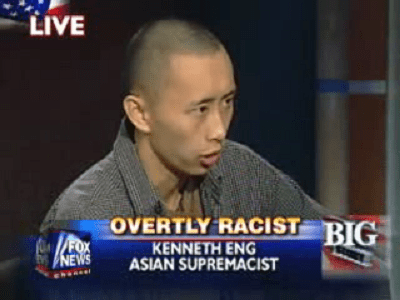
I haven’t featured Ken White lately, in part because Popehat’s posts are sporadic, unlike those of mad bloggers who habitually post multiple essays a day. However, Ken’s most recent post is the epitome of ethical blogging at its best. It is long, but absolutely worth the time to read. His subject is the internet pile-on against a mentally ill writer named Kenneth Eng, who, Ken points out, was obviously not well, and yet was mercilessly attacked and mocked. Fox News even exploited his illness for some sensational cable moments—shades of Sam Nunberg! Ken, who has written frankly and courageously about his own battles with clinical depression, takes a hard ethics inventory, finds himself and the internet community lacking, and does a superb job—as usual—of clarifying a difficult issue. I have had my differences with Ken, but at his best, White is as ethically astute and clear a writer as there is online, with an almost unfailing ability to point us in the right direction.
He writes in part, Continue reading
Sam Nunberg And The Sharks
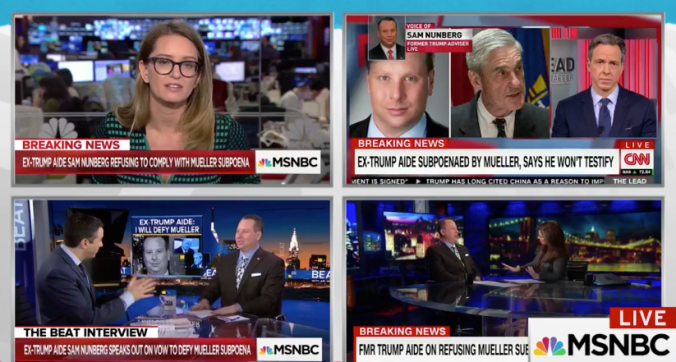
Sam Nunberg is a twice fired Trump aide who has been caught up in the Special Prosecutor’s fishing expedition. Yesterday, he decided to make a desperate grab for fame, infamy, attention…who knows? Taking advantage of the now thoroughly AWOL ethics of what we once called “journalism, he arranged a phone interview with MSNBC’s Trump-hating Katy Tur in the afternoon. Then the sharks moved in. That interview was picked up by both ABC’s World News Tonight and NBC Nightly News. Then Nunberg went on a veritable swim-with-the-sharks orgy, with six interviews media interviews within four hours. He appeared on set with MSNBC’s Ari Melber, then sat down with Erin Burnett on CNN. She had him on camera for more than a half-hour, during which he announced his intent to defy Mueller’s subpoena. Then he did a phone interview with NY1 in which he called Sarah Huckabee Sanders a “fat slob.”
Here was the most significant exchange among all of these:
Burnett: You’re sitting very close to me. We talked earlier about what people in the White House were saying to you, talking about whether you were drinking or on drugs. Talking to you, I have smelled alcohol on your breath.
Nunberg: I have not had a drink.
Burnett: You haven’t had a drink. Because it is the talk out there. I know it’s awkward. Let me give you the question: No, you haven’t had a drink?
Nunberg: My answer is no.
Burnett: Anything else?
Nunberg: No. Besides my meds. Anti-depressants. Is that okay?
I cannot begin to count the number of times I have asked a friend or loved one if he or she has been drinking because I smelled liquor on them. The answer is always “no” or some variation of it. And they are always, always, lying. Any adult of normal experience knows this is true, including Burnett. But she’a a shark, not a journalist, not a professional, and certainly not an ethical human being. She smelled blood in the water, and its alcohol percentage didn’t bother her a bit. Continue reading
Morning Ethics Warm-Up, 2/27/18: “Mrs. Miniver” Ethics, “Ick!,” And A Poll

Rugby in the morning
1 One of my favorite Hollywood ethics scenes. I watched “Mrs. Miniver” again last night, the 1942 WWII drama starring the magnificent Greer Garson. It has a wonderful ethics moment late in the film, when Lady Beldon, the wealthy town battleaxe (and the grandmother Mrs. Miniver’s recently minted daughter-in-law, soon to die tragically) presides over the English village’s annual flower show, in which she has won the coveted “Best Rose” prize every year. But beloved old stationmaster Mr. Ballard has developed a magnificent new rose (named after Garson’s character) and desperately wants to win as well. The Minivers tease their elderly relative about the near certainty that she will win as always regardless of the relative merits of her entry and “The Miniver” entered by Mr. Ballard, since the judges are terrified of her, and Lady Beldon has made it clear to all that she regards the annual prize as a virtual entitlement. After all, the prize is even called “The Beldon Challenge Cup.” Sure enough, the judges, who seemed to be having a harder time than usual concluding that Lady Beldon’s rose deserved the award, hand her a slip that places her rose in first place, and Mr. Ballard’s in second.
Lady Beldon shows the slip to Mrs. Miniver with an air of triumph.
MINIVER: This is really important to you, isn’t it?
LADY BELDON: Yes. It’s stupid of me, but there it is. I’ve won that cup for as long as I can remember.
MINIVER: Mr. Ballard’s terribly keen too.
BELDON: Well, he’s had his chance. Hasn’t he? You have such a way of looking at people. What do you expect me to do? Reverse the judges’ decision?
MINIVER: I wouldn’t put it past you. If you happened to disagree with it.
“But I don’t!” she harrumphs. She keeps looking at the two competing roses, though, and also at old Mr. Ballard (played by Henry Traverse, later to portray Clarence the Wingless Angel”in “It’s a Wonderful Life.” His look of anticipation and hope approximately mirrors the expression of a six-year-old on Christmas morning. And when it comes time to announce the winner, Lady Ballard pauses, looks at the two roses again, ponders, crumples up the judges’ slip, and announces that “The Miniver” wins the prize.
Dame May Witty, one of the best character actors England ever produced, shows us with her face that she realizes she did the right thing as soon as she sees Ballard’s reaction to winning. And the assembled crowd gives her an even louder ovation than they give the winner. They didn’t even have to see the slip like the Minivers: they know what she did. And she knows they know.
I had a Lady Beldon moment many years ago, before I had even seen the movie. Continue reading
Morning Ethics Warm-Up, 2/16/18: Guns, Tweets And Blackberry Slingshots

Good morning everybody!
1. Oh, well if David Hogg says so… I just listened to an earnest, articulate Florida high school student named David Hogg tell a CNN reporter, his head nodding sagely, complete counter-factual garbage, with no correction, for what seemed like an eternity. “David Hogg wants Congress to act.” the screen said said as the 17-year-old was speaking. This is lousy, unethical journalism—well, it’s CNN– and irresponsible. I don’t blame the kid for believing the crap he reads and hears from people who are lying to the public, but I expect the news media to correct, not circulate, dishonest talking points. Well, maybe “expect” isn’t the right word.
No, David, “thousands of students” do not die every year. No, David, that “18 school shootings” fake stat is designed to mislead: it includes every time a gun has been discharged in or near a school, not mass or multiple shootings or even fatalities. [See Item #2]
See, David, when people talk about “mental health reform” they are often talking about pre-crime, and removing the rights of citizens before they have done anything wrong, much less criminal. But CNN’s reporter kept nodding.
These are complex issues involving rights and practical realities, and a high school student is not an authority that CNN or anyone should be presenting as an advocate. Until the anti-gun advocates stop intentionally distorting facts and trying to mislead while relying on emotion to swamp legitimate debate, there will be no serious dialogue about whether any policies could stop tragedies like the latest Valentine’s Day massacre, and bumper sticker chants like “Do something!” and “If it saves just one life…” lead away from responsible policy, not toward it.
I cross-posted this to Facebook, and can’t wait to read the reactions. At this point, posting facts qualifies as trolling. The anti-gun hysterics can’t stand it. Continue reading
Comment Of The Day: “Proposition: An Illegal Immigrant Is Entitled To Receive A Life-Saving Organ Transplant That Otherwise Would Go To A U.S. Citizen In Similar Need”
I am backed up on Comments of the Day again, especially embarrassing after I announced that I would be posting one a day if possible. Getting one of the comments in the queue last night required trying to use my netbook while watching the Westminster Dog Show with my old Jack Russell feeling insecure and cuddling in my lap. The Update will be late today.
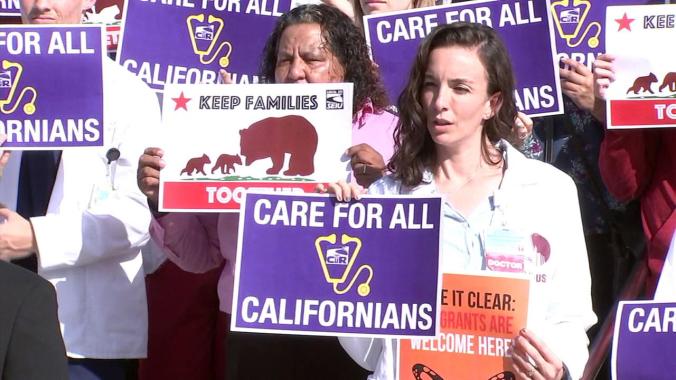
The post about the Oregon hospital being bullied by the local ACLU into placing an illegal immigrant on its transplant list simultaneously raised medical ethics issues and illegal immigration ethics issues, so I am grateful that Zoltar Speaks! resuscitates the topic with his comment. I am particularly greateful for his raising the question, “Is the perception of an action what makes the action ethical, or is it the motives behind the action that makes the action ethical, or does it take both?”
My answer, which I think I have made clear over 80,000 posts, is that it is what an action does or can reasonably be expected to do, within the intention and goal of the actor, that makes conduct ethical or not. Unanticipated and unanticipatable results don’t count, and neither does pollution by non-ethical and unethical motives mixed in with the ethical motives, unless they warp the conduct and the decision to engage in it.
There are exceptions, of course.
Here is Zoltar Speaks’ Comment of the Day on the post, Proposition: An Illegal Immigrant Is Entitled To Receive A Life-Saving Organ Transplant That Otherwise Would Go To A U.S. Citizen In Similar Need:
On one hand there is the Hippocratic Oath that directly implies that medical need trumps things like legal status, so in that regard the policy change is a direct reflection of the core of the Hippocratic Oath and it can be said that they changed their policy to reflect the ethical core of the Hippocratic Oath and present that argument to the public and their actions on the surface can be regarded as ethical. (Yes it’s a run-on sentence)
On the other hand there is the fact that illegal immigrants are literally taking advantage of a near “border-less” country and existing systems in place across the United States that ignore their legal status will allow them to do whatever they want regardless of the fact that they are in the United States illegally and some existing systems in place that actually help them do anything they want because they’re illegal immigrants. The United States has been, and still is, enabling illegal immigrants and this policy change is another system changed that enables illegal immigration.
This leads me directly to a topic that we’ve talked about on Ethics Alarms in the past: is the perception of an action what makes the action ethical, or is it the motives behind the action that makes the action ethical, or does it take both? If I remember correctly, I think the general consensus was that it’s the perception of the action that makes it ethical.
The perception of this action is two fold; first ethically complying with the intent of the Hippocratic Oath and second it’s another policy change enabling illegal immigration. Continue reading
 Ethics Alarms
Michael also used his comment to highlight a concept we have not used on Ethics Alarms, at least by name, “the Overton Window.” That is defined as “The spectrum of ideas on public policy and social issues considered acceptable by the general public at a given time.” Of course, what the “window” is can be tricky to determine. Donald Trump broke the alleged window repeatedly. My preferred approach to this “window” is to challenge it, and to try to expand its boundaries, consequences be damned. I equate the Overton Window with de facto censorship and thought-control.
I am especially glad that this comment again raises the Williamson firing and the related ethics issues. These are rich topics, and yet the matter fled the blogs and commentary sites quickly, paved over by successive outrages of the day.
Here is Michael West’s Comment of the Day on #2 in the post, Morning Ethics Warm-Up, 4/7/2018: “Ruggles Of Red Gap” And “Williamson No Longer Of The Atlantic’.” This is a bit challenging to read, but worth the effort. For clarity, Michael’s commentary is in bold italics.