Health and Medicine
Ethics Hero: Lindsey Bittorf
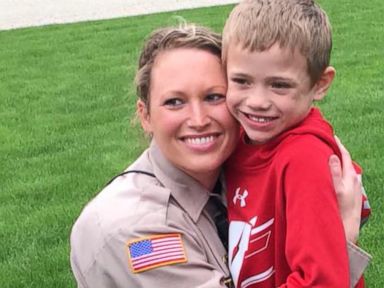
I regard people who contribute kidneys to near strangers as residing in a special category of Ethics Hero, in the exemplary ethics category….maybe the exemplary exemplary ethics category. Considering Don Bedwell, the first individual I learned about who engaged in this extraordinary act of sacrifice, kindness, and compassion, I began my 2005 post, “There are special and rare people whose ethical instincts are so pure and keen that they can make the rest of us feel inadequate.” Bedwell, a traveling businessman, donated his kidney to a waitress who often served him at his favorite Cleveland restaurant when he was passing through the city on business. The second altruistic organ donor was East Haven, Connecticut Mayor April Capone Almon, who gifted one of her kidneys to a desperate constituent she barely knew.
Wisconsin police officer Lindsey Bittorf is the most recent example of this special breed of ethics hero. She saw a Facebook post from a local mother pleading for someone to rescue might her 8-year-old son, Jackson Arneson, who needed a kidney. The boy’s family and friends had been tested and none were a match. Bittorf didn’t know the child or the family, but got herself tested on a whim. Doctors told her she was an unusually good match,considering that she was not related to the boy.
Last week, Bittorf rang the doorbell at Jackson’s home to surprise his family with the good news, ABC News reported. Jackson could have one of her healthy kidneys.The police officer told Jackson’s mom, Kristi Goll, that it was an “early Mother’s Day gift.” That’s a bit better than flowers, you’ll have to admit. Continue reading
Comment Of The Day: “Comment Of The Day: ‘Comment Of The Day: No, Insurance Companies Treating People With Pre-Existing Conditions Differently From Other Customers Is Not Discrimination.’”

I agree, this is getting ridiculous: our colloquy on the ethical and policy complexities of health care policy has created the first Ethics Alarms Comment of the Day on a Comment of the Day on a Comment of the Day. Nonetheless, John Billingsley’s COTD is deserving, as well as interesting and informative. Here it is, his comment on Comment Of The Day: “Comment Of The Day: ‘No, Insurance Companies Treating People With Pre-Existing Conditions Differently From Other Customers Is Not Discrimination’”—which in this case you really should read Charlie Green’s post that prompted it.
I have a few comments on specific points.
“New diseases like RLS”
RLS was first described in 1685 and the first detailed clinical description was in 1944 and it was shown in test recordings in 1962. Not really a new disease but a newly publicized disease. Once a medication was developed that was effective at relieving the symptoms, it became profitable for a pharmaceutical company to target it and raise awareness. The company was not being altruistic, but is it wrong to make money by informing someone that there is a way to relieve the distress they are experiencing? If you have ever talked to someone who really has this disorder, you know how much it disrupts their lives. Is it over diagnosed? Possibly, but polysomnography to make a firm diagnosis is expensive and it is a condition where the clinical symptoms are pretty reliable. Probably cheaper to just treat it.
“Because who’s still going to argue with your doc? Especially when he or she gets side benefits from giving in to the latest DTC ads on network news programs?”
I hate DTC ads. I would be good with a spot that just said, do you experience these symptoms (of RLS perhaps)? If you do, tell your doctor. I actually spent quite a bit of time telling patients why they did not need the newest, expensive drug they heard about on TV or in a magazine either because they didn’t meet the criteria for it or because I felt that the cheaper alternatives were just as effective and needed to be tried first. It was a hard sell, particularly when the patient would say, “but my insurance will cover it.” I, and I think most doctors, take being a good steward of the healthcare dollar seriously. In the past there were sometimes substantial “side benefits” from drug companies especially if you used really expensive things like artificial joints or pacemakers. The most I ever received was dinner in a restaurant and things like cheap pens and sticky note pads. These days there are no more cheap ballpoint pens and meals typically are take out from Newks or equivalent in the office during a presentation. Not something I am likely to sell my soul for although I understand the implications. Continue reading
Comment Of The Day: “Comment Of The Day: ‘No, Insurance Companies Treating People With Pre-Existing Conditions Differently From Other Customers Is Not Discrimination.’”
 The health care/ACA/AHCA commentary from readers continues to be uniformly excellent. (It was originally spurred by the post, No, Insurance Companies Treating People With Pre-Existing Conditions Differently From Other Customers Is Not “Discrimination.”) Spartan’s Comment of the Day on the topic has itself sparked its own Comment Of The Day, this one authored by Charles Green.
By fortune’s smiles, I was able to finally meet Charlie last week face to face, as he kindly alerted me that he would be passing through my neighborhood. Finally having personal contact with an Ethics Alarms reader is always a revealing and enjoyable experience, and this time especially so. I think you would all enjoy Charlie; I certainly did. Maybe I need to hold an Ethics Alarms convention.
Here is his Comment of the Day on the post, Comment Of The Day: “No, Insurance Companies Treating People With Pre-Existing Conditions Differently From Other Customers Is Not ‘Discrimination’.”
…The claim that “a free market system” and “freedom of choice” is the solution to all that ails us is a mindless mantra that is only occasionally true, but not always.
It’s important to be clear about when free market solutions are good, and when they are not. It’s not all that hard to sort out. Basically:
Free market solutions ought to be the presumptive default. Unless there is good reason to the contrary, they ought to be the rule.
1. Exception Number 1: Natural monopolies. It makes no sense to have competition for municipal water supplies; airports; multiple-gauge railroads; fishing grounds; groundwater; or police departments. The basic reason is the putative economic benefit is either simply not there, or is absurdly overwhelmed by the social confusion engendered by multiple suppliers.
In these cases, a form of regulated monopoly is desirable. (By the way, the airline industry at a national level is precisely this kind of market; we do not have too little competition there, but too little regulation).
2. Exception Number 2a: Wallet-driven market power monopolies. It’s strategy 101 in business schools that the way to be successful is to be #1 or #2, and the best way to do that is to get more market share than your competition, so you can drive them out of business. The one guaranteed way to do that is to cut prices so low that no one else can compete. Think Walmart. Think Amazon. Think Japanese in the 60s and 70s in any industry.
The reason we have anti-monopoly laws is to reset the playing field when a competitor dominates the market too strongly.
3. Exception Number 2b: Product-driven market power monopolies. Where the product is so obscure, expensive, infinitely variable, and difficult to understand that the producers are de facto in control, because it is too confusing and too dangerous to challenge them.
Drug prescriptions are an interesting example. The ‘free market solution’ to high drug prices was (partly) to let drug companies advertise, and to loosen up the definition of what constituted a ‘new’ drug. What did we get? New diseases like RLS, new definitions of ‘new’ (moving ‘off label’ to ‘on label’) and even higher drug company profits. Because who’s still going to argue with your doc? Especially when he or she gets side benefits from giving in to the latest DTC ads on network news programs?
Comment Of The Day: “No, Insurance Companies Treating People With Pre-Existing Conditions Differently From Other Customers Is Not ‘Discrimination’.”
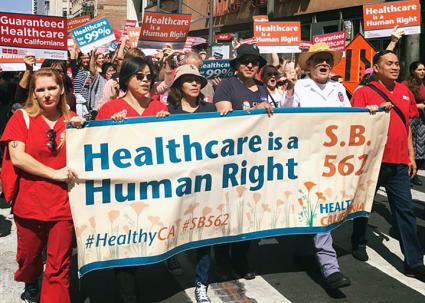
There have been a lot of lively and articulate debates on Ethics Alarms since it began in late 2009, but I don’t know if any post has generated more thoughtful, informed and enlightening comments than this one. Many of them, and I mean ten or more, are Comment of the Day worthy. I would post them all, but it’s more efficient to just send you to the post. I’m very proud of Ethics Alarms readers on this one. It’s an honor to have followers so astute and diverse.
I chose Spartan‘s comment over the others in part because it was the most overtly about ethics, balancing and altruism. Plus the fact that she gets a lot of flack here, and yet perseveres with provocative comments that are well-reasoned and expressed. She is an excellent representative of all the commenters that add so much to this blog.
Here is Spartan’s Comment of the Day on the post, No, Insurance Companies Treating People With Pre-Existing Conditions Differently From Other Customers Is Not “Discrimination.”
The biggest problem — single payer is a jobs killer. I’ll admit that. Tens of thousands of people will have to find new jobs. Of course, there’s a flip side to this issue. Is it moral to sustain an industry that only benefits the rich and those who have access to employer-sponsored health care?
If we are going to get anywhere in this political debate, we have to be honest. Single payor is not sunshine and rainbows for all. Many people will have to find new jobs. Not everybody will love the care that they are provided. Medical students might decide to become stockbrokers instead because they will not make as much money. (On the plus side, the risk for med mal will go down so maybe there will not be a mass exodus.)
Another truth: a single payer plan will hurt the upper middle class the most. People like me. Because under single payer, I undoubtedly will have to pay more in taxes (the only way it could work), but I most likely will get a lower standard of care down the road. So, I imagine many people like me will go out and buy private insurance to sit on top of government provided medical care. So now I am even out more money. (Similarly, I don’t like my government provided education, so I pay money out of pocket for my kids’ school.)
While acknowledging all of this, I would still vote for single payer. In my view, it’s not ethical to let people die so other people can have jobs. That’s my position. If it means we can never go on another vacation or eat out again, it is more important to me that everyone have access to basic health care.
No, Insurance Companies Treating People With Pre-Existing Conditions Differently From Other Customers Is Not “Discrimination.”
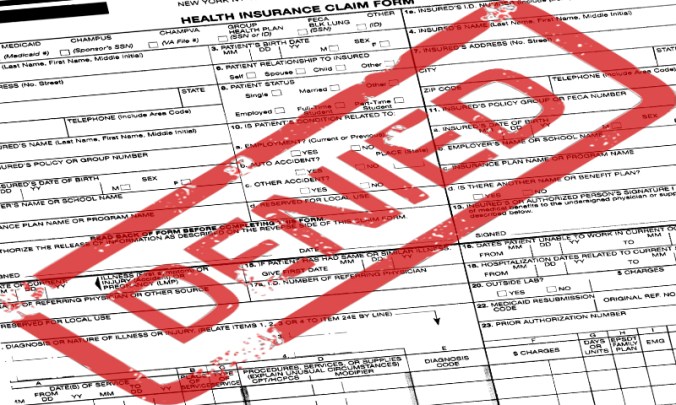
Here is a prime example of how the news media’s intentional or careless use of words warps public perception and policy.
Yesterday, the New York Times front page story about the GOP House’s health insurance bill noted in its second paragraph that the bill wouldn’t do enough to prevent “discrimination” by insurance companies against those with per-existing conditions. I have seen and heard that term, discrimination, used over and over again to describe the per-existing condition, and I apologize for not blowing the whistle on it long ago.
Using the term, which is usually used in other contexts to signal bigotry, bias and civil rights violations, is misleading and virtually defamatory. Insurance companies are businesses. They are not charities. They are not public resources. If an automobile company turns down an offer of half what a car costs it to make, it is not discriminating against that customer who made the offer. If a restaurant customer says to a waiter, “I have just four bucks, but I want you to bring me a dozen oysters, a steak, and a nice bottle of wine,” the establishment isn’t discriminating against the diner for sending him to McDonald’s.
Insureds with per-existing conditions want to pay premiums that are wildly inadequate for the coverage they know and the insurance company knows they are going to need. Insurance companies are portrayed as villains because they don’t eagerly accept customers who they know will cost them money, often a lot of money. That’s not discrimination. That’s common sense, basic business practice, fiscal reality,and responsible management. The news media and the under-cover socialists among us want to create the illusion that a company not wanting to accept customers who lose money rather than add to profits is a mark of corporate greed and cruelty, hence the use of “discrimination” as a falsely pejorative term, when the fair and honest word is “problem.” Continue reading
Ethics Hero, Corporate Division: Merck
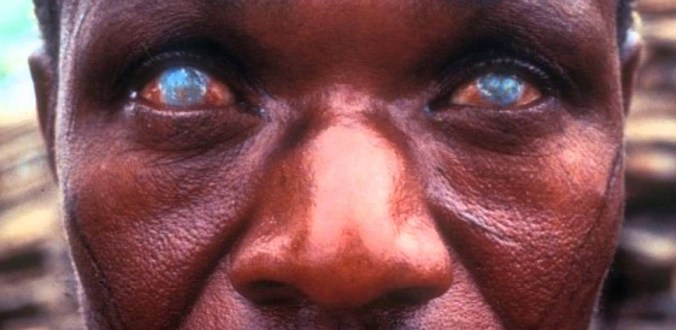
Sometimes, though their implacable foes would refuse to acknowledge it, big corporations do the right thing even without a metaphorical gun at their heads. This week’s Economist magazine relates an amazing example that the public needs to know about, especially since it challenges popular stereotypes about Big Pharma.
The Economist begins by horrifying us with a deadly aspect of life in third world countries that are hot and wet: “neglected tropical diseases,” or NTDs. These are neglected because the populations that suffer from them are poor and far away, but they affect more than a billion people. Among the scourges, all parasitic, are Buruli ulcer, Chagas disease, guinea-worm disease, leishmaniasis, river blindness, trachoma and yaws. There are 18 pernicious maladies currently listed as NTSs.
In the 1970s, mega-pharmaceutical firm Merck developed the drug ivermectin after tests on animals with parasitic infections. William Campbell, one of the firm’s parasitologists,told company executives that the new drug might be effective against the parasite that caused onchocerciasis, or river blindness, which afflicts populations in in parts of Africa, Latin America, and Yemen. He was given the green light to find out.
The first human trial of ivermectin as treatment for river blindness took place in Senegal in 1981, on patients who had the early stages of the disease—itching, rashes— but no damage to their eyes yet. The results were encouraging, indicating that ivermectin was safe for humans and highly effective at stopping the disease before it blinded its victims. Merck, however, now faced the problem that has impeded cures for all the neglected tropical diseases: those who needed ivermectin were too poor to buy it, and so were the nations where they lived. Big corporations are not charities; they have investors, stockholders and a bottom line. They are not accustomed or programmed to give away their products.
Yet Merck made a corporate decision that Bernie Sanders and Elizabeth Warren say is impossible. Starting in 1987, it made an open-ended commitment to distribute as much ivermectin as was needed to eradicate the river blindness worldwide. In the next ten years, it swallowed the cost of 100 million doses. Continue reading
An Especially Ugly Ethics Quiz: Cam Betrayed

This story is too disturbing to describe, so I’m going to just give you the link. Briefly, it involves a couple, she a veteran, he a soldier, killing their therapy dog, laughing as they did it, and filming the event. They were arrested on charges of animal cruelty. Read the story, here, and then consider the Ethics Alarms Ethics Quiz of the Day, which is…
What is the fair, proportionate, and reasonable punishment for this conduct?
The Psychiatrists Board The 2016 Post Election Ethics Train Wreck
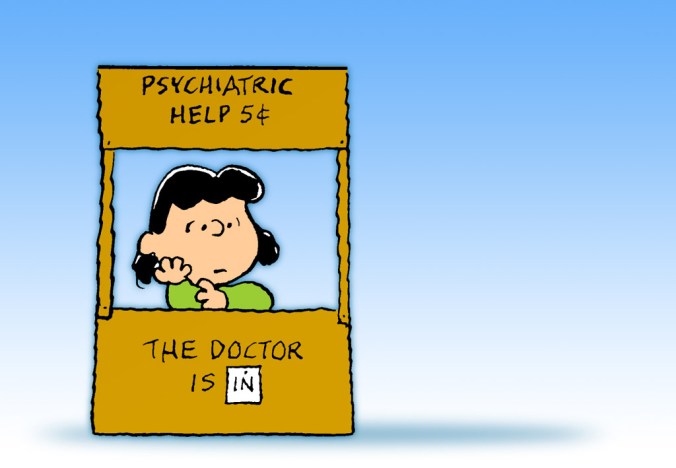
It’s pretty simple. Professionals must be trusted, and when it becomes clear that members of a profession are allowing themselves to be influenced by emotion and partisan political bias, they cannot be. One of the most troubling results of the mass abandonment of fairness, prudence, proportion, fairness and common sense in the wake of the 2016 Presidential election has been the public meltdown of reserve and restraint by so many professionals, which will have long-term effects on their ability to serve the public in the future.
Journalists, as we have seen and continue to see, have completely abandoned their profession’s duties of competence, objectivity and independence to join the efforts on the Left to undermine President Trump and his administration. Educators and school administrators, whose roles in society should have no political component whatsoever, have done the same. Historians, whose profession requires careful and dispassionate analysis of past events with perspective and objectivity, chose this moment to try to influence history as it was being made, and to push it into directions they prefer as partisans, not professionals. Law professors and lawyers have debased themselves arguing for crackpot theories to justify undoing the election. Judges have embraced the opposite of a judicial process to halt a Presidential order their political allies find offensive: rather than evaluating the limited travel halt based on what it is, they have delayed it based on a presumed motive calculated from past comments made on the campaign trail.
Legal ethicists, as I discussed here, abandoned legal ethics to make bogus, politically motivated charges against a Trump aide who is not practicing law, and whose conduct in question wouldn’t have breached professional standards if she had been. Last week, scientists demonstrated on the National Mall to argue for policies they say their research demands, though a preference for specific policy applications biases research and makes it untrustworthy. Great: climate scientists want draconian climate change policies? Good to know; now we also know that we can’t be sure their research results aren’t tainted by their bias….though coming up with a predictive climate change model that actually works would be nice. Even the linguists have succumbed to the epidemic.
Now a significant number of psychiatrists have joined their colleagues in other professions by behaving like partisan hacks. Continue reading
Ethics Quiz On A Story I’m Betting Is A Hoax: The “Identical Twins” Married Couple
I have now read three accounts in borderline news sources about a Mississippi married couple who went to a fertility clinic and discovered to their horror that they were “identical twins.” I’m assuming it is a fake news story, perhaps planted through collusion with the Trump campaign by Russian government operatives, and not just because identical twins cannot be different sexes. (Hey! Maybe one of them had gender reassignment surgery! Now that would be a story!)
I suppose it’s possible; Robert Ripley found odder coincidences for decades, but never mind: let’s assume for the sake of ethics problem-solving practice that the story is true. (I’ll be stunned if it is.)
Your Ethics Alarms Ethics Quiz of the Day is…
What is the couple’s most ethical course now that they know they are siblings, or is there one?
Key question: Is this ick rather than ethics?
Trap: I’m not asking what’s moral.
It’s all yours…
 Ethics Alarms
I am desperately behind in posting deserving Comments of the Day, and have vowed to catch up. This one, by Zoltar Speaks!, is almost a week old, but fortunately its substance remains very current.
He was responding to the post about Harvard icon Larry Tribe being moved to engage in rumor-mongering and conspiracy theories because of his, and undoubtedly his elite peer group’s, contempt and hatred of the President of the United States. I had been holding it to pair with a long post regarding the daily, embarrassing displays of utter bias and irrationality in the New York Times, based on my forced perusal of the last Sunday edition. That post will arrive sooner or later, but it is unfair to delay wider distribution of Zoltar’s commentary any longer.
I was joking about “Anti-Trump Brain Loss,” but the phenomenon is no joke, and is, in fact, an existential threat to the nation, one more thing that the Trump Deranged are incapable of seeing in their fury. For some reason I was reminded of one of the worst Hollywood movies ever mad, the hilarious sequel to “The Exorcist,” “The Heretic,” in which we learn that locusts are turned voracious and destructive by being in close proximity with each other. Their beating wings brush against other locusts, and it changes them (we are told) into monstrous forces of destruction. [Note: this is mostly nonsense, but not completely.] This is like what I witness on Facebook, in the news media and from the more intellectual-limited among Democratic officials, who declare every incident, episode or tweet coming out of the chaotic Trump White House a crisis, then the news media repeats that it is a crisis, and the anti-Trump locusts fantasize about how “the crisis” will finally give them the chance to do what they have been trying to do since November 8, 2016: undo the election.
I was critical of Professor Turley in the previous post, so let me praise his clarity on this topic now. In a post on his blog called “A Question of Law: Calls for the Indictment or Impeachment of Donald Trump Are Transparent and Premature,” he writes,
Bingo. Trump hatred has transformed previously responsible adults into children, as well as locusts. We have never seen anything like it as a nation, and since the infection has mostly crippled an entire political party, the journalism establishment and the pundit class, the risk of permanent harm to the nation is real. I spent five years warning readers about Donald Trump, and almost two explaining why it was madness to even consider him as a responsible Presidential choice. I did not, however, think for a second that progressive mania in response to a Trump victory—one that arose out of indignation that the Left’s precious agenda would be imperiled by a dolt chosen by the electorate because progressives had become insufferable, arrogant, divisive, cynical, corrupt and increasingly totalitarian—-would create a greater danger than an incompetent President.
Yet that is what has come to pass. I have always detested the Right’s facile dismissal of liberals as “insane,” as in Michael Savage’s book, “Liberalism is a Mental Disorder,” because it echoes the indoctrination tactics of the Soviet Union, which placed dissenters in mental institutions. Dubious political beliefs don’t mean one is crazy, but behaving irrationally and irresponsibly because those beliefs aren’t prevailing can produce symptoms of mental disturbance. That seems to be what we are witnessing now.
The locusts’ wings are beating furiously, changing them, driving them mad.
Here is Zoltar Speaks!’s Comment of the Day, the first of several this weekend, on the post, “This Is The Heartbreak Of Anti-Trump Brain Loss…”:
Continue reading →