No, Insurance Companies Treating People With Pre-Existing Conditions Differently From Other Customers Is Not “Discrimination.”

Here is a prime example of how the news media’s intentional or careless use of words warps public perception and policy.

Yesterday, the New York Times front page story about the GOP House’s health insurance bill noted in its second paragraph that the bill wouldn’t do enough to prevent “discrimination” by insurance companies against those with per-existing conditions. I have seen and heard that term, discrimination, used over and over again to describe the per-existing condition, and I apologize for not blowing the whistle on it long ago.

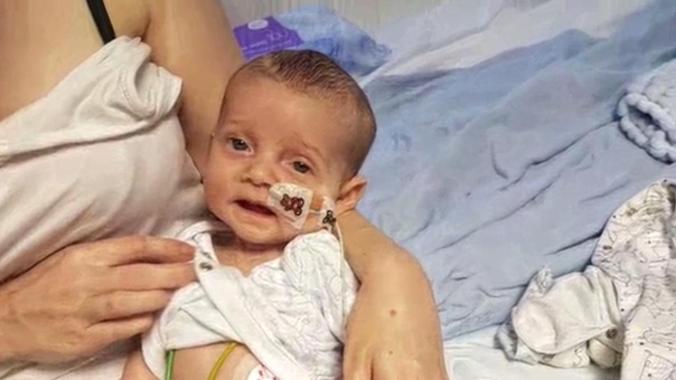
Using the term, which is usually used in other contexts to signal bigotry, bias and civil rights violations, is misleading and virtually defamatory. Insurance companies are businesses. They are not charities. They are not public resources. If an automobile company turns down an offer of half what a car costs it to make, it is not discriminating against that customer who made the offer. If a restaurant customer says to a waiter, “I have just four bucks, but I want you to bring me a dozen oysters, a steak, and a nice bottle of wine,” the establishment isn’t discriminating against the diner for sending him to McDonald’s.

Insureds with per-existing conditions want to pay premiums that are wildly inadequate for the coverage they know and the insurance company knows they are going to need. Insurance companies are portrayed as villains because they don’t eagerly accept customers who they know will cost them money, often a lot of money. That’s not discrimination. That’s common sense, basic business practice, fiscal reality,and responsible management. The news media and the under-cover socialists among us want to create the illusion that a company not wanting to accept customers who lose money rather than add to profits is a mark of corporate greed and cruelty, hence the use of “discrimination” as a falsely pejorative term, when the fair and honest word is “problem.” Continue reading

Ethics Hero, Corporate Division: Merck

Sometimes, though their implacable foes would refuse to acknowledge it, big corporations do the right thing even without a metaphorical gun at their heads. This week’s Economist magazine relates an amazing example that the public needs to know about, especially since it challenges popular stereotypes about Big Pharma.

The Economist begins by horrifying us with a deadly aspect of life in third world countries that are hot and wet: “neglected tropical diseases,” or NTDs. These are neglected because the populations that suffer from them are poor and far away, but they affect more than a billion people. Among the scourges, all parasitic, are Buruli ulcer, Chagas disease, guinea-worm disease, leishmaniasis, river blindness, trachoma and yaws. There are 18 pernicious maladies currently listed as NTSs.

In the 1970s, mega-pharmaceutical firm Merck developed the drug ivermectin after tests on animals with parasitic infections. William Campbell, one of the firm’s parasitologists,told company executives that the new drug might be effective against the parasite that caused onchocerciasis, or river blindness, which  afflicts populations in in parts of Africa, Latin America, and  Yemen.  He was given the green light to find out.

The first human trial of ivermectin as treatment for river blindness took place in Senegal in 1981, on patients who had the early stages of the disease—itching, rashes— but no damage to their eyes yet. The results were encouraging,  indicating that ivermectin was safe for humans and highly effective at stopping the disease before it blinded its victims.  Merck, however, now faced the problem that has impeded cures for all the neglected tropical diseases: those who needed ivermectin were too poor to buy it, and so were the nations where they lived. Big corporations are not charities; they have investors, stockholders and a bottom line. They are not accustomed or programmed to give away their products.

Yet Merck made a corporate decision that Bernie Sanders and Elizabeth Warren say is impossible. Starting in 1987, it made an open-ended commitment to distribute as much ivermectin as was needed to eradicate the river blindness worldwide. In the next ten years, it swallowed the cost of 100 million doses. Continue reading

An Especially Ugly Ethics Quiz: Cam Betrayed

This story is too disturbing to describe, so I’m going to just give you the link.  Briefly, it involves a couple, she a veteran, he a soldier, killing their therapy dog, laughing as they did it, and filming the event. They were arrested on charges of animal cruelty. Read the story, here, and then consider the Ethics Alarms Ethics Quiz of the Day, which is…

What is the fair, proportionate, and reasonable punishment for this conduct?

Continue reading

The Psychiatrists Board The 2016 Post Election Ethics Train Wreck

It’s pretty simple. Professionals must be trusted, and when it becomes clear that members of a profession are allowing themselves to be influenced by emotion and partisan political bias, they cannot be. One of the most troubling results of the mass abandonment of fairness, prudence, proportion, fairness and common sense in the wake of the 2016 Presidential election has been the public meltdown of reserve and restraint by so many professionals, which will have long-term effects on their ability to serve the public in the future.

Journalists, as we have seen and continue to see, have completely abandoned their profession’s duties of competence, objectivity and independence to join the efforts on the Left to undermine President Trump and his administration. Educators and school administrators, whose roles in society should have no political component whatsoever, have done the same. Historians, whose profession requires careful and dispassionate analysis of past events with perspective and objectivity, chose this moment to try to influence history as it was being made, and to push it into directions they prefer as partisans, not professionals. Law professors and lawyers have debased themselves arguing for crackpot theories to justify undoing the election. Judges have embraced the opposite of a judicial process to halt a Presidential order their political allies find offensive: rather than evaluating the limited travel halt based on what it is, they have delayed it based on a presumed motive calculated from past comments made on the campaign trail.

Legal ethicists, as I discussed here,  abandoned legal ethics to make bogus, politically motivated charges against a Trump aide who is not practicing law, and whose conduct in question wouldn’t have breached professional standards if she had been. Last week, scientists demonstrated on the National Mall to argue for policies they say their research demands, though a preference for specific policy applications biases research and makes it untrustworthy. Great: climate scientists want draconian climate change policies? Good to know; now we also know that we can’t be sure their research results aren’t tainted by their bias….though coming up with a predictive climate change model that actually works would be nice. Even the linguists have succumbed to the epidemic.

Now a significant number of psychiatrists have joined their colleagues in other professions by behaving like partisan hacks. Continue reading

Ethics Quiz On A Story I’m Betting Is A Hoax: The “Identical Twins” Married Couple

I have now read three accounts in borderline news sources about a Mississippi married couple who went to a fertility clinic and discovered to their horror that they were “identical twins.” I’m assuming it is a fake news story, perhaps planted through collusion with the Trump campaign by Russian government operatives, and not just because identical twins cannot be different sexes. (Hey! Maybe one of them had  gender reassignment surgery! Now that would be a story!)

I suppose it’s possible; Robert Ripley found odder coincidences for decades, but never mind: let’s assume for the sake of ethics problem-solving practice that the story is true. (I’ll be stunned if it is.)

Your Ethics Alarms Ethics Quiz of the Day is…

What is the couple’s most ethical course now that they know they are siblings, or is there one?

Key question: Is this ick rather than ethics?

Trap: I’m not asking what’s moral.

It’s all yours…

A Facebook Case Study In How People Cripple Their Ability, And Ours, To Make Ethical Distinctions

I inadvertently stumbled over a provocative Facebook post by a friend of a friend of a friend. My friend is a principled and intelligent liberal: apparently I stumbled on to a chain where each link was a little more detached from reality and reason.

The stranger’s post involved the story from two weeks ago, in the aftermath of the collapse of a crucial  highway bridge in Atlanta. Investigators found the the collapse was caused by a fire.There were no deaths or injuries caused by the fire and the explosion it sparked , but i  severed the vital roadway that runs north-south through downtown Atlanta and carries 250,000 vehicles daily, City Fire Department investigators arrested three homeless people on suspicion of involvement in the fire. Eventually only one was charged:  Basil Eleby, a homeless man, was arraigned on charges of first-degree arson and criminal damage to property. He had many previous drug and assault arrests, according to Fulton County jail records.

To this my friend’s friend’s friend—his name doesn’t matter—responded,

Three people are now under arrest for the fire that led to the freeway collapse in Atlanta – 3 homeless people. I predicted this. But rather than seek out revenge on these 3 for the tremendous inconvenience they’ve caused, can we take a moment to realize that no person reading this has ever known the reality of sleeping under a bridge. None of us have been compelled to light a fire under that same bridge in order to keep our bodies warm.

And can we please have a conversation about funding mental health for the homeless? And can we please have a conversation, not based in shame, not based in revenge, about getting homeless people off the street?

Yes, these 3 folks have done something that has inconvenienced many people. Lighting that fire is something they have probably done countless times before. Can we take this as an opportunity to deal with the real problem? It gives me no satisfaction that the person charged with the worst of this situation will have his homelessness solved by a jail sentence.

Now, I’m sure this individual is a really kind, compassionate individual. I’m also sure he’s the kind of person who is always saying things like “Why is anyone going hungry in the richest country in the world?” to the vigorous head-nodding of his friends, and his friends’ friends. (I am willing to bet money that he was a passionate Bernie Sanders supporter; probably Occupy Wall Street too.) This kind of statement, however, is policy and ethics static. It literally makes people stupid, and leads them away from useful, objective, dispassionate analysis, not towards it.  It is an irresponsible Facebook post.

Of course, it is also flagrant virtue-signalling and grandstanding. Now everyone knows that this guy is oh so compassionate and such a good Christian, who rejects revenge, and wants us to apply the Golden Rule to the poor and the weak. Applause, please. Yes, you’re a wonderful human being. Unfortunately, thinking like this impedes policy solutions to problems, by simplifying them and dumbing them down into their most emotionally distracting components, while pretending that hard truths don’t exist. Continue reading

Remember That Old 1963 Song By The Angels, “My Boyfriend’s Dead And I Want To Have His Baby (Hey-la, Hey-la, My Boyfriend’s Dead)”?

Neither do I.

This goes in the “How in the world does someone get the idea that this is ethical?” file.

Coloradan Kate Criswell’s boyfriend Tom Alexander died over the weekend after having heart problems while the two of them were hiking. Then she had a great idea: why not have the hospital harvest his sperm, so she could be artificially inseminated and have his baby! Unfortunately, sperm viability only lasts 24-48 hours after death, the hospital didn’t have the equipment necessary to extract and preserve Alexander’s sperm, nor was there any legal documentation of his consent for such a procedure.

Criswell doesn’t understand why taking his sperm should be such a big deal. After all, she says, he’s an organ donor. Isn’t that the same thing as being a “give my sperm to any woman who asks for it” donor?

“Tom was amazing,” says his ex-girl friend. “He was always so generous and loved me so much and always made sure that I knew that. He took such good care of me.”

Yes, I would imagine that she needs a lot of taking care of, since she is an idiot. Criswell said she will take up the fight with state lawmakers, so this doesn’t happen to anyone else, “this” meaning ” a couple doesn’t get married, he dies, and the law stops her from unilaterally using his sperm to have his baby without his consent, thus gaining claim to his estate, and maybe even part of his family’s estate.” And what if he had more girl friends? What empowers her to be the only one to with a claim to his genetic material? How many of his babies can she have? Does she want the legislature to declare any dead man’s sperm to be a public resource? What constitutes being a “girl friend”? If he had wanted to have a baby with Kate, why didn’t Tom get her pregnant before he died? Since he didn’t, isn’t there a rebuttable presumption that he didn’t want to start a family with her? If you wanted a baby so much, Kate, why didn’t you two love birds get married? Or are you thinking of Tom’s baby as more of a souvenir?

Based on the fact that this woman thinks “organ donor” applies to sperm, there may also be a public policy argument against this pregnancy based on eugenics.

____________________

Pointer: Tim Levier

From The Ethics Alarms “Do The Ends Justify The Means?” Files: The Breast Cancer Survivor’s Inspiring Scam

At one point, profiling the double-mastectomied Paulette Leaphart’s 1,000-mile walk from  Mississippi to Washington, D.C….topless…CNN reporter Jessica Ravitz writes,

“If even one woman’s life was saved thanks to a conversation Paulette started, wasn’t that enough? So what if our hero was flawed?”

Oh, no: the “just one child/just one life” rationalization again! (Which, I now notice, isn’t on the Rationalizations List, and it should be.)

Ravitz writes this to begin a long, detailed, infuriating narrative about the well-publicized and much-hyped crusade of Leaphart, whose journey, displaying her scarred chest,  was to ostensibly demand more funds for cancer research cure and  better and more affordable health care. She said she was a champion for women without breasts “to believe in their beauty and be proud of their strength.”

“By showcasing and embracing her scars, she hoped to inspire others to do the same,” Ravitz writes. “Her journey was bold, visual, moving. It offered a hero to admire and, given Paulette’s audacious decision to walk shirtless in the face of strangers, a rich spectacle to witness. It spoke to African-American women, who face the highest breast cancer mortality rate. It inspired legions of survivors. And it spoke to many who’d lost someone to the disease.”

Ravitz is conflicted, clearly, as she tells the complicated story of the woman whose official cause is admirable, but whose motives are murky, and whose credibility is non-existent. While explaining the mounds of evidence she uncovered that the woman has a record of deception, venality and financial flim-flam, that she sees the long walk as a ticket to fame and cash, and that she has lied and fabricated aspects of her ‘inspirational story” repeatedly while the efforts of journalists to pin her down. Yet Ravitz still ends up by  being wishy-washy and equivocal:

“There’s no way to measure how much of a difference Paulette Leaphart made in shaping the conversation about cancer in this country. She touched many minds and hearts, but whether she did so in the most honest and transparent way remains questionable.”

What? There is nothing questionable about whether Leaphart has been honest and transparent—she hasn’t. Ravitz documents her deceptions impressively. She lied about her cancer treatment. She lied about her eligibility for Medicaid and financial resources. She lied to a documentary team that had arranged to follow her, leading them to end the relationship. She lied on her Facebook page, representing her health travails by using the experiences of a friend. Her unguarded comments suggest that she began the walk as a way to make money for herself as well as research. She accepted contributions under false pretenses.  Yet the journalist still seems to want to say that all of this doesn’t matter,  if some good resulted from it: Continue reading

THREE Comments Of The Day (Really Useful Ones): “Tech Dirt’s Mike Masnick On The Internet Privacy Bill”

There were not one but three excellent, informative, detailed comments, one after the other,  in response to the post about the GOP’s elimination of the recent Obama FCC regulations of Big Data gathering by broadband providers. Technology competence is, I believe, the greatest looming ethics issue for the professions, and it is important for the general public as well. All three of these Comments of the Day are educational. If only the news media and elected officials were as well-informed as Alex, John Billingsley, and Slick Willy.

I am very proud of the level of the discourse on Ethics Alarms, and these three Comments of the Day on the post Ethics Quote Of The Month: Tech Dirt’s Mike Masnick On The Internet Privacy Bill are prime examples.

First, here’s slickwilly:

How to be safe with electronic data

First rule: anything online is vulnerable, no matter who secures it. It follows that any computer/device connected online is also vulnerable.

Second rule: Public WiFi is hack-able, and doing so is not that difficult. Someone just has to want to. Using it for playing games could make you vulnerable, and using it to access your financial information (banks, brokers, etc.) is stoopid

Third rule: Anything you do electronically is forever. Any tweet, snap chat, Facebook post, cell phone text or conversation, email, web post, browsing activity, and anything else may be saved by someone. Some of those are harder to get than others: browsing activity takes a snooper on the data line, or a court order to set a snooper up at your ISP. For instance, all cell phones activity is now all saved by the NSA, including where the phone was when. No, no one looks at it, not until they have a reason to research a person, perhaps years later. ‘Smart’ TVs can record you in your own home, without your knowledge, unless you take steps to stop it (electrical tape over cameras/microphones is a start, but still not enough)

Fourth rule: Any public activity can be recorded today. Besides CCD cameras everywhere and license plate readers on many roads, facial metrics can track you in most urban and many rural areas. Even going into the desert or mountains could be spotted via satellite, should the motivation be enough to look your way.

So don’t leave your computer connected to the Internet 24/7 (a power strip that stops electricity from reaching the computer helps cut connectivity when ‘off’), do nullify the ability of other devices to spy on you in your home, and never say anything electronically you do not want going public. Use complex passwords, and never the same for multiple sites. Password safes are better than written notes (and Apple Notes are silly to use for this.) How much you protect yourself depends on your level of paranoia.

Do you have something to hide? A secret you would rather not be made public? Do not document it electronically! Or use the method below.

Now, how to be safe with electronic information: Place it exclusively on an air-gapped (no network connection at all) computer. Place that computer in a heavy steel safe. Encase that safe in concrete, take it out to a deep ocean trench, and drop it overboard. Forget the coordinates where you dropped it.

The point is, nothing is fool-proof

You can take steps to lower the probability that your information gets out, but even using paper and quill pen was only so good as the physical security the document was placed under. Learn some simple steps and you will remove yourself from the radar of most predators. People are careless, apathetic, and just plain dumb, so anything you do helps keep you safer.

I keep such information in a secure, encrypted flash drive that is not stored in a computer USB slot. Could someone break the encryption, should they find the drive and wish to spend the effort? Sure. But if they want me that badly they will get me, one way or another. Why would they? I do not have any deep dark secrets or hidden crimes in my past. Even so, why should my business be available to anyone just to browse through?

Your mileage may vary, but doing nothing is unethical in my responsibilities to my family.

Now John Billingley’s contribution:

Continue reading

The False Lesson Of The GOP Failure To Replace Obamacare

They called off the Charge of the Light Brigade, the incompetent fools!”

Ethics Alarms feels obligated to state what should be obvious, but increasingly is not, as abuse is heaped on the Republican House and President Trump for failing to be able, for now at least, to agree on a replacement/repeal/fix for the Affordable Care Act, “Obamacare” its close friends….enemies too, come to think of it.

The headlines on stories all over the web describe the lack of a GOP bill are brutal:The failure of the Republican health care bill reveals a party unready to govern (Vox)…Republicans Land a Punch on Health Care, to Their Own Face (New York Times)…Inside the GOP’s Health Care Debacle (Politico). Those are the nicest ones. The conservative media’s headlines are even more contemptuous. This only reflects how much the prevailing delusion on the Left and by extension the Left’s lapdog media and punditry, has infected political common sense, leaving a Bizarro World* sensibility about what ethical governing is about.

It may be futile to point this out from this obscure corner of the web, but hell, I’m a fan of quixotic endeavors: the House health care bill was a bad bill. Virtually everyone who examined it thought so. If the thing had somehow been passed by the Senate (it wouldn’t have been, so this meltdown just got all the abuse and gloating out of the way early) and signed by the President (who admits that he has no idea what a “good” health care system would be), it would have thrown millions of lives and the economy into chaos. It isn’t responsible governance to pass bad laws. (Why is it necessary to even say this?) It’s irresponsible. The Republicans wouldn’t show they were “ready to govern” by passing an anti-Obamacare bill that made a bad mess messier; they would have shown that they were fools, reckless and incompetent.

You know: like the Democrats when they passed the Affordable Care Act. Continue reading