Evil On The Internet…Unethical Website Of The Month: 4Chan

It's Ebola Chan! Isn't she hilarious?

It’s Ebola Chan! Isn’t she hilarious?

In Ethics Alarms’ continuing effort to bring to you depressing news of awful things you may never otherwise hear about if you are normal, I bring you 4Chan. Maybe you are as late to this sick party as I am.

I was vaguely aware that the site, which essentially hosts anonymous shock posts and hoaxes—meaning that it is a magnet for unethical conduct and the people who think its cool—was behind the initial hacking and posting of those nude celebrity photos earlier this month. It is much worse than that, however. Take this, for example, reported by The Daily Dot…

The absolutely terrible #cutforbieber hashtag became a worldwide trending topic on Twitter on Monday, an unfortunate truth that owes its existence to the perpetually scheming deviants on 4chan.

Long known for their affinity for disturbing, often sexually graphic or violent content, 4chan users schemed the hashtag this morning, when an anonymous poster wrote on notorious Web forum /b/ that community members should “start a cut yourself for bieber campaign.”

“Tweet a bunch of pics of people cutting themselves and claim we did it because bieber was smoking weed,” he or she wrote. “See if we can get some little girls to cut themselves.”


Continue reading

Comment of the Day: “Three Breasted Ethics”

Alexander Cheezem contributed an informative and well-argued comment challenging my ethical conclusions in the case of “Jasmine Tridevil,” who supposedly had a surgically constructed third breast attached between her two natural ones in an effort to become a reality TV star. Her story turned out to be a scam, but the ethical analysis is still worthy of consideration. Ethics Alarms doesn’t have many medical ethics dilemmas to ponder, and it is a fascinating area. As I considered  Jasmine’s titillation, I suspected it might be a hoax, but from the standpoint of honing ethics alarms, it doesn’t matter. I’m kind of relieved, frankly. Continue reading

Three Breasted Ethics

Three_breasted_woman

UPDATE: Snopes, the urban legend and hoax website, now thinks that this is a scam. As I noted in the post, that would not be a surprise and in fact would be a relief. In such cases, I suggest that the post be read as a hypothetical, since the ethics issues raised by the three-breasted woman remain interesting, even if the story itself turns out to be fiction.

A 21-year-old woman being identified with the alias Jasmine Tridevil ( don’t over-think it) says she paid $20,000 to a plastic surgeon to  give her a realistic third breast. She wants to  become a TV reality show star. Jasmine has hired a camera crew to follow her around Tampa, Florida, documenting the challenges she faces as a three-breasted woman.

I know what you are thinking.

I HOPE this is a hoax.

“Jasmine” was rejected by more than 50 doctors who believed they would be violating professional ethical codes. Scot Glasberg, president-elect of the American Society of Plastic Surgeons, condemned the surgery as ‘worse than unethical’ and ‘harmful to society’. ‘This violates every ethical principle not just in surgery but in medicine as well. We look to enhance the norm. This is not the norm. Nothing speaks louder than the fact that the surgeon required the patient to sign a non-disclosure form.” Continue reading

Ethics Quote of the Week : NPR Sports Commentator Frank Deford On Football, Values and Brains

football-brain-injury-symptoms

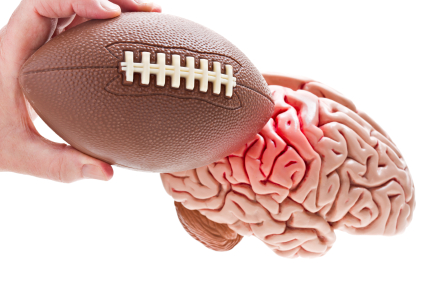
“A new study shows that almost one-third of NFL players will suffer long-term cognitive problems. Granted, that’s professionals, but obviously younger brains are at jeopardy on all gridirons. What mother or father can any longer willfully allow a son to play such a game with such odds? Verdict: Football is dangerous to your brain.”

NPR Sports commentator Frank Deford, in his weekly commentary, this time focusing on the deteriorating reputation and public image of pro football, and how football fans, so far at least, don’t seem to care.

It’s dangerous to your brain in more ways than one.

The NFL Vikings, for example, having decided first that sitting out one game with pay was sufficient to punishment for their star running back who beat his four-year-old son black and blue, then reinstating him for the next game, apparently on the theory that it had thrown a bone to critics, then pulled him off the roster again following new reports of an old story, involving Adrian Peterson allegedly beating another toddler son. (Peterson spreads his seed far and wide and with great generosity and abandon, having an estimated seven or more children with an equal number of unmarried women. The NFL and NFL fans have never shown any disapproval of this irresponsibility conduct, of course.) Now, we have no evidence in this latest allegation beyond text messages in which Peterson admits giving the boy a “woopin,” which is presumably the same as a “whuppin.” Peterson’s lawyer says nothing happened, and indeed, no complaint was made and no charges were filed. So what does the Vikings’ move mean? Is the NFL team concluding from this ambiguous incident that what Patterson did to his other child (that is, one of his many other children) was worse than the horrific photos already showed they were? How much worse could his conduct be? Is it sending the message that all corporate punishment is wrong? Who the hell is the NFL, which allows its players to maim each other, to tell me that I’m a child abuser if I spank my son? Or are the Vikings simply proving, as the league itself did it when banned Ray Rice only after a video showed him doing what it had to know he had done when it suspended him earlier for only two games, that it has no clue what’s right and what’s wrong, what is acceptable violence and what is unacceptable, what the public will ignore and what is so bad that it shouldn’t matter whether the public will ignore it or not?

Football is as dangerous to your values as it is to your brain. Continue reading

Government Horror Story: What Happens When We Expect Bureaucrats To Protect Us

Horror1

Indignant and self-righteous activists  argued that the real problem underlying the shootings at Virginia Tech, the D.C. Naval Yard, Newtown, Tucson and elsewhere—other than the Second Amendment, of course– was the failure of the health care system and the government to apprehend and stop emotional disturbed citizens before they start shooting.

This might have some validity, if it were not for a fact that Big Brother worshipers know but refuse to acknowledge. The health care system and the government are operated by people, many of them dedicated and competent, but a lot of them fearful, lazy, irresponsible and stupid. When we place power over the lives and liberty of others in the hands of such people, bad things happen.

They just happened to my family, and I am furious—both at the immediate fools who have abused us, but also the smug social architects who always think a new law and more government control over our lives is the solution to every problem.

At this moment, be warned:

I hate you people.

Stay out of my way. Continue reading

Henry Rollins Shows Us How To Apologize

MeaCulpaWriter, thinker, and philosopher  Henry Rollins wrote one of those columns that you should put aside for a weekend and think about for a while for the L.A. Weekly, essentially condemning Robin Williams for taking his own life. Reading it, I knew that he would regret it pretty quickly. It was obviously fueled by emotion and anger, and I’m familiar with that feeling. It was how I felt when John Belushi died, and it was how I felt when Philip Seymour Hoffman died—so much so that I had written one of those be-sure-to-think-about-it-over-the-weekend-posts when that great actor died, and fortunately trashed it. But I’ve had exactly the same thoughts that Rollins expressed so powerfully—he expresses everything powerfully—and I know I’ll have them again. He wrote:

“Almost 40,000 people a year kill themselves in America, according to the Centers for Disease Control and Prevention. In my opinion, that is 40,000 people who blew it. Fuck suicide. Life isn’t anything but what you make it. For all the people who walked from the grocery store back to their house, only to be met by a robber who shot them in the head for nothing — you gotta hang in there. I have life by the neck and drag it along. Rarely does it move fast enough. Raw Power forever.”

Continue reading

Ice Bucket Challenge Ethics

Ice Bucket Challenge

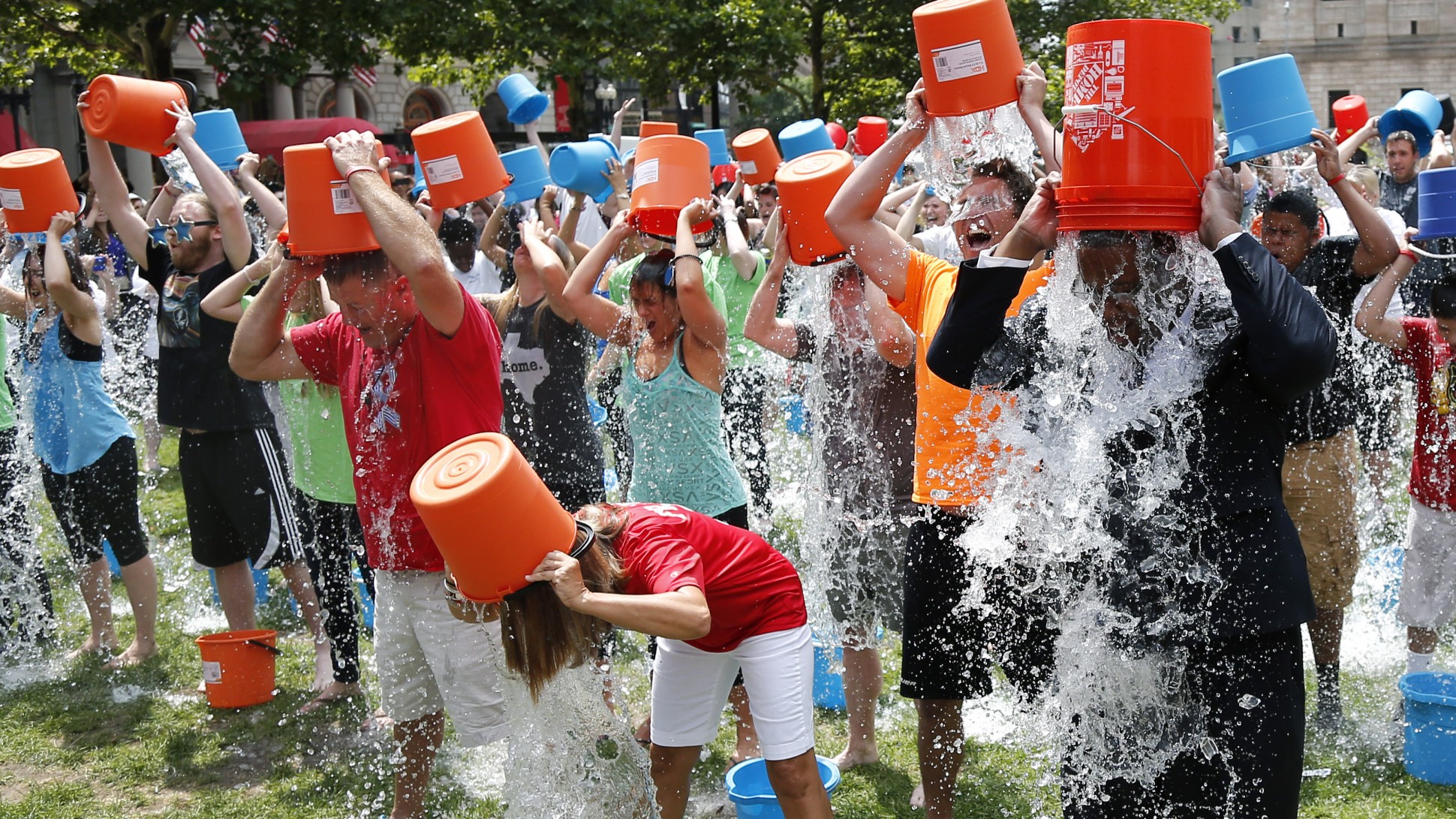
The “Ice Bucket Challenge” is a silly, brilliant fund-raising device that has simultaneously increased public awareness of Amyotrophic lateral sclerosis (ALS), better known as Lou Gehrig’s disease, brought over 14 million more dollars of donated funds into the ALS Association than last year for research, and provided some priceless YouTube fare, ranging from celebrity drenchings to this…

Entertainment! Celebrities! Medical research! Charity! Public Education! How could there be anything unethical about such a phenomenon? Well, ethics often throw cold water on all manner of activities human beings crave, so it should not be too great a surprise that the “Ice Bucket Challenge” has generated quite a few ethics-based objections. Let’s examine the potential, alleged and actual ethical flaws of the current fad, and rate them on an Ethics Foul Scale from zero (No ethical concerns at all) to ten ( Very Unethical).

1. It’s dangerous.

Anything can be dangerous if you are not sufficiently careful, and the Ice Bucket Challenge had its consequentialist moment when four firefighters were injured, one very seriously, trying to help the marching band at Campbellsville University get dumped with ice water this week. Two firefighters were in the bucket of their truck’s ladder preparing to douse the students using a firehose when a surge of electricity jumped from nearby power lines and electrucuted them and two colleagues. This was just a freak accident, however. Unlike the so-called Facebook Fire Challenge, the ALS fundraisng stunt shouldn’t be perilous to anyone, as long as practitioners don’t get too grandiose or creative.

Ethics Foul Score:

0

2. It wastes water.

Continue reading

Undermining Addiction Treatment For A Petty News Story: The Ethics Bankruptcy Of CBS and Dean Kendrick

"Here you go, Dean. Now: what did Robin Williams share at your AA meeting?"

“Here you go, Dean. Now: what did Robin Williams share at your AA meeting?”

 Alcoholism is a national scourge that destroys lives, families and businesses, and  often kills both sufferers and those they interact with. It it is incurable. One of the few effective methods of keeping alcoholism under control is the Twelve Step program developed by Bill Wilson in the 1930s, and taught by the organization he founded, Alcoholics Anonymous. Millions of Americans attend AA meetings every day, including many who are very close to me.

Dean Kendrick works for CBS affiliate KPIX-5 in San Francisco, and he’s apparently an Alcoholic Anonymous member. This means that 1) we shouldn’t know he’s a member, and 2) especially that he shouldn’t be revealing, especially on television, that anybody else is a member, and 3) he absolutely should not be revealing what someone said or how they acted at a meeting he attended, and 4) this even applies to Robin Williams, dead celebrity that he is. Continue reading

Comment of the Day: “Why Fox News’ Robin Williams Gaffe Matters”

Chris Marchener had several excellent posts today, but I am re-posting this one as the Comment of the Day for several reasons. It was in response to another commenter’s opinion that Fox News anchor Shepard Smith was not inaccurate to call Robin Williams a coward for succumbing to his suicidal urges. To the contrary, Smith was wrong, and his statement was cruel and irresponsible. Suicide arising out of mental illness runs—indeed, gallops—in my family: a great-uncle and three cousins killed themselves, and I knew the cousins and their battles with mental illness well. Sadly, much of the public is unschooled in what mental illness does and how and why it so often leads to suicide. Chris’s explanation of why Smith was exposing his ignorance may help enlighten some of the many who need enlightening. Here is his Comment of the Day on the post, “Why Fox News’ Robin Williams Gaffe Matters.”

It is quite easy to play armchair quarterback when you are not cursed with an affliction that renders you powerless to find comfort. You said “It’s borne of being unwilling to face the hard truths, make the hard changes, take the big risks needed to alter one’s own circumstances.” That perspective is fine when you are talking about behavioral sociopathy but when the chemistry in the brain is altered the individual has very little or any control over the outcome. I’ll bet that Robin Williams did more to face his demons than most anyone else would who do not also suffer from a chemical disorder of the brain. Unless you have some personal insight into his medical history a blanket claim of being a coward is unjust.

At this time, there is no prosthesis for remedying the destructive processes of mental illness other than using drugs to alter the brain chemistry. Unlike a prosthetic limb there is no guarantee that the medication will work as desired. Furthermore, as my wife and I have found out the hard way, long term use of anti-seizure and anti-depressives can have a high rate of mortality from the medications themselves.

Calling someone a coward after the fact is not merely unnecessary and hurtful it turns some people away from acknowledging the need for help. All reports show that he did seek help and did his best to confront his problems head on. Despite that he succumbed.

“The Strain” Ethics: Feminism, Sophie’s Choices and Moral Cowardice

The-Strain-Vampires

The FX cable networks ultra-creepy, disturbing and often disgusting series “The Strain” has begun raising ethics issues, as good science fiction (this is a horror-science fiction hybrid) is wont to do. The last episode, “It’s Not For Everyone” provided its characters with one ethical dilemma after another. [SPOILER ALERT!!] Arguably, all of them were botched. Continue reading