The Obligation To Know Something About What You Are Writing About

Believe it or not, this isn't the most ridiculous feature of the Slate essay it comes from.

Believe it or not, this isn’t the most ridiculous feature of the Slate essay it comes from.

I am constantly being reminded of an old Bob and Ray skit (no, I can’t find it online) they did on late night TV where Bob played an interviewer of a longshoreman (Ray) who had just published a thousand page history of the U.S. that was riddled with errors. “Here, for example,” the increasingly perplexed interviewer sputtered, “you say that Abraham Lincoln was born in 1943 in Bailey’s Mistake, Maine!” Because the internet permits anyone to publish authoritative-sounding nonsense and lies without penalty, that skit seems less and less absurd with each passing day.

Even the content of supposedly legitimate, respected on-line sources cannot be relied upon , because 1) the job of “editor” appears to be obsolete, and 2) if there is an editor, he may be an ignoramus too. For example, a day after after the World Health Organization released a stunning report announcing that citizens of Greece were intentionally giving themselves AIDS so they could get health benefits, it retracted the statement, saying, through  a spokesman, “There is no evidence of people in Greece or anywhere else in Europe deliberately infecting themselves.” What happened? It was an editing error. Oh, well then… wait, what? And nobody other than the editor read the ridiculous release before falsely accusing an entire country of breeding idiots?

This brings us to this “correction” that appeared yesterday on Slate….you know, that sophisticated, erudite, eclectic online cultural  commentary magazine:

“Correction, Dec. 10, 2013: This article originally misidentified penguins as mammals. They are birds.” Continue reading

Comment of the Day: The “I ♥ Boobies” Saga

Me too! Uh, all in the interest of breast cancer detection and awareness, of course. Wait, what did you think I meant?

Me too! Uh, all in the interest of breast cancer detection and awareness, of course. Wait, what did you think I meant?

As is often the case, this topic interests me more than it appears to engage Ethics Alarms readers, so I was thrilled to see the following comment by Ulrike, who seems to share my belief that “Keep A Breast” Foundation is the ethics villain of this First Amendment skirmish, choosing buzz and cheap publicity over responsible messaging and being willing to throw well-aimed, legally immune monkey wrench into the classroom as well. 

Here is the Comment of the Day by Ulrike (who also has amassed a bumper crop of Ethics Alarms brownie points by being the blogs most determined volunteer proof-reader) on the post  The “I  ♥  Boobies” Saga.

I beg anyone’s pardon if you may find this off topic, but I really need to vent my anger about these bracelets: The message that these bracelets are sending out is not “Save your life by having regular check-ups!” but “Women are perceived as having breasts first, and subsequently as a person”. All this bracelet manages to do is to reduce women to their sexual attractiveness while fighting for their very lives. Well done, “Keep A Breast” Foundation. I wonder what bracelets girls and women who fell victim to aggressive breast cancer and lost one or both breasts are supposed to wear. Maybe “Don’t got boobies you can love anymore”? Continue reading

J.J. And The Chickens: When Compassion Should Trump Principle

J.J. and friend.

J.J. and friend.

This strange and infuriating news story about the autistic child who is about to lose his “therapy chickens” is yet another example of how even the best ethics practices not only have exceptions, but obvious ones. Obvious, that is, except for the muddled thinkers on the DeBary (Florida) City Council, who have decided to harm a young and vulnerable child while turning his family’s life inside out because the needs of one citizen shouldn’t be enough to justify an otherwise unwise public policy. That governing principle is undeniably true…except in this case. And since it is so screamingly obvious that the otherwise sound principle is cruel to apply in this case, it is the perfect, obvious, compassionate instance when making an exception to a rule that works 99.9999% of the time is not only reasonable, but the right thing to do. The city council in question doesn’t comprehend this. Dead-eyed petty bureaucrats seldom do. Continue reading

Ethics Hero Emeritus: Jack McDonald (1915-2013)

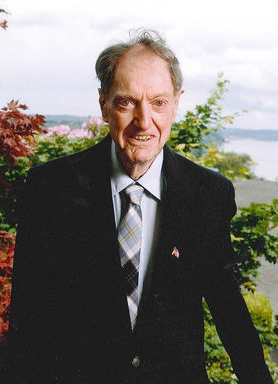
Jack McDonald

Before today, I had never heard of Jack McDonald, and outside of his co-workers , family and friends, not many had. That was the way he wanted it, for he was an unassuming man with a conventional career, including three decades as an attorney for the Veterans Administration. He clipped coupons, dressed humbly and allowed himself few luxuries. He got around his home town of Seattle using public transportation. Most who knew him thought he was struggling.

When Jack McDonald died this past September, his death received little notice in the local news, and none nationally—until about a week ago, when it was revealed that his will provided for the creation of a $187.6 million charitable trust for the benefit of Seattle Children’s Research Institute, the University of Washington School of Law and the Salvation Army. Continue reading

The “I ♥ Boobies” Saga

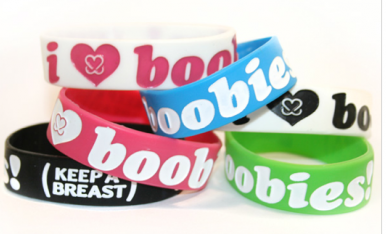
boobies bracelet

Some time in the foreseeable future, we may have the pleasure of reading the various opinions of sages like Antonin Scalia and Ruth Bader Ginsberg regarding the import of bracelets bearing the message, ” I  ♥ Boobies,” and whether it is a constitutional violation for public schools to ban students from wearing them. In August, the Third Circuit U.S. Court of Appeals rejected Pennsylvania’s’ Easton Area School District’s  prohibition of the breast cancer awareness bracelets on the grounds that they were potentially disruptive and inappropriately vulgar.

In late October, the District voted  authorize the district’s solicitor to file a petition with the U.S. Supreme Court seeking to have the high court hear arguments in the case. The controversy has been going on for three years, has cost the district  thousands of dollars in litigation costs that should have been spent on education, and will result, you can bet, in even more egregious expansion of vulgar language in the schools.

This easily avoidable Ethics Train Wreck occurred when two middle school students in Easton wore the bracelets to school with their parents’ permission despite a school ban that called them “distracting and demeaning.”  ETHICS FOUL #2  School is about learning and facilitating learning, not making an effort to intentionally pick fights  in the shadowy realm of First Amendment law. Why did the parents do this? Are the provocative bracelets really essential school fare? Will their presence in the schools have a measurable impact on breast cancer awareness? Was the ability of the girls to wear the bracelets, and their opportunity to bend the school to its will worth all the cost, time and disruption this defiance of a dress code was likely to cause a legitimate utilitarian trade-off?  I don’t think so. Continue reading

Ethics Quote Of The Week: Peggy Noonan

 “A fellow very friendly to the administration, a longtime supporter, cornered me at a holiday party recently to ask, with true perplexity: “How could any president put his entire reputation on the line with a program and not be on the phone every day pushing people and making sure it will work? Do you know of any president who wouldn’t do that?” I couldn’t think of one, and it’s the same question I’d been asking myself. The questioner had been the manager of a great institution, a high stakes 24/7 operation with a lot of moving parts. He knew Murphy’s law—if it can go wrong, it will. Managers—presidents—have to obsess, have to put the fear of God, as Mr. Obama says, into those below them in the line of authority. They don’t have to get down in the weeds every day but they have to know there are weeds, and that things get caught in them. It’s a leader’s job… to be skeptical that grand schemes will work as intended. You have to guide and goad and be careful. And this president wasn’t.”

—-Former Reagan muse and current pundit Peggy Noonan in a Wall Street Journal op-ed titled “Low-Information Leadership.”

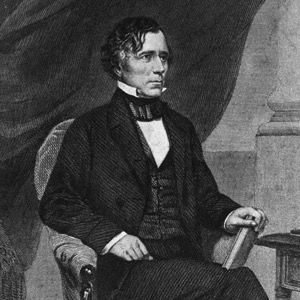
At least President Pierce had an excuse.

At least President Pierce had an excuse.

This is, of course, rank incompetence, but worse than that, it is arrogant, willful, shocking and frightening incompetence. It gives me no pleasure to say that I saw the signs of this years ago, for  years ago there was reason to be hopeful. Presidents learn, most of them, anyway. This one, without any experience to speak of in governing, management, leadership or even organizational process, not only hasn’t learned, but has never shown the slightest recognition that he has anything to learn. Continue reading

Unethical Website Of The Month: The California Republican Assembly’s CoveringHealthCareCA.com

Fake Obamacare site

“Unethical Website of the Month” doesn’t really do justice to CoveringHealthCareCA.com, and that’s even with the acknowledgement that this is the same Ethics Alarms category where the racist site Chimpmania is filed. CoveringHealthCareCA.com is an intentional effort to sabotage the Affordable Care Act in California, the one place where the “signature achievement” of the Obama administration didn’t completely collapse out of the starting gate. For Republican lawmakers to be doing this is beneath contempt, indefensible in every way, and the ethical equivalent of treason. The people who publish Chimpmania are hateful, vicious bigots, but they are marginal citizens and human beings. All societies have scum, and in the 21st Century, some of that scum will have racist websites. That is inevitable. It should not be inevitable for public servants to try to undermine their own government’s laws, health care system, and citizens for political gain.

CoveringHealthCare.com is a false flag website, launched by Republicans in the California Assembly to deceive Californians into believing it is an official Obamacare website, when it is, in truth, an anti-Obamacare website. Its address is similar—CoveringHealthCareCA.com vs. CoveredCa.com, the real site—and its design evokes the actual Obamacare sites. Its apparent purpose is to help citizens navigate the new health insurance system, except that once you begin clicking and reading, it slowly dawns–how slowly will vary— that this is something else, a collection of attacks and talking points against the Affordable Care Act. Continue reading

Comment of the Day: “Ethics Quiz: The Kidneys of Orlac”

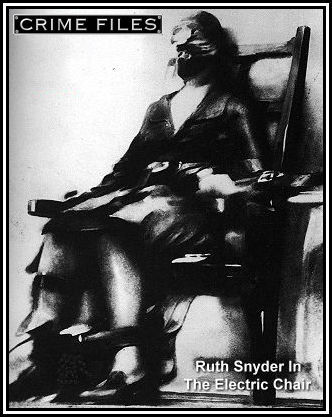
But first, a last act of altruism...

But first, a last act of altruism?

The presumptive winner of the annual Ethics Alarms award for “Commenter of the Year” in 2013, texagg04has delivered a Comment of the Day expanding the topic of the post regarding a condemned prisoner in Ohio who wrangled a postponement of his execution so he could donate his organs to relatives. Here is  texagg04’s  take on “Ethics Quiz: The Kidneys of Orlac.” I’ll have some comments at the end.

“First, a murderer or other capital criminal being held responsible for his or her conduct seems to be in conflict with the same individual being allowed to display charity when you say they  forfeited their freedom, all of it, with their commission of a  capital crime. I’m not so sure it should be viewed from that angle.

Punishment serves a variety of purposes. Some petty crimes receive punishment designed to compensate, as best as can be, the victim – the victim being dead, capital punishment does not serve this purpose. Some crimes are of an anti-social nature, and the apt punishment seeks to rehabilitate or reconcile the perpetrator to the community. Capital crimes are so heinous that we have determined that the perpetrator must be completely cut off from society, through their death. In this case, the punishment does nothing for the victim OR for the criminal; the punishment is designed solely for the benefit of society.

If the criminal wishes to donate his/her organs to (what we must assume is to salve their own conscience – even though we can, probably, cynically assume is just a delaying tactic), we should not care one bit. They are gaining no material benefit from the community, nor are they engaging in any direct interaction with the community – so the act of cutting them off from the community as part of the punishment is still complete. Continue reading

Ethics Quote Of The Month: Dr. Jonathan Gruber

“We currently have a highly discriminatory system where if you’re sick, if you’ve been sick or [if] you’re going to get sick, you cannot get health insurance. The only way to end that discriminatory system is to bring everyone into the system and pay one fair price. That means that the genetic winners, the lottery winners who’ve been paying an artificially low price because of this discrimination now will have to pay more in return. And that, by my estimate, is about four million people. In return, we’ll have a fixed system where over 30 million people will now for the first time be able to access fairly price and guaranteed health insurance.”

—– Dr. Jonathan Gruber of MIT, an economics professor who is among the designers of the Affordable Care Act, a.k.a Obamacare. He was interviewed by NBC’s Chuck Todd regarding the troubled law’s problems.

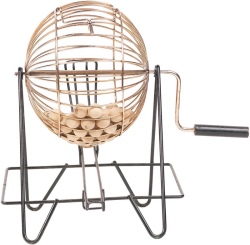
lottery

Could it be that the act of getting involved with this administration turns even non-politicians into deceivers and liars? For an economist to talk so deceitfully and manipulatively is distressing. He, of all people, certainly knows how insurance works, and has to work. The insurance company accepts, in essence, wagers from its insured, in the form of premiums, that they will “win” by incurring health care costs that require more funds more than the accumulated “wagers.” The insurance company gambles that it will “win” by the insured remaining relatively healthy, so that the premiums (and whatever investment income they generate) exceed what the company has to pay in medical costs for that individual. The only way a company can keep providing insurance is to win more bets than it loses.

Saying that an insurance company is “discriminating” (in the unjust and biased sense) when it refuses to  accept a wager that is virtually certain to win is like saying that a poker player is engaging in discriminatory conduct by refusing to play with a new player who brings a royal flush to the table with him. It is not discrimination to refuse to lose money, and Gruber knows it. But  like an expert liar, as I must presume he is, he plants a false definition of discrimination at the beginning of his discussion and then treats it as an agreed-upon description of what is occurring. Not selling something to a customer who can’t afford a fair price is not discrimination, and refusing to gamble with someone who is assured of winning is also not discrimination. But discrimination is something that everyone regards as wrong, unfair, and unlawful, so that is how the lawful operation of insurance companies is framed by this clever, learned, dishonest man.

I no longer trust Dr. Gruber, nor should you.

His statement is of additional interest, however, because it starkly defines the unique Progressive definition of “fairness,” by his repeated use of lottery imagery to describe the fact that some people, through no fault of their own, have fewer advantages than others, while those others, often through no virtue of their own, have more resources and opportunities. Progressives regard this as inherently wrong and unfair, and so unfair that it must be remedied by obtrusive government interference. The rest of America regards this as “life.” Continue reading

Maryland’s Ethics Dunce State Senator, Len Bias, And Statue Ethics

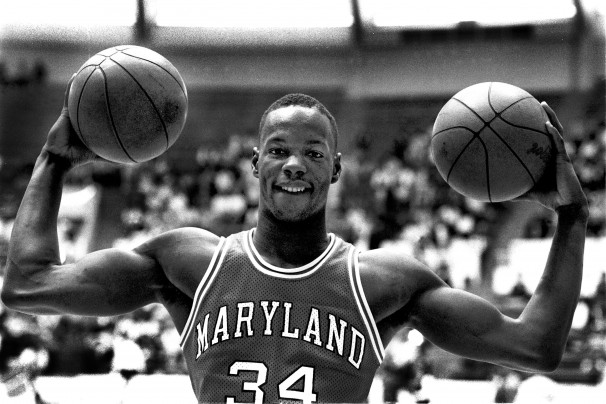
The late Len Bias. No hero he.

The late Len Bias. No hero he.

Maryland State Sen. Victor R. Ramirez (D-Prince George’s County) has introduced a bill to designate state funds to erect a statue of Len Bias, a former University of Maryland basketball star, at Northwestern High School in Hyattsville, Md. Bias, a graduate of the school, died in 1986 of cocaine intoxication less than two days after he was drafted s by the NBA’s Boston Celtics, shocking the area and the nation. Ramirez’s efforts, as well as a recent decision to name another local high school after President Obama, is causing the Prince George’s County Education Board to revise and formalize its policy for such honors as statues and building names. Will an African-American kid who cut off his promising life as it was just beginning with a self-administered drug overdose be deemed worthy of immortalization, to serve as inspiration for future generations of black youth? Stay tuned.

The Stupid is strong in this one...

“Len Bias was a student athlete in Prince George’s,” Sen. Ramirez argues. “He moved the University of Maryland basketball program to new heights. He and Michael Jordan were the two best college players at that time, until he tragically died. . . . We can learn something from everything. The nation learned a lot from this unfortunate incident.” Well, if learning “a lot” from someone’s demise is the criteria for honoring them with a heroic statue, that opens up all kinds of possibilities. Good thinking, Senator! A statue of Richard Nixon reminds us that power corrupts, certainly a valuable lesson for all. A statue of Benedict Arnold teaches us the dangers of pride, and how a sense of entitlement can lead to tragic choices. And what could be more illuminating than a statue of Adam Lanza, the Newtown shooter? Maybe even one showing him mowing down those kids—such a powerful statement about gun abuse, and the failures of the mental health system! In fact, what would really be appropriate is naming a public school after him.

By the end of his life, Len Bias was no hero or role model, and he deserves no honor for knowingly breaking drug laws and getting himself killed while disappointing legions of fans and supporters. Erecting a statue to Bias would be just one more step in society’s capitulation to the seductive, and destructive, appeal of the drug culture, and the elimination of the vitally important societal stigma attached to recreational drug use. What Bias did was willful, ignorant, irresponsible and illegal, and even if that last is removed for his young admirers, the first three remain.

The County Board of Education is now going to debate the appropriateness of making a hero out of a  drug abuser and a 21 year old cocaine casualty. If they have to discuss it to answer that question, they all need to be replaced, not that the pathetic performance of their schools isn’t reason enough for that. Len Bias’s death wasn’t “a tragic incident.” A car crash is a tragic incident. Bias died because, like so many young people in Prince George’s County and elsewhere, he deliberately engaged in dangerous conduct that he knew was forbidden, and learned, the hard way, why.

Placing a triumphal statue in front of a high school is no way to discourage deadly attitudes like the one that got Bias killed…unless the design of the proposed statue shows the young man at the exact moment his heart seized and his eyes rolled back in his head.

________________________________

Facts and Graphic: Washington Post

Source: The Nation