Jahi’s Plight: Why Death Panels Are Inevitable And Necessary If We Are Going To Pay For Each Other’s Health Care

death panels

Even while the Affordable Care Act debacle is mired in other problems, the “death panel” controversy lingers on, as conservatives exploit the public’s visceral reaction against an inevitable result of modern health care cost-sharing, and progressives dishonestly deny and ridicule the reality of that result, because it makes health care reform less attractive.

The case of Jahi McMath is instructive, if anyone bothers to consider its practical and ethical implications. Jahi, 13, underwent a tonsillectomy Dec. 9, and emerged from her post-op recovery legally dead, due to massive swelling in her brain. She was placed on a ventilator, and according to its policy, Children’s Hospital Oakland was preparing to take her off life support when the family strenuously objected. It petitioned a court to keep her technically alive so she could spend Christmas with them. An Alameda County judge Monday ordered hospital officials to keep Jahi on a ventilator until Dec. 30 while an independent neurologist reviews her case. Meanwhile, her mother told CNN and other local media that although she appreciates  the second opinion and court order, she will fight to keep her daughter on life-support as long as possible, saying,

“I’m her mother. I’m going to support her. It’s my job to do it. Any mother would do it. I just want her to have more time. There are so many stories of people waking up in her situation.” Continue reading →

Obamacare, “The March Of Folly,” And The Ethical Obligation To Accept Unpleasant Facts

Charge+of+the+Light+Brigade+Cavalry+Charge

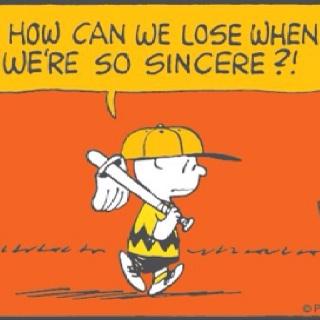
Today, while listening to the furious efforts of such liberal talking heads as E.J. Dionne (NBC’s Meet the Press), Donna Brazile (ABC’s Sunday Morning With George) and Juan Williams (Fox News Sunday) to explain why the Affordable Care Act disaster is not really a disaster and why it should be full steam ahead even as the legislation is unraveling before our eyes, my mind kept jerking back to two disparate sources. One was Barbara Tuchman’s “The March of Folly,” the celebrated historian’s 1985 examination of how governments persist in doomed policies long after it is obvious to all, including them, that the effort is not only futile but disastrous. The other was “Peanuts:”

Sincere

For this is what the bitter-enders regarding the Affordable Care Act have become. Because the absurdly flawed and over-reaching legislation was well-intentioned, and because it was sincerely designed to help people who need and deserve help, and because the hearts of those who rammed it through the process, ignoring warnings, systemic checks and balances, prudence and common sense, were pure, the law just has to work. Former White House spokesperson Robert Gibbs literally said this to David Gregory on “Meet the Press” this morning. There’s just no choice, he said. The administration just has to make it work, that’s all. Anyone who has read Tuchman, or who has been alive longer than Justin Bieber, should get chills to hear sentiments like that. Continue reading →

Anti-Smoking Ethics—And A Subversive (But Ethical!) Suggestion

"Sorry, sir, but sort-of-looking-like-you're smoking's not allowed in here, and besides, a phony study will be finding it deadly any day now."

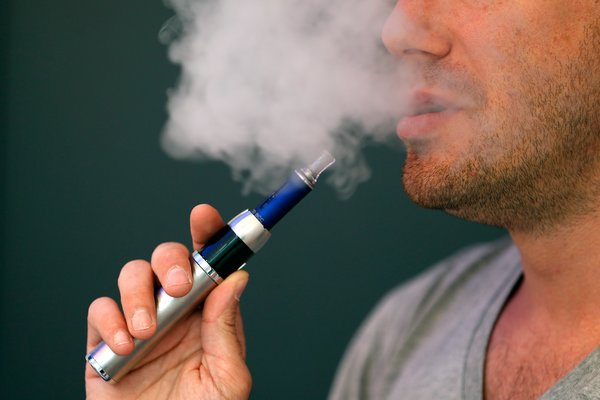
“Sorry, sir, but sort-of-looking-like-you’re smoking’s not allowed in here, and besides, a phony study will be finding it deadly any day now.”

Little noted in the news winds was the fact that a major study reported in the Journal of the National Cancer Institute found “no link between the disease and secondhand smoke.” Oh!  Well, never mind then. The supposed deadly effects of second hand smoke gave hoards of health-policing citizens leave to not only be obnoxious and confrontational–“You have no right to pollute my lungs!”—but also to ban a legal consumer product in public places as well as to stigmatize anyone using the products as selfish sociopaths perpetrating slow-motion serial murder.

The second-hand smoke theory always seemed too convenient to me. Many years ago, I permanently soured my relationship with the head of a large Washington association, a non-smoker (as am I, except that I don’t presume to tell others what legal products to entertain themselves with), by opposing his ban on smoking in meetings and offices (and, eventually, his employees’ own homes) because he thought it was dangerous.  He trumped me by producing a couple of fishy studies that, it appears, were in fact as fishy as I suspected at the time. I would like to see a call for accountability on this: how did data now shown to be completely without factual basis manage to surface, become accepted in the regulatory establishment, and be used to bully smokers for decades?

And if you think this reminds me of the over-hyped scientific “consensus” on global warming and climate change, you are exactly right. Continue reading →

When Evil Doesn’t Seem Wrong: The Post World War II Lobotomies

The recent, shocking discovery that the Soviet Union forcibly lobotomized thousands of World War II veterans when the battle-weary soldiers could not cope with the post traumatic stress created by the horrors of war reaffirms our convictions about the dehumanizing effects of totalitarian government.

Wait…did I say the Soviet Union? My mistake. It was our government that did this, and sent letters to their families like this one:

lobotomy instructions

From the Wall Street Journal this week: Continue reading →

Ethics Quiz: PolitiFact’s Ethical, Unethical Lie Of The Year

Lie of the Year

I’m so confused!

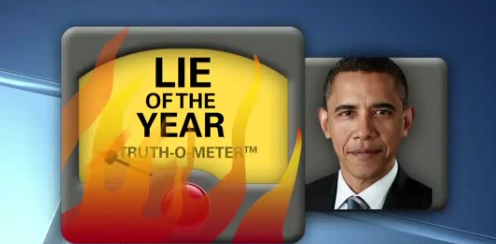
PolitiFact, the Tampa Bay Times’ “fact check” web page, has long been flagged on Ethics Alarms (and elsewhere, notably by the WSJ’s James Taranto) for its lack of integrity and flagrant bias towards the Left, Democrats, and President Obama. It was in June of 2012 that Ethics Alarms produced the “smoking gun” of PolitiFact’s perfidy, when the site  pulled off a “when did you stop beating your wife” stunt to cast unfair suspicion on House Speaker John Boehner, “fact-checking” a groundless accusation and despite finding no evidence that it was true, labeling the accusation unsettled, because Boehner might do what he was accused of, eventually. In May of this year, as it slowly dawned on fair, English-comprehending Americans that then-U.N. Ambassador Susan Rice was misleading the American people about what the CIA knew about the September Benghazi attack, and Jay Carney, as his job description requires, lied through his teeth about her performance, PolitiFact could only muster a “mostly false” rating. The site is a partisan spin-machine, using the dishonest guise of a neutral “fact-checker” to undermine trust in Republicans and bolster Democrats when they need cover, particularly the President, who needs cover a lot. Continue reading →

Ethics Hero: Major League Baseball

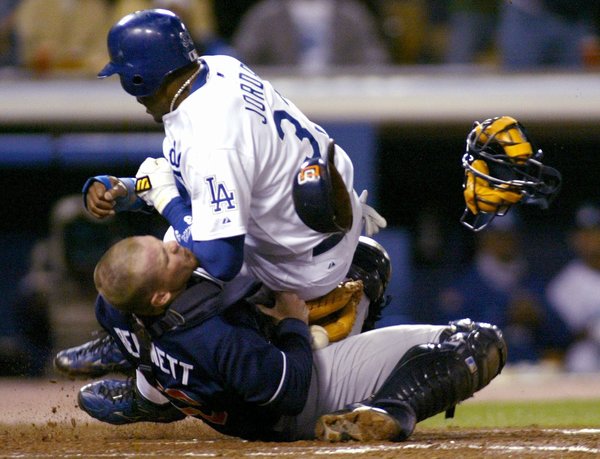
homeplate collisionsAt least one major league sport cares about its players’ health more than it does about highlight films.

Today Major League Baseball announced that it will be banning collisions at home plate, one of the most exciting plays in baseball, and one of the most dangerous. The violent and unpredictable convergence of large human bodies created when runner and ball arrive at home plate nearly simultaneously as a catcher positions his body to receive a throw while blocking access to the plate have decided games and championships, but wrecked careers and, quite possibly, brains. Football’s frightening record of player dementia prompted baseball to check its records, and there was tell-tale evidence that concussions take their toll on ex-catchers as well.

Last season, for the first time, baseball required players suffering concussions to stay on a special disabled list until they were cleared to play after a head examination. The new ban represents more progress.

The rules change will probably take this form, according to ESPN: Continue reading →

The Obligation To Know Something About What You Are Writing About

Believe it or not, this isn't the most ridiculous feature of the Slate essay it comes from.

Believe it or not, this isn’t the most ridiculous feature of the Slate essay it comes from.

I am constantly being reminded of an old Bob and Ray skit (no, I can’t find it online) they did on late night TV where Bob played an interviewer of a longshoreman (Ray) who had just published a thousand page history of the U.S. that was riddled with errors. “Here, for example,” the increasingly perplexed interviewer sputtered, “you say that Abraham Lincoln was born in 1943 in Bailey’s Mistake, Maine!” Because the internet permits anyone to publish authoritative-sounding nonsense and lies without penalty, that skit seems less and less absurd with each passing day.

Even the content of supposedly legitimate, respected on-line sources cannot be relied upon , because 1) the job of “editor” appears to be obsolete, and 2) if there is an editor, he may be an ignoramus too. For example, a day after after the World Health Organization released a stunning report announcing that citizens of Greece were intentionally giving themselves AIDS so they could get health benefits, it retracted the statement, saying, through  a spokesman, “There is no evidence of people in Greece or anywhere else in Europe deliberately infecting themselves.” What happened? It was an editing error. Oh, well then… wait, what? And nobody other than the editor read the ridiculous release before falsely accusing an entire country of breeding idiots?

This brings us to this “correction” that appeared yesterday on Slate….you know, that sophisticated, erudite, eclectic online cultural  commentary magazine:

“Correction, Dec. 10, 2013: This article originally misidentified penguins as mammals. They are birds.” Continue reading →

Comment of the Day: The “I ♥ Boobies” Saga

Me too! Uh, all in the interest of breast cancer detection and awareness, of course. Wait, what did you think I meant?

Me too! Uh, all in the interest of breast cancer detection and awareness, of course. Wait, what did you think I meant?

As is often the case, this topic interests me more than it appears to engage Ethics Alarms readers, so I was thrilled to see the following comment by Ulrike, who seems to share my belief that “Keep A Breast” Foundation is the ethics villain of this First Amendment skirmish, choosing buzz and cheap publicity over responsible messaging and being willing to throw well-aimed, legally immune monkey wrench into the classroom as well. 

Here is the Comment of the Day by Ulrike (who also has amassed a bumper crop of Ethics Alarms brownie points by being the blogs most determined volunteer proof-reader) on the post  The “I  ♥  Boobies” Saga.

I beg anyone’s pardon if you may find this off topic, but I really need to vent my anger about these bracelets: The message that these bracelets are sending out is not “Save your life by having regular check-ups!” but “Women are perceived as having breasts first, and subsequently as a person”. All this bracelet manages to do is to reduce women to their sexual attractiveness while fighting for their very lives. Well done, “Keep A Breast” Foundation. I wonder what bracelets girls and women who fell victim to aggressive breast cancer and lost one or both breasts are supposed to wear. Maybe “Don’t got boobies you can love anymore”? Continue reading →

J.J. And The Chickens: When Compassion Should Trump Principle

J.J. and friend.

J.J. and friend.

This strange and infuriating news story about the autistic child who is about to lose his “therapy chickens” is yet another example of how even the best ethics practices not only have exceptions, but obvious ones. Obvious, that is, except for the muddled thinkers on the DeBary (Florida) City Council, who have decided to harm a young and vulnerable child while turning his family’s life inside out because the needs of one citizen shouldn’t be enough to justify an otherwise unwise public policy. That governing principle is undeniably true…except in this case. And since it is so screamingly obvious that the otherwise sound principle is cruel to apply in this case, it is the perfect, obvious, compassionate instance when making an exception to a rule that works 99.9999% of the time is not only reasonable, but the right thing to do. The city council in question doesn’t comprehend this. Dead-eyed petty bureaucrats seldom do. Continue reading →

Ethics Hero Emeritus: Jack McDonald (1915-2013)

Jack McDonald

Before today, I had never heard of Jack McDonald, and outside of his co-workers , family and friends, not many had. That was the way he wanted it, for he was an unassuming man with a conventional career, including three decades as an attorney for the Veterans Administration. He clipped coupons, dressed humbly and allowed himself few luxuries. He got around his home town of Seattle using public transportation. Most who knew him thought he was struggling.

When Jack McDonald died this past September, his death received little notice in the local news, and none nationally—until about a week ago, when it was revealed that his will provided for the creation of a $187.6 million charitable trust for the benefit of Seattle Children’s Research Institute, the University of Washington School of Law and the Salvation Army. Continue reading →