Increasingly both the questions and the answers published by Kwame Anthony Appiah, the NYU philosopher professor who has been the caretaker of the New York Times Magazine’s “The Ethicist” advice column for more than a decade, show signs of ethics rot. This is why I haven’t been commenting on them as often, though the column is like a window into the warped minds of the Woke and Wonderful.
This month, for example, the previous three questions have been “Is It Wrong to Work for a Charity That’s Funded by a Questionable Source?” (the old “dirty money” trope), “Can I Ask My Brother to Have His Racist Prison Tattoo Removed?” (of course you can ask—you can ask him if he can fly to Mars by flapping his arms, but what someone chooses to wear on their skin or their body is none of your business, and removing a racist tattoo won’t make him any less racist…), and “A Homeless Person’s Pet Needed Help. Should I Have Tried to Buy It?” (The pet is there to give love and comfort to the homeless person. Butt out.)
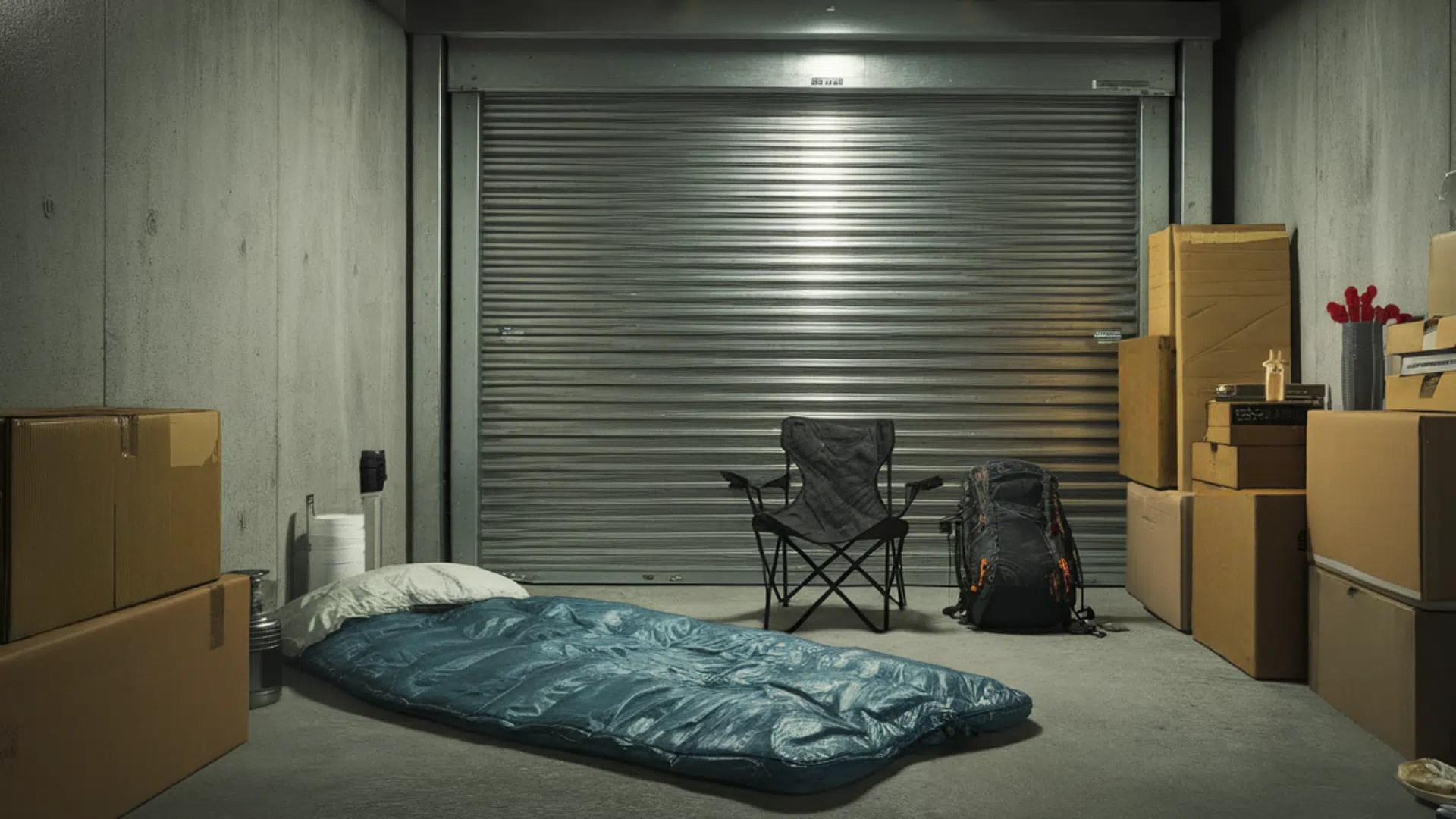
But this week’s question prompts the Popeye in me (“It’s all I can takes ‘cuz I can’t takes no more!”) A woman who rents a storage unit (in a bad Los Angeles neighborhood) discovered that a man is living in the unit across from hers. This makes her uncomfortable (Ya think?) but she feels compelled to ask Kwame, “I Think Someone Is Living in the Storage Unit Next to Mine. What Should I Do?” We then get an exchange of what a friend calls “toxic empathy.” It’s all the U.S.’s fault, see, because we don’t take care of homeless people like—I kid you not—Norway. This supposed ethics expert’s advice: “Asking to move yourself, rather than trying to get him removed, is probably the most humane course, and the one most likely to preserve your peace of mind.”
Well, Kwame (in NYC) and “Anonymous” (In L.A.) certainly are doing their part to make those two cities the leftist hellholes they are becoming. Hey, it’s cruel to enforce laws! The most humane course is let people disobey laws that are inconvenient or get in the way of their needs. By all means, tilt policies to the benefit of the untrustworthy and irresponsible. It only lowers standards, conduct, well-being and safety for everyone, but that’s the goal of equity and inclusion, right?
Morons. How did so many Americans end up thinking this way? I am distraught.


You mean “out of sight, out of mind” isn’t the ethical choice? /s
I disagree about the cat. It’s not humane to keep a cat leashed to a milk crate outside in frigid weather. A pet’s ability to provide love and comfort is a thing of value, but it should not be at the expense of the pet’s health.
The cat situation is more complicated, but my analysis is 1)giving money to homeless people usually doesn’t help them, and sometimes kills them. 2) the cat was probably a stray. Is the cat better off with a flawed caretaker than with nobody, living on the street? Probably. 3) you’re going to, essentially, take something away from a vulnerable human being by exploiting his or her neediness so you feel better and 4) exploit your superior resources as power over a weaker human to remove one of the few pleasures or comforts that person has to bring no ultimate benefit of the human being, who will lose or waste the money, and then not have a cat/companion/source of comfort.
I think I would feel different if the cat were in his lap or had more protection from the cold sidewalk than a thin blanket. A stray would be able to get off the pavement and under a bush or behind a dumpster. So, no, I don’t think it’s necessarily better off with a flawed caretaker because he has her tied to a milk crate.
I would also consider buying a cat bed, food, and a water bowl for her, but the letter writer said they could tell “that he was mentally ill and unable to provide proper care for the animal” so I’m not sure how long those things would remain with the cat. If the man seemed able to care for the cat, along with providing necessities, I think that offering to have her spayed, vaccinated, and then returned to him would be reasonable.
I’m sure I’m a bad person for feeling more sorry for the cat than the man. The man has more agency than the cat and more options. It feels as though the cat is being treated as a thing rather than an animal. (It’s possible my judgement is affected by the illustration. That is one sad looking cat.) I don’t think it’s a fair trade off for the cat to be in an abusive situation just so the man has a companion. I would worry about her little toe beans getting frostbitten.
My late wife would look at the problem exactly the same way.
May I suggest a 9v battery heating vestment for the kitty? It warms up to a very comfortable 65 degrees and the battery lasts a week. I think this might by the must humane choice for all concerned. For the homeless man, for the kitty, and for the feelings of anyone observing.
This makes me think of a conversation between two characters in Pluribus.
Carol: “They’re not evil. They wouldn’t even kill an ant.”
Manousos: “And isn’t it evil to value a man the same as an ant?”
By worrying about the cat, I’m afraid I’ve slipped into caring more for an animal than a human, but it’s because I think the cat is likely to die if it remains as is while the man is not likely to die from the removal of the cat.
The show is on Apple. If you haven’t watched it, watch. We’ll have so much to talk about.
Regarding Jack’s answer to
“I Think Someone Is Living in the Storage Unit Next to Mine. What Should I Do?“, I think he’s missing something.
Jack is actually missing 5 or 10 things, but it’s going to take me a while to enumerate them all.
I’ll be posting on this. My initial objection is Jack’s sanctimonious assertion that the police should be notified. I just don’t like that answer, other things being equal.
stay tuned for my various thoughts and opinions which will be tumbling out of my mind and onto the page during the next day or two.
–charles w abbott
rochester NY
How is the position that law enforcement should be notified when someone is breaking the law “sanctimonious”? I’m a lawyer, you know. In my case, it’s mandatory, and in the case of a normal citizen, its civic responsibility. Why are you keeping us in suspense?
Sanctimonious may not be the correct word.
BTW, I didn’t mean to start a “food fight”. And It frequently slips my mind that you are a lawyer, and that a lawyer might argue that
“Law enforcement should be notified when someone is breaking the law.”
Sorry to tease. There will most posts in a few minutes…
So, here are my thoughts. They may not be listed in decreasing order of significance.
1. Calling the police is not something to be done as a knee jerk reaction. There is an optimal amount of calling the police. A statistician would discuss “Type One Errors and Type Two Errors.” Failing to call the police when we should call them is one sort of an error. Calling the police when it’s an over-reaction and we could have overlooked a minor issue is the opposite error.
Personally I would start by playing “wait and see,” or “time will tell.” Especially if the person is not causing a nuisance. At a stretch, I would call that “Christian forbearance.” Maybe they spent one night there. Maybe they fell asleep there. Maybe it just looks like they are living there because they have begun providing themselves with creature comforts, but they always go home at night to sleep and shower and change clothes.
Making a friendly comment to the storage company could be appropriate, just as a curtesy so that someone there knows. Maybe the company knows, or suspects, and at the moment are pretending not to know, because the situation will soon go away. Perhaps they are “turning a blind eye” as the saying goes.
Calling the cops seems like another thing. Does anyone still call that “dropping a dime?” I mean…outside detective novels? The phrase is probably going away, but I’ll reach out to my network to see what the cool kids are calling it these days.
Personally I would tend to call the cops only if the person was in distress, was fouling the facilities, or seemed threatening or dangerous. And perhaps if I knew what the “baseline” was and there was a deterioration from the baseline.
1.5. Speaking of calling the cops because “people are breaking the law,” there are many stupid laws and some of them are followed more rigorously than others. For example, in many places jay-walking is standard practice, while in California you get fined for it, and the CA motorists are hypervigilant about coming to a quick halt as soon as a pedestrian steps off the curb. Based on my sporadic experience…
I will continue this thread…
charles w abbott
rochester NY
As everyone knows, there are many stupid laws.
A dear friend of mine, a native Californian, remarked to me that in California it was pretty common for people to live in storage facilities. This must have been decades ago, early to mid 1990s.
She went to UC Santa Barbara (regarded as a “party school” by undergraduates but she was in a demanding program in a highly respected department). Because Santa Barbara has a beach and a temperate climate, they have no shortage of homeless people. Like most places in California.
As the story goes, there was a problem of homeless people sleeping in the university library at UC Santa Barbara. The obvious solution was make it illegal to sleep in the library, so that the homeless sleepyheads could be rousted and chased out, probably given a warning or “trespassed”–that is to say, given a “Criminal Trespass Warning” which deems them persona non grata and subject to criminal penalties if they came back.
You can imagine the next part of this story. Zealous defenders of civil liberties complained that the homeless were being unfairly targeted, and that there was a double standard in which UCSB students could catnap freely while the homeless were unfairly put upon. So…campus security started arresting students for sleeping in the library!
This is all told to me by my friend, it could be apocryphal but I doubt it.
stay tuned for more posts…
I don’t see the relevance to the storage facility issue. That a law can be misinterpreted or foolishly enforced does not indicate that it is a bad law. The homeless were trespassing. The students were not. Mens rea is key to being accountable for breaking a law. Someone setting up a bed and eating in a storage facility indicates an intent to break the law by misusing the rental space. Falling asleep in a space one is renting for storage isn’t the dame thing.
Next?
I see your point but I think you’re missing something.
I may revisit this later.
Thanks for coming out to play.
What? I’m missing “something”? What is this, a parlor game? What am I missing? Or is this really Alizia?
ok, just keep egging me on and I’ll type more because I have “instant response syndrome.”
First of all…
Alizia and I are individuals who have never met. She and I are still drafting our declaration to proclaim that “we have nothing in common with each other and we refuse to be held responsible for the debts we might respectively incur.”
Such as driving you, Jack Marshall, crazy.
= – = – = – =
I have no training as a lawyer. I have a certain amount of training as an economist, despite the fact that neither of my degrees are in economics. It often seems like my mind runs in that groove, for better or worse.
Economists view individuals as utility maximizing actors making tradeoffs at the margin, subject to constraints.
Lawyers view society as…oh, who knows, I don’t know how they see the world. I know one thing–Lawyers add constraints. They prohibit this. They mandate that. They caution against this. They reward us for doing that.
The lawyerly point of view is necessary in our society–we have clearly defined property rights and hard edged legalisms. I’m reminded of an old book _The origins of the common law_ by Arthur Hogue, which I still have never read.
We have an incredibly complex system of property rights going back to the High Middle Ages…it facilitates cooperation and exchange. Lawyers help us to work with it. The city owns the “right of way” between the sidewalk and the street. I have to mow the grass on top of it. The city can tell me where the water main stops and my water service pipe begins…
The lawyerly point of view, as I see it, compounds with diligence and zeal to take away people’s options.
People who live on the margins of society, or who are quirky or disagreeable, seek to carve out a little option of doing things. People of modest means are hurt by the proliferation of laws, regulations, codes, red tape.
Lawyers stand in the way of many people who aren’t really causing problems. This is because lawyers exercise prudence. They think of the 19 things that might possibly go wrong, and guard against each one of them, blithely removing options.
Additionally, lawyers help narrow interest groups remove options. I tend to think of the way that the late great economist Milton Friedman put it, probably in _Capitalism and Freedom_.
People who study law get elected to the state legislature and say you can’t cut hair without a license. You can’t build a house without a driveway. Let’s have the town require minimum lot sizes and mostly permit single family homes.
It’s easy to tear down derelict buildings, but harder to put up new ones. It’s easy to take away people’s jobs by pricing them out of the market, but hard to start and business and employ someone.
Let’s speculate about the person who “may be living in a storage unit.”
A lot homeless people are “f*ckups. Some aren’t. I don’t know if the person living in storage unit (assuming he *is* living there) is a f*ck-ed up drug-abusing-crazy-person who sh*ts on the floor. Maybe he is. Maybe he showers at the town health center and charges his phone at the library. You don’t know that either.
Why can’t he live in his storage unit? Because the terms of his lease don’t permit it. What if he has his wits about him and won’t sh*t on the floor or burn anything down…he just wants to crash there 2 days a week during the month he’s between leases? Not permitted.
There are people who you can’t trust–therefore we don’t trust anyone, and no one can do it. Not ever.
Not even one person. We don’t want 100 “mentally ill chemical abusers” living in storage units. We don’t even want one guy who wouldn’t cause trouble. Not allowed.
It’s terrible that someone would consider it adequate to live in a storage unit. They should have an apartment–which they can’t afford or don’t want to pay for. Or they should stay with a friend–which is tricky and takes social skills that not all of us have.
Many single men without children don’t need much of a a place to live. They need a safe place to sleep at night, a job and a way to get to it (or some income), a place to shower periodically, a place to sh*t, and food to eat. Probably a cell phone.
But Air B&Bs are expensive, and so even are cheap motels. It’s why a lot of skilled craftsmen sleep in their trucks / vans / campers, for example.
This is all I can do for now.
charles w abbott
rochester NY
It may be salient that Kwame Anthony Appiah is half-Ghanaian and well enculturated in his own African culture.
I don’t really know much about Ghana and I’m not African, but I have a lot of reading experience on West Africa in particular as well as direct experience from living in SW Nigeria for a year. (No need to bore you with more details.)
In the African country I know the best, Nigeria, “it is a grave social offense to involve the police in a dispute with one’s neighbor.” I read that once during my studies and wrote it down immediately before I forgot it. I cannot attribute it to a source. But the issue is a real one: state institutions in many African countries function poorly. The reputation of the police in many countries is not favorable, to say the least.
Ghana is a better administered country than Nigeria–richer, less subject to centripetal forces, more culturally cohesive in some sense, less anarchic, more “chill.” But Appiah may be channeling his African sensibility. Based on what he knows culturally, involving the police cannot be assumed to be something that would improve a situation. It may not be true in Ghana. It may not even be true here.
charles w abbott
rochester NY