Saturday Ethics Warm-Up, 7/21/18: Seven Questions For A Rainy Day: UPDATED!

Good afternoon!

1. What did you expect? Following close on the heels of Scott Pruitt’s firing from the EPA as a result of blatant ethics violations, Commerce Secretary Wilbur Ross said last week that he would sell all of his stock holdings to “maintain the public trust” after the Office of Government and Ethics pointed out that his financial transactions could get him into legal trouble.

“I have made inadvertent errors in completing the divestitures required by my ethics agreement,” Ross said in a statement. “To maintain the public trust, I have directed that all of my equity holdings be sold and the proceeds placed in U.S. Treasury securities.”

To maintain that public trust. Right.

The culture of CEOs and business executives is so alien to ethics that this kind of thing was assured as soon as Donald Trump was elected President. I wouldn’t say the business culture is necessarily more unethical than the political culture, it is juts unethical different ways. However, President Trump brought this brand of malfunctioning ethics alarms with him, and we shouldn’t expect it to abate until he leaves the White House.

Then we will get back to the good old-fashioned political versions of unethical conduct we’re become numb to. Ah, those were the days!

2. A question of degree. Professor Brian McNaughton, a former professor at Colorado State University, is facing a felony charge for fabricating an outside job offer to get a higher salary. This meets the technical definition of fraud. Apparently he presented the school with fabricated offer letter from the University of Minnesota. McNaughton resigned his position and apologized, and returned the fruits of the ill-gotten  raise,  about $4,000 per year over four years.

He also says that he was urged to use the tactic by other faculty members, who said it was a standard ploy. When does the “I have other job offers” gambit cross the ethics line into fraud? Clearly when you use a forged letter, but short of that, it’s just lying—unethical, but not criminal.

Writes one idealistic commentator:

…if an employee is performing a job and is good at it, that person should be compensated for it accordingly and in line with individuals within the same organization at an equivalent level professionally (ideally pay should be bench-marked against similar-sized institutions in states or parts of the country with comparable income ranges). Does a job offer and the suggestion that the employee is desirable to another organization change how well that person is performing? Promotions and rewards should be directly related to performance and an individual’s contribution to the organization and to science.

Well, yes, but competition and reality interferes with this nice, fair but overly simplistic and impractical theory. In fields where employees are not fungible, basic economic theory comes into play: you can’t deny the influence supply and demand. The fact that there is competition for an individual’s services does increase that individual’s value. Just saying “it shouldn’t be that way” doesn’t change reality. That’s what makes McNaughton’s lie fraudulent: he’s misrepresenting his value, and using false means to do it.

3. Would you fire Dan Coats for this?

Naturally the anti-Trump mob loved it, and that was the director of national intelligence’s intent: he was playing to the mob and virtue signaling to the detriment of his boss. Either than, or he’s thoroughly unprofessional and can’t be trusted to be on TV. Washington Post reporter Dan Baltz is either foolish, naive or dishonest when he writes: Continue reading

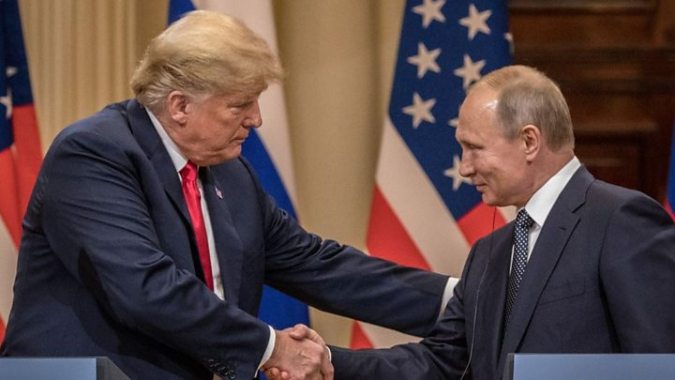
Late Verdict On The Helsinki Press Conference Freak-Out: I’m Convinced. It’s Just More Unethical, Double-Standard, Anti-Trump, “Resistance” And News Media Coup-Fodder, Only Noisier And Dumber Than Usual

I don’t appeal to authority very often.

What I do occasionally do is look for someone with judgment, experience and honesty I trust whose assessment of a particular situation jibes with my ethical analysis at times when I have begun to judge my own sanity. When I started reading people writing, in horror-stricken tones,”Can you believe what Trump said at that joint press conference?,” which I initially missed because these events are always stagey, insincere, all-puffery affairs, I assumed that President Trump finally done something really over-the-top this time, like spitting at CNN reporter, or singing “The Volga Boatman” to irritate Putin. When I read what he in fact did say, and saw the videos, my brain literally couldn’t reconcile it with the hysterical claims that it was “treasonous,” or like “Pearl Harbor,” or “Kristallnacht” or warranted impeachment (Plan N). It didn’t compute, as the robot in “Lost in Space” used to say.

I know I don’t often seem like it, but I have my doubts sometimes. I write as if I am certain I am right, because that’s my style, but often within me there meet a combination of antithetical elements which are at eternal war with one another. Driven hither by objective influences — thither by subjective emotions — wafted one moment into blazing day, by mocking hope — plunged the next into the Cimmerian darkness of tangible despair, I am but a living ganglion of irreconcilable antagonisms. All right, that was from my favorite exchange in “H.M.S. Pinafore,” but I’m not completely facetious. When I read almost every one of hundreds of Facebook friends writing, to universal agreement from their echo ch..freinds, that an extemporaneous statement in a Finnish press conference proves that Putin “has something” on the President, I begin to think, since I don’t see it at all, that the problem must be me. I am so thoroughly sick and disgusted at the relentless unethical and unprecedented efforts to interfere with this President, and his efforts to do the job he was elected to do, by Democrats, progressives, “the resistance” NeverTrumpers and the news media, that maybe my indignation against their dangerous, democratic institution-eroding vengeance because this odd and offensive man shattered the dreams of the Obama Worshipers and the Clinton Conned, had finally metastasized into bias, and made me impervious to something that should have me, for once, agreeing with them. For bias makes us all stupid, you know.

That is why I was so relieved to read this, the transcript of the comments of NYU Russia expert Stephen F. Cohen, a contributing editor at “The Nation,” the most extreme leftist magazine of national prominence in the country. He is clearly NOT being driven by bias, but his analysis was exactly the same as mine:

“The reaction by most of the media, by the Democrats, by the anti-Trump people is like mob violence. I’ve never seen anything like it in my life. This is the president of the United States, doing what every president… since FDR in 1943 with Stalin, meeting with the head of the Kremlin. And every president since Eisenhower, a Republican by the way, has met with the leader of the Kremlin for one existential purpose: To avoid war between the two nuclear superpowers. Today, in my considered, scholarly, long-time judgment, relations between the U.S. and Russia are more dangerous than they have ever — let me repeat, ever — been, including the Cuban missile crisis. I want my president to do — I didn’t vote for this president– but I want my president to do what every other president has done. Sit with the head of the other nuclear superpower and walk back the conflicts that could lead to war, whether they be in Syria, Ukraine, in the Baltic nations, in these accusations of cyber attacks. Every president has been encouraged to do that an applauded by both parties. Not Trump. Look what they did to him today. They had a kangaroo court. They found him guilty. And then you had the former head of the U.S. CIA, who himself ought to be put under oath and asked about his role in inventing Russiagate, calling the President of the United States treasonous. What have we come to in this country? And what is going to happen in the future?”

Whew! What a relief: I thought I was going crazy. Like Cohen, except not close to matching his scholarly efforts, I know quite a bit about how past Presidents treated Russian leaders in their various summits, meetings and diplomatic encounters. Only Trump was expected to insult the Russian leader to his face. Only Trump was asked an outrageous question inviting him to insult a Russian leader to his face. (The reporter should have been ejected from the conference.) President Trump was not only criticized for behaving as every other President has and should have behaved, but was excoriated for doing so.

I wish, of course, that the President’s rhetorical skills were not so blunt and confounding, so he could defend his own conduct without resorting to “fake new!” retorts. I wish he had the nuance and sense to simply dodge such a disruptive and irresponsible question without walking into a true “when did you stop beating your wife” question that made him choose between undermining U.S. intelligence or undermining the whole reason he was at the summit in the first place. I wish that the President was not so much like Donald Trump, in other words, but unlike Anderson Cooper, George Will, Chuck Schumer, John McCain and my hysterical Facebook Friends, I regard constantly becoming more and more irrational over something that happened 19 months ago  to be civic incompetence. Continue reading

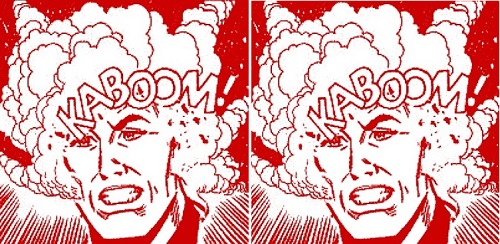
On “Chappaquiddick” And My Multiple “KABOOMS!” As I Watched It.

I finally saw “Chappaquiddick” after delaying the ordeal as long as I could. It isn’t an ethics movie; nor is it the unethical movie I feared that it might be. What “Chappaquiddick” is a very discouraging movie, one that depressed me greatly. It is telling that the Kennedy Legacy Collective didn’t swoop down and try to kill the film, as it is devastating in it depiction of the late Senator. I can only assume that increased focus on what really happened in, say, a libel trial would only affirm the portrayals, and do more damage than a little-seen film alone.

Of course, the movie is open to attack by Kennedy defenders on the grounds that it speculates what Ted Kennedy was thinking, as well as on  the conversations that went on behind closed doors. Nonetheless, the bare fact that Senator Kennedy waited 10 full hours before reporting the accident that killed Mary Jo Kopechne to police has been damning enough since that summer day in 1969 without further elaboration. The cover story—no, we can’t prove it was a cover story, but it was a cover story—that Ted was dazed and in shock from a concussion and wandered around aimlessly, explaining his actions—was never credible, certainly not at my Arlington, Massachusetts home.

I experienced the film this week as a simultaneous flashback and a series of head explosions. I had forgotten the ridiculous neck brace Kennedy wore to Mary Jo’s funeral (but not before or after it); the film states that it was a prop, and I remember that this was the consensus at the time. My biggest head explosion? It was probably the statement of the Martha’s Vineyard judge who gifted Kennedy with the shortest sentence possible for the lesser offense the Senator agreed to plead to, which was leaving the scene of an accident. Kennedy got a two months suspended sentence, and the judge said that he would be “punished enough.” (If you are unfamiliar withe my opinion of THAT rationalization, you can check out this post from 5 years ago; I have another one somewhere about a father who let his baby die in a hot, locked car, and both people involved in those tragedies were less despicable than Ted Kennedy.) Punished enough? The judge presumably meant that Teddy would take a big hit to his White House aspirations, poor guy.

You know, I’d say that every citizen locked up for negligent homicide, which is the real crime Kennedy was guilty of, can kiss their Presidential aspirations good-bye.

KABOOM #2 was the film’s version of first thing out of Kennedy’s mouth when he began explaining the fateful night’s events to cousin and family lawyer Joe Gargan: “I’m never going to be President.” I can’t find substantiation for this; the line isn’t in the version of the screenplay on the web. The subsequent conferences with Kennedy advisors and fixers, however, showed callousness that was not much worse. The film took a lot of its facts from “Senatorial Privilege” by Leo Damore, which was written from interviews with Kennedy friends and relatives, including Gargan.  Kennedy  made over 30 phone calls from the hotel payphone, none of which involved rescuing Mary Jo.   His driving license had been expired for 6-months, so Kennedy’s fixers pulled the right strings and the DMV issued him a new license on that Sunday, before he surrendered to police.

My head blasted the third time watching the recreation of Ted’s nationally televised speech, written by Kennedy wordsmith Ted Sorensen. This is the real version; the movie shortens it quite a bit…

My fellow citizens:

I have requested this opportunity to talk to the people of Massachusetts about the tragedy which happened last Friday evening. This morning I entered a plea of guilty to the charge of leaving the scene of an accident. Prior to my appearance in court it would have been [im]proper for me to comment on these matters. But tonight I am free to tell you what happened and to say what it means to me.

On the weekend of July 18th, I was on Martha’s Vineyard Island participating with my nephew, Joe Kennedy — as for thirty years my family has participated — in the annual Edgartown Sailing Regatta. Only reasons of health prevented my wife from accompanying me.

On Chappaquiddick Island, off Martha’s Vineyard, I attended, on Friday evening, July 18th, a cook-out I had encouraged and helped sponsor for a devoted group of Kennedy campaign secretaries. When I left the party, around 11:15pm, I was accompanied by one of these girls, Miss Mary Jo Kopechne. Mary Jo was one of the most devoted members of the staff of Senator Robert Kennedy. She worked for him for four years and was broken up over his death. For this reason, and because she was such a gentle, kind, and idealistic person, all of us tried to help her feel that she still had a home with the Kennedy family.There is no truth, no truth whatever, to the widely circulated suspicions of immoral conduct that have been leveled at my behavior and hers regarding that evening. There has never been a private relationship between us of any kind. I know of nothing in Mary Jo’s conduct on that or any other occasion — and the same is true of the other girls at that party — that would lend any substance to such ugly speculation about their character. Nor was I driving under the influence of liquor.

Little over one mile away, the car that I was driving on an unlit road went off a narrow bridge which had no guard rails and was built on a left angle to the road. The car overturned in a deep pond and immediately filled with water. I remember thinking as the cold water rushed in around my head that I was for certain drowning. Then water entered my lungs and I actual felt the sensation of drowning. But somehow I struggled to the surface alive.

I made immediate and repeated efforts to save Mary Jo by diving into the strong and murky current, but succeeded only in increasing my state of utter exhaustion and alarm. My conduct and conversations during the next several hours, to the extent that I can remember them, make no sense to me at all.

Although my doctors informed me that I suffered a cerebral concussion, as well as shock, I do not seek to escape responsibility for my actions by placing the blame either on the physical and emotional trauma brought on by the accident, or on anyone else.

I regard as indefensible the fact that I did not report the accident to the police immediately.

Instead of looking directly for a telephone after lying exhausted in the grass for an undetermined time, I walked back to the cottage where the party was being held and requested the help of two friends, my cousin, Joseph Gargan and Phil Markham, and directed them to return immediately to the scene with me — this was sometime after midnight — in order to undertake a new effort to dive down and locate Miss Kopechne. Their strenuous efforts, undertaken at some risk to their own lives, also proved futile.

All kinds of scrambled thoughts — all of them confused, some of them irrational, many of them which I cannot recall, and some of which I would not have seriously entertained under normal circumstances — went through my mind during this period. They were reflected in the various inexplicable, inconsistent, and inconclusive things I said and did, including such questions as whether the girl might still be alive somewhere out of that immediate area, whether some awful curse did actually hang over all the Kennedys, whether there was some justifiable reason for me to doubt what had happened and to delay my report, whether somehow the awful weight of this incredible incident might in some way pass from my shoulders. I was overcome, I’m frank to say, by a jumble of emotions: grief, fear, doubt, exhaustion, panic, confusion, and shock.

Instructing Gargan and Markham not to alarm Mary Jo’s friends that night, I had them take me to the ferry crossing. The ferry having shut down for the night, I suddenly jumped into the water and impulsively swam across, nearly drowning once again in the effort, and returned to my hotel about 2:00am — and collapsed in my room. I remember going out at one point and saying something to the room clerk.

In the morning, with my mind somewhat more lucid, I made an effort to call a family legal advisor, Burke Marshall, from a public telephone on the Chappaquiddick side of the ferry and then belatedly reported the accident to the Martha[‘s] Vineyard police.

Today, as I mentioned, I felt morally obligated to plead guilty to the charge of leaving the scene of an accident. No words on my part can possibly express the terrible pain and suffering I feel over this tragic incident. This last week has been an agonizing one for me and for the members of my family. And the grief we feel over the loss of a wonderful friend will remain with us the rest of our lives.

These events, the publicity, innuendo, and whispers which have surrounded them and my admission of guilt this morning raises the question in my mind of whether my standing among the people of my State has been so impaired that I should resign my seat in the United States Senate. If at any time the citizens of Massachusetts should lack confidence in their Senator’s character, or his ability — with or without justification — he could not in my opinion adequately perform his duties and should not continue in office.

The people of this State, the State which sent John Quincy Adams, and Daniel Webster, and Charles Sumner, and Henry Cabot Lodge, and John Kennedy to the United States Senate are entitled to representation in that body by men who inspire their utmost confidence. For this reason, I would understand full well why some might think it right for me to resign. For me, this will be a difficult decision to make.

It has been seven years since my first election to the Senate. You and I share many memories — some of them have been glorious, some have been very sad. The opportunity to work with you and serve Massachusetts has made my life worthwhile.

And so I ask you tonight, the people of Massachusetts, to think this through with me. In facing this decision, I seek your advice and opinion. In making it, I seek your prayers — for this is a decision that I will have finally to make on my own.

It has been written:

“A man does what he must — in spite of personal consequences, in spite of obstacles, and dangers, and pressures — and that is the basis of all human morality……whatever may be the sacrifices he faces, if he follows his conscience — the loss of his friends, his fortune, his contentment, even the esteem of his fellow man — each man must decide for himself the course he will follow. The stories of the past courage cannot supply courage itself. For this, each man must look into his own soul.”

I pray that I can have the courage to make the right decision. Whatever is decided, whatever the future holds for me, I hope that I shall have — be able to put this most recent tragedy behind me and make some further contribution to our state and mankind — whether it be in public or private life.

Thank you and good night.

I had forgotten that Kennedy never apologized to the Kopechnes for getting their daughter killed. But he did use the recently departed Mary Jo as a convenient device to signal his virtue, standing up for her reputation, while being mostly concerned about his own. The poetic quote was a a typical Sorensen touch, and laying it on a bit thick: a Churchillian passage of dubious provenance that sainted brother Jack had used in his Pulitzer Prize-winning “Profiles in Courage”—which was, after all, written by Ted Sorensen.

The final series of head explosions occurred at the end, as the film showed archival footage of Massachusetts voters, Kennedy worshipers, most of them, talking about how “anyone can make a mistake” and what good things Ted and his dead brothers had done in the past, and how sure, they would vote for him again.

Of course, they did.

The modern progressive movement in the Democratic Party was substantially built on the career of this weak, corrupt man, the product of the triumph of nepotism, mythology, celebrity, money and privilege over merit and justice.

And people deny that there could have been any bias, political manipulation and corruption in the investigation of Hillary Clinton’s private server.

Kaboom.
Sunday Morning Ethics Hangover, 7/15/2018: “Animal House” And The Death Of Truth [UPDATED!]

Good Morning!

(WordPress isn’t working properly this morning. Perfect…)

1. Not being biased helps you be non-stupid…Yesterday, chatting with lawyer attendees at my ethics seminar, a former government attorney told me that he had several ex-FBI colleagues who were horrified at many aspects of the Peter Strzok hearings, as was he. Among their concerns:

  • The news media was failing its duty to explain to the public the duties of professionals, and why Strzok’s conduct was unacceptable, unethical, and undermined the credibility of the investigations he was involved in.
  • Democrats were defending the indefensible, and also breaching their duty to the public. They ought to be exactly as outraged as Republicans at a figure as demonstrably biased as Strzok polluting important law enforcement inquiries, and also should have rebuked him for his defiant attitude.
  • The Strzok scandal was immensely damaging to the public image of the FBI, and should be. It demonstrates an agency that has been seriously mismanages, and that has a damaged culture.
  • The simple fact that Strzok would use FBI equipment to send his texts demonstrated outrageous incompetence and lack of judgement. Even setting aside the bias issue, for a key figure in an investigation to behave so recklessly proves that the current FBI is untrustworthy.

Naturally this is gratifying, since the positions are all consistent with those I have expressed here, and also because they are correct.

2.  When miscreants emulate “Animal House” and Democrats applaud...We also discussed Strzok’s ridiculous “Otter defense”in the hearing, as he emulated the cynical (but in that case, funny) argument offered by the “Animal House” character played by Tim Mathieson (“Take it easy! I’m pre-law!” “I thought you were pre-med!” “What’s the difference?”) in a student council hearing over his fraternity members’ outrageous conduct, especially his own:

” Ladies and gentlemen, I’ll be brief. The issue here is not whether we broke a few rules, or took a few liberties with our female party guests – we did. But you can’t hold a whole fraternity responsible for the behavior of a few, sick twisted individuals. For if you do, then shouldn’t we blame the whole fraternity system? And if the whole fraternity system is guilty, then isn’t this an indictment of our educational institutions in general? I put it to you, Greg – isn’t this an indictment of our entire American society? Well, you can do whatever you want to us, but we’re not going to sit here and listen to you badmouth the United States of America!”

This, of course, is exactly the disingenuous tactic employed by Strzok when he pronounced himself grievously offended that his accusers would dare to impugn the integrity of the FBI, knowing well that the harm done to his agency was entirely due to his own actions. Continue reading

More From The SCOTUS Nomination Freakout—Unethical Quote Of The Week: Senator Edward Kennedy (D-Mass.)

“Robert Bork’s America is a land in which women would be forced into back-alley abortions, blacks would sit at segregated lunch counters, rogue police could break down citizens’ doors in midnight raids, schoolchildren could not be taught about evolution, writers and artists would be censored at the whim of government, and the doors of the federal courts would be shut on the fingers of millions of citizens for whom the judiciary is often the only protector of the individual rights that are the heart of our democracy.

America is a better and freer nation than Robert Bork thinks. Yet in the current delicate balance of the Supreme Court, his rigid ideology will tip the scales of justice against the kind of country America is and ought to be.

The damage that President Reagan will do through this nomination, if it is not rejected by the Senate, could live on far beyond the end of his presidential term. President Reagan is still our President. But he should not be able to reach out from the muck of Irangate, reach into the muck of Watergate, and impose his reactionary vision of the Constitution on the Supreme Court and on the next generation of Americans. No justice would be better than this injustice.”

From Senator Ted Kennedy’s speech on the Senate Floor on July 1, 1987, in response to President Reagan’s nomination of Robert Bork to the Supreme Court

Kennedy’s outrageously unfair, vicious, and hyperbolic attack on Robert Bork, then one of the most respected jurists in the country, “worked,” in the sense that it catalyzed an unprecedented assault on a Presidential nominee who was not merely qualified but spectacularly qualified for a seat on the Court, shattering all previous norms and traditions regarding the confirmation of Justices by the Senate. It would not be inaccurate to mark Kennedy’s speech as the beginning of demonization as a standard tactic in mainstream politics, in which the mere fact of being liberal or conservative justifies the characterization of an individual or a group sinister or evil. (See: Southern Poverty Law Center) In hindsight, Kennedy’s rhetorical excess was eventually acknowledged on all sides of the political spectrum to be a false characterization of Bork as a judge and as a human being, though Kennedy, as far as I know, never apologized for it….but then he never apologized for a lot of things. Continue reading

Gay Stereotype Ethics

I admit it: I no longer understand gay stereotypes, or even if they are gay stereotypes anymore. What are the rules, and the ethics, now?

Take Jamie, the newish character in the Progressive insurance commercials, as longtime spokes-character Flo (Stephanie Courtney) approaches late middle age  and viewer fatigue. Everything about Jamie is stereotypically gay, and on top of that, he’s a silly character. (The actor is excellent and funny. Boy, will I be impressed to learn that he is straight. …let’s see…HOLY COW! His name is Jim Cashman, and apparently he IS straight! Wait…then he is deliberately playing a transparently gay man? And making him both funny and goofy? Silly gay characters were standards fair in Hollywood for decades, but the message was that gay men were ridiculous and laughable.

I don’t see how Jamie is any different from the outrageous gay stereotypes that were ridiculing gay men right up until  recently. Like Martin Short, in “Father of the Bride”: Continue reading

Morning Ethics Warm-Up, 7/3/2018: Remember Pickett’s Charge! Edition [UPDATED]

Good Morning!

1. “General, I have no division!” At about 2:00 pm, , July 3, 1863, by the little Pennsylvania town of Gettysburg, Robert E. Lee launched his last, desperate and audacious stratagem to win the pivotal battle of the American Civil War, a massed Napoleonic assault on the entrenched Union position on Cemetary Ridge, with a “copse of trees” at its center. The doomed march into artillery and rifle fire, across an open field and over fences, lasted less than an hour. The Union forces suffered 1,500 casualties,, while at least 1,123 Confederates were killed on the battlefield, 4,019 were wounded, and nearly 4000 Rebel soldiers were captured. Lee’s bold stroke had failed spectacularly, and would go down in history as one of the worst military blunders of all time.

That verdict is debatable, but this is not: Pickett’s Charge, as the attack came to be called, holds as many fascinating ethics lessons as any event in American history, and this blog has returned to it for enlightenment time and time again.

There is the matter of the duty to prevent a disaster that you know is going to occur, the whistleblower’s duty, and the theme of Barbara Tuchman’s work, “The March of Folly.” There was Robert E. Lee’s noble and unequivocal acceptance of accountability for the disaster, telling the returning and defeated warriors that “It is all my fault.” The defeat also turned on moral luck, with many unpredictable factors, such as the intervention of a brave and intrepid Union cavalry officer named George Armstrong Custer, who also teaches that our greatest strengths and most deadly flaws are often the same thing, and that the Seven Enabling Virtues can be employed for both good and wrongful objectives.  Pickett’s Charge shows how, as Bill James explained, nature conspires to make us unethical.

Pickett’s Charge also teaches that leadership requires pro-active decision-making, and the willingness to fail, to be excoriated, to be blamed, as an essential element of succeeding. Most of all, perhaps, it illustrates the peril’s of hindsight bias, for without a few random turns of fate, Robert E. Lee’s gamble might have worked.

2. Funny how if you continually denigrate someone based on his color and gender, he will eventually stop respecting you. Stanford University has established a Men and Masculinities Project  that aims to help men develop “healthy and inclusive male identities”—because they obviously don’t have those now.  “We acknowledge that male identity is a social privilege, and the aim for this project is to provide the education and support needed to better the actions of the male community rather than marginalize others,” anti-man-splains Stanford’s gurus. Stanford, of course, is not alone in pushing the ubiquitous progressive narrative that men are toxic, along with whites, making white men the worst of all. Perhaps this might explain why support for Democrats among young white men is falling fast.

Nah, it must be because they are sexist and racist…

3. But..but…settled science! The Economist estimates that as many as 400,000 papers published in supposedly peer-reviewed journals were not peer-reviewed at all. Scientists, scholars and academics are no more trustworthy or alien to unethical conduct than anyone else, but because most of the public (and journalists) don’t  understand what they write about and have to accept what they claim on faith, they are presumed to be trustworthy.

Think of them as the equivalent of auto mechanics. Continue reading

Comment Of The Day: “Ethics Quiz: The Little House On The Cultural Divide”

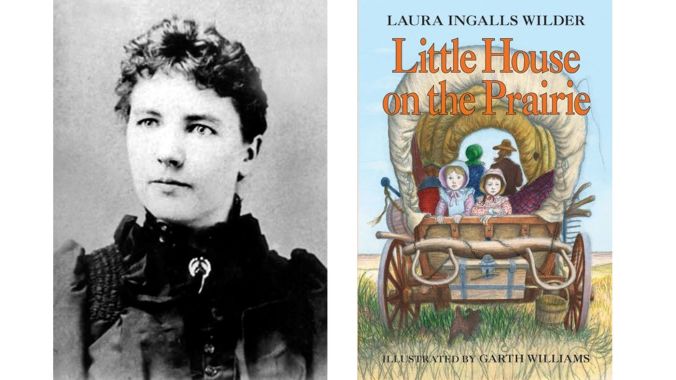
There has been a paucity of Comments of the Day lately; it’s probably my fault. This one is by a first time COTD awardee, and involves the rare Ethics Alarms topic of children’s literature, in response to the Ethics Quiz about the justness of Laura Ingalls Wilder’s name being stripped from the award created in her honor. Apparently her “Little House” books were not sufficiently prescient regarding modern sensibilities and 21st Century hindsight.

And no, I didn’t pick this comment because it includes a compliment to “The Wind in the Willows,” perhaps my favorite book of all time.

Here is Bob’s Comment of the Day on the post, Ethics Quiz: The Little House On The Cultural Divide:

“Is it fair and reasonable to remove Wilder’s’ name from the award, essentially taking away an honor despite no new information or evidence arising?”

No.

Bit of backstory: my husband and I were both inveterate readers when we were children. Oddly enough, neither of us read “children’s books” when we were kids … we went from Dick and Jane to fairly adult novels very early on.

However, when we hit our 40s-50s, we started a campaign of reading the great classics of kiddie lit. (Just a note — “Wind in the Willows” is a masterpiece, the first six [and only the first six] Oz books are spectacular, E. Nesbit rocks and the popularity of “Peter Pan” is a mystery we have never plumbed.)Among those books were the entire Little House corpus. They are quite terrific. (As with most series, some are better than others.) While the attitudes may be dated, there is nothing “hateful” about them. In order to be hateful, there should be some evidence of a clear animus against a particular group of people; Wilder has no agenda, and simply reflects the attitudes common of her era.

It is essential to note that these books are not virulent anti-Amerind screeds, but stories of the heroic pioneers who built our nation. Native Americans occasionally cross this landscape, but these books are neither about nor against them.

It does seem as if there is a concerted effort to erase (or … re-envision) American history to something more palatable to post 1960s sensibilities. This is mischievous and dangerous, and should be confronted whenever possible.

Ethics Quiz: The Little House On The Cultural Divide

From the New York Times:

The American Library Association is dropping Laura Ingalls Wilder’s name from a prestigious children’s literature award in order to distance the honor from what it described as culturally insensitive portrayals in her books.

The decision was made out of a desire to reconcile the award with the organization’s values of “inclusiveness, integrity and respect,” representatives of the association said in a statement on Monday. The award is given out by its children’s division.

“Wilder’s books are a product of her life experiences and perspective as a settler in America’s 1800s,” the association’s president, Jim Neal, and the president of the children’s division, Nina Lindsay, said in the statement. “Her works reflect dated cultural attitudes toward Indigenous people and people of color that contradict modern acceptance, celebration, and understanding of diverse communities.”

…Despite their popularity, Ms. Wilder’s books contain jarringly prejudicial portrayals of Native Americans and African Americans. In the 1935 book “Little House on the Prairie,” for example, multiple characters espoused versions of the view that “the only good Indian was a dead Indian.” In one scene, a character describes Native Americans as “wild animals” undeserving of the land they lived on.

“Little Town on the Prairie,” published in 1941, included a description of a minstrel show with “five black-faced men in raggedy-taggedy uniforms” alongside a jolting illustration of the scene.

Hmmmm.

Your Ethics Alarms Ethics Quiz for today:

Is it fair and reasonable to remove Wilder’s’ name from the award, essentially taking away an honor despite no new information or evidence arising? Continue reading

Morning Ethics Warm-Up, 6/26/2018: Our Amazing, Evolving, Contentious Culture

Good Morning!

1. Outrageous Self-Promotion Dept.: Just in case you live in the vicinity of Washington, D.C., AND are interested in the cultural impact of the works of Gilbert and Sullivan in the U.S., AND would like to see me (and three long-time friends and colleagues who will periodically join me in performing some selections from the brilliant satirical operettas) discuss this rich and wide-ranging topic (Politics! Satire! Movie scores! Broadway musicals!) over a three-hour session that will fly like the wind, all it will take is a mere 50 dollars (just 35, if you are a Smithsonian Associates member) and your attendance. I’d love to see you. The program is Gilbert and Sullivan in the 21st Century, this Saturday, June 30, at 9:30 a.m. Here are the details.

2. Speaking of culture…If you want to feel better about the state of U.S. culture, I recommend watch a Beach Party movie. I just saw the first one all the way to the end for the first time—to realize that it was easily the best of its line (there were six—SIX!!!—more) is mind-boggling all by itself—and found it immediately uplifting. The 1963 William Asher-directed relic looks like it’s from some particularly demented parallel universe, depicting a weird place where 30-year-olds pretend to be  loitering teenagers who do nothing all day but gyrate to frenetic versions of the Twist, listen to awful surf music that makes the Jan and Dean sound like Brahms in comparison, do some surfing themselves (but just the males), and interact with B-list comics like Morey Amsterdam and Harvey Lembeck. The songs and their hackneyed lyrics make you yearn for the nuanced hip-hop musings of Kanye West; the comedy makes “Big Bang Theory” seem like Oscar Wilde, and to speculate on what kind of populace would actually enjoy such badly-conceived and sloppily-executed crap is to risk madness. If this was America in 1963, a) Good riddance, b) How did we survive? and c) No wonder the Soviet Union thought they were going to win!

No blacks are to be seen; indeed no skin color of any shade but glistening white is visible anywhere—didn’t these people even tan? Here’s a typically clueless exchange to ponder:  Annette Funicello: “The professor got his robe from the chief of the Tokyo Fire Department!” Random 30-year-old teenage beach bum: “Great! I’ll call him if my rickshaw catches fire!”  [laughter]. In the hilarious motorcycle gang, where all of the actors appear to be at least 45, the male members’ leather jackets say “Rats” on the back, and their female cohorts’ jackets say “Mice.” None of the”girls” have any function in the film, and no higher purpose, than to moon after the guys and gyrate in their faces.  Accepted conduct is for every male youth to gawk, pant, and emit some sound the equivalent of a wolf whistle every time a shapely female passes. The romantic lead (of sorts), teen idol Frankie Avalon, trying to make virginal, had-to-get Annette jealous, grabs a generic Scandinavian waitress and just starts kissing her. It’s like a magnet. Just kisses her He doesn’t  even wait. When you’re a star, they let you do it. You can do anything. Then he tells her he loves her so she’ll make out with him until Annette loosens up. This is the hero, remember.

They should show this film in every junior high school American History class. I’m very serious about this.

3. An abject lesson in how the news media uses language to manipulate public perception: Virtually every news report about the Trump administration’s actions at the Mexican border described them, and are still describing them, in headlines as “family separation.” The cumulative effect of this is to make casual, not fully-engaged readers and listeners think that family separation is the objective of the policy. The objective of the policy is to enforce current immigration laws while obeying other legal requirements, such as the one that forbids children from remaining with federally  detained parents.  This is, under the Ethics Alarms definition, fake news: deliberately deceitful reporting that conveys a false impression. The equivalent would be characterizing the imprisonment of African American men convicted of felonies as “the Trump policy of making black families into single-parent households.” Continue reading