if I stay away from the network talking head shows…
1 Nah, there’s no mainstream media bias! Ann Althouse has a valid observation (some commenters feel it has been obvious for a long, long time) this morning…she writes in part,
I’m seeing 2 big examples of how the media are reporting good news for Trump this weekend. It’s really embarrassing for them because the 2 stories are very big and very good for Trump and, in both, the same move is made to turn it into something negative and ominous.
1. The Mueller investigation has concluded, and though we can’t read it yet, we know that it means that there will be no charges against Trump or any of his people that have to do with colluding with Russians to affect the election. Though some Russians were charged and some of Trump’s people were charged with lying to investigators, the whole reason for the special investigation seems to have been a phantom. After 2 years of uncertainty and anxiety, this is an immense relief and vindication for Trump. Fantastic, upbeat news. Now, here’s how the NYT is presenting the story on the top, left corner of its front page:
As Mueller Report Lands, Prosecutorial Focus Moves to New York
The work by the special counsel, Robert S. Mueller III, may be done, but prosecutors in Manhattan and elsewhere are pursuing about a dozen other investigations.
It all but ensures that a legal threat will continue to loom over the Trump presidency.
2. Under Trump, the Islamic State has been ousted entirely from the territory it had taken over. This is a distinct, satisfying military victory in what has been a long and difficult war. It is the second story on the NYT front page right now, where it looks like this:
THE ISLAMIC STATE
Its Territory May Be Gone, but the U.S. Fight Against ISIS Is Far From Over
• Thousands of Islamic State fighters are still at large in Iraq and Syria, rearming and regrouping.
• The U.S. and its partners still face significant battles against the group elsewhere, in Afghanistan, West Africa and the Philippines.
So watch for it. The rule is: When something good for Trump happens, find the nearest bad thing and make that the focus of the news report.
No other U.S. President has been treated like this by the news media, and this treatment has been consistent from the beginning of his administration. It’s goal, and effect, is undermine public trust and distort public perception. Continue reading →
Clearly, it’s time to revisit impeachment ethics issues, after Nancy Pelosi’s snide declaration (after saying that she is always respectful of the Presidency, mind you), that the President “wasn’t worth it,” it being the political risk of sending him to a trial in the Senate. We should pause a second to acknowledge the hilarity inherent in the Speaker saying that impeachment wasn’t desirable because it would be “divisive to the country” and “divides the country.” The Democrats, led by Barack Obama, who pointed the way, have intentionally and cynically sliced and diced the country into victims and villains, champions of the oppressed and deplorables, for a decade, unforgivably risking national strength, comity, and peace for speculative electoral gain.
We haven’t added a new Plan to the list of “resistance” and Democratic Party coup attempts—for that’s what they are–including impeachment theories, since last July, though many of the classics re-emerged in the news. Remember, there were law professors who advocated impeaching Trump before he was inaugurated. Here’s where it stands:
Impeachment And Coup Plans.
Plan A: Reverse the election by hijacking the Electoral College.[Status: FAILED and DEAD, until it rises again in 2020]
Plan B: Pre-emptive impeachment. [Status: FAILED and DEAD]
Plan C : The Emoluments Clause. [Status: Still twitching! ]
Plan D: “Collusion with Russia” [Status: On life support]
Plan E : ”Trump is mentally ill so this should trigger the 25th Amendment.” [Status: Amazingly, still being talked about .]
Plan F: The Maxine Waters Plan, which is to just impeach the President as soon as Democrats control both Houses, because they can. [Status: Hope springs eternal!]
Plan G : “The President obstructed justice by firing incompetent subordinates, and that’s impeachable.” [Status: LAME, but ONGOING]
Plan H: “Tweeting stupid stuff is impeachable” [Status: ONGOING]
Plan I: “Let’s relentlessly harass him and insult him and obstruct his efforts to do his job so he snaps and does something really impeachable.” [Status: ONGOING]
Plan J : Force Trump’s resignation based on alleged sexual misconduct that predated his candidacy. .[Status: FAILED and DEAD]
Plan K: Election law violations through pay-offs of old sex-partners [Status: ONGOING]
Plan L: The perjury trap: get Trump to testify under oath, then prove something he said was a lie. [Status: To be determined.]
Plan M: Guilt by association. Prove close associates or family members violated laws. [Status: Ongoing.]
Plan N: Claim that Trump’s comments at his press conference with Putin were “treasonous.”
I’m sure you’ve noticed that the soft coup-complicit news media hasn’t been predicting impeachable results from the Mueller investigation lately, which seems odd, since they have been fanning flames of anticipation and suspicion from the day it started. This is because most rational observers are pretty certain that Trump, as he has said from the beginning, did nothing wrong, and certainly nothing impeachable regarding Russia. Never mind: Democrats have made it clear that this soon-to-be-pronounced dead horse will be flogged by them into goo as long as it attracts donations and is a viable means of stopping the elected President from doing the job he was duly elected to do. Continue reading →
Rep. Liz Cheney, the third-ranking Republican in the House, told NBC’s “Meet The Press” last week that Democrats have become the party of “Anti-Semitism,, infanticide, socialism.” This wasn’t quite as inflammatory as when Samuel Burchard, speaking at a GOP pro-James G. Blaine campaign event during the 1884 race against Democratic candidate Grover Cleveland, denounced the Democrats as the party of “rum, Romanism, and rebellion,” but you wouldn’t know it from the howls coming from progressives, because, as we all know, the truth hurts. Well, that’s not quite fair: Cheney was engaging in hyperbole and being intentionally inflammatory, but she wasn’t entirely wrong.
Let’s look at the “infanticide” accusation. Obviously Democrats don’t favor killing babies as a general proposition, but Virginia’s Democratic governor and renowned Michael Jackson impressionist described exactly how he would make an abortion-survivor “comfortable” before making the newborn dead. (Many states have laws that allowed condemned men to go free if they survived an attempted execution. Seems fair…)
Democrats in the Senate—all but a handfull—blocked a GOP bill requiring doctors to use all means available to save the life of a child born alive after an attempted abortion. They must, it said, “exercise the same degree of professional skill, care, and diligence to preserve the life and health of the child” as they would for “any other child born alive at the same gestational age.”
Senator Ben Sasse, the Nebraska Republican who authored the bill, had called it an “infanticide ban.” Rationalizing like mad, Democrats said that the bill was aimed at discouraging doctors from performing legal abortions—in other words, they were pandering to the pro-abortion extremists—and that it was unnecessary because a similar law already exists, the Born-Alive Infants Protection Act of 2002.—you know, because the Democrats have always opposed redundant legislation. Continue reading →
(I’m Atlanta bound on business and pleasure, but I’ll have significant downtime. With some luck and if my laptop doesn’t explode, it should seem like I never left.)
1. Not unethical, just stupid. I would have warned everyone in advance that I was going to be experimenting with the layout, but I didn’t know it myself. There was a surprise upgrade offer from WordPress that was too good to pass up, but I assumed (Felix Unger: “When you assume, you make an ass of u and me!” that the blog wouldn’t change until I changed it. Nope: the second I clicked on the payment button, the design blew up and was unreadable. Again, my apologies. And also again, this may not be the final design. I’ll be experimenting while I’m in Georgia.
2. But would they let Will Smith play Bill Jenkins?Bill Jenkins died last month, and naturally the news media paid little attention. He was an African-American scientist who was working as a statistician at the United States Public Health Service in the Sixties when learned of the horrific Tuskegee study, one of the worst ethical breaches in the history of U.S. medicine. The federal government deceived hundreds of black men in Macon County, Alabama into thinking that their cases of syphilis wer being treated when they were not. The researchers were investigating what unchecked syphilis would do to the human body. The black men were being used as human guinea pigs, without their informed consent.
Appalled by the study’s unethical and cruel design, Jenkins spoke to his supervisor, who told him, “Don’t worry about it.” The supervisor was, in fact, monitoring the study. Jenkins defied him and wrote an article about the study that he shared with doctors and journalists. Nobody appeared to care. The study, which began in 1932 , continued through 1972, when another health service scientist exposed it and got it shut down.
Jenkins was haunted by the research and his inability to end it. He went back to school to train as an epidemiologist. The Times reveals the rest of the story:
“He would go on to devote himself to trying to reduce disease and illness among African Americans and other people of color, in part by recruiting more such people into the public health professions.
He was one of the first researchers at the Centers for Disease Control and Prevention to recognize how dramatically AIDS was affecting black men. He helped organize the first conference on AIDS in underserved neighborhoods and became the C.D.C.’s director of AIDS prevention for minorities.
And for 10 years he oversaw the government’s Participants Health Benefits Program, which provides free lifetime medical care to the men of the Tuskegee study and their eligible family members.”
3. Dog show ethics. (This is late, and I apologize to everyone, dogs included.) Lesson: even dogs have conflicts of interest. Continue reading →
While the Alamo was under siege, the provisional Texas government organized at Washington-on-the-Brazos. On March 2, the convention declared independence and the Republic of Texas was born, at least on paper. The Alamo’s garrison showed its support for independence from Mexico by sending its own delegates to the convention.While they were unaware that Texas had declared independence, the roughly 200 Alamo defenders stayed at their post waiting on help from the settlements. Among them were lawyers, doctors, farmers and a former congressman and famous frontiersman from Tennessee named David Crockett. While the youngest was 16 and the oldest defender was Gordon C. Jennings, age 56, most defenders were in their twenties. Most were Anglo, but there were a handful of native Tejano defenders as well. Legendary knife fighter and land speculator James Bowie was in command before falling ill and sharing duties with Travis. Several women and children were inside the Alamo, including 15-month-old Angelina Dickinson. Just before the final battle, Travis placed his ring around her neck, knowing she would likely be spared. One of the last messages from the Alamo was a note from Travis asking friends to take care of his young son Charles.
The final attack came before dawn on March 6, 1836. As Mexican troops charged toward the Alamo in the pre-dawn darkness, defenders rushed to the walls and fired into the darkness. Travis raced to the north wall but was soon killed. Bowie was most likely killed in his bed, while reports differ as to Crockett’s death. Many believe Crockett survived the initial attack but was put to death by Mexican soldiers soon afterward.
Mexican soldiers breached the north wall and flooded into the compound. The fierce battle centered on the old church, where defenders made a last stand.
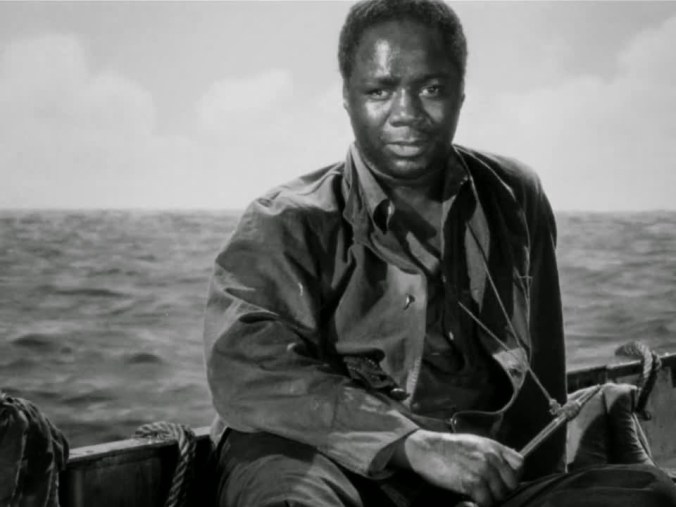
Most Americans, even black Americans haven’t, yet he was a remarkable, talented and courageous black man who made a difference in our history and our culture against daunting challenges. He should have been entered into the Ethics Alarms Heroes’ Hall of Honor long ago. This post will remedy that slight.
He was born to West Indian parents (and thus cannot accurately be called an “African American”) and named Lionel Cornelius Canegata on March 3, 1907 in New York City’s San Juan Hill district. A musical prodigy, Canegata studied the violin at the age of seven, and by the age of twelve was playing concerts. The compensation was sparse, however, so when he was 14, Canegata ran away to the Saratoga Race Track in upstate New York to become a successful jockey until he grew too tall for the job and became a horse exerciser for prominent racehorse owners. Once more seeking a path out of persistent poverty, Canegata changed course again, and set out to become a boxer.
He won 90 of 100 fights, the Metropolitan Inter-City and Junior National Championships, and the national amateur lightweight title. Before one match, an announcer butchered his name, and Canegata somehow became‘Canada Lee.’ Lee liked it and kept it.
In 1926, Canada Lee turned professional, and by 1930, he was a leading contender for the welterweight championship. Lee fought in over 200 fights as a professional boxer, losing only 25. Fate intervened with that path: a punch to the right eye detached his retina, and ended his boxing career just as it was getting promising and profitable. Like most boxers, Lee blew through the money he made during his boxing career, an estimated $90,000 (roughly equivalent to $1,644,684 today). “Just threw it away,” Lee later admitted. Later, Lee lobbied for insurance, health care, financial consultation and retirement homes for fighters. “The average boxer possesses little education,” he said in 1946. “If he winds up broke, he has no trade, no education and nobody to turn to.” Continue reading →
1. Stupid lawsuit update. The bitter ex-Ethics Alarms commenter now appealing the obvious ruling by a Massachusetts judge that his vindictive defamation suit against me continued his abuse of process by filing a spurious motion accusing me of contempt of court and perjury, and calling for sanctions.. It’s 100% baloney, but I still have to file an answer, thus wasting more of my time, which is the point. I’m debating whether to note in my opposition to the motion that the man is an asshole.
2. What an idiot, #1: You have been signed to a ridiculous contract by the Philadelphia Phillies, 13 years for $330 million dollars. You waited four months to do so, jamming up the careers and lives of dozens of lesser players because you really didn’t want to play there, and were determined to get a record setting amount. You know the city’s fans are dubious about your loyalty and commitment, though you have stated that you took such a long contract to demonstrate that commitment. Now you are being introduced to your new team, city and fan base after spending all of your career playing for one of their rival in the National League East, the Washington Nationals. Do you carefully plan out what you will say, when you have your turn at the microphone, knowing that one has only one chance to make a good first impression?
Not if you are Bryce Harper. Yesterday, at his press conference, he said that he wanted to bring a World Series title to Washington D.C.
It’s going to be a long 13 years. For everyone.
3. What an idiot, #2: Special counsel Robert Mueller notified federal Judge Amy Berman Jackson that Roger Stone had sent an Instagram post which containing a photo of Mueller under the words “Who framed Roger Stone,” despite Stone being under Jackson’s gag order barring him from speaking in public about Mueller’s team and its investigation. Continue reading →
Back last night from a whirlwind day of ethics in NYC, and leaving today on an auto safari to Washington County, Pennsylvania, where I will address bar members to kick off their annual meeting. See Facebook? THEY don’t think I should be muzzled! Meanwhile, I will be celebrating the non-birthday of the pirate apprentice hero of Gilbert and Sullivan’s “The Pirates of Penzance,” who was, you recall, indentured to a pirate band until his 2ist birthday, and since he was born on Leap Year, legally committed to a life of crime until he was 84 years old.
1. Nah, Democrats don’t automatically default to race-baiting… Well this was certainly ugly and embarrassing. During House Oversight Committee hearing with Michael Cohen, the fallen Trump fixer accused the President of making racist comments about African Americans. Let me interject here that this was obvious pandering to Cohen’s new pals in “the resistance.” It would have no probative value as hearsay even if the speaker wasn’t testifying with his pants on fire. Thus there was no need for Rep. Mark Meadows to try to rebut Cohen by asking Housing and Urban Development staffer Lynne Patton, who is black, to silently stand before the committee to (somehow) disprove that Trump is racist. Meadows (R-N.C.) said that Patton had told him there was “no way that she would work for an individual who was racist.”
Then Rep. Rashida Tlaib (D-Mich.) characterized Meadow’s stunt as racist, saying, “Just because someone has a person of color, a black person working for them does not mean they aren’t racist,” Tlaib said. “And it is insensitive that some would even say — the fact that some would actually use a prop, a black woman in this chamber in this committee is alone racist in itself.”
“You’re one of my best friends,” Cummings said to Meadows. “And I can see and I feel your pain, and I don’t think Ms. Tlaib intended to cause you that, that kind of pain.”
Tlaib then apologized to Meadows, saying it wasn’t her intention to call him racist. She just said that what he did was racist.
Oh.
2. Stop making me defend the Northam family!Gotcha! Just as Virginia Governor Northam was beginning to extract himself from the embarrassment of having to confess to being a Michael Jackson imitator via shoe polish, an enterprising black legislative page decided to nab her 15 minutes of fame by accusing Mrs. Northam of the dreaded “racial insensitivity.” It appears that Virginia’s First Lady, while narrating a tour of the Governor, triggered her my alluding to slavery.
“When in the cottage house you were speaking about cotton, and how the slaves had to pick it,” the teenaged page’s letter says. “There are only three Black pages in the page class of 2019. When you went to hand out the cotton you handed it straight to another African American page, then you proceeded to hand it to me, I did not take it. The other page took the cotton, but it made her very uncomfortable. I will give you the benefit of the doubt, because you gave it to some other pages. But you followed this up by asking: ‘Can you imagine being an enslaved person, and having to pick this all day?'”
“The comments and just the way you carried yourself during this time was beyond inappropriate, especially considering recent events with the Governor. From the time we walked into the mansion to the time in the cottage house, I did not receive a welcoming vibe.”
Ah. Now we see why Bernie Sanders was attacked by Democrats for saying that race shouldn’t matter. Mrs. Northam treated the black pages like she treated the rest, and that made this page feel unwelcome. And if Virginia’s First Lady had only given the cotton to the white pages? That would have been insensitive too, I’m sure.
To her credit, the Governor’s wife has not apologized. She responded that she has given “the same educational tour to Executive Mansion visitors over the last few months and used a variety of artifacts and agricultural crops.” Her intent is to illustrate “a painful period of Virginia history.” She said that she began last year to tell the “full story” of the governor’s mansion, including the Historic Kitchen. “I believe it does a disservice to Virginians to omit the stories of the enslaved people who lived and worked there — that’s why I have been engaged in an effort to thoughtfully and honestly share this important story since I arrived in Richmond. I regret that I have upset anyone,” she wrote, but she reiterated that she is still committed to chronicling the history of the Historic Kitchen, and “will continue to engage historians and experts on the best way to do so in the future.”
Now, if she had given the tour made up as Janet Jackson, that would have been inappropriate.
3. My own private boycott: I will not buy products that continue the coarsening of our culture by employing juvenile references to gutter language to sell their wares. Now Mr. Clean joins the list, with the ad for “his” Clean Freak Mist. Today’s TV ad screamed out “Big freaking news!” As with Booking.com’s evocation of “fucking” its ads, this is neither clever nor novel. Shrug it off if you like.Continue reading →
It would be a good afternoon if EVERYTHING WASN’T SPINNING OUT OF CONTROL!!!!
1. For the record, it appears that Facebook blocking Ethics Alarms posts has cost the site about 30% of its traffic. Mission accomplished, Thought Control Activists!
No word yet on how Paul is faring, but last October I wrote about yet another example, as described in the New York Times:
…Eight suits have been filed in federal court in Manhattan over the past two weeks, most recently against Hofstra University on Long Island on Oct. 4. In each case, lawyers for Emanuel Delacruz, who is blind, charged that the college’s website is inaccessible to their plaintiff and therefore in violation of the Americans With Disabilities Act.
The filings are part of a growing number of actions involving accessibility and the internet.….Since January 2015, at least 751 lawsuits have been filed over the issue. The vast majority have focused on retailers and restaurants, according to a legal blog that tracks such suits… another website, which includes not only lawsuits but also government investigations into web or technological accessibility, lists 37 schools that have been accused of noncompliance with disability law.
I wrote, in part,
Next? Law suits against art museums for not having audio descriptions of every work exhibited. Law suits against sports stadiums, alleging that the ADA mandates play-by-play being blasted from the ballpark speakers. Then, I suppose, lawsuits against the world for not making being blind a pleasure.
“On Dec. 13, a blind Manhattan resident named Henry Tucker filed federal lawsuits against 10 art galleries, saying their websites were not accessible to people who could not see. The galleries’ names included Adam Baumgold Fine Art, Adelson, Agora, Albertz Benda and Acquavella. The next day, Mr. Tucker and his attorneys moved on to the B’s.”
1. This belongs in the “Bias Makes You Stupid” Hall Of Fame. [ Note of Correction: the story is two years old, dating from March, 2017. It was represented by my source as current, and I didn’t check the date on the link. My error. It changes nothing in the ethics commentary, however. ]
Three Oklahoma teenagers broke into a home last week and were greeted by a homeowner with an AR-15. He mowed them down, as he had every legal right to do, and may I say, “Good!” This is the perfect reason why someone might want to have the security of a semi-automatic weapon like the AR-15. This is a good example of why the “nobody needs a semi-automatic” is such a fatuous anti-gun argument. This homeowner needed one when three people tried to invade his home.
But I digress. The grandfather of one of the dead teenagers is protesting that it wasn’t a fair fight, telling KTUL-TV:
“What these three boys did was stupid. They knew they could be punished for it but they did not deserve to die…Brass knuckles against an AR-15? C’mon. Who was afraid for their life? There’s got to be a limit to that law, I mean he shot all three of them — there was no need for that.”
Ah, yes, that word “need” again. I guess he should have knee-capped one, winged another in the shoulder, and counted on the third to surrender in tears. How was the homeowner supposed to know the kids “only” had brass knuckles with them—which are a potentially deadly weapon anyway? Yeah, the old man is just blathering away in grief, but then most anti-gun rhetoric comes out of emotion rather than logic. I’m sure the grandfather would also argue that it would have been preferable for the homeowner to get beaten to death rather than for three young men with their whole lives ahead of them to be killed.
Side note: Getaway driver, 21-year-old Elizabeth Rodriguez was arrested and charged with three counts of first-degree murder, along with one count of first-degree burglary and one count of second-degree burglary. That’s how felony murder works. No, I don’t feel sorry for her, either.
2. Today’s Jussie Smollett hoax item. Stop making me defend Van Jones! CNN’s dapper race-baiter is getting criticized for calling Jussie an icon in this quote:
“This is the fall of an icon and I don’t think people understand how important he has been in the black community. ‘Empire’ as a show, to have him as a beloved character, I think did a great deal to knock back homophobia in the black community. The fact that he has been celebrated and you see homophobia in the black community through his eyes on the show, this is a Jackie Robinson against homophobia.”
Writes Hollywood conservative columnist Christian Toto: “Jones just served up arguably the worst “take” on the Jussie Smollett hoax story…You almost have to read it twice to appreciate the absurdity of the comparison. If Jones, brighter than the average pundit, can sink this low, it speaks poorly of the pundit class in toto.”
I think Jones is generally a blight on TV punditry, but there is nothing inappropriate about his observation. There is a lot of homophobia in the black culture, and Smollett had begun to loosen its grip by playing a popular, likable, admirable gay character on a one of the most popular TV shows with gay audiences. Sure, the Jackie Robinson comparison is excessive, but I get his meaning. The implication of what Jones is says is that as a figure who was more than just another actor because of his symbolic effect, Smollett had an obligation to protect his status and image. Jones wasn’t excusing Smollett at all. Continue reading →