Snopes’ Credibility Death Spiral: Presenting The Straw Man Fact-Check

Apparently the recent example of Snopes resorting to proving a “claim” false that nobody serious was claiming wasn’t an anomaly, but a new strategy. Here, Ethics Alarms commenter Tippy Scales discussed the struggling urban-legend-turned-partisan-hack-site post in defense of ESPN’s ridiculous removal of Asian -American Robert Lee from a football broadcast because he shared a first and last name with Robert E. Lee. Its spin: the accusation that “ESPN Fired Announcer Robert Lee Because His Name Sounds Like the Confederate General’s? was wrong! Except that was not what happened, nor what critics of ESPM were objecting to.

Why would Snopes do this?  Tippy  opined that Snopes “couldn’t stand having to confirm something that went against their worldview, so they invented a reason to avoid it.” The real reason appears to be even worse than that. Snopes’ current game is to mislead readers by convincing them that criticism from the right is dishonest and absurd, by searching for self-evidently idiotic accusations and then disproving them…which isn’t difficult when the accusations were dredged up from the social media swamp by Snopes specifically to debunk.

Today’s example is hilarious. Snopes:

Fact Check: Was Barack Obama President During Hurricane Katrina?

Twitter users tried to pin the blame for Katrina relief issues on Obama, though he wasn’t even president when it hit New Orleans.

CLAIM: Barack Obama was president when Hurricane Katrina hit New Orleans in 2005.
RATING: FALSE

ORIGIN: As damage from Hurricane Harvey continued to grow in Texas in late August 2017, some Twitter users sought to defend President Donald Trump’s response to the disaster by criticizing the actions of his predecessor, Barack Obama during similarly pervasive flooding in Louisiana in 2016. Other users took that argument even further, knocking Obama for not “doing enough” to help Louisiana during Hurricane Katrina.

Continue reading

From The “Didn’t I Tell You To Stop Making Me Defend President Trump?” Files, An Ethics Alarms Popeye: More On The Joe Arpaio Pardon

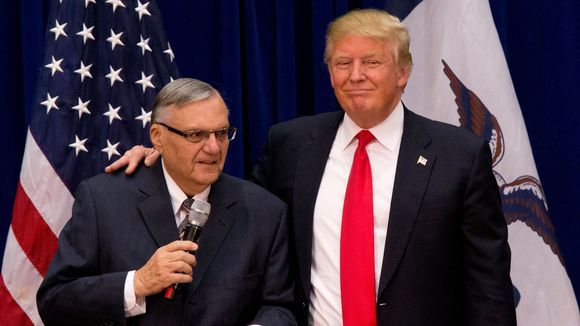
I would prefer not to keep talking about the Joe Arpaio pardon, but the news media and the “resistance” won’t let the pardon go, because in the absence of anything legitimate giving them cause to scream for an impeachment, they have to latch on to whatever they can. So this is a Popeye: I’m writing it because, as the spinach-living cartoon sailor would say, “That’s all I can stands, cuz I can’t stands no more!”

Oh, before I forget: here’s what the Southern Poverty Law Center says about the pardon:

“By pardoning Joe Arpaio, President Trump has demonstrated his contempt for the rule of law and the racism at the core of his agenda. Arpaio, a Trump favorite on the campaign trail, is the former sheriff of Maricopa County, Arizona. He was convicted of criminal contempt of court for intentionally violating a federal court order prohibiting racial profiling. As a result of President Trump’s pardon, Arpaio will never be held accountable for his unconstitutional conduct.”

Following this logic, by pardoning drug dealers President Obama proved that at heart, he is a drug dealer. By pardoning Chelsea Manning, President Obama proved that sharing classified information with our enemies is at the core of his agenda. This is a “law center”  including such tripe on its website? It sounds like the legally ignorant accusation often made against defense lawyers (like Hillary Clinton) that they endorse the crimes, motives and values of their clients.

In a front page article on Sunday, the New York Times tried to break its own record for desperately trying to make a case for Presidential wrongdoing while still stating the undeniable fact that no wrongdoing had occurred:

  • The Times states, correctly, “that there is nothing in the text of the Constitution’s pardons clause to suggest that [Trump] exceeded his authority.” But it tracks down yet another law professor who has allowed the anti-Trump brain virus to swallow his integrity. Noah Feldman, a law professor at Harvard, claimed that pardoning Arpaio “would express presidential contempt for the Constitution.”

Good thinking. The President expressed contempt for the Constitution by engaging in an action described and enacted in the Constitution. A better argument, though still unfair, would be that President Obama was expressing contempt for the Constitution by not using its pardon power provision even once within his first 400 days in office.

  • More from the Professor: “Arpaio didn’t just violate a law passed by Congress…His actions defied the Constitution itself, the bedrock of the entire system of government.” Yes, and so what? If that same document gives the President an open-ended power to forgive any crime, and it does, then this is just huffing and puffing.

All Feldman is saying is that he doesn’t believe that Arpaio’s particular crime should be pardoned. When you’re President, Professor, by all means let that standard be your guide.

  • By saying Mr. Arpaio’s offense was forgivable, Professor Feldman added, Mr. Trump threatens “the very structure on which his right to pardon is based.”

Note to  Professor Feldman: Get help. The reason the President has unlimited pardon power is because, in the view of the Constitution’s authors, any offense IS forgivable. Presidents have pardoned traitors, those who have killed American citizens. They have pardoned terrorists, and a President of the United States who plotted to subvert justice and our democracy itself. No Harvard Law professor has made the claim that any of those offenses were unpardonable (that is, literally, unforgivable). Why is that? Well, a) Trump is special and doesn’t deserves to be judged by the same standards as other Presidents, and b) the Left hates Arpaio beyond all proportion, because of his opposition to illegal immigration.

  • The Times writes, “It was the first act of outright defiance against the judiciary by a president who has not been shy about criticizing federal judges who ruled against his businesses and policies.” If this pardon is “outright defiance against the judiciary,” then most pardons are. Almost all pardons erase a judicial sentence or verdict.

This is misleading, biased, inflammatory, unethical journalism.

  • The Times writes,

“Mr. Trump could pardon any of the subjects of the special counsel’s Russia inquiry, though some legal specialists believe he could increase his risk of prosecution if he is seen as abusing his pardon power.Were Mr. Trump to announce that he has pardoned himself, impeachment would remain possible. A prosecutor might also test the limits of the pardon power by indicting Mr. Trump notwithstanding such an announcement. That clash could lead the Supreme Court to weigh in on the limits of the president’s power to spare himself from punishment for criminal wrongdoing.”

This story has nothing to do with impeachment! No evidence has been found that suggests the President has committed any impeachable acts. The Times story is about the Joe Arpaio pardon. How can the Times justify suddenly piling tangential hypothetical on top of tangential hypotheticals in this article to get to a scenario where the Supreme Court has to determine whether President Trump can pardon himself for crimes as yet unalleged and undiscovered? Well, the reporter is Adam Liptak, the epitome of what Instapundit calls “Democratic operatives with bylines.” He’s not reporting here; he’s promoting a nakedly partisan narrative. Continue reading

First Parmesan Cheese, An Now This: A Judge Bends Over Backwards To Let The New York Times Escape Its Abuse of Journalism Rights

Oh, we knew Palin had nothing to do with this wacko, but it sure felt good to stick it to her anyway…

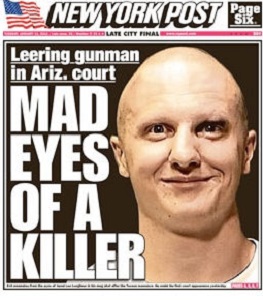
Federal judge Jed S. Rakoff  has dismissed Sarah Palin’s defamation lawsuit against The New York Times, ruling that she had failed to show that the Times  defamed her in its June editorial stating that she was responsible in part for the Tucson shooting of Rep. Gabrielle Giffords and others by the deranged Jared Loughner. Rakoff’s  ruling argued that the statements in the Times editorial were ambiguous (where have I heard this before?), and thus did not qualify as “provably false,” resulting in insufficient evidence that the Times had written the story with “actual malice.”

“[I]f political journalism is to achieve its constitutionally endorsed role of challenging the powerful, legal redress by a public figure must be limited to those cases where the public figure has a plausible factual basis for complaining that the mistake was made maliciously, that is, with knowledge it was false or with reckless disregard of its falsity,” Rakoff wrote.

Right. Except that to write what it did, the New York Times Editors had to be unaware of what the Times itself had reported regarding Palin’s alleged culpability for the shooting. The Times reported, in great detail at the time, that the claim that Palin’s website had inspired Loughner was completely without merit.

A newspaper’s editors impugning a public figure by blaming her for multiple murders and the attempted assassination of a Congresswoman without checking its own reporting doesn’t qualify as “reckless disregard of its falsity”? If that isn’t reckless disregard, what is? Continue reading

Morning Ethics Warm-Up: 8/27/17

GOOOD MORNING!

(he said through gritted teeth..)

1. I received a nice, polite e-mail from a new reader here who accused me of engaging exclusively in “partisan/political rants.” “Further,” he wrote,  “everything you say appears to be entirely one-sided (right/conservative/republican is good, left/liberal/democrat is bad).”

The man is an academic, so one might expect a little fairness and circumspection, but then, the man is an academic. His description is in factual opposition to the contents of the blog (I’m trying to think of the last Republican leader, conservative or otherwise, I designated as “good”), but I know from whence the impression arises: the fact that the entire American Left, along with its sycophants and familiars, the universities, show business and the news media, have gone completely off the ethics rails since November 8, 2016. I don’t know how else I am supposed to address that. It would have been nice, for balance’s sake, if a conservative cast of white actors in, say, a hit musical called “The Ray Coniff Story” had stepped out of character and harassed, say, Chuck Shumer, but this didn’t happen. If it had, I would have treated that breach of theater ethics exactly as I did the cast of Hamilton’s harassment of Mike Pence. (I would not, however, have been attacked for doing so by my theater colleagues, and no, I haven’t forgotten, and I’m not forgiving.)

If a GOP figure working for CNN as an analyst, say, Jeffrey Lord, had used his connections at the network to forward debate questions to Donald Trump and then lied about it when he was caught red-handed, I would have eagerly written about it in highly critical terms—but the Republicans didn’t cheat. Donna Brazile and the Democrats did. 

If Hillary Clinton had been elected President and Donald Trump and the Republicans formed an anti-democractic movement called “the resistance,” tried to use a single Federalist paper as a rationalization to change the rules of the election and then pressured performers not to allow the new President the privilege of a star-studded, up-beat inauguration to unify the nation, and if a large contingent of Republican Congressmen had boycotted the ceremony, saying that they did not consider Hillary as “legitimate President,” Ethics Alarms would have been unmatched in expressing its contempt and condemnation. If conservatives were trying to limit free speech according to what they considered “hateful,” a step toward dictatorship if there ever was one, I would be among the first to declare them a menace to society. They haven’t advocated such restrictions, however. Progressives have. The Mayor of Portland has called for a “hate speech’ ban. What party is he from? Howard Dean said that “hate speech” wasn’t protected. What party was he the Chair of? I forget. What was the party–there was just one— of the mayors who announced that citizens holding certain views should get out of town?

“Need I go on? I could, because the uniquely un-American, unfair and destructive conduct from Democrats, progressives and the anti-Trump deranged has continued unabated and without shame for 10 months now.  That’s not my fault, and I don’t take kindly to being criticized for doing my job in response to it. I have chronicled this as unethical, because it is spectacularly unethical, and remains the most significant ethics story of the past ten years, if not the 21st Century to date.

And the reluctance and refusal of educated and usually responsible liberals and Democrats to exhibit some courage and integrity and vigorously oppose this conduct as they should and have a duty as Americans to do—no, I am not impressed with the commenters here who protest, “Hey, I don’t approve of all of this! Don’t blame me!” as if they bear no responsibility—is the reason this execrable conduct continues. It is also why I have to keep writing about it.

2. I’m still awaiting the apologies and acknowledgement of my predictive abilities from all of my friends who chided me for suggesting that the Confederate flag and statuary-focused historical airbrushing mania would shoot down the slippery slope to threaten the Founders and more.  Continue reading

The Joe Arpaio Pardon

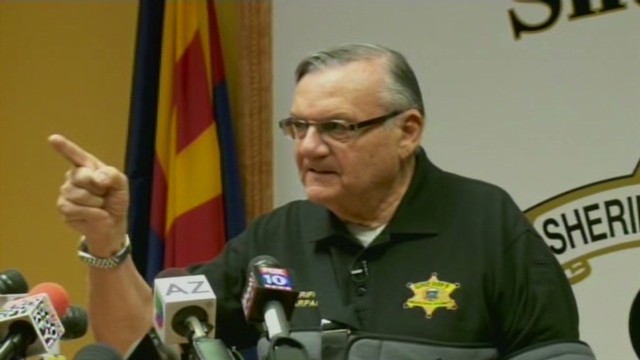
To nobody’s surprise, I hope, President Trump  pardoned the former Maricopa County, Arizona sheriff, a hero to many conservatives and anti-illegal immigration proponents (there is no ethical justification for not being anti-illegal immigration), who was facing up to 18 months in jail for criminal contempt of court, for defying a judge who had ordered him to stop profiling Hispanics.

As I wrote earlier, the President had no good ethical options in this situation. It was a binary choice, and whichever choice he made would be arguably unethical in one respect or another. Let me repeat what I wrote about this question just two days ago, before the President acted:

Let’s see:

  • Arpaio did defy a judicial order. Should a law enforcement official be treated especially harshly when he does this?

Yes.

  • The judicial order related to Arpaio’s practice of assuming that individuals of Hispanic descent were more likely to be violating the immigration laws in his jurisdiction than other citizens. Since his jurisdiction was rife with Hispanic illegals, was this an unreasonable assumption on his part? No. Was it still discriminatory? Sure. Is the balance between profiling, which in such situations is a valuable law-enforcement tool, and the importance of equal treatment under the law a difficult one legally and ethically? Yes. Does a sheriff have the right and authority to ignore the way this balance is decided one legal authorities define it?

No.

  • Is the determination of this balance often polluted by ideological biases, in this case, against enforcement of immigration laws?

Yes.

  • Do Donald Trump, and his supporters, and those Americans who may not be his supporters but who agree that allowing foreign citizens to breach our borders at will without legal penalties is certifiably insane, believe that Arpaio’s position on illegal immigration is essentially correct and just?

Yes.

  • Nonetheless, did his ham-handed methods give ammunition to open-borders, pro-illegal immigration, race-baiting activists like the one who told the New York Times,

“Trump is delivering a slap in the face to dignified, hard-working people whose lives were ripped apart by Arpaio. Arpaio belongs in jail, getting a taste of his own medicine. Trump wants to put Arpaio above the law, showing they are both about white supremacy.”

Yes.

  • Is sending Arpaio to jail a political imprisonment?

Yes, although he made it easy to justify on non-political grounds.

  • Are political prisoners the ideal objects of Presidential pardons?

Yes.

  • Would pardoning him send dangerous messages (it’s OK to violate judicial orders you think are wrong; the ends justifies the means; Presidents should meddle in local law enforcement, “extremism in defense of liberty is no vice”) as well as defensible ones ( judges and elected official enabling illegal immigration are a threat to the rule of law; Joe is an old man with a long record of public service who deserves mercy even though he was wrong…)

Yes.

  • Will such a pardon, especially as the news media is again spinning to make the case that Trump is sympathetic with xenophobes and white nationalists, further inflame an overly emotional debate that needs to be calmed, not exacerbated?

God, yes.

  • Is the most responsible course for Trump to stay out of this mess?

YES!

  • Will he?

Of course not.

Sure enough, Democrats, Trump-haters like Senator John McCain and my echo-chamber Facebook friends are denouncing the pardon as if the President had loosed Hannibal Lector on the world. In doing so, they really look ridiculous,  and might as well be wearing  “I hate Donald Trump and will scream bloody murder no matter what he does” in neon on their heads. Especially for Democrats, who have argued that non-violent criminals shouldn’t be imprisoned at all when they are young and black, the argument that an 85 year old man’s under-two year maximum sentence is an outrageous object of Presidential mercy and grace—that’s what a pardon is, you know–is the height of partisan hypocrisy.

The fact that Arpaio is 85 alone justifies a pardon by the standards Presidents have used since the beginning of the office. That his sentence is relatively short—many, many prisoners with far longer sentences have been pardoned by Trump’s predecessors–makes the pardon, if ill-considered, also de minimus, especially since there is no chance, literally none, that the old man, now out of office and retired, will have an opportunity to repeat the crime he was convicted of committing. A pardon is an act of grace by which an offender is released from the consequences of his offense, according to the U.S. Justice Department’s website. It does not say that the offender was not guilty, or that the law that was violated can be breached at will.  In 2013, President Obama pardoned Willie Shaw Jr., who was sentenced in August 1974 to 15 years in prison for armed bank robbery. Armed bank robbery is a lot more serious an offense than criminal contempt, but nobody argued that Obama’s pardon “demonstrates flagrant disregard for the rule of law in this country,” not even the most virulent anti-Obama Republicans. But that’s what Senator Diane Feinstein said Trump’s pardon of Arpaio was:

“Sheriff Joe Arpaio should not have been pardoned. He brazenly denied a federal judge’s court order to stop racial profiling and continued to do so until being convicted of criminal contempt. A pardon for that conduct demonstrates flagrant disregard for the rule of law in this country.”

By that a standard, any pardon is an insult to the rule of law. Does Feinstein endorse the brain-dead view of her fellow California Senator, Kamala Harris, who seemed to argue that criminals shouldn’t be pardoned? I suspect the standard they both embrace is that no conservative law enforcement official should even be pardoned for being over-zealous in enforcing a law that their party disgracefully has tried to have enforced as infrequently as possible.

This is the real hypocrisy of the critics of Trump’s pardon. Feinstein’s state is full of sanctuary cities that intentionally undermine and defy the rule of law, without a peep of protest from its two Democratic Senators. They want Arpaio to be immune from Presidential mercy, unlike the 534 draft- dodgers pardoned by Jimmy Carter, tax fugitive Marc Rich, pardoned by Bill Clinton afters ex-wife made large campaign contributions and donations to the Clinton Presidential Library, gangster union leader Jimmy Hoffa, and all the Confederate citizens and soldiers who took up arms against the United States.  They want him to be metaphorically hung up by his heels to appease their open-border, pr0-illegal immigration base, making the fervor to punish him purely political, and having little to do with respect for the rule of law, which their own position on illegal immigration proves that they don’t respect themselves.

Let me be clear. This isn’t a Rationalization #22 “it isn’t the worst thing” defense of the pardon. It is a “the attacks on this pardon are wildly disproportionate to its reality, and thus transparent political theater” indictment of the pardon’s critics. Almost every pardon can be called a rejection of the “rule of law,” if you don’t understand what the pardon power is, and politicians who have been undermining respect for  the very laws that Arpaio went over-board enforcing are the last people on earth who should make that argument. They are ridiculous in their hypocrisy.

Joe Arpaio was an arrogant, grandstanding bully and thug, and unworthy of his badge. I wouldn’t have pardoned him despite his age, but there were some good reasons for Trump to do so. It was almost worth doing just to prompt Trump’s foes and pro illegal immigration hypocrites into embarrassing themselves.

The larger ethical problem with this pardon is the one focused on by P.S. Ruckman on his Pardon Power Blog. He is correctly troubled by the fact that the usual process for Presidential pardons was not followed (Trump does not even have a pardon attorney on board yet), and that for a political ally like Arpaio to be the President’s first pardon (despite the fact that Obama didn’t pardon his first until well into his second year in office), sends a corrosive message:

Hundreds of persons have applied for clemency and have waited for years, some for 10 or 15. Imagine how demoralized they must feel now. Now, more gasoline will be poured on the classic misconception that clemency is only for famous persons, rich people, political supporters, insiders, the “connected.” It is, of course, a false narrative, but a powerful one. One that defames a wonderful check and balance and, in some instances, discourages politicians from doing anything. They err on the side of caution (they think) by showing mercy to no one, or to as few as possible.
Comment Of The Day: “Morning Ethics Warm-Up: 8/24/17”

The debate over what kind of tolerance is required and justified in a democracy inspired reader Chris Marschner to submit a thoughful and thought-provoking comment, as he has before, that takes the discussion in a diferent direction.  I’ll let you read it and have your own reactions; Chris needs no further preface.

Here is his Comment of the Day on the post,Morning Ethics Warm-Up: 8/24/17:

Let me begin with the question, what lies as the foundation of tolerance? Is it understanding, empathy, or a just a willingness to comprehend an alternative perspective? Perhaps it is all three. By definition, tolerance is a willingness to live and let live, so to speak. But, the notion of willingness to live and let live does not preclude the actions of those who seek to change minds through cogent rational argument.

I have listened at great length to those who oppose and support the destruction or removal of Confederate iconography in today’s world. If we start with the assumption that what is right and good will triumph over that which is bad and evil in time without the need to resolve the dispute violently we might move toward a more tolerant and enlightened social structure.

My thesis is neither a defense of nor a condemnation of societal issues that continue to pit one against another. I will merely juxtapose the historical issue which divided the nation into camps that found the practice repugnant and those that found no problem with it an a modern day issue that one group find morally repugnant while others do not and attempt to draw parallels to historical events that sanctified, or at least legitimized social behavior.

Again, I am trying not to cast any judgement on any behavior but to develop my thoughts I needed to find a modern day issue that a majority segment of our population finds morally repugnant and another minority segment sees as perfectly acceptable. I then asked myself the question to what lengths might the minority segment go should the majority segment impose its will by executive or judicial fiat? How much will the minority tolerate before it finds the political majorities imposed will too much to tolerate. What issue might create substantial animus toward the ruling segment that it too may seek to enjoin itself from laws of the land. What parallels in history do we see that might engender such animus and how might future generations view the loser if the debate escalated into a full on confrontation? Continue reading

Comment of the Day: “Yes, Virginia, There Is A White Supremacist Teacher Principle”

It is seductively easy to be certain about one’s analysis of controversial issues if you simplify them to the point of distortion. This is what politicians do, and it is often impossible to tell whether they are trying to deceive,  just don’t understand the issue at hand, or are deliberately ignoring inconvenient facts to advance an agenda. Sometimes it is all three. The Civil War, as the recent debate over Confederate statues again illustrates, is a classic example of this phenomenon, and has been since the war itself began. Southerners saw their cause as just, because they were fighting for the right to determine the shape of their own culture, a right they felt was embodied in the Constitution itself. Since that culture included slavery, to assert that the South had a measure of law and ethics on its side has routinely dismissed as, and simplifies as, sympathizing with slaveholders. (As an aside, I wonder if the censorious Left will redouble its efforts to get “Gone With The Wind” exiled from television permanently. I’m betting yes.)

Arguments about what the Civil War was fought over have been taking on the tenor of the old Miller Beer commercials: “Less filling!” “More taste,” or perhaps the Certs ads: “Certs is a breath mint!” “Certs is a candy mint!” “STOP you’re both right!” To his great credit, texagg04 accepted the challenge of trying to clarify the complexities of the “root causes of the Civil War” confusion in a concise comment (the topic has filled long scholarly books). He did an excellent job, and as he wrote as he began his explanation, the complexities matter. They usually do.

Here is texaggo4’s Comment of the Day on the post,Yes, Virginia, There Is A White Supremicist Teacher Principle:

…The South seceded to defend against what it believed would be the Republican plan to eradicate slavery via the National level of government.

Slavery is why the South seceded – Slavery could be said to be a type of Final Cause of secession.

But that said, slavery was merely the topic of the question, “Who has final authority to make significant economic decisions within the individual states: The States or the National level of government?” State powers — those not delegated to the Union — was the issue to be answered as it pertained to slavery. So “States Rights” could be said to be a type of Formal Cause of secession.

There was NO war at that point, because secession, prior to the Civil War, was widely regarded as a perfectly legal course for States *voluntarily* part of a Union to do.

Stopping secession, that is preserving the Union status quo, is *why* hostilities began. Continue reading

Comment Of The Day: “Morning Ethics Warm-Up: 8/23/17”

Like Baltimore removing its politically incorrect statues, here I am in the dead of night trying to catch up with the Ethics Alarms Comments of the Day.

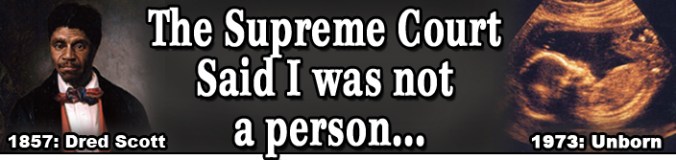
By the way, of all the statues taken down and under attack, the one I can most sympathize with is that of Chief Justice Roger Taney. There is only one reason anyone remembers Taney, and only one thing a statute to him can symbolize: the Dred Scott decision, which he authored. Since it is, by acclamation, the single most disastrous Supreme Court decision in the nation’s history, having a statue of Taney standing in front of the Maryland state house is difficult to defend.

Taney is something of a tragic figure. The rest of his judicial career was distinguished, but that is a bit like saying that the rest of that performance of “Our American Cousin” was terrific. He actually thought the Dred Scott decision would avert a civil war by settling the slavery question once and for all. He was not an evil man, just a horribly misguided one.

There is a street named after Taney in Alexandria. Every time I pass the sign, I think, “This is weird.” Who defends the Dred Scott case? Who has defended it in the last 150 years?

But I digress.

Tippy Scales is an undercover journalist, registering his period disgust at the ethical collapse of his profession here because it is not safe to do so elsewhere. He filed this Comment of the Day two days ago, on the post, Morning Ethics Warm-Up: 8/23/17

(I’ve linked to the topics and posts he  has referred to within his post.)

Let’s review the past few days… Continue reading

Morning Ethics Warm-Up: 8/24/17 [UPDATED]

GOOD MORNING!

1. I’m moving this to the top from its original placement at the end. I warned that the mania for retroactive statue-toppling and historical air-brushing was a deadly slippery slope to cultural chaos from the moment Dylan Roof’s rampage primed the Confederate flag banning push. I said that there was no clear stop on that slope, and that this was a massive ethical error that would quickly spin out of control.

I am accepting apologies and “You were right, I was wrong” messages at jamproethics@verizon.net. I will reply gracefully.

2. It’s a good thing, in some ways, that President Trump has no ethics alarms, or has them but doesn’t understand what all the ringing means, because if he did, he might realize that he has put himself in ethics zugswang in the matter of former sheriff Joe Arpaio, the anti-illegal immigration zealot who is facing up to six months in jail for defying a federal judge’s order to stop targeting Latinos based solely on the suspicion of their legal status. Trump has been urged to pardon Arpaio. Let’s see:

  • Arpaio did defy a judicial order. Should a law enforcement official be treated especially harshly when he does this?

Yes.

  • The judicial order related to Arpaio’s practice of assuming that individuals of Hispanic descent were more likely to be violating the immigration laws in his jurisdiction than other citizens. Since his jurisdiction was rife with Hispanic illegals, was this an unreasonable assumption on his part? No. Was it still discriminatory? Sure. Is the balance between profiling, which in such situations is a valuable law-enforcement tool, and the importance of equal treatment under the law a difficult one legally and ethically? Yes. Does a sheriff have the right and authority to ignore the way this balance is decided one legal authorities define it?

No.

  • Is the determination of this balance often polluted by ideological biases, in this case, against enforcement of immigration laws?

Yes.

  • Do Donald Trump, and his supporters, and those Americans who may not be his supporters but who agree that allowing foreign citizens to breach our borders at will without legal penalties is certifiably insane, believe that Arpaio’s position on illegal immigration is essentially correct and just?

Yes.

  • Nonetheless, did his ham-handed methods give ammunition to open-borders, pro-illegal immigration, race-baiting activists like the one who told the New York Times,

“Trump is delivering a slap in the face to dignified, hard-working people whose lives were ripped apart by Arpaio. Arpaio belongs in jail, getting a taste of his own medicine. Trump wants to put Arpaio above the law, showing they are both about white supremacy.”

  • Is sending Arpaio to jail a political imprisonment?

Yes, although he made it easy to justify on non-political grounds.

  • Are political prisoners the ideal objects of Presidential pardons?

Yes.

  • Would pardoning him send dangerous messages (it’s OK to violate judicial orders you think are wrong; the ends justifies the means; Presidents should meddle in local law enforcement, “extremism in defense of liberty is no vice”) as well as defensible ones ( judges and elected official enabling illegal immigration are a threat to the rule of law; Joe is an old man with a long record of public service who deserves mercy even though he was wrong…)

Yes.

  • Will such a pardon, especially as the news media is again spinning to make the case that Trump is sympathetic with xenophobes and white nationalists, further inflame an overly emotional debate that needs to be calmed, not exacerbated?

God, yes.

  • Is the most responsible course for Trump to stay out of this mess?

YES!

  • Will he?

Of course not. Continue reading

Morning Ethics Warm-Up: 8/22/17

Good Morning!

1. You cannot imagine how long it takes to prepare a post on WordPress when the internet connection is going out repeatedly, requiring a trip down a flight of stairs, re-booting the modem, scanning for a channel back up the stairs in my office, and furiously searching, reading and linking until Verizon kicks out again after three to ten minutes.

Since none of my 40 phone calls to the Verizon tech who promised that the three-months’ long problem was fixed and that he would sprint like a bunny back to our home to trouble shoot if the malady returned had received the courtesy of a response, I snapped, and got into my car to visit a Verizon wireless store about five minutes away that I didn’t know existed. For some reason the world, though sun-lit, was bathed in a weird light, and my neighbors were lying on the ground wearing what looked like 3-D glasses, but never mind: I had someone to yell at.

There were two young men about the age of my son manning the store, and I told one of them, through gritted teeth, the whole infuriating saga of how much Verizon DSL sucks and what useless customer service his employer provides, rendering both my business and my communications chaotic and unbearable. I didn’t expect anything, really. I just wanted to give hell to someone face to face.

To my shock and amazement, the young man actually did something. He got on the phone—I told him that I took sadistic pleasure in watching Verizon personnel go through the infuriating phone tree, get put on hold, get disconnected, end up in the wrong department, for all of this happened to him as I watched and listened—but he finally reached a supervisor, and told him that the story he had just heard from the gentleman in his office made him ashamed to work for Verizon, and he wanted to know how my problems could be addressed immediately. Yes, he knew that I had a tech visit already scheduled, “but since the same tech has been out there three times, each time assuring him that the problem was successfully addressed, why would he trust us to fix the problem now?”

“If I were him, I would have dumped Verizon and found another provider.”

After about 45 minutes, here was what he accomplished. He got them to agree to send a different and higher level tech this time. He set in motion the process of getting me fee rebates for the three months of intermittent service. And he gave me his card, with instructions to call him immediately if the problem wasn’t fixed. “If I have to, I’ll come to your house and personally see that you have functioning internet service from a new provider,” he said. “one way or the other, I will fix this problem.”

Now THAT’S customer service.

Stay tuned!

2. From President Trump’s speech yesterday:

The men and women of our military operate as one team, with one shared mission and one shared sense of purpose. They transcend every line of race, ethnicity, creed and color to serve together and sacrifice together in absolutely perfect cohesion. That is because all service members are brothers and sisters. They’re all part of the same family. It’s called the American family. They take the same oath, fight for the same flag and live according to the same law. They’re bound together by common purpose, mutual trust and selfless devotion to our nation and to each other.

The soldier understands what we as a nation too often forget, that a wound inflicted upon a single member of our community is a wound inflicted upon us all. When one part of America hurts, we all hurt. And when one citizen suffers an injustice, we all suffer together. Loyalty to our nation demands loyalty to one another. Love for America requires love for all of its people.

When we open our hearts to patriotism, there is no room for prejudice, no place for bigotry and no tolerance for hate. The young men and women we send to fight our wars abroad deserve to return to a country that is not at war with itself at home. We cannot remain a force for peace in the world if we are not at peace with each other.

As we send our bravest to defeat our enemies overseas — and we will always win — let us find the courage to heal our divisions within. Let us make a simple promise to the men and women we ask to fight in our name, that when they return home from battle, they will find a country that has renewed the sacred bonds of love and loyalty that unite us together as one.

But as my Trump-deranged Facebook friends say, we know he doesn’t believe any of this. We know in his heart that he’s a racist Nazi. Besides, they don’t want to heal those divisions. They want to exploit them, and why would they want to be undivided from deplorable citizens they hate anyway? Continue reading