Some Final, Hard Words Before Kick-off

cteliving

I made this comment to the main post on the Super Bowl, and decided that the point is important enough to elaborate on a bit and post here.

I’ve  become depressed talking to people on Facebook and elsewhere about the post. They don’t even pretend to have a real argument. Some fall back on the same rationalizations I explored in the post: one guy on Facebook’s rejoinder consisted of writing, “why worry about this when Congress and the White House are full of liars.” And people “liked” that response, which makes no sense at all.  The rest of the determined Super Bowl fans say, “Yeah, you’re right, but I like football and don’t want to think about it.”  That just is not a rational, ethical response to learning that your support is perpetuating a corrupt system that is exploiting and hurting people. It isn’t.

The NFL is not on the same scale of evil as slavery (yeah, I know, but we need the slaves to keep our lifestyle, so I don’t want to think about it) or the Holocaust (Yeah, but I don’t know any Jews, and the country’s doing well, so I don’t want to think about it) or a daughter-molesting husband (Yeah, but he’s a good provider, and I love him, so I don’t want to think about it). Sure, this is a game, but the process of self-delusion, corruption and passive acceptance of evil is exactly the same. Tell me how it isn’t.

And you know, it takes a lot less sacrifice to stop making it profitable for the NFL to lie and pay young men unto dementia and suicide than it did to reject slavery in the South, or Nazism in Germany, or even for an abused wife to report her husband for raping their daughter…because it is just a game. You can live a very happy life, a full life, a fun life, without the NFL being part of it. It’s corrupting American society and you. Don’t you they see that?

I guess slavery and the Holocaust didn’t have cool commercials, so that’s something…

Ashley Judd, Hillary Clinton, and Celebrity Malpractice

Mount Rushmore

I had hoped to have my “Celebrity Code of Ethics” complete for this post, but it isn’t, so I’ll just allude to some of its likely provisions.

I like Ashley Judd, I really do. I’m not sure why she never became the reigning female light drama star of her generation; she’s every bit as good as Sandra Bullock or Julia Roberts, and that voice! Now she’s routinely relegated to repetitious action movies and will be playing Jennifer Lawrence’s mother any day now—oh well, that’s show biz. Judd is also more articulate and intellectually curious than the average celebrity, so it was with great pain and disappointment that I learned that she had recently said this, in an interview with Larry King, about the presidential prospects of Hillary Clinton:

“I think she might be the most overqualified candidate we’ve had since – you know, Thomas Jefferson or George Washington.”

Now, I don’t expect celebrities to be historians or experts on anything  other than their profession and areas of specialty. However, one tenet of celebrity ethics is the same as that of doctors: “First, do no harm.” That means, for someone like Judd, a celebrity has an ethical duty to recognize that a disturbing number of people think that because she is rich and famous, she is necessarily  informed, responsible and wise, as well as a role model, and therefore, unlike the usual drunk on a barstool, when that celebrity says something outrageously ignorant, stupid and misleading, hundreds of thousands of people believe it and align their own beliefs accordingly. That’s harmful, and doing it is unethical. Continue reading

Bias Check

Confirmation bias

Detecting and overcoming one’s own biases is one of the most important features of being ethical. “Bias makes you stupid,” after all, and stupidity can make you unethical. As the author of an ethics blog, this is of special concern to me, as I am constantly making choices that bias could seriously affect. Some of those choices include what issues and events have ethics components, which are most important to publicize, how should the ethical issues be analyzed, what conclusions are fair and reasonable, even how long a particular post should be, what authorities and references should be included, and what style—scholarly? humorous? bemused? indignant? outraged?—will best illustrate a point.

As regular readers here know, I can be harsh, often too harsh, when a commenter dismisses my commentary as partisan or ideologically motivated. First of all, it isn’t, and I resent the accusation. Second, it’s a cheap shot, essentially attacking my motives, objectivity and integrity rather than presenting substantive arguments. Third, it is a simpleminded approach to the world in general, and democracy in particular, and life, presuming that “there are two kinds of people,” and one type is always wrong, while the other type is always right. There is nobody I agree with all the time, and I am far from alone in that trait. People who agree with the same people all the time are not really thinking. They are just taking the easy route of picking sides, and letting others think for them.

Obviously, my approach to controversies, problems and ethical analysis are influenced by thousands of factors, including my parents,  my upbringing,  where I have lived,  teachers, friends, and family members, experiences, books, plays, movies and popular culture, interests  and passions (like leadership, American history, and baseball), what I’m good or successful at and I’m not, and so much else. These are not biases: once such influences mold your way of looking at the world and passing through life, they are, in fact, who you are. I’m comfortable with who I am. I just don’t want biases making me me stupider than I am.

Thus I am always interested in trying to identify where I stand on a the ideological scale. Some of my conservative friends think I’m liberal; all of my liberal friends think I’m conservative. Two sides again: I am confident that it is their place on the scale that leads to those perceptions. Today I encountered another test that supposedly divides liberals and conservatives sharply.  It comes from political scientist and philosopher James Burnham’s  1964 book “The Suicide of the West.” Burnham was one of those radical leftists who did a complete reversal in middle age and became an influential conservative theorist. You are asked to agree or disagree with these 39 statements, and the result reveals your ideological bent.

Here are the questions: Continue reading

Comment of the Day: “Ethics Alarms Encore: ‘Aesop’s Unethical and Misleading Fable: The North Wind and the Sun”

AESOPSFABLNever let it be said that we aren’t eclectic on Ethics Alarms! Today’s Comment of the Day is a thoughtful response to my objections to Aesop’s “The North Wind and the Sun,” a 2011 post that I republished this week in fascination over how it continues to draw traffic. The thread here and on the original has touched on many diverse topics, including theology; commenter Rich (in CT), however, just submitted the most interesting analysis yet.

Here is his Comment of the Day on the post, Ethics Alarms Encore: “Aesop’s Unethical and Misleading Fable: The North Wind and the Sun:

”The comparison of God and Satan in Job to the Sun and Wind is an apt comparison, because the fable relies on “divine privilege”. An exercise of divine privilege should not be taken as an example of behavior that non-divine entities should emulate. Rather, they are external parameters that set up a hypothetical environment to illustrate the lesson of the story.

I specifically say “lesson”, because the objective of the story need not be a superficial “moral”. The “moral” that was selected here was a lazy plot device by an author who attempted to pigeon-hole the fable into his limited definition of a fable. While the particular moral in the version you share is useless, the fable perhaps might better illustrate both the use of strategic thinking and well as illustrate the role of moral luck in one’s success. A more apt “moral”, if any, might be to be clever, but acknowledge the limit of cleverness.

Ethical behavior never takes place in a vacuum, but must balance certain principles with the current circumstances. In the fable, an arbitrary task is selected, and the two actors use the tools at their disposal to attempt to achieve the task. The wind has two tools: blow hard or soft; the sun has analogous tools: beat hard or soft. Given the task, arbitrarily set up as a competition, only one had tools that could creatively solve the task.

The tale here thus illustrates a few important principles that are of value to a child; creative use of ones tools can lead to success, and that not everyone has a every tool available. A non-lazy author might use the fable to teach the value of cooperation, pooling a group’s tools to complete a task.

The particular task is irrelevant, and is set up as an exercise of divine privilege. Mere mortals have no right to manipulate the weather, but the fable’s embodiment of the solar rays and moving air manipulate these elements in an ethically neutral manner. The selection of a mere mortal as a target of task, might be to lead the reader indirectly, through empathy, to the conclusion that some circumstances are arbitrary and beyond one’s control. The objective might be to teach humility, that one is never entirely responsible for one’s success, no matter how clever one might be.

I thus agree that the particular version of the fable shared is unethical. This is, however, the result of a lazy author. The premise, if used wisely, is ethically neutral; Aesop, or some other interpreter, could use the premise of the story to teach a valuable lesson if so desired.


The Destructive, Useful, Unethical Presumption of Bigotry, Part 2: The Oscar “Snub”

selma-4

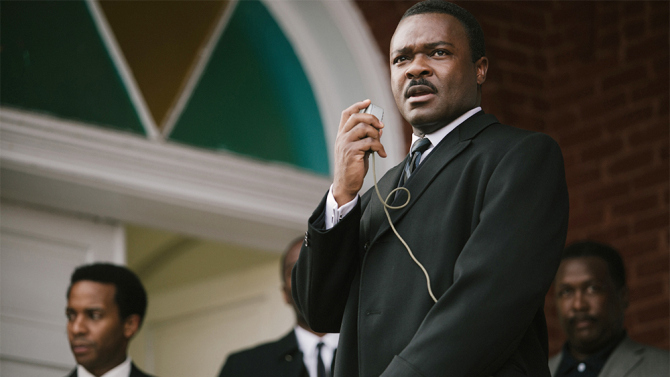
For the second time in nearly two decades, and for the first time since 1998, the Oscars will be awarded to only white acting nominees. This, then, if you listen to the caterwauling race-baiters, is because Hollywood is racist. The Academy’s voters just hid it well since 1998, that’s all. Does that make any sense to you?

There are few more infuriating and transparently illogical examples of an unfair slapping down of the race card than looking for bigotry in the notoriously arbitrary, bias-soaked, essentially meaningless choices for “best” in the various Academy Award movie-making categories. Yet the race card sharks were up to the task.  Naturally, the authority on the subject was Al Sharpton, he whose own performance quality on his MSNBC TV show is so amateurish that it would be shut out in any community theater awards.

“In the time of Staten Island and Ferguson, to have one of the most shutout Oscar nights in recent memory is something that is incongruous,” Sharpton told The Daily News. Wait, what??? Incongruous is the assertion that the nominations for film-making excellence should be influenced in any way by how many blacks are killed resisting arrest. Anyone who finds that to be a logical argument for why more black actors should have been nominated for Oscars is useless to any rational discussion of the issue. I want a show of hands. Continue reading

Ethics Hero Emeritus: Irena Sendler (1910-2008)

Sendler

I missed learning about the death of Irena Sendler (Irena Sendlerowa) in 2008, and this occurred because the mass news media barely took note of it. Lots of celebrities died that year whose passing prompted extended mourning in the press and examinations of their legacies: Paul Newman, Heath Ledger, Sir Edmund Hillary (a member of the Ethics Alarms Heroes Hall of Honor), Charlton Heston, Aleksandr Solzhenitsyn, and many others. There was no room for a final appreciation of the life of Irena Sendler, apparently. Today, the website Bio.com doesn’t list her among the notable deaths of that year, though it finds room for Fifties stunt singer Yma Sumac—remember her? She had a four octave range! And Arthur Showcross: he murdered 11 women from 1988 to 1990 in upstate New York, earning the nickname “The Genessee River Killer.”

All Irena Sendler did was save 2500 children from the Treblinka death camp. Continue reading

Comment of the Day: “Of The Good Muslim, Paris, ‘1984’, And The Compulsion To Deny The Truth”

Mulsim women

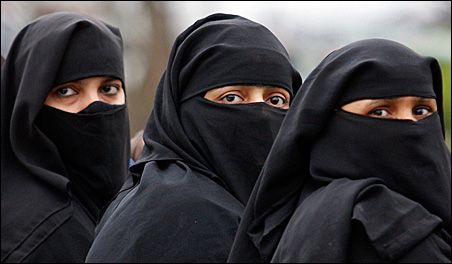
Left-of-center Ethics Alarms follower deery gets a lot of heat on Ethics Alarms, but he has a much-valued knack for spawning edifying exchanges. In this reply to one of his comments arguing that Christianity and Islam near equivilency in their more extreme positions, Ulrike delivers the Comment of the Day, in the battle following the post, “Of The Good Muslim, Paris, ‘1984’, And The Compulsion To Deny The Truth.”

Here it is:

I’d like to make the claim that 1300 years ago, in almost any society women were the losers but now the distinction can be seen by anyone who has eyes. Christians moved on from those times and their nations became successful world powers. On the other hand, oil seems to be the main driving force behind anything in the Arab League.

And yes, in the beginning Islam had a positive influence on the scientific community in so far as it united the Arabic world which up to that date was splintered into tribes. Arabic became the lingua franca and facilitated the trade of knowledge and commodities. The Arabs become the driving force in translating ancient Greek literature – I could go on and on, the list is long, but I’m too lazy. So while we still lived like Neanderthals, the Arabic world had flourishing cities that were the trade centers of the Orient.

Now here’s the rub: The decline of science and the renunciation of modernity can also be attributed to Islam. How can that be, when I just stated that it was a major factor in the rise of science. Well, not Islam as a religion facilitated this rise but its role in uniting the arabic world economically and territorially. But when the Muslim faith came to be the established force behind everything and anything its disciples started to consolidate the belief that science was equal to renouncing Allah.

If you set yourself the task to name any invention in medicine, chemistry, physics or engineering from the last two hundered years that originated in the Arabic world – you have your answer which faith benefited progress more. Christian society developed towards modernity and Muslim society turned away from it… Continue reading

Five Ethics Observations On The US’s Paris March Snub

world-leaders-paris-march

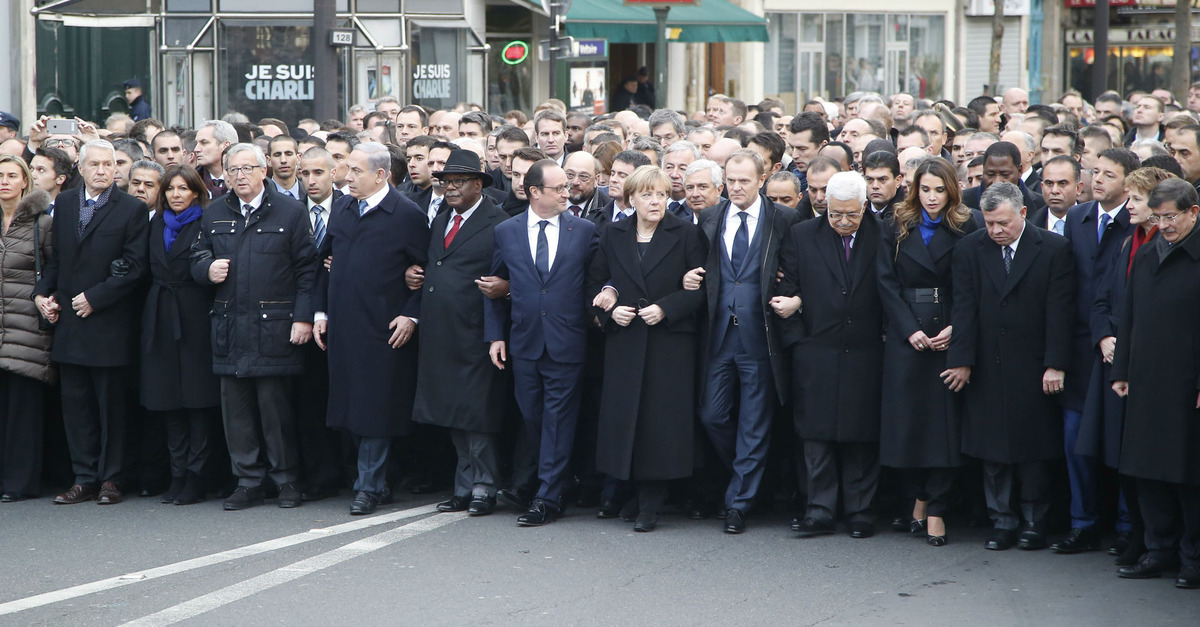
In case you didn’t catch it, more than 40 world leaders joined the start of a Paris march for unity against terrorism and for freedom of speech, linking arms in a demonstration of solidarity. Even Netanyahu and Abbas were there! The Paris march may have included more than 1.6 million marchers before it was done, reportedly the largest demonstration ever. More than three million have now marched across France in response to the deaths of 17 resulting from extremist attacks in Paris last week, beginning with the executions of the staff of the satirical newspaper, “Charlie Hebdo.”

You would expect, and I am sure that the world expected, that the United States of America, reputedly the leader of the free world and the nation that most symbolizes the human right of free speech, would have participated in the event with enthusiasm, conviction, and prominence. But no. President Barack Obama did not come to Paris to join with his fellow world leaders. He did not send Vice President Biden either. Though Attorney General Holder was in Paris, he was not directed to attend the march, and did not.  The United States was only represented by its ambassador, who is not a world leader, and whose job it is to attend routine functions large and small.

Initially the criticism of the obviously intentional snub was muted, with the toadying mainstream news media, as has been its standard operating procedure since 2008, acting and speaking as if there was nothing amiss. Fox News, also as usual, was the exception, but since that network is isolated and pigeon-holed as a reflexive Obama critic “no matter what he does,” this was initially ignored as more right-wing carping. Then, to his great credit, CNN’s Jake Tapper took to Twitter to say  that he was “a little disappointed personally” at the lack of a strong U.S. presence, and in a later statement, escalating to saying that he “was ashamed.” He then wrote in an opinion piece…

“I find it hard to believe that collectively President Obama, Vice President Joe Biden, Secretary of State John Kerry, Secretary of Defense Chuck Hagel, Treasury Secretary Jack Lew and Attorney General Eric Holder — who was actually in France that day for a conference on counterterrorism — just had no time in their schedules on Sunday. Holder had time to do the Sunday shows via satellite but not to show the world that he stood with the people of France?

There was higher-level Obama administration representation on this season’s episodes of “The Good Wife” on CBS.”

Good for Jake Tapper, one of the few relatively objective broadcast journalists who is worthy of public attention and trust. Continue reading

Black James Bond Ethics

Fleming's Bond (l) and Bond-in-Waiting Idris Elba

Fleming’s Bond (l) and Bond-in-Waiting Idris Elba

There’s really no denying it: some conservatives have persistent hang-ups about race, and it undermines their more rational, perceptive views on other matters. A relatively trivial but revealing example occurred in the aftermath of the Sony computer hack by North Korea (or Hacker X). One of the revelations was that Sony, which owns the James Bond franchise, was seriously considering re-booting the character, currently played by the estimable, but aging, Daniel Craig, with a black  British actor (be sure to mock anyone who calls him an “African-American), Idris Elba.

If you are unfamiliar with Elba, you should watch the British series “Luther” on Netflix. He’s terrific: athletic, sexy, charismatic and passionate, not to mention his  aura of cold-bloodedness and danger—in short, perfect for James Bond. But Rush Limbaugh, apparently seeking to retroactively validate the title of Al Franken’s book, “Rush Limbaugh Is A Big Fat Idiot,” decided to use the threat of non-traditional casting to make liberal heads explode, his mission in life:

“That’s NOT who James Bond is, and I know it’s racist to probably even point this out: We had 50 years of white Bonds because Bond is white. Bond was never black. Ian Fleming never created a black Brit to play James Bond. The character was always white. He was always Scottish.”

It is hard to pack so much idiocy into five sentences, but Rush is up to the task. James Bond is a British secret agent: race doesn’t factor into the stories at all. We’ve had 50 years of white Bonds because that’s the conventional way of portraying the character, that’s all. Rush’s argument here is just “Everybody does it.” So what? James Bond movies are entertainment, and if an entertaining James Bond film can be made with Elba as Bond, and there is no reason in the world why not, then James Bond can be black. Continue reading

Comment of the Day: Prosecutor Ethics, “What The Hell Were You Thinking?” Dept: Dog-Whistling “Dixie” To The Jury

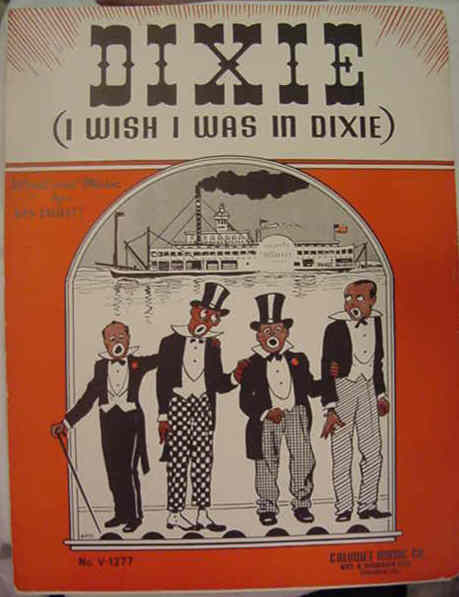
Dixie

I will introduce this fascinating Comment of the Day by one of the blog’s masters of the long form comment, Chris Marschner,  by saying that I think it is only tangentially related to the post, though he would disagree. Chris is writing about the history of “Dixie” and why it should not be associated with racism. Whether I agree with that analysis or not, the fact is that the public does overwhelmingly associate the song with a longing for the simplicities of the Old South, when the darkies were singing in the cotton fields and those Northern folks weren’t sticking in their noses where they don’t belong. This is the basis of an Idaho court’s decision to overturn the conviction of a black defendant after the prosecutor gratuitously and needlessly quoted the lyrics of the song in her closing argument.  That decision was correct, because the issue is whether the comment could reasonably have been an appeal, or seemed like an appeal, or have had the effect of an appeal, to racial bias. I don’t think that conclusion is arguable.

Here is Chris’s Comment of the Day on the post, Prosecutor Ethics, “What The Hell Were You Thinking?” Dept: Dog-Whistling “Dixie” To The Jury:

The prosecutor failed her client – the people- not because she used the words of an 19th century song but because she failed to come to understand that history and culture of the US has been so bastardized that even an appellate court has no understanding and context of the origins of the song and the history and culture of the south. And, because of its misunderstanding believes the lyrics to be racially prejudicial.

“Maybe Erica is so young, color blind and historically ignorant that she had no idea that “Dixie” has been played at Klan rallies and used as the campaign theme for states rights, segregationist, white supremacy candidates since the Civil War. Maybe she didn’t recognize the cotton reference as racial.”

This song was written by a northerner named Daniel Decatur Emmett and performed in New York in an 1859 minstrel show by Emmitt in blackface. The reference to cotton is geographic in nature because cotton represented the primary agricultural commodity and wealth creator of the southern states – nothing more unless one is predisposed to finding anything related to the antebellum south as racist

Many songs have been coopted by various groups but to suggest that lyrics of Dixie are inherently racial because they are used by White supremacists is faulty logic. If a white supremacist adopted the image of Leonardo D’Vinci’s David or Venus d’ Milo or other classical work of art on their flag that would not mean that any such depiction suggests racial superiority. Continue reading