Ethics Dunce: Jon Stewart

Meanwhile, Lincoln pretty much just lay around after he was President...

Meanwhile, Lincoln pretty much just lay around after he was President…

Face the Nation had George W. Bush on today as its primary guest,  so the show’s lead in, CBS This Morning, asked its guest, “Daily Show” host Jon Stewart, what question he would ask the man who preceded President Obama in the Oval Office.  Stewart’s smirking reply,

“ ‘Tell me about umber and how it helps you in painting cats.’ Jimmy Carter’s like 108? He’s out in Africa pulling guinea worms out of children’s feet, trying to cure them. Bush is at home. ‘Bring me my fruit bowl. Doin’ a still life!”

The technical term for this is, I believe,“being a dick.” Yes, it’s vulgar, but the usual terms don’t quite do Stewart’s gratuitous and unfair nastiness justice in trhis instance.

I recognize that Stewart, who eschewed a flood of well-deserved Democrat jokes over the past five days because he could not get around his massive anti-Republican biases, is in mourning over the GOP electoral avalanche that turned the nation red at all levels of government in all regions. Poor baby. Nonetheless, mocking one President of the United States for his activities in retirement because they do not measure up, in Stewart’s value system, to what Presidents are supposed to do is evidence of a stunning lack of grace, decency,proportion, self-awareness and common sense. Continue reading

Unethical Website of the Month: Million Hoodies Movement for Justice

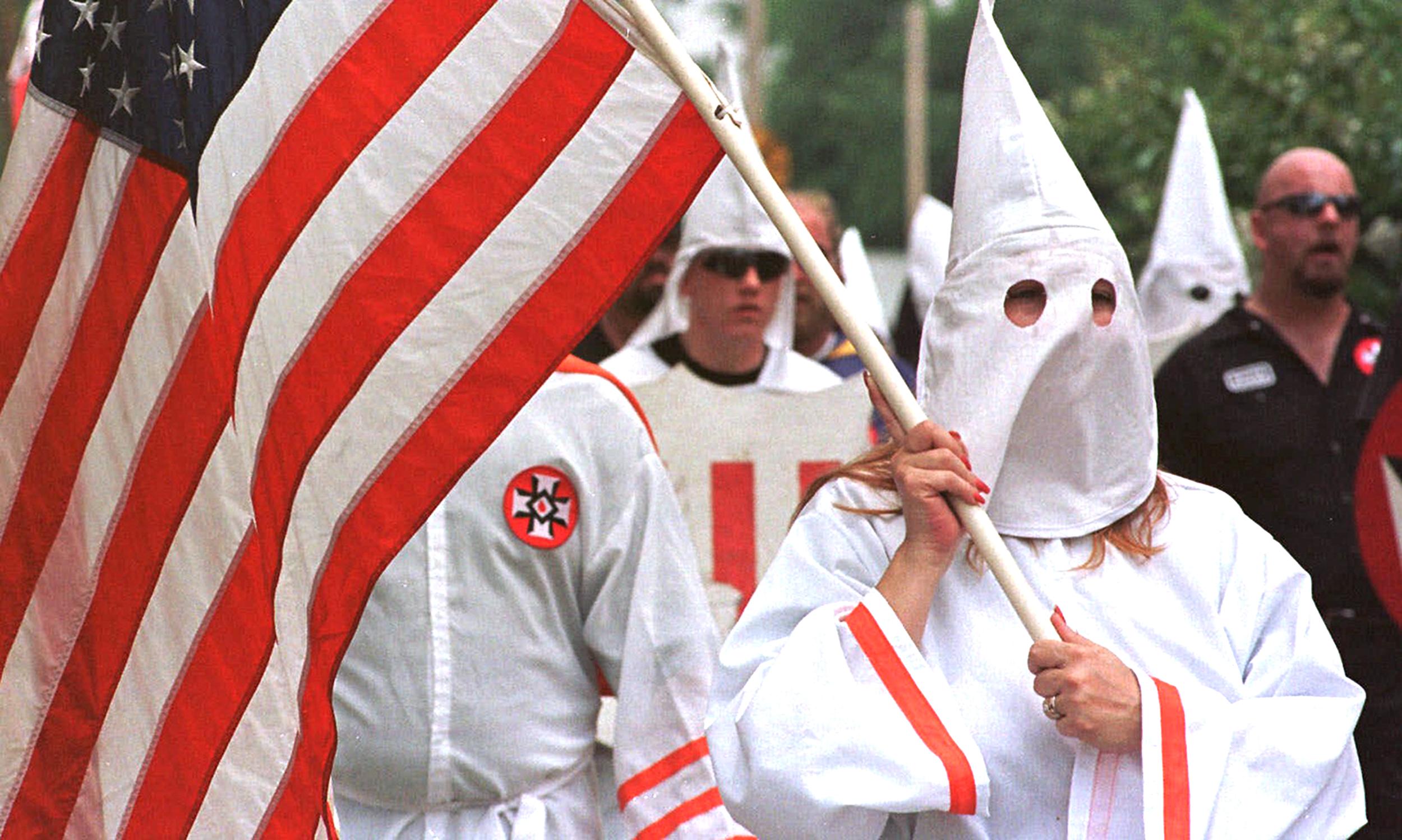
Different hoodies, different races, same ethics...

Different hoodies, different races, same ethics…

Million Hoodies Movement for Justice is, in its own way, as racist as “Chimpmania,” and, I would argue, far more harmful.

The Chimpmania racists live on the margins of respectable civilization. They are the direct ideological descendants of those who wore hoods and lynched blacks in the South, but they operate in the shadows. Their hateful words and beliefs are almost universally recognized for what they are, the product of ignorance. The vast majority of Americans of any race or creed would be mortified to be associated with the site, or with anyone who read it.

In contrast, Million Hoodies Movement for Justice projects the sheen of respectability, and aims to advance legitimate, if debatable causes: the elimination of police militarization, and the banning of profiling. It is, however, as racist in its assumptions about whites as Chimpmania is regarding African-Americans, just more subtle. Continue reading

Ethics Alarms Encore: “Tom Yawkey’s Red Sox Racism, and How Not to Prove It”

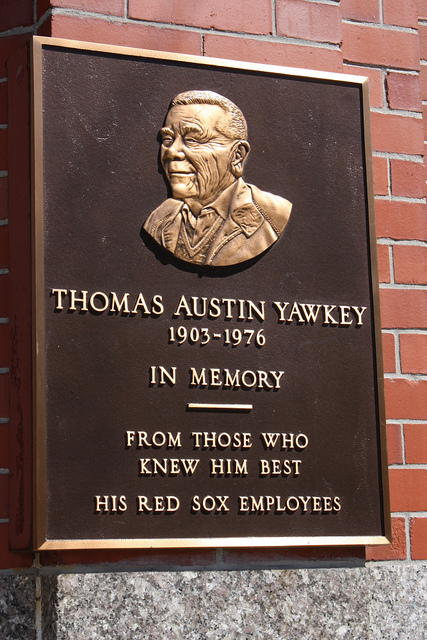
Yawkey TributeEvery now and then a comment out of the blue reminds me of a post that I had forgotten. That was the case here. Reading it again for the first time in five years, I was struck by how the crux of the post is still relevant today (that crux has nothing to do with baseball), and indeed how the intervening five years have made what I thought was a bad trend a genuine political and cultural malady.

And the World Series is going on, and I feel badly about the Red Sox having such a miserable season. This post, which few read when it was first published as the blog was attracting (let’s see…) less than 200 views a day as opposed to nearly 4000 a day now, is a good one, and I enjoyed it.  That “self-professed ethicist” has his moments…. Continue reading

Ethics Dunce: Monica Lewinsky

Under that bus is Monica Lewinsky, and it wasn't Matt Drudge who threw her there.

Under that bus is Monica Lewinsky, and it wasn’t Matt Drudge who threw her there.

It truly pains me to have to write anything negative about Monica, who was exploited and humiliated by a President of the United States, and had her life permanently derailed because she trusted and even loved a rogue who regarded her as little more than an animated sex toy. Her re-emergence now, however—yes it is sad and desperate and makes me furious at Bill Clinton all over again—in the new guise of a “cyber-bullying” victim is intolerable, a delusion on multiple levels, despicable blame-shifting, and a welcome weasel-out of-accountability-free card for the Clintons. Yeccch.

I’m sorry for what happened to you, Monica, but you’re 40 now: it’s time to start seeing life more clearly—especially your own and the reasons why you are in the mess you are.

“Overnight, I went from being a completely private figure to a publicly humiliated one. I was Patient Zero,” Lewinsky said in a speech Monday to Forbes’s Under 30 Summit in Philadelphia. “The first person to have their reputation completely destroyed worldwide via the Internet.”

It has to take a near-fatal injection of self-serving historical air-brushing for the ex-intern to say this with a straight face, and it tells us volumes about the audience that it didn’t start throwing tomatoes:

  • She wasn’t a “completely private figure.” She was a woman having a sexual affair with the President of the United States while he lied about it—to his wife, his staff, and under oath (I haven’t covered all of the lying, either.) That makes her an individual who is engaged in conduct with tremendous public and official consequences who is only “private” because a powerful official is using his power to make it so. The proper term is “inevitable public figure waiting for the dam to break.”
  • The reason for her humiliation was and is William Jefferson Clinton, and no other. He is the one who described her as “that woman,” while denying what was true. He is the one who made his relationship with her part of a legal record while he was trying to avoid the consequences of another “bimbo eruption,” as his long-time “fixer” liked to call them.

Continue reading

Ebola, Trust, Competence, and “The Only Thing We HaveTo Fear Is Fear Itself” Ethics

On the 4th of March, 1933, newly elected President Franklin Delano Roosevelt, taking over the Presidency in the teeth of the Great Depression, intoned his famous words, “The only thing we have to fear, is fear itself!”  It was bravado, of course, and in essence a lie: there was a lot to fear. Roosevelt knew it, and the public certainly knew it. The whole economic system seemed to be falling apart. Anti-capitalist evolutionaries were looking for an opportunity to revolt. Nobody was sure what to do.

The statement was effective, however, in focusing the nation on the challenges at hand and riveting the pubic attention on solving problems rather than cringing in terror in fear of them. Roosevelt was a magnificent speaker, warm and charismatic, and that contributed to the force of his rhetoric, but what was most important is that he was trusted. Every new President  can draw on a full, newly-replenished  account of trust, or at least could, in FDR’s time. A new President’s promises haven’t proven to be air; his political skills and talents, honesty and character have not shown themselves to be inadequate or a fraudulent pose.  In rare cases, and FDR was certainly one, they never do. The President, for good or ill, is the human face of the U.S. Government. If he is trusted, it is trusted. Continue reading

Ethics Hero Emeritus: Edna Gladney (1888-1961)

Edna Gladney

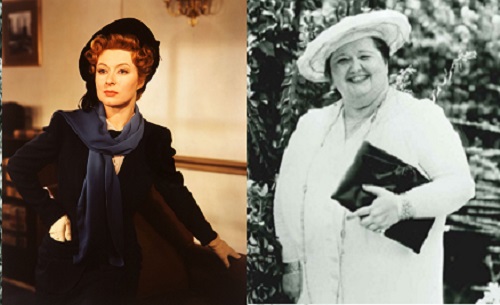
I am ashamed to admit that I never heard of Edna Gladney before I chanced upon a late night Turner Movie Classics showing of the 1941 biopic “Blossoms in the Dust,” which earned the great Greer Garson one of her many Academy Award nominations for her portrayal of Gladney (that’s Greer as Edna on the left). I was unaware of Gladney’s amazing life, legacy and contributions to society because 1) I’m not from Texas; 2) it is hard to learn about great people that society forgets about, and 3) feminists aren’t doing their job, perhaps because a strong and indomitable woman whose life was devoted to saving unwanted children rather than preventing their existence doesn’t interest them as much as it should.

Yet Gladney is exactly the kind of woman whose life should inspire young girls today, and young men too, for that matter. Still,  I recently asked 18 randomly chosen friends and acquaintances who Edna Gladney was, and not one of them knew.

And most of them didn’t know who Greer Garson was, either.

Sigh. Continue reading

Comment of the Day: “Leon Panetta’s Memoirs, and Reconsidering Ethics Alarms’ Absolute Condemnation Of Such Books”

Obama's role model?

Obama’s role model?

Some thoughts as I read the comment below from Ethics Alarms stalwart Steve-O-in-NJ:

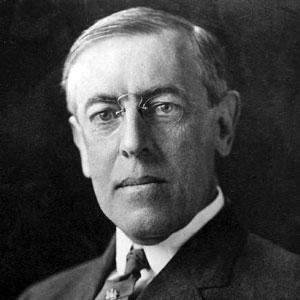
  • Woodrow Wilson is indeed, in many ways, one of the best comps for President Obama.
  • Yet there are still many, even those whose updates appear on my own Facebook page, who will shout to the skies that all such criticisms are partisan, racist, unfair attacks on a marvelous, brilliant, misunderstood  Chief Executive.
  • Why is that fading breed of Democrats fading? And where are the statesmanlike Republicans? Is there one?

Here is Steve’s Comment of the Day on the post, Leon Panetta’s Memoirs, and Reconsidering Ethics Alarms’ Absolute Condemnation Of Such Books:
Continue reading

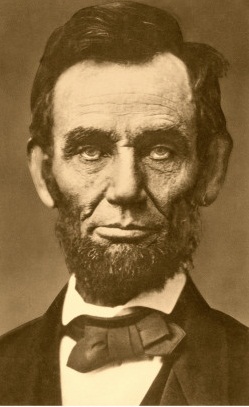
Abraham Lincoln: Good Lawyer, Bad Lawyer, Conflicted Lawyer

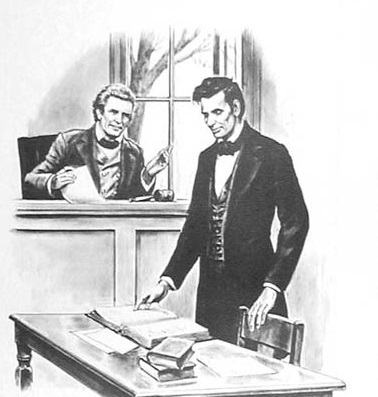
Lincoln in trialI recently quoted a fairly well-known section from some notes Abe Lincoln made for a lecture he was to present to young lawyers in 1850. Some of you asked if would post the whole document, which I am happy to do. Here it is:

I am not an accomplished lawyer. I find quite as much material for a lecture in those points wherein I have failed, as in those wherein I have been moderately successful. The leading rule for the lawyer, as for the man of every other calling, is diligence. Leave nothing for to-morrow which can be done to-day. Never let your correspondence fall behind. Whatever piece of business you have in hand, before stopping, do all the labor pertaining to it which can then be done. When you bring a common-law suit, if you have the facts for doing so, write the declaration at once. If a law point be involved, examine the books, and note the authority you rely on upon the declaration itself, where you are sure to find it when wanted. The same of defenses and pleas. In business not likely to be litigated, — ordinary collection cases, foreclosures, partitions, and the like, — make all examinations of titles, and note them, and even draft orders and decrees in advance. This course has a triple advantage; it avoids omissions and neglect, saves your labor when once done, performs the labor out of court when you have leisure, rather than in court when you have not. Extemporaneous speaking should be practised and cultivated. It is the lawyer’s avenue to the public. However able and faithful he may be in other respects, people are slow to bring him business if he cannot make a speech. And yet there is not a more fatal error to young lawyers than relying too much on speech-making. If any one, upon his rare powers of speaking, shall claim an exemption from the drudgery of the law, his case is a failure in advance.

Discourage litigation. Persuade your neighbors to compromise whenever you can. Point out to them how the nominal winner is often a real loser — in fees, expenses, and waste of time. As a peacemaker the lawyer has a superior opportunity of being a good man. There will still be business enough.

Never stir up litigation. A worse man can scarcely be found than one who does this. Who can be more nearly a fiend than he who habitually overhauls the register of deeds in search of defects in titles, whereon to stir up strife, and put money in his pocket? A moral tone ought to be infused into the profession which should drive such men out of it.

The matter of fees is important, far beyond the mere question of bread and butter involved. Properly attended to, fuller justice is done to both lawyer and client. An exorbitant fee should never be claimed. As a general rule never take your whole fee in advance, nor any more than a small retainer. When fully paid beforehand, you are more than a common mortal if you can feel the same interest in the case, as if something was still in prospect for you, as well as for your client. And when you lack interest in the case the job will very likely lack skill and diligence in the performance. Settle the amount of fee and take a note in advance. Then you will feel that you are working for something, and you are sure to do your work faithfully and well. Never sell a fee note — at least not before the consideration service is performed. It leads to negligence and dishonesty — negligence by losing interest in the case, and dishonesty in refusing to refund when you have allowed the consideration to fail.

There is a vague popular belief that lawyers are necessarily dishonest. I say vague, because when we consider to what extent confidence and honors are reposed in and conferred upon lawyers by the people, it appears improbable that their impression of dishonesty is very distinct and vivid. Yet the impression is common, almost universal. Let no young man choosing the law for a calling for a moment yield to the popular belief — resolve to be honest at all events; and if in your own judgment you cannot be an honest lawyer, resolve to be honest without being a lawyer. Choose some other occupation, rather than one in the choosing of which you do, in advance, consent to be a knave.

This is uniformly excellent, and justly cited to show Lincoln’s high ideals as a man and a professional. This quote, however, is also cited for that purpose, and I am not so fond of it. Since it comes to us second-hand, a.k.a as hearsay, from Lincoln’s law partner, friend and biographer William Herndon, I hesitate to hold it against him too much, for it may be a misrepresentation. I am more concerned with the fact that what follows is sometimes packaged with the notes above, as if they are equally worthy of emulation. No, they are not. Continue reading

What’s The Ethical Response To Giving Birth To A Mixed-Race Child You Didn’t Bargain For? If Only Abe Lincoln Was The Lawyer…

What does Abe have to do with a sperm bank mix-up in 2014? Read on...

What does Abe have to do with a sperm bank mix-up in 2014? Read on…

I can certainly sympathize with the plight of Jennifer Cramblett, the birthing half of a loving, and white, same-sex couple who sought the assistance of a sperm bank to conceive a child, and who ended up giving birth to a mixed-race baby girl because of the kind of clerical error that sets up movie comedies starring Adam Sandler or Cedric the Entertainer. This is like what happened to Chevy Chase in “Vacation,” when he ordered one car and had a different one arrive at the dealer’s months later. Well, the car was a lot worse, because it was ugly, but it drove fine. Well, let me think about that: lots of babies, even babies sired the usual way by attractive parents without alien sperm, are ugly. This baby wasn’t ugly: Cramblett says she’s beautiful. Has all ten fingers and toes. No apparent deformities.

Hmmm.

Maybe this situation is more like the cherry red Nova that got delivered as my first car, when I had ordered something else. I got a discount for going ahead and taking the Nova, and never regretted it: best, most reliable car I ever had, and I had it in the days when I was still having fun in cars.

Come to think of it, what’s Cramblett so upset about? She has a healthy, lovely child and a stable family. OK, that sperm bank owes her a refund, and maybe some “I’m sorry you got the wrong color” money. But would I not only sue the sperm bank for the lifetime of pain it had supposedly subjected me to by causing me to have a mixed race child, but also use the law suit to garner media fame? Of course not. There is no way to simultaneously claim that having a mixed-race daughter is a hardship worthy of substantial damages, and to argue that the race of her daughter doesn’t matter, because she is unconditionally loved.

The couple’s lawsuit against the sperm bank screams “Hey! This could be a jackpot for us!”  The couple’s lawsuit explains that Jennifer Cramblett was raised to accept stereotypical beliefs about blacks. It says she is culturally unprepared to raise a mixed-race child. It argues that their community is, in effect, bigoted, and that—get this—it’s hard to get their daughter’s curly hair cut. In other words, it’s just hell having a mixed-race daughter, but they love her very much and would never trade her for anything in the world.* Got that? Continue reading

9 Observations On The Boston Herald’s “Racist” Cartoon

Obama-Watermelon-1

1. (UPDATE) I’m adding this new #1 right at the beginning—there were originally only 8 observations—because some of the early comments suggest that I over-estimated some of my readers’ scholarship, historical knowledge and/or sensitivity on this issue, so let me be direct:  the reference to any African- American having as affinity to watermelon is about a half-step from calling him or her a nigger, and maybe even closer than that. Clear? This is not a political correctness matter. If the reference is intentional, there can be no debate over whether it is racist or not. It is. The President of the United States should not be subjected to intentional racial slurs.

2. I’m amazed—I just don’t know how this could happen. How could this cartoon make it into print? Cartoonist Jerry Holbert explained that he came up with the idea to use watermelon flavor after finding “kids Colgate watermelon flavor” toothpaste in his bathroom at home. “I was completely naive or innocent to any racial connotations,” Holbert said. “I wasn’t thinking along those lines at all.” Is this possible? In a political cartoonist? On one hand, since the racial connotation is so obvious and so predictably offensive, it seems incredible that a cartoonist for a major daily would dare offer such a cartoon unless he really didn’t perceive the racial stereotype it referenced. On the other, the man is a political cartoonist, not a Japanese soldier who’s been hiding in a cave for decades. How could he not know this? How could his ethics alarms, racial slur alarms, survival alarms not go off?

I don’t get it. Continue reading