The Ethics Conundrum of Jim Thorpe’s Body

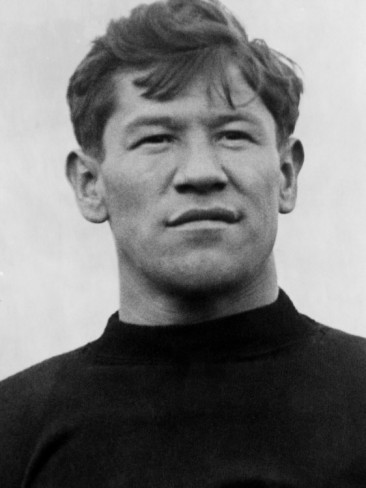
Jim Thorpe: Native American, Olympic Champion, baseball star, football star...football.

Jim Thorpe: Native American, Olympic Champion, baseball star, football star…football.

One thing is for certain: Jim Thorpe doesn’t care. The great Native American athlete whose sports legacy was as sterling as his life was tragic died in 1953, recognized by the country he honored with his record-breaking performance in the 1912 Olympics, but like so many of his race, mistreated and exploited by it as well. Since his death, however, a bizarre battle over his body has raged, and it is a perfect example of the Roshomon-like nature of  ethics in some situations. What is the right thing, the fair thing, the ethical thing? The answer sometimes depends on whose viewpoint is applied, and objectivity, the ideal viewpoint we strive for, doesn’t even exist. In an ethical conflict, moreover, there are good ethical principles on both sides of a dispute.

In Jim Thorpe, Pennsylvania, the ethical verdict of what occurred in a Pennsylvania  court last month is clear: the town has been double-crossed. A federal judge ruled that Thorpe’s remains, which lie in a mausoleum built by the town, can be moved to Oklahoma by his family, to be buried on lands belonging to his tribe. In 1953, however, two Pennsylvania towns signed a contract with Thorpe’s widow, committing them to consolidate and rename themselves after the Olympic, football and baseball legend, in return for being able to house Thorpe’s body and reap the tourism benefits of doing so. The contract was valid, if venal in inspiration: Mrs. Thorpe wanted and received cash in return. But a bargain is a bargain, and Thorpe’s presence and name has defined the town for over half a century. Losing Thorpe means losing the town’s identity and signature feature, which is a calamity. Continue reading →

Obama’s Leadership Incompetence, Now Getting Dangerous

Bad poker bluff

Nice hand, Mr. President.

Not everybody should be a leader, and it is no shame if you have no talent for it.  It is tempting to think that all intelligent, educated, articulate people within a certain range of emotional stability and sanity can learn to be effective leaders, but history and experience tell a different story, and it has many tragic chapters.

I know many readers think that I get great joy out of criticizing President Obama for his lack of leadership skills and instincts, but in truth I find myself consciously avoiding writing about this almost every day, because the problem is on display that regularly*, and this isn’t a Bash Obama blog. I do find it remarkable that such an obviously intelligent man is so immune to leadership instincts, and that he hasn’t resolved to at least try to learn from his more naturally leadership-gifted predecessors. For example, the White House made a point of noting that the President was a great admirer of Doris Kearns Goodwin’s “Team of Rivals,” which recounts how Abraham Lincoln assembled a Cabinet made up of political enemies, adversaries and rivals whose perspective and abilities he managed and used to great advantage. Yet Obama’s choice of Cabinet members and advisors, as even his supporters have pointed out, is unusually insular, passive and narrow, with the same loyalists being recycled into position after position (Hillary was the exception). True, this may reflect the President’s recognition of his own leadership limitations, for Abraham Lincoln, a once-in-a-century example of a born leader, is a daunting model. This is a pattern, however. When various voices in the Obama-worshiping media, such as did the New York Times last week, lament that Lyndon Johnson would have been able to get gun control measures through Congress, they are commenting on the same phenomenon. LBJ was a natural leader, and Obama, whatever his other virtues, is not. Continue reading →

Incompetent Elected Officials Of The Month: The U.S. Congress

"Oh, THAT..."

“Oh, THAT…”

We know that our elected officials don’t think it is important for them to read the bills they vote for (or against.) That’s irresponsible, but this is illegal: as pointed out by Thomas Beck in the Wall Street Journal, both Houses of Congress, but especially the Senate, defy the most basic Parliamentary rule of all, one that is mandated in the Constitution. The requirement: having  more than 50% of members present, a quorum, in order to do business.

Beck:

“Congress has ignored the quorum requirement for decades, yet neither the president nor the courts has questioned the practice. The one time the Supreme Court was called upon to apply the quorum requirement was in the 1892 case of United States v. Ballin. A statute was challenged on the basis that, while a majority was present in the House when the act was passed, a majority didn’t cast votes on it. A unanimous Supreme Court explained that what matters is whether a majority is present: ‘All that the Constitution requires is the presence of a majority, and when that majority are present the power of the House arises.’ Continue reading →

More Reasons Not To Vote For Mark Sanford

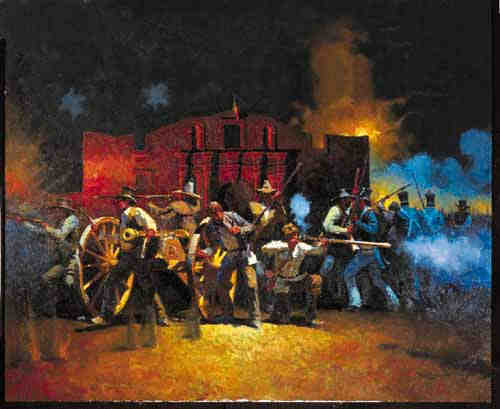
Mark Sanford evokes that stirring Civil War battle, the Alamo.

Mark Sanford evokes that stirring Civil War battle, the Alamo.

The unethical and increasingly ridiculous Mark Sanford, now in the process of losing what should have been a sage House seat for Republicans in South Carolina, has added the public crime of “making Americans dumber” to his list of disqualifications for public office.

Sanford was the rising star South Carolina governor—married, with children— who went AWOL on the job to have a  clandestine liaison with his South American mistress, using public funds in the process, and lying through his staff to cover his tracks. He didn’t have the courage or the decency to resign, nor did he have the common sense and decency to quietly disappear so he would stop embarrassing his wife, his state, Republicans, men, and Homo sapiens everywhere. Instead he returned to run in a primary for a House seat, and since Republican primary voters will apparently vote for anyone or anything, won. Now he’s running behind in the polls to a Democratic candidate whose key qualification is that her brother is a popular TV comic.

Sanford has run a full page ad in some newspapers, painting himself in heroic terms and comparing himself to the martyrs of the Alamo: Continue reading →

Ethics Quote of the Week: Moses (Charlton Heston) in “The Ten Commandments”

The evil that men should turn their brothers into beasts of burden, to be stripped of spirit, and hope, and strength – only because they are of another race, another creed. If there is a god, he did not mean this to be so.

—-Moses, as played by Charlton Heston and scripted by seven writers, in Cecil B. DeMille’s “The Ten Commandments.” answering to the Pharoah Seti’s question, “Then why are you forcing me to destroy you? What evil has done this to you?”

The Ten Commandments“The Ten Commandments” is so extravagantly fun and entertaining that, I must confess, I never watched it as an ethics film until tonight, as ABC once again broadcast the Biblical epic on an Easter weekend. This quote especially struck me as remarkable for a film made by an infamously rigid conservative, DeMille, in 1956.

On Dec. 1, 1955, Rosa Parks was arrested for refusing to give up her seat on a Montgomery city bus. The next twelve months were tense, difficult days in which the entire U.S. population was undergoing a wrenching cultural debate regarding human rights.  On Dec. 6, 1955, the civil rights boycott, led by Marin Luther King, of Montgomery city buses began. January 1956 saw Autherine Lucy, a black woman, accepted for classes at the University of Alabama in Tuscaloosa, the first African-American ever allowed to enroll.  On Jan. 30, the home of Martin Luther King, Jr. was bombed in Montgomery. February 4 saw rioting and violence on the campus of the University of Alabama and in the streets of Tuscaloosa. Lucy had to flee the campus, and the university’s Board of Trustees barred her from returning. On the 22nd of that month, warrants were  issued for the arrest of the 115 leaders of the Montgomery bus boycott. A week later, courts ordered Lucy readmitted, but the school expelled her. Continue reading →

“Walking Dead” Ethics: The Worst Leader Ever

Follow this leader at your peril...

Follow this leader at your peril…

“The Walking Dead’s” resolution of the ethical dilemma facing Rick Grimes—give up a member of his group to be tortured by a deranged sadist, on the basis of a dubious promise by said deranged sadist not to attack Rick’s group with a superior force if he receives the sacrificed member as his torture-toy, or resolve to fight said superior force despite the likelihood of defeat—was consistent with what we know of Rick as a leader from past episodes. He is hopeless. With this crucial decision, however, he forged new ground in fecklessness, stupidity and incompetence even for him:

  • He made the wrong decision, deciding to turn over the sword-weilding Machonne as the Governor demanded;
  • He did not tell his group what his decision was;
  • He confided in the most untrustworthy member of the group, the cynical, homicidal Merle, because Rick knew he would have no compunction with executing such a twisted choice;
  • After doing so, Rick changed his mind, but not before Merle, being certain that Rick couldn’t follow through on his decision, went ahead and subdued Machonne on his own and began transporting her back to the Governor’s lair for the trade.

In the end, Machonne wasn’t handed over to the Governor, and Merle ended up dead, but that’s irrelevant here. “The Walking Dead,’ in addition to being a handy primer on how ethics evolves when civilization collapses and zombies outnumber human beings, is a tutorial on leadership do’s and don’ts. Sheriff Rick, who has been the leader of the central band of survivors from the start, is the George Constanza of leadership: to be successful, do the opposite of what Rick would do. Continue reading →

Tell-Tale Signs Of An Incompetent Government: Rationalization # 32, Star Trek and Chairman Who?

mao zedon.png.CROP.article568-large

One of the common rationalizations that leads to both unethical conduct and an unethical organizational culture is “The Management Shrug,” often verbalized as “Don’t sweat the small stuff.”  (It is #32 on the Ethics Alarms ever-lengthening Rationalizations List; it really should have been in the top ten.) This is a favorite excuse of self-anointed big thinkers of the arrogant and incompetent breed, and is an attitude at the core of a much more sinister ethical fallacy, “the ends justify the means.” The Obama administration has been habitually guilty of the Management Shrug, as has a national news media that largely refuses to hold it accountable, and the U.S. public, which pretty obviously doesn’t notice or doesn’t care.

Here’s a ridiculous example: some idiot paid  with your tax dollars thought it was appropriate to place a quote from Chairman Mao on the Kids’ Zone page at the National Center on Education Statistics website. Continue reading →

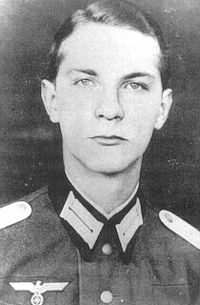
Ethics Hero Emeritus: Ewald-Heinrich von Kleist-Schmenzin

The first Nazi soldier Ethics Hero.

The SECOND Nazi soldier Ethics Hero!

Ewald-Heinrich von Kleist-Schmenzin didn’t accomplish anything heroic, but boy, did he try. The last surviving member of the most famous and closest call of the many failed plots to kill Adolf Hitler, von Kleist-Schmenzin is a ringing example of how the only difference between a a deathless hero and some guy with an unspellable name that you never hear of until he dies sometimes is just luck, and moral luck at that.

von Kleist-Schmenzin was 90 when he perished at his home in Munich this week, outliving almost all of his fellow conspirators in Operation Valkyrie by just short of seven decades. After that near-miss assassination attempt failed (because the bomb-in-a-briefcase dropped near Hitler’s feet by chief conspirator Claus von Stauffenberg was inadvertently moved just enough to save Der Fuhrer’s miserable life), von Kleist-Schmenzin managed to convince Gestapo interrogators that he wasn’t part of the plot, though in truth he was originally given the assignment of planting the bomb. He ended up in prison (the fact that his father was also involved in the plot and was one of those executed guaranteed that) and later was sent back onto the battlefield, but only random chance prevented him from being remembered as the man who ended the war…in fact, it foiled him twice. Continue reading →

Comment of the Day: “More School Abuse of Students and Culture: The Deadly Cupcake Caper”

Not really  a comment but an open letter, this Comment of the Day is reader John Storer’s response to the principal who defended the decision to confiscate toy WWII soldiers from a child’s birthday cupcakes as the latest and one of the most offensive examples of Sandy Hook derangement syndrome. I believe this particular episode in the ongoing Sandy Hook Ethics Train Wreck is more sinister than most, and John’s letter eloquently explains why. I usually don’t publish addresses and e-mail addresses to encourage readers to deluge public officials, but in this case, I’ll make an exception. Her conduct and attitude has to be noted, condemned and discouraged, and letting her know what’s wrong with both is good way to start.

Here is John Storer’s Comment of the Day to the post, “More School Abuse of Students and Culture: The Deadly Cupcake Caper”:

“This is the letter I sent to Ms Wright in its’ entirety:” Continue reading →

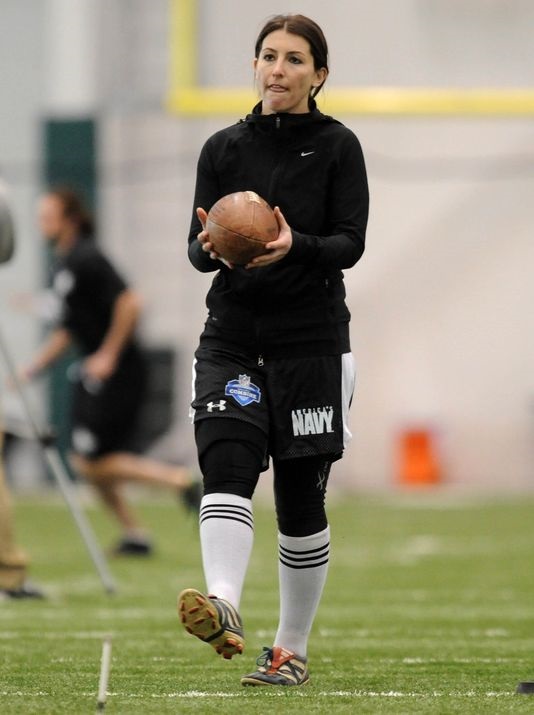
Not Jackie Robinson, Not Even Shannon Faukner: Lauren Silberman Flunks The Traiblazer Test

"Okay, now I kick this funny-shaped brown thingee where, again?"

“Okay, now I kick this funny-shaped brown thingee where, again?”

Call it the trailblazer’s duty. If your objective is to be a trailblazer and break through the obstacle of prejudice in an elite field, your efforts, even if not successful, had better not make the obstacle greater. The epitome of trailblazing excellence is Jackie Robinson, shattering major league baseball’s apartheid  by simultaneously becoming the game’s first black player in decades, and also one of its greatest players of all time. The bottom of the barrel in the trailblazing pantheon is probably Shannon Faulkner, who waged a high-profile legal battle to become the first female cadet at the Citadel, only to enter the school physically and mentally unprepared for the challenge, resulting in an embarrassing failure and rapid withdrawal.

Lauren Silberman, the first female to try out for the National Football League made Faulkner look good. Continue reading →