Ethics Hero: Joan Rivers

Bear with me, now.

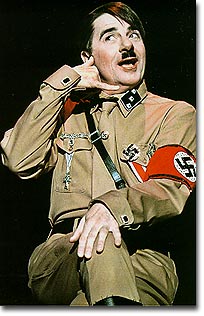
Fight for "Springtime for Hitler," Joan!

Fight for “Springtime for Hitler,” Joan!

Joan Rivers, who took the baton from Phyllis Diller after Diller had proven that women could be funny stand-up comics, and then proved in her own act that women could be funny, gross, and tasteless stand-up comics, is refusing to apologize for her 7, 678, 423rd tasteless joke, uttered on Monday’s episode of E!’s “Fashion Police” regarding the Julien Macdonald that dress model Heidi Klum wore at Elton John’s AIDS Foundation Academy Awards party:

“The last time a German looked this hot was when they were pushing Jews into the ovens,” is how Rivers described the German-born supermodel.

Sure enough, the joke, and Rivers, who is Jewish, are being condemned by Jewish groups and Holocaust survivors as being insensitive.The Anti-Defamation League’s director, Abraham H. Foxman, called the joke “vulgar and offensive to Jews and Holocaust survivors.” Rivers is standing her ground. The 70-something comic told The Hollywood Reporter, “My husband lost the majority of his family at Auschwitz, and I can assure you that I have always made it a point to remind people of the Holocaust through humor.”

In the wake of Seth MacFarlane’s various controversies at the Oscars (yes, I thought the John Wilkes Booth joke was funny, especially with the planned comeback, “Too soon?”) and the Onion getting too outrageous in its misconceived tweet using a 9-year-old girl as the prop for a joke about something else entirely,  this is as good a time as ever to seek a consensus on where some ethical lines should be drawn regarding jokes and satire. Continue reading →
Cheated Out Of Their Final Bows: Hollywood Snubs Its Own At The Oscars, And Worse Than Ever

Oscars

Once, the excuse that routinely issued from the Academy of Motion Picture Sciences when a significant film actor was omitted from the annual “In Memoriam” segment at the Oscars—“There just wasn’t enough time!”-–seemed almost plausible. It was still a lousy and dishonest excuse, don’t get me wrong: in a broadcast that routinely approaches four hours and wastes time like it is money in Washington, we are supposed to believe that there aren’t three seconds to give a proper send-off to the likes of Harry Morgan (last year) or Farrah Fawcett (the previous one)? That excuse won’t fly at all now, however, as some diabolical deal with the behind the camera members, the warped priorities of the Oscar show’s Broadway musical nerd producers, Neil Meron and Craig Zadan, and the final decisions regarding who would be featured in the movie industry’s public goodbye being made by, apparently, throwing darts at a dartboard combined to produce the most extensive and egregious snubs within memory.

This is a television broadcast and tailored for the public audience, after all. The Academy gives its technical awards in a separate private ceremony: wouldn’t that be the  place to bid a respectful farewell to the seemingly endless list of deceased publicity agents, make-up artists,movie executives and key grips whose completely unrecognizable faces and names were paraded before us last night, often with out of context quotes that made no sense at all? Then, guaranteeing that the “we ran out of time!” alibi would be risible, the segment’s editors chose a non-actor for the prestigious final place on the death list, composer Marvin Hamlisch, as an excuse to drag Barbra Streisand into the proceedings. I appreciate Hamlisch’s achievements, but his movie credits were not so extensive as to justify the honor (we are basically talking about one Academy Award-winning song, “The Way We Were,” and his arrangements of Scott Joplin’s music in “The Sting”), and the award show’s misbegotten “theme” of movie music was not sufficient justification to place a non-actor in the position of highest honor.

Meanwhile, the following actors, all who made significant contributions to American film in their careers, were cheated out of their final bow, and we, the film-going audience, were cheated of our chance to remember them, and say goodbye. It was a disgrace.

Ethics Alarms isn’t the Academy, but here, like last year, is its salute to the faces and careers Oscar forgot: Continue reading →

“Argo” and the Horrible Thought

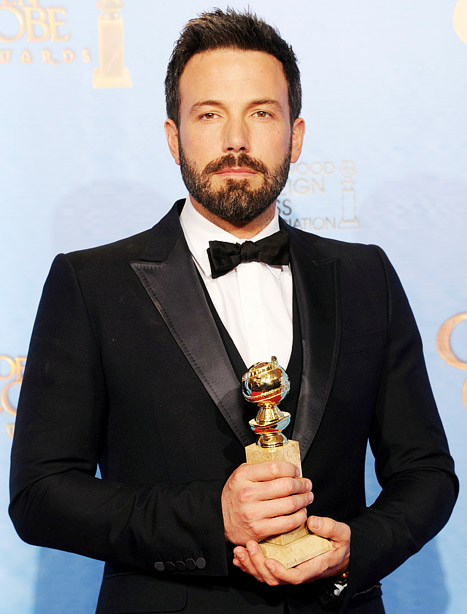
Thanks a bunch, Ben.

Thanks a bunch, Ben.

“Argo” prompted a disturbing thought that has been haunting me since I saw the picture. I am sorry that I had the thought, and hoped that it had been successfully banished by time and hope. Unfortunately, the juxtaposition of “Argo” winning the Best Picture Oscar combined with the inappropriate and intrusive appearance of Michelle Obama to announce it, complete with a politics-tinged speech that was as gratuitous as it was manipulative, caused that thought to begin burning in my brain again. Alas, here it is.

At the conclusion of “Argo,” former President Carter is heard emphasizing the obvious, that in 1980 he would have loved to have taken credit for the audacious  rescue of the six American Embassy workers from Iran that was engineered by his CIA. But, Carter says, do so would have endangered the remaining hostages, and though it would have helped his politically besieged Presidency (which was lost to Ronald Reagan that same year, in part because of Carter’s perceived weakness in handling the hostage crisis), giving all of the credit to Canada was the right and responsible thing to do.

I am no admirer of Jimmy Carter’s policies, personality, Presidency or leadership. He is, however, an ethical man. He was President before the hyper-partisanship that has rotted our politics, before the “perpetual campaign” style of leadership launched by Clinton, and before every act by every main stage player in Washington appeared to be dictated by the need to hold power, rather than by the needs of the people. My horrible thought is that I believe the current President and his  Machiavellian political advisors would not have done as Carter did, if the “Argo” scenario played out in 2012, as that Presidential election approached. This White House, facing the prospect of defeat, would find a way to leak its participation in the successful rescue, judging its retention of power a higher goal than protecting the hostages that may well have died anyway.

I wish I didn’t have this thought, but I cannot banish it. The unseemly chest-thumping and credit-grabbing over the killing of Bin Laden, the leaking of details about the deliberations leading to it, the deceptive handling of the Benghazi disaster, and yes, the inability of the President’s political strategists to resist attaching the President or his wife to anything remotely positive—even the Academy Awards— while refusing to accept responsibility for any mistake, miscalculation or failure (See Bob Woodward on the disinformation campaign regarding the looming sequester, beginning with Obama’s outright lie in the third Presidential debate, “The sequester is not something that I’ve proposed.”), all have me convinced that the days when we can trust a President to risk his own grip on power for the good of the country are gone, perhaps forever.

As I said, it is a horrible thought, and I fervently wish I didn’t have it. I want to trust and admire our nation’s leaders, the President most of all. But the leaders of both parties have earned this level of distrust, and I see no signs that they are capable of making that horrible thought, and other too, go away.

More “Lincoln” Criticism: What Does Spielberg’s Film and Ethics Alarms Have In Common?

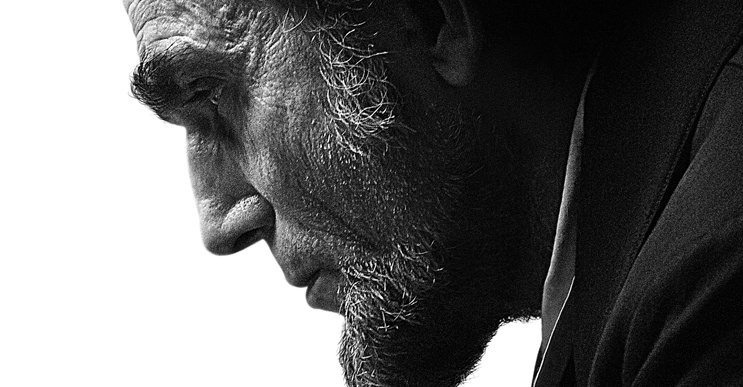
lincoln crop

I won’t hold you in suspense, and no, it’s not that I expect or deserve any awards. What Steven Spielberg’s justly acclaimed historical drama and this blog have in common is being unfairly peppered with a presumptuous breed of complaint that nears the top of my all time “Unfair Criticisms List.”

Here, the complaint usually takes this form: “Why are you writing about Chex Mix labeling when [Pick ONE:] a) we’re about to give up our sovereignty and let anyone just break the law to come across the border? b) Fox news lies to the public every day? c) there are unethical things going on that I care about more ?” Regarding Lincoln, the favorite criticism in the media and on the web of late has been that in the process of showing the sausage-making and political maneuvers that allowed the 13th Amendment to become the law of the land, Spielberg neglected to show the evils of slavery, which, of course, if he were to do without risking the criticism (which he would get anyway) that he did so in a perfunctory and inadequate way, would require either lengthening the film to an unwatchable length, or cutting out significant portions of the story he chose to tell. This obnoxious complaint was brought to a full-throated crescendo by Tony Gittens, director of the Washington, D.C., International Film Festival, in today’s Washington Post. He writes:

“Steven Spielberg’s film “Lincoln” will probably walk away with this year’s Academy Award for best picture, and that would be unfortunate. As Post film critic Ann Hornaday pointed out , “Enslaved people and the terror they endured in the 19th-century South are never portrayed” in the film. Mr. Spielberg did not shy away from depicting the extent of man’s institutionalized cruelty in his moving “Schindler’s List.” Why not in “Lincoln”? Worse, the film ignores the contributions African Americans made toward their own liberation. Instead, they are portrayed as loyal Union soldiers and observers from the balcony as Congress debates their fate. This was simply not the case. From the moment they were brought to these shores, African Americans resisted their enslavement, spawning leaders such as Harriet Tubman and Frederick Douglass. In fact, at the time “Lincoln” takes place, Washington had a significant free black population, many of whom walked the streets in front of the White House. But this is not portrayed. “Lincoln” concludes with stalwart abolitionist Thaddeus Stevens, a white man, in bed with his compliant African American housekeeper. All of the dramatic political maneuvering we had just witnessed on the screen, the struggle of lawmakers to come to grips with how to help make right years of unjust legalized oppression — all of this is reduced to the conjugal relationship between two disparate individuals. Here, once again, “Lincoln” misses the point.”

No, Mr. Gittens misses the point, and it should be a hard point to miss. Continue reading →

Artistic License, History, and Lincoln’s Green Socks

Of course, some historical fabrications are harmless.

Of course, some historical fabrications are harmless.

Several well-placed critics are taking “Lincoln” screenwriter Tony Kushner to task for what they believe are unethical misrepresentations of fact in the much-praised, and supposedly scrupulously accurate film. He, on the other hand, is annoyed. Kushner counters that unlike in history books where a historian gives a well-researched “a blow-by-blow account,” it is reasonable and ethical for a screenwriter to “manipulate a small detail in the service of a greater historical truth. History doesn’t always organize itself according to the rules of drama. It’s ridiculous. It’s like saying that Lincoln didn’t have green socks, he had blue socks.”

I’m going to spare Kushner lawyerly word-parsing and not hold him to “a greater historical truth,” though I suspect that in his hands (he is a skilled political propagandist as well as writer), we would not be pleased with what that license would bring. A politically sympatico film director named Oliver Stone, for example, thought it served a greater historical truth to present completely fictional evidence that Lyndon Johnson was complicit in John F. Kennedy’s assassination, even though Stone’s vehicle, “JFK,” was marketed as a veritable documentary on the “truth” of the Kennedy assassination. Let’s just say that Kushner feels that in a work of entertainment and drama, strictly accurate representation of all historical facts is impossible and unreasonable to expect or require.

I agree. But there is a big, big difference between the ethics of showing Lincoln wearing the wrong color socks, and representing a highly dubious story as fact to denigrate the reputation of a probable hero, as James Cameron did in “Titanic” when he showed First Officer William Murdoch taking a bribe to let a passenger on a lifeboat ( fantasy), shooting a passenger (pure speculation), and committing suicide (denied by a fellow officer under oath at the inquest). Continue reading →

Topps’ Pete Rose Abuse

Pete Rose now, with his Playboy model wife (he calls his marriage "Tits and Hits"), and as a player, when the fact that he was a low-life didn't seem to matter.

Pete Rose now, with his Playboy model wife (he calls his marriage “Tits and Hits”), and as the  player called “Charlie Hustle,” when the fact that he was a low-life didn’t seem to matter.

Baseball season is fast approaching, and with it the usual welter of fascinating ethical issues that sport always generates. Here is an early one, arising out of one of the first signs of Spring Training, the release of the Topps’ baseball cards.

Pete Rose, as every educated American should know, was a wonderful player on the baseball field and a certifiable low-life off of it. Though he is the all-time leader in career hits, the former Cincinnati  Reds icon has been banned from baseball for two decades, the result of defying baseball’s “third rail” by gambling on the game after his playing career, when he was a manager. (Rose also lied about his conduct, helped send a Commissioner of Baseball to an early grave, and has served time for tax evasion…and even without all this, he would still be an insufferable slime-ball. Trivia note: Pete was in the very first group of “Ethics Dunces” in 2004, along with Bindi Irwin‘s dad, and Fox.  See? Nothing changes!) Never mind, though: Rose’s records have never been regarded as anything but legitimate, unlike those of baseball’s other living major miscreant, lifetime home run champ, steroid cheat and ethics corrupter Barry Bonds.

Yet as Aaron Gleeman reports on NBC sports, Topps is now, based on the evidence of its 2013 line of baseball cards, going out of the way to purge Rose’s name from all honor and memory: Continue reading →

Ethics Hero: Pope Benedict XVI

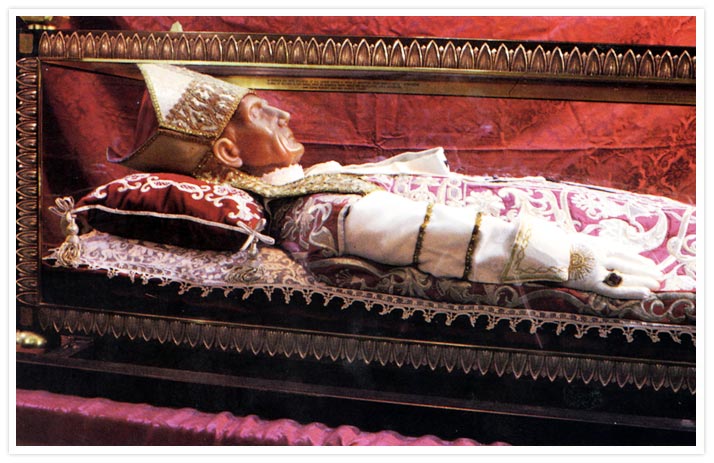
Celestine V, the last Pope who resigned because he didn't feel up to the job...in 1294

Celestine V, the last Pope who resigned because he didn’t feel up to the job…in 1294

Pope Benedict XVI announced today that he will resign at the end of the month, saying that at his advanced age and current state of health, he can no longer fulfill his duties adequately.

Bravo.

Now perhaps other aged, infirm, ill and declining men and women in important positions of power that they are increasingly unable to fill will get the message and resign too, giving up perquisites, influence, and celebrity for the good of the organizations and constituencies they serve. The current roster of Americans who should, if they were properly responsible, do “a Benedict” include members of Congress,U.S. Senators, Supreme Court Justices, doctors, lawyers, state legislators, college professors, corporate founders, CEOs, and many more. Staying beyond one’s pull-date is a national epidemic, one of the unintended bad consequences of increased longevity and better health care. A prominent role model to show the way was just what the doctor ordered—one of the young ones, who keeps up-to-date via the internet. Continue reading →

Unethical Quote of the Week: Former NASA Official Jon Harpold

“Don’t you think it would be better for them to have a happy successful flight and die unexpectedly during entry than to stay on orbit, knowing that there was nothing to be done until the air ran out?”

—–Space Shuttle Columbia mission operations chief Jon Harpold in 2003, talking about the Shuttle crew then in flight, as quoted by former NASA flight director Wayne Hale on his blog this week. Harpold was musing on a hypothetical situation (he thought) where NASA had determined that the Shuttle couldn’t safely return to Earth.

Columbia crew

Days before Columbia disintegrated on re-entry due to a damaged heat shield, NASA officials met to determine whether Columbia was safe to land despite some damage after takeoff. They decided, wrongly, as it turned out, that the Shuttle was safe. In the course of the meeting, Jon Harpold raised the hypothetical dilemma of a doomed Shuttle and an unaware crew.

Hale tells the story to make the point that NASA’s culture at the time was organizationally and ethically flawed. I agree.

Harpold’s position is kind but monstrous. It presumes to withhold the truth from those most effected by it, on the theory that it is better to die suddenly and unexpectedly than to have the opportunity to fight and strive to the end to solve what might be an impossible problem. Nobody should feel that he has the right to make that decision, to give up on life itself, for another who still has the capacity to think and act. This is disrespect for the values of personal liberty and autonomy, both much in the public mind today.

We each must have the right to make our own decisions about our fates, and must always have the information we need to make those decisions as wisely as we can. Those who fear the truth have insufficient reverence for it. Even the worst information may contain the seeds of victory.

I’m not going gentle into that good night, and damn anyone who tries to trick me into doing so out of misplaced kindness.

__________________________________

Facts: Kansas City Star

Graphic: KCNTV

Ethics Alarms attempts to give proper attribution and credit to all sources of facts, analysis and other assistance that go into its blog posts. If you are aware of one I missed, or believe your own work was used in any way without proper attribution, please contact me, Jack Marshall, at  jamproethics@verizon.net.

Ethics Catch-Up: The Revolting Hillary Clinton Testimony

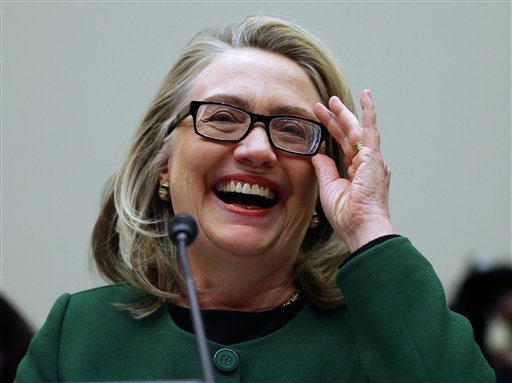
No wonder she's laughing.

No wonder she’s laughing.

I know I neglected my duty to highlight a truly nauseating example of American political shams at their worst with last week’s dual appearances by outgoing Sec. of State Hillary Clinton on the Hill, where she was ostensibly going to inform Americans what really happened in Benghazi, and why. I apologize. I was preoccupied with the earth-shattering matter of  Beyonce’s lip-syncing, and also, I admit, was having a hard time enduring both Lance Armstrong’s act and a Clinton performance in such close proximity. I’m only human, after all. Still, I need to go back a week and examine, if briefly, the ethics stinker that was Hillary on the Hill:

1. Members of this administration keep using the word “responsibility,” but to paraphrase Inigo Montoya, I don’t think the word means what they think it does. Clinton had stated unequivocally that she “accepted full responsibility” for the Benghazi tragedy in October, reiterated that statement last week, and then repeatedly shifted the blame to others or otherwise denied responsibility. She wasn’t responsible for the decisions regarding security, she said. It wasn’t her fault that she didn’t know about cables from Ambassador Stevens’ a month earlier requesting more protection, because “1.43 million cables come to my office. They’re all addressed to me.” Well, who’s “responsible” for a system in which urgent, perhaps life and death messages not addressed to the Secretary of State never reach her desk? She blamed a lack of funding ( a claim that appears to be untrue) was also responsible for the tragedy, and naturally, she can’t be held responsible for that. Clinton’s definition of “responsibility” reveals itself during her testimony as meaning responsible for fixing the problems and systemic failures that led to the deaths of the four Americans, but not really accepting responsibility for what happened–responsibility, in other words, without accountability. Continue reading →

“The Judge in the Hat” (With Apologies To Dr. Seuss)

antonin-scalia hat

The sun did not shine.

Inaugurations are gray.

So reporters sat mocking the people that day.

Senator Claire McCaskill tweeted just what they said.

“Why does Justice Scalia have THAT on his head?”

“It’s a beret on steroids!” one journalist claimed.

“It’s so floppy! It’s silly! He should be ashamed!”

But the mockers just showed what they’d proven  before:

They are dim wits, for the hat honored Sir Thomas More. 

It is seen on his portrait, sitting right on his hair,

And Scalia had chosen his fashion with care.

Brave Sir Thomas fought power abused by a king,

And he died fighting tyranny, beheaded one spring.

For Scalia to emulate More on this day

Meant his hat was a message, and not just some beret.

He was telling this President, as More might have said it,

“Keep abusing your powers, and you will regret it.

Obamacare skated when Roberts’ mind quit,

But  we’ll fight for the Founders, don’t you doubt it one bit!” 

It was clever of Nino, and audacious, and tough

To choose this event to declare, “That’s enough!”

And in such a sly way that he certainly knew

Would go over the heads of all but a few.

Still I’m sorry to say, but I’d say to his face,

“Mister Justice, that symbol was just out of place.

The swearing in isn’t the place for defiance; 

You were bound to show loyalty, just not compliance.”

So as much as I honor More’s ethics and fight,

For Scalia to wear his hat then…

Wasn’t right!

thomas-more