Ethics Quiz of the Day: Mencken-Style Ad Hominem

At the Washiungton Free Beacon, columnist Andrew Stiles writes,

Jack Schlossberg, the sentient boat shoe and semi-employed TikTok user, is running for Congress in New York. It was bound to happen. The 32-year-old Democrat belongs to the Kennedy dynasty—that inexplicably beloved menagerie of goon-faced Habsburgian freaks, Nantucket douche bros, chronic alcoholics, and bloated sex pests. Schlossberg, a mentally deranged internet addict who cracks jokes about guzzling “Jew blood” and “male jizz,” has sought to inject the storied Kennedy brand with Gen Z flare.

That anti-Kennedy invective made me laugh out loud more than once. But is it fair commentary to mix in so much ad hominem invective in an opinion column if it is genuinely funny, at least to a substantial number of readers (or listeners)?

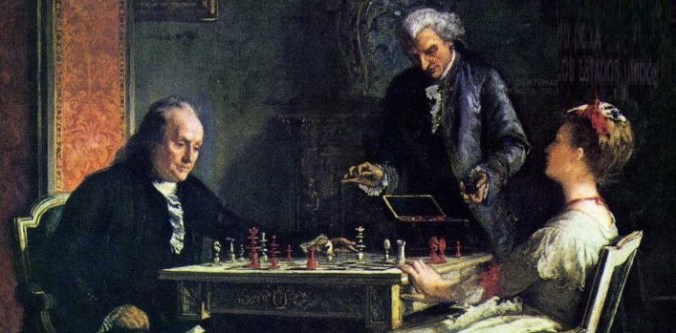
Famous (or infamous) journalist-pundit H.L. Mencken (1880-1956, above) excelled at this sort of thing; he may have even invented it. Here is part of his “obituary” for three-time (losing) Presidential candidate William Jennings Bryan after he died shortly after he faced off against Clarence Darrow in Dayton, Tennessee in Tennessee v. Scopes aka, “Monkey Trial”:

Continue reading

The Duty To Remember: Jan Ernst Matzeliger, Inventor, (1852-1889)

This kind of thing drives me crazy, as regular and long-time readers here know. The culture and society lose so much when important events, figures and trailblazers are gradually lost—forgotten, ignored, erased by ignorance and apathy. That this remarkable and important inventor somehow fell into the memory hole of American history is particularly galling because he was black, and black activists have gone to extreme lengths, at times manufacturing significant black historical figures out of otherwise marginal accomplishments, to show the contributions of African Americans to U.S. society and culture. Jan Ernst Matzeliger was a big deal. We should know his name.

Continue reading

“Right To Offend: The Black Comedy Revolution” and the Duty to Remember

So much of the nation’s cultural health and societal values rely on our fulfillment of the duty to remember. Thanks to our incompetent and unethical education system and the increasing estrangement of American history from our popular culture, recent generations share so little important historical and cultural touchpoints as Americans that effective cross-generational communication is becoming impossible. Television could be a nostrum for this dangerous phenomenon, if only finding the constructive and informative programming were not a task akin to finding, as the saying goes, a needle in needle stack.

I was thinking about this after I stumbled upon the 2022 Starz documentary, “Right to Offend: The Black Comedy Revolution,” a two-part series that I only saw because I am briefly getting Starz free on DirecTV. I missed it entirely when it was new, and have never read or heard anything about it. I haven’t seen the whole series yet either, and only watched an incomplete stretch of Episode One. But that was enough to trigger several thoughts, and to make me schedule a serious viewing of the whole thing from beginning to end.

Among those revelations,

Continue reading

Unethical (and Stupid) Quote of the Month: Zohran Mamdani [First in a Long, Long Series…]

“We will prove that there is no problem too large for government to solve, and no concern too small for it to care about.”

—Zohran Mamdani‘s marathon victory speech on Election Night, after the Democratic Socialist (that is, Communist) was elected as New York City’s mayor.

A commenter asked my opinion regarding Mamdani’s speech and I demurred, because it was standard commie tripe that I’ve read and heard from everyone from Lenin to Castro, and now this guy. He speaks well, and I’m always in favor of that as a key leadership skill. So did David Koresh. However, as I kept seeing that quote being published by the disgracefully uncritical mainstream media, my inner Popeye scratched to get out (“It’s all I can stands, ’cause I can’t stands no more!”) Who does he think he’s kidding?

Perhaps more importantly, what is the proper reaction to any American who wasn’t raised in a cave who doesn’t hear that insane claim and conclude, “Oh, brother! So much for that guy. He’s either lying, ignorant or a moron”? At very least it’s “RUN AWAY!”

Continue reading

Victor Fleming Was a Genius

And attention should be paid.

Victor Fleming is never included in the list of immortal Hollywood film directors. I never understood why, and now I really don’t understand why. Everybody knows, or should, that Fleming pulled off the all-time film directing achievement of helming two deathless classics in two distinct genres in the same year, 1939. The films: “The Wizard of Oz” and “Gone With the Wind.” The closest to that amazing performance anyone else ever came was in 1993, when Stephen Spielberg delivered both “Schindler’s List” and “Jurassic Park.” But Spielberg is automatically in the discussion when great film directors are the topic, and Fleming is not.

I could make the argument that Fleming belongs in that discussion based on his output alone. Though he died at the age of 59 and had only 20 years to create movies in the sound era, Fleming had several other classic films that still hold up: “The Virginian,” “Captains Courageous,” “Treasure Island,” Dr. “Jekyll and Mr. Hyde,” “A Guy Named Joe” and “Joan of Arc” in addition to his two 1939 icons. But that isn’t the reason for this post.

Victor Fleming was ahead of his time, way, ahead, in two respects that only noticed recently:

Continue reading

Back Off, Progressives: Dwight David Eisenhower Was An Excellent President In His Time.

Which is, after all, the only time that matters.at the time.

I just wrote a long rebuttal to a recently Trump Deranged friend of impressive mind and credentials, who decided to go after, of all people, President Dwight Eisenhower for a speech in which he extolled moral values because, my friend’s Facebook post declared, “in real life the years of Eisenhower’s administration—essentially all of the 1950s—did not even come close to measuring up to the tenets of social, racial, ethnic and sexual justice and economic equity that most of us today believe are the standards of a just society.”

“That is an important reminder for all of us us that times do change,” he continued, “and that as right-thinking as Eisenhower’s words seem on the surface, they were spoken by the leader of a society that was very repressive in many ways—economically, socially, racially, sexually and otherwise.” This, to use the vernacular, pissed me off greatly. Ike has gone higher in my estimation of him as President the more I read about him and especially the more I watch other President struggle with the job he seemed to do effortlessly. (Of course, Ike may be the only one of our Presidents for whom the office could be considered a step down in difficulty and responsibility, after overseeing the Allied effort to save the world in World War II.)

Here, with minor edits to protect the guilty, is what I posted in response to that slap at Ike:

***

But this is the purest form of Presentism, and a grossly unfair assessment of Ike, one of our most under-rated and effective Presidents. It is always easy to go back and condemn figures of the past who did not have the benefit of many decades of accumulated experience and wisdom; easy and wrong. It is by this standard that we saw efforts in demented regions like San Francisco (and our own) to strip historical honors from, among others, the Founders, because they were not sufficiently psychic to reject their society’s and culture’s mistaken beliefs, such as the inherent inferiority of other races to theirs.

 I’ve studied Eisenhower’s own writings and those about him. His vision of the Presidency was that his job was to protect and preserve the culture, not change it; that the culture would evolve and change in its own time, when society was ready for it. As a result, Eisenhower led a United States that honored and trusted its institutions at a level that seems astonishing today. He had a great part in that.

Nobody accused him of being a “king,” but in Boston, even then a bulwark of the Democratic Party, kids listened to “Hail to the Chief” on the most popular children’s show (creepily titled “Big Brother”!) as a photo of Ike appeared (the one above, in fact) on the screen and we “toasted” the President of the United States with a glass of milk. The Horror.

Continue reading

Ethics Alarms Threads of the Year: Reparations and Guaranteed Minimum Income

Well, I’m defeated! Two rich and lively threads this week have produced more Comment of the Day-worthy commentary and more essays worthy of guest columns than I can possibly do justice to without them swallowing the blog.

I’m sorry. For the first time ever, I am reduced to linking to the post that sprung these exchanges, and sending interested readers to them rather than my reposting them all.

The first: Friday Open Forum, Halloween Edition. Last week’s open forum was especially lively with many topics covered, but the epic thread, started by Extradimenensional Cephalopod, began with “Premise: The United States institutes a universal basic income of $1000 per person per month, except for people who opt to remain in existing welfare programs.” Many engaged, including Sarah B, AM Golden, Old Bill, CEES VAN BARNEVELDT and Michael Ejercito.

The second: Unethical Quote of the Month: Un-Named California Lawyer. The most prolix combatants in the discussion of slavery reparations are jdkazoo123 and Chris Marschner, but there is enlightening commentary by many others as well.

Ethics Alarms thanks and salutes everyone involved in both of these discussions. They are exactly what I hoped to inspire when I started Ethics Alarms.

End of the Baseball Season Ethics Recap, 11/2/25, Part 1

If you missed last night’s Game 7 of the epic World Series just completed, you have my sympathy; if you missed it, or the entire Series really, because baseball isn’t part of your life you have my pity. Let me quote here the late, great Roger Angell, baseball’s Bard, writing about the only better World Series I’ve ever watched, the 1975 edition where the Cincinnati Reds beat (barely) the Boston Red Sox, also in seven games. He was effusing specifically about Carlton Fisk’s famous home run in the 12th inning (I was there!) in his New Yorker essay “Agincourt and After”:

Carlton Fisk, leading off the bottom of the twelfth against Pat Darcy, the eighth Reds pitcher of the night—it was well into morning now, in fact—socked the second pitch up and out, farther and farther into the darkness above the lights, and when it came down at last, re-illuminated, it struck the topmost, innermost edge of the screen inside the yellow left-field foul pole and glanced sharply down and bounced on the grass: a fair ball, fair all the way. I was watching the ball, of course, so I missed what everyone on television saw—Fisk waving wildly, weaving and writhing and gyrating along the first-base line, as he wished the ball fair, forced it fair with his entire body. He circled the bases in triumph, in sudden company with several hundred fans, and jumped on home plate with both feet, and John Kiley, the Fenway Park organist, played Handel’s “Hallelujah Chorus,” fortissimo, and then followed with other appropriately exuberant classical selections, and for the second time that evening I suddenly remembered all my old absent and distant Sox-afflicted friends (and all the other Red Sox fans, all over New England), and I thought of them—in Brookline, Mass., and Brooklin, Maine; in Beverly Farms and Mashpee and Presque Isle and North Conway and Damariscotta; in Pomfret, Connecticut, and Pomfret, Vermont; in Wayland and Providence and Revere and Nashua, and in both the Concords and all four Manchesters; and in Raymond, New Hampshire (where Carlton Fisk lives), and Bellows Falls, Vermont (where Carlton Fisk was born), and I saw all of them dancing and shouting and kissing and leaping about like the fans at Fenway—jumping up and down in their bedrooms and kitchens and living rooms, and in bars and trailers, and even in some boats here and there, I suppose, and on backcountry roads (a lone driver getting the news over the radio and blowing his horn over and over, and finally pulling up and getting out and leaping up and down on the cold macadam, yelling into the night), and all of them, for once at least, utterly joyful and believing in that joy—alight with it.

…What I do know is that this belonging and caring is what our games are all about; this is what we come for. It is foolish and childish, on the face of it, to affiliate ourselves with anything so insignificant and patently contrived and commercially exploitative as a professional sports team, and the amused superiority and icy scorn that the non-fan directs at the sports nut (I know this look—I know it by heart) is understandable and almost unanswerable. Almost. What is left out of this calculation, it seems to me, is the business of caring—caring deeply and passionately, really caring—which is a capacity or an emotion that has almost gone out of our lives. And so it seems possible that we have come to a time when it no longer matters so much what the caring is about, how frail or foolish is the object of that concern, as long as the feeling itself can be saved. Naïveté—the infantile and ignoble joy that sends a grown man or woman to dancing and shouting with joy in the middle of the night over the haphazardous flight of a distant ball—seems a small price to pay for such a gift.”

Caring is an ethical value.

I’ll get to the other ethics news in Part 2…

The Sec. of Transportation Tells Kim Kardashian That She’s an Irresponsible Ignorance-Spreading Fool. Good!

In an episode of the reality show “The Kardashians” (My god, is that still on?) Uber Kardashian Kim, the only one of the breed who earned her celebrity (with a sex tape and a huge derriere), told actress Sarah Paulson that she had watched interviews with Buzz Aldrin, who was on the Apollo 11 mission with Neil Armstrong and the second person to walk on the moon, and they convinced her that the moon landing was a government hoax.

“I don’t think we did. I think it was fake,” the Kimster announced. “I’ve seen a few videos on Buzz Aldrin talking about how it didn’t happen. He says it all the time now, in interviews.” Does anyone know what the hell she’s babbling about? The last time I heard about Aldrin in relation to the moonwalk conspiracy theory, he punched a guy in the face for claiming it was true.

Then Kardashian repeated a trope of the ancient conspiracy theory: “There’s no gravity on the moon. Why is the flag blowing?” I view that statement all by itself as signature significance: anyone who says it once is too gullible to be let outside without a keeper, and anyone who says it publicly is an idiot. The “mystery” can be answered by viewing the archived videos or by 3 seconds of googling. Who goes on TV and asserts a non-fact that anyone, including her, can prove false in a trice?

This time, however, big guns were trained on the specific idiot. Sean Duffy, the US Transportation Secretary and acting administrator of NASA, rebutted the whatever-she-is on X. He wrote: “Yes, Kim Kardashian, we’ve been to the moon before … Six times! And even better, NASA Artemis is going back under the leadership of [President Trump]. We won the last space race and we will win this one too.”

Madison, Wis, bloggress Ann Althouse, in one of her “it’s not the topic, it’s the tangents” posts, asks,

“Why is a government official calling out a private citizen who expresses interest in a conspiracy theory? We’re Americans. We have our conspiracy theories. Keep your government nose out of our business. You’re only giving more ammunition to the conspiracy theorists. Why stick your neck out to deny what isn’t true? You’re making it more fun to believe the theory!”

Ann is evoking the “Streisand Effect” with her “You’re only giving more ammunition to the conspiracy theorists.” She’s wrong, maybe even at an Ethics Dunce level. This conspiracy is hardly unknown: there was even a movie about it, and I have encountered moonwalk skeptics periodically ever since the event. “Why is a government official calling out a private citizen who expresses interest in a conspiracy theory?” Because, Ann, celebrities are not “private citizens.” They are public citizens; they make their millions by being famous and by appearing, speaking and misbehaving in public. More Americans by far know who Kim Kardashian is than who know who Sean Duffy is. A disturbing number of Americans, maybe even a majority, believe that being a celebrity (and appearing on TV) indicates virtue, wisdom and intelligence. Celebrity culture helped get Donald Trump elected President. Doesn’t Ann Althouse understand that? Hasn’t she ever heard the rejoinder, “If you’re so smart, why aren’t you rich?”

Continue reading

Ethics Hero For The Ages: Elon Musk

I have long planned on writing a thorough post about how much the United States, its culture, its future as a viable democracy and its avoidance (so far) of a close call with progressive neo-totalitarianism owes to Elon Musk. This isn’t it. However, once again he has used his boundless wealth and creativity to strike down an engine of cultural indoctrination and Orwellian twisting of knowledge and history. Buying Twitter and ending its flagrant partisan bias was a landmark in American freedom of speech, one that may well have made the election of Donald Trump possible. His latest adventure may be even more important.

He has launched Grokipedia, the desperately needed alternative to Wikipedia. It is still a work in progress, as Musk admits, but by being AI-driven (the bot in charge is Elon’s Grok), the online living encyclopedia avoids the progressive bias and vulnerability to partisan manipulation that had caused me to only resort to Wikipedia when the topic was immune from political bias.

Continue reading