Kamala Harris, Signature Significance, And “The Right Side Of History”

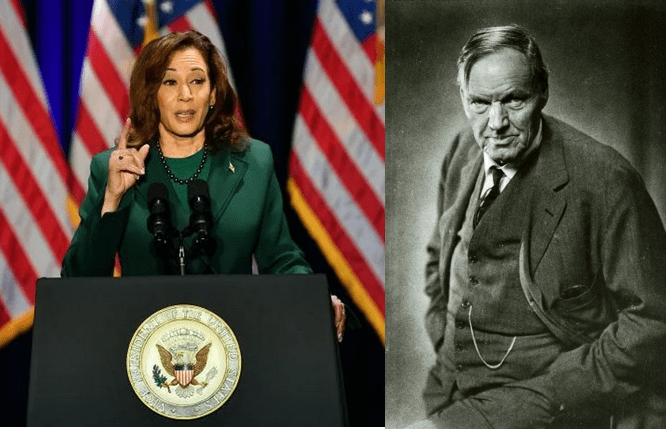
Vice President Kamala Harris, in her speech delivered on the 50th anniversary of Roe v.Wade, didn’t babble incoherently as usual. She just invoked one logical fallacy, rationalization and intellectually dishonest statement after another. The highlight, however, was her claim to the abortion fans in her audience that “we are on the right side of history.”

That’s signature significance. Nobody makes that argument unless they are a con-artist, a demagogue, or an idiot. In Kamala’s case, all three are likely true. Saying one is on the right side of history is just an extraordinarily obnoxious way of saying, “We’re right and everyone else is wrong” without actually making a substantive argument. To quote myself in the description of the phrase (it’s Rationalization #1B. The Psychic Historian on the list):

Every movement, every dictator, Nazis, Communists, ISIS, the Klan, activists for every conceivable policy across the ideological spectrum, think their position will be vindicated eventually. In truth, they have no idea whether it will or not, or if it is, for how long. If history teaches anything, it is that we have no idea what will happen and what ideas and movements will prevail. “I’m on the right side of history is nothing but the secular version of “God is on our side,” and exactly as unprovable.

Abortion supporters have been working hard lately to argue that the Bible supports abortion because it doesn’t expressly condemn it. A text thousands of years old that predates all scientific knowledge about the unborn and the predates modern medicine is irrelevant to the abortion debate. More…

It is a device to sanctify one’s own beliefs while mocking opposing views, evoking an imaginary future that can neither be proven or relied upon. Nor is there any support for the assertion that where history goes is intrinsically and unequivocally good or desirable… Those who resort to “I’m on the right side of history” (or “You’re on the wrong side”) are telling us that they have run out of honest arguments.

Which nicely describes Kamala, if not all abortion advocates. Here is dishonesty exemplified: Harris, in her speech, said, “We are here together because we collectively believe and know America is a promise. America is a promise. It is a promise of freedom and liberty — not for some, but for all. A promise we made in the Declaration of Independence that we are each endowed with the right to liberty and the pursuit of happiness.” Continue reading →
Why Our Culture Needs Old Movies

Typical of the free-association manner in which my brain works, a fatuous essay by a New York Times pundit about a subject he doesn’t understand (but I do)–performing—excavated an ethics memory from my childhood that hadn’t sparked a neuron in decades.

Frank Bruni, for some reason, felt it was necessary to re-hash the ancient debate over whether a movie star is really a skilled “actor,” and can be deserving of an Oscar over “real” actors. Naturally, his target was Tom Cruise and his performance in “Top Gun: Maverick,” the most popular and successful movie of the year. I don’t feel like arguing with Bruni over this; I’ve had the debate too many times. (No, Cruise isn’t going to get an Oscar for this sequel, but he has given Oscar-worthy performances before, because nobody can play Tom Cruise as well as he can). I’ll just give the short version: if an actor plays a part better than any other actor could, it is irrelevant that he can’t play any other part. As a director, I’ll cast a charismatic one-trick pony who is perfect for a particular role over a brilliant, versatile artist who could play Hamlet to cheers every time.

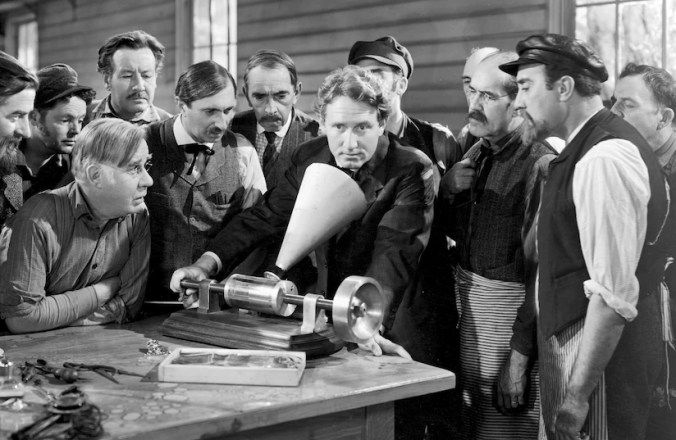
But that is neither here nor there. Here is there: Bruni’s discourse made me think of Spencer Tracy, a movie star and superb actor who had a wonderfully dismissive view of his own field, and then “Edison the Man,” the 1940 biopic, starring Tracy, about Thomas Edison. It was a black and white film that my father made a point of having me see. That film sparked my early interest in Edison, American inventors, technology and extraordinary people through history.

One scene in the movie, however, made a special impression. Edison and his research lab have been laboring on the creation of a practical incandescent light bulb day and night for months. Finally they think they have the right design, and the tungsten filament bulb to be tested is carefully assembled. The new bulb is handed to Jimmy, a teen who does odd jobs at the laboratory, and he dashes across the facility to give it to Edison. In his excitement, Jimmy trips and falls, smashing the precious bulb. Edison’s crew is furious; Edison reproaches the lad. Jimmy is devastated and inconsolable. When Edison’s men finally craft a replacement bulb, Edison calls for Jimmy and give him custody of the bulb, and asks him again to carry it to its destination on the other side of the building. Jimmy, striding carefully and slowly this time, completes his historic task.

Continue reading →

Comment Of The Day: “In The Dispute Over The Fate Of The Elgin Marbles, It Is Time For The Brits To Choose Ethics Over Law”

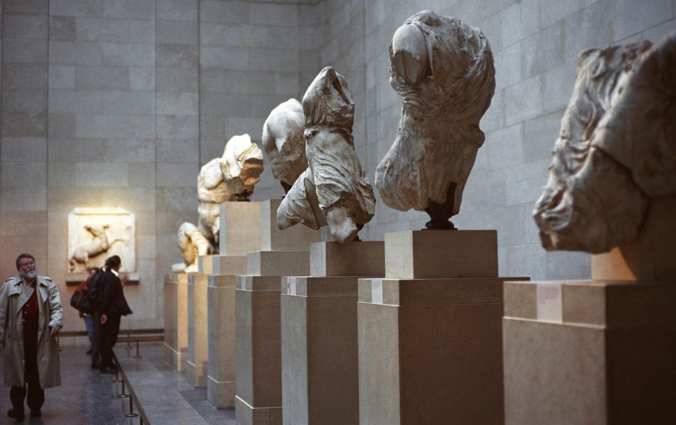
Last week, Ethics Alarms confidently presented the ethics verdict that it was high time—more than high time, in fact—for the British Museum to finally return the so-called “Elgin Marbles” to Greece. As the priceless art was literally ripped off the Parthenon, I didn’t think the question justified an ethics quiz. I still am unconvinced by the arguments that the Brits should hold on to their ill-gotten gains, but I am the grandson of a Spartan, after all. There were several excellent comments asserting ethical grounds for the British position; this one was outstanding.

Here is P.M.Lawrence’s epic tutorial, rebuttal, and Comment of the Day on the post, “In The Dispute Over The Fate Of The Elgin Marbles, It Is Time For The Brits To Choose Ethics Over Law”:

***

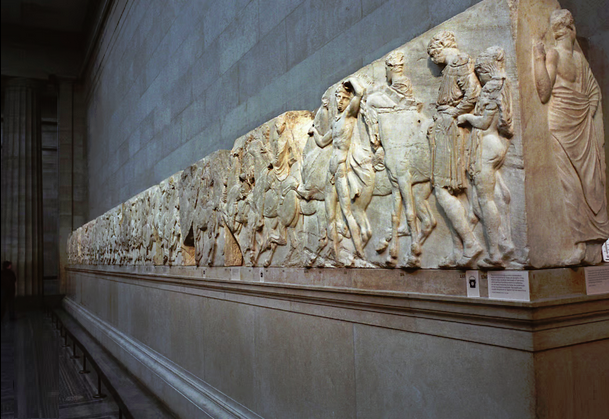
“In the early 1800s, Lord Elgin, a British aristocrat, shipped to England treasures of Greek antiquity that he had strip-mined from Greece, including the carved frieze panels that had decorated the Parthenon. Supposedly this was done with the permission of Turkey, which was then ruling Greece, which is like your home invaders giving neighbors permission to take the art off your walls…”

There is a little more to it than that:-

– On the legal maxim of “nemo dat quod non habet”, of course the Turks couldn’t convey title. But they didn’t, they offered a quitclaim, as it were; they removed themselves from obstructing.

– As regards any original owners, there simply weren’t any left. The last remaining ones were ended by rounds of persecution of pagans, centuries earlier.

– As far as any generic claims of common heritage of western civilisation go, and those claims only go for want of better (there being no direct heirs), what better place to put the items than in a museum furthering that common heritage? Are the British somehow less heirs of that than are the Graeculi? Particularly considering how much safer the items were in that museum(those not taken have suffered horribly from war, corrosion, and what not). And, of course, the very word “museum” proclaims that furthering that common heritage.

Now, none of that conveys title to the British Museum, but adverse possession in the years since does – adverse, in that no better claimant came forward. Just as today’s Greeks feel an understandable connection to these items, as they do to the Lions of St. Mark’s, so too do today’s British – and as today’s Venetians do to the Lions of St. Mark’s. They are as intertwined with the histories of each place as of the other.

The Solomonic solution would be to sand blast the items to the condition of those not taken if any effort to transfer them were ever made. But I expect the Sir Humphreys will loudly assert ownership while underhandedly arranging a loan in name only with no means of foreclosing, just as they have with foundational documents that ought to have remained in British archives. That would satisfy none but the Sir Humphreys.

Continue reading →

In The Dispute Over The Fate Of The Elgin Marbles, It Is Time For The Brits To Choose Ethics Over Law

My mother stole a piece of the Parthenon. She was Greek, my father and she were visiting Athens, and when no one was looking (including my father) she scooped up a 1 x 8 inch chuck of white marble by the ruins and smuggled it home, where she displayed it on her fireplace mantle. My sister and I were horrified when we learned what the piece was, and plotted various ways to have it returned without getting our aged mother prosecuted. When they moved from Arlington, Mass. to Arlington, Va, the item just vanished, or so Mom said. (We didn’t believe her.) It was never seen again.

I think about this family scandal whenever I think of the seemingly endless dispute over the Elgin Marbles.

In the early 1800s, Lord Elgin, a British aristocrat, shipped to England treasures of Greek antiquity that he had strip-mined from Greece, including the carved frieze panels that had decorated the Parthenon. Supposedly this was done with the permission of Turkey, which was then ruling Greece, which is like your home invaders giving neighbors permission to take the art off your walls. The “Elgin Marbles” were sold to the British government and became among the most valued artifacts in the collection of the British Museum in London. As my mother’s son, I know they were among my top three favorite exhibits when I first visited, along with the Rosetta Stone and Paul McCartney’s handwritten draft of the lyrics for “Yesterday.”

Well, Greece has been asking for the Elgin Marbles back for over two centuries now, and if the museum has a leg to stand on in keeping them, it pretty much comes down to that hoary (and not exactly true) line, “possession is 9/10s of the law.” However, recent decades have seen a cultural shift as Western colonization and imperialism have acquired a bad reputation. Many museums are returning such looted treasures to where they were created and, I believe, belong. Why, then, haven’t the Elgin Marbles been sent back to Greece as its government demands, urges, and begs?

Continue reading →

Thoughts While Reading Classmate Entries In My Alma Mater’s Anniversary Report, #3

I have just a few general observations this time.

  • I know I have mentioned this before, but I can’t get past it: it is remarkable to me, but maybe it shouldn’t be, how many of my classmates regard climate change as their greatest concern for the future.These are (mostly) smart, analytical people, yet climate change conventional wisdom has been successfully implanted in their brains by relentless media hammering and by cognitive dissonance (that is, what the “good” people believe must be good and true) so deeply that they are incapable of perceiving obvious logical fallacies. The people society trusts to devise substantive and practical solutions to our problems are stuck in the “Do something!” mode. Scary.
  • Trump Derangement rages.
  • So does wilful historical revisionism. One Democrat wrote that his wife was an “Eisenhower Republican” but had abandoned the current Republican Party because it had become too radically conservative. Eisenhower Republicans would make today’s GOP seem like the Antifa. Kennedy Democrats were more conservative than today’s Republican Party.
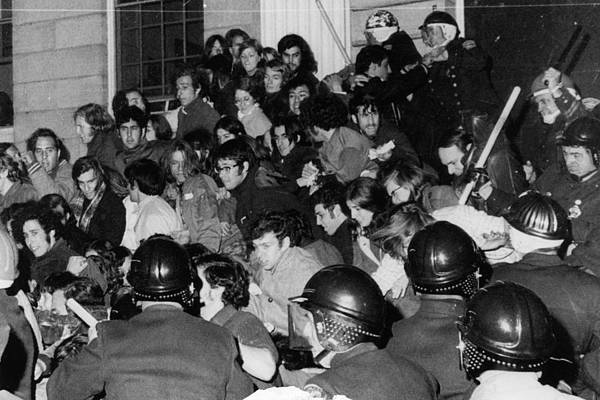
  • By far my favorite ethical weirdness, though, is the widespread obsession with exaggerating the significance of the January 6 Capitol rioting while referring to it as both an “insurrection” and a bleak portent of the decline of democracy. This opinion is coming from the class that overwhelmingly supported the student take-over of the Harvard administration building and cheered the students who battled riot police who tried to clear out the mob! That invasion of Harvard offices was just a microcosm of the Capitol riot, a foolish and doomed tantrum, except that the students were angry that their school was supporting a war over which they had no authority or control, while the Capitol rioters were protesting what they believed was a perversion of a Presidential election that had rendered their votes and rights effectively null and void. While the students were never held accountable for their civil disobedience, the Capitol rioters have been severely punished. After decades that should have made them wiser, the former students who never held any fantasies that their brief take-over of university offices would allow them to overthrow the Harvard administration now solemnly claim that a few hundred jacked-up idiots with bear spray and sticks thought they could take over the United States government.

Ethics Quiz Of The Day: “Gotcha!” Or “Benefit Of The Doubt”?

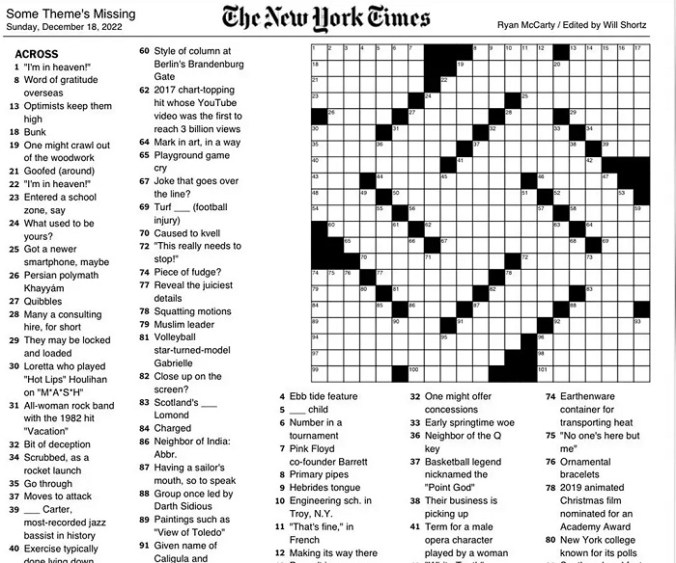
That’s yesterday’s Sunday New York Times crossword puzzle, titled “Some Theme’s Missing,”, above. Does the pattern of the letter squares remind you of anything? Given that December 18 is the first night of Hanukkah, many found the resemblance of the puzzle to a Nazi swastika…disturbing. Sinister even.

Republicans pounced. New York Times-haters pounced. Donald Trump Jr. pounced, on Twitter. Israel’s Israel National News thought it notable that the swastika crossword was published following what it deemed an anti-Semitic op-ed by the Times the day before, warning that Benjamin “Netanyahu’s government…is a significant threat to the future of Israel — its direction, its security and even the idea of a Jewish homeland.”

The publication also posted a poll asking readers if the puzzle’s design was “intentional Nazi imagery or an unfortunate coincidence?” Of the 440 votes, nearly 85% deemed the symbol to be deliberate.

Continue reading →

Institutional Ethics Dunce: The U.S. Congress

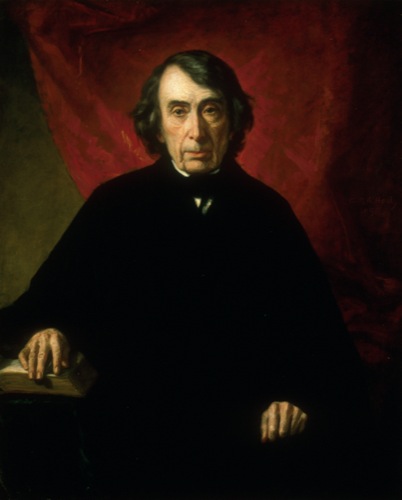
The House of Representatives passed legislation last week ordering the Capitol’s bust of Roger Taney, the Supreme Court Chief Justice who wrote the Dred Scott decision, to Hell, or someplace. It will be replaced by a new bust of Thurgood Marshall, the first black judge to serve on Court.

Of course it will. This naked political grandstanding wouldn’t be complete without installing a black judge’s image as a rebuke to the evil white judge. The legislation now heads to President Biden’s desk to be signed, probably followed by a victory jig.

The pandering legislation says that Taney’s bust is “unsuitable for the honor of display to the many visitors to the Capitol.” It currently sits at the entrance of the Old Supreme Court Chamber in the Capitol where the Supreme Court met from 1810 to 1860. Taney led the court from 1836 to 1864.

“While the removal of Chief Justice Roger Brooke Taney’s bust from the Capitol does not relieve the Congress of the historical wrongs it committed to protect the institution of slavery, it expresses Congress’s recognition of one of the most notorious wrongs to have ever taken place in one of its rooms, that of Chief Justice Roger Brooke Taney’s Dred Scott v. Sandford decision,” the legislation says. I wonder how many of the members who voted for the legislation know anything about Taney or have ever engaged in an objective reading of his opinion. My guess: not many. Maybe none.

Continue reading →

J. Robert Oppenheimer Is Finally Proven Innocent Of Being A Communist Spy. A Lot Of Good It Does Him Now…

Sixty-eight years after he was disgraced and his reputation ruined, brilliant physicist and atomic bomb architect J. Robert Oppenheimer, whose security clearance with the Atomic Energy Commission was revoked on the grounds that he was a supporter of Communism, has been finally declared innocent of that charge. Declassified documents, the Department of Energy has ruled, show that the investigation that rendered the American hero a broken man (he died 12 years later at the age of 62) was biased and flawed.

Energy Secretary Jennifer M. Granholm said in a statement that  “ evidence has come to light of the bias and unfairness of the process that Dr. Oppenheimer was subjected to while the evidence of his loyalty and love of country have only been further affirmed.”

That’s nice. My immediate thoughts when I read this: Continue reading →

Baseball, Beanings and “Systemic Racism”

In the latest issue of the SABR’s Baseball Research Journal, Jerry Nechal decides to finally investigate the conventional wisdom that pitchers deliberately threw at black batters after Jackie Robinson broke the color line in 1947 for an extended period. In the film “42,”  Pirates pitcher Fritz Ostermueller is shown verbally abusing and then deliberately throwing at Robinson.One of Ostermueller’s teammates confirmed the pitcher’s intentions years later in an interview, and there are other anecdotal accounts regarding other pitchers as well.

Like most research aimed at proving a particular thesis with social and political implications, Nachal’s effort was threatened by many forms of statistical pollution, prime among them being researcher bias. The task Nechal set out for himself was daunting; among other obstacles, standard baseball statistics don’t identify the races of players. Ultimately he relied on a previous study’s breakdown, and used a definition of “black” that excluded Hispanic and Native American players, which also meant that if those players were also thrown at more frequently than “whites,” it would distort the study results. Then there was the problem of accounting for deliberately close pitches that didn’t actually hit a batter. These  were unrecorded and unmeasurable until very recently. The study had to be based entirely on batters who were hit by pitches and got a free trip to first base if not the hospital. Continue reading →

And Richmond’s Historical Airbrushing Is Complete

Mayor Levar M. Stoney (D) of Richmond, Virginia is all puffed up with pride because he has overseen the complete removal of statues in the city depicting major Civil War figures who sided with the Confederacy. “Over two years ago, Richmond was home to more confederate statues than any city in the United States,” Stoney said in a statement on Twitter. “Collectively, we have closed that chapter. We now continue the work of being a more inclusive and welcoming place where ALL belong.” His victory lap was occasioned by the toppling of the last Confederate statue remaining in the city of 230,000, which memorialized Ambrose P. Hill, Robert E. Lee’s most trusted lieutenant general, and which had stood on a pedestal at a busy intersection in Richmond since 1892. Hill’s remains were in the pedestal of the statue, now ticketed for the local Black History Museum, where it can be assured of obscurity. Hill’s remains? Supposedly they will be deposited in a grave somewhere, but who knows? They may get flushed down a toilet.

My question is what will the airbrushers plan to do with the city? Richmond was the capital of the Confederacy; its existence is certainly a more prominent memorial to the Grays than any statue of a general most non-Civil War buffs couldn’t distinguish from Benny Hill or Pork Chop Hill. Richmond’s crucial role in the Civil War is its primary claim to fame. Level it, I say. That’s the only way to “close the chapter.” A city that was mission central for the South’s efforts to enslave blacks—-there was really more to it than that, but I’m mouthing the official, historically ignorant line here—can’t possibly be a welcoming place: who does the woke mayor think he’s fooling? At very least, Richmond has to change its name, doesn’t it? Maybe to something like Floydtown or Diversityopolis?

Continue reading →