My father told me he was certain that there were incidents like this during World War II, but that the military covered them up.
The Army Board for Correction of Military Records has changed the death record of African-American WWII Private Albert H. King to list him as having died “in the line of duty.” King, a 20-year-old black soldier with the Quartermaster Corps, was in fact murdered on March 23, 1941, by a white member of the military police, Sgt. Robert Lummus, who shot King five times as he walked on the main road at Fort Benning toward his barracks. King had tried to escape a mob of whites intent on beating him on a bus. Sergeant Lummus claimed self-defense and just 13 hours after shooting King, was found not guilty by a military court.
A thorough investigation had taken place, clearly.
The photo above was taken in a Plains state elementary school in the early 1950s, and depicts a cow-milking exercise. It is, obviously, one of those “Oops!” unfortunate—but funny!—shots that ended up in a local newspaper somewhere because nobody noticed the problem until it was too late.
A Facebook friend posted it on the social media platform for “a chuckle”, and it was clear that the reaction was…restrained.
Your Ethics Alarms Ethics Quiz of the Dayis tougher than it may seem…
Is posting that photo unethical, as it will be legitimately offensive to some, or is it innocently funny, and only objectionable to the political correctness scolds?
I thought it was funny when I saw it. I also thought my friend would get a fair amount of flack. But the more I think about the factors involved, the more uncertain I am of the answer to the quiz question…
Is posting the photo in a public forum a Golden Rule breach? Obviously the photo embarrasses the teacher who, as my freind wrote, “probably wishes she had been standing for the photo.” My friend, however, was a professional performer, in a field where being able to laugh at moments that would humiliate normal people is essential.
Based on the period of the photo, it is certain that the teacher by now must be either dead or too old to care about an old newspaper clipping. Does that take the Golden Rule off the table.
It is more likely that the children shown might be embarrassed by the photo, or were when it was originally published. Does that matter? Was showing it more unethical then than now, when parents (unethically, even though “everybody does it”) post videos of their children in embarrassing (but funny!) situations constantly?
Some people thought the photo was very funny, and appreciated seeing it. It brightened their day! Is that enough to make showing the picture ethical? What formula should we use to determine whether utilitarian analysis justifies an action where the benefits are tangible and the “harm” is ephemeral? If the photo brightened one viewer’s day, isn’t that enough?
One critic of the photo sniffed, “Photoshopped!” If so, and I note that there is always someone who will try to discredit any photo they object to as photoshopped whether it was or not, does it matter to the question at hand. If it’s funny, it’s funny. Or, since it is theoretically funnier if genuine, does being photoshopped change the utilitarian analysis? Should it?
Can showing the photo be justified as a social statement and attempt at a course correction, echoing the common lament that the culture is becoming humor adverse thanks to woke-poisoning, and it is a serious problem?
The New York Times has an article about the competition to create a new Christmas music standard, or at least a hit song for streaming. The piece’s “Rules of the Game:
No. 1: The public prefers the old classics, and isn’t too interested in new songs.
No. 2: Singers shouldn’t wander too far from the melody.
No. 3: “You can’t be too corny at Christmas. You totally get a free pass.”
Corny is fine, but what about creepy?
D. Dark Christmas Songs
1. Traditional Carols
The problem with “The Carol of the Bells” isn’t the lyrics, it’s the music. The thing is affirmatively creepy; my mother hated it, and compared the tune to “The Hall of the Mountain King.” No other Christmas music has been so frequently used darkly. It came, then, as no surprise when the TV horror mini-series “Nos4A2,” based on a novel by Stephen King’s son, used the carol as its theme music. The show is the tale of a damned man who kidnaps children and takes them to “Christmasland” where they are kids forever, and also become little vampires. The music, which is by a Ukrainian composer, is unquestionably ominous. Why it has remained in the Christmas canon is a mystery to me.
Another carol in a minor key is “We Three Kings,” which contains this cheerful lyric in Verse 4, sung by Balthazar:
Myrrh is mine; its bitter perfume Breathes a life of gathering gloom;— Sorrowing, sighing, Bleeding, dying, Sealed in the stone-cold tomb
Merry Christmas!
And why would you give that stuff to a baby?
I’m going to call “I Heard the Bells on Christmas Day” a traditional carol since its lyrics are more than a century old. It’s not creepy, but it is a sad song, and sadder still when one knows its origins.
Henry Wadsworth Longfellow wrote a poem titled “Christmas Bells” on Christmas Day, December 25, 1863. He was in despair: his son had been wounded fighting for the Union the month before, and the poet feared he would die. The author of “Paul Revere’s Ride,” “Evangeline” and other famous poems also was still mourning his second wife, who had died horribly in a fire two years earlier. He was not in a good state of mind when he wrote,
The up-scale retailer Hammacher Schlemmer is battling it out with The Sharper Image in the high-priced Chritsmas gifts, toys food items and decorations market for people who literally have money to burn. I’m especially impressed with the golf ball-locating glasses, the Belgian Chocolate Hot Cocoa Bombs that “explode with flavor” in a cup of hot milk, at only $5 a bomb, and the “first marble run with a track that is suspended in mid-air for only $199.95. However, what caught the ethicist’s eye was the “Your Year to Remember” wall art, which commemorates a birthday or anniversary with coins minted in that year, plus bold graphics that list “major news events” along with pop culture and sports happenings.
For some strange reason, the catalogue designers chose 1968 as the year to display. You can’t make it out from the graphic above, but the major news events listed are…
Before Thanksgiving completely out of view in the rear view mirror, I’d like to recommend Steve-O-in NJ’s valuable, as always, overview of the holiday and its meaning, historically and to our American society now. This is a particularly good candidate for Comment of the Day because, as always on holidays, traffic was confined to only the most active commenters, and many may have missed it.
C.S. Lewis writes that history taught under a tyrant’s rule was “duller than the truest history you ever read, and less true than the most exciting adventure story,” while designated hero Prince Caspian is taught the truth in secret – that the tyrant is trying to cover up the past for his own benefit.
As far as I know, Joy Reid, who I think did another piece bashing the 1950s, has no background in history or much of anything else. She is simply someone who spreads anger, hatred, and unhappiness into the world in the interest of feeding the confirmation bias of her idiot followers and sowing discord and division otherwise.
Celebrations of thanks in Europe date back at least to the chanting and later singing of the Te Deum, a fairly lengthy prayer of praise offered in thanks for victory in war, recovery of leaders from illness, and just about any good event, the idea being we mortals should acknowledge whence whatever blessings we received came. The idea goes back still farther to the 100th psalm, “Praise the Lord all ye lands,” sometimes sung in the Christian tradition as “Praise God from whom all blessings flow…”or other translations.
Services of thanksgiving were and still are a thing in Europe not necessarily tied to any one particular day or event. For the first century or so of this nation’s existence, that was the case here also. Washington was the first president to proclaim a one-off day of giving thanks,and other presidents followed the custom by presidential proclamation as they saw fit. In fact the ancient Te Deum was offered after the Battle of New Orleans in the Cathedral of St. Louis, the oldest continually used cathedral in North America. Continue reading →
I’ve been meaning to mention this for a while now.
I’ve been reviewing some Presidential history as I prepare to continue the Ethics Alarms search for the Worst President Ever, as more evidence of Joe Biden’s proper ranking accumulates. what has stood out is now much worse things have been in the past than they are now by any objective measure. The pundits and other hysterics currently opining daily that the nation is on the verge of unraveling either don’t know our turbulent history, or are deliberately trying to stir up fear and unrest.
They are underestimating the United States of America, and the intrinsic strength of its mission and values.
Take the 15 year period immediately after the Civil War—“Please,” as Henny Youngman would say:
Following a catastrophic conflict that left 2% of the population dead, the nation shattered, a whole region’s economy and society destroyed and the nation faced with somehow dealing with more than four million newly freed black slaves, President Lincoln, the one individual who had the brilliance and political skill to—maybe—navigate this confluence of crises was assassinated in a conspiracy that may have included powerful members of the government itself, or so it seemed.
The Vice-President who took over as President, Andrew Johnson, was a Southern Democrat who was distrusted and disrespected by the overwhelmingly Republican Congress. Worse, he was stubborn and averse to compromise. The nation’s work, at a critical time, with the nation divided and struggling, quickly deteriorated into all-out political war between the Executive and the Legislative Branches, with Congress passing laws, some of which were unconstitutional, Johnson vetoing them, and Congress over-riding the vetoes. Members of Johnson’s own Cabinet, actually Lincoln’s Cabinet, were working with Johnson’s enemies in Congress and against him—talk about the “Deep State” ! Congress finally contrived reasons to impeach the President, who had no defenders in the press either, basing the action mostly on one of those unconstitutional laws. Johnson refused to follow it or obey it (the law prevented a President from firing a Cabinet member without Congressional approval, a clear breach of the Separation of Powers), and there it was: “High Crimes and Misdemeanors”! The Senate failed to convict Johnson by a single vote, with many believing that the pro-Johnson votes had been bought (and they might have been!).
Thanksgiving is an ethics holiday, almost as much an ethics holiday as Christmas. The United States is a nation founded on ethical idealism, so it figures that that increasingly vile and relentless defilers of the nation, who have multiplied like bacteria in agar for a wealth of reasons, attack both holidays with as much gusto as they attack the U.S. year ’round. Here’s the reliably disgusting Joy Reid on Thanksgiving: in a typical Reid rant, she said it is…
….important to unpack the myth of Thanksgiving. It is a holiday riddled with historical inaccuracies.
Built on this myth that the indigenous welcomed their colonizers with open arms and ears of corn. A simplistic fairy tale interpretation of a 1621 encounter between indigenous tribes and English settlers that erases the genocide that followed. It’s the truth that Republicans want banned from our textbooks because here is the secret they want so desperately to keep.
We are a country founded on violence. Our birth was violent. In 1619, a ship with more than 20 enslaved Africans landed in Virginia, ushering in two centuries of American slavery that left millions in chains or dead. With those humans in bondage were finally free, a terrorist organization that was a card carrying member of polite society, Ku Klux Klan, picked up where the Civil War ended, using violence to maintain white supremacy. The Klan is still active and as Americans, we continue to choose violence. We are a country that chooses violence over and over again. There is no facet of the mark in society untouched by it.
Typical of Reid, she engages in an orgy of historical misinformation, to use the Left’s favorite word of late, to claim that Thanksgiving is “riddled with historical inaccuracies.” Holidays are not about technical accuracy, but tradition and symbolism. Deconstructing any holiday is a breeze; all one has to do is focus on related events and facts that the are not the reason the holiday exists. Let’s talk about Martin Luther King, Joy! Continue reading →
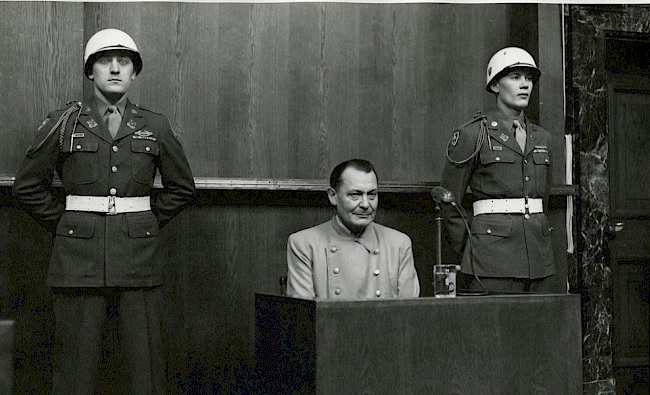
This time I’m separating the usual intro to these ethics potpourris with the enumerated stories. I began by noting that this is the anniversary of the beginning of the Nuremberg Trials in 1945, as notable an ethics milestone as one could imagine, from several perspectives. The trials were an admirable effort to make grand statement about the line of inhuman evil that even war could not justify and that a world would not countenance. They were also significantly hypocritical, just as the post-Civil War trial of Andersonville Prison commander Henry Wirz, the sole judicial precedent for Nuremberg, was hypocritical, punishment inflicted on the losers of a terrible war that could easily have been brought against the war’s victors if the results had been reversed.
There really was no enforceable international law to base the Nuremberg Trials on, making the trials illegal if not unethical. Did they stop genocide? No, and one could argue that the show trails didn’t even slow genocide down. They did, I guess, make people think; one important result of the trials was that the films of liberated death camps, made by U.S. troops and supervised by the great Hollywood director George Stevens, were finally shown. How much the trials made people think is much open to debate. I have always been fascinated by the issues raised by the Nuremberg Trials, and Abby Mann’s 2001 stage version of “Judgment at Nuremberg” was one of the productions I oversaw at The American Century Theater. Directed by Joe Banno, it included post show discussions after every performance, some with D.C. area historians, lawyers and judges as guests. Incredibly, I felt, the show had never been produced in the Washington D.C. area, professionally or professionally. Disgracefully is perhaps the better word. TACT’s was a professional, thoughtful and excellent production, yet the Washington Post refused to review it. “Dated,” was their verdict on most of my theater’s productions. The apathy about “Judgment at Nuremberg” was a major factor in persuading me to end my theater’s 20 year-long mission of presenting neglected American stage works of historical, cultural, theatrical or ethical significance.
But I digress. While I was checking to see whether I had noted this anniversary before (I had not), I found the following post, which was the earliest Ethics Alarms entry featuring a reference to the Nuremberg Trials. Written in 2012, it makes fascinating reading today, so here it is. One nostalgic note: Among the commenters on that post more than a decade ago were Michael Boyd (last heard from on this date ten years ago), Brook Styler (final comment), Chase Martinez ( left in 2015), Julian Hung (last heard from in August of last year), Danielle (who wished me a Merry Christmas in 2016, and vanished), Modern Knight ( final comment in 2017), and several one-time commenters who never returned. But Michael Ejercito was among them, speaking of loyalty. The good kind.
The Donald’s Dangerous Ethics: Loyalty Trumps Honesty On “Celebrity Apprentice”
The treaty imposed on the Cherokee Nation in 1835 facilitated the Trail of Tears, and was the surest sign yet that the eventual fate of North America’s native population was going to be ugly, violent, and tragic. But the Treaty of New Echota, which forced the Cherokee to relinquish their ancestral lands in the South, also included the promise that the Cherokee Nation would be “entitled to a delegate in the House of Representatives of the United States whenever Congress shall make provision for the same.” It is almost 200 years later, and Congress still hasn’t made such a provision.
Well, if we searched the Rationalization List for the excuse for this disgraceful betrayal, we would find several candidates on the very first page, mutations of the hoariest rationalization of all, #1, “Everybody Does It,” but represented by such variations of the theme as, It’s done all the time,”“It’s always been done this way,” “It’s tradition,” “Everybody is used to it,“Everybody accepts it,” and “It’s too late to change now.” The United States broke too many treaties with the various tribes to count, but this one has an especially ugly story behind it.
On Georgia lands guaranteed by the United States to the Cherokee in yet another, earlier treaty, the tribe was attempting to create a model of what might have allowed all the Native American tribes to flourish in the new European-settled nation that was clearly not to be denied. The Cherokee Nation had foresworn war, was working with white communities, creating commerce and launching a hybrid culture that could be integrated into the U.S. while preserving Indian culture. The plan was working too— too well. Georgia exercised the then-current doctrine of nullification, a states rights principle holding that a state could nullify Federal law. The Georgian legislature wanted the Cherokees’ land, and declared the Federal treaty leaving it in their control null and void. The Cherokee sued Georgia in the U.S. Supreme Court and won. President Jackson, however, even though he had earlier condemned South Carolina’s nullification attempts in the strongest possible terms (Jackson threatened to hang Senator John C. Calhoun with his own hands), hated Indians. In an unprecedented demonstration of abuse of power and raw defiance by a President, “King Andy” refused to enforce the SCOTUS decision and backed Georgia. Continue reading →
I’m sorry, but that meme was just too funny to ignore, ethics or not. I’d like to think even Fetterman would appreciate it.
But that’s it for me. Mocking a political figure based on his or her appearance is the ultimate ad hominem attack, and there’s no excuse for it. The Washington Free Beacon, a conservative news source that has made useful contributions to public awareness when the mainstream media is in the process of burying a story that hurts its mission, ran a story yesterday headlined,
“John Fetterman Wears Suit to Capitol, Looks Terrible….like a funeral home director on trial for desecrating a corpse (multiple counts)“