Morning Ethics Warm-Up, 7/2/2021: Remembering The Epic Second Day Of The Battle Of Gettysburg

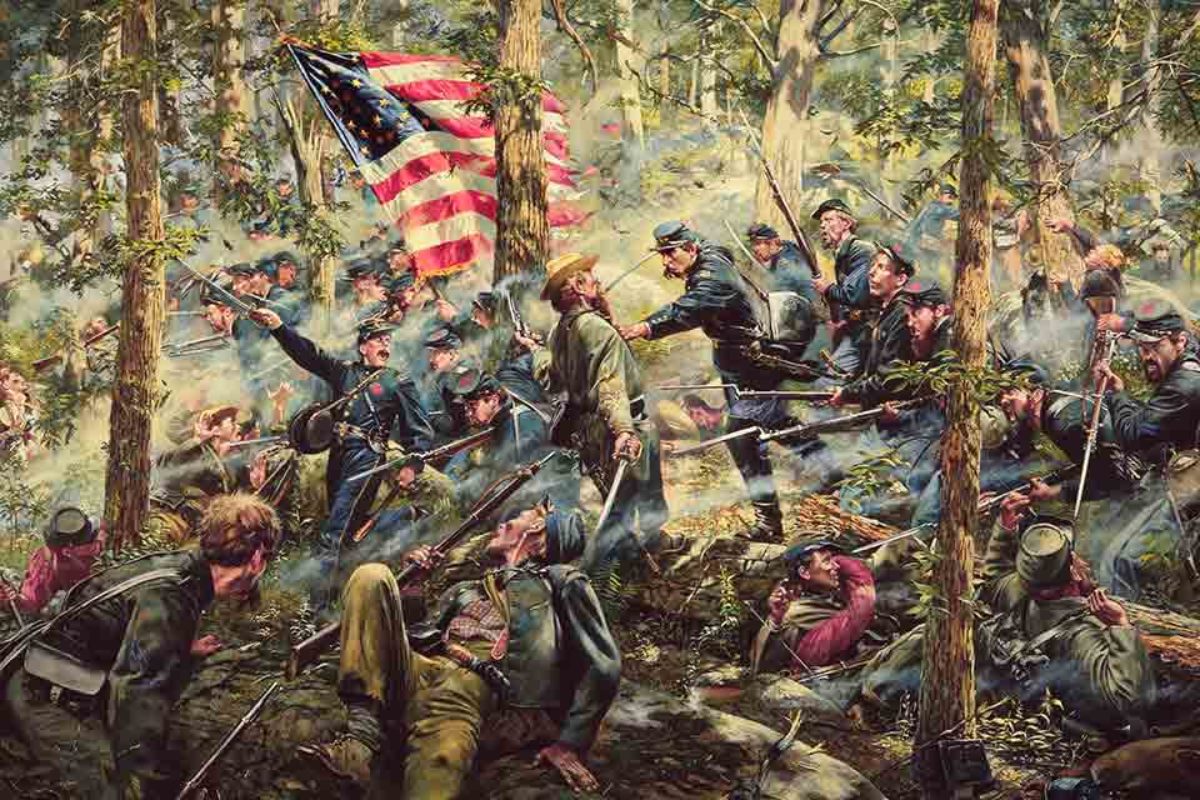
Little Round Top

On July 2, 1863, during the second day of the Battle of Gettysburg with the fate of the Union and the United States hanging in the balance, Confederate General Robert E. Lee’s Army of Northern Virginia tried to break through the line of General George G. Meade’s Army of the Potomac at Cemetery Ridge, Culp’s Hill and Little Round Top. More than once that day, only luck and chaos prevented July 2 from marking the end of the nation as we know it, and from preserving slavery at least a little longer.

All accounts of the battle on July 2 are full of the word “confusion.” Robert E. Lee ordered Lieutenant General James Longstreet to attack by moving his troops up the Federal left flank while General A.P. Hill’s corps threatened the center of the Union line. If coordinated properly, General George Gordon Meade wouldn’t be able to move his troops to reinforce the Union left, where Lee instructed Lieutenant General Richard S. Ewell to make diversionary attacks and launch an all-out assault if possible. Lee’s plan, if successful, would force the Union army to surrender the positions it held on the high ground south of Gettysburg after the first day of the battle, and the entire Civil War might have been won by the South in a day.

Continue reading

Noonish Ethics Battles, 7/1/2021: “Remember Gettysburg” Edition

Gettysburg

July 1 marks the first day of the epic Battle of Gettysburg, which could fairly be celebrated as the beginning of the end for the Confederacy and slavery. Like so many pivotal moments in our history, this one came about by random chance, with Lee’s army and the newly installed Gen. Meade’s Army of the Potomac stumbling into each other in a Pennsylvania country town in 1863. For three days, a bloody and complicated battle engulfed the area, with so many ethics lessons in the process that I fear I won’t be able to cover all of them this week. [ Guest posts on the topic will be welcome!] I am hoping to visit the battlefield again this year—this week will be tough, unfortunately. I will definitely find time this week to watch Ted Turner’s excellent and even-handed film about the battle, highlighted for me by the performances of Jeff Daniels as Joshua Chamberlain, Tom Berrenger as Longstreet, and the late Richard Jordan as General Lewis Armistead, as well as the dramatization of Picket’s Charge, and the score by Randy Edelman.

1. Baseball sexual misconduct notes…A restraining order was taken out against Dodgers pitcher Trevor Bauer, last year’s National League Cy Young winner. Bauer is a sportswriter favorite for his outspoken social media presence and progressive politics, so this will be a blow to the sportswriting woke. The woman making the allegations had what started as a consensual relationship with the pitcher, but in a 67-page document, alleges that Bauer assaulted her on two different occasions, punching her in the face, vagina, and buttocks, sticking his fingers down her throat, and strangling her to the point where she lost consciousness twice, an experience she said she did not consent to. After the second choking episode, the woman awoke to find Bauer punching her in the head and face, inflicting serious injuries. She contacted police, and there is now an active investigation of Bauer by the Pasadena, California police department. If any of her account is true, Bauer faces serious discipline from baseball, which has been (finally) cracking down on domestic abuse by players in recent years.

Also yesterday, MLB suspended the former New York Mets general manager Jared Porter at least the end of the 2022 season.   Porter was fired from the Mets in January after an ESPN investigation revealed that he had harassed a female reporter in 2016 when he worked for the Cubs.

Craig Calcaterra, the lawyer sports pundit, supplied the facts here, and I am grateful for that. I would love to subscribe to his substack newsletter, but every issue I read includes Craig’s apparently incurable progressive bias where it doesn’t belong, and I’m just not paying for that. This time, for example, he cites the Bauer, Porter, and Bill Cosby stories to justify the proposition that “we believe [women] when they say what happened to them,” a stunning thing for a lawyer to say. How Kirsten Gillibrand of him! Later, as if this belongs in a baseball news letter, Craig cheers the death of Donald Rumsfeld as an architect of an “Illegal and immoral” war.

All war is immoral to some extent, but the Iraq War, while in hindsight a mistake, was not illegal except in left-wing talking points. Craig should know better, and maybe he does, but in any event, foreign policy and international law are not his areas of expertise. The degree to which wokism has rotted his brain also shows up in his inclusion of an insulting trigger warning before his account of the Bauer allegations: “Warning: the following contains allegations of sexual assault and violence that may be difficult to read.” Oh for heaven’s sake: “Finnegan’s Wake” is difficult to read. News is life: stop treating adults like children.

You can subscribe to Craig’s excellent baseball observations and juvenile political commentary here.

Continue reading

Sunrise Ethics Serenade, June 30, 2021: Rot, Tragedy, Justice, Arrogance, And Irony

DC Sunrise2

1. Evidence that The Great Stupid was upon us in 2019 if only we had been paying attention...My wife, a World War II history buff, was watching the ending credits most recent movie version of “Midway”(2019) when I heard her emit the sound of a wounded animal. This message had flashed across the screen:

“The film is dedicated to the American and Japanese sailors who fought at Midway. The sea remembers its own.”

What…The…Hell? Those Japanese sailors wouldn’t have had to fight at all if their nation hadn’t killed 3,000 American servicemen is a sneak attack six months earlier. Since when do American films salute those who killed Americans? Now I have to check and see whether there was a tribute at the end of “Flight 93” commemorating the brave Al Qida terrorists who died trying to crash a plane into the Capitol.

Equally disturbing is that I recall no mention at all of “Midway’s” offensive coda in reviews of the film, and could find only one mention of it online. I know, I know, American film studios are desperate to pander to foreign markets. That’s not a good enough reason for that disgusting suck-up to a ruthless and racist enemy.

2. This reminds me of my ethical objection to “bucket lists”...Susan Montoya, 65, an assistant principal at Georgia O’Keefe Elementary School in Albuquerque, New Mexico, died when the hot air balloon she was riding in hit power lines and crashed. It was reported that the ride was an item on her “bucket list.” I don’t know who first came up with the idea that human life was just a collection of enumerated experiences and accomplishments like getting a merit badge, or how it became popular, but it’s a narcissistic and wasteful mindset. If you can’t think of anything more productive to do with your life than to treat it like a grocery list, you’ve missed the point.

Continue reading

More Terrifying Tales Of The Great Stupid, Academic Division

The predictable appeal of racist “antiracism” cant to the world of scholarship and academia in the wake of the fraudulent George Floyd Freakout is producing amusing or frightening results, depending on one’s regard for higher education and resistance to despair.

Today’s sample of Authentic Frontier Gibberish, for example, comes from “Confronting “White Feminism” in the Victorian Literature Classroom,” recently published in the scholarly journal, “Nineteenth Century Gender Studies.” The author is University of California Professor Lana Dalley, who complains that Victorian feminists are “problematic” [There’s that word again!] because they promote “white feminism.” In other words, social commentators and writers of over a hundred years ago don’t seem to reflect the current approved woke perspective of 2021. This is, apparently, a surprise. Here’s her first paragraph, an AFG classic:

The transition to virtual learning in Spring and Fall 2020 intersected with international protests for racial justice and, more locally, Ronjaunee Chatterjee, Alicia Mireles Christoff, and Amy R. Wong’s call to “undiscipline Victorian Studies” by “interrogat[ing] and challeng[ing] our field’s marked resistance to centering racial logic” (370).(1) More specifically, they call for “illuminat[ing] how race and racial difference subtend our [Victorianists’] most cherished objects of study, our most familiar historical and theoretical frameworks, our most engrained scholarly protocols, and the very demographics of our field” (370). Since then, numerous virtual roundtables and panels have convened to discuss critical approaches to race within Victorian studies and to ponder the relevance of contemporary social justice movements to a field whose borders are historically drawn. This essay emerged from one such panel and offers practical suggestions for reframing pedagogical approaches to Victorian feminist discourses in order to “center[] racial logic” and “illuminate how race and racial difference subtend” those discourses.(2) Its suggestions are certainly not meant to be exhaustive, but simply to offer one set of practices for making the Victorian literature classroom more responsive to contemporary conversations about race and gender.”

Now who can argue with that?

Continue reading

Morning Ethics Warm-Up, 6/21/2021: Happy Birthday U.S. Constitution! [Corrected]

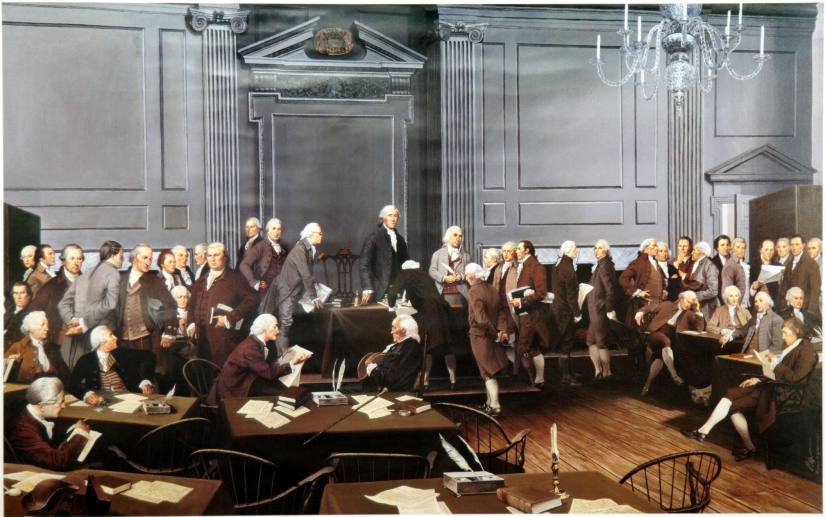
Constitution signing

On this day in 1788, habitually cantankerous New Hampshire became the ninth and last required state to ratify the Constitution of the United States and make it the law of the land. December 7 of 1787 had seen Delaware, New Jersey, Pennsylvania, Georgia and Connecticut quickly signed the document. But Congress had voted that at least 9 of the 13 former colonies had to sign on before the document was considered adopted. New Hampshire, Massachusetts and the remaining states opposed the document, as it failed to reserve sufficient powers to the states and did not protect individual rights like freedom of speech, religion,the press, and the right to bear arms. In February of 1788, New Hampshire, Massachusetts and other states agreed to ratify the document with the promise that necessary amendments would be developed and proposed. The Constitution was ratified based on the compromise by Massachusetts, Maryland and South Carolina, making 8. New Hampshire made nine. The first Congress under the new Constitution adopted 10 amendments, the Bill of Rights, and sent them to the states for ratification. Rhode Island, which opposed federal control of currency and was critical of compromise on slavery, was the last hold-out; the U.S. government had to threaten to sever commercial relations with the state to force it to sign on. Finally, on May 29, 1790, Rhode Island voted to become the last of the original 13 colonies to join the United States of America.

Today the U.S. Constitution is the oldest written constitution in operation in the world, and the only one predicated on ethical principles, thanks to the Bill of Rights.

I would have preferred to see Constitution Day made a national holiday over “Juneteenth,” since it was the principles laid out in the Constitution, along with the Declaration of Independence, that eventually led to the elimination of slavery, and the document has been the backbone of our republic’s epic success in other respects as well.

1. “Larry Vaughn Day”? I regret not noting yesterday that it was the anniversary of the release of “Jaws,” a milestone in American cultural history. It is also an ethics movie, and one that pops into my mind often, since the irresponsible conduct of the weaselly mayor of Amity, Larry Vaughn (Played by Murray Hamilton, who made a career of portraying human weasels), remains SOP for so many elected officials, locally and nationally, and also the leadership of corporations, associations, industries, sports, universities and <cough> religious organizations. Ethics Alarms has a Larry Vaughn tag, and I should have used it in dozens more articles than I have. He is the perfect symbol of leadership that, in the words of Matt Hooper (Richard Dreyfuss) will always “ignore this particular problem until it swims up and bites you in the ass.”

The U.S. could benefit greatly from a “Larry Vaughn Day” on June 20 in which every elected official and organizational leader be required to watch “Jaws.”

Continue reading

Further Reflections On “Juneteenth”

Guest Post by Michael West

My summary observations of something that is more complex than most people make it out to be:

The Fourth of July must always be the preeminent holiday in the American “liturgy”. Even for the slaves whose lives were spent in a state of legalized kidnapping, it was their Independence Day also even while they didn’t enjoy the reality of it. Yet I understand some arguments, such as those who perpetuate Frederick Douglass’s observations on Independence Day. But frankly, anyone espousing that attitude *still* are anti-American.

BUT, it should surely be acknowledged that even while Independence Day was for ALL Americans (even those who in reality didn’t enjoy its blessings), there were those who in reality didn’t enjoy its blessings. And an end to their legalized kidnapping, finally realizing the values of the Declaration, SHOULD be celebrated.

Now, whether that celebration ought to be “Juneteenth”, or the ratification of the 13th Amendment (January 31, 1865), or the Emancipation Proclamation (January 1, 1863), or the defeat of the Confederacy, I don’t know. Still, it is appropriate for the U.S. to honor such a momentous event that all Americans should be grateful for.

Continue reading

Reflections On “Juneteenth”

Juneteenth

Guest Post by A.M. Golden

[Well THAT was fast! This morning’s Open Forum generated not one but two guest post-worthy comments regarding the newly created “Juneteenth” national holiday. I had intended to post on it yesterday; for once I’m pleased that life got in the way. This is the first; the second will appear shortly, and who knows? There may be more!–JM]

So let’s talk about Juneteenth, shall we?

A blatant attempt to pander to the African-American community. A federal holiday that only a small group of people actually celebrate. I’m still trying to figure out if I can go to the post office tomorrow.

I’ve also read one article already by a person of color who admits to feeling uncomfortable with the thought of white people celebrating this holiday.

So, no, this won’t be divisive, will it?

Continue reading

Let’s Play “Only In America!” Today’s Quandary: The Gorilla Glue Girl

“Only in America!” isn’t exactly an ethics quiz. It’s more of an “Is this a great country of a sick country?” game that focuses on the values and strengths of the culture….or otherwise

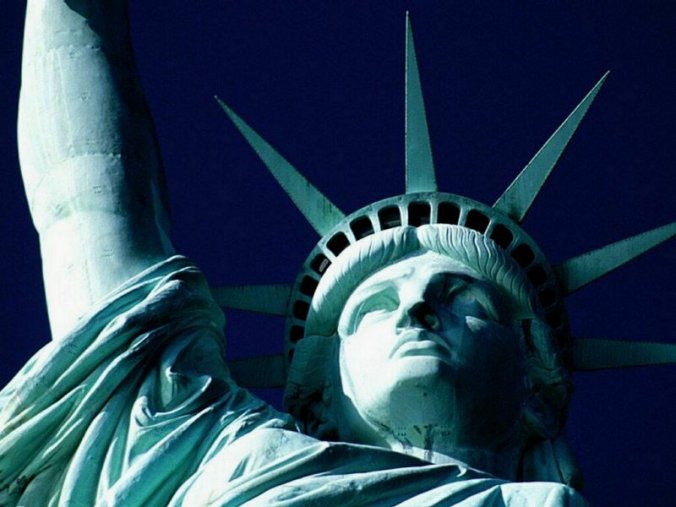
Incidentally, June 17 marks the date when, in 1885, the dismantled Statue of Liberty, a gift of friendship from the people of France arrives in New York Harbor after being shipped across the Atlantic Ocean in 350 pieces. The copper and iron statue was reassembled and dedicated the following year in a ceremony presided over by U.S. President Grover Cleveland. The statue was designed by French sculptor Frederic-Auguste Bartholdi, who modeled it after his own mother, we are told—that woman was BIG!—with assistance from engineer Gustave Eiffel, later famous for, well, you know. It was supposed to be up in time to celebrate the 100th anniversary of the Declaration of Independence, but financing took longer than expected. Even ignoring the pedestal and assembly process, he statue alone cost France an estimated $250,000, or $5.5 million in today’s money). It, or she, finally reached her forever home on Bedloe’s Island nine years late. At the dedication, President Cleveland, said, “We will not forget that Liberty has here made her home; nor shall her chosen altar be neglected.” At more than 305 feet from the foundation of its pedestal to the top of its torch, the statue was taller than any structure in New York City at the time.

In 1903, a plaque inscribed with a sonnet titled “The New Colossus” by American poet Emma Lazarus was placed on an interior wall of the pedestal. Lazarus words, especially “Give me your tired, your poor/Your huddled masses yearning to breathe free,’ have caused a lot of confusion over the years, as many people and even some under-educated elected officials seem to think they represent official U.S. policy, hence “Welcome, illegal immigrants!”

None of which has anything to do with the issue at hand, which is this: In February, Ethics Alarms examined the weird story of Tessica Brown, who decided that the the perfect hair product for her needs was Gorilla Glue adhesive spray. Then, after the predictable result, she posted a video showing the world what an idiot she was, and threatening Gorilla Glue with a lawsuit, an idea the company quickly knocked down for the count. She lost a lot of hair, and even needed plastic surgery. Here’s angry Tessica in the video:

Continue reading

How Newt Gingrich Taught Me Why We Don’t Have An ACLU Any More

NewtGingrich

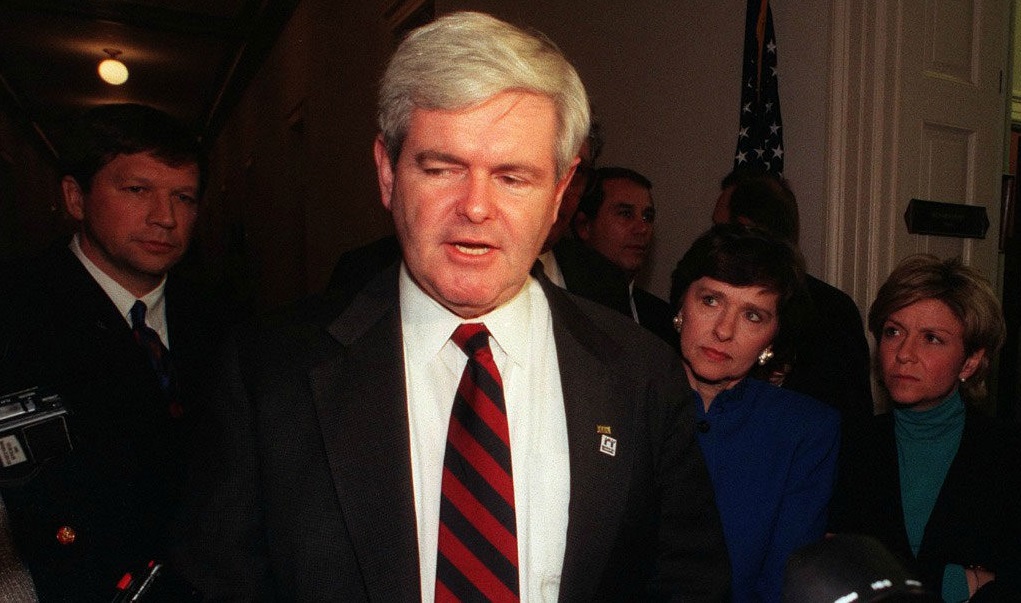
Many years ago, when I was just a little tiny ethicist and ran a research foundation for the U.S. Chamber of Commerce, I was invited to a Chamber executive retreat. By far the most interesting feature was a working lunch with young Congressman Newt Gingrich as the speaker. This was long before most American knew about Newt, who was considered something of a wonk and proved it that afternoon.

Rep. Gingrich gave the clearest presentation of organizational structure and function I had ever heard or have read about since as part of his seminar on long-range planning. He handed out a chart showing a pyramid with “MISSION” at the point, “GOALS” beneath, “OBJECTIVES” beneath that, “STRATEGY” next going down, then “TACTICS,” and finally OPERATIONS as the long base. He went through many examples of failed and successful organizations, making many fascinating points, including (I still have my notes somewhere):

  • You can’t have a strong organization without a strong and clear mission.
  • An organization in which the goals start to become inconsistent with the mission will lose its integrity and direction.
  • If the organization’s strategies are polluted by parochial and personal goals of staff and leadership, the goals will become eccentric and scattershot, and mission will become meaningless.
  • Even the best mission cannot survive inadequate operations, which is why idealists and ideologues so often make poor leaders.
  • The best operations imaginable won’t save flawed mission (Newt’s example: Nazi Germany), and
  • “If you don’t know where you’re going, it’s easy to get there, but it won’t be worth the trip.”

I hadn’t thought about Newt’s private seminar for a long time, but it popped back into what passes for my head when I read this piece, “Once a Bastion of Free Speech, the A.C.L.U. Faces an Identity Crisis.”

Continue reading

Comment Of The Day: “Casting Ethics: ‘Anne Boleyn’ And Discriminatory Double Standards”

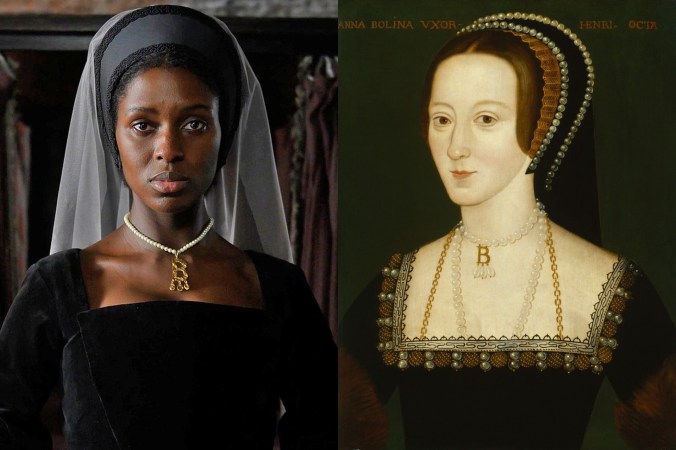
Oh, I just love this Comment of the Day by Curmie, who was AWOL from the ethics comment wars for far too long, and whose return recently has made my heart soar like a hawk. I love it for many reasons, including, of course, the fact that it is well written and enlightening, far more so than my post that prompted it, which focused narrowly on the double standard of applauding the having a performer of one race portray another, but only when it’s the “right” races involved.

As with my posts about ethics issues in another lifetime passion, baseball, I know that many readers nod off when the framework is theater. But the conceit of Ethics Alarms is that the ethics issues and process of analysis are often universal regardless of where the dilemmas and conflicts pop up. As it happens, baseball and theater happen to be two realms that I know a lot about.

But not as much as Curmie, at least as far as theater is concerned. I had hoped that he would weigh in on the casting of a black actress as Anne Boleyn, and he did.

Here is Curmie’s Comment of the Day on the post, Casting Ethics: “Anne Boleyn” And Discriminatory Double Standards.

***

Literally two minutes after reading this post, I saw that Katori Hall had been awarded the Pulitzer Prize for Drama for her play The Hot Wing King. I don’t know the play—its Off-Broadway run was cut short by COVID, and as far as I can tell it hasn’t been published.

I do, however, recognize her name as the playwright of The Mountaintop, in which the two characters are Martin Luther King, Jr. and an employee of the Memphis hotel in which he is spending what he doesn’t know is his last night on earth. (Spoiler alert: she’s really an angel preparing him for what is to come.) It is a good, borderline great, play: by turns moving, humorous, and incisive. But what comes immediately to mind is the production by a student group at Kent State University, in which a white actor was cast as King. The director, of course, claimed the casting decision wasn’t a gimmick. (Newsflash: it was a gimmick.)

The original idea was to alternate the role between a white and a black actor to be, in the director’s words, “a true exploration of King’s wish that we all be judged by the content of our character and not the color of our skin.” The black actor had to drop out of the production, and the white one played the role throughout the run.

Continue reading