Facebook, Meet The Slippery Slope. Slippery Slope, Facebook. Public, PAY ATTENTION!

censorship

This issue doesn’t need a lot of exposition—I hope, at least not among this enlightened and educated readership— but it is important.

Facebook CEO Mark Zuckerberg announced yesterday that his platform will now block posts and inks that argue that the Holocaust didn’t happen or has been exaggerated. , Facebook  is increasingly a taking action to undermine what it considers  conspiracy theories and misinformation, using the approaching U.S. presidential election as justification.

It isn’t. Facebook is too powerful a platform for public discourse and communication to engage in picking and choosing which opinions and assertions are worthy of being read and heard. In addition, Facebook is not objective, unbiased or trustworthy…or competent. I know this for a fact.

It bans Ethics Alarms. Case closed.

Holocaust survivors around the world have pushed Zuckerberg this summer to remove Holocaust denial posts from the social media site. The effort was coordinated by the Conference on Jewish Material Claims Against Germany, which used Facebook itself to promote its suppression efforts, posting one video per day urging him to remove Holocaust-denying groups, pages and posts as “hate speech.”

Once again, and this also is a fact, what is labelled “hate speech” is too often a matter of bias on the part of the hate speech accusers.

Continue reading

Ethics Hero: New York Times Op-Ed Columnist Bret Stephens

1619

Bret Stephens has been criticized on this site for regularly failing his alleged assignment of bringing a principled conservative voice to the New York Times op-ed pages, and seeming to yield to the strongly biased culture of the uenthical paper that employs him.

In his most recent column, however Stephens courageously and unblinkingly calls out the New York Times’ controversial “1619 Project” for what it is—dishonest, misleading, falsified—oh, let’s not mince words— crap. [Ethics Alarms discussed the “1619 Project” and its unethical creator, Times reporter and race activist Nikole Hannah-Jones, here] Josh Blackmon, for example, writing at Reason, thinks that the columnist metaphorically biting the hand that feeds him will mark the beginning of the end of Stephens at the Times. After all, a Times editor recently resigned after the paper’s Jacobins called for his head for daring to allow a Republican Senator to voice an opinion that went against the Times’ view of the world. Stephens has gone far, far beyond that.

He knows it, too. At the end of his dissection of the bad history and unethical journalism that disgracefully won the Times a Pulitzer Prize, the columnist writes,

For obvious reasons, I’ve thought long and hard about the ethics of writing this essay. On the one hand, outside of exceptional circumstances, it’s bad practice to openly criticize the work of one’s colleagues. We bat for the same team and owe one another collegial respect.On the other, the 1619 Project has become, partly by its design and partly because of avoidable mistakes, a focal point of the kind of intense national debate that columnists are supposed to cover, and that is being widely written about outside The Times.

To avoid writing about it on account of the first scruple is to be derelict in our responsibility toward the second.All the more so as journalists, in the United States and abroad, come under relentless political assault from critics who accuse us of being fake, biased, partisan and an arm of the radical left. Many of these attacks are baseless. Some of them are not. Through its overreach, the 1619 Project has given critics of The Times a gift.

Continue reading

The Gallup Poll Is Wrong, Or The Others Must Be, Right?

When President Trump tweeted yesterday about a poll that found a majority of American felt they were better off today than four years ago when Obama’s Camelot was still being hailed by the troubadours (that’s my wording—I don’t think “troubadours”  is in the President’s speaking and tweeting vocabulary), I immediately thought, “Oh God, here’s another spin-job misrepresentation that will be the selected target of the Trump-Haters for the rest of the week.” Such a poll had to come from Mrs. Blapp’s 6th grade class, or maybe Steve Bannon has started a polling service.

I was wrong. The poll came from Gallup, one of the most reliable and objective of the pollsters, and Trump described it accurately. Gallup’s Sept. 14-28 poll found that 56% of U.S. registered voters believe they are better off now under President Trump compared to four years ago. Not only that, the percentage is the highest by far of that registered during a President’s reelection campaign since Ronald Reagan posed the question as the proper way to measure a President’s success in his 1980 campaign to defeat Jimmy Carter.

Gallup better

Now, since I am officially skeptical of polls, and particularly so since the 2016 polling debacle, and even more so when the organizations paying for and holding the polls are committed to removing Donald Trump from the Presidency, I am loathe to use a poll to debunk a poll. But how in the world can Gallup’s numbers be reconciled with the poll-driven narrative that Joe Biden is headed for a landslide, or even a narrow victory? Voters do not typically or, as far as I can recall, ever, vote against perceived self-interest. If 56% of the electorate really believe that they have fared better under President Trump than under the Democratic Messiah, it makes no sense to predict that they will vote to go back to the bad old days. Moreover, the poll was taken in the midst of widespread scaremongering over the pandemic, and as the thriving economy that the President had pointed to as his major achievement lays in ruins from the effects of the seven month lockdown. Even in the midst of this, 56% think they are better off.

How can this be explained? I can imagine some theories:

Continue reading

Columbus Day Weekend Ethics Warm-Up, 10/10/2020: Dumb Tweets, Rigged Reviews, Insane Academics, And Police Conduct Worth Protesting

Is it that time again already? Great, now we have to listen to more Statue Toppling rants from anti-Columbus zealots who don’t think changing the world unquestionably for the better and setting in motion the chain of events that allowed the United States to exist is worthy of a day of recognition.

1. I confess. Although I bailed out of following baseball this “season” when MLB’s groveling to Black Lives Matter became too much to bear, I do check the scores now and then, and thus am taking some pleasure in the fact that the New York Yankees were eliminated in the best of five Divisional Play-offs by the Tampa Bay Rays, making it eleven straight years since the Bronx Bombers got to the World Series.

2. Idiotic tweets that did not come from the White House. Whether one believes the Doomsday Polls or not, it is beyond question that President Trump’s prospects this November would be far brighter were he able to resist sending out dumb tweets, many of which I have highlighted here. (There is a Trump Tweets tag, if you want to reminisce. Like so many of his regrettable proclivities, this one is apparently contagious. Powerline recently flagged three head-exploders:

  • From Washington governor Jay Inslee:

Inslee tweet

  • From former CIA director and Deep State Trump saboteur John Brennan:

Brennan Tweet

Those who visit here often know that by Ethics Alarms standard, quoting “Imagine” as if this infantile doggerel by John Lennon is profound automatically wins any “Dumbest” competition.

Continue reading

On “The Iceman Cometh”

It was this day, October 9, in 1946 that the greatest play of the greatest American playwright premiered. The playwright was Eugene O’Neill, and the drama was “The Iceman Cometh.” (Of course, that’s just my assessment, though I am not alone. I rate it the greatest non-Shakespeare play in the English language.) Like almost all O’Neill works it is an exploration of ethics. A traveling salesman, a professional liar, returns to a dive where he is worshiped by its drunken denizens to change their lives by forcing each of them to confront reality rather than avoid it using rationalizations, delusions and drink.

Few Americans have seen “The Iceman Cometh,” largely because it is seldom produced. The original version is well over four hours long, and in my view, every minute cut diminishes the play’s message and power. (The film version above was cut significantly) The play also requires a large ensemble cast of unusual talent and intelligence. It’s so much easier and safer to produce “To Kill A Mockingbird.”

Unfortunately, O’Neill’s plays are meant to be experienced on stage, and on stage, they work. Reading O’Neill is a chore, and another reason his works are not produced enough is that directors, producers and playreading committees can’t get past the text. O’Neill didn’t help by often writing dialogue in dialect. It’s tough going, though no more so than Shakespeare. (You can read the play here.)

Continue reading

Comment Of The Day: “Oh, Look! More Baseball Ethics Dunces! This Time, It’s the Baseball Writers’ Association of America”

I have been remiss in getting up “Comments of the Day,” another consequence of my frustration adapting to the new WordPress “block” system, damn it.  I usually hand le COTD posts from my laptop, and posts requiring my concentration and composition rather than the imported wisdom of others from the Fortress of Ethics Solitude, my office.

I’m posting this follow-up comment from Here’s Johnny regarding the baseball writers’ gratuitous smear on the original commissioner of baseball based on nothing but rumor, a desire to practice “anti-racism,” without actually doing anything, and the smug assumption that History Doesn’t Matter, Gratitude Doesn’t Matter, and Honors Don’t Matter.

And the dog is licking my toes

UPDATE: Well, that was a failed experiment. When I tried to move the text from Word to WordPress, I couldn’t make the format work from the laptop, so I’m back at my PC. That was 20 more minutes of my increasingly scarce time on Earth robbed by WordPress. I’m thinking of sending them an invoice...

Here’s Here’s Johnny’s Comment of the Day on the post, “Oh, Look! More Baseball Ethics Dunces! This Time, It’s the Baseball Writers’ Association of America”:

Continue reading

Oh, Look! More Baseball Ethics Dunces! This Time, It’s the Baseball Writers’ Association of America

mlb-mvp

Yesterday, the Baseball Writers’ Association of America (BBWAA) announced that group will remove the name of Kenesaw Mountain Landis from the American League and National League Most Valuable Player plaques presented each year to the MVP winners.. Landis has been honored with having the plaques bear his name since 1944, the year of his death. He didn’t do much: he only probably saved the National Pastime at its darkest hour.

It was Landis, a famously tough and uncorruptible federal judge, whom the baseball owners turned to in 1920 in the midst of the Black Sox scandal. The scandal involving the Chicago White Sox throwing the World Series in 1919 under the influence of bribes from gamblers to some key players, including star Shoeless Joe Jackson. Even though the eight accused players were acquitted in their trial, Landis, who remained a judge for two years while serving as Commissioner, banned them all from baseball, laying down a rule that participating in efforts to corrupt the game through gambling or having knowledge of other players doing so and not acting to stop it were grounds for permanent exile. Eighteen players in all, like the infamous Hal Chase, were banned by Landis, who remained commissioner for the rest of his life.

Landis had a memorable career as a judge before coming to baseball’s rescue: in 1907, he thrilled the man who appointed him, Teddy Roosevelt when he fined Standard Oil of Indiana more than $29 million (about $800 million in 2020) for violating federal laws forbidding rebates on railroad freight tariffs.

Why, then, is Landis suddenly the victim of metaphorical statue-toppling? That was a clue: in the wake of the George Floyd Freakout and The Great Stupid, the baseball writers, which are thoroughly infested with self-righteous and semi-ignorant would-be social justice warriors like this guy, blame Landis for not “doing more” to desegregate baseball before Jackie Robinson and Branch Rickey finally did the trick, three years after Landis died. In other words, he’s being punished for not seeing clearly what everyone sees almost 80 years later, and not actively fighting for a cause that neither baseball nor American society may have been ready for.

Continue reading

Ethics Poll: “Ip Gissa Gul”

The New Yorker cartoon above, by the magazine’s iconic cartoonist George Booth, first ran in 1975. I remember finding it strange then. I just ran across it again, and it seems ripe for an Ethics Alarms poll.

The Great Ethics Train Wreck Of 1910

On this date, October 1, 110 years ago,  a massive explosion destroyed the Los Angeles Times building in the city’s downtown area, killing 21 employees and injuring many more. This obviously unethical act—though in the over-heated labor environment of the times, union activists would secretly defend it—set off a series of events in one of the great ethics train wrecks in U.S. history.

The explosion was a message to Los Angeles Times publisher Harrison Otis, a powerful opponent of the burgeoning labor movement in general and unions in particular. Determined to exploit the tragedy to turn public opinion against organized labor, he hired the nation’s most famous private detective, William J. Burns, to crack the case while his paper supplied an avalanche of anti-labor editorials and slanted news stories.  Otis, the leader of the Merchants and Manufacturing Association, a powerful group of business owners with extensive political connections, seemed less interested in justice for the dead than a decisive knock-out of the union movement itself.

Burns’ investigation led to the Bridge and Structural Iron Workers Union and their treasurer, John J. McNamara. Burns got a confession out of  a sketchy character named Ortie McManigal who had allegedly been the intermediary between McNamara and two bomb experts, and personally arrested John McNamara and his brother James in Indiana. Then Burns supervised the kidnapping and transportation of the brothers to California, where they could be prosecuted.

Convinced that the the McNamara brothers were being framed—some labor supporters even suspected that Otis had bombed his own building—Samuel Gompers and Eugene V. Debs pressured Clarence Darrow, then the premier labor lawyer in the U.S.,  to take on the McNamaras’ defense. Darrow had been ill and seeking to retire, but a recent stock market crash had left him broke as well. He agreed to take the case for the then unprecedented sum of $50,000 (about $1,368,000 today). The unions literally had children collecting nickels and pennies to build the defense fund.

The unions were Darrow’s clients under the existing legal ethics rules, but the brothers were also his clients, and their lives were at stake. This became a serious conflict when Darrow learned, within minutes of meeting with the McNamaras, that they were guilty.

Gompers had told him that the brothers had to be acquitted or the entire labor movement might be destroyed forever. The clients paying his fee, therefore, demanded a plea of “not guilty.” Darrow, however, became convinced that only a guilty plea would save the brothers from execution. Meanwhile, he knew that there was no way the McNamaras could get a fair trial. The Times was poisoning the jury pool daily. The prosecution was engaging in outrageous tactics, like bugging Darrow’s offices in L.A. They even had Darrow followed, and got incriminating photographs of the lawyer leaving the apartment of his long-time, off-and-on mistress, a female journalist covering the trial. Then they used the photos to try to force Darrow to withdraw from the case, threatening to show them to his wife, Ruby.

“Go ahead,” he said. “She knows all about Mary.” Darrow’s hands were hardly clean either: his agents had located the supply of dynamite in Indiana that the fatal charge had been taken from, and he hired a lawyer to hide the evidence in a safe. Continue reading

Thursday Ethics Warm-Up, 9/24/2020: It’s “Supreme Court Day”!

Literally!

On this day in 1789, The Judiciary Act of 1789 was passed by Congress and signed into law by President George Washington, thus establishing the Supreme Court of the United States. Notably, it was then designed as a tribunal made up of only six justices—an even number! (The Horror!)  President Washington quickly nominated John Jay to preside as Chief Justice, and John Rutledge, William Cushing, John Blair, Robert Harrison and James Wilson to be Associate Justices.  You should know Rutledge: he sings that cool song about slavery and the Triangle Trade  in “1776.”  You also should recall Wilson from that show—he’s the one slandered by being portrayed as a total weenie, which he most assuredly was not.  Two days later, the six appointments were confirmed by the U.S. Senate.

Nobody thought it was a big deal.

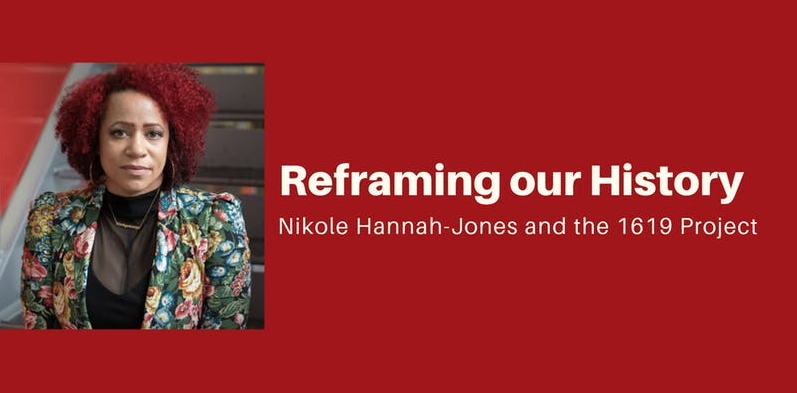
1. We knew the New York Times’ “1619 Project” was flagrant Black Lives Matter-inspired propaganda and based on lies, correct? Ethics Alarms discussed this when the Pulitzers honored the thing’s Liar in Chief, Nikole Hannah-Jones, who even admitted that it was really more about creating a useful “narrative” than accurately presenting history. Ben Crump, the serial race-hustler who gets huge damage settlements for family members of black victims of various tragedies by proclaiming the police and America as racist, cited  the “1619” project’s narrative yesterday while helping to incite riots. See? It works!

But the project is used in many school systems as “history,” and the central dishonesty was a problem, so the Times, without announcement or explanation, erased the central claim of the 1619 Project, which was that the year the first slaves were brought to Colonial Virginia was the “true founding” of the United States.

The  initial introduction to the Project, when it was rolled out in August 2019, stated that

The 1619 Project is a major initiative from the New York Times observing the 400th anniversary of the beginning of American slavery. It aims to reframe the country’s history, understanding 1619 as our true founding, and placing the consequences of slavery and the contributions of black Americans at the very center of the story we tell ourselves about who we are.

Sometime this year, the text became,

The 1619 Project is an ongoing initiative from The New York Times Magazine that began in August 2019, the 400th anniversary of the beginning of American slavery. It aims to reframe the country’s history by placing the consequences of slavery and the contributions of black Americans at the very center of our national narrative.

The change was discovered after Hannah-Jones denied  last week that the project’s core thesis was what she and the Times  had said it was. It “does not argue that 1619 is our true founding,” she said. Well, not any more. Continue reading