Six Ethics Problems With This Picture….And You Should Be Able To Find More

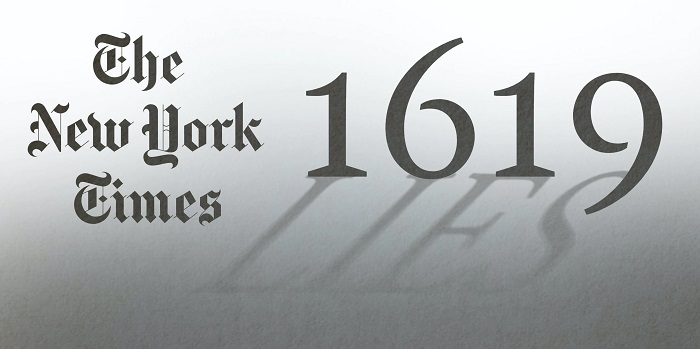
“Scratch” is a New York Times cartoon feature  in the Sunday Business section. This was the most recent installment. I’ll save my (disgusted) comments for the end…

  • The breathtaking leap of logic in the introduction represents such flawed logic that the Times Business Section destroys its credibility, such as it is, by permitting such an illogical statement on its pages. ‘Since companies have been foolishly pandering to hyper-woke complaints about, for example, the picture on a box of rice and the artwork on a package of butter, and statues of important and influential historical figures who were honored in their times are being vandalized and toppled by people who barely know who they are, it’s a ‘perfect time’ time to consider dishonoring the Founders and others without whom we would have no nation at all.’

Continue reading

A Banner Date In The History Of The Barn Door Fallacy: The Day The Concorde Died

s

The Barn Door Fallacy is one of the most striking example of persistent human and bureaucratic incompetence, as well as one of the most destructive.

It is just as illogical as the old saw it is named after, yet the reflex reaction to almost every accident, tragedy or chaotic event is to immediately adopt extreme measures that are deemed necessary to prevent what has already happened. This occurs despite the fact that most such events were in situations already operating with known risks and virtual certainty that the disaster that eventually prompts the Barn Door response would occur. Nevertheless, taking reasonable measures to prevent the catastrophe is somehow never recognized until after the bodies stack up, and then being reasonable  is no longer an option.

Examples of this phenomenon, a triumph of incompetence, emotion and fear of responsibility over responsibility and reason, abound: the aftermath to 9/11,  the over-reaction to the Oklahoma City bombing; the end of airship travel after the spectacular explosion of the Hindenburg, the death of nuclear power in the wake of Three Mile Island and Chernobyl.  The pandemic will undoubtedly lead to some manifestation of the Barn Door Fallacy. It even infects sports: all it took was a televised career-threatening injury to a franchise star catcher to make Major League Baseball drastically alter the rule regarding collisions at home  plate, and a freak accident breaking the leg of a player in a take-out slide at second base during post-season play-offs to prompt MLB to ban a routine aspect of the game—and an exciting one— practiced and accepted for over a hundred years. Continue reading

Comment Of The Day: “Unethical Quote Of The Month: Joe Biden”

I bet Michael, when he submitted this Comment of the Day, had a feeling I’d groove on it. After all, it’s about a President, I’m a Presidents nut,  and he ends up agreeing with me, which is always welcome.

He also raises and interesting question that was not considered in the post. If we judged Presidents on a racism scale that weighted their attitudes according to how they compared to the culture and predominant beliefs of the day, which Presidents would come out looking best? That’s how baseball stat analysts judge players across eras, and it makes sense: players are compared to league averages while they were playing, and then the stats are adjusted accordingly.  For example, Carl Yastrzemski’s .301 average in 1968 was more impressive, and represented better hitting  in his offensive context, than Lou Gehrig’s .354 mark in 1936, when ten players hit at least .350.

Analyzed that way, Woodrow Wilson comes out as the most racist President, more than the slaveholders. Jefferson, despite being a slaveholder, looks relatively good in the context of his times. So, I think, does Teddy Roosevelt, unapologetic white supremacist that he undoubtedly was.

Here’s Michael’s Comment of the Day on the post, “Unethical Quote Of The Month: Joe Biden”: Continue reading

Ethics Catch-Up, 7/23/2020: Waiting For Baseball Edition [Corrected]

This moment in “Field of Dreams” was how I started off my baseball and culture presentation this week. Ironically, the speech has always irritated me, because of its stagey blocking, and because it is a speech that sounds like a  speech, and is essentially right out of the book the film was based on. In the novel, “Shoeless Joe,”,the “Terrence Mann” character played by James Earl Jones was real life (and then, still living) recluse author J.D. Salinger. I dislike the speech, but the scene always moves me, for a personal reason.

As Terrance Mann stands, giving his speech, the ghostly players of the past silently assemble behind him in Ray Kinsella’s (Kevin Costner, of course) magic corn field. One of the players behind him has been identified in the film as Smokey Joe Wood, a 30 game winner with the World Champion 1912 Boston Red Sox. Just a few years before the film was made, I had been in the Fenway Park grandstands as  Smoky Joe, feeble, in his mid-nineties and in a wheel chair shortly before his death, barely threw out—more like dropped—the first pitch at a Red Sox Old Timer’s game, to a standing ovation.  And here he was, in that  corn field, but young and vital again.

Gets me every time….

1. Ethics query: is it ethical to perform “Piggies”? I just caught an old concert clip in which George Harrison and Eric Clapton performed the obnoxious pseudo-Marxist ditty “Piggies” (from the White Album) to thunderous applause.

[Notice of correction: I originally wrote that “Piggies” was a Lennon composition. All these years I assumed it was, heavy-handed and juvenile politics that it was. I am stunned that the song was George Harrison’s doing; I thought better of him.]

This was well after the Manson murders: I had never heard anyone perform the song in decades. Admittedly, it is just moral luck that a madman seized upon the White Album Beatles songs as his inspiration to mastermind the slaughters of  Sharon Tate, her unborn child, and her house guests, as well as supermarket executive Leno LaBianca and his wife Rosemary the following night. However, “Piggies” was the one song referenced directly in both murders. It is not inconceivable that if the White Album had omitted that song—no great loss, either–at least the LaBianca murders might not have taken place. I know I can’t hear the song without picturing carnage, and it seems to me singing the song is like a celebration of Manson’s work. I wouldn’t ban it; I don’t believe in banning anything.  I just think it’s bad taste to play it or perform it.

Is that inconsistent with my objection to “canceling”  “Dixie,” “My Mammy,” “Rockabye Your Baby with a Dixie Melody,” “When Johnny Comes Marching Home,” “Oh Susanna!” and other songs that are redolent of the Old South? I would argue that those songs have the virtue of being great tunes and important cultural touchpoints…in other words, works of musical art that justify themselves. “Piggies,” in contrast, is musical junk, like about 20% of the White Album filler. Continue reading

Remembering Herb Stempel (1926-2020), Ethics Dunce Emeritus


I missed Herb Stempel’s death last month. If you aren’t 95 years old or didn’t see Robert Redford’s “Quiz Show,” that name probably doesn’t ring a bell, but Herb was a seminal figure in American popular culture ethics, and his story raises issues still unsettled today.

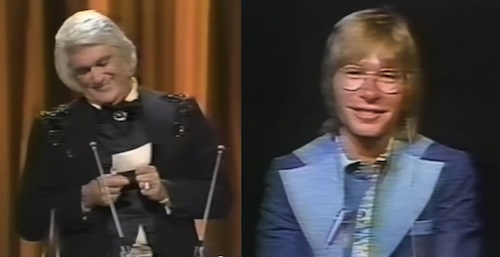
On the evening of December 5, 1956, Stempel, a City College student from Queens, was in his eighth week on the highly-rated NBC quiz show “Twenty-One.” He had won a total of $49,500, but the producers decided that his trivia-obsessed nerd persona (deliberately played up by the show, which instructed Stempel how to look especially dorky) was wearing thin. It was decided that his handsome, Columbia University professor challenger Charles Van Doren  should end Herb’s reign as champion, so Stempel was ordered to “take a dive.”  Despite Stempel’s protests, he was forced to whiff on the question,  “What movie won the Academy Award for best picture in 1955?,” an especially bitter pill because Stempel not only knew the answer, the winning film, “Marty,”was his favorite movie. Those who knew Stempel were shocked that he would answer, “On the Waterfront,.”

Van Doren went on to become the most celebrated  quiz-show contestant of all time—yes, even more so than Jeopardy’s Ken Jennings [Not “Jenkins” as I wrote here originally. Ken Jenkins is an actor, and he jumped into my head without being invited.] He was on the cover of Time magazine and received bags of fan mail and endorsement offers. Then Stempel, in part humiliated by the question he was forced to botch, in part out of jealousy, and maybe with a smidgen of public spiritedness, decided to become the prime witness as a federal investigation exposed the corrupt quiz show culture, telling the news media, prosecutors and congressional investigators that “Twenty One,” (and probably the other popular shows  like “The $64,000 Question,” “Tic Tac Dough’) was a fraud on the American public.

Van Doren was disgraced.  Stempel styled himself as a whistleblower and a hero. He assisted in the production of  Redford’s 1994 Oscar-nominated movie “Quiz Show,”  and also  in a 1992 documentary for the PBS series “American Experience.” After the film revived interest in the  quiz-show scandal, Stempel gave lectures and made radio and television appearances.

In other words, he cashed in. I see nothing admirable about Herb Stempel, though he is typical of many, perhaps most, whistle-blowers.

He testified that before his first appearance on “Twenty One,” the producer asked, “How would you like to win $25,000?” “Who wouldn’t?’” Stempel said he replied. Before each show, Stempel was given the questions and correct answers. He was coached to bite his lip, mop his brow, stammer, sigh, and act as if every question to which he had already been provided the answer might be the one to defeat him. He signed a false statement that he had not been coached and that he had lost to Van Doren, who was also provided answers, fairly. In exchange, Stempel was promised future paid television appearances. It was when the network reneged on those promises that Stempel blew his whistle and let the public and law enforcement know that the  quiz shows were fixed.

They didn’t recover until quite recently, with shows like “Deal or No Deal?” and “Who Wants to be a Millionaire?” having success on prime time. Before that, the format was mostly relegated to daytime television. It’s strange, though. The appeal of shows like “Twenty One” was the same as the appeal of today’s competition reality shows, like “Survivor” and “The Amazing Race”: the illusion that audiences were watching real people dealing with a genuine challenge. The ethical line between a contestant faking that he isn’t sure of an answer to a question in order to ratchet up the suspense, and a reality show contestant following a scripted plot is vanishingly thin. Various levels of fraud exist in most of these programs.

I even believed that Paul Lynde was so clever he came up with those hilarious answers on “The Hollywood Squares” spontaneously.

Unethical Quote Of The Month: Joe Biden

“We’ve had racists, and they’ve existed, they’ve tried to get elected president. He’s the first one that has.”

—-Joe Biden at a virtual town meeting yesterday, giving a novel version of American history.

Where to begin? I suppose it’s obligatory to point out, again, that the now routine assertion that President Trump is a racist is based on distortions, innuendo and outright lies. The Democratic Party/”resistance”/mainstream media axis doesn’t even bother to try to support the claim any more, because, I explained here, this is a  a Big Lie strategy, pure Hitler/Goebbels, from the same source, ironically, of the Big Lie (it’s #3 on the list) that the President is like Hitler. Joe’s Big Lie yesterday is #4. It probably should be #1, since it was formulated from the moment Trump, in announcing his candidacy, said, very clearly, that a lot of illegal immigrants from Mexico were dangerous criminals. That is undeniably true, but it was reported, and has come to be believed, that he said all Mexicans were dangerous criminals.

I’m not going to rehash why Big Lie #4 is  a lie; in you haven’t figured it out, please go to the link. However, it is amazing what happens when you ask anyone, even the most articulate and intelligent Trump basher, how they conclude Trump is a racist. They just can’t do it without resorting to misrepresentations and distortions, then bubble over with rage when you point them out.

Joe Biden, as we all know, isn’t articulate or intelligent, and never has been. Now, sadly, he is existing in the twilight world of some kind of mental deterioration. As an aside, I wonder how the news media and those who would vote against President Trump if whoever was running against him “shot somebody in the middle of Fifth Avenue” are going to rationalize Joe’s increasingly garbled pronouncements. “Be fair. That’s just Joe being Joe. You know, he’s senile!”? “OK, he’s lost it, but at least he’s not a racist”? Incidentally, Joe’s statement describing Barack Obama as “clean” back when Biden had all of his marbles, which were never abundant to begin with, was a more reliable marker of racism than anything Donald Trump has said in public in his long career. Continue reading

Today’s Featured Media Anti-Trump Smear [Corrected]

During a violent storm here in Alexandra, with the internet going in and out, my wife and I gave up and watched “Spotlight” again, an ethics movie, and a genuinely heroic story about journalists doing their jobs, informing the public, exposing popular institutions. Those were the days. The ending speech, where the Boston Globe’s editor talks in high-minded terms about the reason journalism is worth the effort, made me physically nauseous. The profession he described is virtually unrecognizable from what I see on CNN, Fox News, NPR, the Washington Post and the New York Times.

Almost immediately after, I read a column in the Times from two days ago, in the Arts section. It’s a periodic feature by John Williams where he interviews an author, “5 Things About Your Book.” This time he was talking to Larry Tye, whose biography of Joe McCarthy has just been published. The cut line read that Larry Tye “discusses his biography of that American bully, and an eerie echo.”

Having read the Times for the last four years and watched with admiration how it can toss gratuitous insults and sinister innuendoes about President Trump in any context no matter how remote, from book reviews to cooking columns to fashion essays.  I was certain what the “eerie echo” would be. Joe McCarthy was a bad guy, so the article would show how much Donald Trump is like Joe McCarthy.

For the nonce, I will ignore that salient fact that it is “the resistance,” the Democrats and the anti-Trump media, which is to say, the media, that have been using relentless McCarthyite tactics against the President from before he was elected.

So where was this eerie echo of Trump in the life of “Tail-gunner Joe”? Here’s Tye’s  shocking illumination of that question:

I knew there was a general link between Senator McCarthy and President Trump, but I didn’t realize how eerily echoing it was.

Huh? What “general connection”? The Senator died in 1957, when Trump was 10. How can you have a “general connection” with someone who isn’t in your family, you never met, and whom you didn’t know anything about at all until well after he died?

That’s smear #1. Here’s smear #2: Continue reading

How Popular Culture Makes Us Misinformed And Stupid: Gunfights And Sub Battles

I recently perked some interest here in a comment when I mentioned how my dad, who taught various forms of weapon use while a trainer in the Infantry, railed at every example of a “Mexican stand-off” represented in a movie or TV show. “First one to shoot wins, or both quickly realize that there’s a mistake, and put down the guns,” he said. I was inspired by the Netflix Western “The Ballad of Lefty Brown,” which is very good, but the writer really liked Mexican stand-offs.

Another example is the old, dusty street showdowns Westerns have featured for a hundred years. They just didn’t happen, except for a few anomalies. One of them occurred this date  in 1865, when Wild Bill Hickok faced off in the Springfield, Missouri city square against a former Confederate soldier named Davis Tutt in a dispute over a watch.  Wild Bill won—his skill with a pistol was no myth—but the dime novel writers used the episode and Hickok’s colorful persona to create the impression back East that Wild West gun fighters were having quick draw showdowns daily. In fact, the Hickok-Tuttle affair was the first one documented.

The classic western showdown, also called a walkdown, was far rarer than drunken men shooting at each other spontaneously, ambushes and sneak attacks. The showdowns aren’t even as common in the movies as some people think who should know better. One article on the History Channel site talks about showdowns “like in ‘High Noon.'” Despite the title, there is no classic showdown in “High Noon.” And once he stopped making two-reelers as a B-movie star, John Wayne’s characters were never in any “middle of the street” duels either. Continue reading

Comment Of The Day, Part 1: “Ethics Warm-Up, 7/19/2020: And The Hits Just Keep On Coming!”

Another Comment of the Day first for Ethics Alarms: Steve-O-in-NJ’s’s  COTD, touching on history, culture and current events, came in at just over 2200 words, all worth reading, but triggering the Ethics Alarms convention of publishing such lengthy ethics in two parts.

I’m also grateful for another chance to post one of the over-heated protest songs from a time I remember well, if not fondly.

Poor Phil Ochs.

Here, a visit to the political and social madness of the Sixties,  is Part I of Steve-O-in-NJ’s Comment of the Day  on the post, “Ethics Warm-Up, 7/19/2020: And The Hits Just Keep On Coming!”

I wrote this past week about this country being headed for its own version of the Troubles, the 30-year conflict between those who wanted to separate from the UK and those who did not in Northern Ireland that might sound romantic in a song over pints in a pub, but was hell for ordinary people to commute, shop, and raise a family in. Now I’m thinking as well that we may be regressing, back to a much darker time all our own. For a lot of us, it’s not even in living memory. If you’re forty or under, the 60s and 70s are only times you read about in books and maybe get a taste of when you tune in to an oldies station or look at a grainy, less-than-perfect family photo of men in bell-bottoms with afros and women in tube tops and platforms. If you’re between forty and fifty, maybe you have hazy memories of John Travolta in white dancing to disco, yellow smiley faces everywhere, polyester, leisure suits, and the early VW Beetle. You probably have memories of laughing like a loon…and cowering just as often…at early Sesame Street.

You probably have less fond memories of the daily count on the evening news of the days the hostages spent in Iran. It’s only if you’re over 50, maybe even over 55, that you’re going to have any kind of reliable memories of the really darkest days.

Many talk about the political left of that time in romantic terms similar in spirit if not words to those that romanticize the Troubles. In those songs and hazy memories it was all the Kennedy brothers, Martin Luther King, music festivals, hippy girls with flowers in their hair, communes where everyone ate organic food and no one disagreed and grooviness, man! 🕉✌🏻☮ Very few still talk about the Weathermen, the Black Panther Party, the Symbionese Liberation Army, and similar organizations. Even if they do, they still get romanticized as people reaching out to find a cause and make positive change in a society that hadn’t been listening for way too long.

What they leave out is that two days after the day I was born, three of the most radical of radicals perished in the destruction of a townhouse in Greenwich Village…due to the premature explosion of a nail bomb they were planning to plant at Fort Dix to kill NCOs and their dates. What they also leave out is that when my dad, then just getting started on what would be a long career would walk from the subway to his building, nearly every building in the area had suffered either a bombing or an attempt at one. They don’t mention that both One Police Plaza and Federal Plaza had also been targeted. They don’t mention that in 1975 Fraunces’ Tavern was hit, and four were killed. Even if they do, they don’t talk about the smoke, or the dust, or the fear in the air so palpable you could cut it with a knife if you dared, or the fact that ambulances from EMS and every hospital in the area were lined up like taxicabs at an airport, with no shortage of business to be had. All told there were 2,500 bombings in this time. If things had played differently this day or that, who knows, maybe I would have grown up with a different father, or without one at all. Continue reading

Reflections On The Penobscot Expedition

Remember the Penobscot Expedition? Of course you don’t. Today’s history lesson has many aspects worth pondering, but I only recall some mention of the fiasco from growing up in Arlington, Massachusetts. It struck me now as notable thanks to valkygrrl’s Great Americans contest, still generating comments here. One commenter suggested Paul Revere: I wonder if this episode in his career was considered. I assume not.

On July 19, 1779, in the middle of the Revolutionary War, the would-be state of Massachusetts, on it own and without consulting either Continental political or military authorities, set out on  badly planned a 4,000-man naval expedition that ended up as the biggest naval disaster in U.S. history until the attack on Pearl Harbor.

The commanders were Commodore Dudley Saltonstall,  Adjutant General Peleg Wadsworth, Brigadier General Solomon Lovell aaaaand Lieutenant Colonel Paul Revere.   19 warships, 24 transport ships and more than 1,000 militiamen set out  to capture a 750-man British garrison at Castine on the Penobscot Peninsula, then part of Massachusetts, but now known as “Maine.”

On July 25, the Massachusetts forces launched a series of disorganized land attacks, largely leaving their naval forces, which were mostly manned by untrained sailors,  out of the battle. This gave the British crucial time for reinforcements to arrive. General Lovell, the commander of the land assault,  saw Sir George Collier’s seven British warships arrive and retreated, expecting Commodore Saltonstall to oppose them. Instead, Saltonstall, quickly decided that resistance was futile and  surprised everybody by fleeing upriver and burning his own ships. Continue reading