Revisiting The Ethics Alarms Web Hoax Scale

Funny! Also deserved. But wrong...

Funny! Also deserved. But wrong…

To quote myself, planting false facts in the information supply may not make people sick like putting poison in the water supply, but it is damaging enough to be recognized as not worth tolerating for the occasional giggle. A year ago, I introduced the Ethics Alarms Web Hoax Scale,inspired by yet another unethical trick by the loathsome Jimmy Kimmel. As it turned out, 2014 was a banner year for web hoaxes, due to the activity of a couple webs sites that only exist to deceive the news media and make every American certain that they shouldn’t trust anything they read, anywhere.

As you know if you’ve read much here, I detest web hoaxes. I’m also not too crazy about those who use them to announce their superiority to the people who were fooled, essentially saying, “It’s harmless, unless you’re not smart enough to get it—like you.” This attitude emboldens and rationalizes for the hoaxers. I’ve fallen for some, usually when a source I trust has preceded me, marring the site with a post based on a lie. I don’t think it’s funny to make others involuntary accessories to deception.

I was reminded of the Web Hoax Scale, which, like the Race-baiting Scale, I want to finalize before making it a permanent part of the Ethics Alarms tool box, when my least favorite Republican Presidential candidate, Rand Paul, launched a fake Hillary Clinton site on Pinterest. It would have been a #1 on the original hoax scale , rated as harmless because no one who had ever heard of Hillary and who could beat my dog at Scrabble would think it was anything but a gag. (Should a hoax that doesn’t and can’t fool anyone qualify as a hoax at all?) I was going to write, however, that in this context, a fake website is inherently unethical whether it is recognized as such or not, and I have reflected that position in the revision of the scale. Continue reading

Refining The Race-Baiting Scale (“The Knight Scale”)

Untitled Race cards

I am slowly updating and expanding the resources on Ethics Alarms, including adding some of the tools that I have initiated on the blog but never put on the home page to accompany the much-used Rationalization List and the Apology Scale. I thought one of these was a race-baiting scale, as I referred to one, dubbed “The Knight Scale,” here and here. I discovered, however, that I had just given numbers to a few examples of race-baiting along least bad-to-worst spectrum without specifying specific varieties of race-baiting for each.

This was a major failing, and I apologize. Race-baiting has been one of the primary features of public discourse embedded in our culture by having a black President, was well as one with so many unscrupulous race-obsessed supporters and so much evidence of incompetence and dishonesty to try to defend. Its widespread use, tacitly approved if not orchestrated by the White House, has also contributed to the vastly deteriorating race-relations in the U.S., along with the racial distrust and anger fueling it. I have stated, and strongly believe, that this will be, above all else, Barack Obama’s legacy. The tragedy this represents cannot be over-stated.

I am offering now and belatedly a revised Race-Baiting Scale, running from 1, the least offensive and significant form of race baiting, to 11, the worst and most unethical.  Two notes: 1) All entries are based on the assumption that no actual racist or bigoted conduct has occurred, and 2) It is stipulated that all actual racist conduct or bias is unethical and should be called out and condemned.

The Race-Baiting Scale

Continue reading

Ethics Quiz: Eddie Murphy’s Golden Rule Moment

Wait..that's all?

Wait..that’s all?

As the long, live, “Saturday Night Live” 4oth anniversary show was being aired on NBC, twitter and various websites gave moment by moment accounts of what was occurring. Everyone was puzzled by the much-ballyhooed appearance of Eddie Murphy, who had a returning hero’s introduction, and was on screen for about a minute, never to return. Why didn’t Eddie do anything funny? Later we found out, though backstage revelations by SNL mediocrity Norm McDonald.

From “Rolling Stone”:

At the tail end of the “Celebrity Jeopardy” sketch – which reintroduced Darrell Hammond as Sean Connery, Will Ferrell as Alex Trebek and Macdonald as Burt Reynolds/Turd Ferguson – a Video Daily Double appeared in the Potent Potables category. Current SNL cast member Kenan Thompson played Bill Cosby revealing his cocktail recipe, a nod to the sweeping allegations against the comedian.

As Macdonald revealed on Twitter, that cameo was originally written for Murphy, who – after a few days of being pursued by Macdonald, Michaels and even director Brett Ratner (the latter serving as an intermediary for the comic) – decided not to appear in the sketch.

“Murphy knew the laughs would bring the house down. Eddie Murphy knows what will work on SNL better than anyone. Eddie decides the laughs are not worth it. He will not kick a man when he is down,” Macdonald wrote.

Your Ethics Alarms Ethics Quiz is…

Is Eddie Murphy an Ethics Hero?

Continue reading

A Presidents Day Celebration (PART 4 and Final): The Wild, Wild Ride From FDR to W.

smiling-presidents

All of the Presidents (except FDR) in this last section were alive and kicking while I was, and so to me they are both more real and less fascinating to some extent. Familiarity breeds, if not contempt, a tendency not to idealize. These leaders are no more flawed than their predecessors, they just seem that way thanks to mass media.

Franklin D. Roosevelt
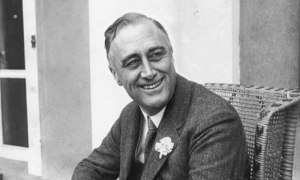
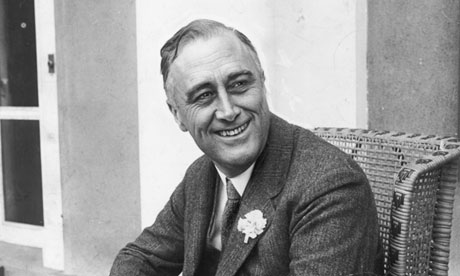
Franklin Roosevelt

Three terms plus, a World War, a Depression, a transformative Presidency and an epic life spent in public service: FDR is another President who can’t be summed up in an anecdote, one book, or a hundred. He accomplished enough great things to be a deserving icon; he committed enough wrongs to be judged a villain. (He was pretty clearly a sociopath, but a lot of great leaders are, including a fair proportion of ours, including some of the best.) The only completely unfair verdict on this Roosevelt is not to acknowledge the importance and complexity of his life. Here are some of my favorite items about him:

  • FDR wrote down a plan when he was still in school outlining the best way for him to become President. The plan was essentially to follow his distant cousin Theodore’s career steps: Harvard, Assistant Secretary of the Navy, Governor of New York, Vice-Presidential candidate, and President. (He skipped “Rough Rider.”) Amazingly, he followed it, and it worked.
  • Conventional wisdom holds that FDR’s polio transformed his character, and that without that crisis and challenge he would have been content to be a rich dilettante. I doubt it, but there is no question that he fits the Presidential survivor template, and that his ordeal made him stronger, more formidable and more determined.
  • Many Presidents had strong mothers, especially, for some reason, many of our Chief Executives from Roosevelt to Obama. Franklin’s mom, however, wins the prize. It’s amazing Eleanor didn’t murder her. But Mrs. Roosevelt is why Eleanor was there in the first place: all of our Presidents raised by strong mothers married very strong wives.
  • If a computer program were designed to create the perfect American leader, it would give us FDR. He was the complete package; his charisma, charm and power radiate from recordings and films that are 90 years old. That smile! That chin! That head! That voice! He is one of the very few Presidents who would be just as  popular and effective today as the era in which he lived.
  • And just as dangerous. FDR is also a template for an American dictator, which, I believe, he would have been perfectly willing to be. It’s no coincidence that Franklin was the only President to break Washington’s wise tradition of leaving office after two terms.
  • Political and philosophical arguments aside, at least four of Roosevelt actions as President were horrific, and would sink the reputation of most leaders: 1) Imprisoning Japanese-Americans (and German-Americans, too); 2) Ignoring the plight of European Jews as long as he did, when it should have been clear what was going on; 3) Handing over Eastern Europe to Stalin, and 4) Knowing how sick he was, giving little thought or care to who his running mate was in 1944.
  • Balancing all that, indeed outweighing it, is the fact that the United States of America and quite possibly the free world might not exist today if this unique and gifted leader were not on the scene. Three times in our history, the nation’s existence depended on not just good leadership, but extraordinary leadership, and all three times, the leader we needed emerged: Washington, Lincoln, and Franklin. I wouldn’t count on us being that lucky again.

I left the bulk of reflection about the character and leadership style of Theodore Roosevelt to one of Teddy’s own speeches to embody, and I’ll do the same for his protege.

On September 23, 1932, New York Governor Franklin D. Roosevelt gave a speech at Manhattan’s Commonwealth Club. (Everyone, conservative, liberal or moderate, should read it….here.) It was a defining statement of progressive principles and modern liberalism, redefining core American values according to the perceived needs of a changing nation and culture.  It is a radical speech, and would be regarded as radical by many today, even after much of what Roosevelt argued was reflected in the policies of the New Deal.

After sketching the origins and progress of the nation to the present, he flatly stated that the Founders’ assumptions no longer applied:

A glance at the situation today only too clearly indicates that equality of opportunity as we have know it no longer exists. Our industrial plant is built; the problem just now is whether under existing conditions it is not overbuilt. Our last frontier has long since been reached, and there is practically no more free land. More than half of our people do not live on the farms or on lands and cannot derive a living by cultivating their own property. There is no safety valve in the form of a Western prairie to which those thrown out of work by the Eastern economic machines can go for a new start. We are not able to invite the immigration from Europe to share our endless plenty. We are now providing a drab living for our own people….

Just as freedom to farm has ceased, so also the opportunity in business has narrowed. It still is true that men can start small enterprises, trusting to native shrewdness and ability to keep abreast of competitors; but area after area has been preempted altogether by the great corporations, and even in the fields which still have no great concerns, the small man starts with a handicap. The unfeeling statistics of the past three decades show that the independent business man is running a losing race. Perhaps he is forced to the wall; perhaps he cannot command credit; perhaps he is “squeezed out,” in Mr. Wilson’s words, by highly organized corporate competitors, as your corner grocery man can tell you.

Recently a careful study was made of the concentration of business in the United States. It showed that our economic life was dominated by some six hundred odd corporations who controlled two-thirds of American industry. Ten million small business men divided the other third. More striking still, it appeared that if the process of concentration goes on at the same rate, at the end of another century we shall have all American industry controlled by a dozen corporations, and run by perhaps a hundred men. Put plainly, we are steering a steady course toward economic oligarchy, if we are not there already.

Clearly, all this calls for a re-appraisal of values.

So Franklin Roosevelt re-appraised them: Continue reading

The Little Blue Jon Stewart Caboose On The Brian Williams Ethics Train Wreck

Blue Caboose

I’ve stopped updating the passenger list on the rapidly slowing Brian Williams Ethics Train Wreck. Essentially it’s all biased and unethical journalists outing themselves and not being honest or sufficiently self-aware to realize it.

Bulletin: Brian Williams being exposed as an untrustworthy journalist isn’t a “tragedy” for anyone but Brian Williams and NBC’s bottom line, and he was no more a “giant” of broadcast journalism than Joe McCarthy was a “giant” of the U.S. Senate. He was a fraud, and his exposure and fall was a good thing, as exposures of frauds always are. His demise (he isn’t coming back, and NBC should stop the speculation and just say so) does serve as a useful trap for similarly unethical and biased journalists, like TIME’s Joe Klein, who made no sense at all while bemoaning the treatment of Williams in an interview on Fox News, first using a straw man argument:

“I think that we’re living in an era where the ferocity of the prosecution is much greater than the severity of most of these crimes.”

No one’s alleging any “crimes,” Joe. Journalists who are paid huge contracts to deliver the news in a professional and trustworthy fashion can’t be allowed to stay on the air. Absent the “ferocity,” Williams would still have his job today, because news organizations value their profit over integrity and ethics. Plenty of people don’t care if journalists are ethical or not, and can’t tell the difference. If critics don’t make their legitimate complaints strongly enough, the majority’s apathy prevails.

Then Joe went for the rationalizations, this time, #19 and #20:

“And all of us make mistakes. All of us do make mistakes.”

Someone explainsignature significanceto Joe Klein, because Williams’ helicopter fable was a perfect example of it, as I surmised from the first report of the episode. Yes, good journalists make mistakes, but ethical and trustworthy journalists don’t make mistakes like that, even once—telling a false story about being in one helicopter under fire when the reporter was really in another. Sure enough, we have since learned that Williams made up lots of stories that upon examination could not have been true (Joe apparently wants to ignore all that), like seeing bodies floating in the French Quarter after Katrina, like claiming that he was imbedded with elite SEAL team that took down bn Laden. They weren’t doubted at the time because we didn’t know Brian Williams was a serial liar then. “Mistakes” are not the issue. Moreover, Williams’ “false memory” defense, complete with “experts” sent out to the media to explain this phenomenon, was also a lie, and a carefully devised one. His other false reports, slowly becoming known like the endless trail of Bill Cosby victims, prove it.

Next for Joe: euphemisms. Continue reading

Verizon Joins The Effort To Coarsen The Culture

When did the writers of advertising copy decide that catch phrases devised to sound like vulgar slang are appealing devices to sell services or merchandise? If you are so devoid of wit and civility that you find Verizon’s new campaign hilarious, Sponge Bob is over your head. Oscar Wilde this isn’t. What it is is one more gratuitous coarsening feature of the public square and common discourse. Now we are teaching children that it’s cool to speak rudely, as long as you pretend that you aren’t intending to. Look! The grown-ups are doing it!

It’s an insult. It’s an insult to the target audience that is supposed to clap like seals at a play on words that would have rejected by the most desperate night club comedian 20 years ago. It’s an insult to the craft of marketing, to which this is what farting on key is to singing. Most of all, it’s an insult to society, the culture, and the United States of America. No wonder Muslims think our way of life is disgusting. It is.

I couldn’t bring myself to post on K-Mart’s abysmal “ship my pants” ad in 2013; I thought it was an aberration. OK, I hoped it was an aberration. Now comes Verizon to sell its FIOS by having actors complain that their internet is half-fast. Half-fast, get it? GET IT???

I’m not offended by the phrase—heck, I scream things ten times as ugly at my computer every day. No, I’m offended that there not only is no respect for others in public discourse, the entire idea that there should be is considered old-fashioned. This began with badly raised kids spouting obscenities in movie theaters, then began metastasizing as TV comedians, Vice-Presidents, Oscar-winning actresses, rock stars and others lacked the inhibitions to keep them from whispering, speaking or shouting obscenities into open mics, and now has gone mainstream. Fortune 500 companies run by Harvard Business School grads believe that promoting their business with coded vulgarity is cute and responsible. Well, it isn’t. It just makes the world we live in a little uglier, and it’s more than ugly enough.

Ethics Alarms SPECIAL REPORT! Oxymoron Ethics: The Super Bowl Ads

super bowl ads

All Super Bowl commercials are unethical by definition: they aid, abet, reward and perpetuate the gruesome and deadly culture of pro football. I’ve written about that enough lately, however, so when I woke up with a leg cramp this morning at 4:46 AM, I decided to go online and watch the Super Bowl ads. Here is what I discovered:

1. Most Ethical Ad: Pampers

Yet another pro-birth ad during the Super Bowl! This one is especially well done, and for once babies aren’t used as mere adorable props to sell a product unrelated to babies. The spot shows a sonogram of a baby giving her first “hello” with a heartbeat playing in the background, and progresses to show the family’s “firsts” together, from ” first tears of joy” to “first first word.” The ad was especially welcome as a rebuttal to last week’s jaw-droppingly callous and absurd characterization of the abortion issue by MSNBC’s resident radical. Melissa Harris-Perry. She asked a guest,

“Are you at all distressed in the ways that I am about the idea that there is a separate interest between an individual and something that is happening in her body that cannot at that moment exist outside of her body? So, the idea, for example, that I would need a court’s permission for cancer treatment or the court’s permission for a surgery that would remove my hand. Like, if it’s my body, I guess I can’t understand why the state would have to give me permission.”

“Something that is happening” that “cannot exist outside her body”?  This is called “desperately stretching for a deceptive euphemism that avoids the central issue.” The Pampers ad focuses on that issue: more than one human life is involved here. Last year, Harris-Perry said,

“When does life begin? I submit the answer depends an awful lot on the feeling of the parents. A powerful feeling — but not science.”

That’s right: it’s a life if the parents think it is, otherwise it’s just like a tumor or a hand. I suspect that future generations will look back on such bizarre and intellectually dishonest arguments by the pro-abortion groups the way we regard the claims of slavery defenders who claimed that black’s weren’t really human. They will wonder how they managed to prevail in public opinion and policy so long using such obvious and vile nonsense.

One way they managed to prevail is that journalists went out of their way to avoid publicizing the aspect of the controversy that make abortion advocates squirm. For example, I reviewed six online ratings of the Super Bowl ads, and not one of them mentioned the Pampers spot, though commentary, ratings and videos of almost all the others were covered. Fascinating. Continue reading

The Ethical Hoax

An unlikely research team produces remarkable results!

An unlikely research team produces remarkable results!

As anyone who reads Ethics Alarms with any regularity knows, I detest hoaxes large and small, from the Piltdown man to the Hitler diaries to the offal thrown into the information stream by websites like The News Nerd.(Let’s see: what “satirical, humorous, obviously fake” story does the site that calls itself “America’s premium news site” offer as fact today? This: “As Deflategate looms over the heads of the New England Patriots, a source with the NFL has revealed that the league is considering permanently barring Patriots Head Coach Bill Belichick from ever working in the National Football League in any capacity. That drastic action would only be taken if it is discovered that Belichick was directly responsible for the deflated footballs…” I guess that’s obviously satire because the NFL would never have the integrity to take such action, right? The story isn’t there to fool gullible blogs and sportswriters working on a deadline into republishing it…) Hoaxes are lies intended to deceive in order to humiliate whoever believes them, and often to enrich the hoaxer.

Occasionally, however, a hoax becomes an ethically justifiable tool. Such is the case with the bogus scholarly medical research article created by Dr. Mark Shrime titled “Cuckoo For Cocoa Puffs?”

Shrime was disturbed at the number of apparently legitimate medical journals with impressive names like the International Journal of Pediatric Otorhinolaryngology that offer to publish papers for a $500 fee. Shrime calls them predatory journals, in part because they prey on trusting third world researchers and scientists for who $500 is a fortune. The other reason they are predatory is that they exploit the confusing—to laymen, which is to say, journalists– welter of legitimate scholarly journals in order to dangle intriguing junk science in front of the eyes of reporters who barely comprehend what they are reading. As Elizabeth Segren writes at Fast Company: Continue reading

The Personal Injury Lawyer’s Sex Doll Ad: Stupid! Funny! But Unethical?

Nah.

Here it is:

There is a dubious principle of advertising holding that as long as the name and the service come through memorably, an ad is a success. This video challenges that assumption. It tells me that the lawyer who let someone talk him into doing an apparently improvised ad with a smut-mouthed rubber sex doll is an idiot, and it is very risky to take legal advice from idiots. Nonetheless, there is nothing unethical about the ad. Does it hold the profession up to public ridicule? No, it holds this lawyer up to public ridicule.

Once upon a time, lawyer advertising was held to be unethical by all state bars, until courts found the restrictions to violate the First Amendment. This kind of ad was what the profession was worried about. A few states, notably Florida (the last I checked), still apply more stringent standards to lawyer advertising than currently apply to used cars and cheesemakers, but as long as an ad lawyer doesn’t make affirmative misrepresentations, it won’t be found to be in violation of the legal ethics rules.

Besides, ads like this one are extremely informative. They tell a potential client everything they need to know about the judgment, reputation and trustworthiness of the lawyer who stars in it. What could be more ethical than that?

_______________________

Pointer: Res Ipsa Loquitur

A Political Correctness Tolerance Level Musical Ethics Quiz: “Speedy Gonzalez”

speedy-gonzales

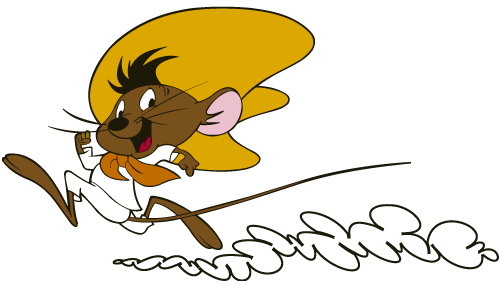
My mind was still on the topic of political correctness after finishing the previous post when, by chance, the pop song that has a fair claim to being the most politically incorrect of all time came on the radio. It was “Speedy Gonzales,” sung by Pat Boone, a 1961 chart hit written by Buddy Kaye, Ethel Lee and David Hess and featuring the voice of the cartoon Speedy (whom you almost never see on TV anymore because, well, you know), Mel Blanc. Here it is…

Your musical Ethics Alarms Ethics Quiz is this…

Is the recording inherently offensive and bigoted, and thus inappropriate for play on the grounds that it stereotypes Mexicans, or is it obviously intended to be funny, and ultimately harmless?

Continue reading