The Blatant Plagiarism Conundrum: If You Make It Obvious That You Lifted Someone Else’s Work, Is That More Ethical Than Covering Your Tracks?

plagiarized essay

This episode reminds me of the Jerry Seinfeld riff–I’ve mentioned it before—on how hairpieces inherently insult the intelligence of the people the bald imposter is trying to fool, and thus the toup’-wearer should just leave the price tag on, danging in front of his face.

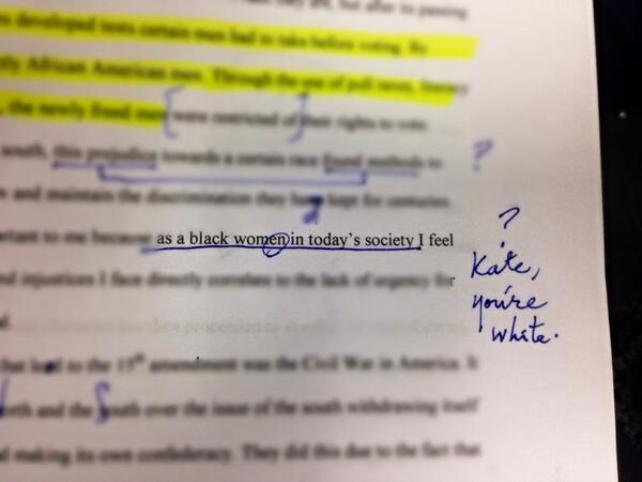
A student apparently submitted an essay regarding her experiences as a black woman, not bothering about the fact that she is white.

Here is the incriminating passage, unblurred:

law-essay2


I’m fascinated by the implications of this. Could the white student plausibly claim she was writing the essay in the voice of a black woman? Could she take the Jumbo route, and express shock that she is white, and argue that nobody ever told her that before? (Fans of “The Jerk,” raise your hands!) That might be a terrific Jumbo: “I’m white??? Oh, my God!!!” If it was plagiarism, does she deserve Seinfeld ethics points for not trying to hide it? Or perhaps she was attempting to prove that her teacher didn’t read essays, and setting a trap, risking her own academic reputation to expose a fraudulent teacher!

Then again, she might just be an idiot.

I’d bet on the latter.

________________________

Pointer: Above the Law

Facts: Legal Check

Graphics: Legal Check


Child Care Ethics And Leashes For Toddlers: CNN and Its Viewers Flunk An Ethics Alarm Test

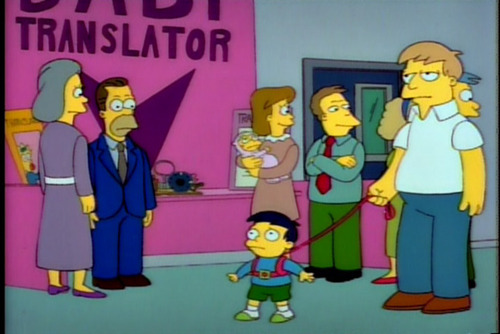
Kids on leashes

It is constantly amazing to me that journalists so seldom identify obvious and critical ethics issues in the topics and events they cover. The rest is mixed emotions: this absence of ethics awareness is a serious culture-wide problem; then again, were this not so, I’d probably be in a different, and less stimulating profession.

Today I sat down to lunch as CNN engaged in a breathless discussion of whether using leashes on toddlers and even older children was a good idea, as it is either a growing trend among parents, or CNN was having a slow news day. The phone lines were open, and many viewers weighed in, with the primary camps expressing the following positions:

1. “If it makes children safer, then there is no reason not to do it. Safety is everything. Kids have been killed running into the street.  A leash will prevent that.”

2. “This shows the decline of child-rearing skills in the United States. If you can’t control your kid better than this, you are the problem.”

If the question of whether it was fair, kind, respectful or right to treat  your child like a cocker spaniel occurred to anybody in this discussion (I know the CNN staff never considered it), I saw and heard no evidence of this. Yet that is the central question, and it is an interesting one to consider. The fact that matters of human dignity, responsibility, respect, fairness, autonomy, kindness, proportion and prudence need to be balanced to answer the question at hand never came into the discussion, and those debating the issue demonstrated neither awareness of the competing ethical values, nor the ability to know how to employ them. Continue reading →

No, NPR, The Ice Cream Truck Isn’t “Racist,” But I Know Why You Want Us To Think So

ice cream truck

“Racism! Come and get your delicious racism!”

I will not be surprised to see a formal course of study emerge in the near future in our institutions of higher learning, teaching the skills necessary to become a certified race-grievance manufacturer. One would be trained in such classes as Advanced Race-baiting, Historical Distortions, The Uses of Paranoia, and The  Permanent Victim Mindset, and a typical honors thesis would be exactly like the essay featured on NPR’s website, by Theodore Johnson III, but with footnotes. Come to think of it, maybe that’s where Johnson’s article did come from. If so, I’m sure he got an A.

And, as was the objective, other race-baiting lackeys, like RYOT’s Viola Knowles, picked up the baton by taking Johnson’s thesis to the next level, with her opus, “So It Turns Out Your Beloved Ice Cream Truck Is Actually Super Racist.” Like its origin, the piece is a lesson in confirmation bias and intellectually dishonest research. Also like the NPR piece—and tell me again why my tax dollars support an institution that encourages racial distrust—it is sinister in intent. “If you’d rather I not crush all of your beautiful childhood memories with ugly racism then you may want to leave now,” she begins ominously. For NPR has discovered that the jingle traditionally played by the friendly neighborhood ice cream truck—“or the racist truck,” she says, is “one of the most racist songs in America.”

Here, in brief is Johnson’s thesis— Continue reading →

Incompetent Candidate For High Political Office—I Hope Of The Year, But Somehow, I Fear Not: Harley Brown

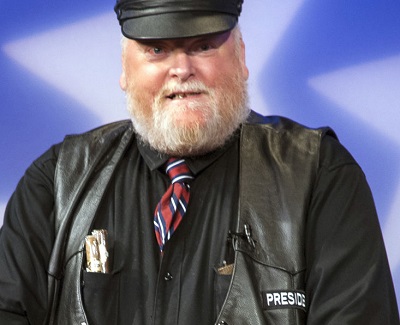
Harley BrownThe incompetence of  people like Harley Brown, a GOP candidate for Governor of Idaho, running in the primary, makes me angry and sad.

Some will protest that candidates for office have no ethical obligation to be competent. After all, running a bad campaign is its own punishment: you lose. That is not necessarily true, however, particularly in the states, but even if it is true, you can do a lot of damage while losing.

Like any other role, task, or job, running for a high elected office like governor of a state comes with responsibilities. For one thing, other people would like to run, work hard at it, and in the process, help democracy work better by giving voters a choice. Incompetent candidates like Brown not only block someone from running who might be good at it, they also give voters less choice, and sometimes, no choice at all. Those who complain about President Obama should review the pathetic campaign performance of John McCain. All these years to prepare, and he couldn’t master the skill of reading from a teleprompter without looking like he had been zapped by Dr. Strange and sounding like a Rotary Club awardee who begins his speech with “Unaccustomed as I am to public speaking…”?

There is more to resent about inept candidates, but let us focus on what makes Brown so awful. Many Idahoans were introduced to him during the recent Republican candidates debate, in which he began the night dressed like a superannuated biker, which is apparently what he is, or maybe Santa Claus in the throes of a mid-life crisis. Then he launched into what is obviously going to be his real schtick: blue collar, redneck sensibilities as imagined in the stereotyped  dreams of Bill Maher, delivered in wince-inducing bumper-sticker slogans and bad jokes that would be the low-lights of the worst stag party routine of all time.

Harley, as his website warns you, has declared war on “political correctness,” and he intends to campaign with what he egotistically calls “Harleyisms”:

“This is a unique compilation of American blue-collar attitudes, political philosophy and non-politically correct humor to both edify and entertain you.I am an opinionated grandfather trying to do what I can to help America become a better place for my grandchildren. To tell the truth, political correctness is in fact, “bondage to fear. “I am making a major political issue of FREEDOM from political correctness. I intend to walk the walk, not just talk the talk…I want to present myself as a much different “Candid Candidate” from the politically correct lawyers now dominating political circles. Perhaps then multitudes of righteous citizens ( particularly the hoards of my currently unregistered blue-collar brothers) will become politically active and help me fight for the futures of our grandchildren with tremendous passion motivated by love…I believe Harleyisms to be a splendid weapon against the vile bondage of political correctness…”

“Harleyisms,” however, really means “moldy and mostly unfunny jokes someone else made up that are only funny to bigots, fools and kids, and are certifiably embarrassing coming from anyone over the age of 12 who is claiming to be worthy of representing, leading, and looking out for the welfare of an entire state.” Continue reading →

Ethics Quiz: If There Is Going To Be A Racial Double Standard For Bigoted Statements, Can We Please At Least Know What It Is?

stop-sign2

Item: Donald Sterling, billionaire owner of the NBA Clippers, while speaking with his mistress/girl friend/ escort in the bedroom, announces that he doesn’t want her bringing black men to Clippers games. In the process, he does not say anything specifically derogatory about African- Americans. He believes the statement is private, and that he is talking to someone he could trust.He was wrong. A recording of the conversation was leaked to the press, and Sterling has been roundly vilified as a vile racist, threatened with a boycott by the players, mostly African-American, in the NBA, fined 2.5 million dollars and banned from the game.

Item: Via Mike Wise, Washington Post sports writer—

“Following Wednesday’s Pacers-Wizards game in Indianapolis, during the time when NBA rules permit media members to be present, the music blaring in the Indiana locker room was filled with vile language: racist, homophobic and misogynist. Afterward, I complained on Twitter that if Commissioner Adam Silver truly wants an inclusive league, he ought to address this (common) practice.”

Result: Wise, who is white, was attacked as a racist. What NBA players listen to in the locker room is none of his business, he is told (but what Donal Sterling says in his bed room is their business.) The NBA has done, and is expected to do, nothing.

Item: Appearing on ESPN where he is a commentator, Charles Barkley, former NBA star (and an African-American), decided to deride the women of San Antonio, Texas as fat. “There’s some big ‘ol women down there,” said Barkley. “That’s a gold mine for Weight Watchers.” He added, “Victoria is definitely a secret. They can’t wear no Victoria’s Secret down there.” A spokesperson for a fat acceptance group protested:

“Making slurs about body size is just as offensive as making comments about body color. One would think being a black man, he’d be more sensitive to having his physical body criticized. It’s totally out of line. He should absolutely apologize.”

Barkley not only refused to apologize, but defiantly challenged anyone objecting to his remarks, jokes or future comments to “change the channel.”  Nobody expects Barkley to suffer any consequences from this series of events.

Item: In 2007, talk show provocateur Don Imus got into a facetious discussion with a broadcast team member about how te women’s basket ball team from Rutgers was “rough looking” and had some “nappy-looking ho’s.” He also referenced Spike Lee’s “Do the Right Thing,” and the film’s “Jigaboos vs.  Wannabes.” Imus apologized profusely, pronouncing the exchange inappropriate, thoughtless and stupid. Under pressure from various civil rights groups,  WFAN, which produced his show, fired Imus, who has never regained his previous prominence.

Item: In 2013, media professional Justine Sacco tweeted a race-based joke before boarding a plane to Africa: “Going to Africa. Hope I don’t get AIDS. Just kidding. I’m white!” A furious cyber mob condemned her as a racist, and demanded her punishment. When she landed in Africa, she learned that she had  been fired.

Your Ethics Alarms Ethics Quiz for today is…

What the hell is going on here?

Continue reading →
Jim Ardis, Mayor of Peoria, Uses The Police To Crush A Social Media Critic, But Never Mind, It’s Not Important Because He’s Not Racist

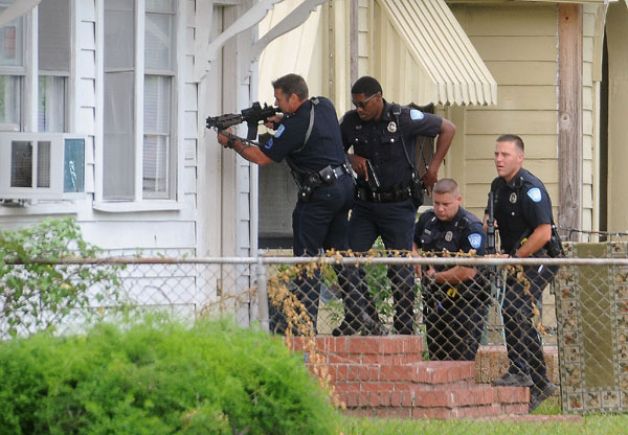
"OK, we know you have tweets in there! We're coming in..."

“OK, we know you have tweets in there! We’re coming in…”

This story is obviously trivial, because the news media doesn’t think it’s worth getting upset about. After all, it doesn’t involve race:

“PEORIA — Police searched a West Bluff house Tuesday and seized phones and computers in an effort to unmask the author of a parody Twitter account that purported to be Mayor Jim Ardis. The account — known as @Peoriamayor on the popular social media service that limits entries to 140 characters — already had been suspended for several weeks when up to seven plainclothes police officers executed a search warrant about 5:20 p.m. at 1220 N. University St. Three people at the home were taken to the Peoria Police Department for questioning. Two other residents were picked up at their places of employment and taken to the station, as well. One resident — 36-year-old Jacob L. Elliott — was booked into the Peoria County Jail on charges of possessing 30 to 500 grams of marijuana and possessing drug paraphernalia, but no arrests were made in connection with the Twitter account.”

The Twitter account was obviously a parody, if not an especially deft or clever one. After all, one would have to be a hopeless doofus, and an unusually dim one at that, to believe that the mayor of any city, even Toronto’s ridiculous Rob Ford, would happily tweet about his own drug use, crimes and corruption like the Twitter avatar of the Peoria mayor did.

Yet here was Mayor Ardis’s justification to reporters for his jaw-dropping abuse of power:

“I still maintain my right to protect my identity is my right. Are there no boundaries on what you can say, when you can say it, who you can say it to? You can’t say (those tweets) on behalf of me. That’s my problem. This guy took away my freedom of speech.”

Uh-huh. Show me a how “this guy” broke any law that justifies a police raid, you unbelievably arrogant, incompetent fascist.

Some observations: Continue reading →

Comment of the Day: “Ethics Quiz: Peeps Ethics”

Peeps Last Supper by Leonardo DiPeepchi

Peeps Last Supper by Leonardo DiPeepchi

Extradimensional Cephalopod’s thoughtful answer to today’s ethics quiz was instantly recognizable as a Comment of the Day, so here it is, EC’s musings on the ethical limits on peeps art, as posed by the post, Ethics Quiz: Peeps Ethics:

Full disclosure: I identify as a freethinker, which in my case means my opinions are informed by this idea: “It is the mark of an educated mind to be able to entertain a thought without accepting it.” –Aristotle (or so the Internet tells me)

With that in mind, offhand I’d say anyone who can’t handle the juxtaposition of a serious scene with a cutesy or comical medium is not emotionally mature enough to be trusted to react appropriately in today’s complex and nuanced culture, and their reverence is likely to be taken to unhealthy levels. I think it is not only ethical, but a requirement for intellectual health to be able to entertain different perspectives and styles of presenting even the most serious subjects. Before someone asks, yes, that includes depictions of the prophet Muhammad, along with all other historical figures on pedestals. I think taboos are unhealthy for a society because they limit critical thinking and creative free thought, both of which are necessary (yet seldom employed) to resolve social issues and differences in perspective.

Bad taste is still a valid concept, but it is context-dependent. It is possible that a subject is not appropriate for most contexts because it leads people to feel bad, but it is imperative that there be some place where it can be discussed, even if it is only under the Jester’s Privilege. My subjective judgment rules that depicting the Civil Rights Movement with marshmallows in this case is not intended with disrespect: the contest stipulated that the medium be marshmallows, and the artist chose a powerful scene without regard for the medium, as is the artist’s prerogative. I personally think the marshmallow scene is quite dignified, but then I am a bit out of sync with humanity as to what I take at face value and what I don’t. I form opinions of peeps by their actions, not by their countenance. It’s unethical for an artist to deliberately spread misconceptions about history, and it may be unethical for an artist to deliberately show disrespect to powerful agents of good. Disrespect is usually unethical because it causes so many problems. However, I’m not sure a sincerely respectful artist can be unethical in their art, unless they simply fail to do the research on the facts they depict and the cultural context for showing respect.

If depicting scenes from the Civil Rights Movement with marshmallows (and putting a good deal of effort into it) is wrong, though, what else is wrong? Crayon drawings by kids? Macaroni? Charcoal? Embroidery? Spray paint? Etch-A-Sketch? Is anything that looks insufficiently grandiose for depicting humanity’s legendary heroes an affront upon their memories? Are scenes of historical importance off-limits to mediocre artists, for fear the general public will lose respect for heroes drawn with funny expressions and ridiculous poses? What if an artist is deliberately depicting a heroic person comically, but without telling lies? Why can’t we be mature, and tell the history with respect while artists do their best in sincerity or spite? Why not simply say, “Well, it’s nice, but it really doesn’t do it justice,” and walk away?

Continue reading →

Ethics Quiz: Peeps Ethics

peeps winner

I collect sentences that can safely be said to have never been uttered before in the history of mankind, and encountered one this morning in a letter of complaint to the Washington Post. It read…

“To take a sacred and historic event in our nation’s history and depict it using marshmallow candy is highly insulting and offensive to the legacy of the Rev. Martin Luther King Jr. and to all those who worked, and continue to work, for racial justice in this country.”

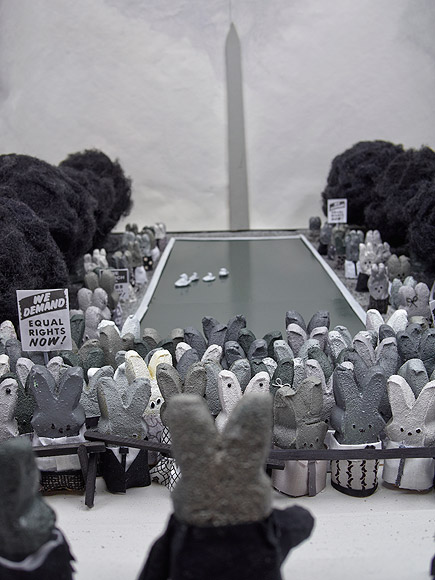
Like all of the sentences in my collection, my favorite being my sister’s immortal, “That fish looks so good, from now on I think I’ll wear my bra on my head,” this one requires some context. The Post holds an annual contest for its readers around Easter, challenging them to submit the best diorama of a scene, using marshmallow peeps. This year’s winner was created by Matthew McFeeley, Mary Clare Peate, and Alex Baker, and involved meticulously painting the colorful bunny stand-ins for King and his throng  at the 1963 March on Washingtonian eight shades of gray to evoke the black-and-white photographs of the event.

Your Ethics Alarms Ethics Quiz, in the sadly neglected field of peeps ethics, is…

Is it unethical to use marshmallow candy as a medium to portray serious, solemn, or other events that many feel deserve respect and reverence?

I know my answer, but this time, I’ll hold my fire until I hear from readers. I’d also be interested in whether any events—Gettysburg…JFK’s assassination…the Lindbergh baby kidnapping…the Crucifixion…Pearl Harbor…9-11…  are ethically off-limits for peeps creativity as inherently offensive, or if this is just  an unappetizing mixture of “ick,” art, humor, and candy.

Unethical Website of the Month: Hoax Site “The News Nerd”

Sorry, Aretha. You are just an innocent pawn in a slimy website's quest for links.

Sorry, Aretha. You are just an innocent pawn in a slimy website’s quest for links.

Updates follow the original post…

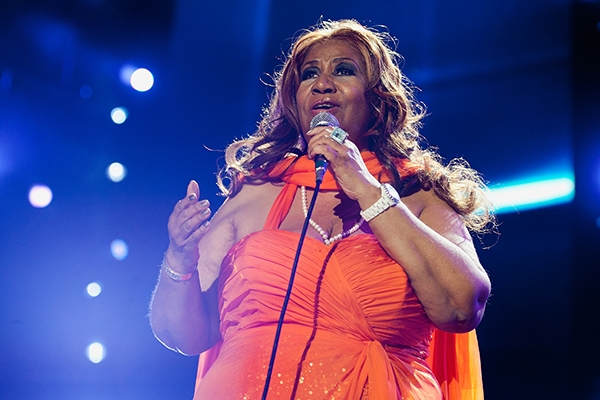
Bonus ethics points are due Mediaite writer Luke O’Neill, who placed the word ‘satire’ in scare quotes while describing the website called “The News Nerd,” which he grouped with, in his words, “The National Report (behind this recent viral hoax about Bill Murray stopping a bank robbery), The Daily Currant, and the rest of the plague of woefully unfunny bottom-feeders who’ve clogged up our newsfeeds of late.” The site in question has been sued by pop icon Aretha Franklin, who argues that its unfunny fake story about her  getting into a fistfight with fellow diva Patti LaBelle is defamatory.  Aretha is going to lose, of course,* and worse, she is bringing more attention, traffic and income to the despicable website, which I will not link to and assist its sordid little game.

Getting links and traffic is the whole point of such sites: write and publish a plausible but strange made-up news story that enough news aggregation sites and bloggers believe, hope the story goes viral, and reap the monetary rewards of notoriety and ethical misconduct. “The News Nerd” had one of its “successes” recently by falsely reporting that George Zimmerman was peddling a new painting, this one of Trayvon Martin. It is a vile, if not especially new, creature on the web, one that makes the internet even less reliable and trustworthy than it was. Such sites’ victims are the trusting, hurried and inattentive. They masquerade as satire sites, but are intentionally poor ones. Their stories are not clever or sufficiently well-made to signal their allegedly humorous nature, and the disclaimers are hidden, perhaps a click away, or at the bottom of a screen, where the site-owners know many readers will never look. Continue reading →

John Paul Stevens’ Gilbertian Nonsense


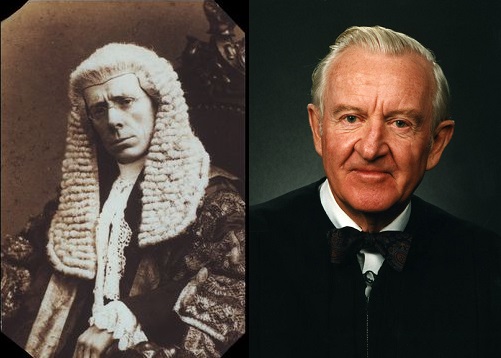
The Lord Chancellor-Stevens

A rather long preface is in order. Bear with me, please…

In the great, underperformed Gilbert and Sullivan operetta “Iolanthe,” W.S. Gilbert, a lawyer by training, devised a satirical judicial solution to a dire turn in the plot. Iolanthe, a fairy, violated Fairy Law by marrying a mortal, who happened to be the Lord Chancellor of England (he never noticed her wings, apparently.) The transgression commands the death penalty, but Iolanthe received a pardon on the condition that she allow her husband to think her dead, which she does for a couple of decades, much of which she spends doing penance at the bottom of a froggy stream, on her head.…but I digress.

When she learns, however, that her husband of yore is about to marry the sweetheart of her half-fairy son, who, though the Lord Chancellor doesn’t know it, is also his son, Iolanthe reveals herself and the paternity to the Lord Chancellor, who is duly stunned. This again triggers the death penalty and just minutes away from the finale, it looks like Iolanthe is going to end up like Carlo in “The Godfather,” as the fairy equivalent of Clemenza waddles on to the stage. (That’s how I would stage it, anyway.) Then this happens: Continue reading →