Rest in Peace, Andy: Mayberry Wasn’t Racist

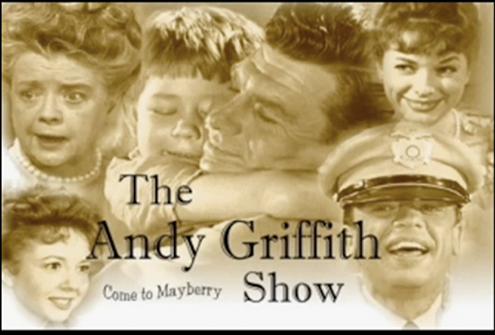
In the wake of Andy Griffith’s death today, a friend of mine wrote this on Facebook: “If you’re waxing nostalgic about Mayberry as an idyllic 1960s Southern town, remember that it had no Negroes living there. Is it any wonder that show was so popular in the midst of the turmoil of the civil rights movement?”

The sentiment was undoubtedly motivated by good intentions, but boy, it is unfair. America was a largely segregated society in 1960, when “The Andy Griffith Show” began its trek to television Valhalla, and it was not up to the producers or writers of a folksy sitcom set in small North Carolina town to remedy that, protest it, or comment on it. This wasn’t “Andy Kills a Mockingbird.” It was a comedy, and a comedy unique and precious for celebrating basic ethical values like kindness, loyalty, friendship, tolerance, community, cooperation, patience, respect and virtue. There were no racist sentiments or attitudes expressed in Mayberry, and no reason to doubt that if a black family moved into the town, they would have been embraced, appreciated, and treated like everyone else. The fact that this may not have been true of a real North Carolina town of that period is as irrelevant as pointing out that real Scottish villages don’t disappear and reappear centuries later like Brigadoon. Continue reading →

The Fojol Bros., Innocent of Racism, Political Correctness Victims

In its advanced stages, 21st century political correctness becomes a kind of delusional illness, causing sufferers to interpret  benign, harmless and even socially healthy conduct as offensive and sinister. An outbreak of this variety of political correctness is in full flower in Washington, D.C., where more than the usual number of officious defenders of that which needs no defending are trying to gin up public outrage against a creative, fun, and successful small business enterprise, Fojol Bros.

The company sends food trucks around downtown D.C. and serves strangely named hybrid ethnic dishes inspired by Indian, Ethiopian and Thai cuisines. The Fojol employees who hand out the delicious fare wear turbans, robes and fake mustaches,  claim to hail from  “Merlindia” and “Benethiopia,” and go by names like “Kipoto.” This was once called “theater” and “fantasy,” no more offensive than Disney employees in Frontierland dressing in cowboy and saloon girl garb and calling themselves “Tex” and “Lilly.” Now some are calling it “offensive,” because too many people have forgotten what offensive is. Continue reading →

Now THIS Is An Unethical Lawsuit (And a Bonus Ethics Quiz!)

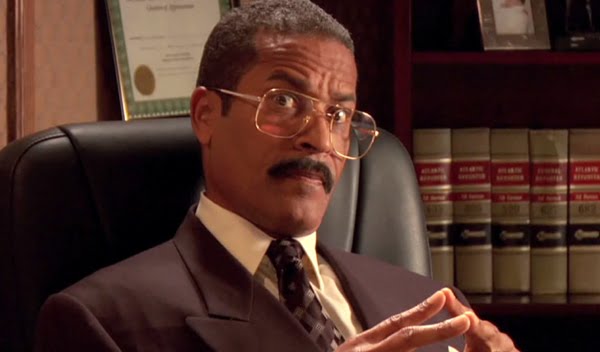
A perfect lawsuit for Jackie!

Not legally unethical, mind you, oh no no no! Remember, a lawyer is not unethical when he brings a crack-brained lawsuit as long as he can muster some vaguely plausible theory to support it. Even if he thinks the case is a long-shot of long-shots, if the lawyer has a good-faith belief that it could prevail without violating the natural laws of time and space, it’s “ethical.” Thus it is that the lawyer for the victims of a car crash caused because the teenaged driver of the other vehicle was reading a text message from his girlfriend can ethically bring a lawsuit against both the driver, Kyle Best, and his girl friend. Continue reading →

Ethics Quiz: The Conundrum of the Crushed Crab

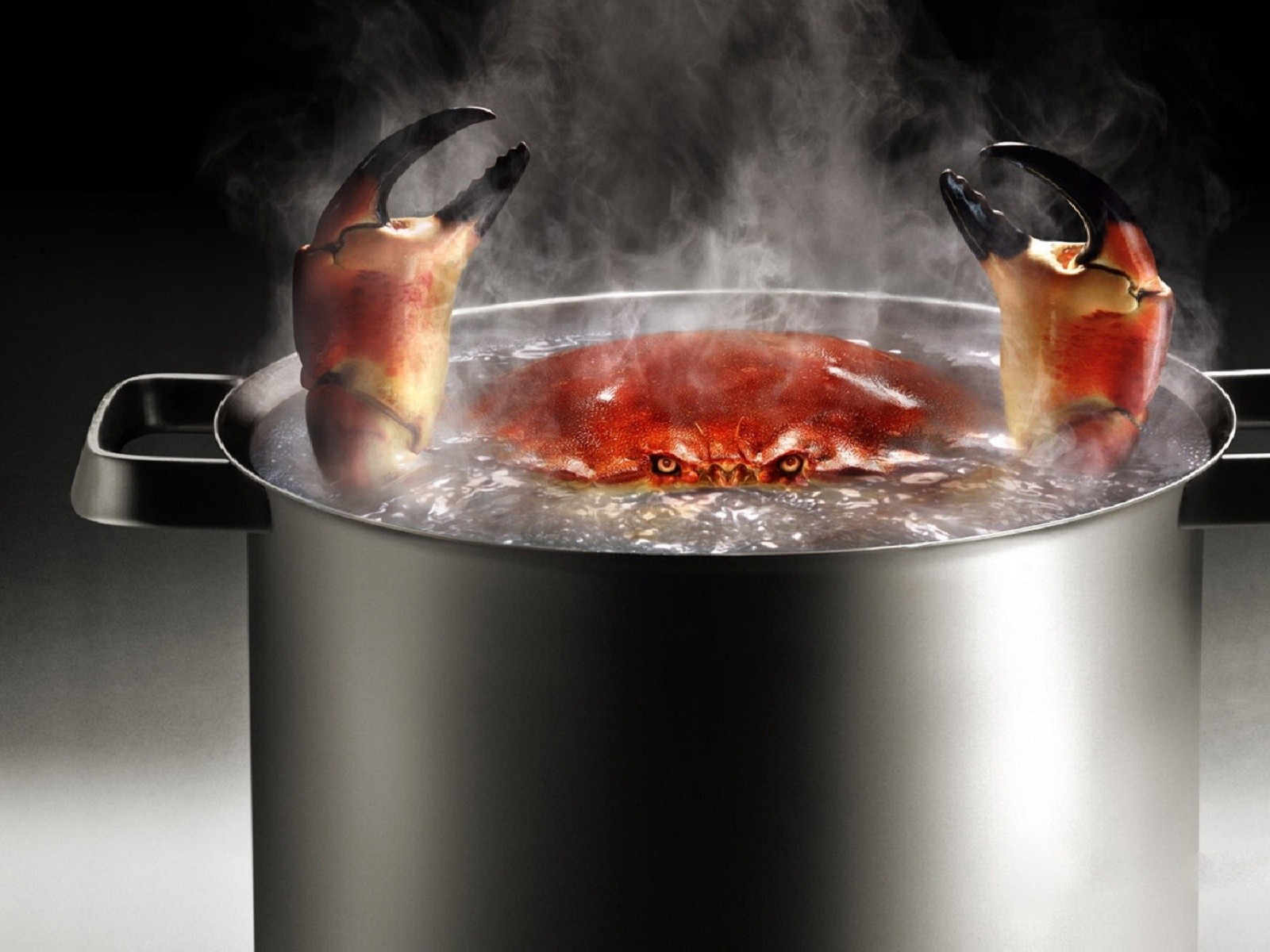
“OH THE HUMANITY! I mean…well, you know what I mean…”

A good friend related this scene on Facebook, and asks if she is losing her mind:

She was shopping at the open air fish market on Maine Avenue in Washington, D.C. when a vendor, whose cart was full of live blue crabs, had an escape attempt. One of the crustaceans made a dash for freedom, only to be squashed by the wheel of the cart.  “I screamed and then burst into tears,” she wrote. “It was awful. I tried to save the little guy.”  Then she realized that people were laughing at the drama, thinking it was a comedy….laughing at the crab getting crushed and at my friend for being upset by it.

She wrote: “Now I know he was destined for a pot of boiling water. But somehow – seeing that little creature getting run over was just too much for me. I know someone was going to eat that crab – but do we have to be cruel?”

Your Post-Mothers Day Ethics Quiz for crab mothers everywhere:

Were the laughers cruel, or merely recognizing a funny scene when they saw one? Continue reading →

Web Hoaxes: Not Funny, Always Unethical

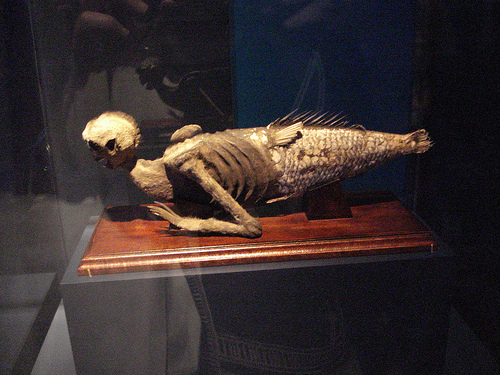
P.T. Barnum’s “Fiji Mermaid:. At least in 1842,. it wasn’t on the web.

Ethics Alarms is swearing off “angry ex-boyfriend/girlfriend takes cruel outrageous revenge” stories, no matter how juicy the ethics lesson may be. First it was the tattoo artist who defaced his ex’s back with a huge and ugly drawing of steaming dog excrement that was fantasy masquerading as news, and now it’s the Polish dentist scorned…remember? The one who pulled out her cheating boyfriend’s teeth? Yes, it seems that horror story was a hoax too.

A lot of people who should know better think that web hoaxes are funny and hoaxers are clever. I regard them as the ethical equivalent of  chefs and waiters who spit in restaurant customers’ food. The web creates—a web!—of information and communication across nations and cultures, and poisoning that web with bogus stories creates a chain of unpredictable harm. At very least, hoaxes make every trusting source that passes along the lie an unwitting accomplice in a despicable act. It harms long-nurtured relationships of mutual trust between those who post on blogs and websites and those who read them. Continue reading →

Joke Ethics: The Obama Dog Jokes Dilemma and The Gut Test

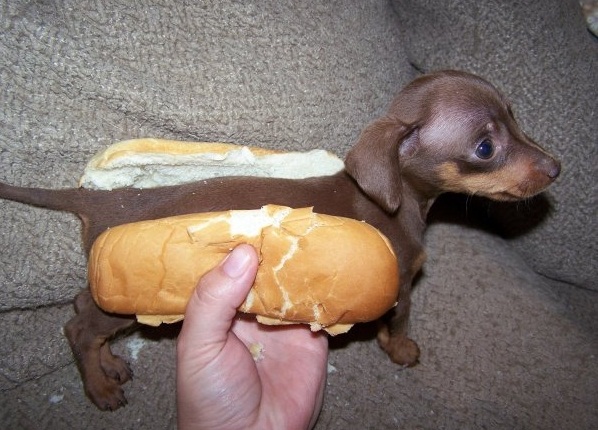
The question: how should fair and ethical people regard the viral “the President eats dogs” jokes? This depends on the standards we choose to apply—and remember, double standards are banned.

  • Is it a humor standard? Political jokes don’t have to be fair; most of them aren’t. They have to be funny. If they are funny, they don’t have to be especially tasteful, either.
  • Is it a motive standard? If the real motive for the flood of jokes is to undermine the President in an election year by using absurd images to make him look ridiculous, should that be condemned? Continue reading →

Tit For Tat Ethics, Canine Division

Rugby For President!

There has been entirely too much written about this topic already, but I do have a pedigree here. I wrote disapprovingly about Mitt Romney’s now infamous episode of dog cruelty way back in 2007, concluding…

“For me personally, the incident is enough to convince me that I don’t like the man, and probably never will. And my feelings as I look at the sweet-tempered and loyal Jack Russell terrier now sleeping on my desk, with his small head resting on my forearm, tell me that me that I would write Rugby’s name on a ballot before I would give Mitt Romney my vote for President of the United States. But that’s not an ethical decision, only an emotional one.”

My feelings about Romney strapping the pen containing his Irish Setter on the roof of his car from Boston to Canada haven’t changed much. Now as then, I think his callousness to the animal who loved him is relevant to his fitness to be President but not dispositive of it. Again from 2007: Continue reading →

Jimmy Kimmel Is Still An Evil, Child-Abusing Jerk, and Apparently I’m The Only One Who Notices

I have written twice before about ABC late night talk show host Jimmy Kimmel’s penchant for urging his viewers to inflict emotional distress on their trusting children, because Jimmy and other mean-spirited jerks get a big kick out of watching kids scream and cry following cruelty from their parents. As I wrote the last time Kimmel issued one of his “challenges,” which was to spoil Christmas for your kid by giving them  horrible gifts (like a half-eaten sandwich):

“Children are not props for Jimmy Kimmel’s sadistic amusement, and parents who are willing to use their children this way… are, to be blunt, rotten, despicable, and untrustworthy parents. Something important—Compassion? Kindness? Empathy? Loyalty? Responsibility? Love? — is absent in their parental make-up, and that void is being cynically exploited by Kimmel, who has crossed the threshold from arrested adolescent to full-fledged villain. Since Kimmel has twice been rewarded with positive publicity for egging on parents to harm their kids, what can we expect next from Jimmy?…There’s almost no limit to the great YouTube videos one can create when you’re willing to lie to your kids to upset them.”

Well, now we know. Jimmy asked parents to pre-chew their kids food and serve it to them, to see their horrified reactions. Last night, he showed the hysterically funny “winners.” One disgusted and enraged teenage girl, finally told by her folks that the prank was Jimmy Kimmel’s idea, said to the camera, resoundingly, “You suck, Jimmy!”

Indeed he does. Continue reading →

Comment of the Day: Time To Retire Editorial Cartoons—With Gratitude

Cartoonist and frequent combatant on Ethics Alarms Barry Deutsch did not disappoint—I was counting on a strong reply from him—in commenting on my post about political cartoonists. And I think he has me convinced. I think what I should have suggested, rather than advocating sending newspaper political cartoonists to the trash bin of history (soon to be followed by newspapers themselves), is that editors exercise some discretion over when an editorial cartoon, even by a respected cartoonist, just doesn’t meet editorial standards.

Here is Barry’s persuasive and educational Comment of the Day on the post Time To Retire Editorial Cartoons—With Gratitude:

“Oh, how could I possibly resist this thread?

“1) At his best, Tom Toles is a wonderful cartoonist, elegant and with an incredibly distinctive style. But he hasn’t been at his best for years. The particular cartoon you’re talking about — which can be seen here, if anyone’s curious — is an embarrassment.

“The problem with that Toles cartoon isn’t that it takes a side, or that it paints with a broad brush; many good cartoons do both those things. The problem is, it’s painfully stupid.

“2) There are good political cartoonists doing interesting work, but they’re mostly not found in mainstream newspapers.

“3) Even the best political cartoonists tend to produce more mediocre than great cartoons.

“4) It’s a very, very rare reader who can recognize the artistic merit of a political cartoon that they strongly disagree with politically.

“5) The economic base has fallen out from under political cartooning; every year, fewer and fewer newspapers support a staff cartoonist, and those that remain are seeing their incomes and outlets shrinking. And no one’s yet found a business model for political cartooning to thrive on the web.

“As a result, the most talented new cartoonists usually aren’t going into political cartooning, because they want to be able to eat and pay rent.

“6) Some of the most interesting political cartoonists have gone so far away from traditional political cartooning that no one even recognizes what they’re doing as political cartooning. See, for instance, Joe Sacco, who does journalism in comics form; his second book on Palestine, “Footnotes In Gaza,” is one of the best books about life in Gaza anyone’s done, in prose or comics.

The Process Can Be Ugly, And Sure Was This Time, But This Is How Cultural Ethics Standards Change

Greta was the tipping point.

The Rush Limbaugh-Sandra Fluke Ethics Train Wreck is over at last, but unlike with many such debacles, something positive occurred. I believe that an emphatic cultural standard was established that calling a woman—any woman, famous or not, liberal or conservative—a derogatory term designed purely to denigrate her by denigrating her gender will not be considered acceptable in political, quasi-political or arguably-political commentary henceforward. If such rhetoric occurs in a comic or entertainment context, no politician or elected official can appear to endorse the individual who utters the offensive words.

I’m not arguing right now whether this is a good or a bad development, but merely that it happened, and that it is a real change. For this to happen, a conservative radio talk show host had to use the terms “slut’ and “prostitute” to make the botched satirical point that a feminist law student activist who argued that free contraceptives were a woman’s right was the equivalent of women who wanted to be “paid for sex.” If pundits and bloggers had merely declared this statement uncivil and cruel, nothing more would have happened, and the incident would have been quickly forgotten. But sensing political points to be scored in an election year, and with the added incentive of being handed what was seen as powerful ammunition to attempt a frontal attack against a detested partisan critic, Democrats,  progressives, feminists, activists, Obama strategists and left-biased journalists decided to cast the Limbaugh’s poor judgment in extreme terms. Continue reading →