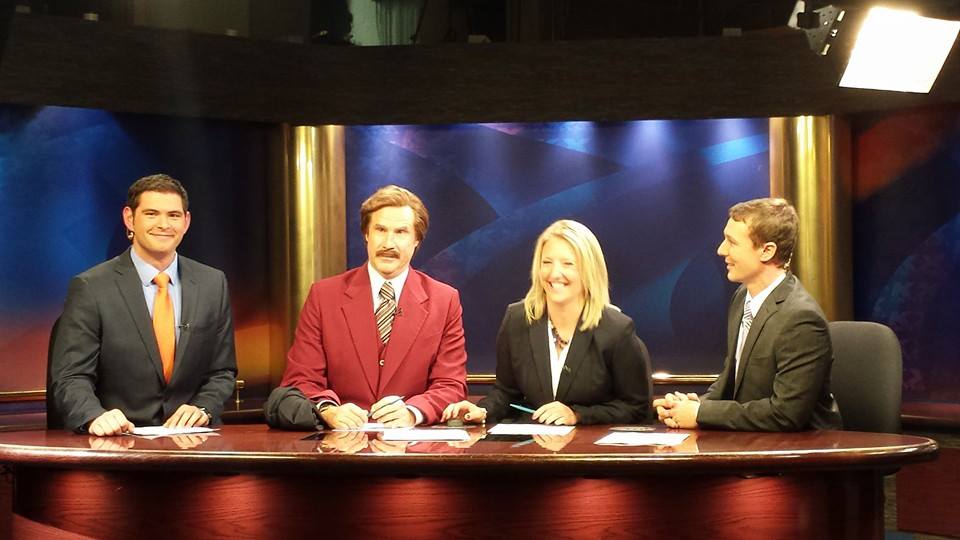
Clown Act: The Dumbest Ethics Train Wreck Of All

deluxe-barack-obama-mask

I had hoped that I wouldn’t have to write about this.

Unfortunately, the saga of the Obama-mocking rodeo clown has, against my fervent hopes, turned into a full-fledged ethics train wreck. The diagnosis was complete once the Missouri chapter of the NAACP decided to disgrace itself, its parent organization’s mission and its supposed dedication to civil rights by calling for a Secret Service investigation into the incident, which Ken White posted on definitively here.

The Horror: someone mocked the President!  And because this President is black, and because his supporters have continually tried to use his pigmentation  (which should have no impact whatsoever on how he is treated, respected and judged, which is to say, like every other President) to shield him from unrestrained criticism, opposition, responsibility, accountability and satire, a crude comedy act in a setting where crude comedy is  the norm (a rodeo is hardly the Algonquin Round Table) has been turned into a full-fledged exercise in chilling political speech by intimidation. Continue reading

Jonathan Capehart’s Confrontation Against Bigotry: Better Than Nothing, But Not Enough

confrontationWashington Post writer Jonathan Capehart shared a personal experience in a column today. Attending an aunt’s funeral in  church in the North Carolina community of her birth, he sat fuming as a guest minister used the occasion to condemn all gays as sinners, and urging them to use faith to give up their sinful ways.

Capehart, who is openly gay, decided that he was obligated not to accept this insult without a response. Here is what he did:

“After the visiting preacher was thanked for his rousing sermon by the congregation and the home pastor, the two made their way to us in the  front pew. During his oration, I vowed I would not shake his hand. But I did, given the immediate circumstances. So I used that as opportunity to make my displeasure known. As he shook my hand and leaned down for a sympathetic hug, I told the preacher, “Your sermon was offensive!” He leaned back, looked at me and replied, “What?” I repeated, “Your sermon was offensive to me. I need you to know that. That’s all I have to say.”

That seemed to satisfy Capehart. “As he moved his way down the pew, the anger I felt was replaced by relief and pride. Never before had I faced down religion-based bigotry. And it felt great.”

I feel terrible for Capehart having to endure such an indignity, and I’m glad what he did  made him feel better. But in no way did he “face down religious bigotry,” and I agree that facing down religious bigotry was called for. What did he do, really? He told the reverend that he was offended. He didn’t even say why he was offended. Continue reading

Language Ethics: Letting The Inarticulate Control Expression

literally

I know, I know.

Tell me about how the English language is dynamic. Next, “irregardless” will be in the dictionary—heck, maybe it is already; I’m afraid to look. Baloney. The fact that “everybody does it,” defined as “people in high places, like Joe Biden, who should know better but don’t,” does not justify treating inarticulate, lazy, careless, embarrassingly stupid language as acceptable. If “literally” means figuratively, then nothing means literally. When someone says that “her marriage was literally destroyed,” thanks to Google and the rest, the only way we know whether her marriage was destroyed or not is if we can find out whether or not the speaker is literate, and maybe not even then.

Call me a stickler, call me a crank, but making the public dumber and communication harder by declaring that those who are poor speakers and lazy thinkers are right and those who champion expressive and accurate language are wrong is not ethical. It is literally irresponsible.

_______________________________

Pointer: Fark

Ethics Quiz (And a Poll!) : The Fan, The Girl, and The Grope

I wrestled with whether it was ethical to show this video or  just link to it on another website instead. I have, as you might have surmised by now, an ethical objection to the practice of taking videos, photographs or recordings of people without their knowledge or permission and publicizing them, and that objection is intensified when it is done for the purpose of embarrassing them or shaming them, unless the conduct is illegal or so unquestionably vile that society is obligated to issue an objection in the strongest terms possible. I think that the borderline episodes of this are  important to discuss and yet it is difficult to do that without aiding and abetting what may be unethical conduct, as I help publicize what perhaps should have been left private.

I haven’t resolved this dilemma. When a video has gone viral, as this one has (as well as another I show here), I think that the impact of my embedding the clip in order to discuss it is minimal, and that the value of presenting the actual video for readers to see outbalances the harm to the victim/victims, if that’s what they are, of posting it on one more site on the web among many. I invite opinions to the contrary. (In the instant case, I should note, the episode was inadvertently captured by a TV cameraman—he shot what he thought was a sleeping fan, and then the copping and feeling began—and broadcast live. Someone else then put the touching moment online.)

With that introduction, here is the video, YouTubed and picked up by Gawker (naturally) as well as many other sites. It shows a male fan at a Yankee game with a sleeping or otherwise unconscious young woman resting her head on his chest. While she sleeps, he appears to fondle her breast, thus spawning endless leering references, since it was at a ballgame, of “stealing second.” We do not know whether the young woman was a stranger who collapsed his way (this actually happened to me once, and at a ballgame, so it’s not that far-fetched), a friend, his wife, his girlfriend, or, as some disturbed individual on one site suggested, his sister.

For the sake of this quiz, we will assume they are a couple. YouTube pulled the video I had embedded, so to see the action, go here.

All set?

Your Ethics Alarms Ethics Quiz today is…

Assuming this was the fan’s wife or girlfriend, was it unethical for him to cop a feel, in public, while she was unconscious? Continue reading

A Handbook For Manipulation and Deceit, Rationalizations Included

PreventingGunViolence

This wasn’t considered newsworthy by the mainstream media, and that alone is worthy of some pondering: a 70-plus page how-to guide titled “Preventing Gun Violence Through Effective Messaging” has surfaced, produced last year by the Washington, D.C.-based firm of Greenberg Quinlan Rosner.* The guide is a political strategy lesson for anti-gun advocacy, and its favored tactics involve emphasizing emotional hot-buttons over rational discourse and informative debate. The manual was produced, it appears, for the Seattle-based Washington Alliance for Gun Responsibility (WAGR) before the Sandy Hook tragedy, but its advice tracks in every way with the approach employed by Democrats, including President Obama, during the disgraceful rush to exploit public horror over the shooting in an effort to pass strong anti-gun measures in the states and nationally.

Of course this is newsworthy. The public is the target of manipulation, deception and persuasion tactics that are designed to provoke half-baked opinions and positions based on emotion rather than rational analysis. If the public recognizes such tactics as the cynical ploys they are, such tactics will not be as effective. Such tactics shouldn’t be effective, and should be employed by honest, ethical advocates on any side of any issue. The mainstream media chose not to publicize the manual because 1) most reporters agree with the manual’s objective, and 2) the mainstream media eagerly facilitated the unethical methods recommended, and will probably continue to do so.

“The debate over gun violence in America is periodically punctuated by high-profile gun violence incidents including Columbine, Virginia Tech, Tucson, the Trayvon Martin killing, Aurora, and Oak Creek,” the guide points out. “When an incident such as these attracts sustained media attention, it creates a unique climate for our communications efforts.”  Early on, the document it makes it clear that the “communication efforts” must always concentrate on stirring up emotions, not relying on facts or engaging in substantive debate. “A high-profile gun violence incident temporarily draws more people into the conversation about gun violence. We should rely on emotionally powerful language, feelings and images to bring home the terrible impact of gun violence.”

For example,  the guide addresses Stand Your Ground laws and advises substituting pejorative (and misleading) descriptions like  “Shoot First” and “Kill at Will,” asserting that these terms are “more accurate and persuasive.” At every turn, the guide cautions against getting bogged down in potentially nuanced statistics and facts, and urges anti-gun advocates to overwhelm any efforts at balancing or considering pros and cons with talking points based on  emotion salted with one-sided, group-tested statistics and generalities...”The core frame should be personal and emotional—centered on ‘people’ and not on facts, laws, or legislation.”  The top things to remember, cautions the guide,

#1: ALWAYS START WITH THE PAIN AND ANGUISH THAT GUN VIOLENCE BRINGS INTO PEOPLE’S LIVES

#2: USE STATISTICS TO REINFORCE AN EMOTIONAL ARGUMENT, NOT TO REPLACE IT.

Recommended phrases to use in forums and interviews include,

  • “It breaks my heart that every day in our country (state or city) children wake up worried and frightened about getting shot.”
  • “Just imagine the pain that a mother or father feels when their young child is gunned down.”
  • ” The real outrage – the thing that makes this violence so unforgivable – is that we know how to stop it and we’re not getting it done”

To the authors of the guide, effective persuasion “means emphasizing emotion over policy prescriptions, keeping our facts and our case simple and direct, and avoiding arguments that leave people thinking they don’t know enough about the topic to weigh in.”

That’s right, keep them ignorant and thinking that they aren’t. It’s the American way.

The guide is professional and well-thought out. It is certainly a useful document for any advocate to study before going on a talk show, or before drafting remarks at a rally, and it is obvious that this is exactly what such advocates do, if not with this document, then with similar ones. It is creepy to read line after line that is immediately recognizable as an endlessly repeated “talking point” during the Trayvon Martin uproar and the Sandy Hook aftermath. The manual also could grow cynicism on a rock. There is nothing honest or genuine about the political and policy-making process that the guide presupposes and attempts to control. There is nothing productive either. The objective is only to win—to get a desired policy initiative past the stage where public support is important and into the back rooms where the deals can be cut . You know that there was an equivalent document during the Affordable Health Care Act. These are blueprints for rushing policies into law, not for educating the public or fairly exploring complex issues before taking giant leaps of faith. They are, in short, instruction books on how to exploit the ignorance of the American people and distort the democratic process.

This is a bi-partisan practice, of course. The only difference between this guide and those produced by conservative consultants is that if one of those was found, the mainstream media would have reported it, Media Matters would have announced that it was a smoking gun document showing how evil Republicans corrupt America with their lies, and on MSNBC, Lawrence O’Donnell would have smirked over it for a week.

The number of rationalizations at the ready, therefore, begin powerfully with “Everybody does it” (#1 on the Rationalizations list). So is, as a direct result, #2, “They’re just as bad” and #7, “Tit for tat,” Such a document and the politics behind it also invokes #3, Consequentialism, and #4, Marion Barry’s favorite, “If it’s legal, it’s ethical.”  It employs # 11, the Dissonance Drag, since the reason it will be deemed acceptable by anti-gun types is because they happen to like the people using the strategy; if the same document outlined the NRA’s approach, they would sincerely and passionately feel it was despicable.

It is the very embodiment of The Saint’s Excuse (#12), otherwise known as “It’s for a good cause,” as well as #13, Self-Validating Virtue. #17,  Hamm’s Excuse or “It wasn’t my fault,” is one of the predictable responses to criticism: “Hey, this is how the game is played. We didn’t make these rules; this has been going on for decades. Don’t blame us!”  My least favorite rationalization of all, #22, Comparative Virtue,  “There are worse things,” is also in play; so is “We have no choice” (because the evil NRA keeps buying legislators and rational debate doesn’t work!), # 24#27, “These are not ordinary times!” is a natural, of course.  So is #30, The Troublesome Luxury, usually expressed as “Ethics is a luxury we can’t afford right now!”

Politics being politics, it’s perfect for #31, The Unethical Role Model, as in “Thomas Jefferson/Abe Lincoln/ Jack Kennedy would have done the same thing.” Heck…A new book suggests Jesus might have done the same thing!

Fourteen out of thirty-two possible rationalizations is an impressive arsenal, all right, but they are still rationalizations for what is a Machiavellian, “the ends justifies the means,” “by any means necessary,” unethical strategy that intentionally aims at the weaknesses of democracy and exploits them through the cynical use of psychology, manipulation, and deceit. Yeah, I know, it works, just as so many methods used by governments and interest groups to deceive the public and warp their perceptions have worked and work still.

That’s not really working, though, is it now? Causing a system designed to involve an informed and rational citizenry  to malfunction by exploiting laziness, ignorance and hysteria isn’t working, just because it succeeds. In fact, such tactics result in the kind of politics and government we have right now.

That is called, not working, but failing.

* According to the guide, Quinlan was part of “a team of communicators” with “decades of experience advising organizations on message development and strategic communications.” Other members of this team were Frank O’Brien, creative director and founder of OMP, another Washington, D.C.-based firm, and Jeff Neffinger and Matthew Kohut at KNP Communications, also headquartered in Washington, D.C. Among GQR’s clients are the Mayors Against Illegal Guns, the Joyce Foundation, several state education associations, Defenders of Wildlife, National Public Radio and the Sierra Club. Among OMP’s clients are Planned Parenthood of America and the Natural Resources Defense Council.

_______________________________________

Sources: WSJ, Washington Examiner, Examiner

Pssst! Katie McDonough! If A Fetus Is A Human Being, Whether Or Not It Feels Pain When You Kill It Is Irrelevant

WOW! What a great straw man!!!

WOW! What a great straw man!!!

There  is a lot of solemn and indignant nonsense written on both sides of the abortion issue, but for mind-numbing  muddle-headedness, Salon’s Katie McDonough deserves some kind of prize. In a jaw-dropping essay titled “Fetal Pain Is A Lie: How Phony Science Took Over The Abortion Debate,” she makes such a throbbing-neon straw man argument that it should be used in textbooks as an example of the technique, beginning with the very first statement under the headline,—“New laws banning abortion after 20 weeks are based on pseudoscienceand real research proves it conclusively.

Real research “proves” nothing of the kind. The various laws banning late term abortions are based on the argument that there has to be a line where the fetus stops being treated by the law like a mass of cells with no rights or status as an individual, unless we’re ready to proceed down the slippery slope to the point where a woman gives birth, looks the kid over to see if she likes him, and bashes his brains out against the wall, legally of course, if she doesn’t.  Continue reading

Comment of the Day: “Ethics Dunce: Photographer Jill Greenberg”

Tornado ruin

A home in Tanner, Alabama, after the events of April 3, 1974…

Here are the always thoughtful and often profound Fattymoon’s reflections, in the Comment of the Day, inspired by the post, Ethics Dunce: Photographer Jill Greenberg:

“This reminds me of the time I made a critical decision, on the spot, while covering the aftermath of a killing F5 tornado at Tanner, Alabama the night of April 3, 1974.


“Walter McGlocklin was walking away from me, carrying one of his two surviving daughters. He was cradling this little girl, her upper body and tear streaked face peeking just above her father’s right shoulder. The look of utter horror on her face! The lighting was perfect, an eerie cross hatch of flashlights and spotlights – I KNEW I had the picture of the year. I raised my Minolta 35 mm and focused in. And that’s when it happened. Something inside me said, Do NOT violate this little girl’s privacy. Do NOT allow this little girl’s unbearable pain to act as fodder to sell newspapers across the country. I slowly lowered my camera. It’s a decision, one of only a very few, of which I will forever be proud of.”

_______________


Regarding The News Media Covering For The President: Will Democrats Ever Have The Integrity To Admit How Dangerous And Wrong This Is?

Nothing to see hereThis was going to be a completely different post. This week President Obama went on the Tonight Show, since, in this civically complacent, lazy and ignorant country, far more voters will watch him there than in his press conferences. In the process of his relaxed chat with Jay, the President made a number of surprising gaffes, verbal, factual, geographical and historical: 1) he confused the Summer with the Winter Olympics, 2) he incorrectly said that Russia’s Putin had been the head of the KGB (he was a long-time mid-level KGB official), 3) he seemed to say that Savannah, Georgia, Jacksonville, Florida and Charleston, South Carolina are on the Gulf of Mexico, when in fact they are on the Atlantic Coast, and 4) he mangled his words so that he appeared to be wishing that more people were killed in terrorist attacks, when he meant to say, pretty obviously, that too many people were killed in traffic accidents. Naturally, the conservative media went crazy with “we told you so’s” after this, recalling the President’s infamous “57 states” mistake and hammering its long-held contention that the President’s vaunted brilliance and mastery of knowledge are carefully maintained, teleprompter-aided myths.

My post was originally going to point out that this is nothing but “tit for tat,” two-wrongs-don’t-make-a-right unfairness melded with confirmation bias by conservatives and the right-leaning media. Yes, it’s true: these are exactly the kinds of mistakes that the liberal news media (but I repeat myself *) have roasted and mocked various Republicans over, from Eisenhower to Reagan through Dan Quayle, both Bushes, Sarah Palin and Mitt Romney, and those attacks were excessive and unfair, at least most of them.** True, Obama is more arrogant than any of these, and it is somewhat satisfying to catch him saying something that would be corrected by a seventh grad teacher, but that’s a petty motivation to claim significance for what is more likely the result of fatigue and poor briefing. I think its fair, indeed necessary, for the media to point out the blunders, if only so the public isn’t actively misinformed, and if the fact of his giving out flawed information lessens the tingle up the legs of some Obama supporters, so be it. Still, it’s not a big deal, and shouldn’t be represented as otherwise, regardless of the clear double standard at work.

This is a big deal, however: The Associate Press actively and intentionally set out to cover for the President, and hide his most significant gaffe rather than report on it.  In quoting the President’s erroneous statements about the Gulf ports that aren’t actually on the Gulf, the AP’s version was this:

‘”If we don’t deepen our ports all along the Gulf – (and in) places like Charleston, S.C., or Savannah, Ga., or Jacksonville, Fla. – if we don’t do that, these ships are going to go someplace else and we’ll lose jobs,’ Obama said.”

That’s a blatant partisan clean-up job, not reporting. After several blogs blew the whistle on the AP, it issued a retraction and apology: Continue reading

Your Incompetent, Biased, Lazy, Untrustworthy News Media At Work: A Case Study

Remarkably, Norman Rockwell accurately predicted how news would be reported in 2013!

Remarkably, Norman Rockwell accurately predicted how news would be reported in 2013!

Last week, the Huffington Post breathlessly reported that McDonald’s could double its workers wages, thus giving them a “living wage,” by raising the price of a Big Mac by a mere 68 cents. This obviously had appeal to the HuffPo’s liberal sensibilities, more proof of how a big corporation was needlessly lining its pockets while exploiting the lowest rungs of the workforce. The “proof” was in a study that had been represented as a being run by a “University of Kansas researcher.” The study results looked so good that the fine progressives at the site just knew it had to be right—after all, it perfectly confirmed their own beliefs. This, I’m sure you have guessed by now, is confirmation bias in its purest form.

The Huffington post writer and editors didn’t check the source, and didn’t check the study. And as some non-biased, at least in the same direction, reviewers quickly found out when they did, neither held up. The “researcher” was an undergraduate (Arnobio Morelix, whose wonderful name alone would have made me want to check him out) , and the “study” might have been a term paper. The paper’s assumptions, conclusions and math didn’t hold up, as is fairly common for undergraduate papers. The Huffington Post had to retract its story, five days later.

Alas, too late! Continue reading

Slate’s Unethical “Redskins” Blackout

You know what Redskins really means, don't you? It means standing up to political correctness bullies.

You know what Redskins really means, don’t you? It means standing up to political correctness bullies.

Via the usually rational reporter David Plotz, we learn that Slate has decided that the Political Correctness Gods will no longer allow the on-line magazine to use the name of Washington’s NFL team when it is reporting on Washington’s NFL team. This is, of course, presumptuous, arrogant, and lousy journalism. It is not the media’s job to re-make the world into what pleases them. Slate doesn’t like the Redskins name so it’s not going to publish it. This seems to be the current mode of operation in the media today–it is no longer dedicated to reporting and commenting on the news, but rather reporting and commenting on the news it doesn’t find “offensive.”

The Redskins, as a team nickname, is certainly the strongest case for those who believe in censorship of team names with ethnic or national origins. The NCAA has already gone way beyond any rational execution of that mission however, and even in the case of Redskins, an unquestionably racist term when applied to Native Americans, the objection to a sports  team name with supposedly negative historical implication has a lot of the “a chink in the armor” nonsense about it. For in Washington, D.C. and in football bars and Sunday afternoon gatherings, Redskins is not a slur, and does not refer to native Americans. It is the name given to a squad of NFL players who play pro football in the name of Washington, D.C., and a franchise that is worshiped in the city. When the name is used, it is not aimed at Native Americans or intended to denigrate them. It does not refer to Native Americans, and not intended to give offense. It is intended to designate the football team, because that is the team’s name. How can someone be offended at the use of a name that is not intended and is not a slur in the context of the use in question? There two answers to this: 1) Most people, including rational Native Americans, aren’t, and 2) Because such people want to be offended.

The name “Redskins” was never intended as a slur, as I have explained here before. Continue reading