Freddie Mac’s Conflict of Interest and the Betrayal Of The American Homeowner

Possible, but expensive.

Though the political implications of this disturbing story, which broke today on NPR, are wide-ranging, this isn’t a political blog.  I will avoid the temptation  to wade into them. That’s fine: the ethical implications are bad enough.

Freddie Mac, the taxpayer-owned mortgage giant, has been doing a Goldman Sachs, betting against the very homeowners it is pledged to serve by making multi-billion-dollar investments that will profit Freddie Mac only if homeowners can’t get out of  expensive mortgages with interest rates well above current rates. Of course, Freddie Mac’s job is supposedly to do the opposite…to help homeowners find cheaper, fairer mortgages. And we were told, by the Obama Administration, that this what it was working to do.

This is called a conflict of interest. And since Freddie Mac, along with its cousin Fannie Mae, is owned by U.S. taxpayers, this is also a massive breach of trust by the Federal government. Freddie and Fannie were bailed out in 2008. The companies insure most home loans in the United States, making banks able to lend at lower risk, and the companies’ rules determine whether homeowners can get refinanced and on what terms. Now we know that Freddie Mac, at least, profits when they fail.  Continue reading →

Faculty Advisor? Principal?? Supervision??? Oversight???? HELLO?????

Joey knows just how you feel, Kenny. Except that he, unlike you, isn't real.

Eighteen-year-old Kenneth “Kenny” Clements, a graduate of Miami’s Ronald W. Reagan/Doral Senior High School, has filed suit against the school district because in February of 2011, when he was a senior, the Reagan Advocate published a story entitled “Teens Stay Quiet About STD’s”. The school paper’s front page story featured a photograph of Kenny with an “x” over his mouth, signifying that he was hiding his disease.

But Kenny didn’t have any sexually transmitted diseases, and he didn’t give his permission to have his photo used to suggest he did. After the article appeared, he says, his fellow students called him “STD Boy.”

This was obviously a cruel, unfair and irresponsible act by the students running the paper, but look at how irresponsibly professional journalists behave when they are drunk with the power of the press. This is why school newspapers must have diligent and competent supervision by adults, to prevent these kinds of things from happening….as they inevitably will without a cool head and an experienced hand at the rudder. Continue reading →

Unethical Quote of the Week: The Washington Post

"I am wearing this bag for the benefit of my former employer while I rip him to shreds."

“A person involved in Paul’s businesses, who spoke on condition of anonymity to avoid criticizing a former employer, said Paul and his associates decided in the late 1980s to try to increase sales by making the newsletters more provocative. They discussed adding controversial material, including racial statements, to help the business, the person said.”

—The Washington Post, in a story by Jerry Markon and Alice Crites (“Paul pursued strategy of publishing controversial newsletters, associates say”) that contradicted Rep. Ron Paul’s denials that he was aware of or endorsed racially offensive content in newsletters published under his name during the 1990s.

The inherent dishonesty of the anonymous source of the Post’s story apparently didn’t register on the paper’s reporters or editors. It wasn’t that the source wanted anonymity to avoid criticizing Paul; he, she or it wanted anonymity to avoid accountability for the information being revealed in order to attack Paul.

How credible is a source whose anonymity is justified by an obvious lie? Not very, but apparently credible enough for the Washington Post to base a 1700 word story on anonymous allegations, essentially branding Paul as a liar without giving its readers any basis on which to assess the motives or credibility of the accuser.

[Ethics Alarms thanks James Taranto for the point.]

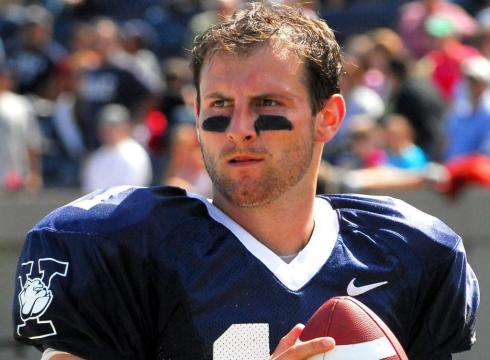
Easy Question With A Sad Answer: If The New York Times Is The Nation’s Most Respected Newspaper, What Does The Patrick Witt Story Say About The State of American Journalism?

Patrick Witt, rapist. Well, accused rapist. OK, he was accused of something that might have been rape.All right, all right, we can't say what he is accused of or did, but he must be a bad guy, or we wouldn't be publishing this story about what some people say he did. Because the public has a right to know. Thank god for Freedom of the Press!

The jaw-dropping Patrick Witt story in Friday’s New York Times was heavy on my mind when I wrote yesterday’s post about the collapse of the news media’s ethical standards. I decided that it needed its own spotlight. When I read the piece about Yale’s former quarterback, what kept going through my mind was, “What does the Times think it’s doing?” I still can’t figure it out.

Reporter Richard Perez-Pena uses an anonymous complaint of sexual assault levied against Witt as justification for raising questions about a young man’s integrity and character and to undermine his reputation with innuendo, speculation and rumor. The article would be outrageous if it was written about a public figure. Publishing such a cruel and unfair attack on a relatively obscure student athlete defies all reason. Obviously, it is also bottom of the barrel journalism…from America’s premier newspaper. Continue reading →

As News Media Sinks To New Ethics Lows, Some Friendly—And Urgent— Advice

One of many news story warning labels devised by Tom Scott (http://www.tomscott.com/warnings/)

The profession of journalism has now sunk to a point of incompetence and untrustworthiness that constitutes a serious threat, not only to itself, but also to the United States, which must have honest and reliable news sources to function and thrive. As currently constructed, the profession of journalism does not possess the tools or the will to address its crisis. Two recent examples should suffice.

The Saturday before Joe Paterno died, a tweet from a Penn State student-run website erroneously announced that Paterno was already dead. The tweet was immediately picked up by CBS Sports, and subsequently by the news web sites The Daily Beast and the Huffington Post. Howard Kurtz, supposedly the preeminent  media ethics watchdog, re-tweeted the false news himself. Many other journalists did the same. But it was all based on a hoax.  Paterno was still alive. Continue reading →

Ethics Hero: Wolf Blitzer

Watch out, Newt! It's SUPER-WOLF!!!

Once again Ethics Alarms finds itself in the sad position of calling conduct heroic that should be routine. Unfortunately, however, competent and responsible broadcast journalism isn’t routine, and if I was looking for a bold and quick-witted journalist to exceed the standard practice, it certainly wouldn’t be CNN’s plodding, timid and often befuddled Wolf Blitzer. Last night, however, as moderator of the latest GOP candidates debate, he did what few journalists ever have the confidence or courage to do: he challenged a politician on an absurd and hypocritical statement.

And yes, I confess…if Wolf fell slightly short of true Ethics Hero status by a couple of points, the fact that the politician involved was New Gingrich the Unethical put him over the top. If that be bias, so be it. Continue reading →

Photography Ethics on Trial

Two photography technology ethics cases erupted this week.

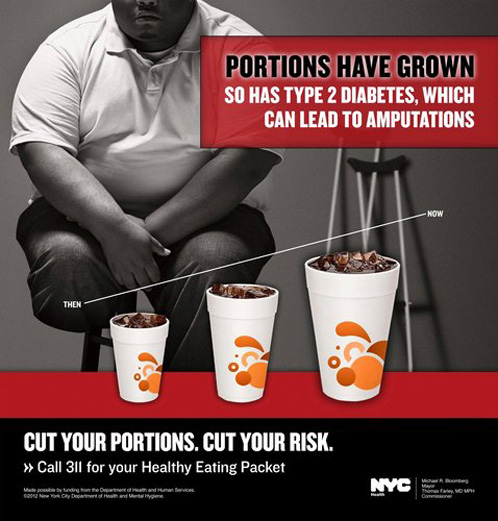
The Case of the Fake Amputee: A recently unveiled New York public health campaign warning against Type 2 diabetes uses a photo of an overweight man who is missing his leg.  The man, however, had both legs when the photo was taken. One was digitally removed to make it appear that his right leg had been amputated. The American Beverage Association, fighting the city’s efforts to reduce consumption of sweetened soft drinks and fast food, seized on the photo to press its case. “Clearly, the straight facts don’t support their singular attacks on our products, so they keep falling back on distortions and scare tactics that are over the top,” association spokesman Chris Gindlesperger said in a statement. “That’s disappointing.”  Well, diabetes does increase the risks of amputations, and a fake amputee is no more scary than a real amputee. Real amputees do exist; having a graphically-created one doesn’t change the accuracy of the ad’s message one bit. What does the association’s argument have to do with the photo-manipulation? Nothing. Continue reading →

Post-South Carolina Confession

Sunday morning, I am duty bound to play roulette with the talking head shows on the networks, watch “Reliable Sources,” Howard Kurtz’s weekly journalism ethics critique on CNN, and scour the Washington Post, all in search of contentious or interesting ethics topics.

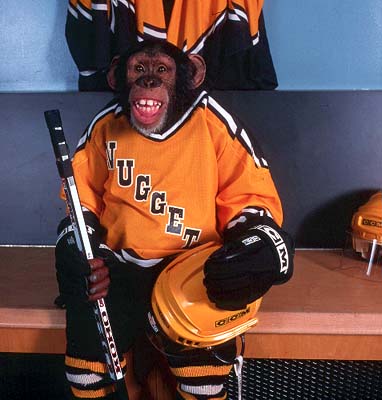
But rather than listen to endless rehashes of the South Carolina Republican primary, endure Newt Gingrich’s gloating, and again hear so-called experts repetitively apply their imaginary expertise to musings about what will happen in the next primary, Florida—-last week’s consensus: Romney had South Carolina wrapped up– I am watching “MVP: Most Valuable Primate” on Encore Family. It’s about a hockey-playing chimp (named Jack, appropriately enough).

It’s not bad.

Screw it. A man can only take so much.

The Marianne Gingrich Ethics Train Wreck

Ugh. What a mess.

The ethics miscreants:

Marianne Gingrich: Seething with hate for Newt, she decided to try to metaphorically stick a shiv in his back by airing dirty laundry from their marriage right before the South Carolina primary, a do-or-die for him. Her interview with ABC was unfair and an act of pure revenge. You couldn’t call it whistle-blowing, since anyone who doesn’t already know what a likely sociopath Gingrich is has been watching too many re-runs of “NCIS.” Gingrich’s character, or lack of it, was established and in the books by 1998. Marianne should have not had to say a word, but everything she did say, she had said before, in an interview in 2010 in Esquire. Continue reading →

Stephen Colbert’s Comedy Terrorism

This was a lesson for me. I fell into the trap of looking past unique unethical conduct because it resembled harmless conduct I had seen many times before, a close cousin of using “everybody does it” to excuse and invalidate the inexcusable. Thank goodness Washington Post columnist Colbert King was paying attention.

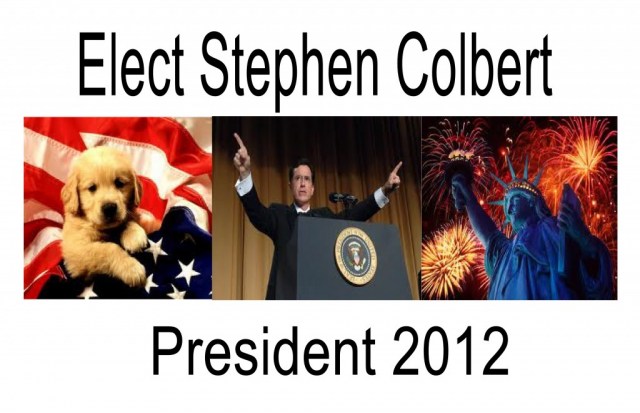
In King’s column today, he catalogues the activities of Comedy Central’s Stephen Colbert’s faux presidential run. I had already commented on Colbert’s gag earlier this week, but the target of my criticism was George Stephanopoulos, who devoted a ridiculous amount of time to a pointless interview with the comedian at the expense of real news. I assumed Colbert was just another in a long line of comedians who have used a presidential election year as a prop, and thus harmless….and I stopped paying attention to his antics. But as King ( his first name is pronounced KOHL-bert; the comedian’s name is Kohl-BARE) points out, Colbert has moved beyond satire into something akin to comedy terrorism, actively attempting to warp and influence the presidential selection process for laughs, and casualties be damned. King writes: Continue reading →