Stanford Goes Big Brother With A Newspeak List

That’s Isaac Asimov above, expressing his doubts that attempts at vocabulary restriction by totalitarians actually works.

I don’t think the ethical issue is whether efforts to “compress” language are successful. The issue is what the effort tells us about the people and institutions who make those efforts. The latest is Stanford University.

Stanford’s IT department released an list x of “harmful language” that it wants erased from the school’s websites, and, by extension, campus discourse.The list is an outgrowth of the “Elimination of Harmful Language Initiative,” which aims to “eliminate” words that may be deemed “racist, violent, and biased.”

The IT department’s censorious document is a mess, a mixture of apples, oranges and passion fruit. Some of the words and phrases marked as unacceptable are rude and archaic. Others are completely innocent as well as useful, condemned because they might have been used somewhere, sometime, by someone in a derogatory context.

Continue reading

A Language Ethics Quiz: Regarding “Groomer”

Conservatives have been using the word “groomer” this year to describe advocates of teaching school children (as young as third grade in some cases) about LGTBQ sexual practices and relationships, while presenting them in a positive light. Targets of the word have ranged from defiant LGTBQ teachers exposed by The Libs of TikTok, to libraries promoting drag readings for kids, to the advocates for “gender-affirming therapy” for teens and younger without parental approval, to Disney’s recent obsession with injecting gay sexual issues into its films and TV offerings.

R.L. Stoller objects. He says he is a “child liberation theologian” (?), and a child and survivor advocate with “a Masters in Child Protection”—okey-dokey, let’s take that as genuine authority arguendo. He objects to the use of “groomer” in the current trend, writing in part,

Continue reading

Dictionary Ethics: Thanks, Cambridge, But I’ll Ask Billy Joel Next Time…

I was going to make this an Ethics Quiz, but decided that the verdict was pretty clear.

Conservative media and blogs have been fulminating over the Cambridge Dictionary’s decision to add a definition of woman—perhaps to help out Justice Ketanji Brown Jackson, whose answer at her conformation hearing that she wasn’t a “biologist” and thus couldn’t define “woman” will haunt her forever (good!)—that jibes with woke fantasies. Now, along with the standard definition of woman as “An adult female human being,” we are stuck with (at least if we consult the Cambridge Dictionary, which I don’t) “An adult who lives and identifies as female though they may have been said to have a different sex at birth.”

At a basic level, the publication is getting criticism it doesn’t deserve. Dictionaries follow language use trends, they don’t lead them. My language maven friends often complain about the loss of useful distinctions in the English language when they become erased by such frequent sloppy use that even dictionaries endorse the misuse. But in language, unlike in ethics, “everybody does it” is usually decisive. I find the distinction between “that” and “which” useful, but many dictionaries have given up and define the words as interchangeable. Nonetheless, I will continue to honor the distinction, just as I will not use the Cambridge alternate definition of “woman. I will acknowledge that many people, perhaps not enough to justify the definition but apparently enough for this one dictionary, do use the new meaning—which to me means “If you say you’re a duck and quack like a duck, that’s literally enough to make you a duck.”

Continue reading

Worst of Ethics Award 2022: Most Unethical Quote Of The Year

There were more unethical quotes this year than I recall reading and hearing in a long time, and that’s just the ones Ethics Alarms chose to highlight. Winners in the category included The New York Times (twice) and the Washington Post, CNN’s finally dismissed hack Chris Cuomo, Joy Behar (I just picked one; there were about a hundred or so), Georgetown Law Center’s Dean, William Trainor, Donald Trump (twice!), Chris’s corrupt and disgraced brother, former NY governor Andrew Cuomo, Sen. Lindsay Graham, Sen. Amy Klobuchar, Dr. Fauci, Nusrat Jahan Choudhury, a federal court nominee who “explained” in her confirmation hearing that she lied in an address to Princeton students to “make a rhetorical point”; Joe Biden (again, for one of about a hundred 2022 quotes that would qualify); Kamala Harris of course, Nancy Pelosi, Rep Eric Swalwell, Barack Obama, Golden State Warriors owner Chamath Palihapitiya, CNN intelligence analyst Robert Baer, and Van Jones (today!), Ann Hathaway, Media Matters chief Angelo Carusone, Herschel Walker (again, take your pick), AOC (ditto), NY Governor Kathy Hochul, Liz Cheney, GOP Rep. Matt Gaetz, GOP Rep. Mary Miller, Democratic Senator Chris Coons, Kim Sill, founder of the Shelter Hope Pet Shop, and Stacey Abrams.

Many of these could have easily been winners in a more temperate year, but President Biden lapped them all with his September, televised “Soul of the Nation” speech that was “wildly unethical…irresponsible, disrespectful, unfair, and un-American, as well as hypocritical, indeed a betrayal, from a leader who promised on his Inauguration Day, “We can join forces, stop the shouting and lower the temperature. For without unity there is no peace, only bitterness and fury. No progress, only exhausting outrage. No nation, only a state of chaos. This is our historic moment of crisis and challenge, and unity is the path forward.”

Biden gave a fascist speech to accuse his political opponents of being fascists

No American President has ever delivered such a despicable addess. It debased his office, and damaged the Republic. But, to be fair, it may have influenced enough fools to keep Democrats from the mid-term wipe-out they deserved. So there’s that.

Most Unethical Quote of the Year: President Joe Biden

No contest.

“You’re The Dog”

The Wall Street Journal’s James Taranto—how I miss his blog!— famously wrote of accusations that something was a “racist dog whistle”:

“The thing we adore about these dog-whistle kerfuffles is that the people who react to the whistle always assume it’s intended for somebody else. The whole point of the metaphor is that if you can hear the whistle, you’re the dog.”

Bingo. In the last week we have seen two particularly vivid examples of this phenomenon. The most recent is peak Great Stupid: the World Health Organization announced  that it will begin referring to monkeypox as “mpox.” Why? Well, there were complaints that its name constituted “racist and stigmatizing language.”  Yes,  all it takes to make WHO jump is complaints from morons, or perhaps power-seeking activists who want to see how easily they can bend organizations to their will, just to prove they can. Continue reading

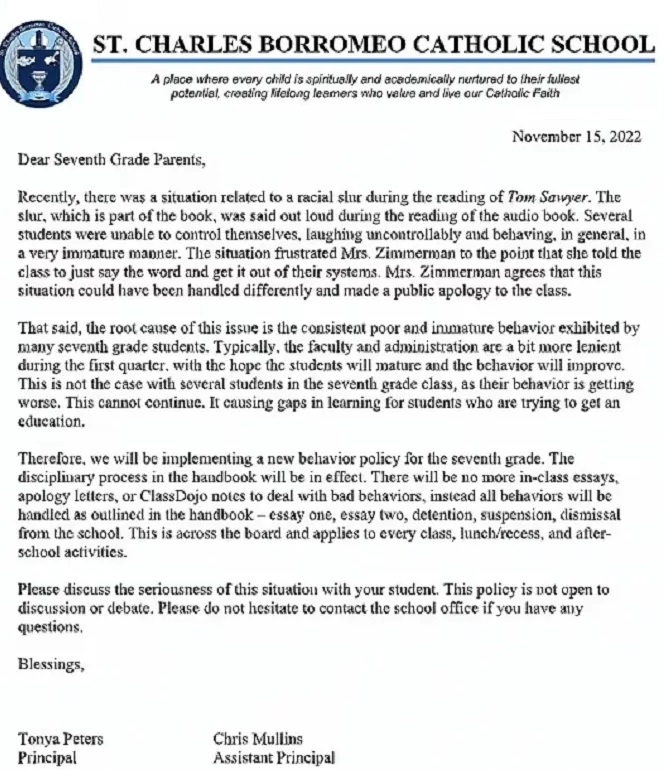
Ethics Hero: Florida Catholic School Principal Tonya Peters, No Weenie She

In a seventh grade English class at St. Charles Borromeo Catholic School in Port Charlotte, Florida, the teacher was presenting Mark Twain’s “Tom Sawyer,” using an uncensored version, which is to say, “Tom Sawyer.” The classic novel, like its larger, more ambitious cousin “Huckleberry Finn,” uses the now taboo “n-word” in a society today that should be too sophisticated and wise by now not to know that declaring words taboo is ethically and intellectually indefensible. One African-American community website’s news report on the incident states, “Anyone who has read an unedited version of those books know how racially insensitive they were.” Well:

  • Any one who has only read an “unedited”, meaning bowldlerized, version of “Tom Sawyer” hasn’t read “Tom Sawyer,” and
  • Great literature isn’t supposed to be “racially sensitive”; it’s supposed to be enlightening.
  • The issue of watering down language that some may find offensive in literature is well-considered in this essay.

As described in the letter above, when members of the class read the book out loud and the word “nigger” was uttered, the students began “acting up,” laughing, making comments, and generally acting like undisciplined 7th graders, which they were. When the teacher could not calm them down, she improvised a creative but risky solution: having the children repeat the word over and over again. The idea, obviously (though not sufficiently obvious for any of the media reports to figure out) was to rob the “taboo” word of power by repetition. It’s an old linguistic trick that kids should be familiar with (i know I was): when any word is repeated enough, it becomes just a sound, which is all any word is. (This device becomes the climax of the excellent horror film “Pontypool,” in which something causes the English language to become deadly, destroying everyone’s brains.) Continue reading

‘HA! You Fell For The Trap, White Boy!’

I almost made this an Ethics Quiz, but then decided that there is only one ethical answer.

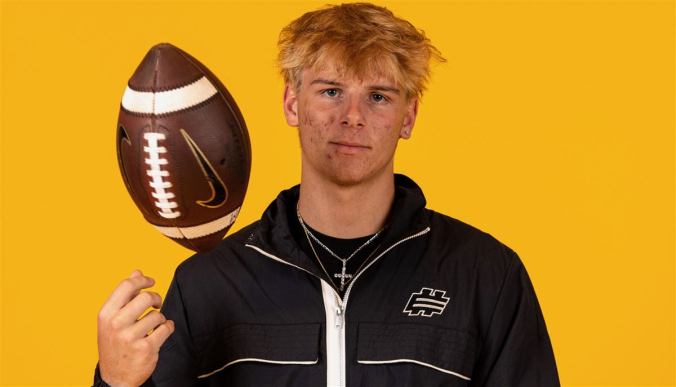
Star high school quarterback Marcus Stokes posted a video of himself in a car singing a rap song that used the term “niggas.” Or maybe it was “niggers.” We can’t find out, you see, because our infantile, unethical news media will only write  that he said the “N-word,” and the video has been deleted. Journalism!

Stokes’ video caused the University of Florida to rescind its scholarship offer. Stokes is white; there is little question that if he were the right color, singing the song and posting it would not have raised any issues at all. But as Yahoo!’s observes, “Saying the N-word as a white person goes into another territory,” at least in the hypocritical, race-obsessed worlds of sports and academia. Continue reading

Ethics Quiz: A Horse By Any Other Name…

In the pantheon of 2022 “Wait…WHAT?” headlines, “Help! I’m So Embarrassed by the Name of My Daughter’s New Horse!” is an instant classic. This comes by way of a query to Slate advice columnist “Dear Prudence,” and you have to pay to see what wise ol’ Prudence decrees. Well, I’ve read enough of Prudence’s advice over the years and have been unimpressed. I don’t care what she thinks; I care what you think (and what I think, naturally). Here’s the letter:

My 10-year-old daughter is a horse girl. She’s outgrown her first pony, so we just bought her a new horse. This horse was priced right, he’s the perfect size, age, and temperament, and he’s trained in what she wants to do—we seriously could not have found her a better horse. Except for one thing. He’s an almost entirely white Pinto, and his registered name is [Farm Name] White Flight. I don’t want to know what his breeder was thinking. My daughter thinks it’s beautiful. But I would be embarrassed to have my child showing on a horse with this name, and I want to officially change it, or at least call him by another name. I’ve explained the meaning of “white flight” to her, but she still thinks it’s a perfect name for a white showjumping horse and says she wants to use it to mean something good, instead of something bad. How can I convince her to rename her new baby? Would it be too mean to say either the name is changed, or the horse is sold and she can’t have another one?

—Whitest Problem Ever

Ah, the problems of families who can afford to buy their child two horses before she’s eleven! But I digress…

Your Ethics Alarms Ethics Quiz of the Day is…

“Is there an ethical obligation to change the name of the horse from “White Flight”?

Continue reading

Ethics Quiz: When Ethics Alarms Don’t Ring And You’re A Drunk College Senior

Sophia Rosing, 22, a University of Kentucky student, was drunk. Really drunk; drunl as a skunk, as the saying goes. As she tumbled into a campus dorm lobby, the student at the front desk, Kylah Spring, tried to stop her, because Rosing had not presented her ID. The besotted senior launched into tirade against Spring, physically attacking the young black woman while calling her a “bitch” and a “nigger,” the latter over 200 times.

When campus security arrived, Rosing kicked and bit the officers as they tried to place her under arrest. University Police were finally able to take Rosing into custody just before 4am. She was charged with public intoxication, assault and disorderly conduct.

The incident was, of course, videoed and posted on social media. Rosing is out on bail, but she will certainly face criminal penalties.

Your Ethics Alarms Ethics Quiz of the Day is….

Beyond the criminal penalties, what are fair, just and ethical consequences for Sophia Rosing now?

Continue reading

An Ethics Alarms Quote Verification Special Report: “Jacques Brel And ‘The Color Of Goose Shit’”

Guest post by Thomas D. Fuller

[Some background is in order before getting to Tom’s essay. Twice in recent days Ethics Alarms has cited the quote, attributed to the late Belgian singer, song-writer, actor and philos0pher Jacques Brel,  “If you leave it to them they will crochet the world the color of goose shit.” I had referenced the quote before, and Ethics Alarms has a category called “The Jacques Brel” reserved for those officious, censorious, miserable people who seem determined to leech all of the joy out of life. After the latest reference, esteemed commenter Arthur in Maine wrote me off-site to ask for the source of the quote, since he couldn’t find it. Indeed, when I Googled the quote, the only source listed was…me. Ethics Alarms. Now I feared that I was passing along “misinformation.” Can’t have that! 

I have the good fortune to have friend of over 50 years, Tom Fuller, who is a dedicated, one might even say “fanatic,” quotation investigator. He was a credited researcher for the superb “Yale Book of Quotations,” and has commented on Ethics Alarms regarding other quotes mentioned here occasionally. I asked him to do that voodoo that he do so well on the alleged Brel quote, which he remembered from the same source where I first heard it, the Sixties revue “Jacques Brel is Alive and Well and Living in Paris.” Tom generously agreed.

As an aside, I’ve been trying to persuade Tom to launch a blog on the fascinating topic of quotes, and if you enjoy his essay as much as I do, please encourage him.

I’ll have some additional observations after the post.]

***

Introduction

One of the most memorable lines in the 1968 musical revue Jacques Brel is Alive and Well and Living in Paris – indeed, it is often the only line that sticks in viewers’ minds – is:

“Jacques Brel says, ‘If you leave it to them they will crochet the world the color of goose shit.’”

Jacques Brel (Belgian songwriter and actor, 1929-1978) wrote the music and lyrics to all the songs in this piece, but the “book” (and therefore, apparently, this line) was written by Eric Blau and Mort Shuman.  The line in question appears in the script between the songs “Bachelor’s Dance” and “Timid Frieda”, but does not seem to relate directly to the lyrics or sense of either song.  (See here.)

The question is:  Did Jacques Brel really say this, and if so, where?

Continue reading