Weekend Ethics Warm-Up, 6/9/18: PART I, Bee’s “Apology”

Hi!

1  Bee gets an Eff. If I didn’t find Samantha Bee so loathsome and her transparent grab for headlines and attention by the cynical device of intentionally violating all standards of public civility and fairness, her on-air apology might warrant a full post here. “Where does it fall on the Apology Scale?,” I have been asked. She really does richly deserve to be shunned and ignored, however, not that she didn’t before. Her act is monotonous, obnoxious (Is there anything more revolting than someone who aggressively  presents themselves as smart and clever who obviously is neither?) and divisive. Like others, she exists to constantly reassure the “resistance” that they are justified in acting and talking like assholes because they lost an election.

Boy, they must need a lot of reassurance.

But since her apology on her show was an abomination (distinct from her apology on Twitter, which was a lie), I have to talk about it. What a crappy way to start a weekend. I’ll save time by commenting as we go. Yes, this is as long as a full post; it’s as long as a long full post. I know it’s silly, but even if it’s just a technicality, I refuse to give someone as contemptible as Samantha Bee more than Warm-Up status.

She said:

“You know, a lot of people were offended and angry that I used an epithet to describe the president’s daughter and adviser last week.”

In other words, “some people” were offended, not you, team member, because you LIKED me calling Ivanka a cunt, but we still have to deal with “those people,” who might be sponsors. Essentially Bee makes it clear immediately that this isn’t an apology  at all. The “you know” is a verbal shrug, and signals, “I don’t think this is a big deal, but I have to say something.”

This sentence, like the whole apology, is signature significance for a terrible human being. If she were my employee, I would stop her and say, “Start again.”

“It is a word I have used on the show many times..”

First rationalization in the second sentence! This is a subset of “Everybody does it”: “I do it all the time.”

“…hoping to reclaim it. This time, I used it as an insult. I crossed the line. I regret it and I do apologize for that. The problem is that many women have heard that word at the worst moments of their lives.”

Doubletalk. The word she used was “cunt.” It has never been anything but an ugly gutter word. What’s to “reclaim?” How it might have been used at other times is irrelevant, making this theme a flagrant act of misdirection, which is itself the theme of the whole phony “apology.” Imagine a male comic under fire for calling one of Obama’s daughters a “bitch”  saying “I have used that word many times–as a dog breeder, to describe swishy men, and in the phrase ‘son of a bitch’…” So what?

Bee’s bait-and-switch also cleverly reframes the issue. The offense was describing Ivanka Trump, on television, using a denigrating, misogynist word. Bee is now declaring that her offense was the rhetorical mistake of  misusing “cunt” as an insult. That was the line she crossed, according to her. Then: “The problem is that many women have heard that word at the worst moments of their lives.” Oh, the problem is when they heard it, not the use of the word itself.

Imagine a comic trying to weasel out of calling, say, Barack Obama a “nigger” making that argument in a parallel “apology.”

“A lot of them don’t want that word reclaimed. They want it gone, and I don’t blame them. I don’t want to inflict more pain on them.”

Wow—I hadn’t read this atrocity for a couple of days. It’s even worse than I thought.

Now Bee says the problem is that her using the word to denigrate the President’s daughter (who had done absolutely nothing to inspire such an attack) inflicted pain on other women—the good ones, you know. The ones who hate President Trump and his family.

“I want this show to be challenging and I want it to be honest, but I never intended it to hurt anyone, except Ted Cruz.”

Translation “You all know Ivanka IS  a cunt, but I didn’t want to hurt any other women by saying so, at least none who voted for Hillary.” Continue reading

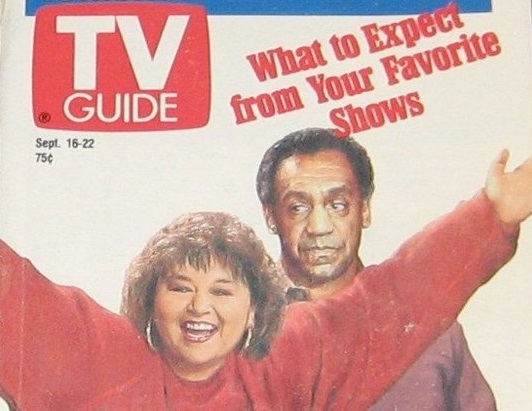
Ethics Observations On The Roseanne Tweet Fiasco

1.  It is possible, after all, to revile Roseanne Barr’s gratuitously vicious “joke” about Valerie Jarrett, and to question the extended reaction to it. I feel especially emboldened, perhaps because you couldn’t have forced me to watch that show or anything associated with Barr had you been credibly threatening to blow up Fenway Park unless I tuned in. One of the ways the enemies of free discourse and thought further their agenda is by setting up these dilemmas, where to even suggest that a genuine miscreant’s punishment has exceeded reasonable bounds is to risk shunning and other serious cultural consequences—it’s the Cognitive Dissonance Scale again. “See, then we make them defend someone who would tweet something like that, and we’ve got em! Then they look like racists too! Bwahahahahaha!

2. No, I don’t think ABC and Disney were looking for an excuse to cancel “Roseanne” 2 because it was perceived as pro-Trump. The show was making money, and corporations place money above politics. However, there is no doubt that a conservative show has less margin for error in today’s biased media environment. It was up to Roseanne to understand that and moderate her conduct accordingly. This recent post is relevant.

3. I was not aware, until ethics alarms reader  Sue Denim pointed it out here, that Barr may have physiological reasons for her lifetime addiction to ugly humor: Continue reading

Comment Of The Day: “Morning Ethics Warm-Up Overstock, 5/15/ 2018: It’s Use Them Or Lose them…”

Good things can even come out of really dumb ethics episodes, like the effort to silence critics of illegal immigration by pointing out that they had legal immigrants in their lineage, a non sequitur if there ever was one.

This good thing is Greg’s Comment of the Day, on Morning Ethics Warm-Up Overstock, 5/15/ 2018: It’s Use Them Or Lose them…:

The notion that immigrants in the 19th and early 20th centuries assimilated much more quickly than today is largely untrue. In fact, most Americans in the early part of the 20th century believed that the failure to assimilate by Lahren’s ancestors and millions of others like them was a matter for grave concern. These days, we read over and over again that the laws passed in the 1910’s and 1920’s restricting immigration were motivated primarily by racism. But that is a gross distortion. If you read political commentary at the time when those laws were debated, you will certainly find discussion of race (usually referring to what we would now call “nationality,” not to what we now call “race”), some of it quite offensive to modern sensibilities.

But the most important concern expressed by immigration restrictionists was that too many immigrants were failing to assimilate. Most immigrants were not becoming citizens. Consulting my grandfather’s trusty, albeit brittle and yellow, 1924 World Almanac, I see that in 1914, the last year before the first restrictive immigration act was enacted, the Census Bureau reported that there were 1.2 million immigrants to the United States but only 0.1 million naturalizations.

The vast majority of immigrants moved to a few large cities in the North. Census figures in 1910 revealed that in most major northern cities, Americans born of parents who had been born in America (as shorthand, in order to avoid wordy repetition, I’ll call them “American-Americans”) were outnumbered by immigrants and their children. In many cities, the number of immigrants was more than twice the number of American-Americans, and the number of immigrants and their children (about two-thirds of them born to two immigrant parents) was often three to four times the number of American-Americans.

Moreover, most immigrants clustered in insular ethnic neighborhoods where they continued to speak their native languages and follow their native customs, standing largely outside the broader American society. In the 1910 census, the population of the United States was 92 million, of which 33 million were immigrants and their American-born children. Of those 33 million, 23 million told the census that English was not their primary language, with 3 million admitting that they did not speak English at all (although the actual number was generally believed to be much larger). Those heart-warming Italian, Irish, Jewish and other ethnic neighborhoods that you see in countless movies and books? There was a widespread conviction that those neighborhoods were a serious social problem. They were viewed, not unfairly, as encouraging their inhabitants to maintain dual loyalties or primary loyalty to their native countries, perpetuating European ethnic hatreds that imported from their native countries, breeding ethnic criminal gangs (Irish, Italian, Jewish and others), fomenting anti-democratic political tendencies, and most of all, undermining America’s sense of itself as a people joined by common values and purposes. Most Americans believed that something should be done to induce people in those neighborhoods to assimilate into the mainstream of American society; and that this necessary assimilation would never happen if immigration were not curtailed. Continue reading

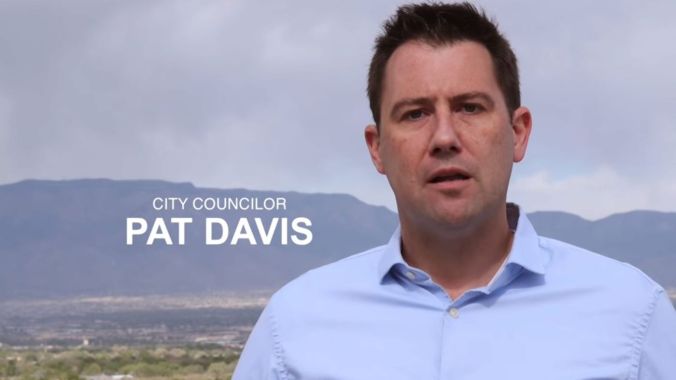
Unethical Quote Of The Month: New Mexico Congressional Candidate Pat Davis (Guess What Party!)

“Fuck the NRA!

—-Albuquerque City Council member Pat Davis, in a TV ad promoting his candidacy for Congress in the upcoming Democratic Party primary.

Nice.

That’s what we really need more of in the government: more incivility, vulgarity, cretinous rhetoric, and hate-mongering. Go Pat!

I suppose Davis is taking his cues from potty mouth DNC chair Tom Perez and putative Presidential candidate and California Senator Kamala Harris, both of whom have decided to jettison dignity and professionalism in pursuit of the rapidly devolving progressive base. These people are all ethics corrupters. I don’t care who they say to fuck, or what. If this their idea of leadership, they are a disgrace to the nation and whatever office they seek.

Of course Davis’s message is idiotic, regardless of his terminology. He says that the NRA’s ” pro-gun policies have resulted in dead children, dead mothers and dead fathers.”  If politicians like Davis want to repeal the right of citizens to own guns, then let them have the honesty and integrity to say so. Blaming the organization that is an advocate for the Second Amendment for crimes committed by those who abuse the right is intentionally dishonest as well as cowardly,  like blaming the ACLU for the proliferation of lowest common denominator demagogues who think “Fuck the NRA” is responsible political discourse and not merely the equivalent of a primal scream.

Morning Ethics Warm-Up, 4/26/18: Sorry Trump-a-Phobics, It’s A President Trump Morning!

Good Morning!

1. Wake up with President Trump! By sheer chance, I surfed by Fox and Friends just as the three goofs (or two goofs and a random blonde from the stable in a tight party dress) on the sofa were having a spontaneous phone interview with President Trump, just like in the good old days in 2015, when CNN and NBC let the crazy old reality star and eccentric real estate mogul blather on while they smirked and nodded because it was great for ratings and  might even saddle the evil Republican Party with a Presidential candidate that Hillary Clinton could squash like a bug, finally leading to the Great Progressive Awakening in America, with open borders, no more guns, free college, a ban on fossil fuel, and Harvey Weinstein as a White House regular.

Observations:

  • Say what you will about Trump, this was just after 8 AM, I could hardly utter a coherent sentence, and the President was sounding like Harold Hill doing “Trouble in River City.” Either he had 20 cups of coffee or was hooked up to an electric generator.  I have a lot of energy, but Trump is older than I am, and he was energetic, engaged, and, for him, articulate.
  • His performance this morning highlights how disgusting the “Trump has dementia, let’s use the 25th Amendment to get rid of him” plot was, with the news media in full complicity. It made it hard for me to focus on what the President was saying on Fox, frankly. That particular post-election, anti-democratic attack—it was Ethics Alarms’ Plan E on the alphabetical list of “the resistance’s” ongoing efforts to overturn the election, if you recall—makes me furious every time I think about it.
  • Nevertheless, I will never get used to having a President who talks like he does.  It isn’t statesman-speak, or even demagoguery. It’s pure salesman patter, again, like Harold Hill,  or any infomercial spokesman. It’s almost hypnotic. What Trump-Whisperer Scott Adams would say, indeed has said many times, is that this is a talent and a skill, and we aren’t going to see it become commonplace among Presidents because most people just can’t do it well. No, it’s not Presidential, and will never be. But it works.
  • I also realized, once again, how much class bigotry is involved in the extreme hostility to President Trump from the “elites,” and yes, I count myself in that group. Never mind what schools Trump went to: he’s Fred Trump’s son, and unlike the Kennedy boys, never polished off the rough spots passed along to him through his humble, street-smart, back-alley forebears. I just watched the film of “My Fair Lady” again after many years, and found myself thinking about Henry Higgins’ theories while I was listening to Trump: if he spoke like Barack Obama, how differently would the news media and his adversaries treat him? Yet how many of his supporters would then regard him as just another one of “them”?

Why can’t the English teach their children how to speak?
This verbal class distinction, by now
Should be antique
If you spoke as she does, sir
Instead of the way you do
Why, you might be selling flowers, too!

An Englishman’s way of speaking absolutely classifies him
The moment he talks he makes some other Englishman despise him! Continue reading

Morning Ethics Warm-Up, April 11, 2018: Caesar’s Wife At The EPA, Idiots On The Air, And Dreamers Demanding Discounts [UPDATED]

Good Morning!

1. Forgetting to heed the “Caesar’s wife” Principle. Whatever one may think about EPA head Scott Pruitt’s controversial policy directions as head of the environmental agency, all ought to be able to agree on this: he’s an idiot.

Here is a cultural literacy test: How many Americans under the age of—what, 45? 60? 104?—know what the term “like Caesar’s wife” means? When you have a target painted on your back because you are taking positions that are guaranteed to be anathema to powerful critics, like the news media, you are “like Caesar’s wife.” This should communicate something to you. In 63 BC, Julius Caesar, a man on the rise, was elected to the position of the Pontifex Maximus, the chief priest of the Roman state religion. The next year, his wife Pompeia hosted the festival of the Bona Dea (“Good Goddess”) in which no man was allowed to participate, at Caesar’s official residence. Publius Clodius Pulcher, a  rash young patrician, snuck into the celebration disguised as a woman, allegedly to seduce Pompeia. He was caught, prosecuted ( not for trying to shag Caesar’s wife but for the crime of sacrilege), and ultimately  acquitted. Nevertheless, Caesar divorced Pompeia, saying, “My wife ought not even to be under suspicion.”  Thus was born the saying, once well-known to educated individuals, that “Caesar’s wife must be above suspicion.”

Either Pruitt doesn’t know the reference, or doesn’t understand it. He has made himself vulnerable and a political liability to the Trump administration by the kind of grubby ethics violations so many of the administration’s recruits from the corporate world have engaged in. (And what does this tell us about that culture?)

David J. Apol, acting director of the Office of Government Ethics, sent  a letter this week to Kevin Minoli, the EPA’s  top ethics official,  asking the agency to take “appropriate actions to address any violations.”

Among the issues raised were Pruitt’s $50-a-night rental  of a Capitol Hill condominium from the wife of an energy lobbyist (This may not have been market value, the letter speculates, raising the question of whether it was a gift, aka “bribe.” Ya think? You can’t rent a decent garden tool shed for 50 bucks a night…), Pruitt taking an excessive number government-funded flights home to Oklahoma and back (He’s about the 78th Trump official to be caught doing this kind of thing—do these guys read the newspapers?), and worst of all, reports that agency staff members who raised concerns about these and other actions creating “the appearance of impropriety”  found themselves transferred or demoted.

“The success of our government depends on maintaining the trust of the people we serve,”wrote Apol. “The American public needs to have confidence that ethics violations, as well as the appearance of ethics violations, are investigated and appropriately addressed.”

Why yes! And anyone who holds high government office is supposed to know that. Anyone holding high government office in this administration, which is in the position of the thug sprung from police lock-up on a technicality to which an angry detective says before he strolls out the door, “If you so much as spit on the sidewalk, I’ll be there to pick you up,” should know that especially. When they are gunning for you, you have to be like Caesar’s wife.

The President should fire Pruitt for these flagrant abuses. He won’t, because he literally doesn’t think ethics matter. I wonder if he thinks stupidity and unrestrained arrogance matter… Continue reading

Comment Of The Day: “Don’t Cheer Mississippi’s Westboro Baptist Tactics Too Loudly: You Never Know Who Might Hear You”

An Ethics Alarms commenter with the evocative screen name of Fuck you, who is a bit behind on his surfing, or perhaps a really, really slow reader, was moved to author today’s Comment of the Day on a post from seven years ago regarding the tactics used by Mississippi law enforcement to foil a legal demonstration by Fred Phelps’ merry band of homophobes.

Why is this a Comment of the Day? It perfectly embodies the rudimentary, lizard-brain level of ethical analysis that predominates in the public, in much of the media, and among our elected officials. It is helpful, to me at least, to read such comments, for this is exactly the find of gut-level, emotion-based, legally and ethically ignorant reaction that my work exists to overcome. I’ll have more to say after the Fuck You has his say.

As an aside, it was nostalgic reading the names of the commenters on the original post. There, for example, fighting as usual, were liberal logic-cop tgt and uber-conservative Stephen Mark Pilling. Ah, those were the days…

Here is Fuck You’s Comment of the Day on the post, Don’t Cheer Mississippi’s Westboro Baptist Tactics Too Loudly: You Never Know Who Might Hear You—I’ll be back at the end:

Fuck you for this comparison. I know I’m coming in years later with this and I hope that others have already expressed a similar sentiment. I also understand the point you are trying to make. But still FUCK YOU. I sincerely hope that if you ever lose someone dear to you, these fucking hatemongers show up and protest that person’s funeral. FUCK YOU. Yes they have a right to protest but this type of shit should definitely qualify as a reasonable restriction, like yelling fire in a crowed theater.

FUCK YOU. This comparison is not only an insult to the Marine in question but also to the civil rights activists from decades ago that you just compared to the fucking WBC. FUCK YOU.

Once again Fuck you, you goddamn scum ass mother fucker. Oh, and FUCK YOU.

Continue reading

Morning Ethics Warm-Up, 4/3/2018: Hypocrisy, Exploitation, Fake Definitions And Fake News

Good Morning…

…and believe me, it takes a super-human effort for me to say that right now…

1.  Good. Rep. Esty is not running for re-election. We discussed her hypocrisy in a post two days ago. Now she says, “Too many women have been harmed by harassment in the workplace. In the terrible situation in my office, I could have and should have done better.” This would have been a meaningful and productive statement if she hadn’t previously insisted that she handled the matter correctly and refused to be accountable. She did, however, and mouthing platitudes now should not alter the verdict that she was a cynical and grandstanding #MeToo performer who, when time came to act according to the standards she was demanding of others, failed miserably.

2. Anybody know of an ethical computer protection service? I now have two ghost services torturing me with pop-up ads, slowing down my computer, and generally behaving like a virus because I cancelled them. When I cancel a service I allowed onto my computer, I expect them to say good-bye and leave. I do not recall agreeing in my original contracts that “the undersigned hereby agrees that if for any reason he chooses to end his relationship with ____________, the service will continue to hound him with warnings, special offers, unrequested scans and other harassment until he dies or throws his computer out the window.”

The two companies at issue are AVG and McAfee. I will chew off my foot before I engage either of them again.

3. Big Brother’s way of winning a debate: change the meaning of the terms so you can’t lose.  After the repeated misuses of the term “assault rifle” as a disinformation and fear-mongering tactic by the anti-gun mob were flagged by Second Amendment supporters to the embarrassment of the zealots, Mirriam-Webster rode to the rescue,  changing its online dictionary entry for the term so its ignorant ideological allies could now cite authority:

On March 31, 2018, the following definition was published:

noun: any of various intermediate-range, magazine-fed military rifles (such as the AK-47) that can be set for automatic or semiautomatic fire; also a rifle that resembles a military assault rifle but is designed to allow only semiautomatic fire

Translation: “This is what the term really means, but it also means what ignorant politicians, journalists and activist refer to erroneously as the same thing even though it’s not, because we support them and this will make it easier for them to mislead other without looking dishonest and foolish.”

[UPDATE: There is some question of whether that definition was added before or after Parkland. Reader Steve Langton reports that he read the current version a couple of days after the shooting.]

Continue reading

Review: Ethics Alarms Concepts And Special Terms

Recently updating the Ethics Alarms list of concepts and frequently used terms reminded me that I had been meaning to post them for review and assistance to those relatively new here. Of course, the link has always been right there at the top of the home page, but I have this sneaking suspicion that it isn’t visited very often.  Here, then, is the up-to-date list.

CONCEPTS

Non-Ethical Considerations: Defined above, non-ethical considerations are important because they are often the powerful impediments to ethical conduct, and the cause of many conflicts of interest. Non-ethical considerations are many and diverse, and include:

  • The need and desire for shelter, health, wealth, fame, security, self-esteem, reputation, power, professional advancement, comfort, love, sex, praise, credit, appreciation, affection, or satisfaction
  • The desire for the health, comfort, safety, welfare and happiness for one’s family, loved ones, friends, colleagues, an co-workers
  • The pursuit of vengeance or retribution
  • Hunger, lust, pain, ambition, prejudice, bias, hatred, laziness, fatigue, disgust, anger, fear
  • …and many more

Ethical Dilemma: This is an ethical problem in which the ethical choice involves ignoring a powerful non-ethical consideration. Do the right thing, but lose your job, a friend, a lover, or an opportunity for advancement. A non-ethical consideration can be powerful and important enough to justify choosing it over the strict ethical action.

Ethical Conflict: When two ethical principles demand opposite results in the same situation, this is an ethical conflict. Solving ethical conflicts may require establishing a hierarchy or priority of ethical principles, or examining the situation through another ethical system.

Ethical Gray Area: Gray areas are situations and problems that don’t fit neatly into any existing mode of ethical analysis. In some cases, there may even be a dispute regarding whether ethics is involved.

Reciprocity: The ethical system embodied by The Golden Rule, and given slightly different form in other religions and philosophies. It is a straight-forward way of judging conduct affecting others by putting oneself in the position of those affected. Reciprocity should always be available in any ethical analysis, but it is frequently too simple to be helpful in complex ethical situations with multiple competing interests.

Absolutism: Absolutist systems do not permit any exception to certain ethical principles. The champion of all absolutists, philosopher Immanuel Kant, declared that the ethical act was one that the actor was willing to have stand as a universal principle.

One principle of absolutism is that human beings can never be harmed for any objective, no matter how otherwise worthwhile. Absolutism has the advantage of making tough ethical calls seem easy, and the disadvantage of making debate impossible. One sees absolutism reflected today in the controversies over war, torture, abortion, cloning, and capital punishment.

Utilitarianism: Utilitarianism accepts the existence of ethical conflicts and the legitimacy of some ethical dilemmas, and proposes ethical analysis based on the question, “Which act will result in the greatest good for the greatest number of people?’ It entails the balancing of greater and lesser goods, and is useful for unraveling complex ethical problems. Its drawback, or trap, is that utilitarianism can slide into “The ends justify the means” without some application of absolutist and reciprocity principles.

Consequentialism: In formal ethics, utilitarian schools of philosophy are sometimes lumped together as “consequentialism,” in that the ethical decision-making is based on seeking the best result. Here we just uses the above term, utilitarianism.  Consequentialsm, in contrast, is the flawed belief that the rightness or wrongness, or even wisdom, of chosen conduct is measures by its actual results rather than its intended results. If “if all worked out for the best,” in other words, the conduct that created the desirable result most have been ethical, whatever its intent or however the conduct was determined to be necessary or desirable. This is a fallacy.

Cognitive Dissonance:
Cognitive dissonance is a psychological phenomenon first identified by Leon Festinger. It occurs when there is a discrepancy between what a person believes, knows and values, and persuasive information that calls these into question. The discrepancy causes psychological discomfort, and the mind adjusts to reduce the discrepancy. In ethics, cognitive dissonance is important in its ability to alter values, such as when an admired celebrity embraces behavior that his or her admirers deplore. Their dissonance will often result in changing their attitudes toward the behavior. Dissonance also leads to rationalizations of unethical conduct, as when the appeal and potential benefits of a large amount of money makes unethical actions to acquire it seem less objectionable than if they were applied to smaller amounts.

Moral Luck: The common situation where an unethical act is only discovered, noticed, or deemed worthy of condemnation due to unpredictable occurrences that come as a result of the act or that affect its consequences. Moral luck is the difference, for example, between two mildly intoxicated drivers, one of whom arrives home without incident, while the other has an unwary child dash in front of his automobile, leading to a fatal accident that he couldn’t have avoided if completely sober. Yet the unlucky driver will be a pariah in the community, while the more fortunate driver goes on with his life.

SPECIAL TERMS USED ON ETHICS ALARMS

Continue reading

Unethical Quote Of The Month: Microsoft

“By agreeing to these Terms, you’re agreeing that, when using the Services, you will follow these rules:

….

iv. Don’t publicly display or use the Services to share inappropriate content or material (involving, for example, nudity, bestiality, pornography, offensive language, graphic violence, or criminal activity).

b. Enforcement. If you violate these Terms, we may stop providing Services to you or we may close your Microsoft account. We may also block delivery of a communication (like email, file sharing or instant message) to or from the Services in an effort to enforce these Terms or we may remove or refuse to publish Your Content for any reason. When investigating alleged violations of these Terms, Microsoft reserves the right to review Your Content in order to resolve the issue. However, we cannot monitor the entire Services and make no attempt to do so.”

—-From the revised Microsoft Services Agreement.

I do not trust Microsoft to decide what is “offensive language” in my communications, or anyone else’s. Many people, for example, believe that it is offensive that I assert the duty of citizens to allow an elected President to do the job their fellow citizens exercised their rights to select him to do, and that they have an ethical obligation to treat him with the respect the office of the Presidency requires.

We are already seeing indefensible bias on the part of other big tech companies, such as Google, Twitter, Apple and Facebook, as they favor specific ideological and partisan positions and use their platforms to censor and manipulate public discourse. These are private companies and not constrained by the First Amendment or core ethical principles like fairness and respect for autonomy (and, as we all know, definitely not respect for privacy). The problem is that the big tech companies are ideologically monolithic, virtual monopolies, possess the power to constrain free expression and political speech while leaving no equivalent alternative, and are increasingly demonstrating the willingness to use it.

The big tech companies have proven that they are unethical, ruthless, lack integrity, politically-active and willing to abuse their huge and expanding power to advance their own agendas. At the same time, their products and services  have become essential to the daily lives, recreation and occupations of virtually all Americans. This is a dangerous combination.

They must be regulated as the public utilities they are, and the sooner the better.