Once Again The Courts Step In To Prevent Woke Discrimination

believe all survivors

Say what you will about the Trump Education Department, the fact that it reversed the anti-due process bullying of the Obama administration, which threatened colleges and universities that did not use a presumption of guilt to investigate accusations of campus sexual harassment and assault, was laudable and ethical. Now the Biden administration is in the process of reversing the reversal, as it once again embraces a “believe all women” context for such cases. (Well, “believe all women” except in cases where the Governor of New York and the president of the United States aren’t involved—but that’s another story.)

Fortunately, we have the courts, which are being kept especially busy as the progressives in power try to run roughshod over that damnably inconvenient Constitution thingy. This month the Eighth Circuit Court of Appeals rejected the disingenuous argument by the University of Minnesota that they weren’t stacking the deck against accused male football players due to their gender, but rather tilting the process toward their accusers because the school was biased against all students accused of sexual misconduct. Riiiight, the Court concluded:

The district court concluded that a university’s bias in favor of the victims of sexual assault does not establish a reasonable inference of bias against male students, citing Doe v. University of St. Thomas, 240 F. Supp. 3d 984, 991 (D. Minn. 2017). While the circumstances here also give rise to a plausible inference of bias in favor of sexual assault victims rather than against males, “[s]ex discrimination need not be the only plausible explanation or even the most plausible explanation for a Title IX claim to proceed.” Schwake, 967 F.3d at 948; see Columbia Univ., 831 F.3d at 57. Thus, we reverse the district court’s dismissal of the Does’ Title IX discrimination claims.

Continue reading

Saturday Afternoon Ethics Coolers, 6/26/2021: Bad Baserunning And Bad Laws

Coolers

1. Professional incompetence, Baseball Division. ESPN had a long article by a former player about how the base-running skills of modern players had declined to a such a degree that he couldn’t stand watching games. I hadn’t thought about it much, since there have always been notable players who made repeated gaffes on the basepaths, and I assumed this was another of those, “In my day, we played the game right!” lectures from leathery old codgers. Then I started paying attention, and he was right: a shocking number of players don’t know the rules of the game they are payed eight figures to play. It really is amazing: players don’t understand how the infield fly rule works. They even get confused about whether they need to get tagged out or if the fielder just needs to tag the base in a force-out.

Last week, in a game with the Tampa Bay Rays, the Boston Red Sox got a break when a Rays player, thinking a fly ball out would be a hit, ran from first base past second, and then had to dash back to first so as not to be thrown out by the outfielder. The throw into the infield was wide, and the player made it back safely. But the Red Sox threw the ball over to second base, and the runner was out. Why? Because a player who runs past a base and then has to return to the original base is required to tag the second base on the way back. They used to teach this in Little League; my friends and I observed it in sandlot ball.

The Red Sox announcers thought the mistake was hilarious. Then a few innings later, young Red Sox superstar Rafael Devers did the same thing! Worse, no one on the Rays caught it, and he returned safely to first base.

2. I see no possibility that this unethical program will be be ruled constitutional. “You Can Feel the Tension’: A Windfall for Minority Farmers Divides Rural America,” reads the New York Times story from last month about the Biden Administration’s $4 billion fund that black farmers can access but not white farmers. Gee, why would a lot of money that will be distributed to members of one race and not another cause division?

“A $4 billion federal fund meant to confront how racial injustice has shaped American farming has angered white farmers who say they are being unfairly excluded,” reads the cut-line. You see the framing there? This is one of the many, many ways the news isn’t delivered straight: the “good intentions” of the law preceded the facts about the law, and thus slants the perception of it. “The debt relief is redress set aside for what the government calls socially disadvantaged farmers — Black, Hispanic, Indigenous and other nonwhite workers who have endured a long history of discrimination, from violence and land theft in the Jim Crow South to banks and federal farm offices that refused them loans or government benefits that went to white farmers,” the story goes on. Wait a minute: were these farmers the victims of that “long history” of discrimination? No, they weren’t and they don’t need to show any discrimination or mistreatment against them personally at all to get their money. Skin color or racial identification is enough.

Continue reading

Ethics Quiz: Britney Spears’ Conservatorship

In 2008, a court placed pop super-star Britney Spears under a conservatorship led by her father, Jamie Spears, and attorney Andrew Wallet, giving them complete control of her assets after a series of incidents indicating that Britney suffered from various emotional problems and might be a danger to her children, herself, and most importantly, perhaps, her earning potential. The conservatorship has continued all of this time, and so has Spears’ performing and recording career along with her supplemental income as a professional celebrity. (She received a then-record salary of $15 million to be a panel judge on the American version of “X-Factor, for example.) For many years, apparently, Spears has been trying to end the conservatorship, and this week there was a court hearing on her request.

I’m going to stray from the usual practice in Ethics Alarms Ethics Quizzes by asking the question before the facts you need to base your answer on. The “facts” are contained in the now 39-year-old Britney Spears’ statement to the court, which she delivered over the phone. The question is this:

Is it ethical for Spears to be forced to continue under the control of her father?

A couple of points to consider was you read the transcript:

  • Spears’ children are now in their late teens, unlike when their welfare was a major consideration in granting the conservatorship.
  • She has been handled much like a performing monkey, working almost constantly, and not having control of her own funds.
  • Many who have seen her perform live report that she appears drugged or robotic.
  • While there is little doubt that Spears is not mentally or emotionally well, many, maybe even most, successful artists lie somewhere between madness and sanity, but they are seldom “normal.” Many have personal lives that spiral out of control, sometimes fatally. Many could be called dangers to themselves

How much do we value personal liberty and the freedom to live our own lives in the United States of America? Is making an artist like Britney Spears a virtual prisoner and robbing her of agency and autonomy necessarily better for her than allowing the singer to make her own choices, even bad ones?

Bill James once made an observation about the Hall of Fame baseball pitcher Rube Waddell (1876 – 1914) that stuck with me. James concluded from his study of Waddell that he was what we would call today “mentally challenged.” It wasn’t just that he was an out-of-control drunk to his dying day; he couldn’t take care of himself. His managers handled his money and doled it out as Rube needed. If he heard a fire engine go by the ball park, he was likely to leave the dugout and chase it if he wasn’t stopped. He sometimes missed a start because he was fishing or playing marbles with kids. Once he disappeared for days during spring training, and was found leading a parade down the main street of Jacksonville, Florida. Opposing players placed rubber snakes on the field to upset him, and he lost one game because an opposing manager had told him he has a puppy to give him and Rube kept thinking about the dog while he was pitching. Yet he had great physical gifts. James wrote that today someone like Waddell would be institutionalized, but in his era, he was left alone (to a point) to do what he wanted to do, and live his life. James asked which, in the end, is the kinder, more ethical approach by society.

Now here’s Britney:

Continue reading

Ethics Observations On The Cruz-Hirono Exchange During The Senate Judiciary Committee Hearing

Here is the full exchange. Do watch it all:

I could justly call this a case of res ipsa loquitur, requiring no further explication, but let’s be clear about what was going on.

Senator Hirono stated that her objection to the doctrine of Constitutional originalism was not based on law or theory, but on the fact that cases like Roe v. Wade, which made abortion a right, and Obergefell v. Hodges, which legalized same sex marriage, would not have been decided as they were had the Supreme Court majority used an originalism standard. That is, obviously, a purely consequentialist argument: if the results of applying a principle do not yield what she favors, then she does not believe the principle should be applied. It is an “ends justifies the means” position, and that is antithetical to the rule of law, as we have discussed on Ethics Alarms often. If the law is enforced by judges according to a floating standard whereby a principle is valid when a desirable result will arise from applying it, and invalid when an authority prefers a different result, then the law has no integrity, and the system becomes arbitrary and chaotic.

Senator Cruz, after his questioning of the Biden judicial nominee who tried to dance his way through Cruz’s implications that he was not consistent in his judicial philosophy, then referenced Sen. Hirono’s unambiguous explanation about why she opposed originalism: decisions she likes would have come out the other way. She responded by accusing Cruz of “mansplaining” and mischaracterizing what she said. When Cruz reasonably tried to ask exactly how he had mischaracterized her statement, the Democrats furiously attempted to block his response. When that failed, and Cruz asked directly whether she had said what she said, Hirono babbled incoherently, finally said “No.”

Continue reading

Ethics Nightmares, 6/23-24/21

I’m up at 3:30 am writing an ethics post because a nightmare woke me up. I don’t want to talk about it…

1. Breaking! American citizens are not as stupid as progressives think they are! At least in this instance…the first wave in the Democratic Party’s unethical push to eliminate safeguards agaiants fraudulent voting was the campaign during the Obama administration to label voter ID requirements as “racist’ and “voter suppression.” The argument that it made sense not to require voters to present the same level of identification necessary to rent a car, cash a check or get on an airplane when the integrity of our elections is involved was intellectually dishonest, but the with the degree to which the news media carried the message for their favorite party, I assumed this particular brainwashing exercise was a success. But in the wake of the failure of that party’s attempted take-down of election security last week, the Monmouth University Poll revealed that 80% of the public, approve of voter ID. I know, polls. But that’s a pretty convincing margin:

Even Democrats favor ID, though not by a large enough margin to generate any respect. The big surprise was that Monmouth shows whites splitting 77/21 in favor of ID and nonwhites favoring the measure even more strongly, at 84/13.

The American Left, wherein the One-Worlders dwell, always like to cite the United States’ failure to emulate European governments—which the U.S. decided at its origin not to follow by design—as an argument for various measures like banning capital punishment, nanny states, , and gun ownership restrictions, but have been adamantly mute on the fact that 46 of 47 European countries require government-issued photo ID to vote. The one exception has been Great Britain (although not Northern Ireland), and last month Prime Minister Boris Johnson’s government said it would make photo IDs mandatory in response to a Royal Commission report.

Continue reading

Law vs. Ethics #2: The Supreme Court Unanimously Says Colleges Can Use Tuition To Run A Professional Sports Business

In NCAA v. Alston, handed down yesterday, a unanimous Supreme Court ruled that the National Collegiate Athletic Association (NCAA) violated the rights of student athletes and the Sherman Antitrust Act by restraining colleges from compensating student athletes. Justice Gorsuch wrote the opinion, upholding the U.S. Court of Appeals for the 9th Circuit. Justice Brett Kavanaugh wrote a concurrence.

The decision was a slam dunk for the players. Gorsuch vivisected the NCAA argument that its compensation rules should not be subject to a “rule of reason” analysis because it is a joint venture to offer consumers the unique product of intercollegiate athletic competition. The NCAA has monopoly power in the market, Gorsuch explained, so it deserves no such deference. The NCAA’s argument that it should be exempt because it offers societally important non-commercial benefits is ridiculous on its face, and Gorsuch explained why.

Justice Kavanaugh’s concurring opinion went further:

Continue reading

Law vs. Ethics #1: Harvard Screws Over Its Students, But It’s All Legal, So There

Harvard welsome

Two rueful thoughts before I begin:

  • One of my college graduating class’s big reunions is next year. Harvard always does an amazing job of throwing a party (having a bank account larger than the treasuries of some countries let you do that , I have many friends and room mates I yearn to see again, and I haven’t been back home to Boston in 17 years. But I’ll be damned if I’ll honor Harvard with my presence. It has been an ethics disgrace consistently for several years, and I am ashamed of my association with the institution, as well as my family’s association (my father and sister graduated from the college, and my mother worked there for over 20 years, culminating in her becoming an assistant dean.)
  • I could really enlighten NPR’s listeners about the difference between law and ethics in this case, if I hadn’t been blackballed for daring to explain how accusations of sexual harassment against public figures like Donald Trump were not necessarily fair even if they were sincere. Oh, well—NPR can bite me.

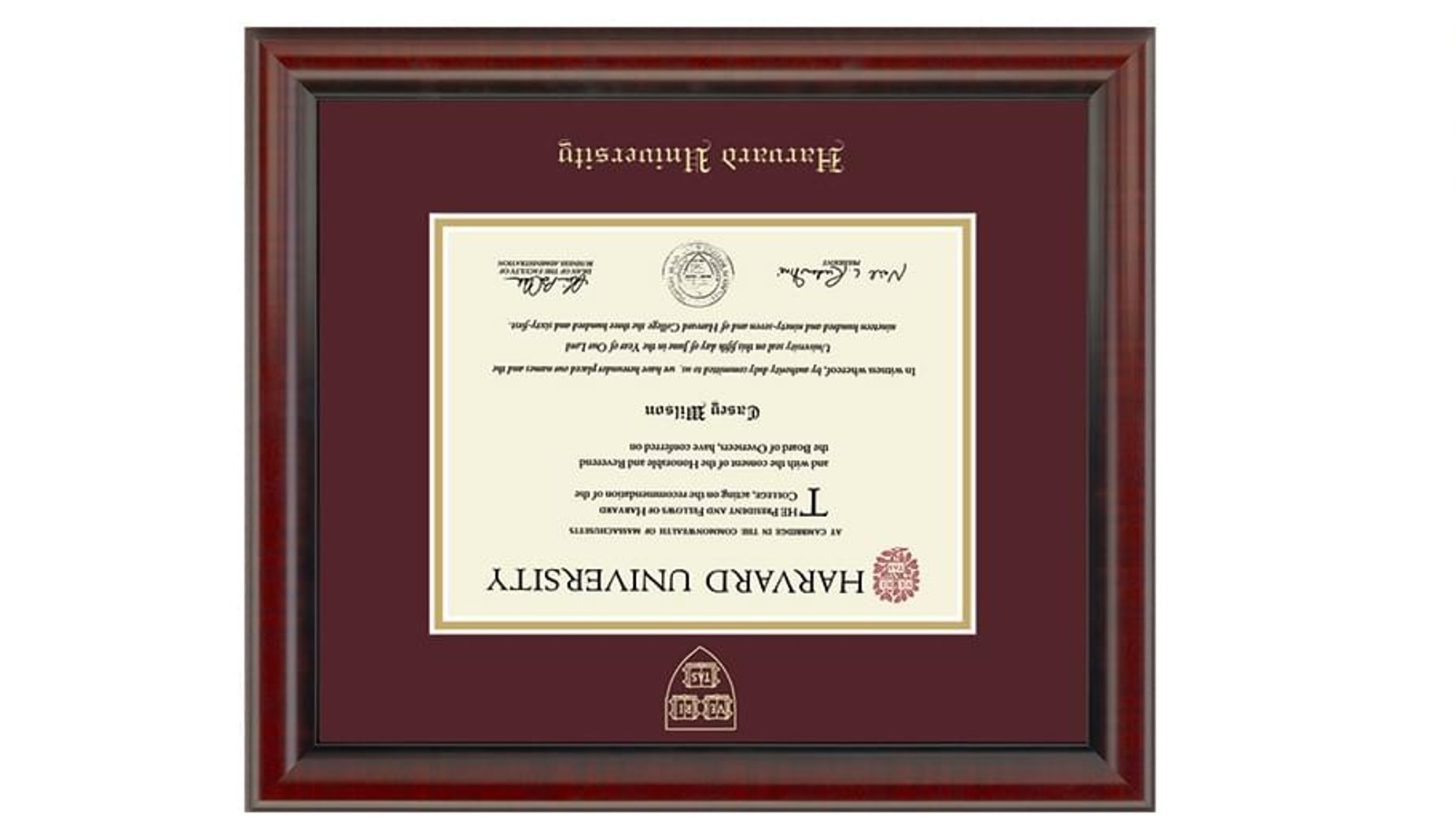
With that introduction, be it known that in the case of Barkhordar et al v. President and Fellows of Harvard College,  Harvard University won a dismissal today of a lawsuit by students over its decision not to partially refund tuition when it evicted students from dorms and moved classes online early in the Wuhan virus pandemic. Continue reading

Unethical Quote Of The Month: American Bar Association President Patricia Lee Rufo

Rufo


The American Bar Association is deeply troubled by the recent proliferation of hate speech directed against members of the Jewish faith and at LGBTQ, Asian American and Muslim communities. Such hateful behavior, coming in the wake of attacks on African Americans and other groups, have serious consequences as studies show a correlation between exposure to hate speech and the increase in hate crimes. Hate speech also serves to legitimize intolerance, reinforce stereotypes and further discrimination. We must not let any messages of hatred be normalized if we hope to advance the rule of law to achieve an inclusive society.

Patricia Lee Rufo, the 2021 president of the American Bar Association, in an official statement last week.

This is disgraceful, and in so many ways. Imagine: the head of the largest lawyers’ association in the country authored that collection of vagaries, buzz words and wokisms in a naked virtue-signaling exercise with no substantive value at all, but with significant sinister potential. Worse, nobody at the ABA had the guts or integrity to tell her, “Uh, Patricia, that’s just plain embarrassing. We can’t put our name on that!” Also…

Continue reading

Morning Ethics Warm-Up, 6/21/2021: Happy Birthday U.S. Constitution! [Corrected]

Constitution signing

On this day in 1788, habitually cantankerous New Hampshire became the ninth and last required state to ratify the Constitution of the United States and make it the law of the land. December 7 of 1787 had seen Delaware, New Jersey, Pennsylvania, Georgia and Connecticut quickly signed the document. But Congress had voted that at least 9 of the 13 former colonies had to sign on before the document was considered adopted. New Hampshire, Massachusetts and the remaining states opposed the document, as it failed to reserve sufficient powers to the states and did not protect individual rights like freedom of speech, religion,the press, and the right to bear arms. In February of 1788, New Hampshire, Massachusetts and other states agreed to ratify the document with the promise that necessary amendments would be developed and proposed. The Constitution was ratified based on the compromise by Massachusetts, Maryland and South Carolina, making 8. New Hampshire made nine. The first Congress under the new Constitution adopted 10 amendments, the Bill of Rights, and sent them to the states for ratification. Rhode Island, which opposed federal control of currency and was critical of compromise on slavery, was the last hold-out; the U.S. government had to threaten to sever commercial relations with the state to force it to sign on. Finally, on May 29, 1790, Rhode Island voted to become the last of the original 13 colonies to join the United States of America.

Today the U.S. Constitution is the oldest written constitution in operation in the world, and the only one predicated on ethical principles, thanks to the Bill of Rights.

I would have preferred to see Constitution Day made a national holiday over “Juneteenth,” since it was the principles laid out in the Constitution, along with the Declaration of Independence, that eventually led to the elimination of slavery, and the document has been the backbone of our republic’s epic success in other respects as well.

1. “Larry Vaughn Day”? I regret not noting yesterday that it was the anniversary of the release of “Jaws,” a milestone in American cultural history. It is also an ethics movie, and one that pops into my mind often, since the irresponsible conduct of the weaselly mayor of Amity, Larry Vaughn (Played by Murray Hamilton, who made a career of portraying human weasels), remains SOP for so many elected officials, locally and nationally, and also the leadership of corporations, associations, industries, sports, universities and <cough> religious organizations. Ethics Alarms has a Larry Vaughn tag, and I should have used it in dozens more articles than I have. He is the perfect symbol of leadership that, in the words of Matt Hooper (Richard Dreyfuss) will always “ignore this particular problem until it swims up and bites you in the ass.”

The U.S. could benefit greatly from a “Larry Vaughn Day” on June 20 in which every elected official and organizational leader be required to watch “Jaws.”

Continue reading

Satire Ethics: Carrying A Joke Too Far

Unethical!

The Church of the Flying Spaghetti Monster’s Australian wing applied to be formally recognized as anon-profit charitable entity, but was rejected on the grounds that the purported religion is nothing more than a “hoax.” Ya think? This is the deliberately ridiculous parody religion devised to mock all organized religions and those who believe in them. Pastafarians, as “believers” call themselves, have extended a gag web post ridiculing the logic of every other religion to the point of diminishing returns. Its “heaven” has a Stripper Factory and a Beer Volcano; its argument for the existence of the deity with noodely appendages involves the world distribution of pirates. Very funny. Now stop wasting everyone’s time. Ethics Alarms discussed two abuses of process by Pastafarians here and here, but as with the career of Jimmy Kimmel and the persistence of tofu, I assumed that this joke would have run its course by now. Sadly, no.

Adelaide, Australia’s Tanya Watkins is a self-described “captain” of the church (like on a pirate ship, see) , has made repeated attempts to have the “church” be granted incorporated association status. After her latest attempt was scoffed at by the Corporate Affairs Commission, Watkins sought a review by the South Australian Civil and Administrative Tribunal (SACAT), claiming the movement was formed for a “religious, educational, charitable or benevolent purpose”, thereby meeting the criteria of South Australia’s Associations Incorporation Act.

Hilarious! She should be fined.

Continue reading