Last week, Apple announced a plan to introduce new technology that will allow it to scan iPhones for images related to the sexual abuse and exploitation of children. These tools, however, which are scheduled to become operational soon, can be used for less admirable objectives, like so many technologies.
Apple’s innovation will allow parents have their children’s iMessage accounts scanned by Apple for sexual images sent or received. The Parents would be notified if this material turns up on the phones of children under 13. All children will be warned if they seek to view or share a sexually explicit image. The company will also scan the photos adults store on their iPhones and check them against records corresponding with known child sexual abuse material provided by organizations like the National Center for Missing and Exploited Children.
Cool, right? After all, “Think of the children!!” (Rationalization #58) But while Apple has promises to use this technology only to search only for child sexual abuse material, the same technology can be used being used for other purposes and without the phone owner’s consent. The government could work with Apple to use the same technology to acquire other kinds of images or documents stored on computers or phones. The technology could be used to monitor political views or “hate speech.
Computer scientist Matthew Green, writing with security analysist Alex Stamos, warns,
“The computer science and policymaking communities have spent years considering the kinds of problems raised by this sort of technology, trying to find a proper balance between public safety and individual privacy. The Apple plan upends all of that deliberation. Apple has more than one billion devices in the world, so its decisions affect the security plans of every government and every other technology company. Apple has now sent a clear message that it is safe to build and use systems that directly scan people’s personal phones for prohibited content.”
Your Ethics Alarms Ethics Quiz of the Day:
Does the single beneficial use of the Apple technology make it ethical to place individual privacy at risk?
Here is an issue from Julythat I never had time to write about…
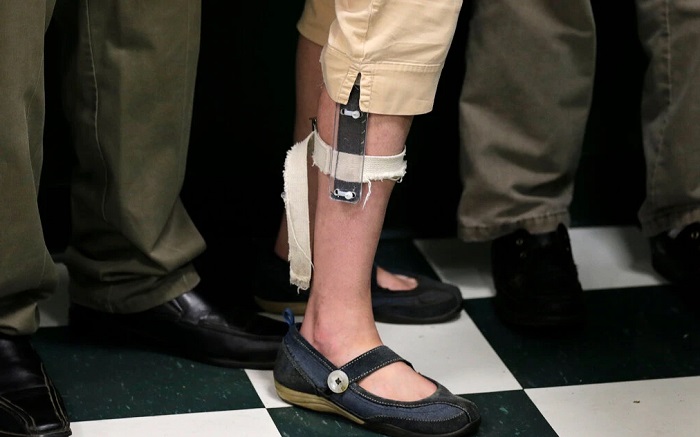
In a 2-1 opinion, the U.S. Court of Appeals for the D.C. Circuit overturned a Federal the ban on the use of electric shock devices to modify destructive or otherwise problematic behavior by students with intellectual disabilities. The Food and Drug Administration sought to prohibit the devices in March 2020, saying that delivering shocks to students presents “an unreasonable and substantial risk of illness or injury.” The court ruled, however that the ban was a regulation of the practice of medicine, which is beyond the FDA’s authority.
The now banned ban only affected a single school, the Judge Rotenberg Educational Center in Canton, Massachusetts. It is the only facility in the United States that employs the shock devices to correct self-harming or aggressive behavior. The center serves and houses both children and adults with intellectual disabilities or behavioral, emotional or psychiatric problems.
What ethics approach do we use to assess such a practice?
This essay is closely related to yesterday’s post about the elderly defense lawyer who revealed in a memoir shortly before his death that the client he successfully defended against kidnapping charges in his most celebrated case was guilty. One commenter opined that it is unethical for a lawyer to defend a client whom the lawyer knows is guilty, which immediately reminded me to republish my explanation of this core element of legal ethics and the criminal justice from 2005. The commenter’s position is surprisingly common, even among law students. I’d bet that a majority of the American public is confused about the issue. That is more than a little scary, but it explains why, for example, the public was so blase about Derek Chauvin being convicted of murder under conditions that made fair trial virtually impossible. What follows is very slightly edited from the original version, which can be found here.
***
How can it be right for an attorney to defend in court an individual that he or she knows is guilty? The fact that so many Americans are perplexed by this after two centuries is an indictment of the legal profession, which has flunked its obligation to protect its role in protecting a crucial Constitutional right by making sure that it is understood by the pubic that right serves. About 20 years ago, then-Fox TV commentator Bill O’Reilly led a campaign to get California criminal lawyer Jeffrey Feldman disbarred because leaked plea bargaining sessions showed that he knew his client, child killer David Westerfield, was guilty of murder, even though Feldman was vigorously disputing his guilt in court. O’Reilly pronounced Feldman a liar. He was wrong, but his ignorance, in this matter at least, is excusable, but only because it so widespread.
To understand the criminal lawyer’s ethical responsibilities, begin with this: the Founders of the American republic believed that citizens in a fair and just society shouldn’t be imprisoned or punished just because the government decides they are guilty of something, whether it is murder, robbery, not paying taxes or, as with John Hancock and Samuel Adams, criticizing those in power. They wisely decided on a system that required the government to prove that an individual had committed a crime to the satisfaction of an unbiased jury. Not only that: they decided that a very high standard should be applied in determining legal guilt: “beyond a reasonable doubt,” or near certainty.
Why? Taking the cue from British legal scholar William Blackstone, who famously said that it was better to have ten criminals escape punishment than to have one innocent man imprisoned, uber-Founding Father Benjamin Franklin said that “ it is better one hundred guilty Persons should escape than that one innocent Person should suffer.” Achieving this ideal means keeping the government honest: no convictions based on false or planted evidence, unreliable or lying witnesses, or confessions extracted from the accused by torture, beatings, or other forms of duress even if the accused is, in fact guilty. All of that is essential for the system to work, if to work means “being fair and just.” If we permit the government to cheat in order to imprison a guilty individual, we have no way to stop it from cheating to imprison an innocent one. Indeed, it will be impossible to tell the difference.
A shocking story in the New York Times has the legal ethics world buzzing. I just added the issues to an ethics seminar I’m preparing for this month; I wrote a song parody about it, in fact. For some reason, a Times reporter finally found out about a self-published memoir by criminal defense lawyer Peter De Blasio that came out about a year ago. The book, “Let Justice Be Done,” reveals among its other tales of his legal career the truth of his most famous case, and one of his most successful. DeBlasio had convinced a jury to acquit his client, Dominic Byrne, of kidnapping in the sensational Samuel Bronfman Jr. abduction case in 1975, though the evidence pointing to his guilt was overwhelming.
What made DeBlasio’s defense strategy work was the testimony of the mastermind of the kidnapping plot, a spectacularly talented liar named Mel Patrick Lynch. He took the stand and claimed that the 21 year-old Seagrams heir had planned his own kidnapping, and that he, Lynch, was the young man’s gay lover. Lynch was unshakable under cross examination even though his elaborate story made no sense. Realizing that the jury was buying the tale, and that the prosecution was unprepared to discredit it, DeBlasio exploited the story to persuade the jurors that the dimwitted Byrne was innocent of kidnapping, though he would be convicted of extortion. In the end, both Byrne and Lynch served less than four years in prison.
During a closed meeting on this week, Attorney General Merrick Garland met with 35 state supreme court chief justicesto urge their cooperation on limiting evictions. Garland praised the Michigan Supreme Court for giving tenants more time to apply for rental assistance by directing courts to stay eviction proceedings for up to 45 days. The AG also saluted the Texas Supreme Court for helping tenants facing lawsuits by sending them notices with assistance options.
The 35 justices should not have accepted Garland’s invitation (or was it a command?) Those who did accept should have ostentatiously walked out as soon as his purpose became clear. To call the meeting inappropriate is itself inappropriate: this was a straight up violation of the separation of powers, and a breach of professional ethics for everyone involved. Garland works for the President: he’s part of the executive branch. He’s also a litigant or a potential one in the matter he was discussing. The is an ex parte communication, as he well knows.
For the White House’s agents to strong-arm, or attempt to, members of the judiciary to allow the President’s party to pursue an unconstitutional policy is one more step to undo the structure of American democracy. This is a pure IIPTDXTTNMIAFB (“Imagine if President Trump did X that the news media is accepting from Biden.”). Creeping autocracy! Democrats and their puppet media would scream. Defying democratic traditions and weakening institutions! Except, you see, Donald Trump never did anything like this, and if he did, I assume all those good Democrats and progressives among the justices would have used the opportunity to call for impeachment, and the Republican chief justices, having respect for the Constitution, would refuse to attend.
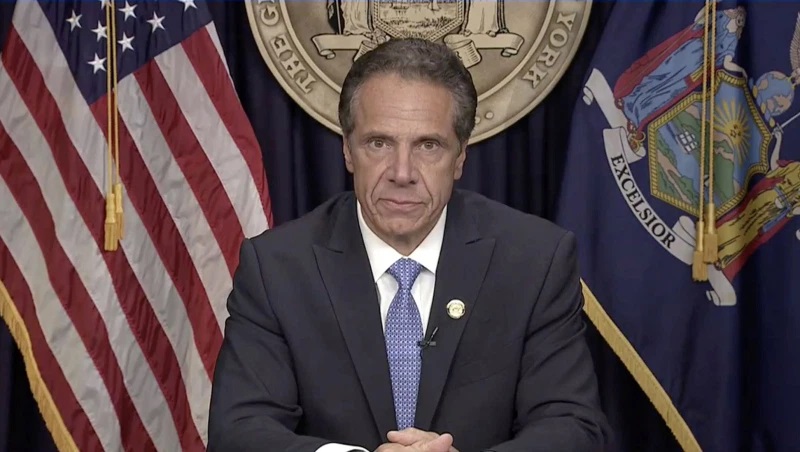
Just as the news media and others had convinced themselves that New York Gov. Andrew Cuomo was determined to draw out the impeachment process, insist on his innocence and remain defiant, he resigned, saying today that he would officially step down in 14 days.
I cannot find a full text of Cuomo’s resignation speech, not is there a video that WordPress lets me embed. You can watch it here.
Ethics Observations:
1. Good. Everything else aside, resigning was the right thing to do, and the best outcome for the state. It doesn’t matter if the resignation itself was graceful or appropriately contrite— it wasn’t—or whether Cuomo would have stayed on and roiled the government indefinitely if he thought he could survive. It’s the most ethical decision even if his reasons for it and his method of doing so were unethical.
2. Hanging around for two weeks after resigning is unusual for an elected official resigning during a scandal. Cuomo will be a kind of super-lame duck. In theory, saying two weeks to help with an orderly transition is responsible. In practice, I expect it to be chaotic. He may not last the full 14 days.
3. Cuomo began his announcement by attacking the accusations against him and the process that brought hum down. So much for accepting accountability and admitting wrongdoing. He blamed the political environment (“there are many motivations at play, if anyone thought otherwise they would be naive”), his political enemies, social media, and rapid cultural changes that were just too darn sudden. He never admitted that he did something wrong. Incredibly, Cuomo presented himself up as a victim.
4. And, incredibly enough, a selfless hero. “I work for you and doing the right thing is doing the right thing for you because as we say, it’s not about me, it’s about we,” Cuomo said, agreeing that fighting the wave of opposition in the wake of the sexual harassment accusations would throw New York into months of turmoil. “I cannot be the cause of that,” he said. “The best way I can help now is if I step aside and let government get back to government. And therefore that is what I’ll do, because I work for you, and doing the right thing, is doing the right thing for you” What a guy! This is, as we know by now, standard face-saving strategy. It’s still nauseating when it is not accompanied by a genuine apology and an acknowledgement of wrongdoing.
My wife and boss, Grace, emailed me this morning with a list of major events that occurred on August 9th, remarking, “NOW THIS WAS AN INTERESTING DAY IN HISTORY !” Indeed it was: this is a major marker of ethically provocative events, each worth not just a post, but a debate, a book, and museum:
Richard Nixon’s resignation as the 37th President of the United States took place at noon on August 9, 1974, avoiding the personals shame and the national trauma of an impeachment and trial, back when an impeachment was still an impeachment (and not, as the Democrats recently transformed it, a purely partisan device to demonstrate hatred of the elected President). This put an unelected President into office, Gerald Ford, who soon after taking office announced that he was pardoning the man who appointed. This act forever defined Ford’s brief Presidency, and was either a courageous act of political sacrifice on his part, or part of a corrupt scheme to allow Nixon to escape criminal prosecution. (I believe the former description is the correct one.)
On 2014, a black teen, Michael Brown, was shot to death in Ferguson, Missouri, by a white police officer. The episode launched an ongoing Ethics Train Wreck that is still stopping for passengers and causing great destruction to this day.
It was on August 9, 1969, that members of Charles Manson’s “family” murdered five people in movie director Roman Polanski’s Beverly Hills, California, home, including Polanski’s pregnant wife, actress Sharon Tate. Less than two days later, the cult members killed again, murdering Leno LaBianca and his wife Rosemary in their home. The murders finally ended the myth of the “peace and love” Sixties while casting a shadow over the lives of many not butchered that night, from the Beach Boys to Doris Day to Hollywood, especially perhaps Polanski, who eventually became a living Ethics Train Wreck himself.
Speaking of the hippies, Henry David Thoreau’s “Walden, or, A Life in the Woods” was published on August 9, 1854 and became a staple in the intellectual arsenal of those advocating “dropping out” of society. “Dropping out” of society is unethical.
August 9, 2010 was the day that JetBlue flight attendant Steven Slater actually attracted praise for his “fuck you” exit from his job as a Jet Blue flight attendant. Not from Ethics Alarms, though…
And speaking of metaphorical “funk you’s,” on this day in 1936, African American track star Jesse Owens won his fourth gold medal of the Berlin Olympics in the 4×100-meter relay, thus foiling and infuriating Nazi leader Adolf Hitler plan to use the Games for “master race” propaganda.
Finally, though it should probably by first, it was on August 9, 1945, that the U.S. dropped a second atom bomb on the citizens of Japan, at Nagasaki, finally speeding Japan’s unconditional surrender. If the decision to drop the first atom bomb is controversial, the ethics controversy over the second is even more contentious.
1. Oh, let’s start with another Wuhan vaccination matter, this one from the Ethicist, who was asked,
My elderly mother is in an independent-living facility where all the residents have been vaccinated …Protocols are very strict, and no resident has gotten sick. [A] relative who lives nearby… is not vaccinated. This facility will soon mandate that all visitors be vaccinated, but my relative plans to dissemble in order to evade the requirement. Should I … tell the facility that my relative is not vaccinated?
Does she really have to get expert advice to figure this out? Continue reading →
I hate to inflict that song on you (the singer/composer was the late Jess Cain, once the most popular disc jockey in Boston) but I have limited options. The 2021 Red Sox, who were sailing all season to what looked like a certain play-off slot , are suddenly in freefall, with the hitters not hitting and the pitchers not pitching. They face a double-header today, and a double loss would be disastrous. After the 1967 Red Sox “Impossible Dream” season, the best summer of my life, when a team of virtual kids won the closest pennant race in baseball history by a single game after finishing in a tie for last place the year before, WHDH, which then carried Boston’s games, put out the cheesy but wonderful commemorative album above, containing clips from broadcasts of the most memorable games and Cain’s song, tied together by Sox play-by-play announcer Ken Coleman reciting one of the worst pieces of doggerel ever heard by human ears. At one point, Ken recounted a desperate point in the team’s underdog quest, and, having set up the rhyme with “zero,’ intoned, “We have to have a hero.” Cue the Yaz song!
I’ve been thinking about the need for a hero, indeed more than one, quite a bit lately, in matters more consequential than the Red Sox season (well, for normal people anyway.) The Sox sure need one today. If he shows up, maybe it will be an omen…
Incidentally, Yaz deserved the song. Modern metrics show that his Triple Crown, Gold Glove, MVP 1967 season was the second best of all time. (Babe Ruth had #1, naturally.) Anyone who followed that 1967 season knew it before the numbers were crunched.
1. More free speech threats in the Biden Era, but Donald Trump was a threat to democracy…The Baltimore Symphony fired Emily Skala, 59, the orchestra’s principal flutist for more than three decades, because she shared social media posts expressing doubt on the efficacy of vaccines and facemasks. Fellow musicians, audience members and donors complained, so it was bye-bye Emily. Skala, no weenie she, will challenge her dismissal, and accuses the orchestra of creating a hostile environment where she was being attacked for expressing unpopular views. I’d say that is likely. Musicians as a group are about as progressive and open to conservative views as college professors.
Skala angered many of her colleagues for sharing posts questioning the results of the 2020 presidential election—Oooh, can’t have that! She was also criticized for saying that black families needed to do more to support their children’s classical music studies. Wow, this woman is a veritable Nazi! Amusingly, the New York Times cites as among the examples of social media “disinformation” that got her fired were “false theories suggesting that the coronavirus was created in a laboratory in North Carolina” and posts “raising concerns about the safety of vaccines.”
That’s funny: it wasn’t too long ago that suggesting that the virus originated in a Wuhan lab was considered disinformation. And didn’t Joe Biden and other prominent Democrats raise “concerns” about any vaccine produced under the Trump Administration?
I’m just spitballing here, but if only we had some heroic organization that defended free speech, regardless of what side of the political spectrum it came from. It could call itself…let’s see…the National Civil Liberty Protection Alliance, or something like that…
2. Believe it or not, this Russian lawsuit isn’t frivolous, just mind-meltingly stupid. Thanks to Curmie for passing along the saga of Ksenia Ovchinnikova, an Orthodox Christian in Omsk, Russia, who is suing McDonald’s on the theory that its ads made burgers seem so yummy and irresistible that they made her break her fast for Lent in 2019 after years of successfully avoiding meat. She wants 1,000 rubles ($14) as damages for “sustained moral damage.”
The reason this isn’t frivolous (at least not in the US) is because a lawsuit clears the bar if it seeks a new interpretation of existing law, no matter how wacky. Of course, a heroic lawyer would tell the woman, no matter what she offered to pay, “You’re out of your mind, and I’d rather eat my foot than disgrace my profession by taking such a ridiculous case. By the way, would you like this corndog?” Continue reading →
I often feel like issues and discussions fly by too quickly on Ethics Alarms, as trivial matters like an old Star Wars fanatic’s vulgar window sign and the desperate efforts to frame a celebrity gymnast’s ill-timed choke blot out the ethical controversies that are most important to ponder and understand. Fortunately the commenters here often take steps to ameliorate that flaw, as veteran reader Dwayne N. Zechman does here. His Comment of the Day amplifies a post from a week ago that came in the middle of the earth-shattering question of Simone Biles’ “twisties” and only inspired 22 comments other than mine (my replies to comments don’t count). This, despite the fact that, to evoke Ben Bradlee (Jason Robards) at the end of “All the President’s Men,” nothing’s riding on what a Federal Appeals Court ruled in the case at issue “except the First amendment to the Constitution…and maybe the future of the country.”
“You can’t have an under-representation without having an over-representation. Are the people who come out on top guilty of “privilege”? Did they “steal” their success? Do they owe their success to the denial of opportunity to someone else? Even if so here or there, is it universally true in every case? Is that a dictum that we have to adhere to? I would submit that this is the wrong way to think about social outcomes. You can see that it’s the wrong way from the places this sort of thinking leads you. “
—Glenn Loury, Merton P. Stoltz Professor of the Social Sciences and Professor of Economics at Brown University, an African-American, in the inaugural essay of the newJournal of Free Black Thought.
You won’t see Loury interviewed on CNN , MSNBC, NPR or the networks. He undermines the narrative—a lot of them, in fact. In his essay, his primary target is Black Lives Matter, as part of his warning against the ascendancy of “bad ideas.” He writes,
“Racial essentialism is one of these bad ideas…If we can’t find some way of countering the underlying problematic ideological commitment to race as an essentialist category, we’re in trouble. Martin Luther King had the right idea with colorblindness, yet today it’s regarded as a microaggression to say one doesn’t see color. Of course, it’s impossible literally not to see color, but despite pressure from cultural elites, we needn’t give it the overarching significance we now do. In fact, if we’re going to make our experiment in democracy work, we mustn’t give it such significance.”