Assorted Ethics Items, 4/23/2021: I Can’t Talk Or Eat, But I Can Still Write. And Think, Sort Of…[Finally Corrected!]

Well, THAT was certainly unpleasant…made a root canal seem like the warm embrace of a succubus by comparison…

1. An alternate juror in the Chauvin trial gave an interview. She seems like a pretty rational sort, but two comments support the contention that the trial was not a fair one:

  • “I did tell them that I saw the settlement run across the bottom of the screen one day…I was not surprised there was a settlement, but I was surprised they announced it beforehand.” She also said she understood that civil trial and criminal trial standards were different, but the fact that the city essentially announced that its police were liable for Floyd’s death cut the legs out from under Chauvin’s defense.
  • “I did not want to go through rioting and destruction again and I was concerned about people coming to my house if they were not happy with the verdict.” If any jurors feel that way, it’s not a fair trial.

Continue reading →

Comment Of The Day: “Ethics Observations On The Shooting Death Of Peyton Ham”

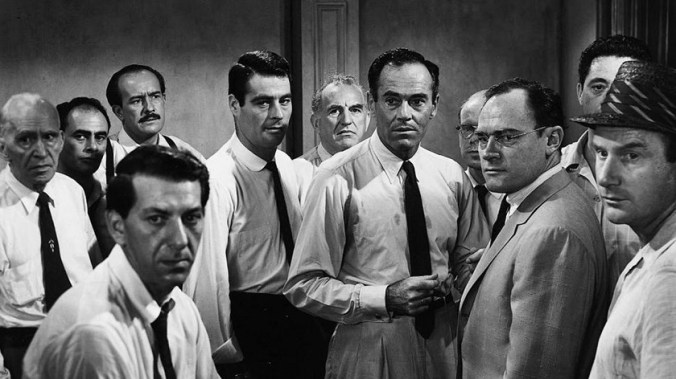
Steve-O-in NJ has stepped into a temporary (I hope) vacuum of ambitious comments to monopolize the COTD field. Steve is a lot more pessimistic than I am, and prone to Jeremiads (THE END IS NEAR!) but he also is willing to make observations that most are reticent to put into print. A few of you out there hang out on my Facebook page, where my alleged friends had a meltdown over a repeat of my musings here about whether Juror 8 in “12 Angry Men” would have bothered fighting for reasonable doubt in the trial of a defendant whom he thought was probably guilty if he knew that a not guilty verdict would trigger violent riots. How dare anyone suggest that there was reasonable doubt in the Chauvin trial? How dare anyone imply that the trial wasn’t fair!

Steve-O’s point about police being in an impossible position still applies to Derek Chauvin, cruel and untrustworthy cop that he undoubtedly was. Usually that impossible position girds police from conviction in all but the most egregious examples of police misconduct, as in the case of Michael Slager. I think the public’s acknowledgement of the dilemma is appropriate and generally ethical, but it is ready-made for accusations of racism when the victim is black.

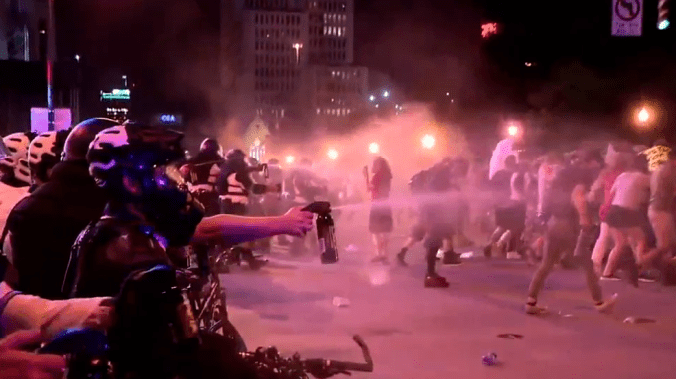
Back to the post that sparked Steve’s COTD, “Ethics Observations On The Shooting Death Of Peyton Ham”, there has been no news coverage of Ham’s death for a week. He was 16, just like the girl shot in the act of trying to stab another teen in Columbus, Ohio, but nobody in Congress or anywhere else is arguing that his youth demanded restraint by police. The reason is that Peyton Ham was a white male, and Ma’Khia Bryant was a black female. The police were supposed to understand that different standards applied. (The photo above is of the Columbus riots in response to the girl’s shooting. Somehow I can’t locate any similar photos of the protests of Ham’s death.)

Here is Steve-O-in-NJ’s Comment of the Day:

Policing in the United States is fast becoming a lose-lose proposition and a job fewer and fewer people are going to want. If you take action, you are considered a thug, a bully, and automatically a racist. If you take no action, you are either lazy or dead from the neck up and need to be fired. We’ve been over this half a dozen times since the death of George Floyd. Policing is by nature a dangerous and demanding job. Policing by nature sometimes requires split-second decisions which have a tiny margin for error and possibly grievous consequences if gotten wrong. Policing is not just about crossing schoolkids, directing traffic, getting lost children home, making reports of fender benders, and once in a while giving out a ticket to someone driving a little too fast or parked in a place clearly marked “no parking.”

Even in the safest small towns in America there are always going to be domestic violence calls, holdups, drunk and disorderly conduct, kids getting into drugs, or the mentally ill who do crazy things that endanger themselves or others. Like it or not, a big part of policing involves making unwilling individuals comply with lawful orders necessary to keep order. Sometimes there is no way to make that happen but to use force. Using force isn’t pretty. It’s not pretty to slam a violent husband or boyfriend down on the kitchen table and cuff him before he hits the woman in his life again. It’s not pretty to cuff a drug-addled, emaciated streetwalker who you’ve told to move along for the umpteenth time and been met with a torrent of profanity each time. It’s not pretty to throw a reeking homeless person who’s been harassing shoppers into the back of a police cruiser to take him somewhere where he can (hopefully) get the help he needs. And no, it’s not pretty to arrest some dreadlocked thug who’s spent his whole life doing nothing but commit crimes when he commits yet another one. It’s also not pretty when a hapless wife or girlfriend gets a broken jaw or a spiral fracture of the arm from a partner who she “just wouldn’t listen to.”

It’s not pretty when a family can’t walk down the street without seeing some skeletal prostitute shooting up. It’s not pretty when everyone has to avoid the block that “Crazy Joe” has claimed as his own. It’s not pretty when DeShawn, out of prison barely a week, sticks up a bodega with a gun or hits somebody over the head because he has no money and few prospects.

Continue reading →

Wednesday Wrap-Up For A Post-Chauvin Trial America, 2/21/21 [Corrected]

I guess I have to come clean: I thought I had posted this before noon. Guess not. So a Morning Warm-Up became a late night wrap up…

1. The trial was a sporting event? I did not know that! ESPN included the Chauvin guilty verdict in its list of important sports news today. Apparently, it’s sports news because a lot of athletes are going to shoot off their mouths about it, spreading ignorance far and wide.

2. Deranged Quote of the Day: “Where are the disabled, queer, poor, gender diverse, dogs of colour and single-parent dog families in Bluey’s Brisbane?” That comes from ABC Everyday’s Beverley Wang. The Disney+ program, we are told :

….is the award-winning, mega-hit animated series about the Heelers, a family of dog-shaped humans — parents Bandit and Chilli, four-year-old Bingo, and six-year-old Bluey — who live in a gorgeous Queenslander with city views, perched on a lush hilltop in sunny Brisbane.

The only way to handle people who poison minds and the the culture with ideas like this is to be merciless, and slap them down with the classic reaction of “Sidney Wang”:

Being nice just enables them.

3. From the False Narrative files: Yahoo! News correspondent Jon Ward authored a piece of counter-factual propaganda headlined, “Chauvin’s guilty verdict is a major milestone in America’s reckoning with racial justice.”  As I have tried to point out repeatedly, there is no evidence that George Floyd’s fate would have been any different if he had been white, Asian-American or a Smurf. None. NONE. There is no evidence that Chauvin was a racist, or that race played any part in his brutal treatment of Floyd. The fact that activists, politicians and the journalists seized on the symbolic imagery of a white cop’s knee on a black man’s neck and exploited it shamelessly doesn’t change the facts. This was not a racial incident. If the jury convicted Chauvin thinking that it was, then they were misled.

Ward’s essay is a good starting place for anyone who wants to understand  how far journalism has sunk.

Continue reading →

Ethics Reflections And Questions On The Chauvin Verdict, Part 2

Part 1 is here. As I expected, there was a lot of dubious as well as perceptive commentary after the verdict, and some related events with ethics implications.

1. I’d comment on this, but Ann doesn’t allow comments any more...The only note Althouse had on the verdict was a detached, “I’m sure that is an immense relief to many, many people.” Not to me. I’m not relieved when the justice system allows itself to be dictated to by mobs. Nor am I relieved when racial significance is illicitly attached to a non-racial episode so activists can lie about it.

2. The reason why there was no reason to be “relieved” arrived quickly, in the form of the Democrat reaction to the police shooting of 15-year-old Ma’Khia Bryant in Columbus, Ohio. Body camera footage showed Ma’Khia charging at another young woman apparently preparing to stab her with a knife. Attorney Ben Crump, looking for the next black family he can represent and the next white police officer he can demonize in the press, referred to Ma’Khia as “unarmed” in a tweet. “Squad” member Ayanna Pressley tweeted, “Black girls deserve girlhood — uninterrupted. Black girls deserve to grow up and become women” —apparently even if they kill other black girls on the way to growing up. Senator Sherrod Brown disgracefully tweeted, “While the verdict was being read in the Derek Chauvin trial, Columbus police shot and killed a sixteen-year-old girl. Her name was Ma’Khia Bryant. She should be alive right now.”

Naturally, BLM protests erupted in Columbus. When Ethics Alarms says “Facts Don’t Matter,” I’m not being cute. The push to brand virtually any law enforcement action against black lawbreakers as racist and an example of police misconduct will gather power with each perceived victory. The effort to bully elected officials and juries into discarding due process and sound policy to accomplish this will not stop or weaken until enough Americans have the courage to brave accusations of racism and say “Enough.”

Continue reading →

Ethics Reflections And Questions On The Chauvin Verdict, Part I

I haven’t read much commentary on yesterday’s verdict yet. I’m assuming that I’ll have more observations later in the day.

1. Ultimately, it appears that the jury just decided that it wasn’t worth it to acquit Derek Chauvin even if there was reasonable doubt. That’s sad, but the calculation can be defended on utilitarian grounds, meaning that, ironically, the arguably unethical decision to discard the law, individual rights, a fair trial and the integrity of the justice system might have been an ethical decision because it will cause less harm in the long and short run. In other words, it can be defended as a decision in which ethics won and the law lost.

I’m not saying that I would defend it that way, but I acknowledge the argument as respectable.

2. It is important to remember that cases where verdicts were based on emotion, human nature, and sociopolitical dynamics rather than the evidence and strict adherence to the law have occurred periodically, and will continue to do so.

The Nuremberg Trials were travesties from a legal standpoint, and the verdicts “ethical” only in the sense that a formal, solemn statement that some conduct is so heinous that civilization has an obligation to reject it was deemed more important than such niceties as avoiding hypocrisy or respecting the law’s aversion to ex-post facto legal penalties. The trial of the alleged conspirators to murder Lincoln was as rigged as a trial can be. This isn’t an “it happens all the time” excuse for the Chauvin trial, but a reminder that the Chauvin case isn’t the cataclysmic scar on the justice system that many will claim it is.

Continue reading →

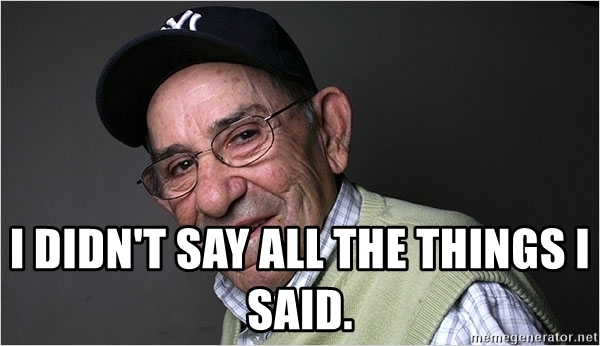
As The Chauvin Jury Finds The Defendant Guilty As They Were Ordered To Do, The President And Rep. Waters Deny That They Said What They Said

But when Yogi Berra denied that he said what he said, it was funny..

In Minneapolis, the jury found Derek Chauvin guilty of unintentional second-degree murder, third-degree murder, and second-degree manslaughter in his role in the death of George Floyd on May 25, 2020.

It would be a defensible verdict if he had received a fair trial, and the jury didn’t fear that they would spark national riots, property destruction and death if they found reasonable doubt. It would have been more defensible if the otherwise competent judge hadn’t botched his obligation to sequester the jury when another Minnesota police officer shot a black man, and riots did occur, with more on the horizon.

It is not a fair trial when a nationally known Congresswoman and the President of the United States publicly declare that, in the words of the Congresswoman, a defendant is “guilty, guilty guilty!”

So now, after polluting the trial and the verdict, both the President and the Congresswoman are engaging in a wretched display of “I didn’t really say what I obviously said and meant to say.”

Yogi Berra this ain’t.

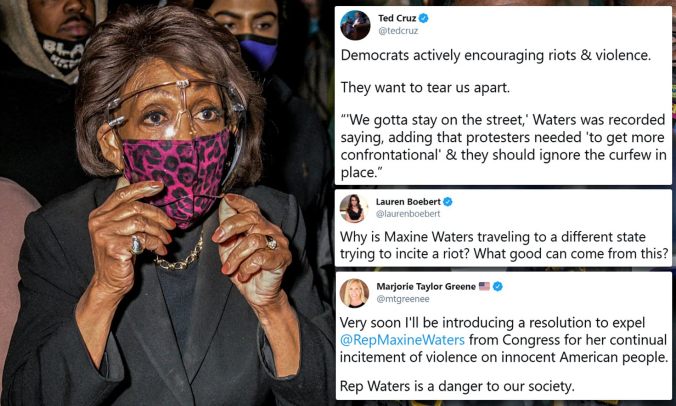
First, here’s Maxine’s hilarious “translation” of what she meant when she told some potential rioters, ““We’ve got to stay in the streets, and we’ve got to demand justice,” Waters said. “I am hopeful that we will get a verdict that says, ‘guilty, guilty, guilty,’ and if we don’t, we cannot go away. We’ve got to get more confrontational. We’ve got to make sure that they know that we mean business.”

“I wanted to be there kind of as Auntie Maxine, to show them that not only do I love them and I support them, but they can count on me to be there with them at this terrible time in all of our lives,” Waters said in her own defense. But she is not their aunt. She is an elected official of the United States of America, and is sworn to uphold the Constitution, which means, among other things, not using her position to urge members of the public to break the law, and not using her influence to deny an American citizen a fair trial.

In another interview, she tried rationalizations instead of masquerade:

Continue reading →

Unethical And Intolerable: Waters, Babbitt, Sicknick, Part 1.

intolerable

The United States is now being consumed by a wave of audacious double standards and hypocrisy, rooted in racial bias and oppressive partisanship. Exposing it, condemning it and opposing it is to invite “cancellation” and being tarred as an ally of white supremacy. In the words of George H.W. Bush to Saddam Hussein, “This will not stand.”

I. Rep. Maxine Waters.

By any fair and reasonable standard, Waters’deliberate attempt to incite violence and law-breaking among already agitated and agitated protesters in Brooklyn Center, the Minneapolis suburb where Daunte Wright was killed, should earn her serious sanctions from Congress, her own party, and by the standards previously asserted by her party, the justice system. She exhorted the potential “mostly peaceful” mob to “get more confrontational” when the city had already seen burning, looting, and attacks on police. She directly threatened the jury in the Chauvin trial just a few miles away. In response, the judge in that trial, Peter Cahill, castigated Waters by name as the trial went to the jury, saying that her words were “disrespectful to the rule of law,” and adding,

“I’m aware that Congresswoman Waters was talking specifically about this trial, and about the unacceptability of anything less than a murder conviction, and talk about being ‘confrontational.’ [I wish] elected officials would stop talking about this case…I think if they want to give their opinions, they should do so in a respectful and in a manner that is consistent with their oath to the Constitution, to respect a coequal branch of government.Their failure to do so, I think, is abhorrent.”

Then, whistling in the dark, he tried to deny the obvious, saying that her comments wouldn’t affect the jury because he had instructed them not to pay attention to them. Right. Everyone knows that the old “pretend you didn’t hear what you heard’ command is a perfect remedy. (See: “The Verdict.”) Pathetically, Cahill said that one congresswoman’s opinion “really doesn’t matter a whole lot anyway.” Then why did the judge take the extraordinary course of mentioning it during the trial?

Cahill’s refusal to sequester the jury after Wright’s death was a terrible error, and it is coming back to haunt him quicker than anyone could have predicted, thanks to Waters. Later, the truth battled its way out of his mouth and he blurted out that Waters “may have given” the defense grounds “on appeal that may result in this whole trial being overturned.”

And yet Nancy Pelosi, who led a contrived impeachment of Donald Trump for urging demonstrators to peacefully protest because she claimed it sparked an “insurrection,” claimed nothing was amiss with Waters’ speech. “Maxine talked about confrontation in the manner of the Civil Rights movement. I myself think we should take our lead from the George Floyd family. They’ve handled this with great dignity and no ambiguity or lack of misinterpretation by the other side…No, I don’t think she should apologize.”

The rule, then, appears to be that a Democratic Congresswoman can cross state lines to urge an already inflamed crowd to get “more confrontational” while threatening a demonstration showing that it “means business’ if a jury does not provide the verdict she demands, while a Republican President should be impeached and charged with a crime for urging demonstrators to peacefully protest what they and he believe to be an undemocratic election.

Is it material that the Congresswoman inciting a riot is black, and the President who called for a peaceful protest is white? Are we allowed to wonder? Is it permissible to consider reality?

Continue reading →

Ethics Villain: Rep. Maxine Waters (D-Cal.)

I seriously considered not posting this, because Waters’ ethical villlainy should be obvious to everyone, and Ethics Alarms generally doesn’t post on the obvious.

It has certainly been obvious to Ethics Alarms from the beginning: in 2009, in one of the very first posts here, I noted that CREW (Citizens for Responsible Ethics and Responsibility in Washington), the Democratic Party-bolstering fake “non-partisan” ethics watchdog, had labeled Waters one of the “Most Corrupt” members of Congress. This served their masquerade at the time, because it is so obvious that Waters is corrupt that she was “low hanging fruit”: by listing her on their unethical Congress members docket, CREW could claim that they really were bipartisan. (If CREW didn’t list Waters, it would make the group look like the sham it is.) Democrats know Waters is unethical; they simply lack the guts and integrity to say so and do something about her.

As I wrote in another post about Waters, “Never mind though: Waters is black, so by the infinitely adjustable weaponizing definition of racism used by progressives, black activists and Democrats for the previous eight years, to criticize her at all is to be a racist.” There is no member of Congress—maybe no one in government—so brazenly reliant on this principle as Waters. She also girds herself in gender, so pointing out the obvious about her—that she’s a demagogue, a racist, an embarrassment to her her party, a disgrace to Congress and not very bright in the bargain—gets a critic tagged as a bigot AND a misogynist. The fear of this is so great that even Bill O’Reilly, himself an ethics villain who seldom crumpled in the face of race-baiting, groveled an apology for mocking Waters’ helmet-hair in 2017, saying, “As I have said many times, I respect Congresswoman Maxine Waters for being sincere in her beliefs. I said that again today on ‘Fox and Friends,’ calling her ‘old school.’ Unfortunately, I also made a jest about her hair, which was dumb. I apologize.”

Defenders of slavery were sincere in their beliefs. Flat-earthers are sincere in their beliefs. Charles Manson was sincere in his beliefs. Stalin was sincere in his beliefs. The old guy with empty look in his eyes who stood with his old Weimaraner day and night near our street where I grew up, thinking he was still an air raid warden in World War II was sincere in his beliefs, and he was harmless, unlike Maxine Waters.

It’s kind of fun, in fact, to read the Waters dossier at Ethics Alarms, and I was selective. I almost literally could have posted about her ethics vacuum every time she opened her mouth. I had forgotten for example, that she posted this on Twitter:

But history teaches that eventually those who think they are immune from accountability go too far, and if the latest from Maxine isn’t an example of that, it should be. Continue reading →

Ethics Observations On The Shooting Death Of Peyton Ham [UPDATED]

There were no mostly peaceful protests in Leonardtown, Maryland this week, despite the similarities between the 16-year-old high school student’s shooting death at the hands of a Maryland state trooper and the sensational death of 12-year-old Tamir Rice in Cleveland six years ago. Why is that?

Ham was fatally shot by a state trooper who had responded to two 911 calls about someone “acting suspiciously” and armed with a pistol. A witness to the event told police that troopers encounter Ham in a driveway “in a shooting stance” using an Airsoft gun. A trooper opened fire on the teen and wounded him. A second witness said the wounded boy then took out a knife and tried to get up, whereupon he was shot dead.

Airsoft guns are realistic replicas of real weapons. They shoot plastic BBs. My son collected them; once we had our parked car surrounded by police because he left some of them in the back seat. Pointing an Airsoft at a police officer is an excellent way to get shot, and justifiably so. But the reason there were no protests, demonstrations or riots after his death is that Peyton Ham was white. There is no other reason. (Well, it also wasn’t Portland. More about that later…)

Because the victim was white, there was no immediate presumption of racism and police brutality. Nobody argued that police should have tried to “wing” him. Nobody argued that a social worker rather than police officers should have responded to the 911 call. Ben Crump didn’t immediately make a statement that this was yet another “execution” of an innocent, promising young black man due to cop brutality and racism, and a racist system. The story wasn’t even national news.

Yet the family played by the script that has become so familiar. It quickly put out a statement that made Ham sound like the perfect son. It described him as “an incredibly smart, gifted sweet young man” with a “Alex P. Keaton” type personality, referring Michael J. Fox’s character on the 1980s sitcom “Family Ties.”

“Our family is absolutely heart broken and shattered over this sudden, unexpected loss of life of a talented young man, filled with promise,” the statement says. “Words cannot express the gratitude our family is feeling with the overwhelming love and support being extended by our friends and family in our amazing community.”

Speaking to the AP, Ham’s mother described her son as “an awesome young man.” You know, like Michael Brown and Trayvon Martin. This kind of statement, which made no sense whatsoever in the context of the facts of Ham’s death, was calculated to spark anger and suspicion against the police, and to shift responsibility from the shooting victim to those trying to protect the community. If Ham had been white, there would have been the assumption of a cover-up, and the presumption of a deliberate racist killing of an innocent boy.

Continue reading →

Comment Of The Day: “Maryland Strips Police Officers Of Substantive Due Process Rights: Oh, THIS Will Work Out Well, Yessiree!”

Another Steve-O Comment of the Day is on the way, but this one is particularly relevant considering what is unfolding in Minnesota, and not just there. Here, for example, is the state of affairs in Austin, Texas:

After the Austin police budget cut on top of the repeal of the public camping ban, Austin crime and disorder has gotten measurably worse. Austin police are also leaving in droves:

After the Austin city council voted unanimously to defund its police department by about one-third of its budget, in August 2020, many predicted that once the cuts kicked in a flood of officers would leave the force as soon as they could. The new district attorney’s policy of re-investigating police officers for closed cases is also expected to cause officers to resign or retire.

The city council’s cuts officially kicked in and have been in place for a few months.

PJ Media reports exclusively that APD is now suffering a huge surge of officer departures putting it on pace to shatter 2020’s record.

In January 2021, sources tell PJ Media 20 officers retired from APD and eight resigned, for a total of 28 departures.

In February 2021, five officers resigned and six retired, according to multiple sources, for a total of 11 departures.

In March 2021, 24 more officers left APD, with 20 officers retiring. Additionally, three officers resigned and one was terminated.

To put this into perspective, 2019 was the last non-pandemic year and the year before the city council cut APD’s budget. APD averages about 50 retirements or separations in a calendar year, and replaces them with cadets who have graduated from the police academy or officers who join APD from another force.

APD saw 46 officers retire with another 22 resigning in 2019, according to local TV news station KVUE.

2020’s numbers were exacerbated by the George Floyd riots; 78 officers departed or retired from APD from the beginning of those riots to the end of 2020, for a total of 89 separations, according to KVUE.

Official 2021 numbers provided to PJ Media by the Austin Police Retirement System (APRS) break down as follows:

  • Prior to 2020, retirements averaged 50-52 per year over the last 5-6 years
  • Record number of retirements in FY 2020: 97
  • First-quarter 2021 retirements: 45

Add to those 45 retirements the 18 resignations or terminations, for a total of 63 separations in just the first quarter of 2021. If the current pace continues, APD could lose approximately 252 officers — about five times the average number of separations for a year. This will impact public safety across the board, and according to the APRS, can impact retirees’ benefits as well. APRS raised the alarm about the impact the city council’s cuts could have in September of 2020.

March 2021’s retirements hit all over the department, including tactical intelligence, gang crimes, narcotics enforcement, investigations, and the bomb squad, according to a full list provided to PJ Media. Traffic enforcement — both warnings and citations — has declined by more than 60% in the first two months of 2021, a source tells PJ Media.

At the same time, the city council’s cuts have forced the cancellation of police cadet classes. The department is losing experienced officers in droves and is unable to replace them with new officers.

Fewer officers means fewer officers to cover 911 calls, to the point that some 911 calls now result in “NUA”s: No Officer Available…

Meanwhile, in Minneapolis, where it increasingly appears that the prosecution and the judge are willing to discard due process and basic fairness to make certain Derek Chauvin is convicted of murdering George Floyd, Kim Potter, the police officer who shot Daunte Wright in a Minneapolis suburb after appearing to mistake her gun for her Taser was arrested yesterday and charged with manslaughter. The Wrights’ family lawyer, Ben Crump, coincidentally the same lawyer who represented the families of Trayvon Martin and Mike Brown, declared,

“This was no accident. This was an intentional, deliberate, and unlawful use of force. We will keep fighting for justice for Daunte, for his family, and for all marginalized people of color. And we will not stop until there is meaningful policing and justice reform.”

Nice! Crump is accusing Porter of racism and murder, before any investigation and without any evidence that race played any part in the shooting. The fact that the victim resisted arrest, however, was a significant part of the tragedy. The convention Crump and various elected officials and legislators are trying to create would create strict criminal liability for law enforcement officials when black suspects are involved. Why wouldn’t this eventually lead to police officers being passive when confronted with black law breakers? Why would any officer take any measures to stop a fleeing African-American suspect,or foil efforts to resist arrest?

Here is Steve-O-in NJ’s Comment of the Day on the post, Maryland Strips Police Officers Of Substantive Due Process Rights: Oh, THIS Will Work Out Well, Yessiree!

Continue reading →