Saturday Morning Ethics, 11/9/2019: ABC’s Epstein Cover-Up, Facebook’s Whistleblower Identity Censorship, And More

I started this one at 3:30 AM. 

If you can’t sleep, might as well be thinking about ethics…

1. “I’m smart! I’m not stupid, like everybody says…” While trying to find  the post I linked to yesterday(about corrupt and abusive systems of municipal funding, justice and law enforcement that “are virtual dictated by poverty and demographics that make an ethical system impossible”),, I stumbled upon a post written in August, 2014, titled “Prediction: The Ferguson Ethics Train Wreck.”Five years and three months later, I had no clue as to what that prediction might have been, and was curious to find out what it was. My prediction was this:

At this point, we have no way of knowing what the truth is. Maybe Wilson executed Brown. Maybe he is a racist. Maybe he is a psychopath. And maybe Brown’s conduct justified the use of deadly force by the officer, and the teen was largely responsible for his own demise. Presumably we will eventually know the truth.I confidently predict this, however, based on what occurred in the Martin-Zimmerman case:

IF the evidence supports the conclusion that Brown charged at Wilson, neither the family of the slain teen, nor the African American community in Ferguson, nor the protesters, the race-hustlers, the black and progressive politicians who benefit by preserving racial tension and distrust,  much of the news media and many, many pundits and political bloggers, will change their rhetoric, accusations or the prevailing Ferguson narrative one bit. They need for the narrative as it stands to be true, and want it to be true. Massive confirmation bias will ensure that the death of Mike Brown will be talked about, protested and regarded as an example of racist police oppression of young black men, and the truth, in the end, will be irrelevant.

I hope my prediction is wrong.

And, as we now know, it was not. Several candidates for the Democratic Party’s 2020 nomination for President have referred to Brown’s “murder,” the news media has largely allowed their intentional misrepresentation to go uncondemned.

2. Democracy Dies in Darkness update: Facebook and YouTube have joined the bizarre media censorship conspiracy that is committed to keeping the name of the Ukraine “whistleblower” from as many lazy and inattentive members of the public as possible. This is happening despite the fact that his name has been thoroughly revealed in many forums: he is almost certainly Eric Ciaramella, a CIA analyst, committed Democrat and consort of Joe Biden, Rep. Schiff, John Brennan and other Impeachment Plan S architects. Ciaramella also was cited in Special Counsel Robert Mueller’s report on the now-disproven collusion between Donald Trump and Russia. It included  Ciaramella’s May 2017 email summaries of a meeting between Trump and Russian officials  that were eventually  leaked to a New York Times reporter. Continue reading

Netflix’s “The Laundromat” And Money Laundering Ethics

Now streaming on Netflix, “The Laundromat” is an entertaining and flamboyant  examination of the phenomenon and roots of international money laundering, brought to us by director Steven Soderbergh (“Erin Brockovich,” “Traffic”) using a screenplay by Scott Z. Burns. The often tongue in cheek film is narrated by actors Gary Oldman and Antonio Bandaras playing lawyers Jürgen Mossack and Ramón Fonseca , whose now defunct firm set up tax shelters and shell corporations for the rich, corrupt and criminal  all over the world. Their empire was shattered by the Panama Papers data dump in 2016.

The film’s tone veers from smug to blunt as it focuses on three adaptations of true stories involving  Mossack Fonseca clients, all narrated by the excuse- and rationalization-spouting lawyers, the real life versions of which tried to sue to halt the production.

“The Panama Papers” as they are now called consisted of 11.5 million leaked documents that detailed financial and attorney–client information for more than 214,488 offshore entities, many of which were legal, but that supported fraudulent schemes and other crimes.  The documents were the property of  Mossack Fonseca. Even now, the fall-out from the release of the documents is unclear, in large part because so many of them involve attorney-client privilege, and the rules and laws governing their legal handling are spread over many nations, laws and ethics rules. The leak itself was a crime, and the hacker responsible, who goes by the name of “John Doe,” has never been identified.

This is an international ethics train wreck, and one that is so complicated that I didn’t cover it in 2016. That was ethics commentary malpractice on my part, I think. It was the biggest ethics story of the year, even if it is still largely unresolved.

Whether the law firm itself broke any laws is still a matter of debate. As Oldman and Bandaras constantly remind us, Mossack Fonseca set up arguably legal structures, and, they claim, didn’t know or care how they would be used. This is still a gray area of legal ethics in the U.S., one that was highlighted when “60 Minutes” broadcast its Global Witness episode in 2016 . Partners in eleven large Manhattan  law firms were caught on hidden cameras  exploring possible ways to represent an individual posing as the agent of an “African despot” seeking ways to launder millions of dollars. The ethics rules say that a lawyer may not knowingly assist a client in a crime or fraud, but contrived ignorance can be an effective, if unethical, device for lawyers to avoid  accountability when representing  unsavory (but profitable) clients.  Remember, Enron’s law firm avoided any sanctions, while the company’s accounting firm, Arthur Anderson, was prosecuted and destroyed.

No, Ethics Alarms didn’t cover the Global Witness scandal either, though I have talked about it in legal ethics seminars ever since. Clearly, money laundering has not had proper priority here. Again, my fault. I’ll do better. Continue reading

Comment Of The Day: “Comment Of The Day: ‘Unethical Tweet Of The Month: Rep. Alexandria Ocasio-Cortez (D-NY)'”

Humble Talent has issued an excellent and provocative post on one of the Great Ethics Controversies: what is fair, ethical and effective criminal justice punishment in a nation with the values of the United States?

I admit that this is an ethical blind spot for me, perhaps because I worked as both a defense attorney and a prosecutor. My natural inclination is toward the Baretta theme song: “Don’t do the crime if you can’t do the time.” Or, for that matter, if you can’t pay the fine. I also believe, as Humble alludes to skeptically  in his final paragraph, that the culture of the United States, emphasizing individual freedom and encouraging self-worth measured by success, does make criminal activity more common, and its history and culture also increase the frequency of  violent crimes. I don’t trust cross cultural comparisons; I think they are all misleading, and often intentionally so. The United States is unique.

Nonetheless, all of the issues brought up in the post are complex and important to examine, carefully, seriously. I have not forgotten this post, though I needed  Humble Talent’s comment to make me track it down,  and I hereby pledge to make criminal justice issues, and especially prison,  a higher priority here.

This is Humble Talent’s Comment of the Day on the post, “Comment Of The Day: ‘Unethical Tweet Of The Month: Rep. Alexandria Ocasio-Cortez (D-NY)’”

We’ve talked about this issue before, tangentially… And it’s something of a hot topic for me. It’s something that differentiates me from the group, I think, because it’s something I think America could do better, and it seems to be something that other right-leaning commentators are somewhere between apathetic to and actually proud of.

I think, and I could be wrong, but I think that this reaction is more of a rejection of the other side than a legitimate statement of belief. Progressives seem to no longer be content with the steady beat of “normal” progress, instead seeming to be approaching everything from politics to the personal with a militant quasi-religious fervour.

And to a point, who can blame them? If I listened and believed half of what their thought-leaders are telling them, I might be right there beside them. I’m of the opinion that people on the right feel like (and I agree with them, to an extent) they are perpetually under siege; their values, their way of life, their livelihoods, their basic understanding of the rules of the game of life. They’re given no rest, having the steady grind of not only the overt political messaging, but cultural and familial shifts happening around them in real time. And that’s worn away the dermis a little, they’re on their last nerves, and not picking their battles very well, instead opting to fight everything. Because otherwise…. The wholesale rejection of criticisms of the penal system seems… kinda shitty when you think about it. Continue reading

Two Ethics Dunce University Presidents Who Should Be Fired

Hateful!!!!

They are…

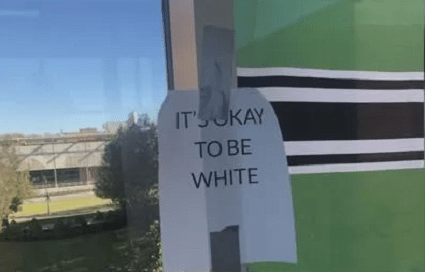
Western Connecticut State University  President John Clark, who asked for the community’s help identifying students—if they were students— who distributed what he called “hate filled flyers and inscriptions on our university property.” These were more of the 4Chan-inspired “It’s OK to be white” and “Islam is right about women” trolling devices.

“I wanted to assure you that a full scale police investigation is underway,” Clark wrote, stating that the FBI, state police and municipal police were reviewing surveillance footage iand grilling those  “who may have witnessed any of this despicable and utterly unacceptable behavior.” In full grandstanding and virtue-signalling mode, Clark declared that any WCSU community members identified as responsible for  the flyers  “will be subject to the severest disciplinary actions, including dismissal as well as possible civil and criminal actions.”  He described the flyers’ message as “disgusting,” “hateful,” “virulent,” “sick and outrageous.”

“It’s OK to be white.”

The Horror. Continue reading

No, This Isn’t Impeachable Either, Just Unethical And Illegal

They are whooping it up at the Trump-Haters Club, because President Trump will have to pay $2 million in damages to nonprofit groups as a penalty for what can only be called a fraudulent use of his foundation in 2016. As part of the settlement agreement,  the President had to admit misusing funds raised by the Donald J. Trump Foundation, accessing them to assist his campaign, pay off debts of businesses he owned, including Mar-a-Lago and the Trump National Golf Club in Westchester County,  and, as an especially obnoxious move,  purchasing a $10,000 portrait of himself to hand in one of his Florida hotels. New York’s Attorney General  filed suit  accusing the Trump family of using the foundation to benefit various businesses and assist Trump’s  presidential run. You can’t use a non-profit like that; this is the kind of scam that got Tom DeLay thrown in prison.

The President admitted that the alleged charity charity gave his campaign complete control over the $2.8 million that the foundation had raised at an Iowa fund-raiser for veterans in January 2016. It was in fact a fund-raiser for the campaign, not veterans.

Nice.

Continue reading

The Coup In Progress: Presidential Impeachment/Removal Plans

I am finally devoting a dedicated post  to this list, in part because I am sick of searching for the thing every time I want to reference it. I will eventually deposit the list along with the Apology Scale and the Rationalizations List as another separate page in the “Rule Book” to your right.

One note on the use of the term coup. Some media pundits, their hands already bloodied, have been making the sophist claim that what has been going on since November 2016 isn’t a coup under the dictionary definition, which requires violence and usually a military take-over. Using cover-terms and euphemisms is a form of lying, and it is an especially common practice from  the Left right now, though the Right has its moments.

A “soft coup,” also known as a silent coup, does not use violence, and is typically based on a conspiracy or plot  aimed at seizing power, overthrowing existing legal authority, exchanging political leadership, changing the political system or the current institutional order. We are watching a long-running soft coup. A soft coup is still a coup.

There have been 19 Plans to abuse various processes, laws and theories, all put forward and promoted by members of the Democratic Party/”resistance”/mainstream news media alliance since President Trump’s election.  The  desired effect of this barrage, apart from serving the goal of removing him without the bother (and risk) of an election,  has been to make it impossible for the President to govern, and to destroy his support among the public.

When Plan S, which late novelist Robert Ludlum might have called “The Ukrainian Perversion” if it had been one of his novels, fails like the rest, or if President Trump is re-elected, the list will keep growing.

The List: Continue reading

Thoughts Upon Reading The Comments To The Recent “Conscience Clause” Post

The comments on the recent post regarding the so-called conscience rule being voided in court generated the comments the topic always does. What follows is a relatively short, general post to frame the issues as clearly as possible.  Admittedly, when a post is titled “When Law and Ethics Converge,” perhaps I shouldn’t have to explicate with a post focusing on the difference between law and ethics. I strongly believe that conscience clauses undermine the law, and are unethical, as you will see.

Law and Ethics are not the buddies people think they are, or wish they were. If you look around Ethics Alarms, you see why. Ethics, as the  process by which we decide and learn what is good and right conduct, evolves with time and experience. A predictable cut of a society’s ethics are always going to be a matter of intense debate. Ethics are self-enforcing, for the most part and by nature, because being ethical should make us feel good.  Once an authority or power starts demanding conduct and enforcing  conformity, we are mostly out of the realm of ethics and into morality, where conduct is dictated by a central overseer that, if it is to have genuine authority, must be voluntarily accepted by those subject to its power.

Society cannot function on ethics alone. Without laws, chaos and anarchy result. Because chaos and anarchy are bad for everyone, no individual who has accepted the social compact may decide which laws he or she will follow and which he or she will defy—at least, not without paying a price, which is society’s punishment. In ethical terms, this is a utilitarian calculation: we accept laws that individually we may find repugnant, because allowing citizens to pick and choose which laws they will obey as a matter of “conscience” doesn’t work and has never worked. Ethics pays attention to history.

Thus it is ethical to obey the law, and unethical not to,  even if good arguments can be made that particular laws are themselves unethical. This is where civil disobedience comes in: if a citizen chooses to violate a law on a the basis of that citizen’s conscience or principle, the citizen also has to accept the legal consequences of doing so as an obligation of citizenship. Continue reading

When Law And Ethics Converge: Goodbye To The Trump Administration’s Unconstitutional and Unethical “Conscience Clause”

Today’s decision by U.S. District Judge Paul Engelmayer, voiding the Trump administration’s “conscience rule” that resuscitated the Bush Administration’s similar rule, is right on the law, and, more important for this blog, right on ethics. The Trump version, which was yet to go into effect,  allowed health-care providers to refuse to participate in abortions, sterilizations or other types of care they if they disagreed with them on religious or moral grounds.

It was an invitation to open-ended discrimination, and as objectionable in principle as allowing public accommodations to refuse to serve Jews, blacks or gays. This topic has been thoroughly explored on Ethics Alarms over the years, and I don’t have anything much new to say. In fact, perusing my various essays on the topic, my favorite is one that is so old, it was on the Ethics Alarms predecessor the Ethics Scoreboard (on which I am slowly making progress in my efforts to get it back online) and mentions Paris Hilton, working at Blockbuster, and an earlier incarnation of Colin Kaepernick in the NBA.

I wrote, in 2005, Continue reading

You Are No Doubt Reading About How Yesterday’s Election Gave Democrats Control Over The Virginia Legislature. Here Is A Notable Component Of That Accomplishment.

Be proud, Democrats!

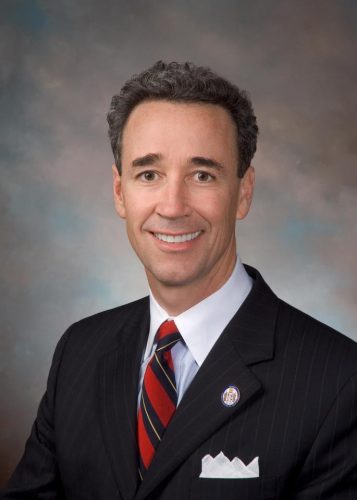
Former Virginia lawmaker Joe  Morrissey  won the state Senate seat for the 16th District in the Old Dominion last night, defeating Independent Waylin Ross.  Morrissey got more than 60% of the votes, showing an enthusiastic  electorate. He will now represent parts of Richmond, Chesterfield County, Petersburg, Hopewell, Prince George County, and Dinwiddie County.

Who is Joe Morrissey? Let me refresh your memory using this post, from 2014. The first half of it was about revolting Republican House member Blake Farenthold—the guy wearing the duck pajamas—

who was, thankfully, finally forced out of office in the wake of #MeToo.  The second half was about Joe: Continue reading

Comment Of The Day: “Unethical Tweet Of The Month: Rep. Alexandria Ocasio-Cortez (D-NY)”

An old, old, lament: “Laws are for the little people…”

I am constantly impressed at the perceptive and eloquent comments that issue from such a large number of Ethics Alarms readers. It cushions the blow of the traffic fall-off here that came shortly after the 2016 election, as the rapid Trump-Haters and resistance acolytes fled to secure echo chambers. (Facebook banning EA didn’t help.) I’d like both, sure, but I’ll take quality over quantity every time.

Aaron Pascal is long-time participant on Ethics Alarms, and he has issued many provocative comments, usually with a refreshing edge. This, in reaction to the most recent of AOC’s annoying and ethics-dead tweets, is one of his best.

Here is Aaron Pascal’s Comment of the Day on the post, “Unethical Tweet Of The Month: Rep. Alexandria Ocasio-Cortez (D-NY)”….

“Jail the poor to free the rich” smacks of a combination of two extreme positions on two separate valid social dilemmas interacting.

First, there is the moderately unsettling (to me) privately funded and operated prison system. It’s been suggested that inmates are the product that is sold to bring in money. If people stopped being put in prison, then the corporations running the prison would lose money. Ergo, they get the politicians (especially the nasty, racist Republicans) to criminalize more activity, and push for longer sentences for smaller and smaller offenses. Especially if the crimes you tighten up on end up imprisoning a disproportionate number of racial minorities. Not a viewpoint completely without merit, but if you assume it’s the norm it certainly encourages a topsy turvy view of criminal activity vs the justice system. It also requires picturing the police, the justice system, the prison system, and the government as really bad, selfish people. Which is only a problem for leftists once you get to the government, which once you assign the blame to those horrible Republicans, the cognitive dissonance goes away. Continue reading