Justice vs. Process: The Case Of The Final, Mandatory, Unjust Sentence

African American in Prison

A full panel of the U.S. Court of Appeals for the 4th Circuit, fifteen judges in all, heard arguments this week  regarding whether they have the power to do anything about Raymond Surratt Jr.’s mandatory life sentence, which just about everybody—-the sentencing judge, Surratt’s defense lawyers and government prosecutors—agrees is unjust.

Until the Surratt case, no federal appellate court has faced the question of  whether a court it has a route to correcting a mistake of its own making when the error is as severe as a mandatory life sentence. The North Carolina father of two is incarcerated at a federal facility in Virginia for a 2005 cocaine conviction. If Surratt were sentenced today, he would face a mandatory minimum penalty of only ten years in prison. If he had been sentenced under current laws in 2005 rather than the laws then in effect, he would be out of jail by now.

Surratt pleaded guilty in 2005 to conspiring to distribute at least 50 grams of cocaine in western North Carolina. The judge said he had no choice under sentencing guidelines other than  to give him a mandatory life sentence because of Surratt’s earlier drug convictions. The judge called the penalty “undeserved and unjust.”

The conviction and sentence were upheld after Surratt’s  appeals. Now he has no appeals left. But in 2011, the 4th Circuit, which includes North Carolina, overruled past practice, meaning that it held that prior convictions as in Surratt’s case should not trigger a mandatory life term.

Now, I know that non-lawyers react to this by thinking, “So what’s the problem? Let him out!” That’s in line with the reaction they have when they hear about a defense lawyer who knows his mad-dog killer defendant is guilty of a heinous, bloody crime (“So tell the judge!”). However, the law can’t be changed on the fly, and the fact that a result may be obviously wrong doesn’t change the importance of addressing it within existing procedures, rules and laws. In this case, no more appeals means no more appeals.

The Surratt case involves the important judicial principle of finality. Prof. Steven H. Goldblatt, who runs Georgetown Law Center’s  appellate litigation clinic, told the court that finality is of vital importance to the legal system. Agreeing, a majority of the Fourth Circuit panel said last year that… Continue reading →

The North Carolina Transgender Bathroom Freak-Out, LGBT Activists And Shared Accountability For An Ethics Train Wreck

rest rooms gender

Yes, the new North Carolina anti-LGBT law is excessive, dumb, an over-reaction and probably unconstitutional. More than that, however, it is an example what can happen when the proponents of opposing views refuse to listen to or respect each other, don’t attempt to minimize bitterness and conflict, and prefer to settle problems by going to war. The law exemplifies the ignorance, fear and reflex defensiveness of human beings when faced with inevitable cultural change, but it could have been avoided if LGBT activists and advocates had not demonized their opponents and used political leverage to push for extreme positions that were neither necessary nor clearly correct.

North Carolina’s conservatives are horrified at the idea of biological males being allowed to use women’s rest rooms when the “males” identify as female, so the state passed a law that appears to allow all forms of discrimination based on gender and sexual orientation. The new law establishes a statewide nondiscrimination ordinance that explicitly supersedes any local nondiscrimination measures. The statewide protections cover race, religion, color, national origin and biological sex,  but not sexual orientation or gender identity. Whether it is intended to do so or not, this seems to say that in the eyes of North Carolina, discrimination against LGBT citizens is fine and reasonable.

Well, it isn’t, and thus the law itself is unethical—incompetent, irresponsible, unfair, unjust, uncaring, and disrespectful.

Good job, State legislature,  Gov. Pat McCrory, and North Carolina. You’re all an embarrassment to the nation.

Still, this whole mess  occurred because activists couldn’t come up with a reasonable accommodation that would still the concerns of those old fashioned citizens who think ladies rooms shouldn’t be frequented by people who can pee standing up, while still meeting the minimal requirements of the Caitlyn Jenners of the world. Continue reading →

The Great Texas Warrant Roundup

debtors prisons

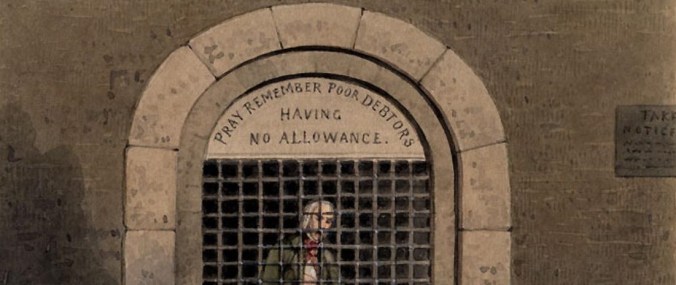
If the news media did their job, somebody would have asked Ted Cruz about this by now.Something like, “Senator, what is your position on the growing use of debtors prisons in your state and other states around the U.S.?”

On March 5th, Texas commenced what is known as the Great Texas Warrant Roundup, an annual statewide collaboration of courts and law enforcement agencies to squeeze payment of overdue fines and fees from Texans. The Texans targeted are overwhelmingly poor citizens who have outstanding warrants for unpaid traffic tickets, many of which were dubious, the product of aggressive policing to meet budget quotas. The carrot is an amnesty period that precedes the “roundup;” the stick is the threat of arrest and jail for those who can’t pay.

In Texas, a ticket for failing to signal a lane change—a favorite way to start the process of bleeding vulnerable citizens to cover city and county budget shortfalls— will cost about $66. That’s just the beginning, though.  Texas adds $103 in court costs, a public defender fee,  a fee to put you on a payment plan if you can’t pay,  and the always versatile “administrative fee.” Writes the ACLU: “For people who are too poor to pay their tickets, that $66 fine can grow to over $500.”

Once the victim can’t pay the collective fines,Texas will suspend renewal of the driver’s license, adding the License Renewal Suspension Fee, another $30.  Now it’s illegal to drive to the work, and without work, it will be impossible to support a family and pay bills. Faced with that dilemma, many citizens drive anyway, and get eventually get pulled over, leading to more tickets, fines, fees…and more debt. Continue reading →

Unethical Quote Of The Month: Above the Law’s Joe Patrice

[C]onsensual relationships with adults don’t seem like a big deal. Sure, the conflict of interest of sleeping with someone in your class is deserving of discipline, but, really, in a state where you can marry your sister, is it a fireable offense to hookup with a twenty-something attorney-to-be? Obviously, if there were more serious allegations that would be another matter, but so far we’ve only learned of this more benign brand of misconduct.

—-Above the Law writer Joe Patrice, commenting, incompetently, on the firing of Virginia University College of Law Professor Arthur Rizer, for having sexual relations with multiple students.

Professor Rizer, the Sam Malone of West Virginia University College of Law...

Professor Rizer, the Sam Malone of West Virginia University College of Law…

This commentary, from a regular writer for a website that covers law schools, is so ethically obtuse and legally ignorant that he should be fired. “Not a big deal”? Sexual harassment at law firms is a very big deal as well as a very big problem, and a law professor who flagrantly violates an anti-harassment policy like the prohibition against professors treating the student body as their own personal dating bar is teaching that seeking sex with subordinates is culturally acceptable in the legal profession. It isn’t. It never has been.

The professor’s conflict of interest is the least of his self-created problems. First, there is no valid consent in such cases. The professor has real and perceived control over students’ academic success and legal career viability. This is classic inequality of power that gives a professor implied leverage over a student’s “consent” to sexual relations. Moreover, the knowledge that a professor is having sex with students constitutes third-party sexual harassment. Do other students assume that they are expected to have sex with the professor if he requests it? Is the professor looking at female students as mere sex objects? Are students that provide sexual access more likely to get high grades? What happens to students who say “no”? This creates a hostile environment for study and education. Continue reading →

Ask Ethics Alarms: “Why Is It Unethical For A Prosecutor To Say That A Witness Is telling The Truth?”

"Would I try to convict an innocent man?"

“Why would I try to convict an innocent man? He has to be guilty.”

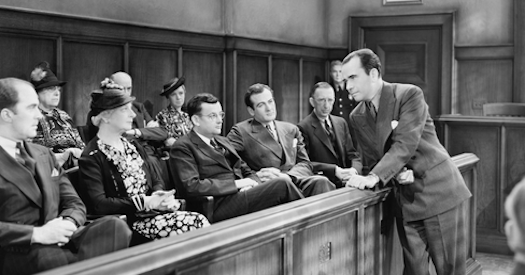
The primary Ethics Alarms topic scout, the Amazing Fred, has posed a question about this case, in which a child pornography conviction was overturned because the government prosecutor repeatedly stated that his witnesses were stating the truth, and that the government doesn’t prosecute defendants who aren’t guilty.

Fred asks the question this way:

“A prosecutor told a jury that prosecution witnesses were credible…Isn’t a defense attorney allowed to discredit prosecution witnesses? Why shouldn’t a prosecutor be free to argue the opposite?

The problem isn’t arguing that prosecution witnesses are credible, but rather the prosecutor appearing to personally vouch for the witness. Lawyers aren’t witnesses, and their opinions aren’t testimony or evidence. A lawyer can tell a jury that a defendant is guilty or innocent, but a lawyer cannot say “I believe “ a witness or “I believe” the defendant is guilty. It doesn’t matter what the lawyers believe, and they prejudice the jury by making their own credibility part of the case. Lawyers don’t have to personally believe in the positions they argue. Continue reading →

Ethics Verdict: The Republicans Should Vote On (And Approve) Judge Merrick Garland

Merrick Garland

For Senate Republicans, holding hearings on President Obama’s qualified and moderate nomination for the Supreme Court is both the ethical course and the politically smart course. It is also in the best interests of the nation.

In fact, the Byzantine political maneuverings by the President and the Republican leadership, by turns petty and ingenious, have handed Republicans a political chess victory, if only they are smart enough, responsible enough, and patriotic enough to grab it. Naturally, they aren’t.

It is infuriating, and all citizens should be infuriated.

A brief review of how we got to this point of looming GOP disgrace is in order:

  • Justice Scalia died, removing a towering conservative force from the Court. This meant that almost any replacement, and definitely one named by Obama, would make the Supreme Court more liberal than it has been in many years.
  • Seizing on the opportunity to make the election a referendum on the composition of the Court (which is was going to be anyway), Mich McConnell announced that no nominee named by Obama, an outgoing POTUS less than a year from leaving office, would be considered by the Senate.
  • Democrats and their allies in the punditry predictably pronounced this to be a breach of Senate duty. Embarrassingly, records surfaced of  Joe Biden asserting the same basic principle that McConnell was arguing for, when Bush was the President. Biden, I must duly note, is an idiot, but he’s still the current Vice President. Then again, all Biden has to do is say now, “I was wrong.” As he frequently is.
  • Though many predicted that Obama would name a transsexual, disabled black Jewish Latino judge with Socialist leanings to maximize the opportunity to politicize the process, he did the opposite. He named a qualified jurist.
  • The judge he named, Merrick Garland, is a white, veteran 63-year-old judge with a distinguished record, nothing flamboyant or controversial, who is as close to a non-ideological, non-partisan moderate as any Democratic President is likely to appoint from now until the stars turn cold.

Now, if Senate Republicans were interested in doing what is in the best interests of the nation—that is,  filling the Supreme Court vacancy as soon as possible, giving proper deference to a responsible and reasonable nomination by the President, avoiding a nasty and divisive partisan fight, and ensuring that the next Supreme Court Justice won’t be an intractable leftist firebrand determined to gut the Constitution or another “wise Latina” mediocrity who will pollute the record with touchy-feely ramblings—they would leap on this opportunity and unanimously confirm Garland, saying publicly that they reconsidered McConnell’s declaration in the interest of restoring the integrity of the nomination process and returning to the time before Democrats politicized the process beyond reason in the Bork hearings, giving the President his choice, regardless of philosophical bent, when the nominee is qualified, dignified, experienced and trustworthy. like Judge Garland Continue reading →

Unethical Quote Of The Week: Nautika Harris

miami-teen-home-intruder

“You have to look at it from every child’s point of view that was raised in the hood. You have to understand … how he gonna get his money to have clothes to go to school? You have to look at it from his point of view.”

—Nautika Harris (above, right), the cousin of a 17-year-old teen shot dead by a 54-year-old Miami woman as he tried to exit her home, which he had entered to burglarize.

Miami-Dade police say that Trevon Johnson, 17, burglarized the home of a 54-year-old old woman last week.

She was not in the house when the break-in occurred, but after being alerted by her surveillance system, she rushed home and found Johnson climbing out of a window. She shot him dead, and his relatives are outraged.

“I don’t care if she have her gun license or any of that. That is way beyond the law … way beyond,” Johnson’s cousin Nautika Harris told local radio station WFOR. “He was not supposed to die like this. He had a future ahead of him. Trevon had goals … he was a funny guy, very big on education, loved learning.”

And loved burglary, apparently. Continue reading →

The Ethics Of Judges In Love

gavel heart

When  attorney Joe Foley represented a client in a matter before Judge Scott Drazewski in early 2011, he was unaware that the married judge was involved a year-long secret romantic affair with Judge Rebecca Foley, the attorney’s wife.

Now both Illinois judges  have been disciplined by state legal ethics authorities for failing to reveal their romantic relationship and violating multiple ethics rules as a result. The ethics commission imposed a four-month unpaid suspension on Drazewski for “egregious” judicial ethics violations, and censured Judge Foley for assisting, aiding, abetting, and not reporting his violation or their affair. Continue reading →

Now THIS Is Hypocrisy (Among Other Things)…

Hypocrisy meter

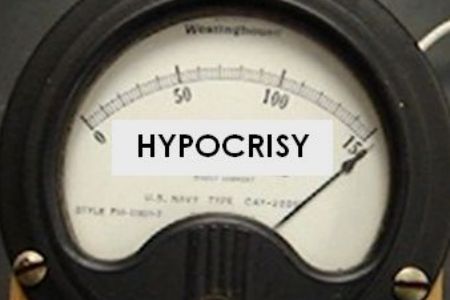
I thought Eliot Spitzer set a high bar for hypocritical prosecutors, but Ingham County (Michigan)  Prosecutor Stuart Dunnings makes him look like a piker.

Dunnings, a well-respected prosecutor since 1997 and an outspoken advocate for ending human trafficking and prostitution, is facing fifteen  criminal charges in Ingham, Clinton and Ionia counties, including ten counts of prostitution, pandering and four counts of willful neglect of duty.

Investigators connected to a 2015 federal investigation into a Michigan-based human trafficking ring determined that between 2010 and 2015, Dunnings paid for sex hundreds of times with many women whom he contacted using escort websites. Dunnings also allegedly induced one woman to become a prostitute,leading to the pandering charge, which carried a maximum sentence of 20 years. The prosecutor’s  brother, Lansing attorney Steven Dunnings, was also charged with two counts of prostitution.

Ethics Alarms frequently finds itself annoyed by mistaken, incorrect or unfair accusations of hypocrisy, and is grateful to Dunning, who claimed to be dedicated to wiping out human trafficking and prostitution while he was really supporting both with his patronage, for giving us a clear and unequivocal demonstration of what real hypocrisy looks like.

Obviously, Democratic Base Demonstrators Are Planning To Disrupt July’s Republican National Convention In Cleveland. Here Are Seven Ethical Mandates To Prevent It…

1. Integrity, Citizenship and Responsibility: President Obama should begin speaking, now, about the integrity of the democratic process, the duty of all Americans to respect the opinions of others, and the civic obligation to allow elections to be peaceful and fair. he should also stop sowing partisan animus, and seeking to divide the nation for the Democratic Party ‘s advantage.

2. Responsibility and Competence: The Republican Party should tell Donald Trump that he has disgraced the party’s values, that he will no longer be considered as a candidate, and that he can do his worst. (Just for fun, it should challenge Democrats to be equally responsible and disqualify Hillary Clinton for conspiring to foil the Freedom of Information Act, which is pretty obviously what the private server was all about.)

3.  Responsibility: The GOP should move the convention out of Cleveland. It may already be too late, but it needs to do this, and should have done so the second the Tamir Rice shooting occurred. Holding a national convention in that city is inviting violence. My recommendation: move it to Honolulu, so demonstrators will have to spend a fortune to get there, while placing it in Obama’s home state, bring the division he has sought and nourished into his back yard. Continue reading →