What Lawyers Can Teach Doctors About Ethics

So THAT'S why they wear masks!

So THAT’S why they wear masks!

Sandeep Jauhar is a cardiologist, the author of “Doctored: The Disillusionment of an American Physician” and “Intern: A Doctor’s Initiation.”and a contributing op-ed writer for the New York Times. He recently penned a column for the paper that raised concerns about threats to doctor-patient confidentiality, specifically from the case, in Washington state, of Volk v. DeMeerleer.

Howard Ashby, a psychiatrist, was sued after his patient, Jan DeMeerleer, shot and killed an ex-girlfriend and her 9-year-old son before shooting himself.  The estate of the victims, Rebecca and Phillip Schiering sued Dr. Ashby, alleging that he breached a duty to warn DeMeerleer’s victims even though the killer had made no specific threats toward the Schierings during his treatment.  Last year, however,  that judgment was reversed by an appeals court, which held that doctors could be required to warn “all foreseeable victims” of their potentially dangerous patients in their care.

It’s a terrible decision, and Jauhar does a good job explaining why. Unfortunately, he also writes this..

“I once took care of a business executive in the emergency room who had hired call girls during a weekend drug binge. When he saw a police officer outside his room, he quietly handed me an envelope containing a large amount of white powder. I wasn’t sure what to do with it, so I discarded it. For the next several hours the patient eyed me suspiciously, probably wondering whether I had ratted him out. But it never occurred to me to do so.”

Well, it should have. Confidentiality is one thing, assisting in a crime is another. The Hippocratic Oath says“What I may see or hear in the course of treatment, I will keep to myself.” That only means, however, that doctors who learn about criminal activity a patient may be involved in is bound not to report it (lawyers have the same obligation).  Jauhar did more than not report criminal activity; he participated in it. He crossed the line by disposing of contraband. Continue reading →

Just To Wash The Nasty Residue Of Those Absurd Pilgrim-Syrian Refugee Analogies Out Of Your Brain, Here are Some Useful And Informative Silly Refugee Discourses

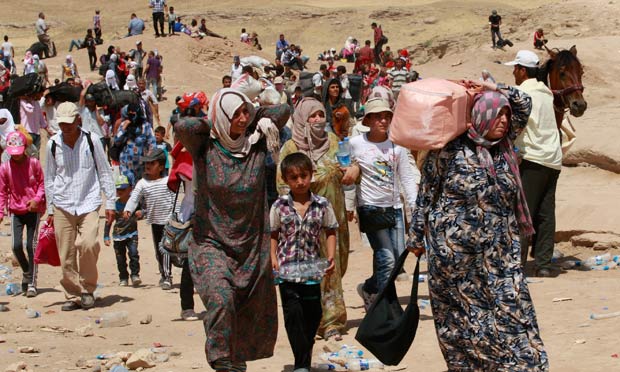
Go ahead, tell us how you'd keep THESE refugees out, Donald...

Go ahead, tell us how you’d keep THESE refugees out, Donald…

By the time Thanksgiving arrived, the social media memes pronouncing that for anyone who believes accepting Syrian refugees into the U.S. is less than wise policy it was rank hypocrisy to celebrate the holiday had become too much to bear. Granted, this stupid analogy was marginally less stupid than the “Jesus was a refugee so what kind of Christian are you?” stuff put out by OccupyDemocrats, but it was still pure debate pollution. Did the Native Americans know that the Europeans were refugees? Uh, no. Did they have a refugee policy? Nooooo. Was the territory that became the United States being targeting by terrorists? No. Had there been any previous terrorist attacks on Native Americans in North America? No. If the Indians had known about what the Spanish had already been doing to indigenous people, would they have been so welcoming? I think not. If Native Americans today could go back in time and decide all over again whether to allow the “refugees” to settle here, what would they decide?

You betcha.

Are the beneficiaries of a terrible decision ethically obligated to risk their own destruction by making the same mistake?I guess that’s the theory. Pardon me if I’m not persuaded, but you wouldn’t believe the “likes” this argument got on Facebook in its various forms.

Well, President Obama used this same illicit analogy before Thanksgiving, and the progressives and pundits nodded their heads furiously, like turkeys. Oh, snap, Mr. President! You really stuck it to those xenophobes!

President Obama obviously doesn’t care about his rhetoric any more, or think about it, either. He’s not as flagrant as Donald Trump in spewing irresponsible nonsense, but no ethical President should even spark the comparison.

Well, over at Law and the Multiverse, which is another neat website in the Ethics Alarms links, there is a very informative discussion of the refugee status of Superman, an environmental refugee (a planet exploding qualifies its residents) and Supergirl, another Krypton refugee whose status is a bit more complex. Law and the Multiverse features serious legal discussions of the legal issues that would be raised by the conduct and existence of superheroes in the real world. Here’s a sample, from author Kean Zimmerman’s discussion of Supergirl’s status: Continue reading →

Your Ethics Alarms Cognitive Dissonance Guide To The Planned Parenthood Shooter Spin Game


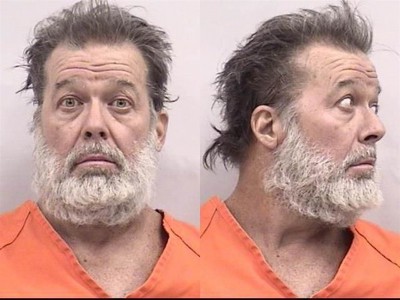
Robert Dear

Cognitive DissonanceTo the left is a simplified version of Leon Festinger’s Cognitive Dissonance Scale. Most of the people and institutions who use the scale to mislead and manipulate public opinion neither know this diagram nor have heard of Dr. Festinger, but it is what they are employing in the daily wars to win ideological political converts by distorting the significance of current events.

Robert Dear’s as yet unexplained shooting rampage within a Colorado Springs Planned Parenthood facility has immediately created an opportunity for cognitive dissonance manipulation. Festinger’s research showed that our minds will always try to resolve dissonance when something with a high, or positive score—say, “Free Speech,” appears to be closely associated with something else that is low on the scale, such as “hateful speech.” How the dissonance is resolved will depend on the scores of the two dissonant objects or beliefs.

If you want the public to decide that something it approves of is less worthy of approval, attaching it to something the public believes is reprehensible will do the job by creating cognitive dissonance and pulling the well-regarded object down the scale. If you want the public to move its opinion of a person, organization or concept from negative territory into positive, identifying someone or something the public regards far more negatively who opposes the person, organization or concept will tend to move the object of the negative entity’s opposition upward on the scale. In these situations, the mind seeks distance from the reviled entity. I hate broccoli; I learn that Donald Trump hates broccoli; I don’t want to have anything in common with Donald Trump. Pass the broccoli, please.

The latter is the process repeatedly applied by the protesters of police shootings when African Americans are the victims. The public correctly opposes abuse of power and wrongful violence by law enforcement officials; it is far below the mid-point on the scale. It also a opposes criminal activity and resisting legitimate law enforcement. With rare exceptions, every black victim of a questionable police shooting was engaging in or had engaged in criminal activity, and had resisted arrest. These have been criminals, but because the alleged misconduct of the police is far lower on the scale than the criminal activity involved, the criminal victims are propelled by cognitive dissonance into the scale’s positive territory. (The media assists the process by publicizing the most benign images of the victims they can find. The most frequently used photo of Laquan McDonald, who was executed by a Chicago cop, shows him in his high school graduation gown, for example. The cop didn’t shoot a criminal who refused to stop when ordered to, he shot a smiling young man with a bright future. The police officer is thus a monster; the victim a martyr and a hero.)

Now let’s look at the current use of cognitive dissonance in the wake of the shooting by Robert Dear. Continue reading →

Ethics Film of the Year: “Spotlight”

No spoiler alerts necessary; I’m not going to say much about the film’s plot. Just go see it.

Sure, I was predisposed to like “Spotlight.” It’s about Boston, my home town; Fenway Park even appears in it, Red Sox and all.  I had also followed the unfolding Catholic Church sexual molestation scandal there that the Boston Globe broke in 2002. This was the Globe’s momentous investigative journalism series which showed the extent to which high-ranking Church officials allowed child predator priests to continue harming trusting kids, as the Church paid for confidential settlements to victims and transferred the criminal priests to other parishes, where they could, and did, strike again. “Spotlight” tells the story of how a group of Globe editors and reporters finally exposed a local conspiracy of corruption that spread across institutions and professions, and that pointed to a world-wide scandal that still haunts the Catholic Church today.

It’s a better ethics movie than “All The President’s Men,” to which it will inevitably be compared. Whether it’s a better movie or not is a matter of taste. (I liked it better.) Where the movie really shines, however, is how it raises so many of the ethics issues we routinely cover here, such as…

  • Legal ethics: the duty of lawyers to represent clients, confidentiality, and when, if ever, human ethics require the breaching of professional ethics.
  • Ethics corruptors, and what happens when admired, trusted and powerful people and institutions require their followers to show their loyalty by ignoring, rationalizing or covering up wrongful acts.
  • Journalism ethics: the business of journalism’s conflict with the duty of journalists to find and publicize the truth; how ambition, personal biases and non-professional concerns can warp perspective and performance
  • Ethics and religion, hypocrisy, and the institutional utilitarian choice to protect the whole when it means sacrificing individuals
  • Rationalizations, including the Saint’s Excuse and the King’s Pass, in which prominence and “good deeds” seem to justify double standards.
  • Hindsight bias, Moral luck, and more.

Continue reading →

Have A Happy Thanksgiving Everyone, And Don’t Forget To Review The Ethics Alarms Complete “It’s A Wonderful Life” Ethics Guide Before The Annual TV Screening!

It’s right here!

I Don’t Understand: Why Doesn’t The Life of Donald E. Gates Matter To Black Lives Matter?

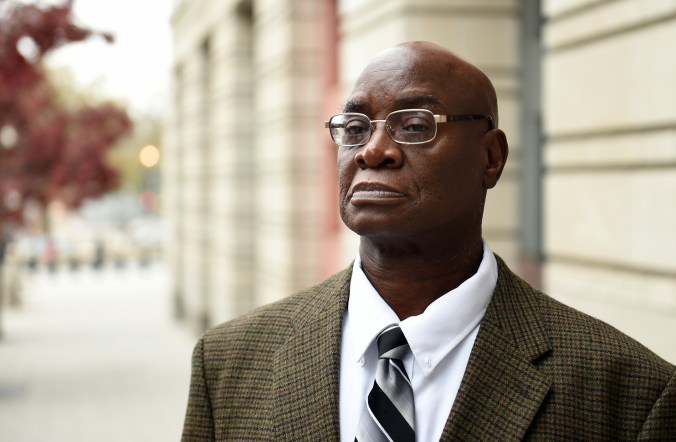
GATES

This week, a federal jury found that District of Columbia. police framed Donald E. Gates, an innocent man, for a 1981 rape and murder of a 21-year-old Georgetown University student.  Gates, who is African American, was imprisoned for 27 years. Two days after the verdict, the city settled with Gates for $16.65 million in damages.

The trial determined that two D.C. homicide detectives,Ronald S. Taylor and Norman Brooks, both now retired, largely fabricated  the confession Gates was supposed to have made to a police informant. The detectives also withheld other evidence from Gates’ defense attorney. You can read the whole horrible story here.

There are a couple of aspects of this story, and others like it, that I don’t understand at all.

One is this: why aren’t the two detectives going to prison? Their conduct has cost the city’s taxpayers eight figures in damages, it has already cost an innocent man the prime of his life, and what is their penalty? I would support capital punishment for police like these. Destroying a man’s life, breaching a public duty, shredding public trust, using the law for evil— few murders do so much damage. It makes no sense for there not to be life imprisonment, execution, something to announce to the community that police and law enforcement officers will and must be held to the highest standards, and suffer greatly when they fail to meet the lowest. From what I can tell, these evil detectives—that’s a fair description, isn’t it?— aren’t even going to lose their pensions. Continue reading →

Tesla’s Seat Belt Recall, Moral Luck, and Ethics Chess

Jaws victim

Ethics Alarms Chief Ethics Scout Fred found this one. Tesla was alerted to one seat belt failure in its Model S, and  recalled them all. This involved a huge cost, of course, and that cost will be eventually passed on to consumers and investors. Fred asks,

“Abundance of caution” is the phrase they used, one I gather is familiar to lawyers. Could they have justified some other response that was less catastrophically expensive? Would they have had a fiduciary duty to do so? Or would that duty lie in maintaining the brand image of meticulous quality at almost any short-term cost, building a reputation that could command premium prices for decades to come?
The issue was simply this: how much did the company want to bet on moral luck? Tesla was aware of a possible design or manufacturing flaw that could kill passengers. It could have been a fluke, and it could have been widespread. If the cars were not recalled—and I don’t know enough about Teslas to presume that there would be any other way to check every single car or replace the seat belts without the expense of a recall, so I will assume for this discussion that there is not—and one or more passenger was killed, then Tesla management would have suddenly become Sheriff Brodie and Mayor Vaughn in “Jaws,” as articulated, with a slap, by the mother of a little boy who became shark bait while playing on his yellow raft. They knew there was a possible danger, and decided that chancing it was a better call than risking the summer tourist business. They balanced the risks, and did nothing.

Refugee Debate Update: The Good, The Bad, The Ugly, The Stupid, and Then There’s Carol Costello

OccupyDemocrats2

Ugh. It’s hard, not to mention nauseating and repetitious, to simultaneously cover two Ethics Trainwrecks moving at alarming speed and generating unethical conduct and words in all directions. My backlog of other, non-campus, non-terrorism stories grows longer my the minute, but Ethics Alarms has a mission, damn it.

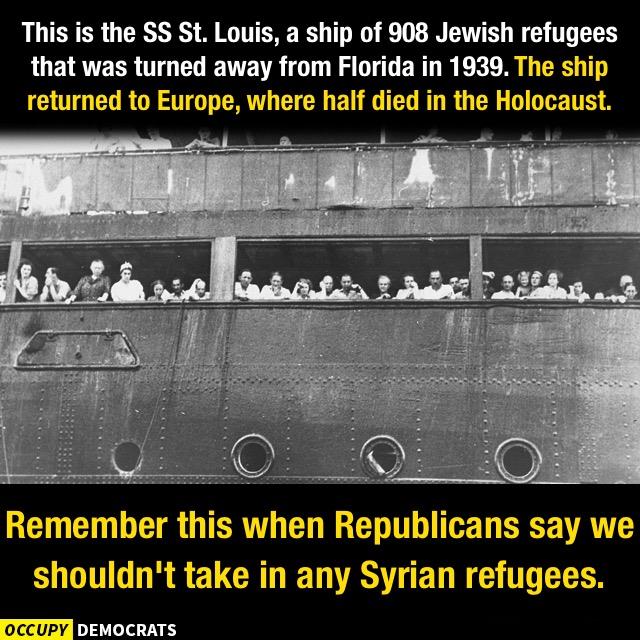
First the Stupid, represented by one of OccupyDemocrats many memes. I am torn, though: is this meme even worse?

OccupyDems

Somebody at OccupyDemocrats.org makes these constantly, and I’d be fascinated to know if whoever it is really thinks these are valid arguments, or are just appealing to, you know, reliably stupid people who aren’t thinking very hard, and who say, “Duhhh, yup! That’ll put those Republicans in their place! I’ll post this to Facebook!” How many Americans really are this deficient in critical thinking?

Maybe I don’t want to think too much about this.

Next, the Good:  Continue reading →

An Ethics Mystery: Why Can’t Democrats Be Honest Or Responsible Regarding The Syrian Refugees??

"Repeat after me:  WE CAN SCREEN THE SYRIAN REFUGEES! THERE IS NO DANGER! NO DANGER"

“Repeat after me: WE CAN SCREEN THE SYRIAN REFUGEES! THERE IS NO DANGER! NO DANGER”

The question of whether to accept Syrian refugees is not, or should not be, a partisan one. It’s simple logic, duty and priorities, as I wrote here. A needy group has an unknown component of deadly members capable of killing Americans. Until or unless those members can be identified and separated from that group, it would be irresponsible to admit them into the country. The Paris bombing vividly illustrated the risk of ignoring these facts. So why are Democrats and their pundit allies making statements attacking those who acknowledge them? You know, just because they are conservatives and Republicans who tend to think that all of President Obama’s policies are misguided doesn’t mean they can’t be right occasionally.

I have been searching for a single persuasive, fact-based argument that justifies the risk of accepting thousands of Syrians. In fact, I have been searching for one that wasn’t dishonest, an appeal to emotion over reality, or a cheap excuse to engage in race-baiting, now the Democratic Party’s favorite pastime.

I’d love to hear one. I’d love to be convinced. If the nation can take in the suffering refugees without vastly increasing the chance of a bomb going off in the a restaurant I’m eating with my family, hurray!

Such arguments just aren’t there, however. Instead we are hearing: Continue reading →

The Syrian Refugee Controversy: For The US Government, An Easy Ethics Call

Syrian refugees

That does not mean that it is an easy call for Barack Obama, whose perception of his duties and the stakeholders in his decisions is often confused.

The Question: Is it competent and responsible (ergo ethical) for the  the U.S. accept 10,000 Syrian refugees (or 65,000, as Hillary Clinton advocates) in the U.S., knowing that it is statistically certain that some of them will carry the threat of Islamic terrorism with them?

The Answer: No. Of course not. How can a rational person advocate such a foolish policy?

The answers to the last question are fascinating to speculate upon, and range from 1) “A rational person won’t,” to 2) “Willful blindness to reality” to 3) “Because of a profound misunderstanding of  the ethical priorities of government and leadership” to 4) “That’s a rational policy if the policy maker-wants  terror attacks.”

The proper analogy is admitting a refugee population with members suffering from a highly-communicable, infectious, incurable and fatal disease. No responsible government would risk bringing a plague into its population without being able to make certain—certain—that none of the refugees carried it. Thus there would be a quarantine period imposed on the refugees showing no symptoms, and those infected would not be allowed to enter the U.S. population at all. This is the same situation, except that the infectious, fatal, incurable contagion is radical Islam.

Dishonest and manipulative politicians like Hillary Clinton tacitly acknowledge the plague model when they say that refugees must be admitted to the U.S. but only after they are “thoroughly vetted.” They cannot be thoroughly vetted, however. Records from Syria are neither reliable nor available. Thus what such politicians are really saying is either “I don’t support taking Syrian refugees, but want you to think I do” or “I’m hopeless detached from reality.” The first is Hillary; the second is Barack Obama, who said yesterday,

“Slamming the door in their faces would be a betrayal of our values. Our nations can welcome refugees who are desperately seeking safety and ensure our own security. We can and must do both.”

We can’t do both. It can’t be done. His first sentence is pure demagoguery, and demonstrates, yet again, how shockingly ignorant the President is regarding the duties of his office. His essential duties are  to do what is in the best interests of the United States, its citizens, and its mission of promoting human rights in the world. When those objectives are in conflict, the President must put the welfare and security, long term and short term, of the citizens who elected him and the nation he leads above all else.

Why can’t Obama see that? I don’t know. I’ve given up trying to understand the man.

Objectively, the question of the Syrian refugees is an ethics conflict, when warring  ethical principles and systems contradictory results.On the side of accepting the refugees and the undeniable risks they carry, we have altruism, The Golden Rule, fairness, kindness, decency, tolerance, acceptance, compassion, and caring.

On the side of rejecting them, there is utilitarianism, responsibility, loyalty, process, competence, trustworthiness,  prudence, and due diligence.

For a leader, the choice is obvious, because for a leader, it can’t be a question answered objectively. The President of the United States is not permitted the luxury of altruism, or objectivity. He holds an office of trust, and is trusted to place  citizens above others. This decision involves more than values. It is a matter of leadership and government ethics.  However much Obama or anyone else believes that assisting the Syrian refugees, of any number, is objectively the “right thing to do,” the United States Government cannot regard it that way. It is bound by its own duties, standards and priorities to be partisan: this country comes first. The Syrian refugees present a real and existential peril that cannot be avoided, except by keeping them out.

Easy ethics call.

At least it should be.

Other points:

1. Nonetheless, it is Obama’s call. The 28 state governors who have announced that they will “not permit” Syrian refugees in their states are either ignorantly or for effect asserting a power they do not have. States cannot reject immigrants and refugees duly and lawfully admitted into the country by the Federal government. (According to the Obama Justice Department, they can’t reject illegal immigrants negligently admitted into the country by the Federal government’s incompetence and corruption, either.) These announcements of defiance are a bluff, but have undeniable political power. Continue reading →