Swastika Ethics: 8 Observations On The George Washington University “Hate Crime”

swastika

I was recently reminded about the origins of the Nazi swastika, ironically enough, during the Cincinnati funeral service of my dear friend, Georgetown classmate,  lawyer and patriot Mitchell Dale, who died last summer. Looking down during a prayer, I was startled to see the Hindu version of the symbol in a mosaic imbedded in the church floor.

Oddly, the pastor and mourners weren’t arrested.

Yet last month, an unnamed Jewish student placed a small, bronze, Indian swastika on the bulletin board of his Jewish fraternity, Zeta Beta Tau, in the university’s International House. The building had recently been the target of an unidentified vandal who drew three swastikas on the walls. After posting the swastika, the student stayed close to the bulletin board, intending to discuss it and the previous vandalism with observers. He briefly stepped away, unfortunately for him, and during that period a member of the student’s fraternity saw the swastika and called GWU’s campus police. They  filed a report and took the swastika as evidence. When the student found out the police had been called, he immediately came forward to authorities and said that he had posted the  image to spark a conversation about the ancient symbol, cultural appropriation, messages, perception…as in what used to be called “education.” He said he did not intend to offend anyone, noting in doing so that this was an Indian swastika, not a Nazi one. He had just returned from studying religion in India, and said he became fascinated by the idea that a symbol that was not one of hate could become so defined by hate.

GWU suspended the student and evicted him from university housing pending the outcome of five disciplinary charges. The university also kicked him off campus, and referred the incident to the District of Columbia police for investigation as a potential “hate crime.” He could face expulsion.

Ethics observations:

1. FIRE, Freedom for Individual Rights in Education, is on the case. Thank you, FIRE. FIRE Program Officer and attorney Ari Cohn wrote,

“GWU may not ignore thousands of years of history and effectively forbid all uses of the swastika because it was used by Nazi Germany. It’s ironic that the charges against the student illustrate the very point he was trying to make in the first place—that context is important and there’s much to be learned about the history of the swastika.”

2. Now the Hindu American Foundation is protesting as well. This is the wonderful aspect of diversity, and a warning to institutions and diversity hounds that diversity must cut in all directions, or is a sham. It is discriminatory for a university to demonize and censor an aspect of a world religion’s symbology and culture. Do you think the administrators at GW sufficiently understood this, or just didn’t care, going with what they perceived as the most powerful interest group?

3. The George Washington fiasco comes in the wake of other  colleges  responding to anti-Semitic swastika vandalism, but that shouldn’t have mattered. Continue reading
Unethical Website Of The Month: GoFundMe

GoFundMe thinks the 6th Amendment is heinous, apparently...

GoFundMe thinks the 6th Amendment is heinous, apparently…

A about a week ago, I designated the crowd-funding website GoFundMe an Ethics Dunce. Now it’s clear that it is worse than that. It’s an unethical website, period.

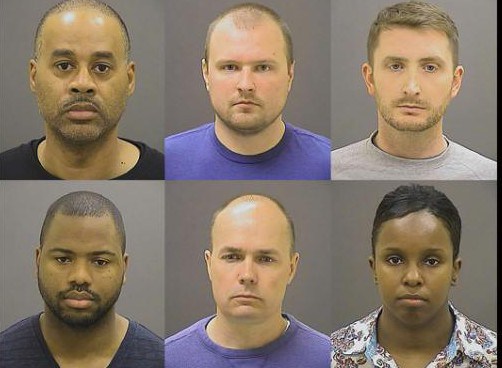
After the six Baltimore police officers were prematurely charged with serious crimes before the investigation into the death of Freddie Gray was complete, the Baltimore City Fraternal Order of Police created a GoFundMe page for their defense. Less than an hour later, it was taken down, with GoFundMe citing the same dubious policy it used to cut off support for a bakery driven out of business by vengeful same-sex marriage supporters:

“‘Campaigns in defense of formal charges of heinous crimes’ are prohibited by our terms . . . GoFundMe cannot be used to benefit those who are charged with serious violations of the law.” Continue reading

“Hillary Clinton’s Honesty Called Into Question In New Poll”…Wait, Why Is There Any “Question”?

 According to a recent AP-GFK poll, 61 percent of those surveyed—that’s only 61%—said “honest” describes Hillary Clinton only slightly well or not at all. Nearly four in 10 Democrats, and more than six in 10 independents agreed that “honest” was not the best word for her.

Gee, really?

This raises several important questions, such as..

1. What the heck is the matter with the 39% that would ever use “honest” in the same sentence as “Clinton”?

2. How much  is necessary to convince the nearly 70% of Democrats that unequivocal proof of habitual lying, violating signed pledges and dodging rules is indisputable indicia that one of their darlings is untrustworthy?

3. Why aren’t those Democrats embarrassed for their Party?

4. Why do they have so little respect for the nation?

5. How stupid does the  Democratic Party think voters are?

Last week, while the poll was being prepared for release, Vox, a reliable progressive mouthpiece that still has a greater capacity for integrity than 70% of their editors’ favorite political party, revealed that least 181 companies, individuals, and foreign governments gave to the Clinton Foundation and also lobbied the State Department while Hillary Clinton was Secretary of State.

After a staggering chart of all the cash that nobody can prove was part of a quid pro quo understanding but which almost certainly was, Vox concludes, “That’s not illegal, but it is scandalous.”

Of course it is scandalous.

It also violates federal law. Continue reading

A Particularly Dangerous Ethics Dunce Display: State’s Attorney Marilyn Mosby’s Unethical Statement Regarding Charges In The Death Of Freddie Gray

State’s Attorney Marilyn Mosby announced today that the six Baltimore police officers involved in the arrest and subsequent death of Freddie Gray  have been charged with criminal charges  second-degree murder, manslaughter, second-degree assault, vehicular manslaughter , and misconduct in office. I have no comment on that: I haven’t seen the evidence. I will assume the charges are justified base on what evidence there is.

Nonetheless, Mosby’s announcement and related statements from  the steps of Baltimore’s War Memorial Building were unethical, and indeed  constituted a professional ethics breach:

  • Mosby said she told Gray’s family that “no one is above the law and I would pursue justice upon their behalf.” Unethical. Her client isn’t the family. Her client is the state. If the evidence appears too weak to get a conviction based on any new revelations, her duty to her client, which only requires justice, not justice for any party, would be to drop the case. Telling the family that she is working “on their behalf” is either a lie, or, if true, unethical. She is not their lawyer or the victim’s lawyer.
  • “I heard your call for ‘no justice, no peace,'” she said. “Your peace is sincerely needed as I work to deliver justice on behalf of this young man.”

Ugh. Again the “on behalf of” misstatement. Worse, though, is “I heard your call for ‘no justice, no peace.” What are we to take from this statement, other than the disgraceful admission that the indictment is in response to mob violence and threats of more? She may not say that. By saying it, she has undermined the rule of law. Prosecutors must not”hear” demands that a citizen be prosecuted, or not prosecuted. They are ethically obligated to ignore them, and do what the evidence dictates.

The demonstrators obviously got her meaning. Desmond Taylor, 29, shouted to the crowd,  “This day means that your actions bring consequences in Baltimore City.”

Imagine what else riots and arson might bring! Continue reading

Unethical Quote Of The Week: Hillary Clinton

black-men-jail

“There is something wrong when a third of all black men face the prospect of prison during their lifetimes.”

—Hillary Clinton, in an address, to the David N. Dinkins Leadership & Public Policy Forum decrying “mass incarceration.”

So few words, so much deceit.

We are going to hear a lot of this theme, apparently, unless or maybe even if Democrats get responsible and choose a candidate other than the ethically compromised (and compromisable) Mrs. Clinton. “Mass incarceration” itself is a loaded term that sounds as if random citizens are rounded up and locked up by the government just for the hell of it. It is redolent of the political arrests of totalitarian regimes, and as such, misleading and irresponsible.

Likewise, the Unethical Quote of the Week that Hillary just authored suggests that black men are imprisoned without their doing anything untoward to justify it. A third of all black men don’t face the prospect of prison unless at least a third have broken laws or are anticipating breaking laws that require prison as the penalty. 100% of non-criminal black men—what we call “good citizens”— don’t “face” imprisonment at all. “Face” means that the fate is looming over their heads, ready to fall at any time. That’s nonsense, and a classic use of statistics to deceive. Prison is not a “prospect” for anyone who does not set out to commit a crime. Continue reading

The Freddie Gray Ethics Train Wreck: If Protesters Really Want Justice, Then They Have To Stop Making Justice Impossible

Maybe it's all the same train wreck after all....

Maybe it’s all the same train wreck after all….

Yes, the mysterious death of Freddie Gray from injuries he sustained while in the custody of the Baltimore police has now become a certified Ethics Alarms Ethics Train Wreck. That honor was guaranteed once Baltimore’s mayor started stumbling over her words and meaning and then blaming others; when looters and rioters began burning down stores and a seniors home; when the finger-pointing began and when shameless Republicans started politicizing the riots, notably Texas Congressman Bill Flores (R-TX) who somehow reasoned that the Baltimore riots prove the dangers of gay marriage.

Most of all, a train wreck rating was guaranteed once the African-American activist response to Gray’s murder, inflamed by incompetent handling of the incident by the Baltimore police department, exactly followed the script of the Ferguson Ethics Train Wreck. Gray’s death was pronounced a murder and the police response a racist cover-up before all the facts were known or even knowable. Never mind: “Black Lives Matter” signs were paraded on the streets, and columnists and news reporters began telling the story as if Gray was—not might have been, not probably was, but was—just another in the long line of young black men murdered by the police. After all, we had the recent Walter Scott shooting, captured on video, to justify a presumption of racism and murder.

But a presumption of racism and murder, absent proof, is never justified. It isn’t allowed in court, and it isn’t ethical out of court. Never mind: that’s where we now are with Freddie Gray and Baltimore. Maybe this isn’t a new Ethics Train Wreck. Maybe it’s just the Ferguson Ethics Train Wreck, just rolling on.

As with Mike Brown (and Trayvon Martin’s death) , the underlying narrative of the protests over Freddie Gray’s death appears to be less certain than it originally appeared. The Washington Post reports that a prisoner who was in the police van with Freddie Gray says he could hear Gray “banging against the walls” of the vehicle, suggesting that Gray  “was intentionally trying to injure himself.” The prisoner’s statement is contained in an affidavit that’s part of an application by the police for search warrant seeking the seizure of the uniform worn by one of the officers involved in Gray’s arrest. If that account has any credibility at all, it could result in a prosecutor’s legitimate refusal to indict any officers. Continue reading

Death Throes Of The Death Penalty: Dumb Expert, Dumb Advocates, Dumb Debate

“Next!”

As I recently concluded, the death penalty is beyond saving, not because it can’t be defended ethically and morally, but because the issues are tangled beyond repair.

The controversy over the legality of the so-called drug cocktails that somehow became our execution method of choice is a perfect example. The battles over capital punishment trapped policy-makers into this kinder, gentler, ridiculously complicated method of execution that has suffered snafus ranging from unavailable drugs to ugly extended deaths. The problem is the floating definition of “cruel and unusual punishment,” prohibited by the Constitution, but almost entirely subjective. Many judges think killing a killer is itself cruel by definition, and the more reluctant Western Europe becomes to execute the worst of the worst, the easier it is to make the argument that the death penalty is also unusual.

I don’t get it. I never have. India once executed condemned criminals by having the subject place his head on a stump under the raised foot of  trained elephant, which on a command would smash the head like a grape. Quick, painless–messy!—but virtually fool-proof. A pile-driver would be an acceptable equivalent.  Ah, but ick! In this stupid, stupid, intellectually dishonest debate, ick always equals “cruel and unusual,” because to opponents of the death penalty, killing people, even horrible, dangerous people, is inherently icky.

(Oddly, ripping unborn babies out of the womb is not, but I digress.)

I’ve admitted it, and I will again. (This lost Ethics Alarms Luke G., one of its best commenters the last time.*) It is obviously wrong to intentionally prolong an execution or deliberately cause pain, but if the occasional execution is botched and the condemned suffers, that should be cause for great rending of garments, nor should it be used to discredit capital punishment. As I wrote here about Clayton Lockett’s execution in Oklahoma

“There was no question of Lockett’s guilt, and his crime was inhuman. Such wanton cruelty and disregard for innocent life warrants society’s most emphatic rebuke, and the most emphatic rebuke is death. It is essential that any healthy society make it clear to all that some crimes forfeit the continued right to not just liberty, but also life. Anyone who weeps because this sadistic murderer experienced a few extra minutes of agony in the process of being sent to his just rewards has seriously misaligned values. No method of execution will work every time, and to make perfection the standard is a dishonest way to rig the debate. If the death penalty is justified, and it is, then we should expect and accept the rare “botch.” Meanwhile, if the concern really is efficiency, reliability, speed of death and minimal pain, there are literally dozens, maybe hundreds of methods of swift execution that would accomplish this. They just won’t pass the standards of death penalty opponents, because no method will.”

Today the Supreme Court heard oral arguments on the question of whether Oklahoma’s use of the common surgical sedative midazolam did not reliably make prisoners unconscious during lethal injections, thus violating the Eighth Amendment’s protection against “cruel and unusual punishment.” It’s a ridiculous case, which arises out of the botched April 2014 execution of Lockett that sparked the post I just quoted. It is a ridiculous case because the method of execution isn’t worth arguing over. Elephant. Head. Problem solved. Why is Oklahoma fighting about which cocktail to use? This is the anti-capital punishment team’s game, and sooner or later, the result is preordained.  Continue reading

The AWOL Walter Fauntroy, Flawed Black Martyrs And The Duty Of Outrage

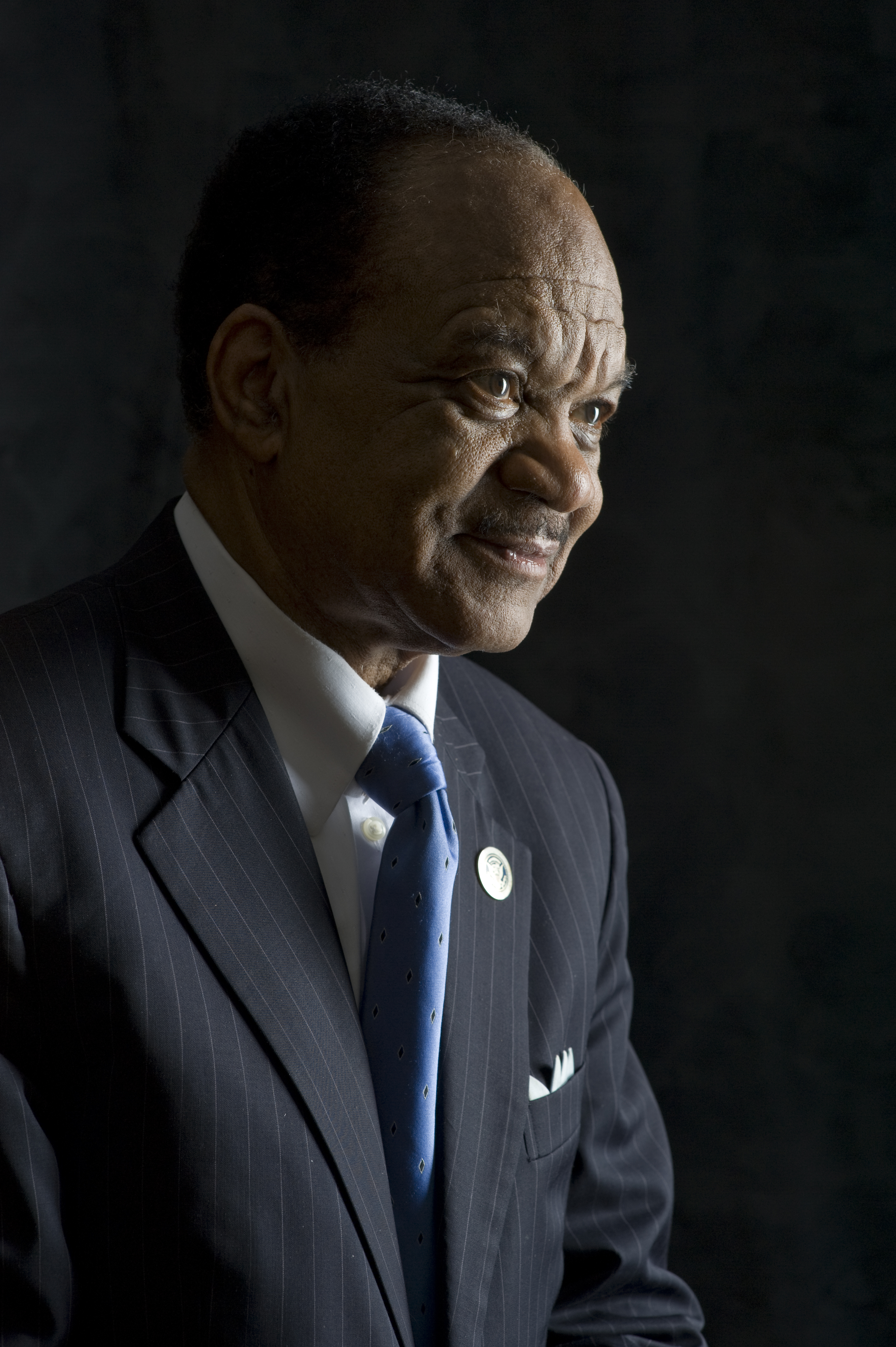
Walter Fauntroy, D.C. icon, civil rights hero, fugitive, coward, crook...but still a hero. Somehow.

Walter Fauntroy, D.C. icon, civil rights hero, fugitive, coward, crook…but still a hero. Somehow.

As I was composing this post in my head, I stumbled upon—and I mean that, because I normally avoid her columns like cheap Chinese food—Kathleen Parker’s latest column. Parker is the sort-of conservative, sort-of op-ed pundit who has mastered the art of compassionate equivocation, meaning that her opinions on public affairs usually consist of one long sigh. She was at it again here, except that the topic she was sighing about confounds me, he who does not shrink from assigning blame, almost as much as it does she who usually spreads blame so evenly that its ethical impact is nil.

Parker wrote…

At the same time that people avoid too-sensitive subjects, they seem to fear stating the obvious lest their thoughts be interpreted as an act of betrayal to “the group.” Politicians are the most risk-averse of all. Few are the Democratic women who will find (or express) fault with Clinton. It is the rare African American who finds fault with Obama. When Rawlings-Blake also said that she “gave those who wished to destroy space to do that,” her Democratic colleagues spoke only of her “poor choice of words.” Not poor thinking? Not lousy leadership? Republicans don’t get a pass. Heaven forbid they should call out someone who wants to inject biblical end-times into political debate.”

Ah, how it makes my chest fill with pride that I have flagged all three of the ethical breaches Parker mentions within the few daysHillary Clinton’s brazenly suspicious conduct and the disgraceful refusal of her cheering section to either acknowledge or question it…Rawlings-Blake’s “lousy leadership”… and Republicans who use religiosity as a prop. Parker being Parker, she had earlier used an example of missing outrage that sets my teeth on edge because, while correct, it calls to mind another area of missing outrage and societally-damaging martyrdom that I can’t quite figure out how to talk about.

Where is the outrage beyond the African American community about police brutality and the deaths of young black males? Where are members of Congress other than those belonging to the black caucus? My God, the list of those killed is staggering,” she writes, “yet this is not a new phenomenon. Baltimore’s Freddie Gray, the 25-year-old who suffered spinal injuries while in police custody and died, is but the most recent. Yet you see only the usual black activists speaking up.”

True. The missing paragraph, however,  is this: “Where are the African-American activists asking why so many young black men are constantly in positions that place them in conflict with the police? When protesters chant the names and carry photos of police victims like Freddie Gray, Walter Scott, yes, and Mike Brown, they are presenting in honored terms African-Americans who weren’t credits to their communities or examples for the next generation to emulate. Indeed this ritual sanctifies lives and backgrounds that are part of the same urban pathology as the police attitudes that killed them.”

Freddie Gray was only 25-years-old, and yet he already had a staggering 18 previous arrests since he turned 18-years-old. His mother was a heroin addict; he had no father in his life. Why was someone like this even out of jail, in a position to become yet another victim of police anger and contempt against the endless wave of young, irresponsible, law-defying young men who undermine the vitality of their own communities and the nation?

The fact that Gray’s death was undeniably the greater outrage shouldn’t allow the outrage of lives like his to be ignored. Black crime and police dysfunction are part of the same pathology. If only the Bill O’Reillys are going to ask the hard questions about black communities policing their young and changing their deadly culture—and are they really hard for O’Reilly, whose audience is inclined to look for ways to side with the police even when they commit murder?—then those questions and their equally hard answers, involving, among other things, avoidance of responsibility and accountability, can be and will be largely ignored.

This is part of the loyalty to “the group” phenomenon that cripples the African-American community and warps its values. It is especially powerful when prominent leaders, those African-Americans who should be leading the way away from self-destructive conduct and who have the power, visibility, and credibility to do so, demonstrate an atrocious lack of ethics themselves. Where are the black voices—those not belonging to black women he sexually assaulted, that is—condemning Bill Cosby? Or Al Sharpton? Charles Rangel?

Washington, D.C.’s overwhelmingly black population was conditioned to accept black leadership outrages by the late Marion Barry. I was not quite aware of the extent of this cultural purging of the ability to hold prominent African-Americans to ethical standards until I read a jaw-dropping Washington Post feature about the wife of local civil rights legend Walter E. Fauntroy, who helped Martin Luther King plan the 1963 March on Washington, and who served as the District’s congressional delegate for two decades. The tone of the article is enough to make a reader think he or she is going mad. The loving 80-year-old wife, Dorothy Fauntroy, speaks about her husband in glowing terms that nothing in the article suggests is inappropriate. Continue reading

Ethics Hero: Toya Graham, The Baltimore Riot’s “Mom of the Year”

It is odd that the now-anointed “mom of the year” is a woman videotaped beating her son, and rather violently at that. That’s the Ethics Incompleteness Principle for you: even conduct that is “always” unethical may be made ethical by unusual circumstances. Seeing your grown son participating in looting and rioting that are destroying your neighborhood changes the rules, or perhaps makes them inapplicable.

Here is what the unidentified woman (UPDATE: Her name is Toya Graham) was doing that is an ethical duty: she was fixing the problem to the extent she could. Utilitarian? Yup. Would Kant approve? Well, if every mother of those rioters intervened, they would have had more success than the Baltimore police did.

As for the Golden Rule, her conduct passes that test as well. If I were getting pulled into violent, mindless mob violence like that kid, I would want my caring parents to stop me by any means short of shooting me. If it were my son wearing that hood, I’d be tackling him.

I don’t know if she’s really “Mom of the Year”—I’d like to think that a really exemplary mother won’t raise a rioter.  She’s an Ethics Hero, though, beyond question.

Ethics Dunce: GoFundMe

“DESTROY THE EVIL CAKE DISCRIMINATORS!!!!”

If GoFundMe isn’t going to have the integrity to avoid taking sides in complex political and cultural disputes, it is functionally useless.

Perhaps it should change its title to “GoFundMyPoliticallyCorrectCause.”

Pusillanimous GoFundMe caved in to pressure from vindictive gay marriage activists and pulled the crowdfunding campaign on the site that had raised more than $109,000 for the Christian-owned bakery,  Sweet Cakes by Melissa.

The cake shop in Gresham, Oregon, became ground zero for the same-sex marriage debate  in January 2013, when it turned away customers who wanted cakes for a same-sex wedding. The spurned couple filed a complaint to the Oregon Bureau of Labor and Industries, claiming their civil rights under the Oregon Equality Act had been infringed. In defense, the owners of the business stated that they  refused to cater  the wedding because of their religious beliefs, and thus their decision was protected by the U.S. Constitution. They subsequently closed the shop, and carried out their business from home. The Oregon Bureau of Labor and Industries proposed a damages award Friday of $135,000 against Aaron and Melissa Klein, the owners, for being in violation of the state’s anti-discrimination law. The award, which is not final, would provide $60,000 in damages to Laurel Bowman-Cryer and $75,000 in damages to Rachel Bowman-Cryer for “emotional suffering stemming directly from unlawful discrimination.”

After taking down the page raising money for the bakery in the belief that they have been unfairly targeted, victimized and mistreated, GoFundMe said in a statement that the campaign violated the site’s policy against raising money “in defense of formal charges of heinous crimes, including violent, hateful, or sexual acts.”

Continue reading