Prediction: The Ferguson Ethics Train Wreck

michael-brown-ferguson-shooting

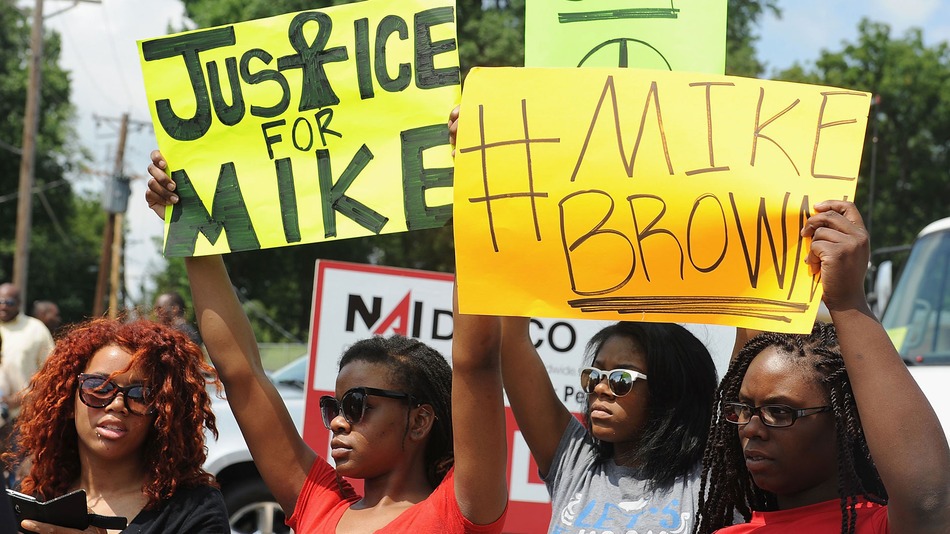
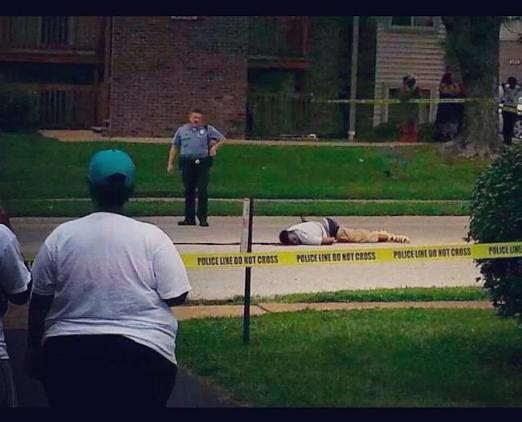
The witness accounts of the death of Mike Brown that have received all of the publicity suggest that the unarmed teen, after being shot in a police cruiser while resisting arrest, bolted from the car and was shot dead by Officer Darren Wilson as he tried to escape, even after the victim stopped and appeared to surrender. This is the account currently on Wikipedia, for example, and even in the absence of a fair and careful investigation, is the account accepted as fact by the “Justice for Mike Brown” protestors.

To those who are convinced that the police are evil, jack-booted racists and that a police officer with no record of equivalent misconduct would shoot down an unarmed and surrendering teen in public, this undoubtedly seems like a plausible scenario.  It sure doesn’t to me. I can see one way it might have happened this way: After Brown, who was huge, hurt and frightened Wilson in the car when they fought, Wilson lost his composure, and fired in rage. If that was the case, then he should be prosecuted for murder. Nothing in even that scenario proves or even suggests racism, but Brown was black and the officer was white, and for too many in the African-American community, that is proof enough.

Now another account has surfaced, on that might support Wilson’s account. It is also more plausible, because it both explains and even justifies the shooting. That account suggests that rather than turning from his flight and surrendering, Brown charged Wilson, placing him in legitimate fear of  bodily harm.

At this point, we have no way of knowing what the truth is. Maybe Wilson executed Brown. Maybe he is a racist. Maybe he is a psychopath. And maybe Brown’s conduct justified the use of deadly force by the officer, and the teen was largely responsible for his own demise. Presumably we will eventually know the truth.

I confidently predict this, however, based on what occurred in the Martin-Zimmerman case: Continue reading →
More On The Perry Indictment: The Mark Of Hack Partisan Journalism

H

The unethical indictment of Republican Texas Governor Rick Perry in Travis County (Austin) for the “crime” of trying to force a drunk, power abusing, ethically corrupt district attorney from continuing to head the Public Integrity Unit—quick, now, Democrats…why is this a bad thing?—is a rare opportunity for otherwise incorrigibly biased journalists to show some token integrity and fairness. What is forfeited, after all, by admitting the obvious, that Perry is being railroaded by an abuse of prosecutorial power to derail him politically? Perry is no real threat to win the Presidency, no matter how high his stock is now. We all saw why in 2012.

So the liberal media has no need to play gotcha, and could, for a change, actually do its job: show the public why the indictment is nothing but a political hit job; why it’s a breach of legal ethics, how disgracefully Travis County DA Rosemary Lehmberg has conducted herself; why she is obligated to resign after breaking the law, trying to use her position to intimidate police officers on video, having her law license suspended, and apparently doing nothing about the fact that she is a raging drunk; why having such an individual heading up the agency responsible for public integrity is a threat to the public well-being and the public trust; and why a Governor of any political affiliation doing everything he can to pressure such a miserable and incompetent DA to resign as she had a professional obligation to do is, not merely not criminal, but admirable.

But most of them just can’t bring themselves to do it. So here is the Daily Beast partisan hack news commentary website, the yin on the left to the yang of Tucker Carlson’s partisan hack Daily Caller on the right, which wouldn’t be necessary if there weren’t a Daily Beast,  publishing this piece by its partisan hack staffer Mark McKinnon, implying that there may be validity to the indictment, suggesting that Perry did something wrong, and glossing over how disgusting it is that Lehmberg  still holds office. Continue reading →

Ethics Dunces: ABC News, Jonathan Karl and the Sunday Morning “Roundtable”

Republican Texas Governor Rick Perry is being threatened with prison by a per se unethical and illegal grand jury indictment, obtained by special prosecutor Michael McCrum, that attempts to criminalize not merely political tactics, which is how critics are describing it, but the essential and obligatory efforts of a state’s elected leader  to remove a corrupt and unqualified district attorney who is unfit to serve, corrupt,defiant….and drunk as a skunk.

You can read various eviscerations of the indictment here, here and here; there are many more. So far, I can’t find a respectable legal source that finds the indictment anything better than jaw-droppingly absurd and an abuse of prosecution. Jonathan Chait, a left-ish pundit and far from a Perry fan (much like me, except for the left-ish part), nicely expresses his contempt of the charge here. A short hand version would be that Perry has been threatened with jail based on what he said about vetoing a bill, which seems like a First Amendment violation to me.

The reason for the Ethics Dunce call on ABC is that this morning, the network reported on the indictment of Perry and its effect on his Presidential prospects in 2016 without explaining the reason for the Governor’s actions that the prosecutor is straining to call illegal. A simple, thorough, clear explanation would be sufficient to cause any reasonable reader or listener to cry “What? You’re kidding! That’s not possible!” That explanation, however, was not forthcoming on ABC, and has been missing from other reporting as well. Continue reading →

Ethics Quiz: The Macaque’s Selfie

Macaque

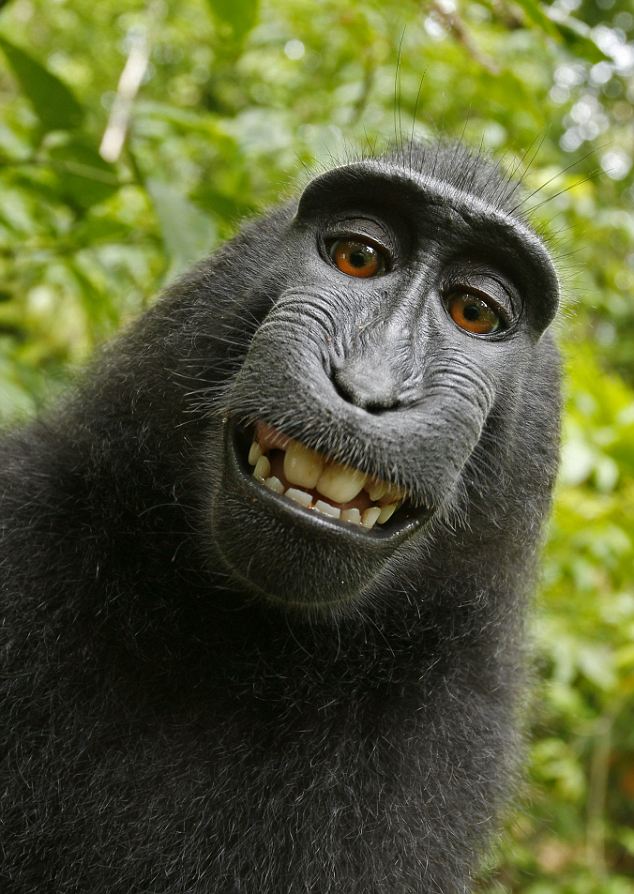
The wonderful photo above has gone viral on the web, and is also causing serious debate among intellectual property lawyers. The weird tale is as follows:

Wildlife photographer David Slater was visiting a national park in North Sulawesi to photograph the wildlife. His subject was a group of crested black macaques, and when he left his camera unattended, the primates took advantage of the opportunity. Apparently attracted by the reflection and the noise the camera made when activated (the implications of the macaques doing this because they were interested in photography are too disturbing to contemplate, so I won’t),  one macaque took hundreds of photos of itself. Most were blurry and out of focus, just like the pictures my dad took, but a few were superb selfies that would have Ellen DeGeneres eating her heart out.

Wikimedia took the clear images off of Slater’s website, adding them to its collection of royalty-free graphic, and sending them all over the web as a result.  Slater now demands that the images be taken down or that he be paid for them. While Wikimedia argues that either the monkey owns the copyright for the photos or nobody does, the photographer claims that being the owner of the camera, and the artist who created the circumstances under which the macaque was inspired to release his inner Richard Avedon, he alone is the owner of the photographs.

As you might expect, copyright law is unclear on the issue of lower primate selfies, an art form that was not anticipated as the law evolved. I don’t care about that: today’s Ethics Alarms Ethics Quiz is about fairness:

Should Slater have full ownership of the macaque’s creations?

Continue reading →

Ferguson’s “How Dare You Challenge Our Narrative?” Protest

Mike-Brown-Signs

There was another large demonstration in Ferguson last night. This one appears to have been more proportionately and wisely managed by Ferguson police, who still had a bad day that didn’t do much to erase the impression that its leadership is not equipped to deal with the challenges posed by race politics in 21st Century America. The inexplicably delayed information on the circumstances surrounding the shooting death of teenager Michael Brown, including the name of the officer involved (who can now count on receiving death threats and having celebrities try to help vigilantes by tweeting his address), “infuriated”  Brown’s family and the African American community in Ferguson, on the theory that video showing Brown robbing a convenience store and assaulting its owner was an attempt to smear the victim of a racist killing, and to “justify” an execution.

It’s an unethical theory, and the news media and fair observers should reject it. Indeed, they have a duty to reject it.

A young man is dead, and that is a tragedy. Another young man, the one who shot him, is also involved, and his life, while not over, is going to be permanently scarred in the best case scenario. If “justice,” the word that the demonstrators in Ferguson and elsewhere are using as a mantra, is being used to mean what it is supposed to mean (and, it is not), then the young police officer deserves justice too. That means, at very least, waiting until all the facts are known that can be known, and making a dispassionate, objective, non-politically motivated analysis of what occurred, who was at fault, what crimes, if any, were committed, and how to prevent such incidents in the future.

Is that too much to ask? To insist upon?

So it seems. Continue reading →

Mid-EthicsTrainwreck Observations On Ferguson

train_wreck

1. This is traveling the identical route as the Trayvon Martin-George Zimmerman fiasco, and I wonder when the intentional similarity will begin dawning on the public, discrediting the participants and embarrassing the news media, which is as Pavlovian as the most conditioned canine.

2. In an environment where race grievance vultures lie in wait, the usual rule of prudence—an ethical value— for law enforcement becomes a fatal error. Now, if a police department waits and investigates before making an official report or filing charges when a white individual has killed a black one, it will be spun by those seeking to find sinister motives, and the news media will take the cue.

3. As in the Martin case, the victim was immediately portrayed by his family as being as threatening as a Care Bear, except for his race. Martin was introduced to the public by the news media with an old photo that made him look about 12. Michael Brown was introduced by his promising future: he was going to college, and his parents were proud of him, as if these factors are proof of unquestionable virtue and innocence. He was unarmed, and a teenager. But as I learned for the first time by seeing the surveillance video of the alleged robbery, he was a huge teenager. A man that big doesn’t have to be armed to be dangerous. Naturally, all public impressions of the incident were formed before any of this came to light. This also addresses the new outrage by protesters that the video was released to “justify” the killing. The video let us know that Brown wasn’t a harmless kid, and that’s valid information now. Continue reading →

When Ethics Becomes Impossible: Captain Johnson’s Ferguson “Solution”

Ron Johnson

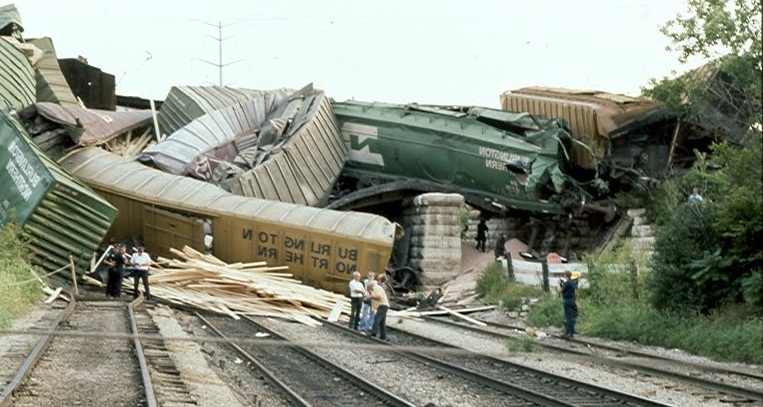
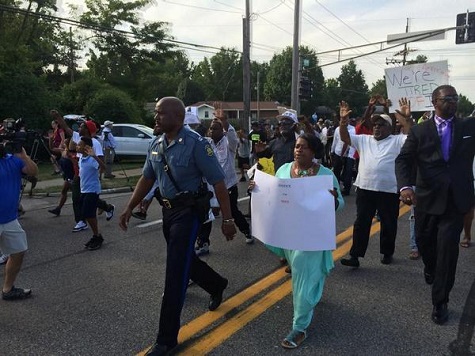
Yesterday,  Ferguson, Missouri’s newly appointed police commander, Capt. Ron Johnson of the Missouri State Highway Patrol, walked with those protesting the shooting of African American teenager Michael Brown.The police shooting in Ferguson this week and its aftermath became an instant Ethics Train Wreck, its carnage seeded by tragedy, local tensions, growing distrust of police nationwide, worsening race relations exacerbated by Democrats and the media resorting to race-baiting to stifle criticism of the Obama administration, as well as such episodes as Occupy confrontations with police in Oakland and the Trayvon Martin-George Zimmerman fiasco.

Johnson’s actions calmed what had been escalating violence, with community protests spilling over into looting, irresponsible and inflammatory statements being made by both police and protesters, and an excessive, military-style response by St.Louis police that treated sometimes over-enthusiastic demonstrating as if it was Rodney King-style rioting. What Johnson did worked, in other words, and that’s both the best and the worst that can be said about it. Ethically, it was the best available option. When a situation reaches the ethics chaos stage that Ferguson has, however, this is rough utilitarianism at best. Continue reading →

Police Misconduct, Professional Courtesy, and the Insideous Virtue of Loyalty

"No, I still have your back...I'm just going to have to give you a speeding ticket, that's all!"

“No, I still have your back…I’m just going to have to give you a speeding ticket, that’s all!”

In 2011, Florida Highway Patrol Trooper Donna Jane Watts pulled over—after a brief chase– an off-duty Miami police officer whose vehicle she clocked at over 120 mph. Lead-footed officer Fausto Lopez explained to Watts that he was late for an off-duty job. The tradition among police, as in other professions (like the law and politics), is to extend “professional courtesy” in such situations, or as I call it, unwarranted privilege and corruption.

 Watts, however, arrested Lopez, who had a history of reckless driving, and he was eventually fired. Continue reading →

Is There An “Almost Naked Lovely Lawyer Principle”?

cathy-mccarthy

Not really.

But it’s complicated.

Cathy McCarthy (above) is a 2013 graduate of Loyola Law School-Los Angeles, and she is sounding the clarion call for the right of bikini model-lawyers to be taken seriously. She wrote…

I graduated law school a year ago after receiving an academic scholarship and passed the California Bar last November on my first try. I am also a model and have had moderate success, building fan base of over 26,000 people where I do mostly bikini promotions. Does this make me better or worse at my job? According to some people, it makes me unable to be taken “seriously” in the business community. In fact, two weeks ago, I was reprimanded by a coworker for my online presence and was told to “handle the situation.”I fought back and was ultimately let off the hook, but this is not the first time that I have faced backlash from colleagues who think that a lawyer should not also get the privilege of “looking hot in a bikini.”

Unlike the case with primary and secondary school teachers, where a published presence on the web that is sexually provocative can interfere with a healthy student-teacher relationship, there is no automatic impediment to a lawyer client relationship posed by the lawyer moonlighting as a bikini model, a fold-out, or even a porn star. The profession acknowledges this in several legal ethics opinions affirming lawyers’ First Amendment rights. Lawyers can express themselves any way they choose, provided that it does not undermine their ability to represent their clients in any way. Continue reading →

The O’Bannon Case: A Judge Explains How The Law Requires An Unethical and Corrupt Practice To Be Fair….But It’s Still Unethical and Corrupt

NCAA-ban

Now that a federal judge has declared the elite student-athletes at big time sports colleges to be what they are…paid mercenaries…and the sports programs at such institutions to be what we always knew they were…cynical sideshows that sacrificed education to greed…will the pubic, the media, educators, and universities now stop this slow-moving ethics train wreck?

Of course not.  If they cared about how high-profile college sports were warping both America’s education and its values, they would have addressed the problem decades ago. They would have stopped it before, for example, schools started paying football and basketball coaches more than any professor. They would have stopped it before prestigious schools gave degrees to graduates whose entire education was a sham, who took ridiculously easy courses and who were held to infantile academic standards, all so rich, fat alumni would continue writing checks. They would have stopped it before a revered football coach held such power in a university that he was able to persuade the school’s leadership to allow a child sexual predator operate on campus.

U.S. District Judge Claudia Wilken, in a 99-page ruling agreeing with the claim of a group of plaintiffs fronted by former UCLA basketball player Ed O’Bannon, issued an injunction against the NCAA from “enforcing any rules or bylaws that would prohibit its member schools and conferences from offering their FBS football or Division I basketball recruits a limited share of the revenues generated from the use of their names, images, and likenesses in addition to a full grant-in-aid.”

The ruling will be appealed, and some of its legal conclusions certainly seem debatable. That is not my concern. The opinion effectively kills the fiction that the semi-literate youths who perform on-the-field heroics to burnish the images of universities and attract huge broadcast fees are what the NCAA, alumni, students , the schools and the media pretend that they are. Now that we know they are not truly students, what persuasive ethical justifications can be given for them to play college sports at all?

My answer?

None. Continue reading →