Ethics Hero: Dick Masten—When Ethics Trumps Law

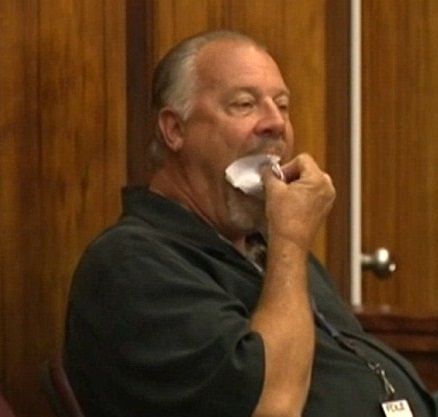
A heroic and ethical snack...

A heroic and ethical snack…

One way I can always start an argument on Ethics Alarms is to state my position that willfully breaking the law is per se unethical as a breach of citizenship. Like all rules, however, this one has exceptions. Dick Masten, the Director of Miami-Dade Crime Stoppers, recently demonstrated one of them.

The former police chief was ordered by Judge Victoria Brennan to reveal the name of a tipster in a cocaine possession case, State vs. Lissette Alvarez. Alvarez was arrested in 2013 and charged with cocaine possession. Brennan called for Masten to come into court and confer with her in chambers regarding the case. Miami-Dade Crime Stoppers sparked the eventual arrest after getting information from a tipster who was assured anonymity. Alvarez’s attorney insists that the tipster’s information is part of the evidence against his client, saying, “Ms. Alvarez, in this case, has every right to confront her accusers. But more particularly in this case, it’s not the accuser, but the evidence that the State will use against her.”

Ordered by the judge to reveal the name of the tipster, Masten, insisted that he couldn’t divulge information to be reviewed in closed court that might be discoverable as evidence. “There is a possibility that looking at certain documents, a defendant could work that case backwards and put the tipster at peril, and I’m not gonna let that happen,” he said. In a dramatic touch, Masten swallowed  a slip of paper that held the tipster’s name. “What is personal to me, is the promise,” Masten said before his ethical snack. “Some of these tipsters could end up dead. Not on my watch.” Continue reading →
“Can The Democrats Find The Right Message On Obamacare?” You Mean Other Than, “We Lied To You And Gave You A Law That Doesn’t Work Right But You Should Still Trust Us To Fix It”?

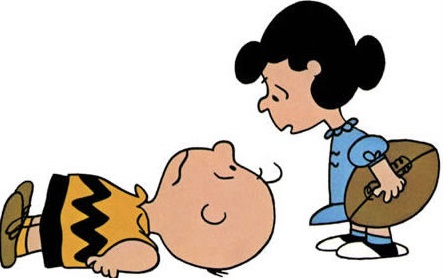
One more time....

One more time….

“Can Democrats find the right message on Obamacare?” asks the Washington Post’s “Wonkbook,” as it reviews various strategic options for threatened Democrats after the party’s “fix Obamacare” candidate lost a winnable Congressional race in Florida. The question, objectively interpreted, really means “Can Democrats fool voters into trusting them one more time?” That’s a good question, and the answer is far from certain. The use of the word “right,” however, is cynical.  The Post means “effective.” The right message, as in the ethical and honest one, would have to be based on these undeniable and unpleasant facts: Continue reading →

Family Ethics: The Rachel Canning Saga, Continued.

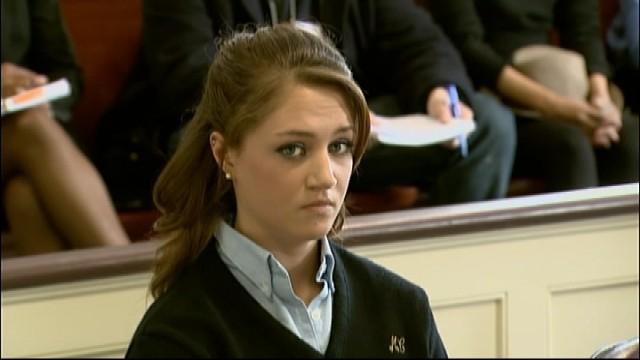
Rachel, pouting but loved.

Rachel, pouting but loved.

The latest turn of the bizarre Rachel Canning saga should have all parents asking themselves. “What would we do?”

Presumably, the answer is, “Exactly what Sean and Elizabeth Canning are doing.” Yes, even after filing a law suit against her mother and father demanding that they continue to support her after she defied their authority and moved out of their home…even after accusing her father of vague inappropriate behavior and her mother of cruelty…Rachel asked to move back into her childhood home. And her parents said, “Yes.”

Why? Because that’s how ethical families behave. Because it is the right thing to do. Because children…and she is still a child, though the law now treats her as an adult…screw up, say and do reckless, irresponsible and hurtful things, act ungrateful and spoiled, and then come crawling back, asking for forgiveness, because they know they will get it. Continue reading →

50 Years After Kitty Genovese, Inhumans On A Bus

The title describes the public transit riders who watched this disturbing scene unfold on a Philadelphia bus, and did nothing:

2014 is the 50th anniversary of the infamous Kitty Genovese case, and dueling books on the incident either recount the accepted version that 38 people in an apartment building heard the 28 year-old woman’s screams as she was being stabbed to death but “didn’t want to be involved” and let her die, or adopt the revisionist theory that the apathy of bystanders was unfairly and inaccurately hyped by the news media. The incident on the Philadelphia bus tells me that the revisionists have a burden of proof that will be hard to meet. There was plenty of evidence already, like here, or here, or here, or here, or more recently here, that Kitty Genovese might not fare any better today. Continue reading →

Ethics, Justice and Punishment: The Don Collins-Robert Middleton Case

Collins

Several readers sent me this case, which is as odd as it is horrible. In 1998, Don Willburn Collins allegedly attacked, possibly raped, and set on fire an 8 year-old boy named Robby Middleton when Collins was 13, and Middleton was only 8. Collins spent several months in juvenile detention but was released when prosecutors decided they did not have enough evidence to convict him. Middleton survived, permanently scarred and maimed, his health ruined. In 2011 he died of skin cancer, which doctors attributed to his burns. Shortly before he perished, he gave a video deposition accusing Collins of the crime.

Now a judge has ruled that Collins can be prosecuted for Middleton’s murder, since he died as a direct consequence of the attack 13 years earlier. Moreover, the judge said, he can be charged as an adult, though he was a juvenile when the attack took place.

The case raises many legal issues, and I am neither prepared nor interested in exploring those. I suspect that the task facing prosecutors is insuperable, given the time that has passed, issues of proof and law, and the gut feeling many jurors will harbor that such a conviction would be unfair.

I will render this ethics verdict, however: If Collins was the attacker, I believe it would be fair, just and ethical for him to be punished for it now as an adult, for that is what he is. Continue reading →

Ethics Quote of the Week: The Detroit News

“While it may be politically expedient, rewriting a law passed by Congress simply to avoid ballot box consequences is an outrageous abuse of executive power…No law should be reshaped for the sole purpose of benefiting a single political party.”

—-The Detroit News, condemning the cynical and nakedly political decision by the Obama administration to postpone the consequences of the Affordable Care Act until after the 2014 mid-terms, to protect vulnerable Democrats from voter anger.
train-wreckSo many of Ethics Alarms’ reflexive Obama administration apologists have fled lately that I wonder if anyone will have the fortitude to take to the parapets and defend the latest turn of the Obamacare Ethics Train Wreck. Highlights from the clear-eyed Detroit News editorial: Continue reading →

Incompetent Elected Officials Of The Month: Chicago City Council

Rugby, my pure Jack Russell Terrier (though "pure" is an oxymoron with Jacks)

Rugby, my pure Jack Russell Terrier (though “pure” is an oxymoron with Jacks)

Laws affect our lives too much to be concocted by dolts. If elected officials are going to restrict our freedom, they have an obligation to do so only with good cause, careful consideration, precision, and after making certain that unintended consequences will be minimal.

On the other hand, elected official could just say “What the hell, let’s see how this turns out,” and be like the Chicago City Council, which passed an ordinance banning the sale of pure breed dogs.

This is as nice an example of good intentions gone stupid as we are ever likely to see. The intent is to cut off the supply of dogs from s0-called puppy mills, which are rightly regarded as too often cruel and irresponsible. However, in pursuit of that elusive goal, the city council didn’t bother to craft a law that addressed the problem effectively, or that even made sense.

Continue reading →

Ethics Quote of the Day: Ken White at Popehat

File photo of U.S. Director of Exempt Organizations for the IRS Lerner being sworn in to testify before a House Oversight and Government Reform Committee hearing in Washington

“Pardon me: if you accept the proposition that the government targets organizations for IRS scrutiny because of their political views, and you still say things like ‘why take the Fifth if you have nothing to hide’, then you’re either an idiot or a dishonest partisan hack.”

—-Attorney-blogger Ken White, discussing former IRS official Lois Lerner’s refusal to testify in front of Rep. Daryl Issa’s House Government Oversight Committee

Good point.

Elaborating on the point before this statement, Ken points out why this is so:

“You take the Fifth because the government can’t be trusted. You take the Fifth because what the truth is, and what the government thinks the truth is, are two very different things. You take the Fifth because even if you didn’t do anything wrong your statements can be used as building blocks in dishonest, or malicious, or politically motivated prosecutions against you. You take the Fifth because if you answer questions truthfully the government may still decide you are lying and prosecute you for lying.”

Got it. Or, you take the Fifth because you really did engage in illegal activity in a coordinated effort to obstruct legal political action for partisan motives, on orders from someone with close ties to the White House, which still may be the case.

In the same post, Ken explains that Lerner may have waived her Fifth Amendment right against self-incrimination, or may not. If she has, then she is in contempt of Congress. If she hasn’t, she isn’t.

My observations on this slow-motion ethics train wreck: Continue reading →

Lawyer Daniel Muessig’s Clever, Effective, Legally Ethical And Thoroughly Despicable Ad

Just as I’ve been desperately trying to explain that lawyers do not represent bad people because they like them or want to loose them upon the world,  here comes innovative Pittsburgh lawyer Daniel Muessig, whose clever TV ad proclaims that this is exactly what he wants to do. Here it is:

Is this an ethical ad? According to the Pennsylvania Rules of Professional Conduct, it is within the conduct permitted by the state’s legal ethics rules. The ad isn’t misleading. It doesn’t make promises the lawyer cannot keep. It doesn’t represent dramatic recreations as fact, or use broad metaphors and exaggerations. (Lawyer ads are held to a standard of literalness that presumes the public has never see any other kinds of advertising in their entire lives.) Once upon a time the various state bar advertising regulations included prohibitions on “undignified” communications, or those that undermined public trust in the profession, but those days are long past: the standards were necessarily vague, and breached free speech principles.

So we have this: a lawyer who appeals to his future criminal clients by saying that he thinks like a criminal, believes laws are arbitrary, that other lawyers will “blow them off” and that he visits jails frequently because that’s where his friends are. He attacks his own colleagues and profession, denigrates the rule of law he is sworn to uphold, and seeks the trust of criminals not because of his duty as a professional, but because he’s just like them. Muessig is willing to undermine the law-abiding public’s belief in the justice system and the reputation of his profession and his colleagues in order to acquire clients. I’m sure his strategy will work, too. Continue reading →

Ethics Heroes: The Massachusetts Supreme Judicial Court

Michael Robertson: pervert, creep, outrageous abuser of women who deserves to be shunned, despised and condemned by all decent people. But a criminal? Not yet...

Michael Robertson: pervert, creep, outrageous abuser of women who deserves to be shunned, despised and condemned by all decent people. But a criminal? Not yet…

The degree to which our media pundits fail to grasp the essential nature of the rule of law remains confounding, and this is another in a long line of examples. Worse, the lower court in this weird case failed to grasp it as well.

You see, there is conduct that is obviously wrong, which we call unethical. Some of that conduct is so wrong, so harmful, and so difficult to discourage with social opprobrium and informal enforcement alone that we pass laws against it, both to signal strong disapproval but also to add serious negative reinforcement, in the form of tangible punishment, to the mix. Then the wrongful conduct becomes both unethical and illegal. If we skip the essential intermediate step of writing and duly passing the law that designate the conduct as illegal, however, we have established a dangerous, indeed frightening precedent. Then we have created a society where one can be imprisoned or fined for conduct that is regarded as unethical without a law in place that empowers the state to take such actions against citizens who engage in it. Ethics, unlike law, especially on the margins, is never etched in stone. Once society starts imprisoning individuals based on ethics alone, none of us are safe.

Yet this morning I was subjected to the protests of one TV commentator after another who derided the absolutely correct decision of the Massachusetts Supreme Judicial Court to uphold this principle by throwing out the conviction of Michael Robertson, a sick sleaze-ball who was arrested in August 2010 by Boston transit police who had set up a sting after getting reports that he was using his cellphone to take photos and video up female riders’ skirts and dresses: Continue reading →