CBS’s “Blue Bloods”: Endorsing the Saint’s Excuse and Polk County Justice


Time for the department ethics training, Chief. You should sit in on it too...

Time for the department ethics training, Chief. You should sit in on it too…

“Blue Bloods,” Tom Selleck’s New York police family drama on CBS, began as a paean to the core values of public service, nobility, justice, courage and honesty as it chronicled the work and lives of three generations of the Reagan family. The Reagan men are all cops, the one female is a DA, and Selleck is the paternal Chief of Police. Based on last night’s episode, “The Truth About Lying,” series creators Mitchell Burgess and Robin Green have permitted the show’s writing staff to be infiltrated by the Dark Side in its fourth season, and now its calling cards will include the enthusiastic promotion of the abuse of power and the celebration of lying as long as it’s all for a good cause. That’s the Saint’s Excuse, one of the most deadly of the rationalizations, in which “good” people decide that they are empowered to do unethical things in the pursuit of what they believe are worthy goals. The Saint’s Excuse is something of a theme in the United States these days. Now “Blue Bloods” is making sure popular culture spreads the word.

The episode, which you can watch here, was ostensibly about Selleck’s Chief’s efforts to foil the city’s newly appointed “inspector general,” installed in the wake of a “ripped from the headlines” court rejection of an effective “stop and frisk” program by New York’s finest. Continue reading
Facebook Ethics: Making Your Facebook Friends As Ignorant As You Are

Foto-Facebook

All of a sudden, for some unknown reason (maybe THIS story!) there is an avalanche of Facebook users posting this language, or the equivalent:

Now that there has been a change in Facebook’s privacy policy, I am making the following change: I do not give Facebook or any entities associated with Facebook permission to use my pictures, information, or posts, both past and future. By this statement, I give notice to Facebook it is strictly forbidden to disclose, copy, distribute, or take any other action against me based on this profile and/or its contents. The content of this profile is private and confidential information. The violation of privacy can be punished by law.  NOTE: Facebook is now a public entity. All members must post a note like this. If you prefer, you can copy and paste this version. If you do not publish a statement at least once it will be tactically allowing the use of your photos, as well as the information contained in the profile status updates. DO NOT SHARE. You MUST copy and Paste.

================================
PRIVACY NOTICE: Warning – any person and/or institution and/or Agent and/or Agency of any governmental structure including but not limited to the United States Federal Government also using or monitoring/using this website or any of its associated websites, you do NOT have my permission to utilize any of my profile information nor any of the content contained herein including, but not limited to my photos, and/or the comments made about my photos or any other “picture” art posted on my profile. You are hereby notified that you are strictly prohibited from disclosing, copying, distributing, disseminating, or taking any other action against me with regard to this profile and the contents herein. The foregoing prohibitions also apply to your employee, agent, student or any personnel under your direction or control.

The contents of this profile are private and legally privileged and confidential information, and the violation of my personal privacy is punishable by law.

UCC 1-103 1-308 ALL RIGHTS RESERVED WITHOUT PREJUDICE.

Impressive!

Scary!

Legal sounding!

But oh so wrong in every way. Continue reading

What’s Wrong With The Florida Cyber-Bullying Arrests? Everything.

“Bullying, as they are supposed to teach you in school, is when someone uses their superior power to subordinate and humiliate someone weaker than themselves. This is wrong, and it is always wrong.”

The Sheriff of Polk County...wait, no, that's Tom Cruise, searching for pre-criminals in "Minority Report." Well, close enough.

The Sheriff of Polk County…wait, no, that’s Tom Cruise, searching for pre-criminals in “Minority Report.” Well, close enough.

This is a quote from an Ethics Alarms post earlier this year, about a school that forced students to do embarrassing things in a warped effort to discourage bullying. There is a disturbing societal consensus brewing that opposition to bullying justifies all sorts of extra-legal, unethical, excessive, abusive and unconstitutional measures, and there are a dearth of persuasive voices point out that this consensus is dangerous and wrong. Those potential voices are being stilled by a kind of cultural bullying. How can you defend bullies! Look at the victims! Think of the children! What a horrible, unfeeling person you are!

This is the only explanation I can generate for the fact that none of the commentary and media coverage regarding the Florida arrests of a 14-year-old girl and a 12-year-old girl on trumped-up charges of “stalking” following the suicide of Rebecca Ann Sedwick pointed out that the arrests were a travesty of the justice system, an abuse of power, child abuse, legally and constitutionally offensive, and, yes, bullying of a different kind. Continue reading

Annals Of The Ethics Incompleteness Theorem: The Snuggle House And “The Dress Code Effect”

Awww! Who could object to a little snuggle?

Awww! Who could object to a little snuggle?

Almost any rule, low or ethical principle can be deconstructed using what I call border anomalies. The first time I was aware of it was as a Harvard freshman in the late Sixties, when all assumptions, good and bad, useful and not, were considered inherently suspect. The college required all students to wear jackets and ties to meals at the student union, and up until my first year, nobody objected. But that fall, my classmates set out to crack the dress code, so they showed up for meals with ties, jackets, and no pants, or wearing belts as ties, or barefoot. (Yes, there were a lot of future lawyers in that class.) Pretty soon Harvard gave up, because litigating what constitutes ties, jackets and “proper dress” became ridiculously time-consuming and made the administration look petty and stupid. Of course, there are good reasons for dress codes—they are called respect, dignity, community and civility—-but never mind: the dress code couldn’t stand against those determined to destroy them by sending them down the slippery slope.

If any rules are to survive to assist society in maintaining important behavioral standards, we have to determine how we want to handle the  effects described by  the Ethics Incompleteness Theory, which holds that even the best rules and laws will be inevitably subjected to anomalous situations on their borders, regarding which strict enforcement will result in absurd or unjust results. The conservative approach to this dilemma is to strictly apply the law, rule or principle anyway, and accept the resulting bad result as a price for having consistent standards. The liberal approach is no better: it demands amending  rules to deal with the anomalies, leading to vague rules with no integrity—and even more anomalies. The best solution, in my view, is to regard the anomalies as exceptions, and to handle them fairly, reasonably and justly using basic principles of ethics, not strictly applying  the rule or law alone while leaving it intact. Continue reading

“Print the Legend” Ethics (Again): Does It Matter If Matthew Shepard’s Death Was Really A Hate Crime?

Powerful story; moving story; useful story. Does it matter if it isn't a true story?

Powerful story; moving story; useful story. Does it matter if it isn’t a true story?

It apparently matters to a lot of people for the wrong reasons—unethical reasons, in fact. As a result, legitimate efforts to determine what really happened to the gay rights icon, then a 21-year-old University of Wyoming student, who was beaten,  tortured and murdered  in Laramie, Wyoming  in 1998, have been exploited for ideological goals by adversaries of gay rights, and attacked by the media, gay rights advocates and good progressives everywhere. Just as it is important to the civil rights establishment, the black grievance community and anti-gun advocates that Trayvon Martin be seen as the innocent victim of a racist vigilante with murder in his heart—a characterization of Martin’s murder at war with all known facts and rejected by a jury after a fair trial—thus is it crucial to gay advocacy groups and others that Shepard be remembered as the victim of a hate crime, brutally killed because he was gay.

And facts be damned. Continue reading

Psychic Found Guilty Of Fraud: Did She Know This Would Happen?

gypsy-fortune-teller2Now that the required joke is out of the way, I can more soberly state that the New York conviction of psychic Sylvia Mitchell for larceny and fraud opens up a welter of ethical, legal and religious issues. Law prof-blogger Ann Althouse is troubled by the result, writing,

“In my book, this is entertainment and unconventional psychological therapy. Let the buyer beware. Who’s dumb enough to actually believe this? Should the government endeavor to protect everyone who succumbs to the temptation to blow a few bucks on a fortune teller?”

Clearly not, and that’s where courts and states generally land in this matter, as in the case I wrote on three years ago, Nefredo v. Montgomery County. There the courts ruled (in Maryland) that it was an infringement of free speech for Maryland to ban what is, for most, just an exercise in supernatural entertainment. But the New York case involved a little bit more than that: Mitchell apparently bilked some clients out of significant amounts, getting $27,000 from one in an “exercise in letting go of money,”  $18,000 from another to put in a jar as a way to relieve herself of “negative energy,” and thousands from other clients to purchase “supplies” for various rituals—what does the eye of a newt go for these days?

Admittedly this seems to cross the line from harmless, if stupid, entertainment into preying on the stupid and gullible, but that doesn’t convince Althouse that the conviction, or the prosecution is a legitimate use of government power. She reminds us about the Supreme Court case of U.S. v. Ballard, in which the Court upheld the conviction of a faith healer for fraud. The SCOTUS majority, headed by William O. Douglas, held that if the faith healer didn’t believe in her claimed powers, then she was a fraud, and thus could be prosecuted under the Constitution if she used a claim of false powers to take money from her clients. In a sharp and thought-provoking dissent, Justice Robert Jackson wrote in part… Continue reading

Cautionary Tales: When The Law Protects Unethical Creeps

Chaney_Chelsea

Two recent court rulings demonstrate how the law often cannot punish purely unethical conduct if it falls in the cracks of legal language and definitions. When that happens, however, it is incumbent upon the rest of the culture not to allow an Ethics Dunce, or worse,to escape without proper identification and condemnation.

Case A: Curtis Cearley

Director of technology services for the Fayette County (GA) school district.

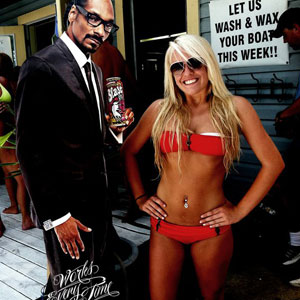
Fayette County high school student Chelsea Chaney used her Facebook page to post a photo of herself wearing a bikini and standing next to a life-size cardboard cut-out of rapper Snoop Dogg holding a can of Blast, the caffeinated alcoholic beverage he promotes. Although it was posted for the student’s friends, Cearley saw it, and used the comely photo in a  presentation at a public forum on the risks of sharing potentially embarrassing personal information on social media. He also used her name, identifying Chaney at the forum which was attended by parents, faculty and  students who attended school with her. He never alerted her, or asked her permission to use her photo as a “Don’t be like Chelsea!” example. The forum was titled “Once It’s There, It’s There to Stay.”

Horrible. This is a pure Golden Rule violation by Cearley, unfair, cruel, thoughtless, mean and intentionally  harmful to a minor, no less: Continue reading

Ethics Quote Of The Week (“Believe It or Not!” Division): The 2nd U.S. Circuit Court of Appeals

“We fail to see any reasonable connection between this defendant, his conviction more than a decade ago, his failure to fill out paperwork, and the government-mandated measurement of his penis.”

—- The 2nd U.S. Circuit Court of Appeals, rejecting as “extraordinarily invasive”a Vermont sex offender treatment program that required David McLaurin, who was convicted of producing child pornography, to submit to “penile stimulation treatment” as a condition for supervised release. He was shown child pornography images as the blood flow to his penis was measured.

Cheer up, Alex...it could be worse, You could be in Vermont...

Cheer up, Alex…it could be worse, You could be in Vermont…

McLaurin was arrested in 2011 for violating the federal Sex Offender Registration and Notification Act, which requires offenders to register and keep current their address information. He  received a sentence of 15 months imprisonment with five years of supervised release.

“The size of the erection is, we are told, of interest to government officials because it ostensibly correlates with the extent to which the subject continues to be aroused by the pornographic images,” the opinion states, dryly. The testing was apparently developed by a Czech psychiatrist and used by the Czech government as a way to identify and “cure” homosexuals.

Uh, yes, I’d say the court got this one right.

Unbelievable.

______________________

Facts: ABA Journal


Heeeeeeeeeere’s JOHNNY’S BETRAYAL!!!!

henry_bushkin_johnny_carson

Lawyers are forbidden by the ethics rules of their profession in every state from divulging the secrets of their clients, their former clients, or even their dead former clients, except in the rare circumstances when doing so will save a life or prevent a crime, and often not even then. Client confidences include all information a lawyer learns about a client in the course of the representation whether or not it is germane to the representation or not, if the client would be embarrassed by the information or would want it to remain secret.

The duty to maintain client confidences goes to the core of the professional relationship between citizens and their lawyers, and any attorney who breaches it not only harms his or her client but undermines trust in the entire profession as well. So sacrosanct is the duty that a Massachusetts court agreed with the Fall River law firm that represented Lizzy Borden in her famous murder trial, when Lizzy’s heirs tried to force it to reveal whether she did, in fact, “give her mother forty whacks” (and her father forty-one) with an ax, that it could not reveal Borden’s secrets even in the interests of history.  The firm, said the court, was quite correct: Miss Borden hired it based on its lawyers’ assurances that her secrets were safe with the firm forever, and to allow otherwise now, even a century after the crime, would betray her trust and undermine the profession’s integrity. The Massachusetts Bar agrees.

So how can it be that Henry Bushkin, for decades the late Johnny Carson’s personal lawyer and thus charged with keeping the secrets of the famously reticent comic’s personal life, is now publishing a tell-all book filled with juicy stories about his conveniently dead client? Continue reading

How Partisanship Makes Pundits Untrustworthy

Healthcare down

Ezra Klein is a relentlessly progressive Washington Post reporter. He’s obviously also a smart guy, and it is a shame that he has allowed his total immersion into pro-Democratic politics render him incapable of seeing current events in  anything but political combat terms. But that is what he has become, and as a result, his analysis of any issue must be considered pre-poisoned by the lack of any objectivity, and a rooting interest in “his side.”

Here is an instructive paragraph from his Post blog, in a post that was also re-written slightly as a column this weekend. He was nominally criticizing the Obama Administration’s Affordable Care Act website:

But the Obama administration did itself — and the millions of people who wanted to explore signing up — a terrible disservice by building a Web site that, four days into launch, is still unusable for most Americans. They knew that the only way to quiet the law’s critics was to implement it effectively. And building a working e-commerce Web site is not an impossible task, even with the added challenges of getting various government data services to talk to each other. Instead, the Obama administration gave critics arguing that the law isn’t ready for primetime more ammunition for their case.

Amazing, isn’t it? Continue reading