Now THIS Is an Unethical Lawyer!

The Tennessee Supreme Court this month disbarred a Nashville lawyer, Brian Philip Manookian, for habitual unethical conduct that I have a hard time believing that any lawyer would dare to engage in even once. Manookian, wrote the Court, “engaged in this long pattern of intimidating and degrading conduct” to succeed in a medical liability case, the Tennessee Supreme Court said. His goal was to coerce opposing lawyers “into standing down to avoid personal humiliation and emotional distress for them or their families. A business model of sorts, based on fear….To say that Mr. Manookian engaged in multiple offenses is to understate,” the state supreme court continued. “Despite lectures, fines, sanctions and suspensions from judge after judge, Mr. Manookian did not choose merely to continue engaging in misconduct—each time he received the expected negative reaction to his behavior, he responded by escalating it.”

Continue reading

Incompetent Elected Official of the Month: North Las Vegas Mayor Pamela Goynes-Brown

Why do communities keep electing officials who are ignorant of the law, history, and the U.S. Constitution?

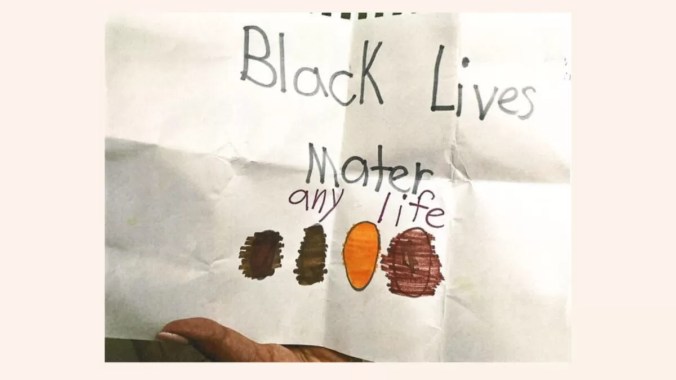
Three days ago, North Las Vegas Mayor Pamela Goynes-Brown, (Guess which party!) announced on social media that her city would host a Black-owned business fair this coming weekend at the conclusion of Black History Month. The fest would feature local black vendors, community resources, an art corner and an area for children. Food trucks and live entertainment would enliven the proceedings. It would be a fun day of promotion for all participating—black-owned only!—businesses.

Who could have a problem with that?

Continue reading

Still More Law and Ethics Matters

Boy, the laws and ethics intersection has been almost constantly in the news lately, led by the Fani Willis controversy in Georgia, which apparently will turn on whether the judge believes the justly beleaguered Fulton County DA really paid half of her paramour and co-Trump prosecutor’s expenses on various platonic < cough> trips and cruises in cash, though there’s no record of such payments. Willis’s father even took the stand to explain that keeping huge amounts of cash on hand is “a black thing.” I did not know that!

As Alice would say, “Curiouser and curiouser!” Then we have much ferment in the legal world over whether the New York County Supreme Court’s order for Donald Trump to pay an unprecedented $355 million for inflating asset values in statements of his financial condition submitted to lenders and insurers was just, cruel and unusual punishment, a bill of attainder, or self-evident partisan lawfare. Gov. Kathy Hochul didn’t help matters by trying to justify the award by saying that Trump is special (wink,wink) and we all know what that means when coming from a Democrat. I confess, I don’t know the New York law involved well enough to weigh in on this one, but the verdict certainly adds to the weight of evidence that there is a full-on press to use the courts to crush Trump before he can crush Joe Biden.

There were two non-Trump law and ethics stories recently worth pondering.

Continue reading

Update: Recent Law and Ethics Matters….

Wow, Colbert, that was hilarious! What a great satirical take-down of ignorant and biased Democrats who somehow can’t perceive how abnormal it is—well, not in Russia— for an entire party to seek to eliminate the primary threat to its power by searching for ways to send him to jail! Brilliant! He even perfectly evokes their disdain for due process: “everybody” knows Trump is guilty, so what are the courts waiting for? Wait, what? Colbert wasn’t trying to be funny? But I thought he was a comedian!

Meanwhile, in other ethics news involving law, courts, judges and lawyers—

1. Glenn Greenwald tweeted, “How someone reacts to the Fani Willis testimony yesterday is a litmus test for if they’re a complete partisan hack. Anyone who denies that she clearly lied, could not respond to basic questions, acted inappropriately, and corrupted this prosecution is a mindless Dem partisan.” Almost my entire legal ethics listserv basically reacted to the Fani Willis hearing by concluding that nothing she did was relevant to the prosecution of Donald Trump. The few bold souls among the legal ethics experts who are inclined to dissent are doing so timidly at best. The anti-Trump bias in my sector is shocking, and the rationalizations being grabbed onto to defend Willis are embarrassing. One very prominent legal ethics specialist wrote that he believes the Fulton County DA hiring her lover was innocent because “she couldn’t find any qualified lawyer”—David Wade is not qualified— to take the job.

2. Meanwhile, both ABC and the New York Times adopted Willis’s insulting “This is only happening because I’m a black woman!” defense.

Continue reading

FIRE’s Annual Censorship Awards

FIRE released its annual “Top Ten Worst Censors” list. They are…

As you see by the EA links, I batted just .500 in covering this topic, and some of the incidents described in FIRE’s report are clearly major ethics breaches that should have been discussed here. Personally, I blame Donald Trump for being a catalyst for so much unethical conduct by the Axis of Unethical Conduct (AUC)—the “resistance,” Democrats and the mainstream media—as well as his own usual forays into the Ethics Twilight Zone that I missed other important matters. Or, as Joni Mitchell might have croaked, “So many things I might have done, but Trump got in my way….”

OK, I’m kidding. Sort of.

The most horrible story that I missed is a tie between the Mayo Clinic outrage and the Marion County Police Dept.’s gestapo act. In that one, FIRE explains,

Continue reading

“It Wasn’t Our Fault! That Bad Robot Did It!”

Hey, Canada Air! Can you say, “accountability?” How about “responsibility”? Sure you can.

Jake Moffat needed to fly from Vancouver to Toronto to deal with the death of his grandmother. Before he bought the tickets for his flights, he checked to se whether Air Canada had a bereavement policy, and the company’s website AI assistant told him he was in luck (after telling him it was sorry for his loss, of course.) Those little mechanical devils are so lifelike!

The virtual employee explained that if he purchased a regular priced ticket, he would have up to 90 days to claim the bereavement discount. Its exact words were:”If you need to travel immediately or have already traveled and would like to submit your ticket for a reduced bereavement rate, kindly do so within 90 days of the date your ticket was issued by completing our Ticket Refund Application form.” So Moffatt booked a one-way ticket to Toronto to attend the funeral, and after the family’s activities a full-price passage back to Vancouver. Somewhere along the line he also spoke to a human being who is an Air Canada representative—at least she claimed to be a human being— confirmed that Air Canada had a bereavement discount. He felt secure, between the facts he had obtained from the helpful bot and the non-bot, that he would eventually pay only $380 for the round trip after he got the substantial refund on the $1600 non-bereavement tickets he had purchased.

After Granny was safely sent to her reward, Jake submitted documentation for the refund. Surprise! Air Canada doesn’t have a reimbursement policy for bereavement flights. You either buy the discounted tickets to begin with, or you pay the regular fare. The chatbot invented the discount policy, just like these things make up court cases. A small claims adjudicator in British Columbia then enters the story, because the annoyed and grieving traveler sought the promised discount from the airline.

Continue reading

This Question to the Ethicist Sends Me to the Wood-chipper

[That would be my foot sticking out. I’m sure my good neighbor Ted would be willing to get me through…or any one of the thousands of people I’ve infuriated over the years.]

You can read Kwame Anthony Appiah’s answer to the most discouraging question he’s ever been asked (my description, not his) if you like. Essentially “The Ethicist” says (I’m counting here), “No, no, no, no, no, no, no, no, no, and no!” As usual the New York Times “Ethicist ” is thorough, but he could have written his response in his sleep, as I could have, and if you’re reading an ethics blog, so could you.

Here’s the question, and hold on to your heads…

A close friend of many years whom I’ve always thought of as an extremely honest, ethical person recently confided in me that she shoplifts on a regular basis. She explained that she never steals from small or independently owned businesses, only from large companies, and only when no small business nearby carries the items she needs. She targets companies that are known to treat their employees badly, or that knowingly source their products from places where human rights are violated, or whose owners/C.E.O.s donate to ultraconservative, authoritarian-leaning candidates, etc.

My friend volunteers in her community and has worked her entire life for nonprofit antipoverty and human rights organizations. While she isn’t wealthy, she is able to afford the items she steals and believes that she is redistributing wealth; she says she keeps track of the value of what she’s stolen and donates an equal amount to charity. She thinks of her actions as civil disobedience and says she will accept the consequences if she’s caught.

When she told me, I thought, Stealing is wrong. But as we discussed it, I realized I was oversimplifying a complex moral issue. Is it wrong to steal food to feed your starving children? What if I stole a legally purchased gun from a person I knew was about to commit a mass shooting? Are those who bring office supplies home from their workplace also thieves? I find myself struggling with the question of whether an individual’s actions are morally defensible if they do more good than harm. — Name Withheld

Continue reading

Unethical Quote of the Month: Illegal Immigration Activist Pedro Rios

 “It represents denial, represents exclusion and is pushing people away.”

—“Migrant advocate” Pedro Rios, complaining that the devices recently installed on top of a wall at the U.S.-Mexican border are “inhumane.”

As the Texas Ranger (weakly, unfortunately) portrayed by Glenn Campbell in the John Wayne “True Grit” says at one point, “I don’t understand this conversation at all.”

And neither do I. If someone can explain to me how the whole concept behind Friendship Park at the US-Mexico border makes any sense when it spawns the kind of wacko protest enunciated by Mr. Rios, please do.

Until I saw this story, I was happily unaware of Freedom Park’.’s existance. Here’s the description of the place from the “Friends of Freedom Park” website:

“Friendship Park is a binational park located at the western end of the US-Mexico border. For generations people have gathered here to meet up with friends and family “across the line.” While this historic location remains fully open and joyously well-utilized in Mexico, the U.S. side is marred by a system of double walls erected by the Department of Homeland Security.  Since 2008, San Diego Border Patrol officials have severely restricted public access in the United States. In February 2020 they completely closed the Park to the public in the United States.  At present they have made no commitment to its re-opening.”

Of course not! It shouldn’t re-open, because the thing was always an open invitation to Mexicans to illegally enter the country. Right now, people on the Mexican side can only communicate with those on the American side by touching fingers through the fence and speaking. It would be nice if citizens of both countries could meet unrestricted in a neutral zone, but the Mexicans can’t be trusted not to abuse the park to sneak into the U.S. Betrayal of trust has consequences.

Continue reading

“This is What Happens…”

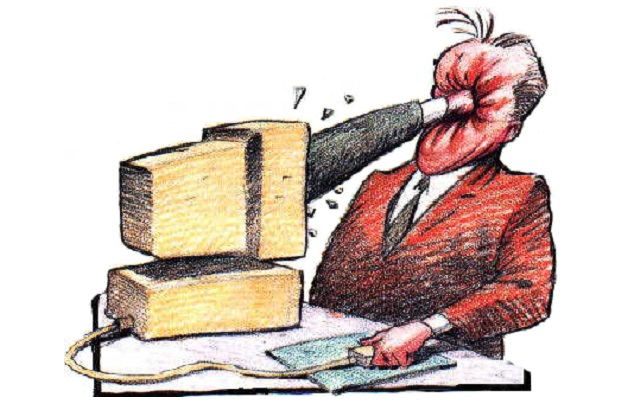
Except that this was no shark attack, and it wasn’t a boating accident or Jack the Ripper. This is what happens when an entire political party decides that it will never give an elected official the minimal bi-partisan support required to make our three Branch system work, and will ignore, breach or distort basic, core essential democratic principles and traditions to destroy him for as long as it takes.

That arm belongs to Lady Liberty.

Yesterday, two of the terrible consequences of the Democratic mania to destroy Donald Trump, first as President, then as ex-President and Presidential candidate, became especially vivid. Let me say, because if I don’t blow my metaphorical horn no one else will, that Ethics Alarms warned about all of this, tirelessly and repetitiously.

WordPress shows me the 10 tags I have used most frequently since Ethics Alarms began in 2009. Nine are what you would expect on an ethics blog: fairness, ethics, responsibility, integrity, trust, respect, hypocrisy, honesty…and the 2016 Post Election Train Wreck. That tag originated in 2016 when Ethics Alarms first blew the metaphorical whistle on the Democrats’ (along with “the resistance” and the news media) destructive, divisive, unprecedented and totalitarian-tending reaction to the (greatly deserved) loss by Hillary Clinton in a presidential race they thought was a sure thing. I have said repeatedly that the 2016 Post-election Ethics Train Wreck is the most serious and important ethics story in the 21st Century, and one of the five or so worst in our nation’s history. We survived the others, but were lucky. There is a substantial chance that this time, our luck will run out.

Continue reading

From Texas, A “Better Late Than Never” Horror Story

The Texas Monthly story is titled, “The Juror Who Found Herself Guilty.” Its tone is celebratory: a juror who made an unethical decision (though the writer attempts to mitigate it in many ways throughout his article) courageously decided to undo the wrong, and succeeded. Far from being impressed with the alleged ethics hero, Estella Ybarra, I found the story infuriating, and its conclusion that Ybarra should be admired untenable.

The story is in the familiar, long-form format familiar to readers of the New Yorker, Esquire, Vanity Fair and The Atlantic. We are given more details about the lives of all the participants in a drama than we need as well as thick context about every facet of the tale. It can be summarized easily, however, and relatively quickly.

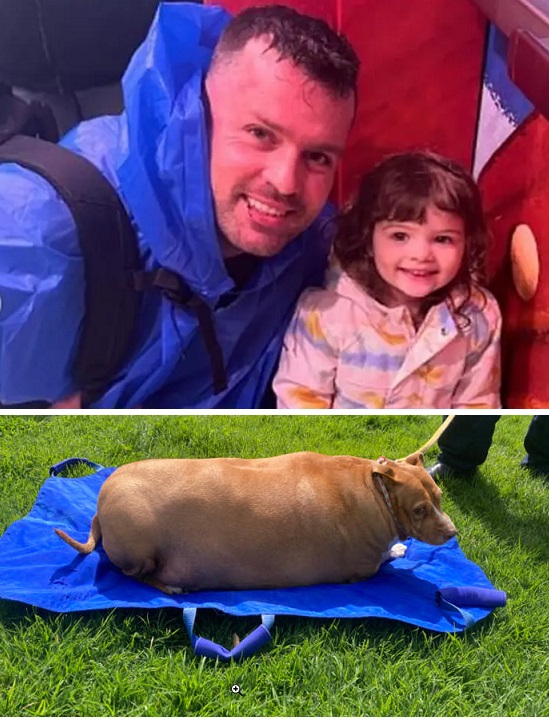
In 1990, when Ybarra was 48 years old, she served on a jury charged with determining the guilt of a Mexican-American man accused of rape. She was the hold-out juror, Henry Fonda in “Twelve Angry Men”; everyone else was certain Carlos Jaile (above) had raped an eight-year-old girl. Ybarra was not: she felt the evidence was thin. There was no physical evidence, the defendant had an alibi, and the main proof of his guilt offered was a child’s eyewitness identification after the fact. But, we are told, Estella was still learning English despite being born in the U.S. (Whose fault is that?) and didn’t understand the justice system very well. (Or that?). As a result, she allowed herself to be bullied into voting ‘guilty’ by the men on the jury, even though she was not at all convinced Carols Jaile was.

She went home after Jaile was convicted and sentenced to life in prison, and wept, we are told. This is supposed to make her seem sympathetic. Later, Estella received a certificate in the mail stating that by serving as a juror and “accepting this difficult and vital responsibility of citizenship in a fair and conscientious manner, you have aided in perpetuating the right of trial by jury, that palladium of civil liberty and the only safe guarantee for the life, liberty and property of the citizen.” Ybarra threw the document into a drawer. She told the writer, Michael Hall, that she thought to herself, “We sent an innocent man away for the rest of his life.”

Continue reading