
I smell fish.
1. Question: Has “Mark Owen,” the Navy SEAL from Team 6 who has written an account of the Osama bib Laden kill mission (real name: Matt Bissonnette), engaged in unethical conduct by doing so? Continue reading
I smell fish.
1. Question: Has “Mark Owen,” the Navy SEAL from Team 6 who has written an account of the Osama bib Laden kill mission (real name: Matt Bissonnette), engaged in unethical conduct by doing so? Continue reading
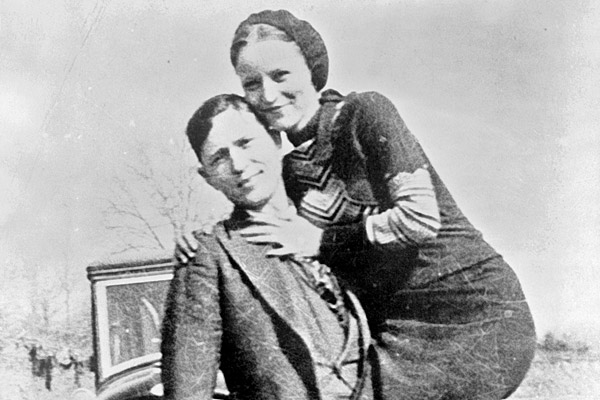
With bank robbers, the bank alarms go off, but the ethics alarms don’t. This is the exception.
Proving that it’s never too late to do the right thing (well, almost never), Kent Anthony Clemens successfully robbed a bank in a small North Dakota town and escaped to Topeka, Kansas, where he gave much of the money to his sister. Then he felt bad about it and called 911, telling the police to come and arrest him.
Admittedly, this is a case in which the ethics alarms sounded a bit late, but they sounded nonetheless. The temptation is to minimize the virtue of Clemens’ conduct in turning himself in, because it just speeded up the inevitable, but that may not be the case. The news story notes that Williston, like many towns in North Dakota that have been victimized by vastly increased crime in the wake of the state’s oil boom, is strapped for law enforcement personnel and overwhelmed with unsolved cases. The amount Clemens stole wasn’t much ($700), and it’s not unlikely that he would have gotten away with his heist. But there he was when police arrived in response to his call, sitting on his front porch wearing the same outfit that surveillance cameras showed him in when he knocked over the Gates City Bank. Continue reading
Nice guy, though.

Jury duty?
Ivana Samardzic, 20, took off for a long-planned Cancun vacation. The problem was that she was a member of the jury in a felony trial, and deliberations had already begun. Samardzic went AWOL after the presentation of the felony shooting case against the defendant, Spartacus Outlaw, calling the court clerk from the airport to say that she had left her vote with the foreman. That’s gall. That’s also contempt. Rather than call a mistrial, the judge got the defendant to agree to allow the jury to continue with only eleven jurors, who found the defendant guilty of one of the charges against him. ( By the way, if you are named Spartacus Outlaw, I really think crime is a risky career choice.) Continue reading
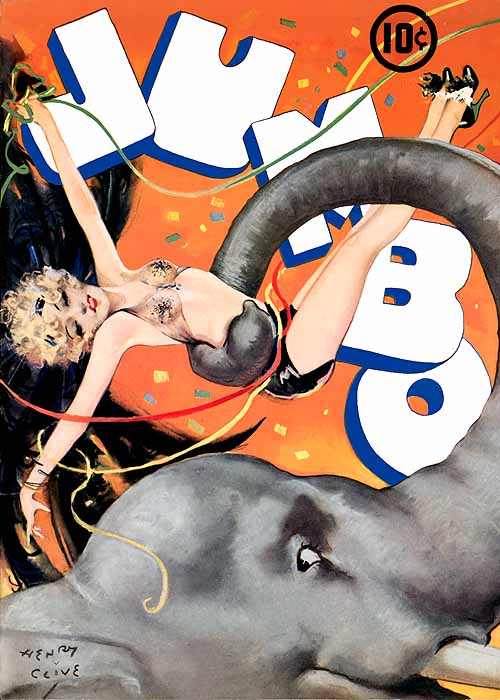
Today Ethics Alarms is launching a new category, the Jumbo Award. The Jumbo is named after the famous moment in the 1935 musical (and 1962 movie adaptation)“Jumbo” in which a clown, played in both by the sublime Jimmy Durante, is trying to sneak the largest elephant in the world out of the circus, which has been seized by creditors. A sheriff intercepts the would-be elephant-napper, and demands, “Where do you think you are going with that elephant?” To which Durante’s character replies innocently, as if the pachyderm at the end of the rope in his hand is invisible, “Elephant? What elephant?”
Henceforth, the Jumbo will be periodically awarded to an ethical miscreant who continues to try to brass his or her way out of an obvious act of ethical misconduct when caught red-handed and there is no hope of ducking the consequences. And the first recipient is faux lawyer John Mark Huerlin.
Huerlin was suspended from the practice of law, yet was caught representing himself as a lawyer in several ways, which you cannot do while you are suspended. To do so is an ethical violation in itself—dishonest, defiance of the bar, and the unauthorized practice of law. Nonetheless, he used a letterhead that referred to the “Law Offices of John M. Heurlin” and an email address that read “JheurlinLaw@Netscape.net.” But the real kicker was that Heurlin held himself out as an attorney in litigation on his own behalf, by following his name with “Esquire” on court pleadings.
Huerlin told the bar that he could explain everything. Esquire means that I’m a lawyer in good standing? My goodness! This is all a big misunderstanding, then. I didn’t use “Esquire” to indicate that I was a lawyer. I thought “Esquire” just meant that I was a subscriber to the magazine, Esquire!
Now either disbarred or soon to be, Mr. Huerlin is officially authorized to replace that confusing reference to his reading habits with a new suffix, so he can present himself as John Mark Huerlin, Jumbo.
_______________________________
Facts: ABA Journal
Graphic: Abracadabra
Ethics Alarms attempts to give proper attribution and credit to all sources of facts, analysis and other assistance that go into its blog posts. If you are aware of one I missed, or believe your own work was used in any way without proper attribution, please contact me, Jack Marshall, at jamproethics@verizon.net.
I know we just had an Ethics Quiz, but this is too good to pass up.
San Francisco police officer Gared Hansen has filed a lawsuit against the city. He says he was unfairly suspended because in his non-uniformed down-time, he is an artist with an unusual passion. He photographs nearly-naked women dressed, made-up, or painted to evoke mythical creatures. You know, like this:

Or this…

..or, if you prefer, this:

So here is your Ethics Alarms Ethics Quiz for this Sunday:
Is such a hobby engaged in by one of its number sufficiently damaging to the credibility, dignity and image of the SF police force that it is reasonable for the officer to be disciplined? In short, should there be a corollary to “The Naked Teacher Principle” called the “Cop Who Paints Weird Naked Women Principle”? Continue reading
 The mini-baccarat game at the Golden Nugget Casino in Atlantic City became awfully profitable one night in April, because the company that was contractually obligated to supply the casino with decks of pre-shuffled cards inexplicably did not. Once the alert gamblers noticed that they were being dealt the same sequence of cards repeatedly from unshuffled decks, they started raising their bets. After forty-one consecutive winning hands, fourteen players had won more than $1.5 million. Puzzled but dim casino security had been watching them to see how they were cheating, but couldn’t figure it out.
No surprise: the casino is suing the card supplier. That’s not all, however: it is also suing the gamblers for their winnings, citing New Jersey regulations that require all casino games to offer “fair odds to both sides.” The casino’s lawsuit claims that once the gamblers realized that the unshuffled cards tilted the odds in their favor, they were obligated by law to stop playing and winning.
Your Ethics Quiz for today: Is that a fair position? Was it unethical for the gamblers to take advantage of the casino’s card problem? Continue reading
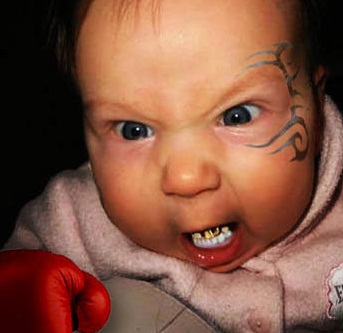
“And in this corner, standing 20 inches and weighing 18 pounds…”
There was a joke in an old “I Love Lucy” episode in which Lucy misunderstood a reference to “three-year-olds” in a story about horse racing, and announced in horror, “They’re racing little girls at Churchill Downs!”
Well, this is worse, and it’s no joke.
“According to Dover Police, three employees from the Hands of Our Future Daycare in Delaware were arrested after a cell phone video showed employees watching and encouraging two 3-year-olds fight each other. Tiana Harris, 19, Lisa Parker, 47, and Estefania Myers, 21, were charged with Assault, Endangering the Welfare of a Child, Reckless Endangering and Conspiracy for the incident, which occurred in March of 2012 and was captured on cell phone video. In the video, police say one child can be heard crying and yelling, ‘He’s pinching me,’ while a daycare worker responds, ‘No pinching, only punching.’” Continue reading

“Aw, why close the door now? The horse hasn’t escaped yet!”
The very day after Pennsylvania’s tough new voter ID law was upheld in court, the lead plaintiff in the lawsuit alleging it was discriminatory, a 93-year-old African-American woman named Viviette Applewhite, who had sued the state claiming that the requirement of a picture ID effectively disenfranchised her, walked into her local Department of Motor Vehicles branch. Though she had neither a birth certificate nor a Social Security card, she was duly issued a photo ID.
But of course. The accusations cynically and dishonestly adopted by Democrats and the Obama administration claiming that voter ID requirements are a thinly-veiled attempt to rob African-Americans and other minorities of their right to vote have always been nothing but a particularly scurrilous component of the 2012 campaign strategy of tarring Republicans as racist for opposing Barack Obama. Because the mainstream media has been willing to give the myth credence, it has had more staying power than blatant lies deserve. When challenged to show that their claims are real, however, Democrats and civil rights advocates have been exposed as frauds. Continue reading
I suppose they just can’t help themselves, sometimes.
So handsome…and so foolish to mess up with partisan politics.
I support the American Civil Liberties Union because of its mission, and because it is on the correct side of issues more often than not. Still, it is stocked with left-wing ideologues, and too often is blatantly political, which damages its reputation, perceived integrity and effectiveness. Every American should be a supporter of a non-profit organization that stands for individual rights and freedoms as defined by the Constitution. Once such a group aligns itself clearly with one side of the political spectrum, however, this is impossible. At very least, the organization should refrain from partisan political attacks, which raises questions of conflict of interest, fairness, and independent judgment. The ACLU is too important to sully with political bias, but since it is run by people full of it, such taint is inevitable.*
Thus we have the embarrassing “report” by ACLU Liberty Watch. I can’t tell what the affiliation with the ACLU is; I assume that the ACLU approves and oversees an entity that leads with its name. This report attacks Mitt Romney’s running mate, Rep. Paul Ryan, as being “anti-civil liberties,” using the most dubious and extreme rationales to do so. My instant reaction: How can I trust an organization that proudly publishes such slanted trash with such obvious partisan intent to be a dispassionate watchdog on my civil liberties?
The answer: I can’t. Neither can you. Continue reading

A useful tool, when the government decides that what you did should have been illegal.
Let me bring the non-baseball fans among you up to date, reminding you that while the immediate subject is baseball, the ethical implications of this story are far broader.
Melky Cabrera, until last season, was a standard issue major league outfielder of substantial but undistinguished abilities and accomplishments. Last season, playing with the frequent destination of such players, the Kansas City Royals, Cabrera suddenly and unexpectedly emerged as a star, surpassing all expectations and his previous levels of performance. The Royals traded him, like an over-priced stock, to the San Francisco Giants in the off-season, getting a package of players in exchange for one they probably thought was as valuable as he would ever be.
This season, however, he was even better. Not only was he selected to the All-Star team for the first time, he was also on the way to leading the Giants to the play-offs and possibly a World Series appearance. Then, this week, a drug test came in positive for testosterone: steroids. By MLB’s rules, Cabrera was suspended from play for 50 games, effectively eliminating him from the Giants season and post season and, not incidentally, marking him as a cheat and an idiot.
And maybe a batting champion. When he was suspended, Cabrera was second in the National League in batting average, and had already amassed the necessary at bats to qualify for the championship (actually, there are some complications with that, but for all intents and purposes, that’s true). He’s only 13 points behind the leader, and averages tend to come down as the season drags on. Not only is Cabrera’s high average a likely product of pharmaceutically-aided cheating, but his suspension for getting caught at cheating may actually help him win the prestigious batting crown, by freezing his average at a lofty .346. Is this fair? Certainly not. Continue reading

