An Appropriate Limit on the First Amendment Right To Be A Total Jerk

"Pardon? I'm not sure I understood that last remark."

If you peruse the various debates on Ethics Alarms, you will note that every time someone writes or says something cruel, dishonest or uncivil that appropriately brings down criticism or worse on the miscreant’s noggin, he and his defenders  will argue that the First Amendment should render them immune from the consequences of their words. This is not what the First Amendment is about, however. It is about the government not being able to punish them for what they say, with some exceptions. Even then, it is possible to be so inarticulate in your jerkish expression that your utterances are beyond even that constitutional protection.

For example, when you bark like a dog.

Or to be more accurate, when you set out to tease and annoy a police dog by barking. Mason, Ohio has an  ordinance making it a crime to “willfully and maliciously taunt, torment, [or] tease … any dog used by the Police Department in the performance of the functions or duties of such Department.” That’s exactly what Mason Police Officer Brad Walker found a drunken Ryan Stephens doing to Timber, a K-9 German Shepard behind a screen in his police cruiser. Continue reading

Casey Anthony’s Lawyer is Pronounced Unethical By an Expert

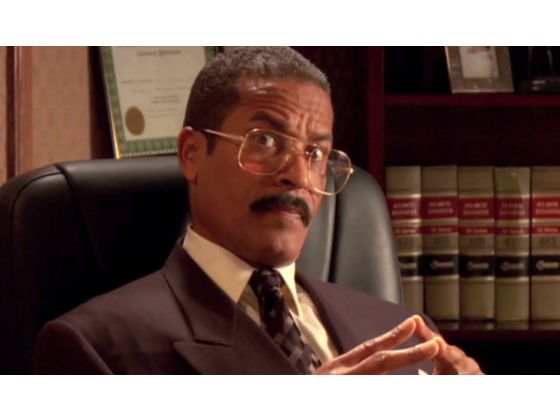
Jack Thompson knows incivility

Ah, the Casey Anthony trial continues to be the legal equivalent of “Jersey Shore,” or some other annoying TV reality show. In today’s episode: Hypocrisy! Revenge!  Irony! Abuse of process! Incivility!  And a special guest!

Cheney Mason, one of Casey Anthony’s defense attorneys, gave a raised middle finger (the international symbol of “I have nothing but contempt and utter disdain for you and your untoward words and conduct, so please have some form of unpleasant sexual intercourse with yourself!”) to a spectator who was verbally harassing Mason and others celebrating Anthony’s July 5 acquittal at a restaurant immediately after the trial.  Such public conduct by a lawyer is rude, undignified and inappropriate, but it is also rude, undignified and inappropriate for sea captains, puppeteers and plumbers, too. Incivility by a lawyer has to be especially egregious and must in some way threaten to undermine the administration of justice to raise the possibility of bar discipline, and flipping the bird to a jerk in a restaurant just plain doesn’t qualify. Now, a lawyer running all over town giving the finger to everyone for weeks on end, or a lawyer making the gesture to judges, opposing counsel or jury members in court would be very different matters. Such conduct would call into legitimate question a lawyer’s fitness to practice law. One such incident? No. I won’t speculate on what percentage of lawyers have given the upturned finger to someone during their careers, but you can.

Nevertheless, a Florida citizen decided to file an ethics complaint against Mason, which is his right. But this wasn’t just any Florida citizen; the complainant was Jack Thompson, a once nationally prominent attorney who managed the nearly impossible: he got himself disbarred for life in Florida for incivility, along with other ethical misconduct. Continue reading

Comment of the Day: “The Provocative T-Shirt Problem”

Rick Jones, whose excellent blog posts on ethics, academia, politics and life can be read here, at Curmudgeon Central, again delivers the Comment of the Day, on my post about the gay couple asked to hide an innocuous T-shirt message while visiting Dollywood.

“It strikes me that attempting to draw clear lines of demarcation in terms of either content or location is inherently fraught with peril. The best determinant may indeed be the Golden Rule. But that inevitably touches on intent. The purpose of a “marriage is so gay” t-shirt isn’t to “get in the face of” opponents of gay marriage; it’s to make a mildly humorous point about an issue without being strident.

“The guy who wore the “I’m a Muslim. Don’t Panic” t-shirt to the Ground Zero celebration after the killing of Osama bin Laden—not terribly clever, but not at all offensive, either.

I wouldn’t be offended by a t-shirt backing a political candidate I’d never support (I might have an indication of whether to engage in conversation with this person as we wait in the queue, but that’s another matter); I would be by a t-shirt defaming that same candidate: comparing him to Hitler, for example. Yes, intent matters. Continue reading

Religious Tolerance Ethics: Pro

Yes, India, worshipping this silly thing means you are all mad as hatters. Now come to a rational church, and chow down with us on some body and blood of Christ. Hey...what's so funny?

In  State v. Daley, the Ohio Court of Appeals reversed a trial court’s mental incompetence verdict and order of treatment for the defendant  because it appeared to be based solely on the defendant’s passionate religious beliefs.

Daley was charged in March 2010 with retaliation, intimidation, aggravated menacing, menacing, and telecommunications harassment. The trial court referred Daley to the court’s psychiatric clinic for a competency evaluation, and the evaluating psychiatrist opined that Daley was not competent to stand trial because he was not able to assist in his defense.

At the competency hearing, Daley testified that, to the contrary, he was able to continue assisting his attorney in his defense. He also testified that his opinions about the legal system, such as his description of divorce court as the “high court of Satan,” were based on his religious belief that divorce is against the word of God. Nevertheless, the trial court found Daley incompetent to stand trial and ordered him hospitalized for restoration to competency. It based its opinion on the diagnosis of the psychiatrist, who testified that Daley, a “radical Christian,” “expresses such extreme intensity of religious belief in very unorthodox religious beliefs to the point to constitute psychosis.” The psychiatrist further testified that treating Daley would “change his psychotic symptoms of which are a religious theme[,]” so that his “intensity and [ ] preoccupation with his religious beliefs will be greatly decreased.” Continue reading

In Marion’s Footsteps: the Jaw-Dropping Shamelessness of Harry Thomas Jr.

A true role model: Washington D.C. politicians ask, "What would Marion Barry do?"

The most notable scoundrel in recent Washington D.C. government history is former mayor and current City Council member Marion Barry, he of  “The bitch set me up!” fame. What marked Barry was and is his remarkable shamelessness. Whether he was caught smoking crack, or giving government salaries to girlfriends, or not paying his taxes, or engaging in any number of other public and personal outrages, his attitude has always been to shrug his shoulders and presume that everyone will just let him go on being an elected political leader, as if his complete disrespect for law, honesty and responsibility is irrelevant to his qualifications to serve. And you know what? In the District of Columbia, he is correct.

He is also not alone in this attitude, in part because Barry has helped mightily to warp the ethical culture in his city over the past three decades. His most recent disciple is D.C. Council member Harry Thomas Jr. (D-Ward 5), who has just agreed to repay the District $300,000 of the taxpayer dollars he misappropriated  for his personal and political use. D.C. Attorney General Irvin B. Nathan announced last week that his office was withdrawing a one million dollar lawsuit against Thomas in exchange for that settlement, saving the District the cost of litigation. The lawsuit had been backed up with strong evidence that Thomas used public funds to fund golf trips to Pebble Beach, buy himself an Audi SUV, and in a nice touch of class, pay for a $143.71 visit to Hooters. Funds budgeted by the council for youth baseball was diverted by Thomas to Team Thomas, a nonprofit founded and controlled by the Council member. Naturally, Thomas also was shown to have engaged in plenty of old-fashioned graft,  soliciting gifts and contributions from private businesses contracting with the city.

Is Thomas ashamed? Contrite? Apologetic? Nah! And he isn’t planning on leaving his job, either. Instead, he issued this nauseating statement, saying in part: Continue reading

Ethics Dunce: Criminal Defense Lawyer Gerard Marrone

If defending the Constitution means you can't look in the mirror, you're in the wrong profession.

Levi Aron was charged this week for abduction and death of Leiby Kletzky, an 8-year-old Brooklyn boy who disappeared while walking home from a Jewish day camp last week. Surveillance video showed the child  asking a stranger, alleged to be Aron, for directions and then getting into his car. A city-wide search for the missing child ended when police found the boy’s body parts, leading to Aron’s arrest.

Now Gerard Marrone, one of the two lawyers defending Aron, has withdrawn from the representation. There is, in theory, nothing wrong with that. A lawyer can withdraw from any representation for good cause, as long as the withdrawal doesn’t harm the defendant. Marrone’s withdrawal, however, was done in such a way that it almost certainly harms the defendant, because the lawyer told the press why he was withdrawing.

“I have three little boys,” he told the Daily News,“You can’t look at your kids and then look at yourself in the mirror, knowing that a little boy, who’s close in age to my eldest son, was murdered so brutally.” Continue reading

Perplexing Oxymoron of the Month: the Unethical Ethics Fellow

You may want to fine tune that ethics program, guys....

From news reports: “A former Harvard University fellow studying ethics has been charged with hacking into the computer network at the Massachusetts Institute of Technology  to steal more than five million academic articles….Aaron Swartz, 24, was indicted on six counts including wire fraud and faces up to 35 years in prison and a million dollar fine if convicted.”

What?

Questions abound:

What do they teach in Harvard ethics classes?

What kind of grades did Swartz get?

Does this prove that the course of study was junk, or does it prove that he was studying the right subject, since he obviously has a lot to learn?

Is it reasonable to say, “Imagine how unethical he would have been if he wasn’t an Ethics fellow”?

Does this prove that one can be an Ethics Fellow and an Unethical Fellow at the same time?

Should an Ethics Fellow who proves himself to be unethical  be allowed to cite his credentials as an ethics fellow?

If those who can’t do, teach, is he still qualified to teach ethics?

Finally, if becoming an Ethics Fellow at Harvard can’t be relied upon to set the “stealing 5 million academic articles is wrong” alarm, what’s the point?

Something For the Casey Anthony Lynch Mob to Think About

So they cut some corners....

The New York Times reports that John Bradley, a software designer who testified at the Casey Anthony murder trial that Anthony had visited a website regarding the use of chloroform 84 times, now says that he made a mistake, and that in fact Anthony only accessed the site exactly once. The finding of 84 visits was used by prosecutors repeatedly during the trial to suggest that Ms. Anthony had planned to murder her 2-year-old daughter, Caylee.

The designer realized his mistake after reworking his software.  Bradley told the Times that he immediately alerted a prosecutor, Linda Drane Burdick, and Sgt. Kevin Stenger of the Sheriff’s Office in late June to make them aware of his new findings. Yet the prosecutors never corrected the record or alerted the defense, as they are required to do under the law.

What does this mean? Continue reading

James O’Keefe—Still Faking, Still Recording, Still Unethical

This is all your fault, Allen Funt!

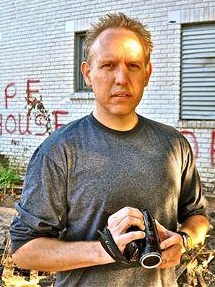
The latest James O’Keefe Candid Camera stunt is supposed to show corruption in the Medicaid system. As in his earlier video hit-jobs on ACORN and NPR, O’Keefe’s colorful crew of community theater rejects pose as outrageous and unsavory stereotypes—this time, drug-smuggling Russians with the worst accents since “Rocky and Bullwinkle,” who are pimping out their “sisters” for sex. The O’Keefe Players manage to find a jolly, badly-trained, none-too-swift Ohio Medicaid worker who giggles away their confessions of wanting to defraud Medicaid and dealing illegal drugs. The video of the dumb encounter—dumb charade, dumber government employee—has been posted on YouTube. More of the same, presumably, is on the way.

If you’re as bored with this as I am, please tell O’Keefe to stop. Of course his act is as unethical as his “Russians'” accents are embarrassing: Continue reading

Judicial Non-Ethics, Pennsylvania Division: Now THAT’S a Conflict of Interest!

The judge apparently found the meter to be in contempt of court.

Lancaster, Pennsylvania District Judge Kelly Ballentine dismissed several of her own parking tickets and an expired registration ticket within the past year, according to court records.

“According to the state Judicial Conduct Board’s rules, district judges should disqualify themselves in proceedings where they are a party,” notes the news report.

Yes, I rather think that’s a good idea, don’t you?

It appears that Judge Balentine’s colleagues understand this not-so-fine point of conflict of interest principles and basic ethics: a check of court records with regard to all of the county’s district judges revealed that those who had parking or traffic tickets had another magisterial judge handle their cases at the district court level. Sometimes we hear objections to court proceedings in which a judge over-stepped his or her proper role and became de facto “judge, jury, and prosecutor.” A judge serving as judge, defendant and defense attorney, however, is much, much worse. Continue reading