“Hatchet Wielding Hitchhiker” Ethics

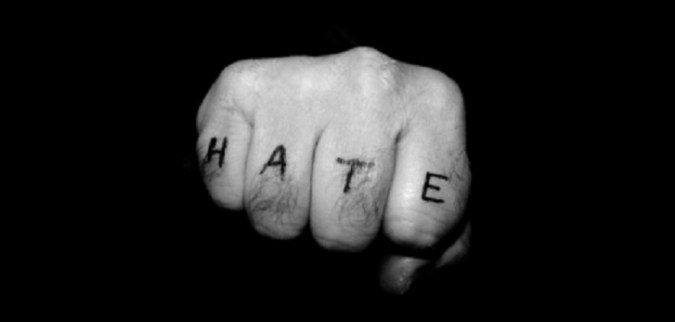
This week Netflix offered another true crime documentary, “The Hatchet Wielding Hitchhiker.” It tells the weird tale of Kai Lawrence (his real name  is Caleb McGillvary) who went from viral celebrity to convicted murderer in less than a year. It is a very disturbing story, and not just because of the murder. What I found most illuminating if not surprising was the eager exploitation of an obviously disturbed young man with violent tendencies by media types who gave no thought to the likely consequences of their actions.

In  2013, McGillvary, aka “Kai” was a homeless pot-smoking vagrant, living on the streets and depending on the kindness of strangers.  Hitchhiking in the Fresno (California) area, he was picked up by Jett McBride, who, Kai revealed later, he had given a cigarette laced with a hallucinogenic drug. Perhaps as a result, McBride ran down a pedestrian  When a woman rushed to the pedestrian’s aid, McBride, apparently bonkers, assaulted her. This is where “hatchet-wielding” comes in: Kai got out of the car and stopped McBride’s attack by hitting him three times over the head with a hatchet he had in his bag.

Yes, he became a hero by striking a man with a hatchet. The woman felt Kai had saved her life, and a local reporter on the scene quickly grabbed the long-haired, handsome young man for an interview. The reporter was obviously amused and delighted by Kai’s spontaneity and affinity for the camera. At one point McGillvary turned directly to viewers and delivered a well-rehearsed call for all human beings to be “respected for who they are.” The reporter was charmed, even though anyone with open eyes should have known then that they were witnessing the act of seasoned grifter. Continue reading
Ethics Quiz: As The Founders Roll Over In Their Graves…[Corrected]

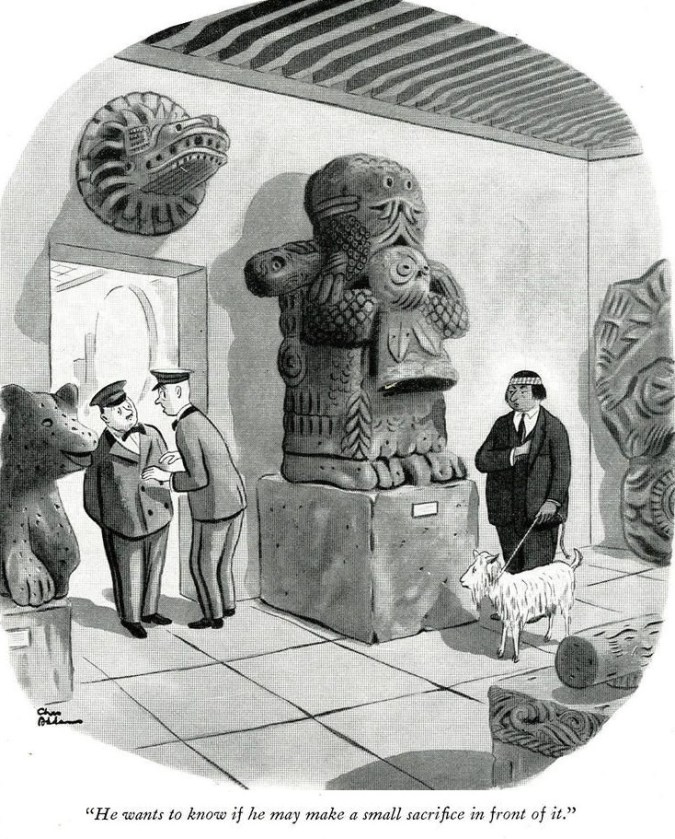
The headline: “Hamtramck City Council votes to allow animal sacrifice for religious purposes in the city.”

The act of animal sacrifice is often practiced among Muslims during the celebration of  Eid al-Fitr, and Muslims make up a majority on the council, it seems. There’s not much more that needs to be said, is there?

Your Ethics Alarms Ethics Quiz to begin this cold and gloomy Thursday (at least where I am) is…

Are animal sacrifices for any reason ethical in the United States of America?

Continue reading

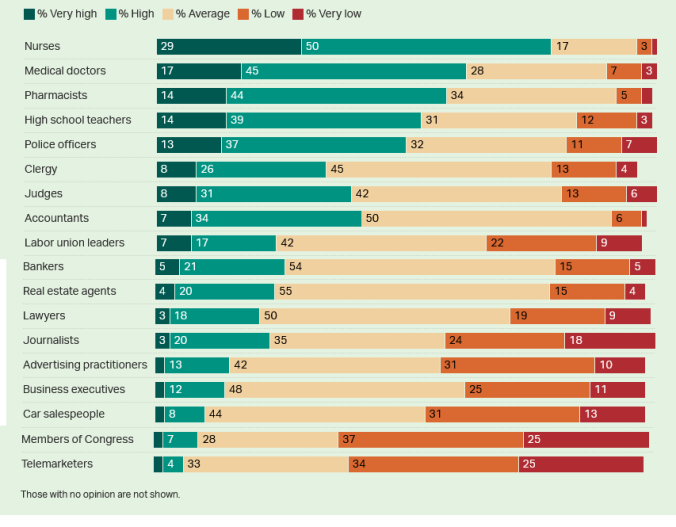
Ethics Observations On The 2022 Gallup “Americans’ Ratings of Honesty and Ethics of Professions”

Here it is…

Those polled were asked, Please tell me how you would rate the honesty and ethical standards of people in these different fields — very high, high, average, low or very low?” Continue reading

Gee, Can We Lock Up The Parents For THIS Shooting?

Ethics Alarms has always maintained that when a child gets control of a real firearm and shoots it, the parents must be held criminally responsible, not only for the consequences of the shooting, but for allowing the child access at all. I also believe that this should be strict liability: I don’t care if the child is a whiz at picking locks or a precocious little Michael Corleone. If you own a gun and your kid gets a grip on it, you’re the menace to society.

I can’t imagine a more perfect illustration of the need for this policy than the story out of Richneck Elementary School in Newport News Virginia. A 6-year-old boy shot and wounded his first grade teacher yesterday. He apparently did it intentionally—he had some dispute with her, we are told—and is a good shot: she is in critical condition.

The Washington Post story about the shooting is infuriating:

Newport News Police Chief Steve R. Drew said at a news briefing…’We did not have a situation where someone was going around the school shooting.’”

Oh, the first grader wasn’t an active shooter then! We could guess that. What about the parents?

Continue reading

Now THIS Is Incompetent Policing! (International Division)

Police in Santa Marta, Colombia, recently published a wanted poster for 12 dangerous criminals in the town, asking the public for help in apprehending them. All are members of the “Los Pachenca” drug cartel and are suspects in a series of crimes committed in Santa Marta in recent months. The published poster (above), however, only mentioned the suspects’ nicknames without revealing their real names, and only generic silhouettes were offered rather than actual photos.

Nevertheless, the police department acted as if their procedure was serious and reasonable. “It is very important that citizens help us identify the people who are affecting life throughout the city,” the police high command said to supplement the poster. “We are going to provide payments for data that allow us to identify them.”

The mockery of the absurdly inept dragnet was instant and relentless. One wag noted that it should be easy to identify cartel members since “they all look identical.”

The department quickly pulled the poster. See? It’s not completely incompetent after all!

Romeo and Juliet’s Ethical Unethical And Really, REALLY Late Law Suit

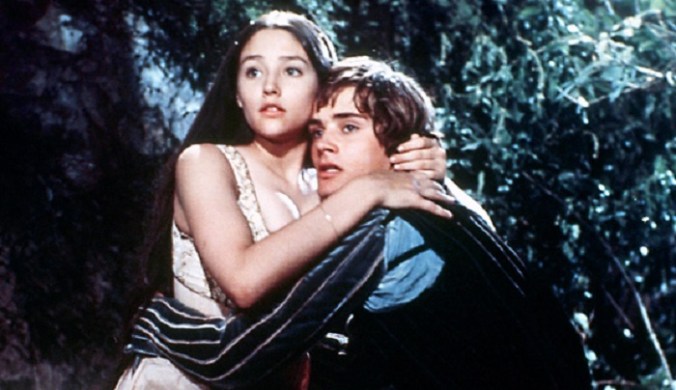
It is hard not to be cynical about the news that Leonard Whiting and Olivia Hussey, the now-aged stars of the Oscar-winning 1968 film “Romeo and Juliet,” are suing Paramount Pictures for sexual abuse over the dreamy, artsy nude scene that was included in Franco Zeffirelli’s hit. When I told my wife about it, her snap reaction was “I guess they need money.”

It’s fair conclusion, especially regarding Whiting, who never had much of a career after the great success of “Romeo and Juliet.” Hussey, at least, worked pretty consistently after her debut, among her credits being a classic horror film, the ahead-of-its-time slasher flick “Black Christmas” which introduced “The calls are coming from inside the house!” to our cultural vernacular.

The first thing I thought of was the California statute of limitations, forgetting that California has temporarily suspended it for child sex abuse, in part because of an emerging Hollywood scandal involving child stars. The suspension has spurred new lawsuits and the revival of others that were previously dismissed.

The actors, both seniors now, claim director Zeffirelli tricked and bullied them into doing a nude scene despite giving them assurances that they would not have to bare themselves on screen. The director reportedly told the two teens (Hussey was 15 at the time; Whiting 16) that without the tasteful nudity the film would lack artistic integrity. Solomon Gresen, who represents the pair, says in explaining the suit,

“Nude images of minors are unlawful and shouldn’t be exhibited.These were very young, naive children in the 60s who had no understanding of what was about to hit them. All of a sudden they were famous at a level they never expected, and in addition they were violated in a way they didn’t know how to deal with.”

The actors’ spokespeople now say that the lawsuit comes so late because Hussey and Whiting were afraid that suing earlier would adversely affect their careers (regarding Whiting: What career?) and that no one would believe them. A lot of people won’t believe them now, either: in a 2018 interview, Hussey defended the brief view of her breast. “Nobody my age had done that before,” she said, adding that Zeffirelli shot it tastefully. “It was needed for the film.” In a another interview the same year, Hussey said that the scene “wasn’t that big of a deal. And Leonard wasn’t shy at all! In the middle of shooting, I just completely forgot I didn’t have clothes on!”

So we come to the question that so often must be answered to assess an ethics controversy: “What’s going on here?”

Some answers:

Continue reading

Discrimination By Any Other Name

Colleges and universities have become masterful at the sophistry of claiming that their discrimination isn’t discrimination, not really. A new example from Berkeley is very close to the line.

The Berkeley Law chapter of Law Students for Justice in Palestine announced over the summer that it had altered its bylaws to prohibit “speakers that have expressed and continued to hold views or host/sponsor/promote events in support of Zionism, the apartheid state of Israel and the occupation of Palestine.” Eight other student groups adopted similar bans. In response, two lawyers filed a complaint with the U.S. Department of Education’s Office for Civil Rights claiming that the ban amounts to antisemitic discrimination. DOE is investigating.

The lawyers, Arsen Ostrovsky and Gabriel Groisman, argue,

The student groups at Berkeley Law are being willfully deceptive. Rather than simply exclude Jewish speakers, they exclude speakers who have expressed and continue to hold views in support of Zionism. Zionism refers to the Jewish people’s right to self-determination and liberation in their ancestral homeland, the Land of Israel. It is not merely a “viewpoint” as the Dean suggests, but rather something that has for millennia formed an integral and indispensable part of Jewish identity. A rejection of those who identify as Zionists, which is a vast, overwhelming majority of Jews, is therefore no different to excluding anyone else on the basis of their faith, shared ancestry or national origin. And Title VI of the Civil Rights Act specifically states that “[n]o person in the United States shall, on the ground of race, color, or national origin, be excluded from participation in … any program or activity receiving Federal financial assistance.” Title VI also provides protection from discrimination on the basis of shared ancestry or ethnic characteristics.

Continue reading

Dead Body Ethics: Why Is “Mind Your Own Damn Business!” Such A Difficult Principle To Grasp?

This post was almost titled “Stop Making Me Defend Governor Hochul!” Conservative pundits, bloggers and busybodies are freaking out over Governor Kathy Hochul (D-NY) signing into law legislation that makes New York the sixth state to legalize the composting human remains. The law adds “natural organic reduction” to cremation and entombment as legal ways to dispose of bodies. The new law defines the practice as the “contained, accelerated conversion of human remains to soil” in a “structure, room, or other space” in which decomposition can occur.

To all of which I say, “Fine.” Any time government increases individual autonomy and the liberty to do as citizens please as long as it doesn’t harm society or other individuals, or infringe on their rights, that’s an ethics win. It is especially encouraging to see a Democratic governor move in this direction, since her party has lately embraced a philosophy of seeking more restrictions on core American rights—like, say, freedom of speech— rather than fewer.

Never mind, though: some on the right are eager to bash Hochul anyway.

Here’s “Not the Bee”s” John Knox:

Continue reading

Tardy Ethics Observations On The Netflix Series “Unbelievable” [RE-Corrected]

I have at least four posts written already in my head this New Year’s Day morning, but I wanted to begin 2023 with a discussion that is at least a little bit positive, hence this. In truth, the 2019 series “Unbelievable” is the reason the first post of the year is going up so late: disgusted with the vulgar and idiotic New Year’s Eve coverage on the networks (“Do you two have children, are will you be making one tonight?” one of ABC’s celebrity hosts asked a kissing couple.) Grace and I started watching “Unbelievable” on Netflix for the third time. I thought it was better this time than before, and on the earlier viewings I thought it was great. Thoroughly engrossed we couldn’t stop midway, so as a result, the Marshall got to bed after 3 am last night. (And I woke up with a cold.)

Over at “Simple Justice,” lawyer/blogger Scott Greenfield wrote about his regret that so many examples of flaws within the justice system escaped his metaphorical acid pen in 2022. Yeah, welcome to my world, Scott. I write three or hour posts a day to his one, and I still miss more ethics issues, often major ones, than I cover. I do not understand why I didn’t write about “Unbelievable” in 2019, or in 2021, when I watched it again. In such situations, I’m just letting readers down. “Unbelievable” is not only an ethics story, but an important one; it also happens to be true. (It was also partially created by the Marshall Project. I am awash in shame.)

I usually don’t worry much about spoilers, but in this case, I don’t want anyone to enjoy the series less because I’ve given away the plot completely, although, as I said, I enjoyed “Unbelievable” more the third time around, but perhaps for different reasons than I did on first viewing. If you want to experience the story, the performances (which are all excellent), the incrustation and emotional finale cold, then maybe you should stop reading here. But I’m going to try to make some ethics points here without giving too much away: Continue reading

On The Freedom Of Speech Front…

Strangely, many of the same people who are claiming that democracy is hanging by a thread or two are also trying to fray a rather obvious thread, the right to free expression and free speech. Since that First Amendment thingy is a bear, they have to find ways around it that will stifle ideas, opinions and arguments that interfere with the “greater good”.”” (as they see it, natch). Or pretend the First Amendment “isn’t what it is” (#64).

Recent developments:

Continue reading