Ethics Quote of the Week: Sen. Lindsey Graham

“If you can give nothing but bad information, isn’t it better to give no information?”

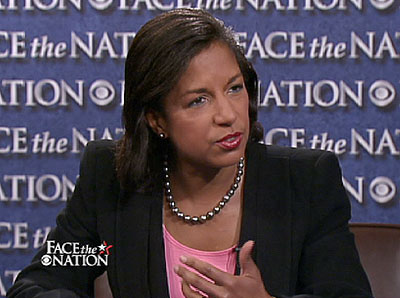
—- Sen. Lindsey Graham (R-SC), during a press conference on Nov. 27th, during which he reiterated his position that U.N. Ambassador Susan Rice had knowingly and intentionally misled the American public regarding the fatal attack on the Benghazi compound on 9/11, in her appearances on multiple news shows five days later repeating “talking points” to the effect that the attacks had been spontaneous and sparked by an anti-Muslim video.
Apparently.

Even many liberal commentators are now conceding that Rice was being a “good soldier” on September 16, carrying a technically accurate but intentionally misleading message that seems to have been designed by Obama campaign strategists to make sure the death of an American ambassador in Libya wasn’t seen as a refutation of Obama’s claims to a successful handling of that nation’s struggles or a contradiction of the argument that “his” killing of Bin Laden had Al Qida on life support. After all the attacks on Republicans Senators McCain, Graham and Kelly Ayotte for their condemnation of Rice for her part in the Obama campaign’s spinning, including accusations of racism from Congressional Black Caucus members and the affirmatively weird complaint by President Obama (which seems to be that as long as Rice was repeating what she had been programmed to say by others she shouldn’t be held personally responsible for the content of her own public statements),Graham in particular has refused to back off his criticism, and cheers to him for that. Continue reading →
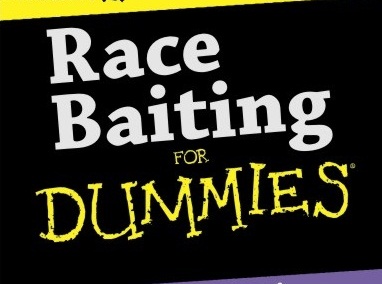
Unethical Quote of the Month: Rep. Marcia Fudge (D-OH)

“It is a shame that anytime something goes wrong, they pick on women and minorities..All of the things they have disliked about things that have gone on in the administration, they have never called a male unqualified, not bright, not trustworthy. There is a clear sexism and racism that goes with these comments being made by unfortunately Sen. [John] McCain and others . . . How do you say that a person with Susan Rice’s background is not qualified? I wonder what your qualifications are for your job. Where did you finish in your class? You know, I know one of them finished in the bottom of their class. Susan Rice was a Rhodes scholar. How do you say a person like Susan Rice is not qualified?…I mean, Susan Rice’s comments didn’t send us to Iraq and Afghanistan. Somebody else’s did. But you’re not angry with them.”

—-Rep. Marcia Fudge (D-OH), accusing GOP Senators John McCain, Lindsay Graham, and Kelly Ayotte (a woman) of sexism and racism for their harsh criticism of UN Ambassador Susan Rice for her repeated assertion on multiple news shows that the Benghazi attack that killed the American ambassador in Libya was a spontaneous demonstration over a YouTube video after the Obama Administration had been told otherwise.

It must be comforting to be able to rationalize all criticism arising from your own conduct and to attribute it to the biases of your critics. Crippling, but comforting. If one cannot regard criticism as legitimate, then one can never assess one’s own mistakes and weaknesses and work to improve.

Fudge is one of the habitual race-card players in Congress: earlier this year, she accused the bi-partisan House ethics committee of racism because a disproportionate number of the Congressional Black Caucus’s members were under investigation. (This was, of course, because a disproportionate number of  the Congressional Black Caucus’s members, like Fudge, have engaged in dubious practices that indicate a weak grasp of ethics.) This time, she had lots of company, including Rep. James Clyburn (D-NC), who later said that the word “incompetent” was racist code. Brilliant! This means that no black public official can ever be called incompetent! Sure to be added to the code book if this theory sticks: inept, ineffective, corrupt, careless, irresponsible, and unqualified. Fudge, Clyburn and their colleagues propose to make legitimate criticism of black and female officials—those who are Democrats, that is—impossible, one word at a time. Continue reading →

Ethics Dunces: The Petraeus Defenders

I know I have touched on this before regarding the Petraeus scandal (and elsewhere), but it bears emphasizing—especially since so many seem to be unable to process the concept. Leaders cannot be seen as willing to violate their own rules, principles and those of the organizations they represent. Arguing that the rules violated are foolish, or outdated, or too restrictive does not rebut this fact of leadership in any way, but making that argument does show beyond question that the pundit making it doesn’t comprehend the most basic facts of leadership and the building of ethical cultures.

Today’s Sunday papers are awash in editorials and op-ed pieces by former intelligence personnel, lawyers, social scientists and other pundits blaming the widening Petraeus scandal ( now focusing on Gen. John Allen, the U.S. commander in Kabul, and the significance of his exchanging thousands of inappropriate emails with Jill Kelley, the Tampa socialite who is apparently the military equivalent of a rock-and-roll groupie, only older) on antiquated morals and political opportunism. There are too many of these bewildered commentators to count, but their views all ooze from the same basic, shockingly facile, and in some cases intentionally misleading theory, which is that Petraeus’s and Allen’s conduct are irrelevant to their ability to do their jobs. The Washington Post’s David Ignatius, usually one of the more rational and objective of that paper’s leftward chorus, actually reprints verbatim an e-mail he received from an Arab diplomatic source as if it contains illumination rather than naiveté:

“He needs to resign cause he has an affair? What da hell??? He is brilliant!!!! Why like this????” Continue reading →

Accountabilty Check: President Obama’s Bizarre Defense of Susan Rice

“Don’t pick on my poor. defenseless, untrustworthy ambassador!”

Add to the list of the Top Ten Outrageous Remarks of President Obama this stunner, the low-light of his first full press conference since March.

“If Sen. McCain and Sen. Graham and others want to go after somebody they should go after me. For them to go after the UN ambassador who had nothing to do with Benghazi…to besmirch her reputation is outrageous.”

“Accountability” continues to be an alien ethical concept to the President, and this proves it. U.N. Ambassador Rice went on the Sunday morning TV shows four days after the deadly Benghazi attack and after U.S. intelligence had determined that the attack that killed the American ambassador in Libya was not a spontaneous demonstration sparked by an anti-Islam video, but a planned, organized, terrorist enterprise. She did this while asserting in no uncertain terms that the attack was not what U.S. intelligence had told the State Department and the White House that it was. Rice, in making this mistaken or dishonest case on behalf of the administration, put her name, her status, her credibility and her position behind it. From the moment she became the Administration’s spokesperson on Benghazi, she had something to do with Benghazi. Continue reading →

A No Tolerance Rule For Cabinet Members: Don’t Threaten Reporters

Intolerable.

I’ll make this simple, and get right to the point: any Cabinet member who threatens a reporter with physical violence for doing the job journalists are supposed to do should be fired. No exceptions. Moreover, that should be obvious and beyond debate.

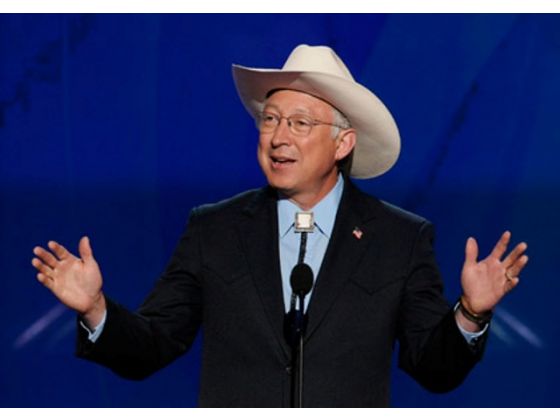
Ken Salazar, the Secretary of the Interior, didn’t like a question he was asked by Colorado Springs Gazette reporter Dave Philipps. The investigative reporter had tried to reach Salazar for months through his press secretary seeking a comment on a story Philipps had written about how a Colorado man with business connections to Salazar had been sold hundreds of federally protected wild horses that have subsequently vanished. The man is under investigation, and one of his businesses is slaughtering horses, not that any of this is germane to how Salazar treated Phillipps.  When Philipps began asking Salazar about the program and possible personal ties he had to the wild horse buyer now under investigation, Salazar abruptly ended the interview. He then pushed The Gazette’s camera aside, got nose to nose with the reporter, and said, pointing, “Don’t you ever…you know what, you do that again… I’ll punch you out.” Continue reading →

Gen. Allen, Lockheed, John Edwards, Restraint Bias,and Further Musings on the Petraeus-Broadwell Ethics Train Wreck

Run away!

In no particular order:

  • In a tack that is being duplicated by other commentators on the left, MSNBC’s Rachel Maddow essentially pronounced the scandal as much ado about nothing (Columnist E.J. Dionne dismissively referred to Petraeus’s affair as his “little secret”). See, as long as an incident involves sex, the Left’s default position is that it can’t be that bad. Maddow mocked the actions of Jill Kelley, the woman who Broadwell threatened and who alerted the FBI, saying, “Who contacts the FBI because of threatening e-mails? If I did that, they would have to set up a special division just for me.” Ha ha.  How many of your threatening e-mails credibly suggested that the head of an intelligence agency was having an illicit affair with an unstable wacko, Rachel? Kelley did the responsible, intelligent thing given the possible national security implications. But it’s certainly good to know that you wouldn’t…because it’s only sex, of course.
  • Other pundits are complaining that the FBI became involved when what Petraeus did “wasn’t a crime.”  Yes,  it’s the “It’s legal” rationalization. Why people who can’t comprehend that dangerous, destructive, serious misconduct can occur without breaking any laws are allowed to write newspaper columns, I’ll never understand. Petraeus’s affair was a violation of the ethics rules, in an intelligence agency with major responsibilities in national security. That is serious, inherently dangerous, and easily could have led to security breaches that were illegal. If a leader materially, knowingly and publicly violates an ethics rule, he cannot lead. This is why Petraeus, who understands this, resigned, despite the certainty that the Rachel Maddows of the media would have been happy to shrug off his actions as “no big deal.” …because it’s only sex, and “it’s legal.”
  • Kelley still boarded the ethics train wreck, not because of her actions in response to Broadwell’s threat, but in light of the revelation that she was maintaining a hot e-mail relationship with Gen. John R. Allen, the commander of U.S. and NATO troops in Afghanistan. The FBI has uncovered between 20,000 and 30,000 pages of primarily e-mails containing “potentially inappropriate” communication between Allen and Kelley. Wait, what? Between 20,000 and 30,000 pages? What the hell is going on with our generals? This is obsessive, unhealthy behavior, even if he’s just writing her limericks and recipes. Something is serious amiss in the ethical culture of the U.S. military leadership Continue reading →

Ethical Quote of the Month: Gen. David Petraeus

“Yesterday afternoon, I went to the White House and asked the President to be allowed, for personal reasons, to resign from my position as D/CIA. After being married for over 37 years, I showed extremely poor judgment by engaging in an extramarital affair. Such behavior is unacceptable, both as a husband and as the leader of an organization such as ours. This afternoon, the President graciously accepted my resignation.”

—-Gen. David H. Petraeus, Director of the Central Intelligence Agency, in a public statement announcing his resignation from that position.

How quaint.

Democrats and Republicans must have felt that they had stumbled into the Way-Back Machine and delivered into England circa. 1904. A high government official resigning over adultery, sex,…”personal misconduct?” How bizarre! Naturally, Sen. Diane Feinstein, who heads the Senate Intelligence Committee,  announced that she would have supported Petraeus if he had chosen to stay. “I wish President Obama had not accepted this resignation, but I understand and respect the decision,” she said in a statement, and described Petraeus’s resignation as an “enormous loss for our nation’s intelligence community and for our country.”

The right way to leave after an affair, apparently, is to try to cover it up, submit to extortion, corrupt others in the process, and only quit when the hideout is surrounded, the hounds are clawing at the door and someone is yelling at you through a bullhorn—you know, like former GOP Sen. John Ensign, who waited two years to resign while his colleagues, like Feinstein, looked the other way. Nobody gets it in Washington—“it” being the ironclad principle that leadership must set the highest example, not the lowest level it can get away with, or the whole system rots below. Nobody, apparently, except the man who just resigned. Continue reading →

CREW vs. Issa: Biased Accuser, Guilty Accused

Unethical for Rep. Issa to make it, and unethical that CREW didn’t

The Center for Responsibility and Ethics in Washington does almost half a great job in its stated role as a government ethics watchdog. The supposedly non-partisan group is obviously partisan, since it goes after unethical Republican officials with frequency and relish while targeting unethical Democrats with infrequency and reluctance. CREW’s complaints, however, are almost always well-supported and legitimate. Why almost half a great job? CREW can’t be as effective in its efforts to expose unethical Republican conduct as it needs to be because its obvious bias makes the organization’s motives and judgment less trustworthy and more vulnerable to attack.

We have a perfect example in the news. “The Hill” reports that CREW….

“…has asked the Office of Congressional Ethics to investigate whether Rep. Darrell Issa (R-Calif.) violated rules by producing a video that attacks President Obama. Continue reading →

Chris Christie and the Curse of Consequentialism

It will be scant consolation to Chris Christie, who probably lost forever any chance of becoming President, but his bi-partisan actions in the wake of Superstorm Sandy provide a perfect example of how a completely ethical and responsible decision can have consequences that cause it to be judged unethical and irresponsible.

Even before Obama won Ohio’s electoral votes, guaranteeing his re-election, analysts were pointing to Christie’s much-photographed stroll with (and hugging of) the President, and the well-timed opportunity it provided to allow Obama to appear both Presidential and willing to co-operate with Republicans, as the tipping point in a close race, breaking Mitt Romney’s momentum and undercutting the argument that only he could “reach across the aisle.” I doubt that Chris and Barack’s New Jersey Adventure was in fact the primary reason Romney lost, but I have no doubt at all that conservatives will blame Christie, among others, for the loss. Continue reading →

Why Nate Silver Is Wrong

Funny, Nate, I don’t see “leadership” anywhere in here…

I have wrestled with whether to write this post for about a month now. I am not in the election predicting business, which is a fool’s game, and this is tangential to ethics at best. On the other hand, leadership and American culture are among the subjects frequently explored here. Nate Silver’s analysis of the Presidential election on his New York Times blog has been at once fascinating and aggravating for me, though it has been a godsend to my nervous friends on the ideological left. Silver has insisted that his statistical analysis of the polls fortells an Obama victory with increasing certainty. Last I looked, his model was showing the election to be all but in the bag for the President, with, Silver calculates, an 86% chance that Romney goes down to defeat.

I don’t question Silver’s figures or formula. He’s a statistics whiz. His mistake is trying to use the tools he has used to great success on the poker table and in the world of sabermetrics to analyze the election of a President of the United States, without acknowledging or understanding the core of the process, or the culture and context in which it occurs. In many elections, most perhaps, his model would work perfectly. This time, it is going to fail. Silver won’t see his failure coming because as brilliant as he is in his chosen field, his demonstrated expertise is in economics and statistics. He really believes, apparently, that American history doesn’t matter, that what Americans think about when they choose a President is irrelevant, and that numbers purify the discussion and remove all the bias and static. He couldn’t be more wrong. Continue reading →