Some day I’ll have to tote up the number of Comments of the Day attributable to each commenter. I have no idea who the current leader is, but there is no doubt that Chris Marschner is among the contenders. Here he discusses a long-time favorite topic of mine, the effect of height and size on the perceptions and uses of power.
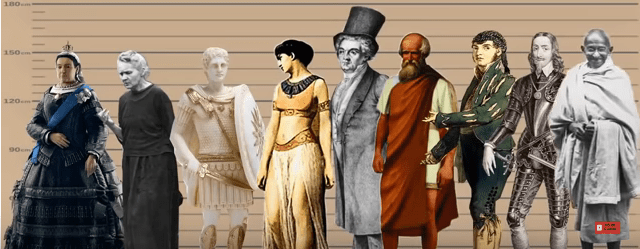
What is interesting is why people view tall people as somehow better leaders. There are numerous studies on the anthropological underpinnings of size and pecking order in the animal kingdom. It is not a stretch to think that deep within the reptilian parts of the human brain are the remnants of the need for a strong protector. The entire concept of the alpha male embodies this notion.
The larger, stronger member of the group takes on all comers and provides for the group while the betas and very meek simply do as they told or fight among themselves for the highest possible status in the group who, at some point, will eventually challenge the alpha member for dominance. Other studies involving what is considered beauty have also been done. We routinely give deference to attractive tall people unconsciously. Nature has imbued these folks with an innate power to get others in the group to do for them. I have termed these innate physical traits a source of natural power.
There are also numerous books on the origins of power. Some types include: Legitimate Power; Expert Power; Coercive Power; Referent Power; and, Reward Power. The Resistance attempts to convince the less informed that Trump is using coercive power while working to undermine his legitimate powers granted by the Constitution. Some who state that Trump has created a cult like following are ascribing Referent Power to him. I doubt a single Trump supporter with more than two brain cells sees him as a deity. But that seems to be what the resistance wants people to believe because it would create a schism in the religious communities. Continue reading →
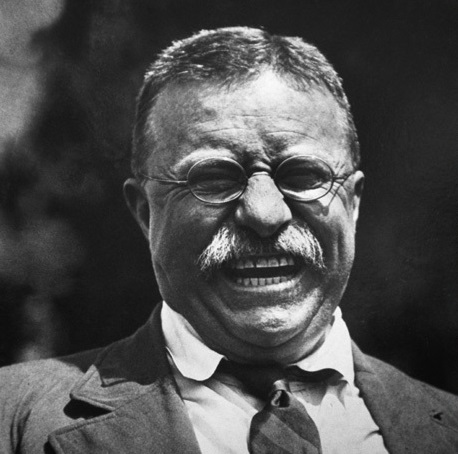
Theodore Roosevelt wasn’t still President when he gave his speech, “Citizenship In A Republic”, at the Sorbonne, in Paris, France on April 23,, 1910. He was a President, though, and getting ready to run for the office again; moreover, you can have a speech be any more pure Teddy than this one.
It is his most quoted speech as well as the one which describes his essence. I wonder if President Trump has read it? Teddy wouldn’t approve of Trump, I think, but he would have to admire the President’s determination to spit in the eyes of his critics, and “whose face is marred by dust and sweat and blood; who strives valiantly; who errs, who comes short again and again, because there is no effort without error and shortcoming; but who does actually strive to do the deeds; who knows great enthusiasms, the great devotions; who spends himself in a worthy cause; who at the best knows in the end the triumph of high achievement, and who at the worst, if he fails, at least fails while daring greatly, so that his place shall never be with those cold and timid souls who neither know victory nor defeat.”
That describes Donald Trump these past three years as much as any President, including Teddy Roosevelt.
Strange and impressive associations rise in the mind of a man from the New World who speaks before this august body in this ancient institution of learning. Before his eyes pass the shadows of mighty kings and war-like nobles, of great masters of law and theology; through the shining dust of the dead centuries he sees crowded figures that tell of the power and learning and splendor of times gone by; and he sees also the innumerable host of humble students to whom clerkship meant emancipation, to whom it was well-nigh the only outlet from the dark thraldom of the Middle Ages.
This was the most famous university of mediaeval Europe at a time when no one dreamed that there was a New World to discover. Its services to the cause of human knowledge already stretched far back into the remote past at a time when my forefathers, three centuries ago, were among the sparse bands of traders, ploughmen, wood-choppers, and fisherfolk who, in hard struggle with the iron unfriendliness of the Indian-haunted land, were laying the foundations of what has now become the giant republic of the West. To conquer a continent, to tame the shaggy roughness of wild nature, means grim warfare; and the generations engaged in it cannot keep, still less add to, the stores of garnered wisdom which where once theirs, and which are still in the hands of their brethren who dwell in the old land. To conquer the wilderness means to wrest victory from the same hostile forces with which mankind struggled on the immemorial infancy of our race. The primaeval conditions must be met by the primaeval qualities which are incompatible with the retention of much that has been painfully acquired by humanity as through the ages it has striven upward toward civilization. In conditions so primitive there can be but a primitive culture. At first only the rudest school can be established, for no others would meet the needs of the hard-driven, sinewy folk who thrust forward the frontier in the teeth of savage men and savage nature; and many years elapse before any of these schools can develop into seats of higher learning and broader culture.
The pioneer days pass; the stump-dotted clearings expand into vast stretches of fertile farm land; the stockaded clusters of log cabins change into towns; the hunters of game, the fellers of trees, the rude frontier traders and tillers of the soil, the men who wander all their lives long through the wilderness as the heralds and harbingers of an oncoming civilization, themselves vanish before the civilization for which they have prepared the way. The children of their successors and supplanters, and then their children and their children and children’s children, change and develop with extraordinary rapidity. The conditions accentuate vices and virtues, energy and ruthlessness, all the good qualities and all the defects of an intense individualism, self-reliant, self-centered, far more conscious of its rights than of its duties, and blind to its own shortcomings. To the hard materialism of the frontier days succeeds the hard materialism of an industrialism even more intense and absorbing than that of the older nations; although these themselves have likewise already entered on the age of a complex and predominantly industrial civilization. Continue reading →
In some ways, Jack Kennedy was the anti-matter Donald Trump.
He unified the country with optimistic words and soaring idealism, and was treated by the media and much of the public as if appearances and substance were the same thing. Like Trump, he was rich and the son of a ruthless business man; unlike with our current President, few seemed to care. JFK was young and vigorous (or as he would say, “vigahrous”), and nobody accused him of hyperbole and lies. The press loved him; his press conferences were all laughs and smiles. Yet Kennedy was every bit the narcisisist that Donald Trump is, and at least as much of a misogynist. He engaged in open nepotism, having his brother as his Attorney General and chief advisor, but nobody suggested he was hving incestuous relations with Bobby. Both had glamorous wives, but while Melania has been effectively banned from the covers of women’s magazines, Jackie was on a cover every month, if not every week. Kennedy committed impeachable offenses, like having a secret sexual liaison with an Israeli spy (and Mafia moll), but it was Trump who was impeached. Meanwhile, President Trump’s accomplishments in his first term far exceed those of Kennedy, who also managed to prompt East Germany to erect the Berlin Wall, and to nearly trigger World War III.
His inaugural address, however, marked his Presidency as the gateway to a new era, when anything was possible. Kennedy was not a great orator—all the Kennedys had and have a tendency to shout—but he was a a passionate one, and he had charisma, that indefinable magic that makes strangers love and trust a politician. Though he had barely received 50% of the votes in the 1960 election, nearly seventy-five percent of Americans expressed approval of President Kennedy after this speech.
Mostly crafted by Kennedy aide Ted Sorenson, it is undeniably a masterpiece.
Vice President Johnson, Mr. Speaker, Mr. Chief Justice, President Eisenhower, Vice President Nixon, President Truman, Reverend Clergy, fellow citizens:
We observe today not a victory of party but a celebration of freedom–symbolizing an end as well as a beginning–signifying renewal as well as change. For I have sworn before you and Almighty God the same solemn oath our forbears prescribed nearly a century and three-quarters ago.
The world is very different now. For man holds in his mortal hands the power to abolish all forms of human poverty and all forms of human life. And yet the same revolutionary beliefs for which our forebears fought are still at issue around the globe–the belief that the rights of man come not from the generosity of the state but from the hand of God.
We dare not forget today that we are the heirs of that first revolution. Let the word go forth from this time and place, to friend and foe alike, that the torch has been passed to a new generation of Americans–born in this century, tempered by war, disciplined by a hard and bitter peace, proud of our ancient heritage–and unwilling to witness or permit the slow undoing of those human rights to which this nation has always been committed, and to which we are committed today at home and around the world.
Let every nation know, whether it wishes us well or ill, that we shall pay any price, bear any burden, meet any hardship, support any friend, oppose any foe to assure the survival and the success of liberty.
This much we pledge–and more.
To those old allies whose cultural and spiritual origins we share, we pledge the loyalty of faithful friends. United there is little we cannot do in a host of cooperative ventures. Divided there is little we can do–for we dare not meet a powerful challenge at odds and split asunder.
To those new states whom we welcome to the ranks of the free, we pledge our word that one form of colonial control shall not have passed away merely to be replaced by a far more iron tyranny. We shall not always expect to find them supporting our view. But we shall always hope to find them strongly supporting their own freedom–and to remember that, in the past, those who foolishly sought power by riding the back of the tiger ended up inside.
To those people in the huts and villages of half the globe struggling to break the bonds of mass misery, we pledge our best efforts to help them help themselves, for whatever period is required–not because the communists may be doing it, not because we seek their votes, but because it is right. If a free society cannot help the many who are poor, it cannot save the few who are rich.
To our sister republics south of our border, we offer a special pledge–to convert our good words into good deeds–in a new alliance for progress–to assist free men and free governments in casting off the chains of poverty. But this peaceful revolution of hope cannot become the prey of hostile powers. Let all our neighbors know that we shall join with them to oppose aggression or subversion anywhere in the Americas. And let every other power know that this Hemisphere intends to remain the master of its own house. Continue reading →
By late winter 1933, the Great Depression had caused more than 11,000 of 24,000 banks to failed, wiping out the savings of depositors. Millions of Americans were unemployed and desperate; millions more were working at vastly diminished wages that barely provided subsistence. Currency values had dropped and farms were failing.
The Democratic Party had run on a vague but revolutionary platform that made it clear that the election of its Presidential candidate, Franklin D. Roosevelt, would result in unprecedented governmental growth to deal with the crisis. Roosevelt’s task in his first speech as President was to calm the burgeoning panic, and to reassure America that it was in competent hands.
Lincoln, Reagan and Roosevelt were the greatest orators ever to hold the office of President, and FDR was perhaps the greatest of them all. His strong and confident delivery, cocky body language and dramatic delivery made this speech a success as much as its content. And, of course, it contains his most famous quote, and one of the endearing quotes in our history.
I am certain that my fellow Americans expect that on my induction into the Presidency I will address them with a candor and a decision which the present situation of our Nation impels. This is preeminently the time to speak the truth, the whole truth, frankly and boldly. Nor need we shrink from honestly facing conditions in our country today. This great Nation will endure as it has endured, will revive and will prosper. So, first of all, let me assert my firm belief that the only thing we have to fear is fear itself–nameless, unreasoning, unjustified terror which paralyzes needed efforts to convert retreat into advance. In every dark hour of our national life a leadership of frankness and vigor has met with that understanding and support of the people themselves which is essential to victory. I am convinced that you will again give that support to leadership in these critical days.
In such a spirit on my part and on yours we face our common difficulties. They concern, thank God, only material things. Values have shrunken to fantastic levels; taxes have risen; our ability to pay has fallen; government of all kinds is faced by serious curtailment of income; the means of exchange are frozen in the currents of trade; the withered leaves of industrial enterprise lie on every side; farmers find no markets for their produce; the savings of many years in thousands of families are gone.
More important, a host of unemployed citizens face the grim problem of existence, and an equally great number toil with little return. Only a foolish optimist can deny the dark realities of the moment.
Yet our distress comes from no failure of substance. We are stricken by no plague of locusts. Compared with the perils which our forefathers conquered because they believed and were not afraid, we have still much to be thankful for. Nature still offers her bounty and human efforts have multiplied it. Plenty is at our doorstep, but a generous use of it languishes in the very sight of the supply. Primarily this is because the rulers of the exchange of mankind’s goods have failed, through their own stubbornness and their own incompetence, have admitted their failure, and abdicated. Practices of the unscrupulous money changers stand indicted in the court of public opinion, rejected by the hearts and minds of men. Continue reading →
U.S. Presidents are leaders of their parties, but that is only one role among many that the U.S. Presidency has evolved to serve. There are times when it is crucial for the President to be seen as the symbol of the nation and the representative of all Americans, whether some Americans are able to concede that fact, or not. Some of the greatest Presidential speeches were inspired by national tragedies, as a Chief Executive was forced by events to serve as “Comforter-in- Chief,” and to to set aside partisanship in times of tragedy to speak words that remind us that, despite what may be passionate differences, we are all Americans.
No President was better qualified by his experience and talents to fulfull this role than Ronald Reagan, after we all watched the Space Shuttle Challenger launch and then explode into pieces on that beautiful, cloudless day.
Ladies and gentlemen, I’d planned to speak to you tonight to report on the state of the Union, but the events of earlier today have led me to change those plans. Today is a day for mourning and remembering.
Nancy and I are pained to the core by the tragedy of the shuttle Challenger. We know we share this pain with all of the people of our country. This is truly a national loss.
Nineteen years ago, almost to the day, we lost three astronauts in a terrible accident on the ground. But we’ve never lost an astronaut in flight; we’ve never had a tragedy like this. And perhaps we’ve forgotten the courage it took for the crew of the shuttle; but they, the Challenger Seven, were aware of the dangers, but overcame them and did their jobs brilliantly. We mourn seven heroes: Michael Smith, Dick Scobee, Judith Resnik, Ronald McNair, Ellison Onizuka, Gregory Jarvis, and Christa McAuliffe. We mourn their loss as a nation together. Continue reading →
Jeffrey Valentine has given us a perfect send-off into Presidents Day weekend with an epic post ranking the 44 men who have led our nation.
When I was a lad, Presidential ranking lists were common and popular. Jeffrey’s version is better and fairer than most of them. Then as now, the historian cabal was overtly political, overwhelmingly liberal, and successfully misleading the public with false narratives gilded into accepted truth. Worst of all was Kennedy’s house historian, Arthur M. Schlesinger, Jr. who was routinely treated by the news media of the time as an objective authority, which he most certainly was not. He placed his friend and idol JFK in the “Near Great” category, scrupulously ignored the warts on Democratic Presidents like Wilson and Jackson, and was especially unfair to Eisenhower, whose “hidden hand” Presidency has gradually won admirers the more we learn about what he was doing.
Perhaps moreso than the original post, Adimagejim’s comments about former President Obama [JAM: CommenterAdimagejim was extremely critical of President Obama ] got me thinking about how I think about Presidents and how they rank. The more I think about it, I put Presidents into seven distinct categories. As you will see, my personal opinions don’t always mesh with popular opinion. I will also note that while I find the Presidents fascinating, I won’t even pretend to study them to to the extent that our host has.
The categories are as follows:
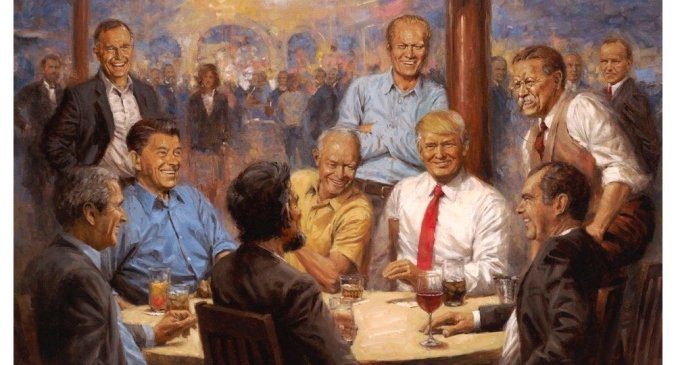
1. The Greats with no caveats. These are the Presidents who could objectively say “I was a great President because…..”, have a really reasonable explanation of why they were great, and not have to explain away any major part of their respective presidencies. In this category, I place George Washington, Thomas Jefferson, James Monroe, James K. Polk, Abraham Lincoln, Theodore Roosevelt, Harry S. Truman, and Ronald Reagan. [You’ll note these categories won’t create perfect rankings, per se, as I believe there is at least one president (Roosevelt) in paragraph 2 objectively better than Jefferson, Monroe, Polk, Truman, and Reagan].
[Note One: This ethics blog is often very critical of Jefferson-reasonably so as a man- but I’m ONLY analyzing the presidencies of these men. I think his presidency was clearly successful-even if he wasn’t an ethical individual. In fact, Jefferson may be the major exception that probes Jack’s rule that, generally speaking, the country is better served by an ethical man holding the presidency.]
[Note Two: James K. Polk doesn’t quite seem to fit on this list. I think his reputation is a function of consequentialism, however. He expanded U.S. territory, which set the stage for the civil war. Historians blame him for this- I don’t think that’s fair. I read somewhere that a historian once stated he resolved matter for HIS time. I think it’s unfair to expect a president to do more. What he resolved for his time- he resolved well. He was, therefore, a great, but not legendary, president.]
2. The Greats with Significant Caveats: These are the Presidents who could objectively say, “I was a great president because…”, have a really reasonable explanation about why they were great, but would have a major controversy or issue to to explain away in terms of their legacy. Caveats are always, in my mind, considered based on their respective times. My more liberal friends might put Washington in this category, because he owned slaves. I do not. This list includes Andrew Jackson (Trail of Tears), Franklin Delano Roosevelt (Japanese American Internment), Dwight D. Eisenhower, (McCarthyism), Lyndon B. Johnson, (The Vietnam War), and Bill Clinton (Monica Lewinsky). Continue reading →
1. Dresden bombing ethics. February 13-15, 1945 witnessed the Allied firebombing of Dresden, Germany, with the resulting deaths of between 22,000 and 135,000 civilians. depending on whose propaganda you choose to believe. Regardless of the number, the destruction of the German cultural center and questionable military target so late in the war—after its loss in the Battle of the Bulge, Germany’s defeat was just a matter of time—was instantly controversial, and is still intensely debated today.
The attack, which dropped more than 3,900 tons of high-explosive bombs and incendiary devices on the city, destroyed more than 1,600 acres. By all accounts, the human toll was horrific. Lothar Metzger, a survivor, wrote,
We saw terrible things: cremated adults shrunk to the size of small children, pieces of arms and legs, dead people, whole families burnt to death, burning people ran to and fro, burnt coaches filled with civilian refugees, dead rescuers and soldiers, many were calling and looking for their children and families, and fire everywhere, everywhere fire, and all the time the hot wind of the firestorm threw people back into the burning houses they were trying to escape from.
Was the firebombing of Dresden a war crime? If the Allies had lost the war, it would have become a war crime. As we have discussed here before, the concept of war crimes is confounding and hypocritical at best. If the attacks were deemed essential to ending the war as soon as possible, then they were ethically defensible.
Much of the debate over the years has focused on whether the bombing was terrorism. Of course it was, as were the atom bombs dropped on Hiroshima and Nagasaki, and General Sherman’s March to the Sea. Terror is a legitimate weapon in warfare, when the objective is to destroy the enemy’s will to fight. Attacks on civilians for revenge and to inflict gratuitous death and pain for no legitimate strategic purpose are unethical . The distinction is usually in the eye of the beholder.
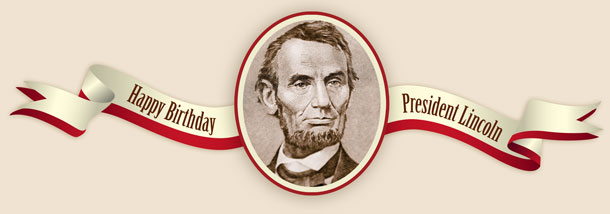
Yesterday was Abe Lincoln’s birthday, and I didn’t remember until late last night. This is the inevitable result of Presidents Day, the lazy combination of Lincoln and Washington’s birthdays into one floating holiday that lumps all our Presidents together as if they were equally laudable. (They are all laudable, but not equally.) Thus Franklin Pierce gets as much love from our calendar as Abe and George, which is ridiculous. ( President Pierce’s birthday I remember, because it’s the same date as my wedding anniversary, November 23.) In the old days before the blight of Presidents Day, school children would spend both February 12 and 22 learning about and doing projects related Lincoln or Washington. Without either of these great leaders, we probably don’t have a nation today, or if we do, it would be a vastly diminished one. Our first and Sixteenth Presidents tower over the rest in leadership ability, vision, and impact on our history and culture. Both deserve their own holiday, because every American should take at least a day out of every year to remember these two icons and honor their essential contributions, at great sacrifice, to the existence of the United States of America as well as the welfare of all of its citizens, past, present and future.
Today, most Americans couldn’t describe what Lincoln said at Gettysburg, and that’s not a recent phenomenon. In the classic movie “Ruggles of Red Gap,” a barroom full of Americans in a Western frontier town are unable to recall Lincoln’s message, but the very British butler, recently immigrated, can. Charles Laughton, who played the butler, continued to deliver Lincoln’s masterpiece throughout his career after that scene became the highlight of the movie. You can watch it here—I’d embed it, but there is no YouTube version.
1. Self promotion dept. I’ll be participating in a live podcast later today, discussing the ethical implications of nepotism. Details to come.
2. Still more developments in the Houston Astros cheating scandal. Earlier this morning I watched a live press conference from the Astros Spring Training camp about the sign stealing scheme. From a public relations standpoint, the spectacle made the Astros problems worse.
Stars Alex Bregman and Jose Altuve spoke for a grand total of 90 seconds, sounding for all the world like American prisoners of war in North Korea. Owner Jim Crane did most of the talking, which was unfortunate for the Astros and baseball. He took no responsibility at all for what went on in 2017, though he was at the top of the organization chart: this is called the “Ken Lay excuse.” Worse, Crane repeatedly refused to acknowledge that using a secret camera to relay to the Astros dugout the opposing catchers’ signs telling pitchers what to throw, which were then relayed to Astros batters by players banging on trash cans, constituted cheating. All Crane would say was “We broke the rules. We can argue about what you want to call it.”
Worse still, Crane said that it was impossible to say whether the team’s full year of sign stealing, including the playoffs and the World Series (which the Astros won), gave his team a competitive advantage. “Maybe it did, maybe it didn’t” he said. “Our opinion is this didn’t impact the game. We had a good team. We won the World Series and we’ll leave it at that.”
In later interviews with the players after the press conference, it sounded like everyone had been prepped to keep saying “2017” over and over, because there are lingering suspicions that the Astros scam extended into 2018 and 2019. As commentator Matt Vasgersian mused afterward on the MLB cable channel, if the Astros had won a championship cheating all the way through 2017 and hadn’t been caught, why would they suddenly stop the next season?Continue reading →
The Biden camp released this attack ad today. Althouse opined that it employed race-baiting and homophobia.
She’s right. The race-baiting is obvious: Joe Biden learned the lesson of the Obama administration and “Black Lives Matter”; if a white person does or says anything negative affecting a black person, it’s racist. The gay-bashing is insidious, and I have no question that it is intentional. Biden’s marketing team could have emphasized many minor aspects of a small city mayor’s duties to make the same point, but it deliberately chose topics like brightly-colored lights to make the river look fabulous, and ornamental bricks.
The fact that Mayor Pete is gay has been almost entirely ignored in media coverage, however, and if you don’t know Buttigieg is gay, none of the homophobic dog whistles will reach your ears. I showed the video to my wife, and she noticed none of them because, I was surprised to learn, she didn’t know Mayor Pete is gay. Once I told her, she agreed that the ad probably intended to remind those who are.
The fact that Buttigieg is gay is irrelevant to his qualifications for the Presidency, but his sexual orientation is the Woolly Mammoth in the room regarding his electability. Anti-gay prejudice is not the exclusive domain of the Deplorables; it runs high in the African American community and among Hispanics as well.
I think Biden’s ad is unethical.
My still recuperating wife had another interesting reaction. She found it obnoxious for Biden to have the chutzpah to mention his role in passing the Violence Against Women Act when he habitually and unapologetically gropes women of all ages in public.
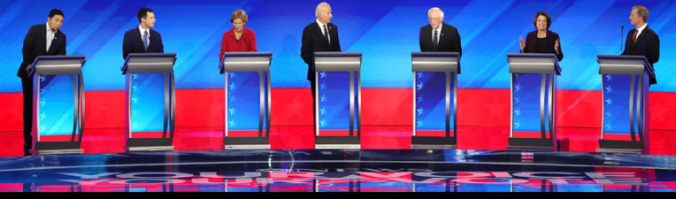
I just spent 20 minutes or so trying to find a complete transcript of last night’s debate, and I failed. If I can find a link or someone sends me one, I might revisit the post, but probably not.
It was a dull and repetitive debate; I, at least, didn’t learn anything I hadn’t observed before.
Yang was irrelevant, occasionally making obsrevations a politician never would make, but too passive to stand out: he spoke about half as long as Joe Biden, and the moderators barely noticed him.
Steyer continued to concentrate on race-baiting and diversity virtue-signaling.
Warren, as usual, made promises of passing sweeping laws she knows are impossible.
Klobuchar is still playing the long game, holding her niche as closer to sane than anyone else in the field and hoping that centrist voters migrate to her once Joe Biden drops out.
Buttigieg employs his supposed prodigious intellect to appear to take multiple sides of issues simultaneously; how anyone who can remember Bill Clinton would be fooled by his act escapes me. Chris Christie, now reduced too being a “contributor” to ABC, said after one of Pete’s answers, “My goodness, he uses more words to say nothing than anyone on that stage!”
Sanders repeats his socialist talking points relentlessly while using “climate” like priests use “God.” I want that transcript to check the number of times he did this last night.
Biden, as he did in the very first debate, has the stench of metaphorical death about him. Anyone serious and honest knew he wouldn’t make it from the day he announced he was running. Joe was never a viable Presidential candidate even when he was younger: too transparently dim-witted, too smarmy. Now, in addition to those features, he is enervated, washed out, seemingly on the verge of full-fledged dementia. As a group, the seven show how tragically devoid of talented aand compelling leaders of character and courage both parties are.
 Ethics Alarms