Ethics Dunce Hillary’s George Costanza Moment

In “The Comeback,” a much admired “Seinfeld” episode, George Costanza obsesses over the fact he missed what he is sure was the perfect comeback when a colleague at a staff lunch, watching him gluttonize a bowl of shrimp, quipped that “George, the Ocean called, and they’re out of shrimp!” George wishes he had said, “Yeah? Well, the jerk store called, they’re running out of you!” The problem is that much success in life is based on timing. If you miss your moment, it’s gone, and coming back later to explain that you had the perfect response and didn’t use it is trolling for sympathy, when you don’t deserve any.

Now Hillary Clinton, in her post-Presidential-run botch excuse tour, is channeling George as she muses about whether she missed the perfect comeback when, she says, Donald Trump was “invading her space” during the town meeting style debate.

In an audio clip to promote her upcoming book (above), Clinton reads the section in which she recounts her thoughts as she claims she considered telling her Republican adversary to “back up, you creep” as he roamed the stage behind her during the second presidential debate.

“My skin crawled,” Clinton reads. “It was one of those moments where you wish you could hit pause and ask everyone watching ‘well, what would you do?'” Just two days before, Clinton says, “the world heard [him] brag about groping women.” She says she decided against telling Trump to “back up, you creep, get away from me. I know you love to intimidate women, but you can’t intimidate me,” and instead gripped the microphone “extra hard.”  Now she wonders if she made the right choice.

Hey Hillary, the loser store called, and it’s out of you! Continue reading

Accumulated Ethics Notes On The Charlottesville Riots, The Statue-Toppling Orgy and The Confederate Statuary Ethics Train Wreck, Part 3 Of 3: Potpouri! [Continued]

  • Grandstanding as always, Nancy Pelosi proclaimed that all of the Confederates honored in the Capital Gallery should come down. How odd that this never occurred to her when she was Speaker of the House and the Democrats held the Senate and the White House.

The Gallery is exactly the kind of enclosed public space for display that the statue-topplers argue should house the controversial statuary, places where their context can be considered outside of the public square. They don’t mean it, though. They want the statues hidden away, so nobody will see then without searching for them like Indiana Jones.

  • It was nice of Duke to show just how calculated and hypocritical this sudden eruption of horror at long-standing monuments is. While the school is capitulating to students by removing another statue of Lee from its chapel, there seem to be no plans to tear down the statue of George Washington Duke  a Confederate soldier and a slave owner. Duke’s son, Buck, gave a large endowment to  what was then called Trinity College, and in appreciation, the school changed its name to Duke University. And this happened in the twenties, which proves that the real objective was to salute Jim Crow—or so we are being told now.

Duke was named after a confederate soldier and a slave owner, meaning that by the Left’s logic the entire school is a memorial to white supremacy and slavery. But the students who happily agreed to have his name appended to their life forever are traumatized by a campus statue of General Lee. Continue reading

Accumulated Ethics Notes On The Charlottesville Riots, The Statue-Toppling Orgy and The Confederate Statuary Ethics Train Wreck, Part One

As an introduction, I have to say that this episode, which has quickly turned into an ethics train wreck of sweeping and perhaps catastrophic proportions, frightens me as few issues do. It has become a danger to free speech, to cultural diversity, to liberty, education, historical fairness, cultural cohesion and  common sense. It appears to be the metastasis of all the demonizing rhetoric, self-righteous pandering and virtue-signaling, and totalitarian-minded efforts to remold the past in order to control the future. The level of contempt, hate and intimidation being focused on those who—like me—are attempting to keep the issues in perspective by analyzing complex and emotional ethical components in context is causing the fervor involved to approach  that of unthinking mobs. The damage done by the worst mobs of the past, however, were mostly confined to a restricted region, or, like The Terror in France or the Red Scare here, were immediately repudiated one the fever broke. I’m not sure that this fever will break, at least not before it breaks us. It is the perfect storm of self-righteous fanaticism, as the anti-Trump hysteria collides with Obama era race-baiting and victim-mongering, both of which have run head on into the mania for air-brushing history to remove any mention of events, movements, attitudes or human beings that “trigger” the perpetually outraged of today.

Social media has magnified the intensity of this already deadly storm, by allowing once intelligent people to throttle their brains and judgment into mush by confining their consideration of the issues to partisan echo chambers. Daily, I am embarrassed and horrified by what I read on Facebook by people who I know—I KNOW—are capable of competent critical thought but who have completely abandoned it to be on the “right” side, where facile, half-truths and lazy conclusions are greeted by a myriad “thumbs up” and “hearts.”

And I am angry–contrary to popular opinion, I’m not usually emotionally involved in the issues I write about; like Jessica Rabbit, who isn’t really bad (she’s just drawn that way), I’m not usually as intense as I seem. I just write that way—that I am so tangential and impotent that what see so clearly has little persuasive power at all, because I’ve frittered away my opportunities to be influential in a thousand ways.

I have never allowed futility to stop me, though, because I have spent a lifetime banging my head against walls.

Here are the ethics observations I’ve been accumulating since the first torches were lit in Charlotte:

  • Please watch this video, from Ken Burn’s “The Civil War”:

I was moved when I first saw this, which was in the documentary’s final chapter, and I am moved still. The old Union soldiers moaned when they saw the men who had tried to kill them, and who had killed their friends and comrades, re-enacting their desperate open field march into deadly artillery. Then they dropped their arms and met their former foes, and embraced them.

These men didn’t think of the former Confederates as traitors, or racists, or slavery advocates. They, like the Union veterans, were just men of their times, caught up in a great political and human rights conflict that came too fast and too furiously for any of them to manage. They were caught in the same, violent maelstrom, and knew it even 50 years earlier. Soldiers on both side wrote how they admired the courage of the enemy combatants they were killing, because they knew they were, in all the ways that mattered, just like them. It was the Golden Rule.  After the war, these soldiers who had faced death at the hands of these same generals, officers and troops, did not begrudge them the honor of their statues and memorials, nor their families pride in the bravery of their loved ones.

Yet now,  self-righteous social justice censors who never took up arms for any cause and in many cases never would, employ their pitifully inadequate knowledge of history to proclaim all the Civil War’s combatants on the losing side as racists and traitors, and decree that they should be hidden from future generations in shame. We have honored men and women for the good that they represent, not the mistakes, sins and misconduct that are usually the product of the times and values in which they lived. In doing so, we leave clues, memories, controversies, differing vews, and stories for new generations to consider and better understand their own culture and society, and how it came to be what it is.

Those who want to tear down monuments to the imperfect, whether they know it or not, are impeding knowledge, perspective, wisdom, and understanding. They want only one view of history, because they will only tolerate one that advances their ideology and values—just as the Americans of the past believed in their values. Foolishly, I suppose, they trusted future generations to act on their own ethical enlightenment without corrupting the historical record. Continue reading

From The “Grandstanding Ingratitude” Files…Ethics Dunce: Boston Red Sox Owner John Henry

Ah, Ethics Alarms heaven! The statue-toppling mania issue has collided with the Boston Red Sox, just two days after my pilgrimage to Fenway Park!

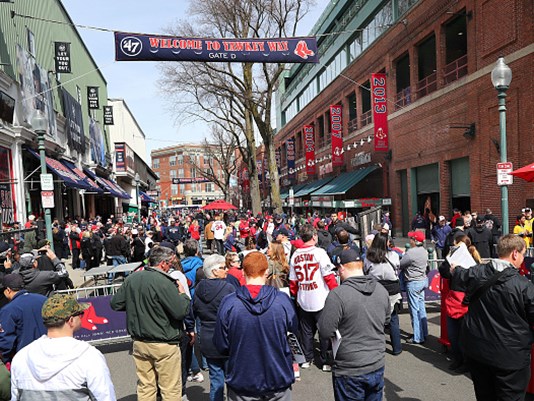
ESPN reported yesterday that Red Sox owner John Henry wants Boston to change the name of  the street that borders the legendary park, Yawkey Way, and he is trying to exploit the   current political correctness mania that has cities pulling down statues of war heroes in the dead of night to accomplish his goal.

That’s my characterization, of course, not ESPN’s.

Henry told the Boston Herald that he is “haunted” by the racist legacy of previous owner Tom Yawkey, who led the team from 1933 to 1976. Because he is haunted, he thinks that it is fair and right that the man who beyond question saved the team, ran it as a Boston institution and public utility, and is as responsible as anyone for the fact that Henry owns one of the prestige franchises in all of sports, should be dishonored and shunned because he wasn’t enlightened about civil rights long before Martin Luther King began marching.

Such disgraceful moral grandstanding and self-righteous ingratitude is seldom seen. But I guess if anyone should be able to grandstand, its someone who owns a baseball park.

For those who mock the idea that the desecration of Robert E. Lee’s statues leads directly to George Washington, now hear this; for the Boston Red Sox, Tom Yawkey is George Washington.

The only owner any one remembered before Tom Yawkee bought the team was Harry Frazee, consigned to Beantown Hell for selling Babe Ruth (and many other stars) to the New York Yankees in 1919. From that moment on, the team was a perennial loser, often in last place, while New York won pennant after pennant and sneered at its proud rival on the Bay. In 1933,

Tom Yawkey , a lumber tycoon and baseball enthusiast, bought the team and poured money and love into it, buying other team’s stars (Left Grove, Joe Cronin, Jimmy Foxx) and turning the team into worthy challenger to the Yankees.  From the beginning, Yawkey paid no  attention to the bottom line as he tried to build a champion out of the franchise, or as he put it, “to bring a championship back to the fans of Boston.” This was during a period when teams had permanent control over player contracts, and most owners used that leverage to pay players pathetic wages. Not Tom Yawkee. He was criticized for over-paying players–hilarious now, when we’re talking about his paying a utility infielder $15,000 when others of his ilk were making just $8,000, and current utility players make a couple million dollars a season. Sportswriters in Boston called the Red Sox a country club, and blamed Yawkee for “falling in love with his players.” In 1960, Ted Williams had to ask Yawkey to cut his salary, because he felt embarrassed after a bad year, his only one.

Was Yawkey a racist? He was born in 1903, and grew up during the Wilson Administration, when Jim Crow really took of. Sure he was a racist, along with about 95% of the whites in the nation.  Continue reading

Morning Ethics Warm-up: 8/18/17

Good Morning, Ethics Alarms Readers!!!!

1. I am so aggravated, offended and frankly frightened over how the Charlottesville politically-correct spin has been injected into the public’s brain by the familiar unholy alliance of the free speech-hostile left, the Soviet-emulating historical air-brushers, cowardly scholars and, of course, our impulsive and inarticulate President, that it is difficult for me to focus on anything else. As Billy Bigalow sings in “Carousel,” though, “I’ll try, by God, I’ll try…”

2.  Wolf Blitzer actually asked, on the air, whether the Barcelona terror attack was inspired by James Field’s homicide-by-auto in Charlottesville. I swear, this isn’t a Charlottesville commentary but a “How incredibly stupid does a journalist have to be before the public and his employers send him off to work at a bait shop?”  commentary. Is this some sinister effort to blame Robert E. Lee for terrorism in Barcelona? There have been  eight jihadi car-ramming terror attacks this year alone! Why in the world would a Spanish terrorist look to James Field’s for inspiration? Why would Wolf Blitzer even ask such a blitheringly idiotic question? How can we respect of trust major news media when it can behave like this?

As Ann Althouse wrote last week about a Washington Post story:

This is the kind of newspaper article I’m looking for, detailing what happened in Charlottesville, and I wish I felt more confidence that The Washington Post would tell it straight. Maybe this is straight, but how can I know? What trust has been shot to hell in the last few years of journalism! I’m still reading this, because it’s the closest I’ve come to the kind of careful report I want.

For me, once a major network anchor displays the utter stupidity (or contempt for the intelligence of its viewers) that Wolf’s speculation constitutes, I have enough information to never trust that news source….not that I didn’t already have sufficient justification for that conclusion.

3. I have come to the conclusion that all polls are inherently misleading, and those who cite poll results to justify or condemn policy decisions or initiatives are themselves untrustworthy. First of all, the polls reflect apples, oranges,  mangos and walnuts but treat them as if they are the same. When a majority of the public, for example, disapproves of Congress according to a poll, what does that mean? It means that some who disapprove do so because Congress is too conservative, while others regard it as not conservative enough. Since the two components of that disapproval diametrically oppose each other’s standards, the poll provides no genuine guidance or illumination. Such polls are also misleading because there is no way of knowing  how many of those polled are informed regarding the issues and legislative matters beyond reading headlines or watching Stephen Colbert. I don’t care what ignorant people think about things they haven’t bothered to think about, and neither should the news media or elected officials.  All polls should include the category, “I really haven’t studied this issue enough to have anything but a gut-level opinion.” “Don’t know/No opinion” is not the same thing. Continue reading

Morning Ethics Warm-up: 8/17/17

Good Morning!

1. I got back late last night from my pilgrimage to say thanks to the Impossible Dream team, and now I’m on my way out to teach an ethics seminar for D.C. government attorneys. I haven’t caught up with the comments yet; I’m sorry. Things should be back to normal hear by this afternoon. Here are the surviving members of that 1967 Red Sox team that changed my life:

Incredibly, the Red Sox barely promoted the event, and had no memorabilia, not even a T-shirt, available at the souvenir stands. I asked one of the sales people, who said the team had given them nothing, figuring that the typical fan was too young to remember or care.

And people wonder why I object to tearing down statues…

2. …which the unethical Mayor of Baltimore ordered to be done yesterday in the dead of night. From the Times:

It was “in the best interest of my city,” Mayor Catherine Pugh said Wednesday, as she explained why she ordered Confederate monuments removed under the cover of darkness, days after violence broke out during a rally against the removal of a similar monument in neighboring Virginia.

“I said with the climate of this nation,” Ms. Pugh said later, “that I think it’s very important that we move quickly and quietly.”

With no immediate public notice, no fund-raising, and no plan for a permanent location for the monuments once they had been excised — all things city officials once believed they would need — the mayor watched in the wee hours on Wednesday as contractors with cranes protected by a contingent of police officers lifted the monuments from their pedestals and rolled them away on flatbed trucks…

David Goldfield, a professor of history who studies Confederate symbols at the University of North Carolina at Charlotte, said the removal of the monuments in Baltimore was likely to be part of a “rolling cascade” of cities and states ridding themselves of, or at least relocating, similar statues.

”You’re going to see another wave of these removals.” Mr. Goldfield said. “The fact that it’s done fairly expeditiously is not surprising because if you do it quickly the opposition can’t build up, and the confrontations that we’ve had, not only in Charlottesville but elsewhere, will not materialize.”

By all means, move quickly and without notice or due process so lawful protests and expressions of public opinion “can’t build up.” “It was in the best interests” is such a versatile rationalization for unilateral government action.

Democracies don’t undertake controversial actions in the night. Dictatorships do. Pugh and others nascent fascist of the left are as responsible for “the climate of this nation” as much or more than anyone else, and now want to exploit the dangers of that climate to stifle dissent.

Perfect. Continue reading

Morning Ethics Warm-up: 8/16/17

GOOD MORNING!

1. I’m heading to Boston and Fenway Park in a few hours to meet with two of my high school classmates and together pay our respects to the 1967 Boston Red Sox, the spiritual beginning of Red Sox Nation, and a group of men, then barely more than boys, who had as profound an effect on my life and view of it as anything I have ever experienced.

It’s the 50th Anniversary of that amazing team and the heart-stopping pennant race it won against all odds, in a four team race that came down to the final game of the regular season. I mean heart-stopping literally: the team wasn’t called “The Cardiac Kids” for nothing. TWO of my father’s colleagues at the Boston Five Savings Bank died of heart attacks while attending Red Sox games, during one of the 9th inning desperation rallies for which the team was famous. The only reason I didn’t perish in like fashion is because I was just 16 years old.

Why was this team, and that summer 50 years ago, so important to me? I don’t have time or space to answer that question well, and you’d probably wonder what I was babbling on about anyway. A 2017 film by Major League Baseball called “The Impossible Dream” does a fair job of explaining it, but it’s too short to do the job right.

I had listened to, watched or attended every Boston Red Sox game for five years, as the team lost and lost. From those bad teams, followed weakly by the city in those days, in a crumbling old park that seemed destined to be abandoned and torn down, I learned that winning wasn’t everything, that loyalty wasn’t easy, that Hemingway was right, and that baseball was about courage, humility, perseverance, doing your job every day, sacrifice, and hope, as well as usually losing at the end. That summer of 1967 taught me that hope is worth the effort even though hope is usually dashed by the ice water of reality, that you should never give up, that miracles do happen, and that nothing is as wonderful as when a community is united in a single, inspirational goal, no matter what that goal might be…and that you should never be afraid to give everything you have in pursuit of a mission, even when it is likely that you will fail.

I learned difficult, discouraging lessons, too. When an errant pitch hit Red Sox right-fielder Tony Conigliaro in the face on August 18, 1967, it was the beginning of a lesson that revealed its tragic last chapter 23 years later. That one taught me that life is horribly, frightening unpredictable, and that we envy others at our peril. It taught me that we need to do what we can to accomplish as much good as we can as quickly as we can, because we may lose our chance forever at any moment.

Tony C, as he was and is known as, was a beautiful, charismatic, local kid, the idol of Boston’s huge Italian-American community,  in his fourth season with his home town team at the age of 22. He dated movie stars; he recorded pop songs; he had a natural flair of the dramatic, and was destined for the Hall of Fame. One pitch took it all away. Although he had two comebacks and played two full seasons facing major league fastballs with a hole in his retina and his field of vision, Tony was never the same. After his final attempt to keep playing failed at the age of 30, he became a broadcaster, and at 37 was seemingly on the way to stardom again in 1982 when he suffered a massive, inexplicable heart attack—Tony  did not smoke, and had no family history of heart problems– that left him brain damaged until his death in 1990.

As Henry Wiggin, the star pitcher protagonist of the novel, play and movie “Bang the Drum Slowly” observes as he  reflects on the death of his catcher and roommate, everyone is dying, and we have to remember to be good to each other. But it’s so hard. Ethics is hard. The ethics alarms ring faintly when we are about the task of living, or not at all…

At the end of the story, the narrator, the best friend of the catcher (but not really that close a friend) recalls how quickly everyone on the baseball team went back to their selfish ways after their teammate went home to die Even the narrator, who was the leader of the effort to make the catcher feel loved and appreciated in his last days, ruefully recalls his own failing. The catcher had asked him a favor, just to send him a World Series program (the team won the pennant after he had become too ill to play), and he had forgotten to mail it until it was too late. How hard would it have been, the narrator rebukes himself, to just put it in an envelope and mail it? Why are we like that, he wonders?

1967 was the beginning of my exploration of that mystery too.

So I am going to Boston for the 30 minute ceremony. I can’t even stay for the game; I have a seminar to teach tomorrow morning, and the last flight out of Logan is at 9 PM. There will probably be just a small contingent from the Cardiac Kids: most of them are dead now, or too infirm even to walk onto the field. But Yaz will be there, and Gentleman Jim Lonborg; Rico Petrocelli, Mike Andrews, and maybe even Hawk Harrelson  and Reggie Smith. I will be there to say thank-you, that’s all.

And to show that I remember. Continue reading

More Perspective On Charlottesville, The Left, And The First Amendment

I’ve been spending the day pointing out the bias and hypocrisy of various Facebook friends who posted emotional, warped, virtue-signaling junk assuming they would be greeted with the sounds of a thousand well-trained seals clapping. I’m not sure why I bother: it gets close to the cartoon about the guy who tells his wife, “Someone is wrong on the internet!” I feel like the alternative is to  just let a brain virus run amuck. These once intelligent people just know the President is secretly a white supremacist. He’s obligated to specifically condemn the white nationalist group, because they were “emboldened” by his election. And, they say, their “side’s” violence is “less disgusting” than the violence of the bad people….because, though they don’t say this, the ends justify the means.

I think the reason I subject myself to the sneers and abuse—did you know I must be a Donald Trump supporter and a white nationalist?—is that the Left’s assault on free speech, which is the cornerstone of democracy,  has to be opposed, called out and condemned every single time, until they either embrace the Constitution, move to Canada, or haul us off to re-education camps. White supremacists aren’t a danger to the nation, because that kind of prejudice is antithetical to core American values, and no credible, respectable institutions and individuals support them, or ever will. Fascism of the Left is a real danger, because it is seductive and misleading, and it is infecting the most powerful and influential institutions we have. We saw it in Charlottesville. In a college town indoctrinated in the progressive cant that the wrong opinions don’t deserve to be heard because they constitute harm and violence by spoken word, the state and local government  combined to use violence to stifle political speech.

One of the best and most objective political, government and ethics websites around is City Journal; I really should cite it more often. Today Bob McManus posted an excellent essay which began with this… Continue reading

Morning Ethics Warm-Up: 8/11/17

GOOD MORNING!!!

1. From sources within Google management, we learn that the firing of the diversity memo writer, James Demore, was hotly debated, but in the end...

“…Damore’s focus on biology really made it clear that he had crossed the line.” What turned the tide, said sources, was when it was noted that if Damore’s dubious contentions about women’s skills were replaced by those about race or religion, there would be no debate.’

Ethics diagnosis: Bias made them stupid…that is, Google’s political correctness bias. If someone says that blacks, for example, are biologically handicapped for certain jobs, that’s bigotry and ignorance, the equivalent of poor Al Campanis’s  infamous statement to Ted Koppel that blacks “lacked the necessities ” to manage a baseball team. If someone says that holding religious beliefs suggests one may have biological disadvantages, then that individual is, of course, an idiot.

Women, however, are biologically different from men. If this was the reasoning behind Demore’s dismissal, then it is an example of regarding fealty to cant and politically correct mythology as more important than dealing with complex realities.

2. Professional Trump apologist Jeffrey Lord reacted with a tweeted Sieg Heil! to  Left Wing attack group Media Matters organizing a boycott of the Fox News star’s sponsors to force Sean Hannity off the air.  CNN responded by firing Lord, saying, “Nazi salutes are indefensible.”

Except that Lord was not performing a Nazi salute, but alluding to it to make the very accurate point that the Media Matters wing of progressive America is anti-free speech, and, Nazi-like, determined to shut down inconvenient dissent. Sieg Heil!, in the context of Lord’s tweet, did not mean “Yay Hitler, and let’s kill some Jews!” but rather “Media Matters embodies fascism of the left.”

Which it does.

This story is just full of detestable people and organizations. Jeffrey Lord is a dishonest hack whom CNN keeps parading before its viewers to pretend that the network is “balanced” in its relentless critical commentary on the President. Typically Lord is the sole defender of the Administration on a panel of multiple virulent critics, presided over by one of CNN’s myriad anti-Trump hosts. Sean Hannity is a knee-jerk conservative without scruples, perception or shame. Media Matters is a left-wing propaganda machine that makes a mockery of the term “media watchdog” by its very existence, and it is not unfair to rate its creator and leader, David Brock, as unstable. And I don’t like Nazi salutes either, though to call them “indefensible” is just plain wrong. They are defensible on the History Channel, to show how Nazis behaved. They are defensible in films like “Valkyrie,” since Tom Cruise’s doomed hero’s reluctant salute was a central theme.

It is defensible in Mel Brooks movies, which feature the salute frequently, to mock the Nazis. It is defensible in “Dr. Strangelove,” to make the running joke that mysterious ex-Nazi genius has a Nazi arm with mind of its own.

And it is defensible to use the Nazi salute derisively to say,”David Brock and Media Matters are fascist in the their methods and attitudes towards free speech.”

CNN’s firing of Lord falsely implied that he was referencing the salute positively. By doing this, the increasingly unprofessional and untrustworthy network was also able to impugn President Trump; after all, if his most visible defender in a Nazi, that makes the President Hitler, right?

In this particular basket of deplorables, CNN may be the most unethical of all. Continue reading

Morning Ethics Update: 8/10/17

Good Morning!

1. Less than two weeks after social justice bullies on social media chastised actor Mandy Patinkin for agreeing to take the place of a black actor in Broadway’s “Natasha, Pierre & The Great Comet of 1812,”  causing the politically impeccable Mandy to withdraw with humble mea culpas, and the “woke” creator of the  the Tony winning musical to humbly kowtow to the new show business principle that it is better for a show to close entirely, putting everyone out of work, than for a white actor to take over a role from a black actor who took over the role from a white actor in the first place, “The Great Comet’s” producers announced that the show will close in September.

Good job, everybody!

Morons.

2. First Amendment incursions are creeping in from all sides and all angles so fast it’s hard to slap them down. Cowboy Joe West, the major leagues’ longest-serving umpire,was just suspended for three days for comments he made a in an interview with USA Today published on June 20, to mark   the umpire’s 5,000th regular-season game. Asked which player beefed most frequently about his calls, West said “it’s got to be Adrian Beltre.” Beltre, who recently punched his own ticket into the Hall of Fame by getting his 3000th hit, is apparently something of a human Bermuda Triangle for ethics controversies.

“Every pitch you call that’s a strike, he says, ‘Whoa! Whoa! Whoa!,'” West was quoted as saying.  “I had a game with him recently and the pitch was right down the middle. He tells me, ”That ball is outside.’ I told him, ‘You may be a great ballplayer, but you’re the worst umpire in the league. You stink.'”

MLB suspended West for three days, telling the umpires union in a letter that the discipline was in response to an “appearance of lack of impartiality.” Beltre has said that he never assumed West was being anything but facetious. The umpires union is livid, and West is likely to file a grievance.

There are two theories about this strange episode in the Marshall household. I think it’s more evidence of slippage on the societal slope to speech suppression. My wife thinks baseball is laying the groundwork for replacing umpires on balls and strikes with robo-calls. After all, robots aren’t biased.

I hope she’s right, but I doubt it.

3. Why don’t Democrats want to clean up eligible voter rolls?the Justice Department filed a Supreme Court amicus brief  supporting the state of Ohio as it fights to defend its law that purges names from voter rolls if  those names aren’t attached to votes for a significant period. This reverses the Obama Administration’s position, which backed a lower court decision  that it ran afoul of the 1993 National Voter Registration Act.

Why does Ohio want to de-register voters who don’t vote for two years, then are sent notices asking that they confirm their voter registration, don’t respond to the notices ,and continue to not vote for another four years? I assume it is because the state doesn’t want dead people on the voter rolls. Why do Democrats want the names of dead people listed as eligible voters?

I’ll leave that to your imagination… Continue reading