Lost Tuesday Ethics Scraps, 12/11/18: Statues, Tucker Carlson And “To Kill A Mockingbird”

Good whatever it is.

I guess I’m not as recovered as I thought: one high energy ethics presentation to a sluggish audience today and I was fried. This better not be encroaching old age, or I’ll be pissed.

1. Thank you for making the open forum this morning active: I wish you all had been in my audience today. I haven’t read any of it yet (I did finally get your excellent comment out of moderation, Michael R!); I’m trying to get my own posts up.

2. Stolen art ethics. No doubt: the looting of art from the Old World by American tycoons and museums is a long-time ethics scandal, and the international court battles settling the disputes will continue for a long, long time. The argument over a 2000-year-old bronze statue, known as “Victorious Youth between the Getty Villa and Italy, however, is not as clear as most. Italy’s highest court has ordered that the sculpture should be returned to Italy. Currently, it is on display at the villa on the outskirts of Los Angeles, which is part of the J. Paul Getty Museum. It was retrieved from Adriatic waters by Italian fishermen in 1964, and sold to successive collectors and dealers. After a decade-long legal battle, Italy’s Court of Cassation ruled  that the statue should be confiscated and brought back to Italy, rejecting the Getty’s appeal. Getty is not giving in.

The ethics as well as the law is murky. This is not a case like King Tut, where Indiana Jones-style archeologists and adventurers, just uncovered foreign cultural treasures and took them home. Before acquiring the prized artifact, the Getty undertook a comprehensive, five-year study of whether the statue could be purchased legally and in good faith. Their due diligence extensive analysis of international, Italian, American and California law and of Italian court decisions pertaining to the work.

In 1968, Italy’s Court of Cassation ruled that there was no evidence that the statue belonged to the Italian state; after all, it is Greek. Although the fishermen took the statue onto Italian soil, the court did not find that its brief presence in Italy transformed the sculpture into a component of Italian cultural heritage. Eventually the statue made its way to a German art dealer who put the statue up for sale. According to the Getty, in 1973, acting on a request from Italy, German police initiated an investigation into whether the German dealer had received stolen goods. The investigation was dropped for lack of evidence of wrongdoing. In 1977, the Getty purchased the bronze in Britain for almost $4 million from a gallery affiliated with the German dealer. The bronze has now been publicly exhibited, studied and cared for at the Getty for 40 years. Continue reading


Morning Ethics Warm-Up, 12/4/18: The Red Sox Do The Right Thing, France Does The Wrong Thing, The News Media Does Their Usual Thing, And All Sorts Of Stuff In Between…

Good Morning!

It’s beginning to look a lot like Christmas…

1. The sad part is that this is newsworthy. The Boston Red Sox accepted their invitation to visit the White House and be honored for their World Series victory. In doing so, they buck the trend of the past couple years of championship teams “boycotting” what should be a unifying, purely ceremonial event of national pride (and fun, since that’s what sports are supposed to be about) in order to make some kind of incoherent statement of disapproval  regarding President Trump. Of course, this is all virtue-signalling, as if being expressly unpatriotic, disrespectful and divisive while insulting the President is a virtue. (Sportswriter love the boycotts.)

Boston manager Alex Cora is Puerto Rican, and had criticized the national response to the island’s hurricane emergency. Some thought that he would lead his team to snub the White House, but Cora is a smarter, wiser, stronger leader than that, as he showed all season long.

2. Great. France accepts government by mob rule. President Emmanuel Macron’s administration today suspended planned increases to fuel taxes for at least six months in response to weeks of  violent protests. The fuel taxes, which most heavily burden  French citizens least able to endure them, were expressly aimed at curbing climate change, though there isno evidence whatsoever that they would accomplish that. So it was a bad policy, but even bad policies should not be vetoed by mob rule. Macron’s capitulation to violent protests is cowardly—though so, so French—and undermines the rule of law, not just in France, but worldwide.

These are the times even the most hardened-Trump-hater should be grateful that the U.S. has a leader who cannot be extorted in this manner.

Should be, but, of course, won’t.

3. If they didn’t have double standards…well, you know the rest. Human rights groups say China has detained up to 2 million Uighurs, a Muslim minority in the country, to promote “ethnic unity” in the country’s far west. This week over 270 scholars from 26 countries released a statement drawing attention to “mass human rights abuses and deliberate attacks on indigenous cultures” taking place in China. “In the camps, these detainees, most of whom are Uighur, are subjected to deeply invasive forms of surveillance and psychological stress as they are forced to abandon their native language, religious beliefs and cultural practices,” the statement said.

Never mind. The news media is just thrilled that the President has called a temporary truce in the trade war with China, is meeting with its leader, and that the two countries may soon again be working together, creating jobs and wealth on both sides of the Pacific. Meanwhile, the same people cheering our efforts to accommodate China have pronounced the President a monster for not risking relations with the Saudi’s over the murder of a single journalist. Continue reading

Ethics Alarms Sheepishly Presents Rationalization #69: John Lyly’s Rationalization, Or “All’s Fair In Love And War”

Why sheepish? Well, for an authority on rationalizations, it’s pretty embarrassing to have one of the most famous and oldest rationalizations of them all not appear until the 91st entry on a list being compiled for ten years.

Most people would guess that the old saying comes from Shakespeare. Nope: household name John Lyly, a poet, included the idea in his novel “Euphues: The Anatomy of Wit,” published in 1579, about ten years before the Bard wrote his first play. The novel recounts the romantic adventures of a wealthy and attractive young man, and includes the quote “the rules of fair play do not apply in love and war.”

As often happens, I stumbled on this prominent hole in the list while on another mission. A reader had questioned my criticism of George Bailey and his mother in the Ethics Alarms guide to “It’s a Wonderful Life,” in which they plot to snatch the lovely Mary (Donna Reed) away from George’s obnoxious  (“Hee haw!!”) old childhood friend and wheeler-dealer, Sam Wainwright. The reader’s argument was that Mary and Sam had made no commitment, and that she was obviously looking for a better match, so she was fair game for George. This sent me back to the movie, which I watched again last night. The key scene is this one: George is talking to his mother party for younger brother Harry and his new bride… Continue reading

Morning Ethics Warm-Up, 10/25/2018: Parlor Games! [UPDATED]

Good Morning!

I know that’s a photo from last night’s Red Sox World Series victory, but thinking about this catch by Andrew Benintendi it has certainly brightened MY morning…

(Psst! Joe, you idiot: George Wallace was crippled for life by an attempted assassination.) Said Joe Biden at a political rally two days ago, “This president is more like George Wallace than George Washington!” Long before Trump came along, Joe told African Americans that Mitt Romney would but them back in chains. I know it’s unfair to focus on Simple Joe (or Hillary, or Maxine, or Elizabeth, or Nancy, or Keith…) to characterize Democrats, but according to polls, this guy is currently the party front-runner for the Presidential nomination. [Pointer: Ann Althouse, who rejoined, “Because he doesn’t own slaves?”] Joe really is a boob, but he makes for good parlor games. My favorite comments in the Althouse thread…

“He’s more like George Washington…they both got elected president.”

“Trump is more like Elizabeth Warren because they’re both not Indians.”

“Because he doesn’t own slaves?” No, because he worries about black unemployment. Washington never worried about that.

“Because Wallace was a Democrat, like Trump was his whole life until 15 minutes before he ran for president?”

2. Fake News. New York Times headline:Pipe Bombs Sent to Hillary Clinton, Barack Obama and CNN Offices.”

How much more dishonest can a single headline be? There were no “pipe bombs,” but hoax bombs, and the hoax bomb sent to “CNN offices” was addressed to John Brennan. The headline deceitfully aims to suggest that the target was the news media.

3. I figured this out when I was 17 years old. A new book called The Personality Brokers: The Strange History of Myers-Briggs and the Birth of Personality Testing, by Merve Emre, (Doubleday, 336 pages, $27.95) explains that the iconic personality test is junk science. I first took the test in high school, when my parents paid a psychologist to advise me where to apply to college. He complained that the battery of tests I took had contradictory results. Yes, that would be because it was so obvious how to manipulate them, and also how insulting they were, since any fool could see the little pigeon holes the tests were trying to stuff you into. Essentially, the test was designed to create bias on the part of employers. Writes Reason,

“This book is a useful study of how a dubious idea can gain traction if it arrives at the right time.”

There’s another parlor game: which dubious ideas are gaining traction now, supported by junk science, junk research, or false assumptions? Continue reading

Comment Of The Day: “A Sudden Impulse Poll On Cultural Literacy”

To all of those waiting to have their Comments of the Day posted, all I can say is that I’m sorry, and that I’m having trouble getting my own posts up lately. The languishing COTDS will appear in unpredictable order, but they will appear.

Extradimensional Cephalopod had, as usual, fascinating observations to convey on the question of the importance of cultural literacy I raised based on a reference to “Alice in Wonderland.” I don’t agree with his position–some cultural scaffolding is permanent, and must be—but it’s well worth pondering.

Here is his Comment of the Day on the post, “A Sudden Impulse Poll On Cultural Literacy.”

Incidentally, a majority of those answering the main poll recognized the quotes, which cheered and surprised me. As for the complaint that the second poll was limited to parents, that was the point. Do parents pass along cultural touch points like Lewis Carroll? Do the schools? That poll was for parents.

I’m eventually planning to write an article about this sort of thing. It’s essentially a concern that we’ll all end up like Ozymandias. (Cultural references can help compress concepts into easily transmissible packages, for better or worse, case in point.) For now, since I don’t have much time tonight, these somewhat disjointed thoughts will have to do.

Is the ultimate fate of all classics to become footnote? To a large extent, yes. As Nassim Nicholas Taleb would put it, fame is in Extremistan. For comparison, Mediocristan is the domain of physical properties, which often follow a normal distribution (e.g. most people are average height, and there are fewer and fewer people at heights that vary more and more in either direction from the average). Fame, however, doesn’t do that. Necessarily you have many people who are known by few and the people with the most fame are few in number.

My perspective on this issue is that everything in civilization is a scaffold. It exists to help us to get to the next place, hopefully a better one, and then it is taken down. This includes even memories, since memory is a resource that culture uses and we only have so much memory to go around, at least in our day-to-day lives. What we remember must have some functional benefit, even if that function is nostalgia. We can learn about the past, but only inasmuch as we enjoy it or as it helps us create the future. Its value is considerable, but can be concentrated more efficiently than having everyone know all the esoteric details of it at all times. Anything about the past that doesn’t help us or make us feel anything can be temporarily forgotten until such time as it becomes relevant again (hopefully before it’s too late for us to use that remembered knowledge). Continue reading

A Sudden Impulse Poll On Cultural Literacy

I am increasingly depressed by the widespread cultural illiteracy of the public, and not just the younger generations. I do believe it is an ethics issue, because, as Prof Hersch wrote decades ago, a lack of historical and cultural perspective makes competent citizenship, critical thinking and effective participation in society difficult if not impossible. It is a life skill that we all are ethically obligated to acquire, and that society is obligated to help us acquire for its own health and survival.

In a comment today, slickwilly wrote,

You are both mad.

“Oh, you can’t help that. We’re all mad here. I’m mad. You’re mad.”

“Why, sometimes I’ve believed as many as six impossible things before breakfast.”

It suddenly occurred to me, with horror, that a majority of the public probably can’t identify the origin of those quotes. I wonder how many Ethics Alarms readers can. Here’s a couple of surveys/poll. No cheating, now. You’re on an ethics blog.

Morning Ethics Warm-Up, 8/27/2018: Petards, Conflicts, And Bullshit Edition

Good Morning!

1. Oh no! Hoisted by my own petard! I’m pretty certain that Clinton fixer Lanny Davis has an unwaivable conflict of interest in his representation of Trump fixer Michael Cohen. The legal ethics establishment is soft-peddling the issue because most legal ethicists apparently hate President Trump more than they like ethical lawyering, but I’ve been wrestling over whether to file a disciplinary complaint. The problem is that any complaint that has even a tinge of political motivation won’t be touched by the Bar (if prior performance is any indicator), so a complaint by me would be the proverbial lonely tree falling in the forest. The remedy would be to issue a publicity release about the complaint, but I’ve criticized that tactic as unethical right here, on more than one occasion. Rats.

It might be just as well. After the mere hint that I was defending Donald Trump (I was not) on NPR appears to have gotten me blackballed there after many years as an ethics commentator, I probably should not criticize the lawyer for the most popular sleaze in D.C. these days.

2. Neil Simon Ethics. In an alternate universe, my still operating professional theater company, dedicated to keeping unfairly buried, forgotten or unfashionable American theater works of the past in front of audiences who deserve a chance to see them, is looking at a lot of Neil Simon productions. The works of the —by far—most successful writer of comedies in Broadway history are already sneered at as sexist and “outdated,” and I can vouch for the fact that all it takes is one militant female board member with a checkbook and a chip on her shoulder to kill a production. Remember S.N Behrman? Seen any Philip Barry plays lately? How about Kaufman and Hart? Simon just died, and he’s already heading to obscurity along with those guys, and most of their plays are still funny too.

3. Here’s another topic it’s dangerous to get intoFrom CBS:

A pregnant Washington state woman said she was fired via text message from a sub shop where worked, with a store manager telling her “it’s not a good time to have somebody who is leaving for maternity leave in several months anyway.” Kameisha Denton told CBS Seattle affiliate KIRO-TV that she had told the manager she was pregnant and due in December, asking for maternity leave.

Denton said she realized that she hadn’t been assigned shifts at Jersey Mike’s sub shop in Marysville, Washington, so she sent a text to her manager inquiring about the hours. The response she says she received was shocking.

When Denton asked for her “updated schedule” she received something a bit different. The store manager named only as “Marcos” in Denton’s phone responded, “I am sorry to inform you but it’s not going to work out with Jersey Mikes. It’s not a good time to have somebody who is leaving for maternity leave in several months anyways. You also failed to tell me this during your interview.”

Denton posted the exchange on Facebook in a post that had garnered over 1,000 shares in just two days.  

Denton told KIRO-TV,  “I was just like in shock, it took me a minute to face reality — I was like this is really happening.”

Continue reading

On Boycotts, Vendettas, Grudges And Principles: The Unethical Theater Group And Me

Over the weekend I attended a local theater production at the behest of an old friend who was involved in it. I did so with great hesitation. You see, several decades ago, I directed a show for this company, an old and popular community institution. Not only was I treated as miserably as I have ever been treated by an organization in my life; my cast and staff were abused as well. I encountered perpetual arrogance, nastiness, pettiness and hostility, all of which is common in the theater world and especially the amateur end of it, but not on this level.

I would enjoy itemizing the particulars of my indictment against this organization, but it would be an indulgence, and would necessarily lengthen the post. I’ll just note that the fact that an African-American member of my cast and her family were harassed more than once by the venomous seniors running the company like their own private East Germany was not an indispensable part of my conclusion that the company was  a special gift from Hell. I would have come to the same conclusion even if the group hadn’t been racist as well as venal, exploitive, dictatorial, mean, incompetent, vindictive, and stupid.

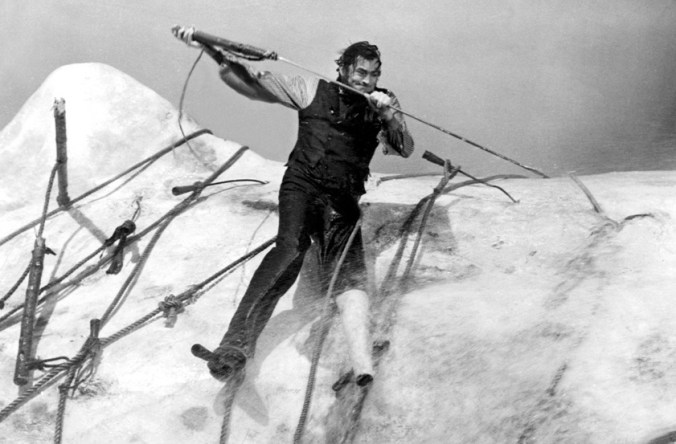
So I attended the show, which was not bad at all, though I felt like Jeff Goldblum making a visit to Jurassic Park. (The tickets were comped: it I had to pay a cent for them, I would not have gone.) My last time in that building—the group owns its theater facilities–I vowed not only that I would never return, but that I would take every opportunity to undermine the company’s strength, viability, reputation and existence. I had, too, until I attended the show. I take pride in the fact that I have warned many previously naive artists away from getting involved in the group, and I have kept many theater-goers away as well. It is my theatrical Moby Dick, I suppose: to the last I’ll grapple with it; from hell’s heart I’ll stab at it; for hate’s sake I’ll spit my last breath at it.

During the performance, which had its boring and annoying features, I found myself reflecting on this state of mind. Is it ethical to hold a grudge that long and that strong?

It certainly can be, to be sure. In cases like this, however, I believe that staying the course is a matter of integrity. Continue reading

Where Have You Gone, Ernest Hemingway? Of Baseball, Tanking, Winning, Trying, And Life…

This essay is only incidentally about baseball, but like so many things that sieve through my brain, it was sparked by a conversation about baseball. On the satellite radio MLB channel, one of the interchangeable hosts—I really have trouble telling them apart: some are ex-general managers who nobody will hire, some are ex-players, and a few are sportswriters, but they all seem to say the same things, though one says them with a bilateral lisp—was interviewing a New York sportswriter. That alone would normally prompt me to switch to the Beatles Channel (or the weather), but as I reached for the dial I caught one of the writer’s comments. He was talking about the fact that the New York Yankees’ opponent at the time, the Tampa Bay Rays, were almost a .500 team, and were competing despite a tiny payroll, unlike many other teams this year, which have adopted the controversial strategy of fielding cheap and crummy teams (called “tanking’) in the hopes of getting high draft choices as a reward for  miserable won-lost records.

“I guess you have to admire the Rays,” he said, “though in this day and age, it makes no sense to try to be a .500 team.”

What a nauseating, unethical position, and how characteristic of the downward trend in American values and spirituality!  It makes no sense to try be a .500 team? This sentiment warps so much in American life today. It translates into the envy, resentment and anger that typical, normal, healthy Americans lug around on their souls all day because they aren’t rich like the people they see on TV, or the neighbor down the street who had wealthy parents and left him a bundle.

It makes sense for the Rays to try to be a .500 team because it means the team is doing the best it can, despite limitations beyond its control, to give its fans something to cheer and care about. It makes sense to try to be a .500 team for the same reason it makes sense to aspire to be the kind of steady, honest, hard-working middle class American who raises happy and well-adjusted children in a stable home but will never win any major awards or be the subject of features in their local newspapers. It makes sense to try to be a .500 team for the same reason it is right to work hard and well no matter what your salary, or whether you are being paid at all.

Ambition is a great motivator, as long as one understands that achieving one’s goals is often as dependent on chance and chaos as it is on industry and talent, and if you prepare yourself to be bitter about that, bitter is how you are likely to wind up.

I learned to love baseball passionately following a .500 baseball team–indeed a sub-.500 baseball team— that seemed like it would never be anything but. This was in an era where the New York Yankees literally won the pennant every year, with a rare exception now and then. The system was rigged to favor them, and had been for decades. The Boston Red Sox began every season knowing that getting to the World Series was a pipe dream, and their fans knew it too. Nevertheless, they tried. As an almost good team, they had a chance to win every game—not a great chance, when they were playing the Yankees, but a chance. Often the Sox made a good fight of it while going down: our hopes were raised, and there was that wonderful-horrible moment that is the beating heart of baseball where anything can happen from a miracle to a tragedy as the ball is hurtling toward the plate and fate’s resolution. Life is like that, and the sooner you realize and accept it, the better off you are.

The best hitters make outs 60% of the time, and the best teams still lose at least 35% of their games. The typical players and teams do worse than that, just like the typical American, indeed human being, loses a lot more often than he or she wins. The important thing, the thing that undergirds ethics, and integrity, and responsibility, and honor, is that you do the best you can, and pick yourself up when you fail, and try again. It’s not a bromide. It’s the only way to live without going crazy, becoming a serial killer, or surrendering to despair. Continue reading

Comment Of The Day: “Ethics Quiz: The Little House On The Cultural Divide”

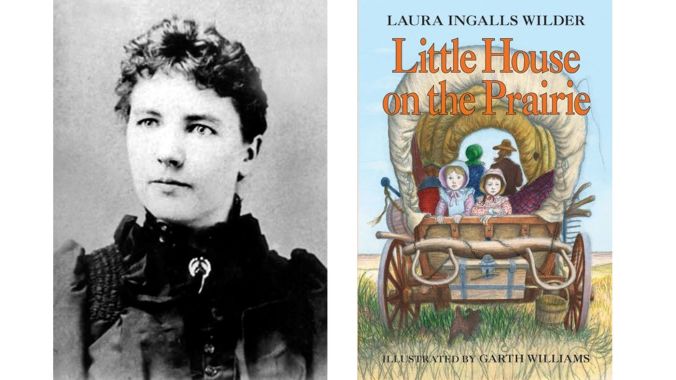
There has been a paucity of Comments of the Day lately; it’s probably my fault. This one is by a first time COTD awardee, and involves the rare Ethics Alarms topic of children’s literature, in response to the Ethics Quiz about the justness of Laura Ingalls Wilder’s name being stripped from the award created in her honor. Apparently her “Little House” books were not sufficiently prescient regarding modern sensibilities and 21st Century hindsight.

And no, I didn’t pick this comment because it includes a compliment to “The Wind in the Willows,” perhaps my favorite book of all time.

Here is Bob’s Comment of the Day on the post, Ethics Quiz: The Little House On The Cultural Divide:

“Is it fair and reasonable to remove Wilder’s’ name from the award, essentially taking away an honor despite no new information or evidence arising?”

No.

Bit of backstory: my husband and I were both inveterate readers when we were children. Oddly enough, neither of us read “children’s books” when we were kids … we went from Dick and Jane to fairly adult novels very early on.

However, when we hit our 40s-50s, we started a campaign of reading the great classics of kiddie lit. (Just a note — “Wind in the Willows” is a masterpiece, the first six [and only the first six] Oz books are spectacular, E. Nesbit rocks and the popularity of “Peter Pan” is a mystery we have never plumbed.)Among those books were the entire Little House corpus. They are quite terrific. (As with most series, some are better than others.) While the attitudes may be dated, there is nothing “hateful” about them. In order to be hateful, there should be some evidence of a clear animus against a particular group of people; Wilder has no agenda, and simply reflects the attitudes common of her era.

It is essential to note that these books are not virulent anti-Amerind screeds, but stories of the heroic pioneers who built our nation. Native Americans occasionally cross this landscape, but these books are neither about nor against them.

It does seem as if there is a concerted effort to erase (or … re-envision) American history to something more palatable to post 1960s sensibilities. This is mischievous and dangerous, and should be confronted whenever possible.